- The paper reveals that decentralized solar irrigation systems are managed through both formal monitoring tools and informal networks like WhatsApp.
- The paper employs longitudinal ethnography and mixed methods to uncover operational, technical, and social challenges in rural Gujarat.
- The paper highlights the potential of integrating farmer-led practices with distributed environmental sensing to bolster climate resilience.
Insights into the Socio-Technical Dynamics of Decentralized Solar Irrigation in Rural India
Introduction
The proliferation of decentralized solar irrigation pumps (SIPs) represents a paradigm shift at the intersection of rural electrification, modern agriculture, and renewable energy policy. "Insights from Farmer-Managed Decentralized Solar Irrigation Systems" (2604.09395) systematically investigates how smallholder farmers in Gujarat, India, appropriate formal and informal digital infrastructures to manage geographically dispersed solar installations. Through longitudinal ethnographic engagement, the study elucidates the operational, social, and technological complexities that underlie the deployment and maintenance of grid-connected SIPs in the context of India's ambitious renewable energy targets and evolving agricultural digitalization.
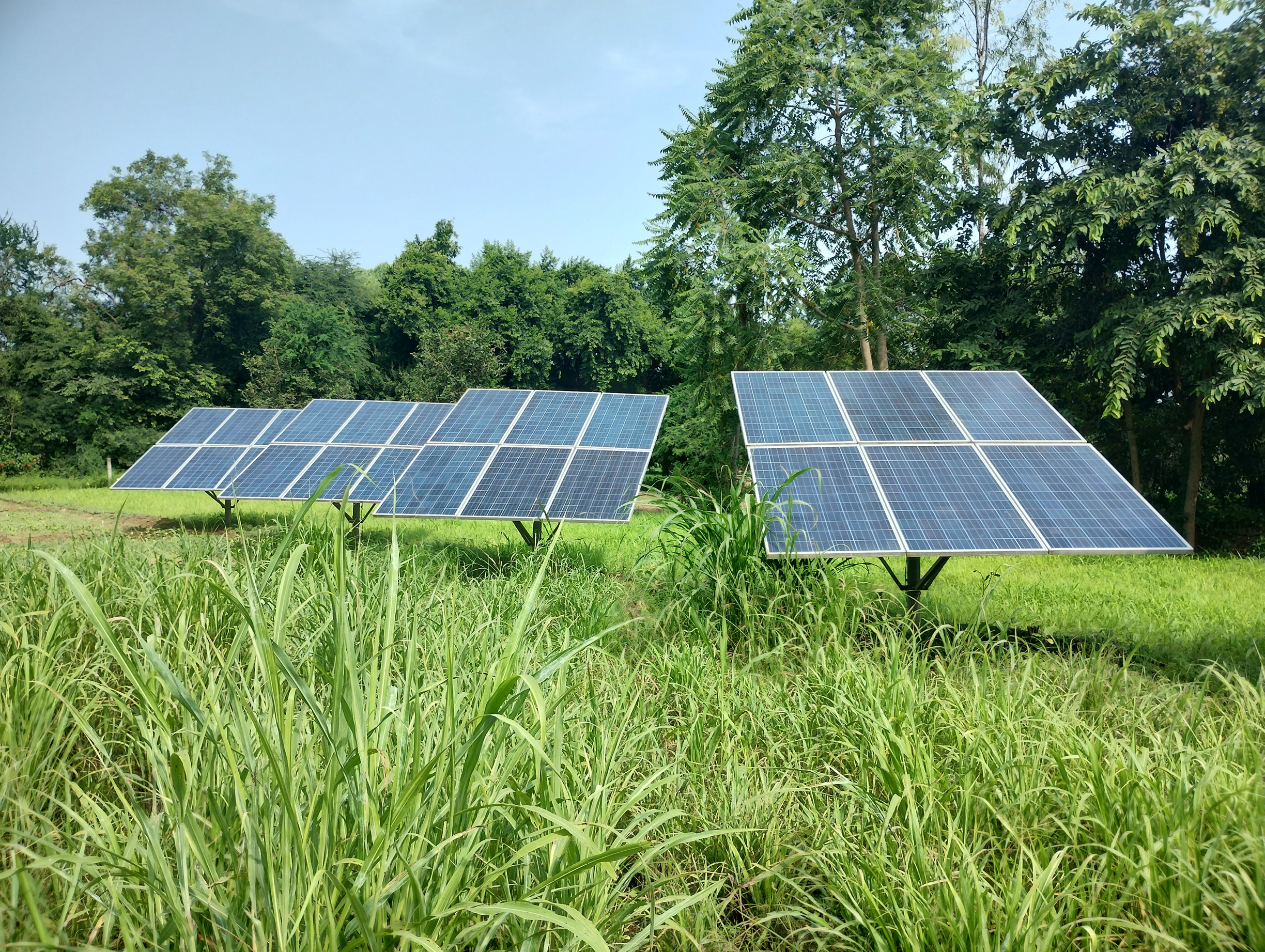
Figure 1: A representative grid-connected Solar Irrigation Pump (SIP) field installation in rural Gujarat, India.
Empirical Foundation: Context, Methods, and Data
The research was conducted in Gujarat, a state characterized by diverse agro-climatic zones and a rapidly expanding renewable energy portfolio. The participant pool comprised two cohorts: C1, operating under the initial Solar Power as a Remunerative Crop (SPaRC) pilot and organized as a cooperative; and C2, participants in the large-scale Suryashakti Kisan Yojana (SKY) scheme. Both utilized grid-connected SIPs enabling irrigation and surplus energy export, yet differed in digital infrastructure access and scheme integration.
Data collection leveraged an immersion/crystallization methodology, involving unstructured interviews, participatory observation, and multi-year rapport-building with exclusively male farmers, reflecting prevailing gendered land ownership norms. The mixed data sources—direct field engagement and digital traces—yielded rich qualitative insights into technical practices, community strategies, and platform adaptation over time.
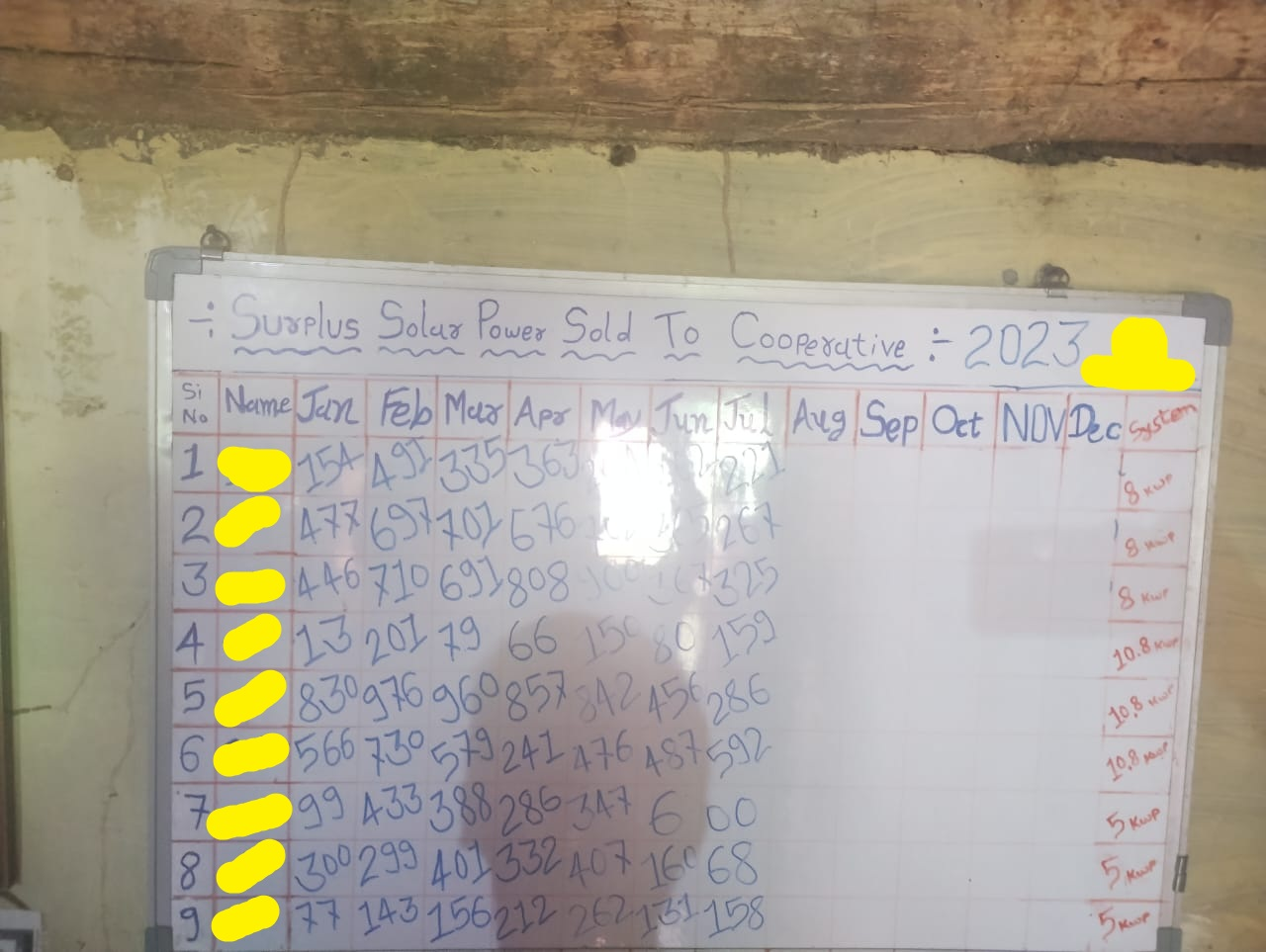
Figure 2: Physical tracking of monthly surplus solar power exports by C1 farmers, highlighting analog data management methods.
Findings: Challenges, Strategies, and Digital Appropriation
Operational Barriers in SIP Management
Farmers in both cohorts highlighted persistent maintenance and monitoring challenges. Common failures—transformer and wiring faults, dust accumulation, inconsistent app connectivity—contributed to both direct income loss from reduced generation and heightened uncertainty. The remote siting of SIPs aggravated oversight and timely intervention, with official service channels sometimes unresponsive or nontransparent. While the SKY Android application provided functional remote monitoring for C2, its lack of peer benchmarking and community features limited its impact.
A salient innovation emerged in C2: the grassroots appropriation of WhatsApp groups to circumvent limitations of formal monitoring tools. By sharing daily system data and peer-volunteered operational experiences, farmers constructed an informal, community-driven diagnostic and support network. This enabled collective anomaly detection—baseline deviations due to capacity-equivalent panels allowed rapid identification of line losses, dust, shading, or equipment failure. Social confidence and adoption were driven by progressive group members, fostering gradual normalization of digital data sharing and collaborative troubleshooting.
In contrast, C1 retained analog practices, physically recording metered output on shared whiteboards (see Figure 2), reinforcing the role of digital infrastructure access in shaping monitoring paradigms.
Discussion: Socio-Technical Implications and Future Directions
Digital Participation as Infrastructure
The study advances the conception of digital infrastructures—not only as top-down technical interventions but as adaptable substrates for emergent community practices in decentralized energy systems. The WhatsApp appropriation exemplifies effective integration of human-centered, participatory mechanisms, aligning with the principle that social interaction and peer knowledge transfer are as critical to infrastructural sustainability as physical hardware or formal software platforms. This reframing aligns with contemporary CSCW and ICTD discourse emphasizing the limitations of treating technical users as isolated rational actors.
Towards Distributed Citizen Science and Climate Sensing
A bold implication of this work is the prospect of leveraging decentralized SIP networks as distributed environmental sensing grids. The researchers posit that incentivized, anonymized sharing of real-time generation data—already shown capable of anomaly detection—could be extended for climate variable reconstruction (e.g., irradiance, cloud cover, rainfall inference), facilitating advances in agro-climatic modeling and resilience strategies. This would integrate farmer-managed infrastructures with broader citizen science paradigms and resilience planning, with potential economic value not only in operational efficiency but in data monetization models for all stakeholders.
Policy and Design Recommendations
The findings challenge prevailing centralized solar deployment paradigms, suggesting superiority of locally managed, digitally-networked micro-infrastructures in promoting operational reliability, financial sustainability, and community agency. System design for future SIP rollouts should prioritize:
- Embedded peer-to-peer comparative analytics
- Contextual, localized interfaces supporting farmers' interpretation and broader community engagement
- Integration pathways between informal digital practices (messaging platforms) and formal monitoring/maintenance applications
- Policy regimes that support open, compensation-linked data sharing while protecting privacy and community control
Critical barriers remain, including grid instability from reverse power injection, vulnerability to local groundwater market dynamics, and the necessity for models that scale beyond homogenous, cooperative groups.
Conclusion
This study foregrounds the indispensable role of social and digital fabrics in sustaining decentralized solar energy infrastructures in the Global South. By evidencing the limitations of exclusively technical or individually-targeted interventions and surfacing organic community innovations such as WhatsApp-based collective monitoring, the research reframes decentralized renewable deployment as a socio-technical phenomenon.
Such insights underpin future research and policy on farmer-managed energy systems, advocating for hybrid models that blend technical robustness, participatory governance, and open digital collaboration. There is substantial promise in extending these practices towards environmental sensing and resiliency networks, pointing to new frontiers at the convergence of HCI, CSCW, ICTD, and AI-supported agricultural sustainability.