- The paper shows that JWST/MIRI-MRS monitoring captures the spatial evolution of SN 1987A’s mid-IR spectrum and the complex behavior of its dust continuum.
- Advanced spectral modeling reveals spatial variations in dust mass and temperature, highlighting distinct shock front interactions within the equatorial ring.
- First mid-IR detections of H2 and diagnostic ionized emission lines provide actionable insights into ejecta-ER interactions and reverse shock heating.
The Temporal Evolution of the Mid-Infrared Spectrum of SN 1987A with JWST/MIRI-MRS
Introduction and Context
The recent JWST/MIRI-MRS spectroscopic monitoring of SN 1987A provides, for the first time, spatially resolved mid-infrared (mid-IR) spectral evolution of a core-collapse supernova at late times. SN 1987A, at a distance of 49.6 kpc in the LMC, has been pivotal for understanding the interplay between supernova ejecta, circumstellar interaction, and dust evolution. The system's main structural features—anisotropic ejecta, a dense equatorial ring (ER), and outer rings—are legacies of the progenitor's mass-loss history and continue to be shaped by the propagating blast wave. The ER, currently the dominant source of mid-IR emission, exhibits complex shock interactions as ejecta encounter circumstellar material, producing multi-phase shocks and resulting in observable modulations in its IR spectrum.
Observations and Methodology
JWST’s MIRI/MRS was employed for two epochs: Day 12927 (Cycle 1) and Day 13311 (Cycle 2) post-explosion, separated by 384 days. Both campaigns provided full spectral coverage (4.9–27.9 μm) with improved calibration for Cycle 2, and included simultaneous imager data for precise absolute astrometry. Cycle 2 included, for the first time, dedicated off-target backgrounds, improving control over detector- and background-related systematics.
The data reduction chain accounted explicitly for known MRS systematics, including PSF anisotropies (Figure 1) and wavelength-dependent aperture corrections (Figure 2), utilizing advanced pipeline releases (v1.14, CRDS 11.17.16). Spectra were extracted from regions corresponding to the ER (including cardinal point sectors), ejecta, interaction hotspots, and the system's total flux (using Rayleigh-based, wavelength-adaptive apertures, Figure 2).
Global Dust Continuum and Evolution
Comparison of the total MIRI/MRS fluxes at the two epochs (Figure 3) reveals minimal evolution in the integrated ER dust continuum, with essentially invariant spectral shape and only marginal fading of the 10 μm silicate emission. However, continuum brightness mapping across four spectral windows (hot dust, 10 μm and 20 μm silicate, 24–27 μm "excess") reveals strong spatial non-uniformity: inner ER regions fade, while the outer ER brightens (Figure 4), corresponding to the shockfront's continued traversal into fresh CSM.
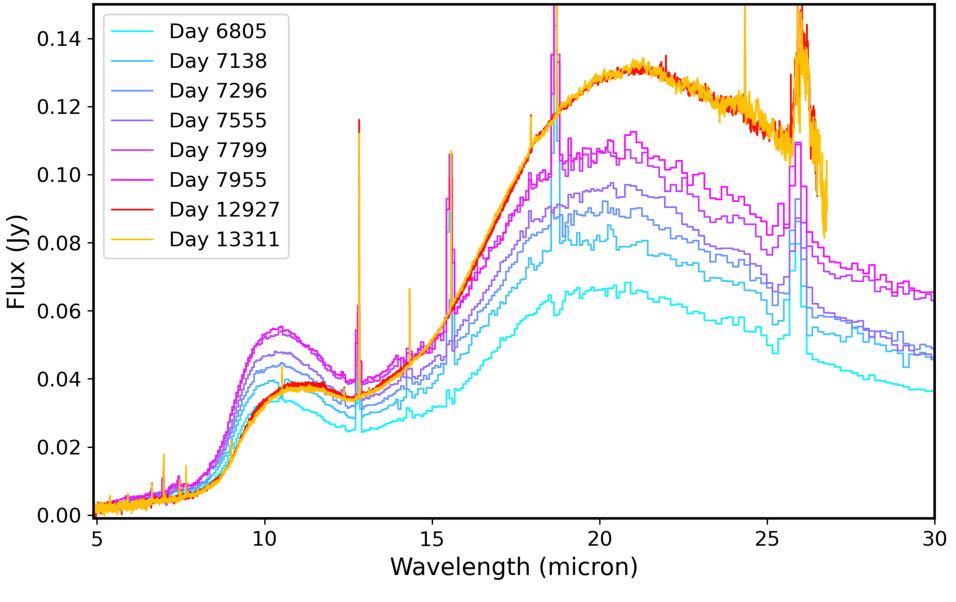
Figure 3: The MIR spectrum of SN 1987A at both MIRI/MRS epochs compared to historical Spitzer/IRS data, highlighting the relative stability during the JWST era.
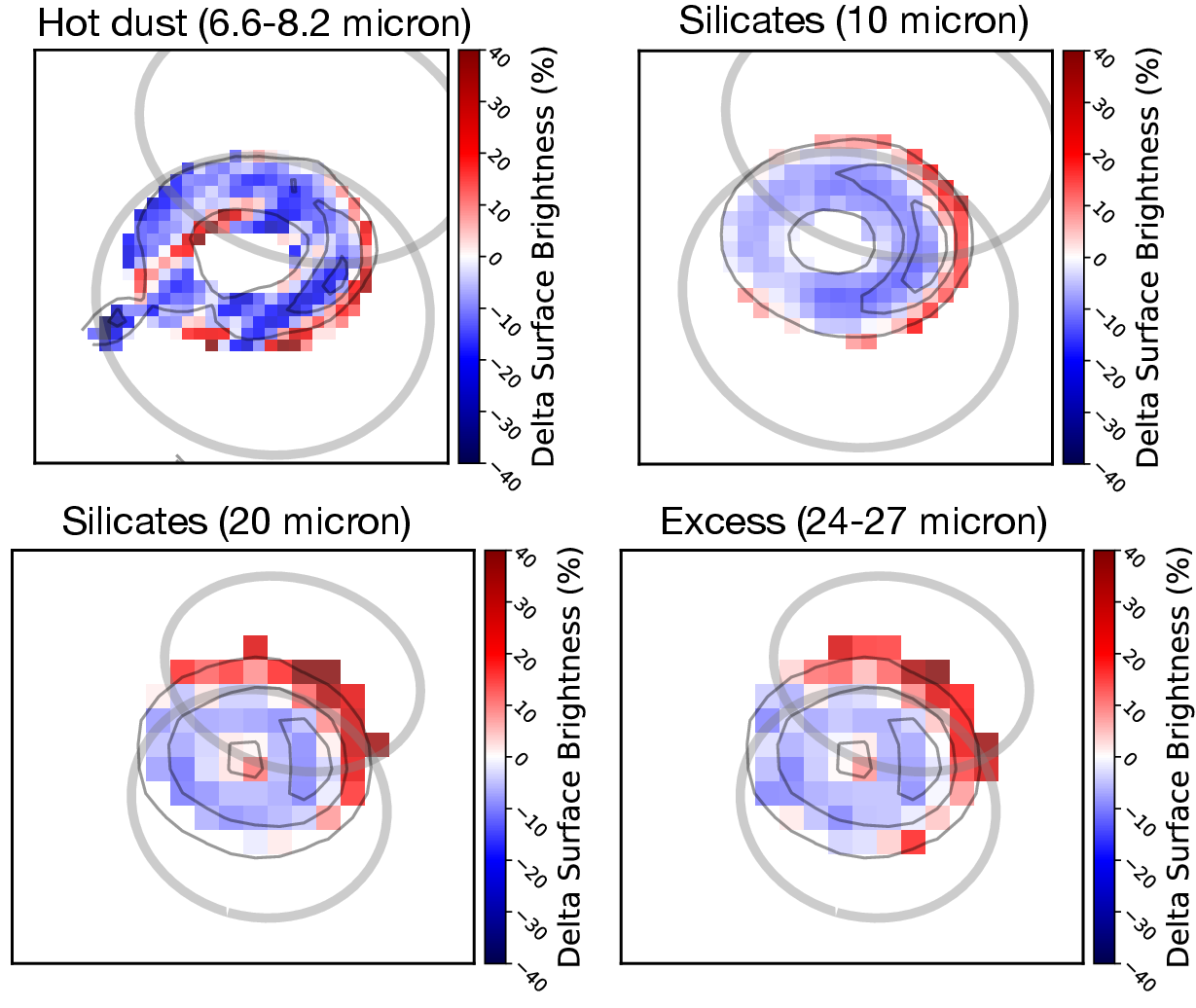
Figure 4: Spatial brightness evolution between Days 12927 and 13311 in key dust continuum windows; fading in the inner ER and brightening at the periphery is evident.
Fitting multi-component dust models to both epochs (Figure 5, Table 1), incorporating astrodust and alternate silicate/amorphous-C grain compositions, demonstrates that changes in total hot and warm dust mass/temperature are within uncertainties—significant spectral evolution requires a longer baseline. Nevertheless, spatially resolved spectral modeling of the ER shows the west region dominates both hot and warm dust content; the warm dust mass is systematicly higher in the west, and fading is mainly in the east, north, and south (Figure 6; Table of regional properties).
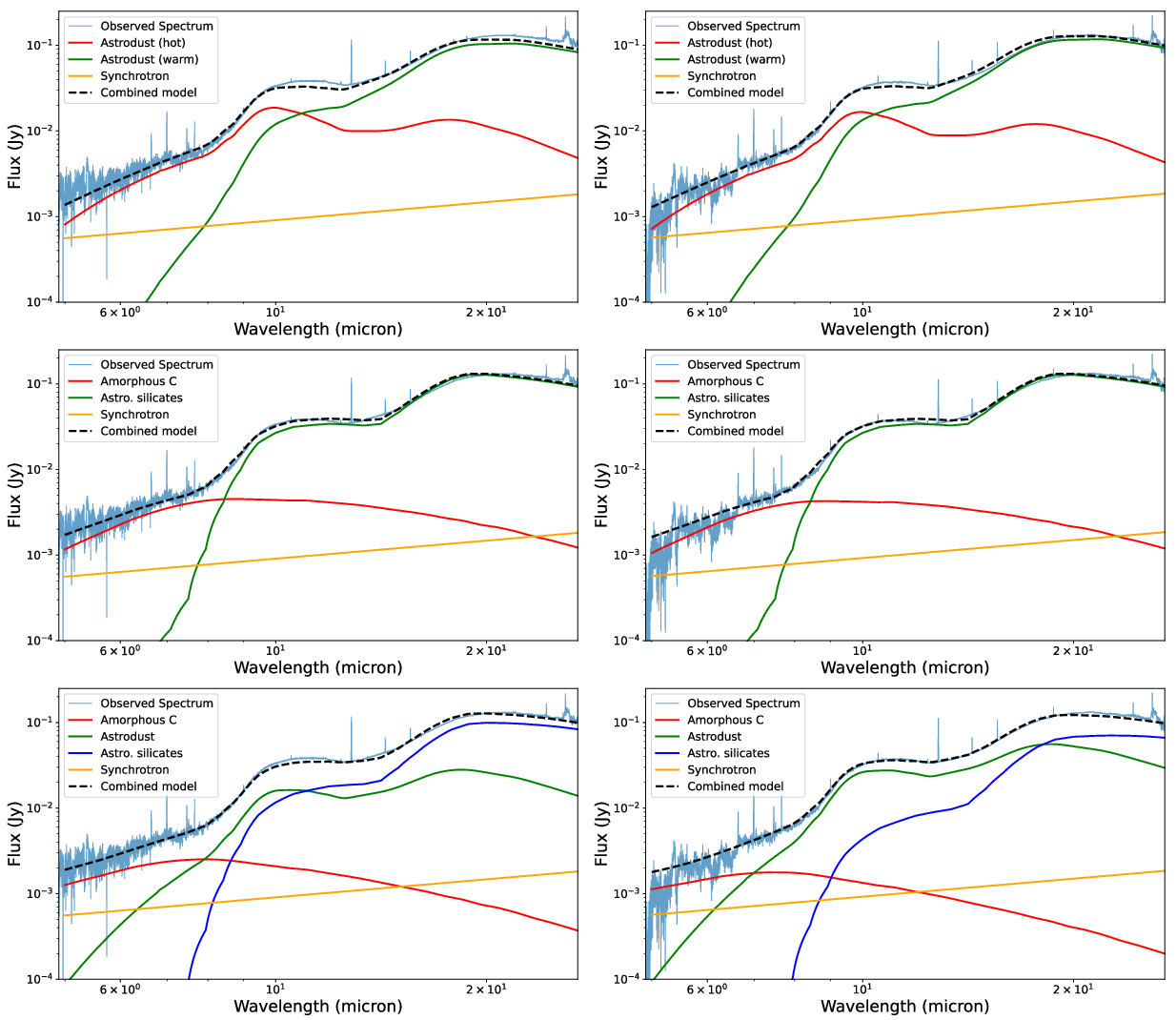
Figure 5: Model fits to the global dust spectrum at each epoch, illustrating component decomposition and highlighting the method’s sensitivity to model assumptions.
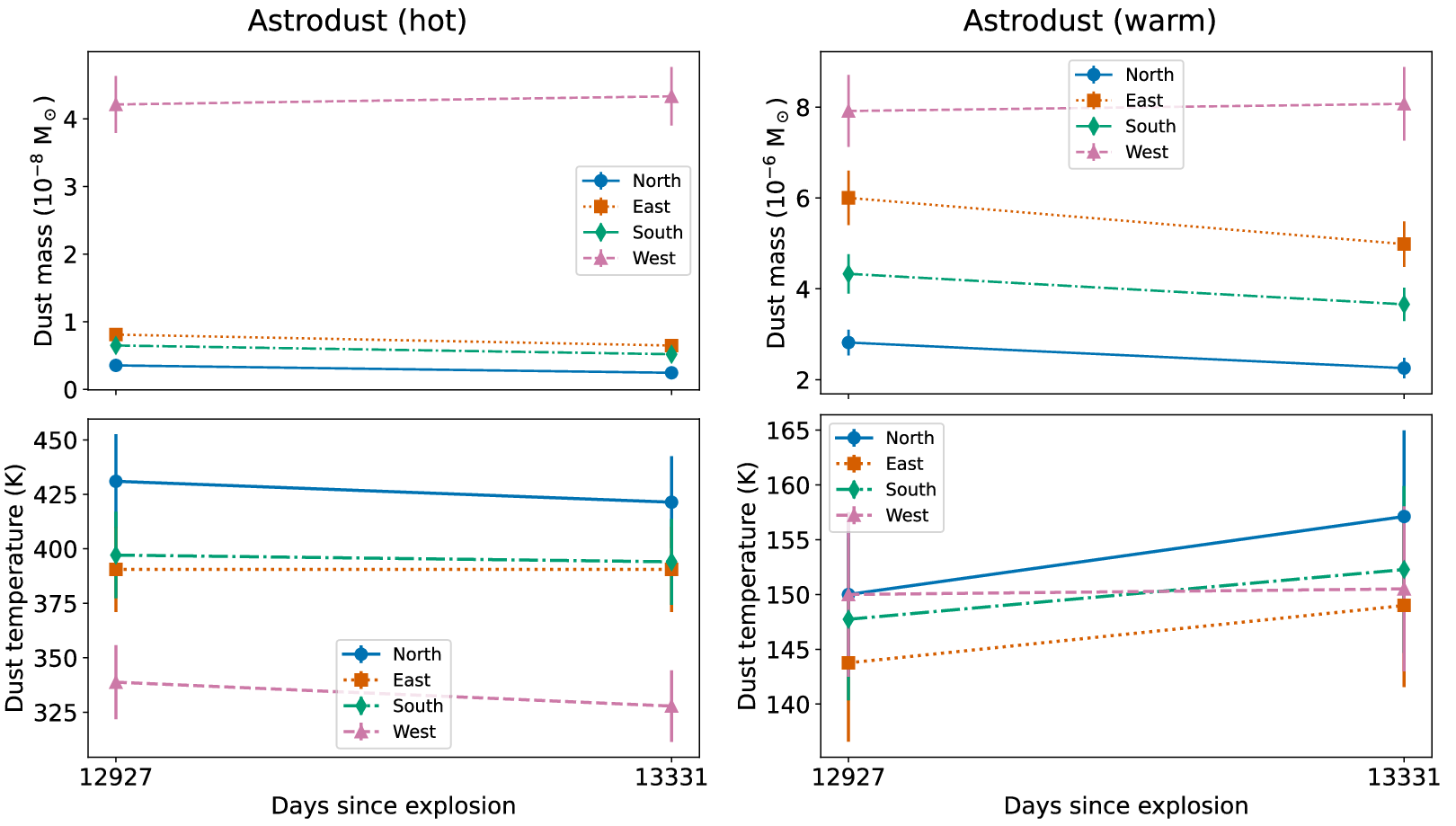
Figure 6: The evolution of hot and warm dust component mass and temperature for north/east/south/west ER subregions, demonstrating spatially dependent trends.
A critical result is the characterization of the "30–70 μm excess," previously seen by SOFIA/Herschel. Modeling with an explicit excess component (T ≈ 120–140 K), assignable to astronomical silicates, provides a superior fit to the >20 μm region and is fully consistent with the historic SOFIA 31.5 μm point (Figure 7). The excess arises spatially in the ER, with no evidence for an ejecta origin, pointing towards a grain size distribution with enhanced large grains rather than new component formation.
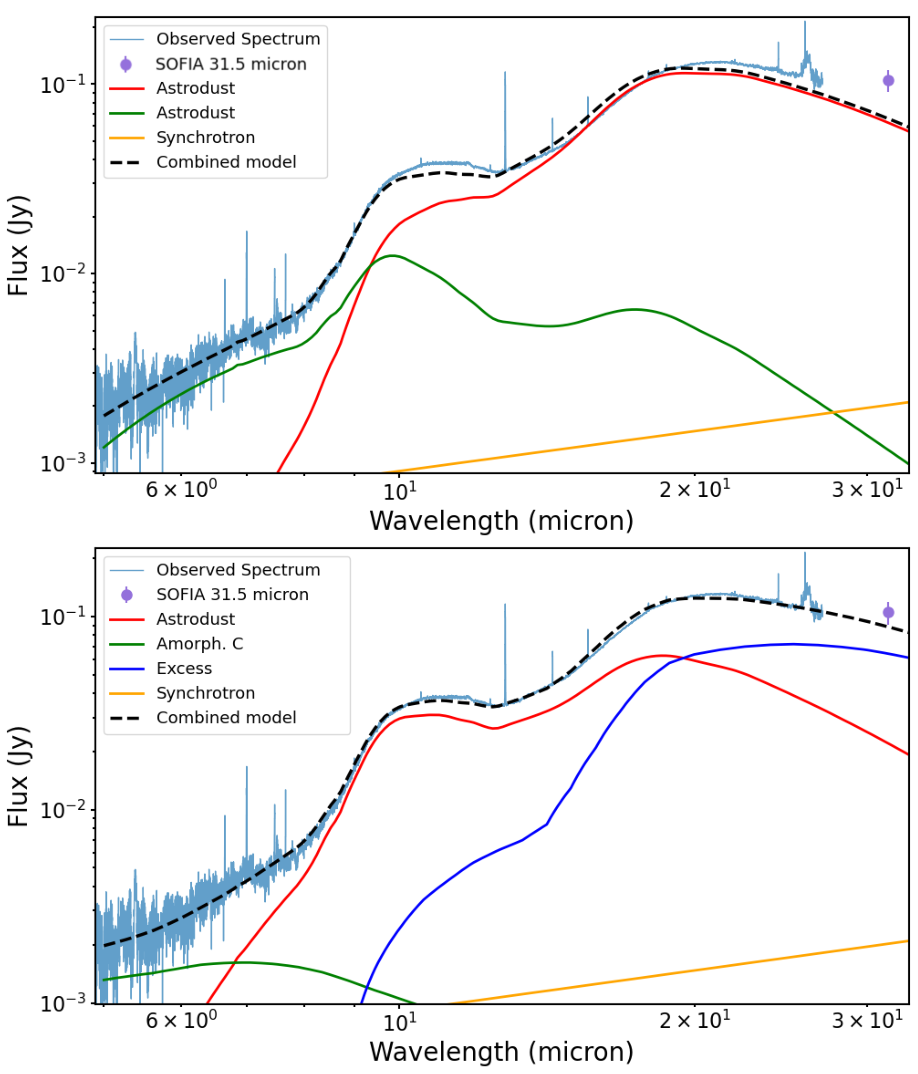
Figure 7: Comparison of model fits with and without the "excess" component to SOFIA photometry, confirming the necessity of an additional warm-silicate population.
Dust composition analysis (Figure 8) reveals that O-rich CSM (Ossenkopf et al. 1992) with continuous distribution of ellipsoids (CDE) matches the spectral "dip" between 10 and 20 μm silicate features, a property not captured by standard ISM astrodust models. However, the short-wavelength continuum still demands further components, possibly metallic Fe or amorphous C.
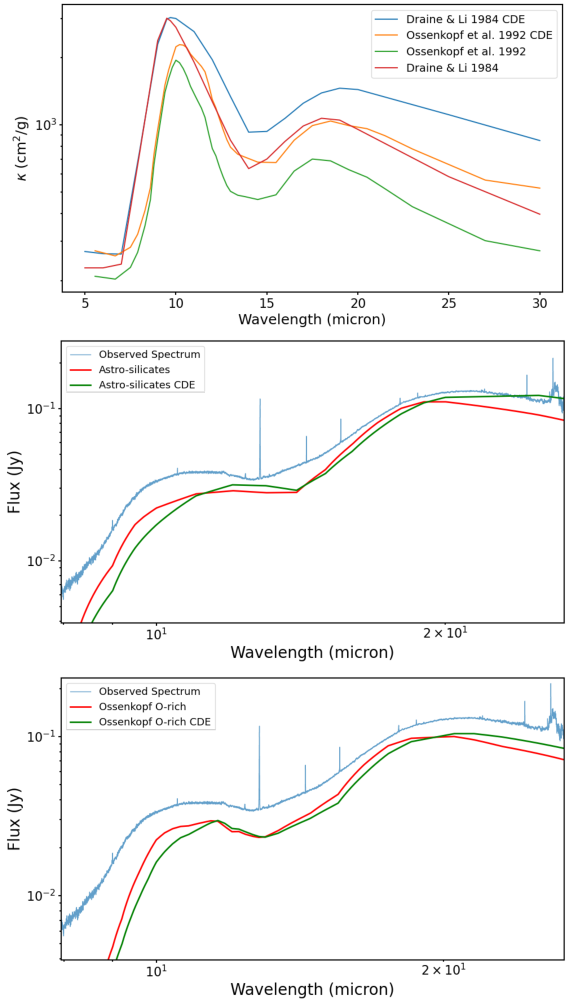
Figure 8: Mass absorption coefficients for silicate models highlight how O-rich CDE dust matches the observed spectral structure—vital for compositional constraints.
Emission Line Diagnostics: ER, Ejecta, and Interaction
Detailed line fitting shows two distinct kinematic regimes: broad (200–300 km/s) lines from singly ionized species mapping to the post-shock ER, and much narrower lines from highly ionized species tracing low-density, extended, UV-flash ionized gas. The bulk of ER line fluxes (e.g., [Ne II], [Ar II], [Fe II]) are stable (flux ratios Day 13311/12927 ≈ 1.0 within errors), with statistically significant declines only in a subset ([Ne II], [Ar II]), showing a 10–15% fade.
Spatial maps of ER line evolution (Figure 9) echo the dust continuum: fading dominates the inner regions, while outer segments or "interaction" zones brighten, correlating tightly with the passage of fast ejecta and shockwave propagation.
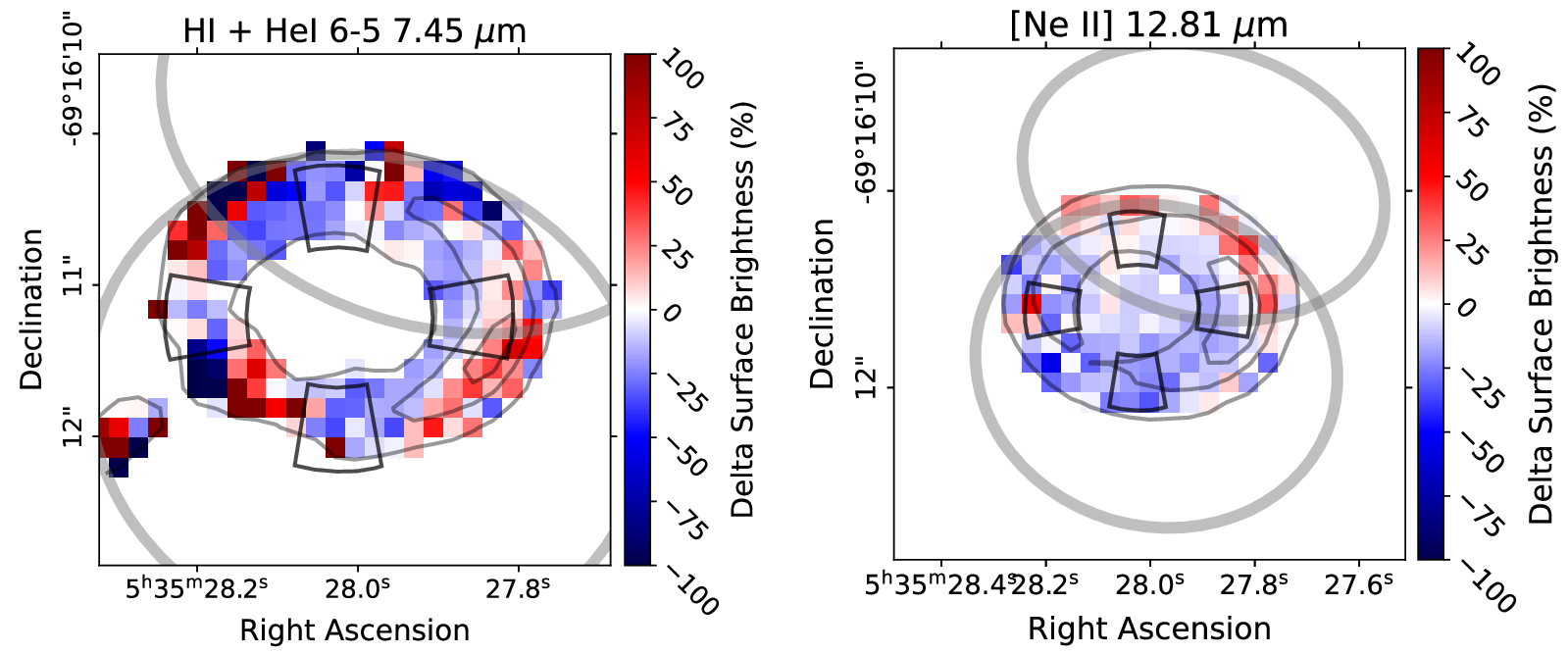
Figure 9: Surface brightness change maps for representative ER emission lines, affirming detailed spatial structure and correlation with dust continuum trends.
First Mid-IR Detection of Ejecta H2 and Line Kinematics
The study reports, for the first time in the mid-IR, clear identification of pure rotational H2 emission lines from the ejecta (e.g., 0–0 S(1) to S(7)), verified in both epochs (Table of H2 lines and Figure 10). Their spatial correlation is with regions connecting inner ejecta and the north ER, matching predictions of UV-excited PDRs (Draine & Bertoldi 1996) under high UV flux and density, consistent with earlier NIR detections and models but now with increased diagnostic reach.
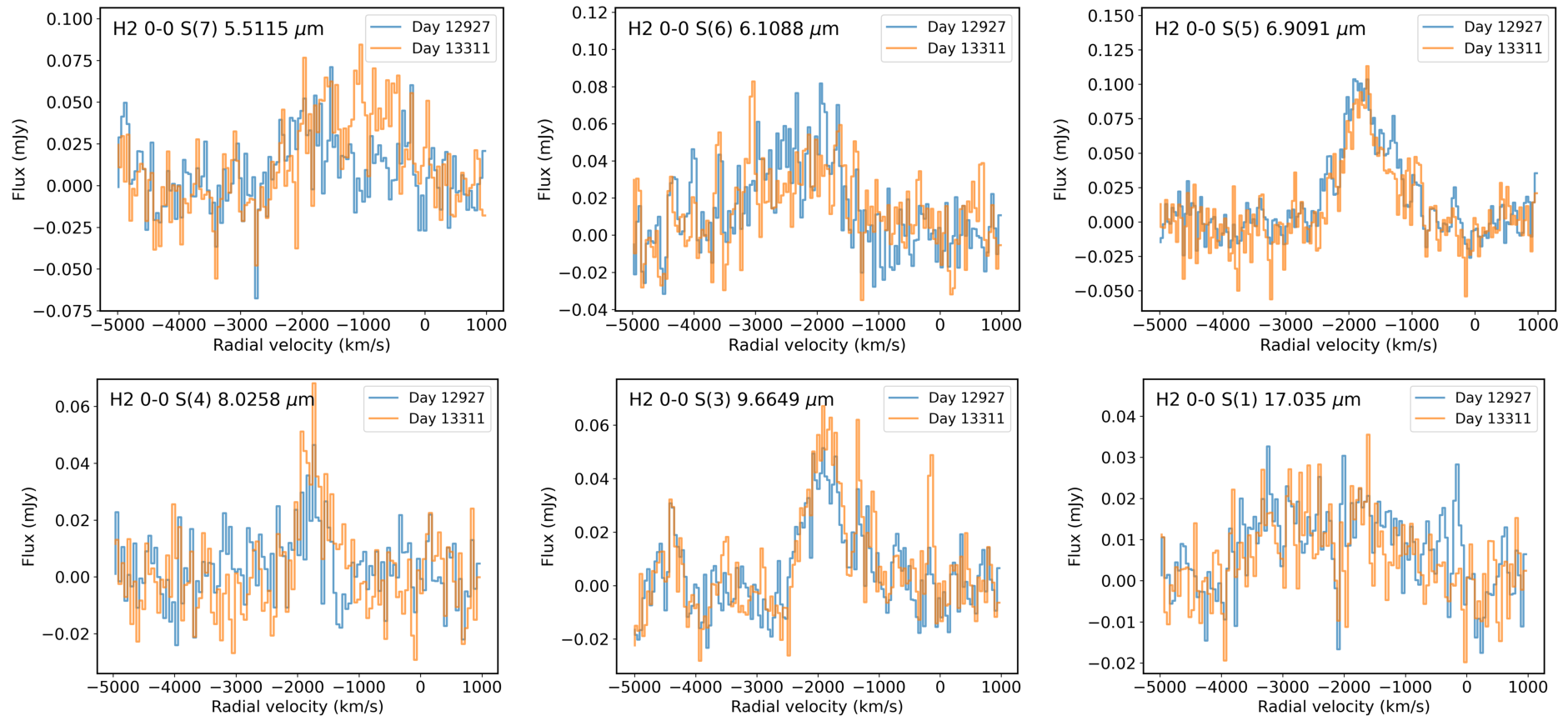
Figure 10: Example H2 line profiles at both epochs confirm kinematic signatures of UV-excited molecular material in the inner ejecta.
Ejecta-ER Interaction: New Ionization and Heating Diagnostics
The shock-driven interaction at the ER's north-east and south-west is scrutinized across epochs. Flux increases, spatial extension, and broadening in interaction-tracing lines ([Fe II] 5.34 μm, [Ar II] 6.99 μm, [Ne II] 12.81 μm) are all detected (Figures 17–19), especially in the southern region. Detailed [Fe II] diagnostics, exploiting NIRSpec and MIRI/MRS transitions, constrain ne ≈ 1.3×10³–1.5×10⁴ cm⁻³ and Te≈1500–2000 K in the X-ray heated, Fe-rich shocked ejecta (Figure 11). The electron densities and temperature exceed those in the (radioactively powered) central ejecta, confirming that dense, metal-rich core material has now reached and is actively interacting with the reverse shock.
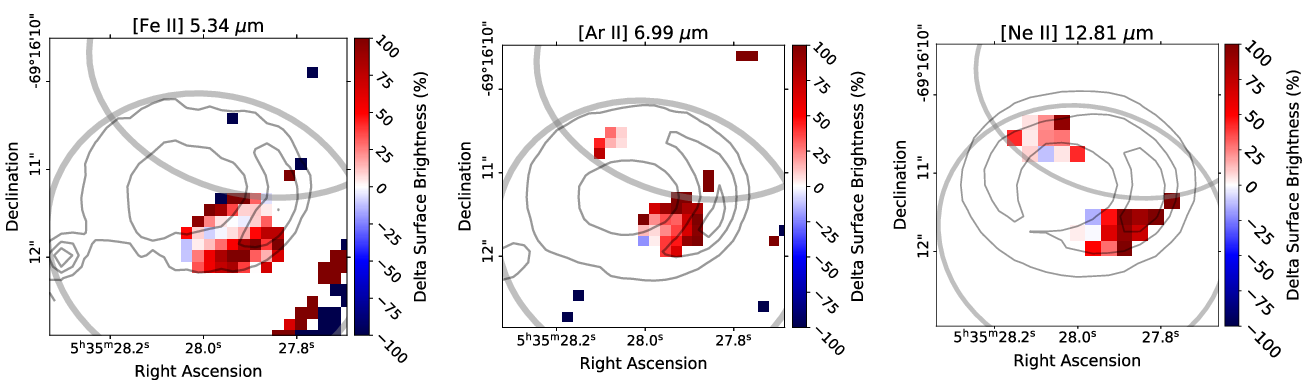
Figure 12: Maps of line brightness change in interaction regions demonstrate the recent acceleration of shock-driven excitation beyond the ER.
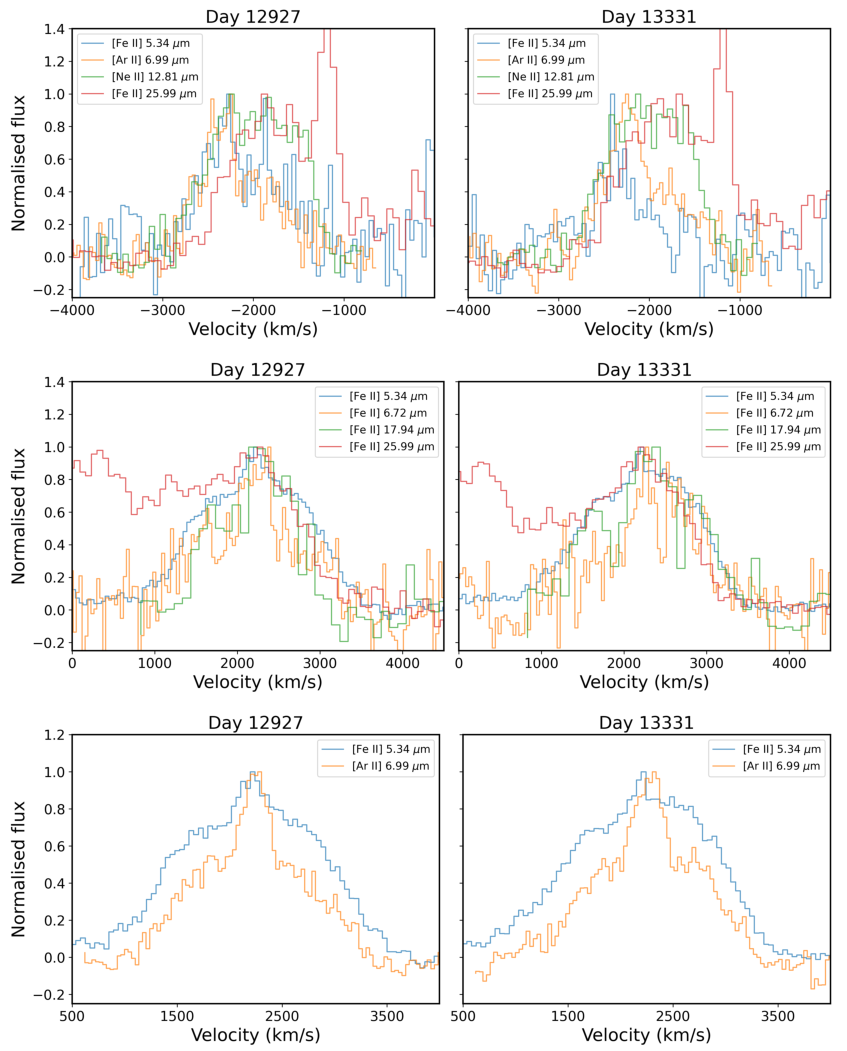
Figure 13: Velocity profiles of broad, fast-moving lines from the interaction regions, showing distinct evolution and co-spatial nature for different elements.
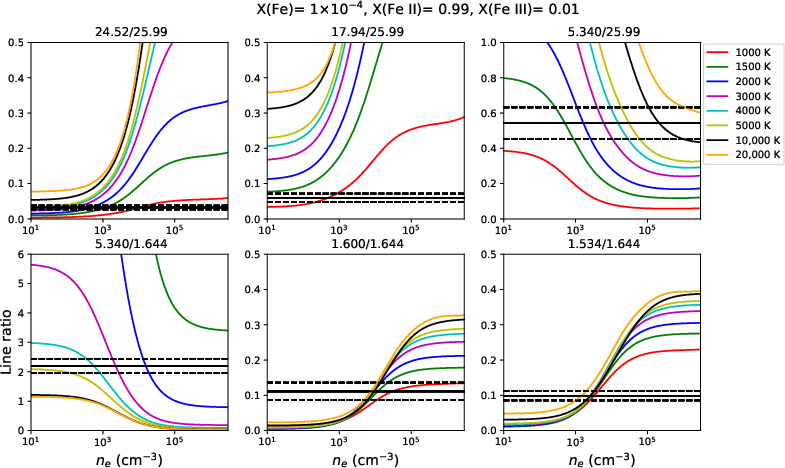
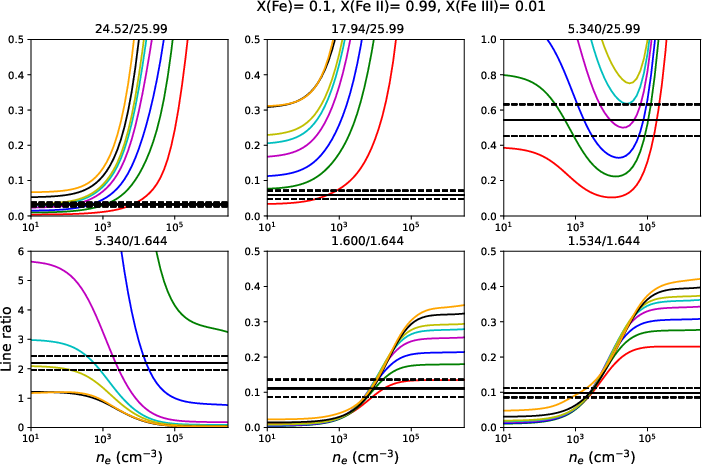
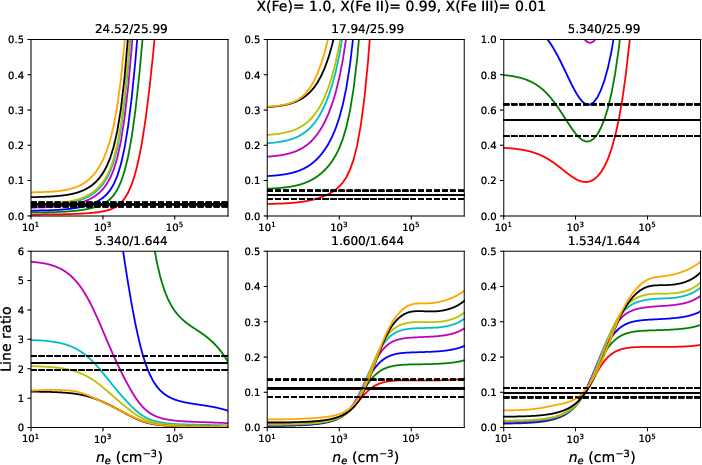
Figure 11: Model-to-observation comparison for [Fe II] diagnostic line ratios; contours (solid/horizontal) represent observed values for electron density/electron temperature constraints.
Implications and Outlook
This work provides definitive evidence that (a) the ER’s dust continuum evolution has entered a subtle regime, with spatially complex but (so far) globally stable dust masses and temperatures; (b) the post-shock ER is progressively being overtaken by newly shocked CSM, manifest in both dust and gas phase; and (c) dense, Fe-rich ejecta is now entering the ER, with clear X-ray-driven heating, raising electron temperatures and densities to levels characteristic of mature reverse shock interaction. The unambiguous detection and modeling of mid-IR H2 opens new possibilities for probing molecule survival and ISM replenishment.
This study sets rigorous constraints for future time-domain monitoring. Further MIRI/MRS and NIRSpec/IFU epochal observations will trace the continued erosion of the ER dust reservoir, the progressive emergence of the interaction region, and possible appearance of further molecular emission and asymmetric structures as the supernova remnant ages. The methodological advances (e.g., detailed spatially resolved PSF deconvolution and robust background subtraction strategies) will inform spectral analyses of other nearby SNe and resolved remnants.
Conclusion
The dual-epoch JWST/MIRI-MRS study of SN 1987A establishes a new benchmark for late-time, spatially resolved supernova remnant spectroscopic monitoring. It demonstrates that while the integrated IR signature of the ER appears nearly static over a year baseline, spatially resolved spectral mapping exposes highly dynamic processes at the blast wave's edge. The emergence of new molecular and fast ionized emission, along with direct line diagnostics of ejecta-ionized plasma, mark key transitions as the remnant enters its next evolutionary phase. Ongoing and future monitoring will be essential for quantifying dust destruction and formation, ISM enrichment processes, and the eventual fate of the core-collapse debris.
Reference: "The evolution of the mid-infrared spectrum of SN 1987A observed with the JWST/MIRI-MRS" (2604.09211)

