- The paper introduces the SPICE framework that uses a single proxy variable under a novel completeness condition to uniquely identify causal effects.
- It proposes SPICE-Net, a two-stage neural estimator that outperforms existing methods on simulated and real-world datasets.
- The work offers rigorous theoretical guarantees and extends identifiability results to both discrete and continuous settings, impacting fields like medicine and epidemiology.
Identifying Causal Effects with a Single Proxy: The SPICE Framework
Introduction and Motivation
Estimating causal effects in observational settings is notoriously challenged by unobserved confounders. Classic adjustment techniques are invalid when such confounders are latent. The paper "Identifying Causal Effects Using a Single Proxy Variable" (2604.09135) addresses this challenge by assuming access to a single proxy variable—possibly noisy and multidimensional—for each unobserved confounder, alongside knowledge of the proxy measurement mechanism. Under a novel Single Proxy Identifiability of Causal Effects (SPICE) completeness condition, the paper derives provable identifiability results and introduces SPICE-Net, a neural estimator for the setting.
Proximal-Confounded Structural Causal Model (PC-SCM)
The central formalism is a proximal-confounded SCM, defined on observed variables (treatment X, outcome Y, proxy W) and latent confounder U. The proxy variable W is generated from U via a known mechanism, possibly under additive noise. The graphical template is a DAG with U as the common parent of X, Y, and W—with Y0 conditionally independent of Y1 given Y2.
The core inference target is the causal function Y3, the expectation of the outcome Y4 under intervention Y5. Adjustment via proxy Y6 alone is generally biased; the paper rigorously quantifies this bias in linear Gaussian settings, showing bias shrinks when Y7 is closely aligned with Y8 or when direct treatment effect dominates confounding.
Theoretical Results: SPICE and Identifiability
The main theoretical advance is the SPICE identifiability condition. Let Y9 be the known measurement mechanism (possibly of higher dimension and non-Gaussian). SPICE requires that the conditional densities W0 are complete: integrals of the form W1 vanish only if W2 almost everywhere.
Under this completeness condition, the causal function W3 is uniquely determined by the observed joint W4 and the known mechanism W5. The analysis covers both:
- Discrete proxies/confounders: Completeness reduces to full column rank of the conditional probability matrix W6 (i.e., invertibility via matrix adjustment).
- Continuous/dimensional proxies: SPICE is satisfied by linear additive noise models W7 with independent noise W8 whose density's Fourier transform is non-vanishing—a condition met by a very broad class of noise distributions, including Gaussian, Laplace, Cauchy, and many more infinitely divisible laws.
This framework both generalizes and subsumes previous results limited to scalar, Gaussian, or discrete settings (see [Pearl 2010], [Kuroki 2014]).
Non-completeness, e.g. with non-injective W9 (such as squaring), is shown to preclude identifiability.
Estimation: The SPICE-Net Architecture
SPICE-Net leverages the identifiability theory to design a practical two-stage estimator:
- Proxy Model Estimation: Learn (using the Engression NN framework) the inverse conditional distribution U0, exploiting the known measurement model U1 and additive noise. The NN is trained with an energy score loss and employs random noise inputs to model U2.
- Causal Adjustment: Utilizes samples from the latent confounder distribution (up to an injective, typically linear, transformation) as "synthetic confounders". Standard nonparametric regression adjustment (G-computation) or other flexible estimators can then be used to estimate U3.
The approach is robust to both discrete and continuous treatments and outcomes, and allows for parameter estimation of noise distributions (SPICE-Net-Approx) when unknown.
Empirical Results
Simulation Study
SPICE-Net is benchmarked on four simulation scenarios: linear Gaussian, binary treatments, exponential noise, and a high-dimensional confounder/proxy with correlated proxies. Evaluation is via out-of-sample MSE on causal function estimation, with oracle (unachievable) confounder adjustment serving as a gold standard. SPICE-Net outperforms competing proxy-based methods (CEVAE, SKPV, SPMMR), closely matching oracle performance except in the most challenging non-Gaussian/high-dimensional setups.
(Figure 1)
Figure 1: Mean squared error (MSE) of causal function estimators across simulation datasets; SPICE-Net consistently matches oracle adjustment and surpasses proxy-only and existing single-proxy estimators.
Real-World Data
The Light Tunnel Mk2 from the Causal Chamber® platform [Gamella2025] provides precise experimental data with verifiable ground truth. In both low-noise and high-noise proxy scenarios, SPICE-Net again achieves MSE performance close to oracle adjustment, and significantly better than proxy-only methods or single-proxy kernel/autoencoder baselines.
(Figure 2)
Figure 2: MSE (in U4 units) of causal effect estimators relative to ground truth, from real-world Causal Chamber Light Tunnel Mk2 data; SPICE-Net tracks oracle performance across proxy noise regimes.


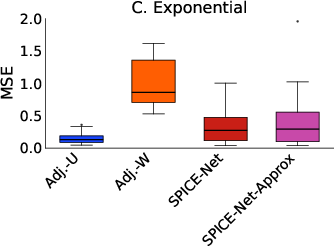

Figure 3: The Light Tunnel Mk2 setup used to generate ground-truth experimental causal data.
Extensions, Limitations, and Implications
The proposed identifiability framework is robust to both discrete and continuous settings, higher dimensional proxies, and a broad class of error models—substantially generalizing classical matrix adjustment. The completeness (SPICE) condition is easy to verify in common cases. The analysis is extended to:
- Additional observed confounders
- Models with noisy treatment/outcome measurements (as in differentially private releases, e.g., the US Census)
- Certain unobserved mediation scenarios due to Markov equivalence of DAGs
- Potential extensions to multiple proxies, partial knowledge of error mechanisms, and bounds analysis when the mechanism is not fully known
From a practical perspective, SPICE-Net has major relevance for applied fields (e.g., medicine, epidemiology, education) where unmeasured confounding is endemic but proxies and their error models are accessible.
Conclusion
This work provides a rigorous, general, and practically implementable framework for identification and estimation of causal effects using a single proxy variable and a known measurement mechanism. The SPICE completeness condition delivers strong identifiability guarantees across a wide range of realistic scenarios. SPICE-Net operationalizes these guarantees, achieving near-oracle performance in both synthetic and real data, and setting a new standard for proxy-based causal inference workflows.