- The paper presents a hybrid simulation framework combining ion PIC and electron fluid models to capture detailed DPF physics.
- It resolves electromagnetic field dynamics and plasma instabilities, yielding quantitative neutron yield predictions that closely match fully kinetic benchmarks.
- The model achieves near kinetic-level accuracy while reducing computational costs by 5-6 orders of magnitude for efficient DPF studies.
Electromagnetic Hybrid PIC-Fluid Modeling for Predictive Neutron Yield in Dense Plasma Focus
Introduction
The paper "A Fully Electromagnetic Hybrid PIC-Fluid Model for Predictive Fusion Neutron Yield in Dense Plasma Focus" (2604.09032) introduces and validates a hybrid simulation methodology for dense plasma focus (DPF) devices, addressing the critical need for both physical fidelity and computational efficiency in modeling these compact fusion neutron sources. The DPF operates via rapid plasma and electromagnetic field evolution through sequential physical phases: flashover, rundown, radial collapse, and the high-density pinch—the fusion-productive phase. Accurately predicting neutron generation in DPFs demands resolving kinetic ion behavior, electron dynamics, strong electromagnetic coupling, and the transition between plasma and vacuum, while maintaining computational tractability.
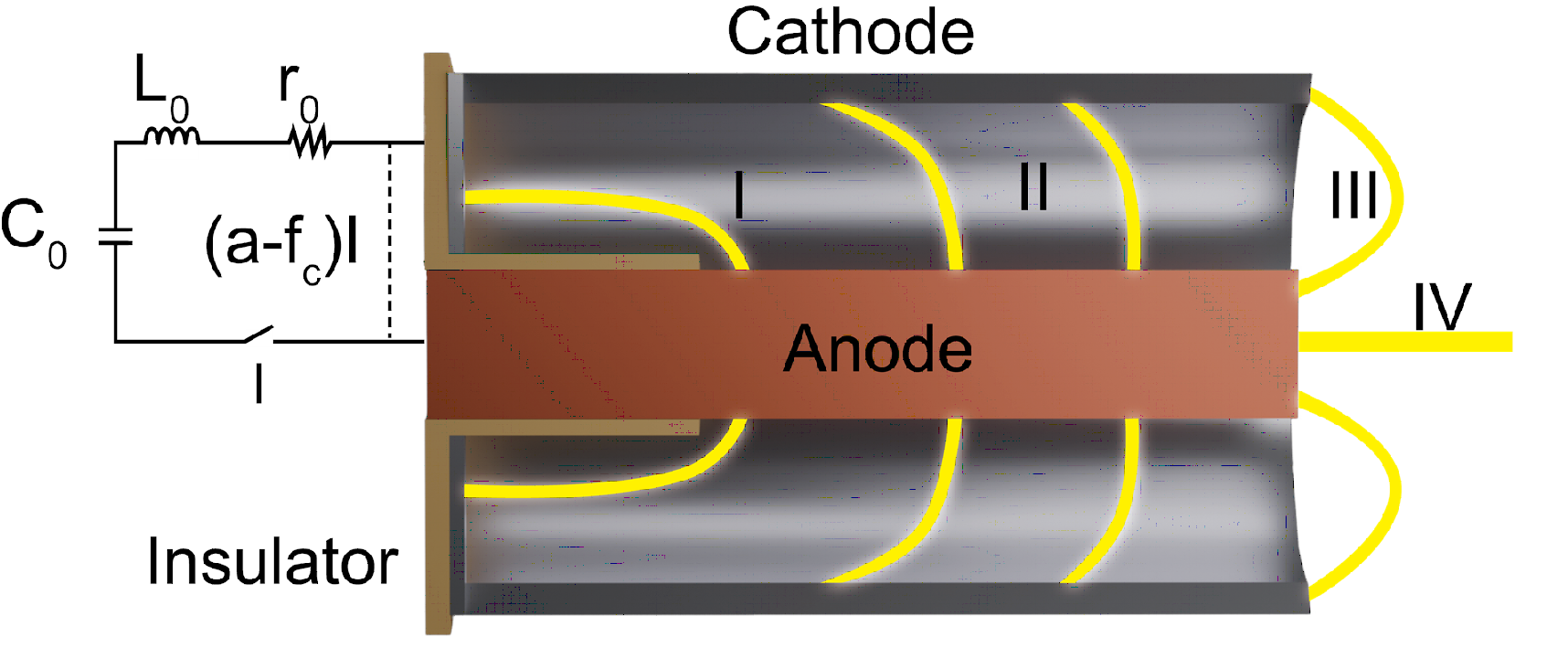
Figure 1: The operational structure of a dense plasma focus device consists of distinct evolution stages, including the flashover stage (I), the rundown stage (II), the run in stage (III), the pinch stage (IV).
The hybrid model follows a quasi-neutral ion PIC / electron-fluid approach, with full solution of Maxwell’s equations. Ions are represented as macroparticles advected using the standard Boris push, enabling kinetic fidelity for non-Maxwellian features and strong field interactions crucial for neutron-producing events. Electrons are a fluid, closing with a generalized Ohm law that incorporates resistive, electron pressure gradient, and Hall terms. The Maxwell system is updated explicitly using an FDTD scheme on a staggered Yee grid for proper representation of field structures. Marder's divergence cleaning and a robust predictor-corrector scheme for current density yield both numerical stability and physical accuracy.
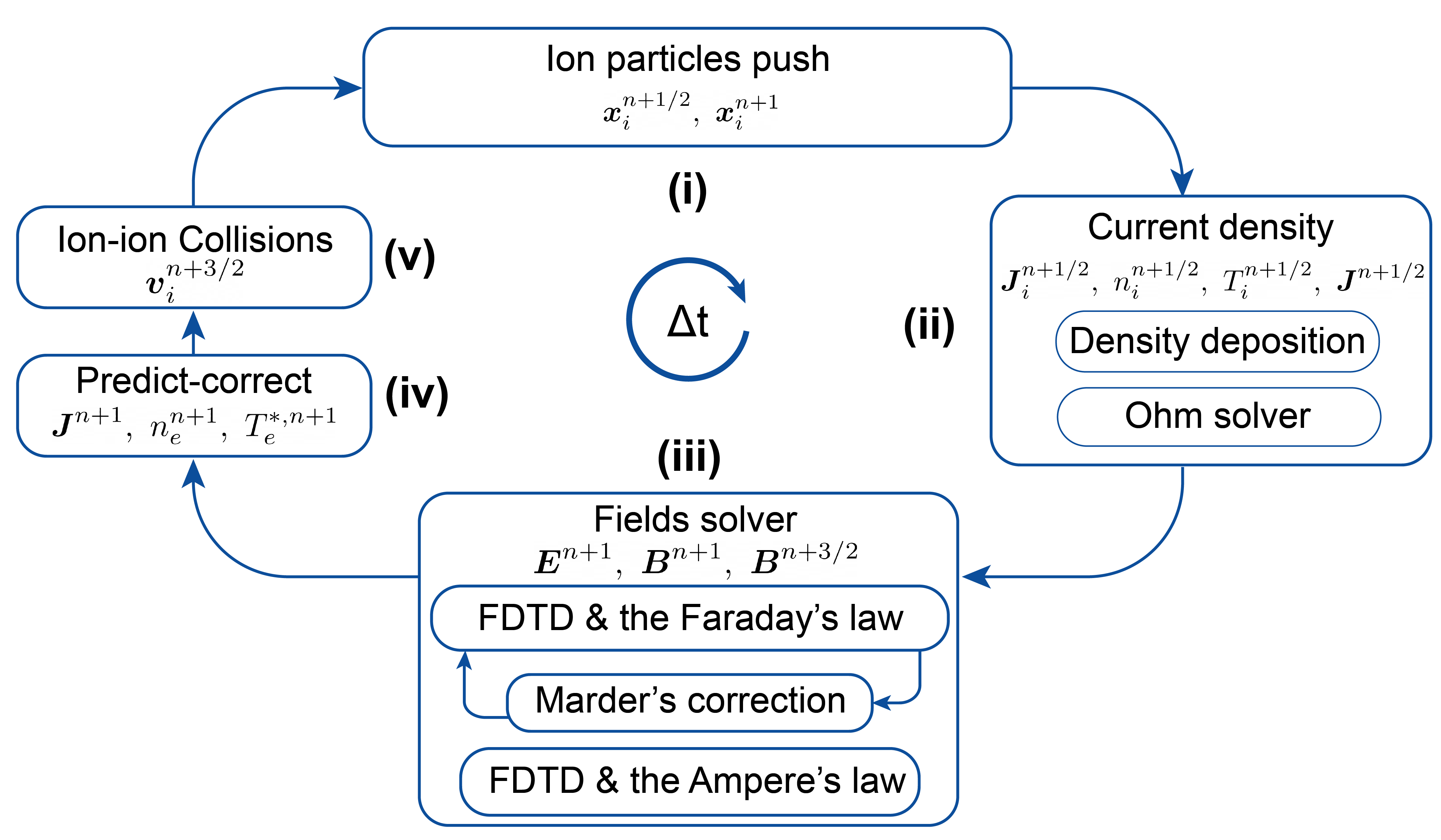
Figure 2: Main time-stepping workflow of the hybrid ion–PIC/electron–fluid electromagnetic solver.
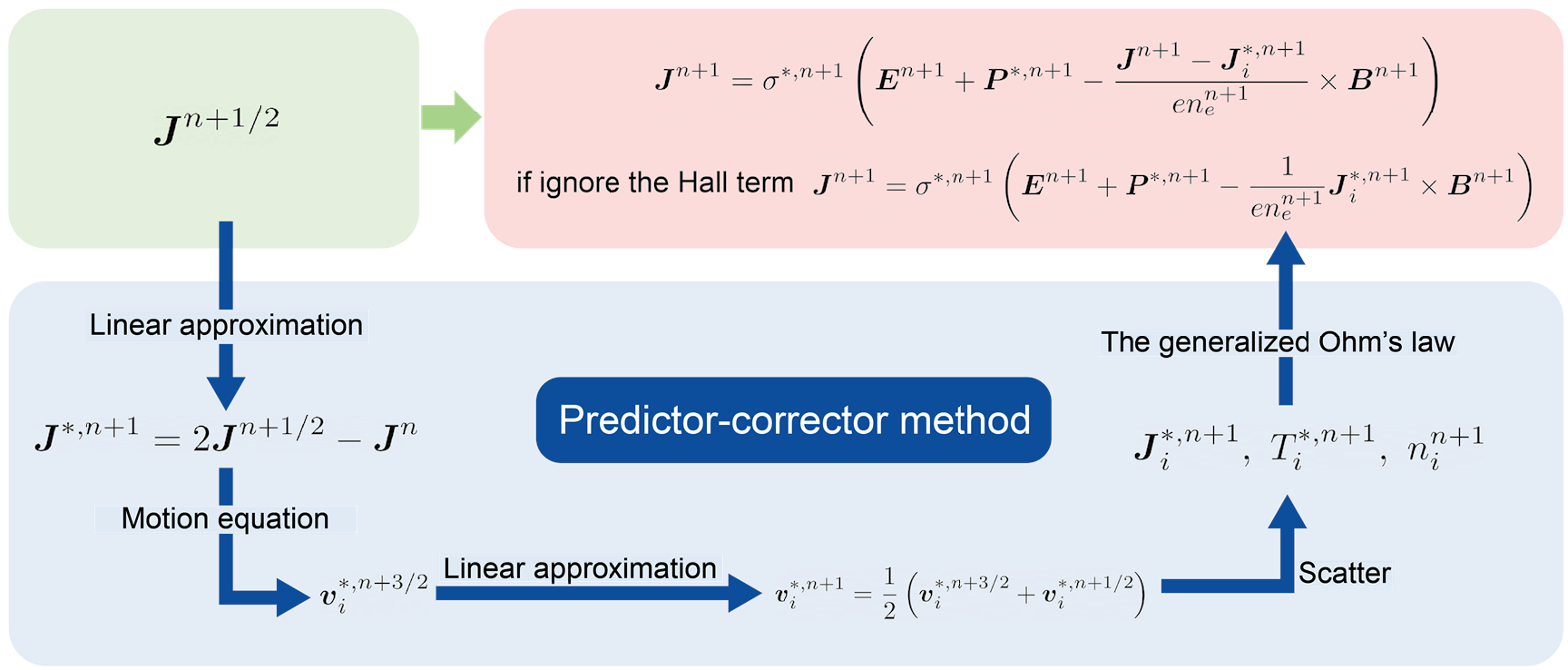
Figure 3: Predictor-corrector scheme for stable, accurate end-of-step current density estimation.
Boundary conditions and absorbing PML layers are deployed to emulate the experimental environment and enable correct propagation of electromagnetic energy out of the computational domain. The model leverages a two-dimensional axisymmetric geometry and is tailored to the LLNL-type DPF configuration with a solid anode.
Simulation Setup and Validation
The simulation grid resolves the sheath (O(1 mm)) and pinch dimensions with sufficient spatial resolution (Δr = Δz = 0.02 cm, 1.5 cm × 10 cm domain). The pre-ionized plasma and sheath regions are initialized via Monte Carlo sampled macroparticle distributions matching experimental profiles. The system includes a lumped element external circuit model, with time-dependent current feeding directly into field boundary conditions.
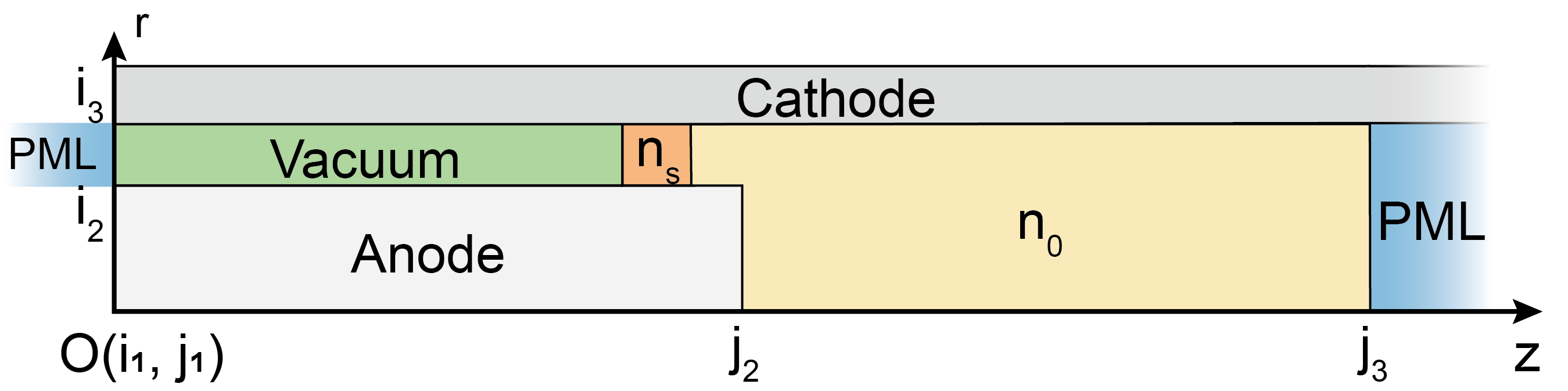
Figure 4: Computational domain and boundary conditions for the LLNL-like DPF geometry.
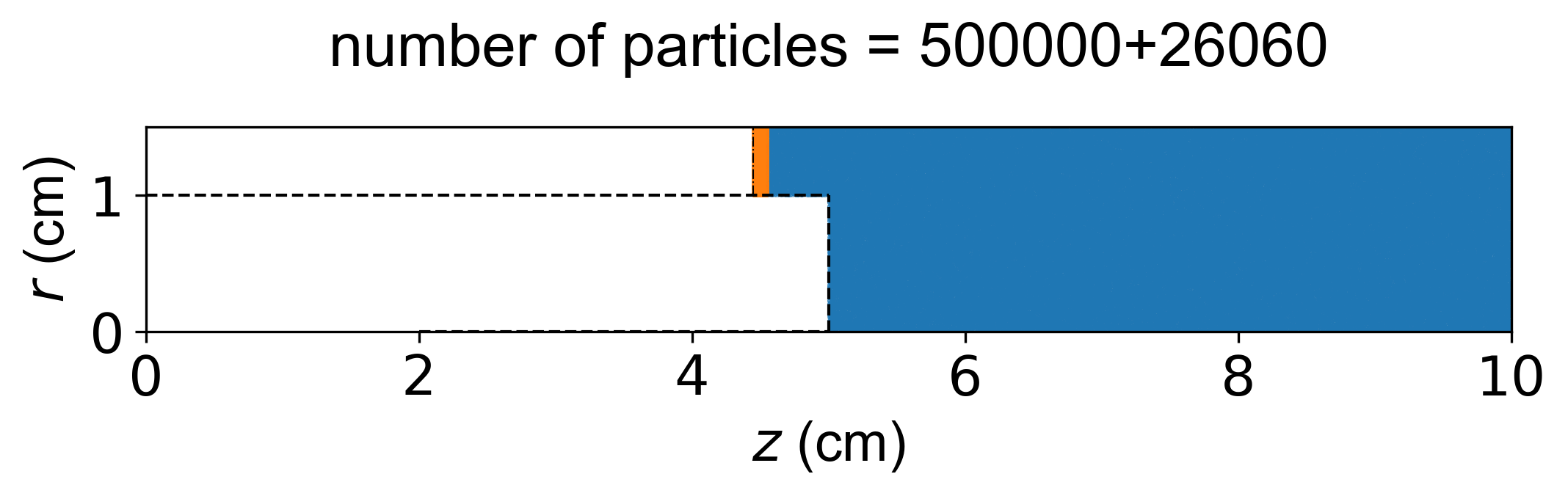
Figure 5: Initial conditions at the end of rundown, showing sheath and upstream plasma configuration.
Explicit description of the E and B fields throughout the vacuum, plasma, and sheath regions ensures physical self-consistency and captures both electromagnetic pulse propagation and plasma compression, which is inadequately treated by models using quasi-static or Darwin approximations.
Discharge Evolution and Physical Observables
The model captures all major DPF phases. The current-carrying sheath propagates axially, bends around the anode tip, and undergoes radial implosion, forming a central high-density, high-temperature pinch.
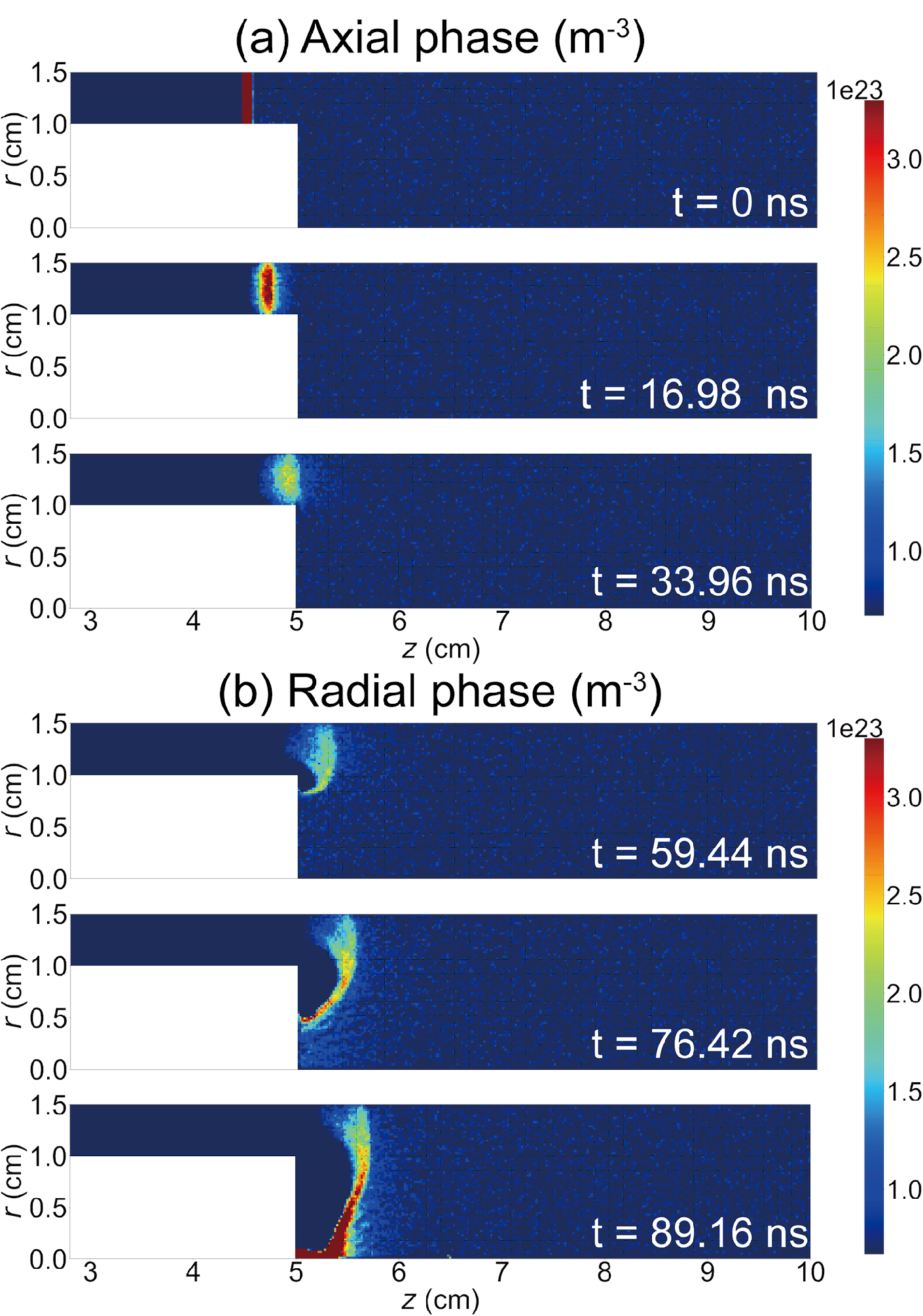
Figure 6: Time evolution of ion number density from the hybrid simulation—axial and radial phases, pinch column formation.
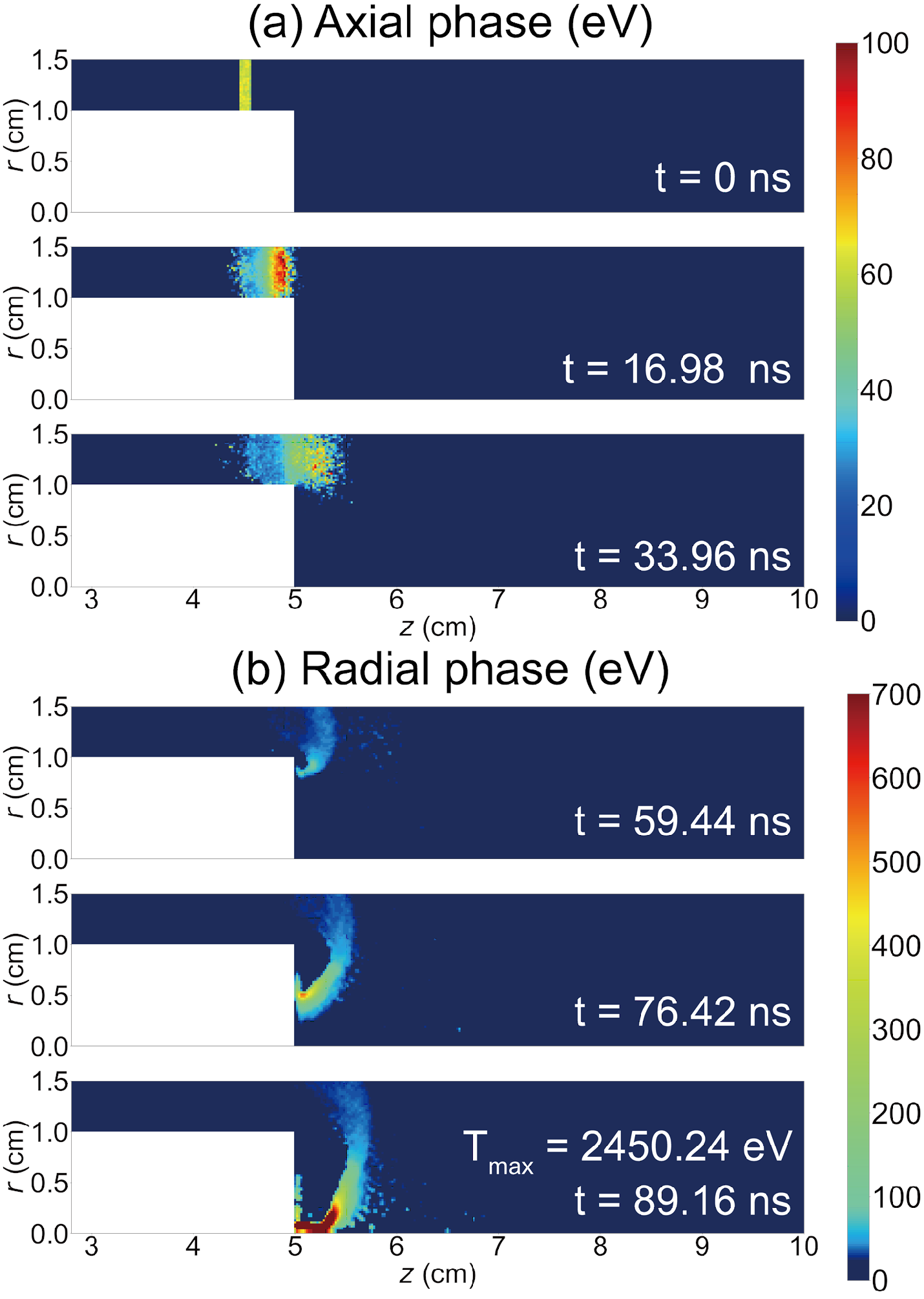
Figure 7: Ion temperature evolution, with sheath-localized heating and a compact central hot spot reaching Tmax≈2.45 keV.
Localization of strong magnetic fields at the plasma boundary and the axis is observed, providing the necessary pinch confinement and energy density for fusion events.
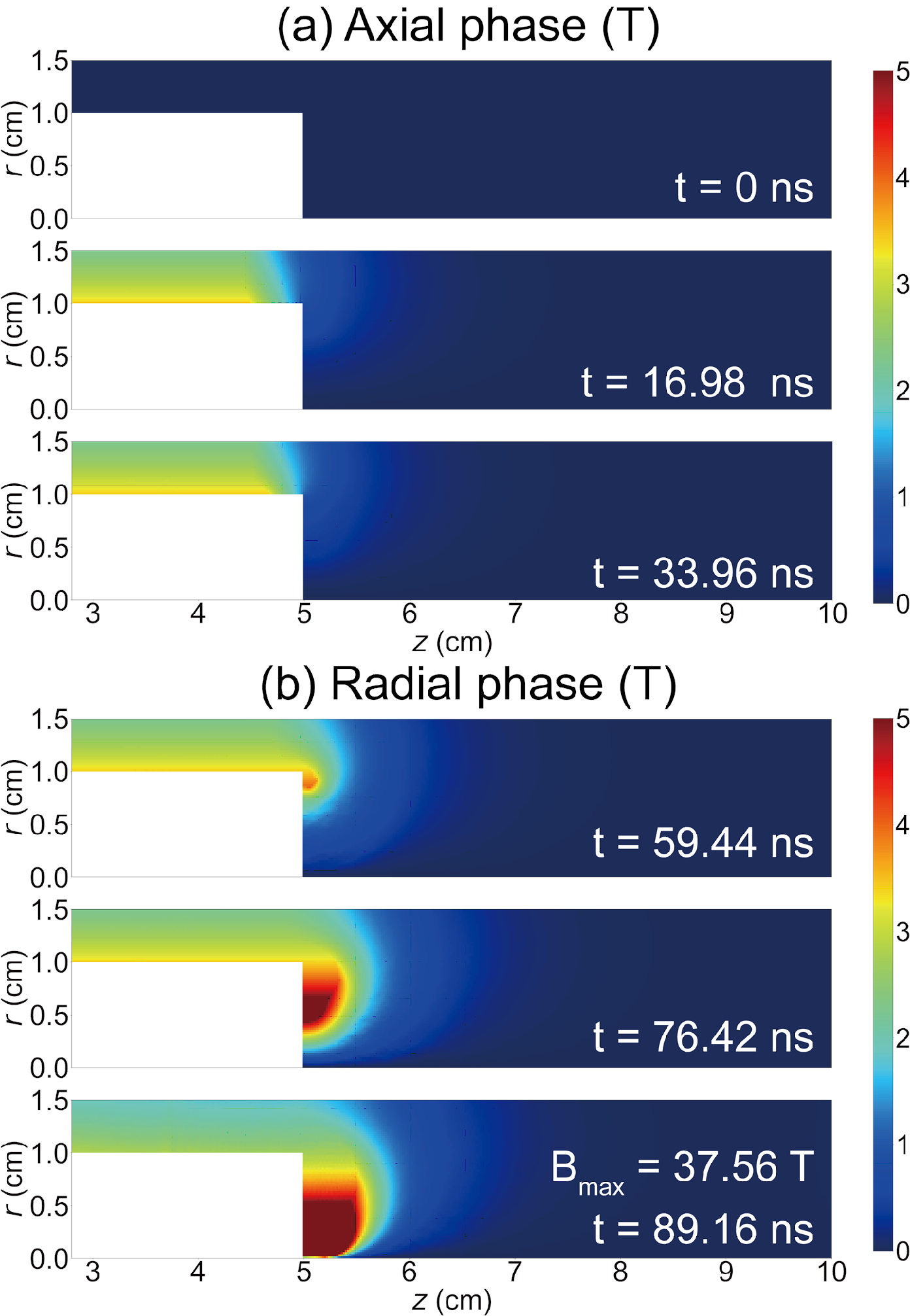
Figure 8: Evolution of the azimuthal magnetic field during axial and radial phases, with peak Bmax≈37.6 T at the pinch.
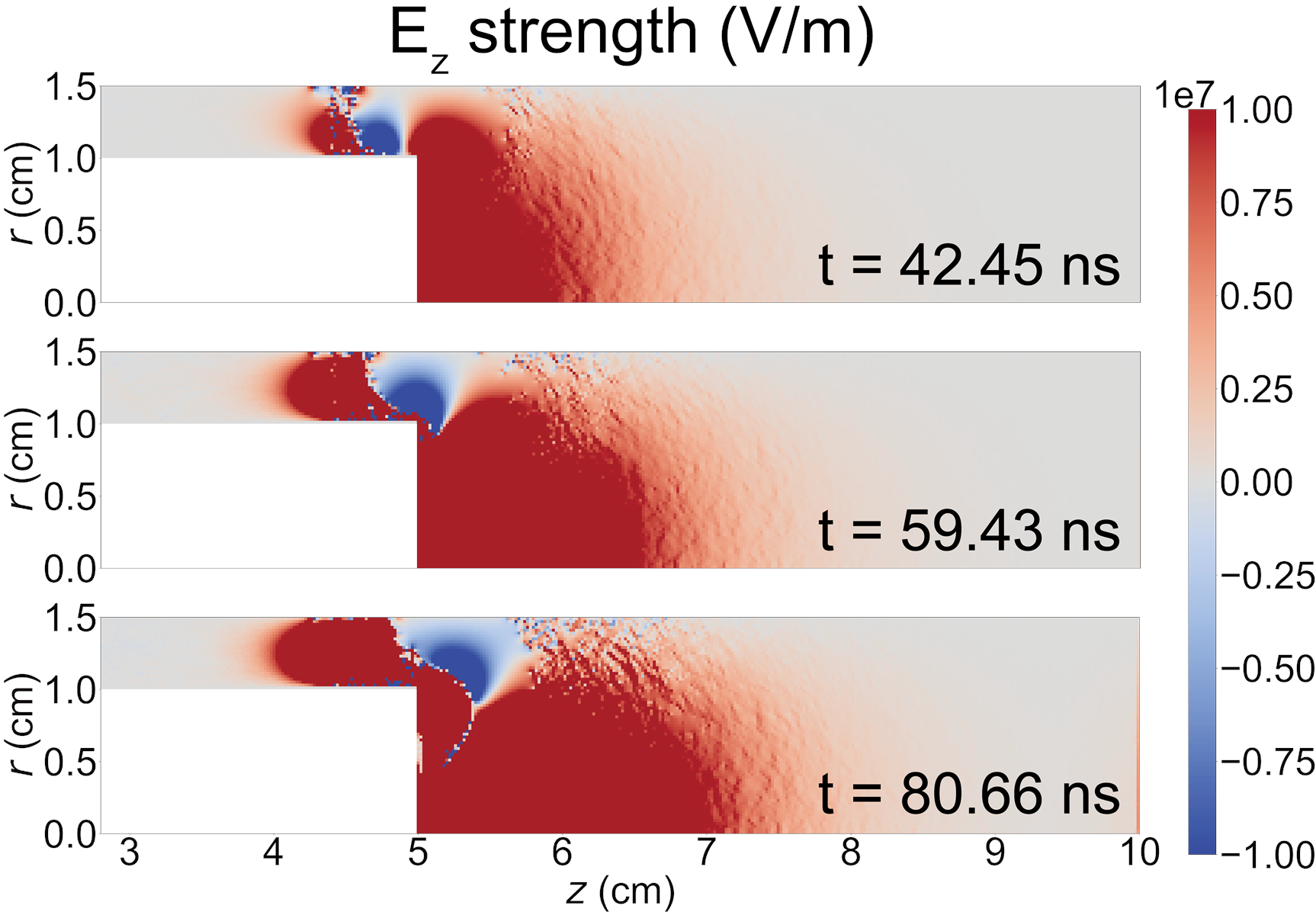
Figure 9: Axial electric field Ez at key moments shows strong bipolar structures and post-pinch acceleration fields.
Comparison to Fully Kinetic and Experimental Benchmarks
The sheath front location, current waveform, and pinch characteristics produced by the hybrid model closely match published fully kinetic LLNL simulations, with sheath arrival times and propagation trajectories within 10% over the main discharge phase.
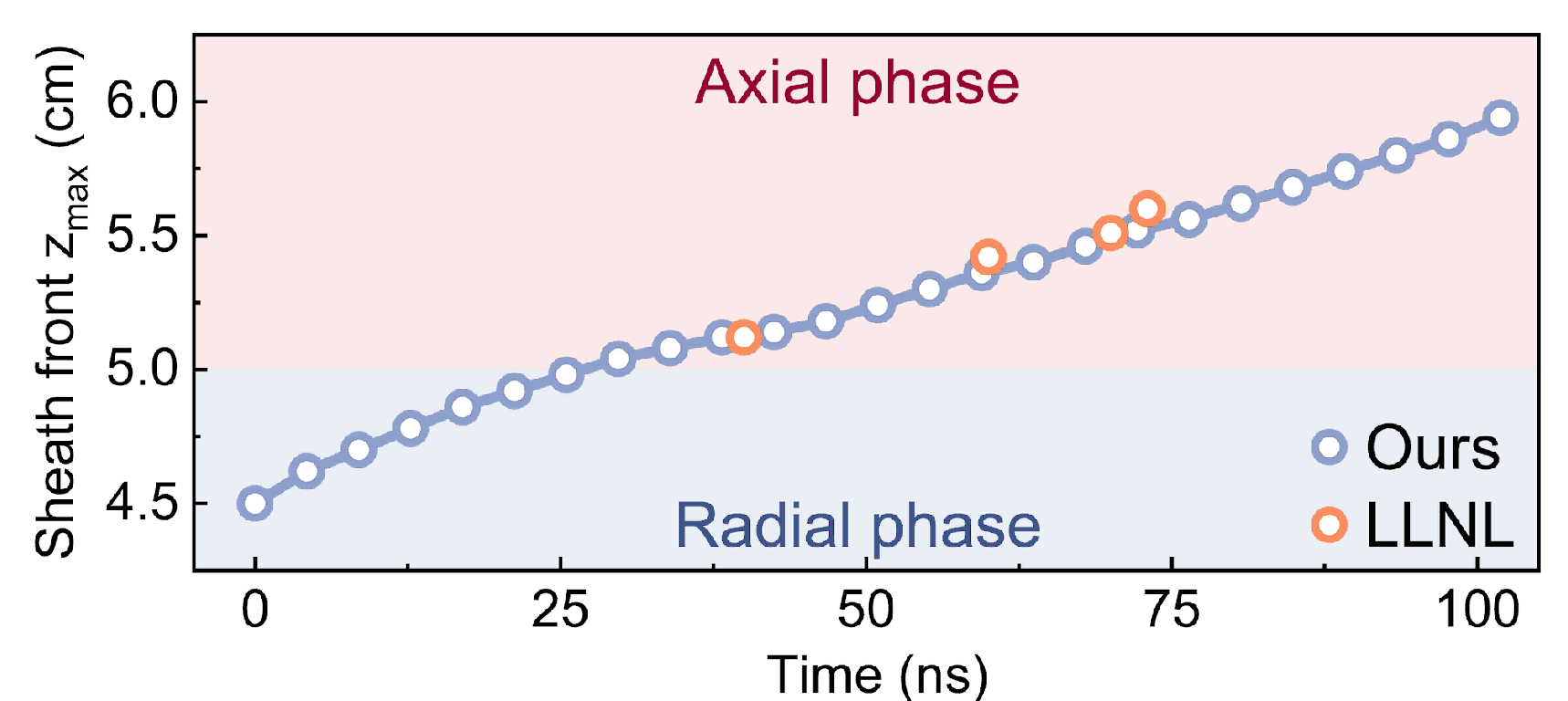
Figure 10: Sheath front position zmax as a function of time—hybrid simulation (blue) vs. LLNL fully kinetic and measured benchmark (orange), demonstrating quantitative agreement.
The discharge current and voltage evolve consistently with DPF operational signatures, further verifying the circuit coupling.
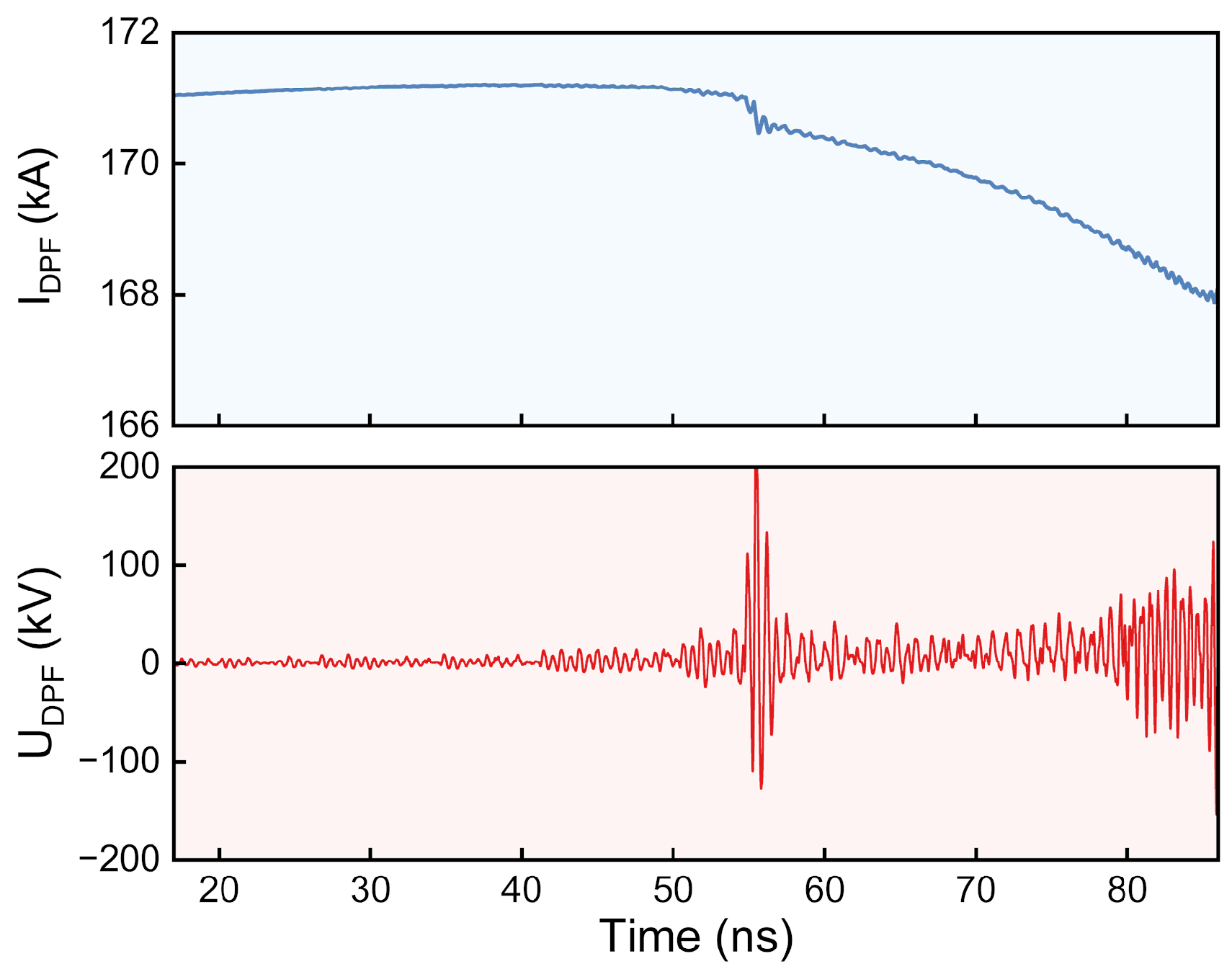
Figure 11: Time evolution of the discharge current IDPF and system voltage UDPF through all major discharge stages.
Crucially, the neutron yield predicted by the hybrid model, 0.296×10⁷ for D-D fusion at 180 kA, is in the same order-of-magnitude as fully kinetic results (LLNL: 0.86×10⁷ for a slightly different geometry), and nearly two orders of magnitude higher than prior hybrid simulations (hybrid: 3.6×10⁴ in [Schmidt et al., 2012]). This demonstrates the hybrid model’s ability to bridge the paradigm gap between fluid/hybrid approaches and fully kinetic solutions for integral fusion observables.
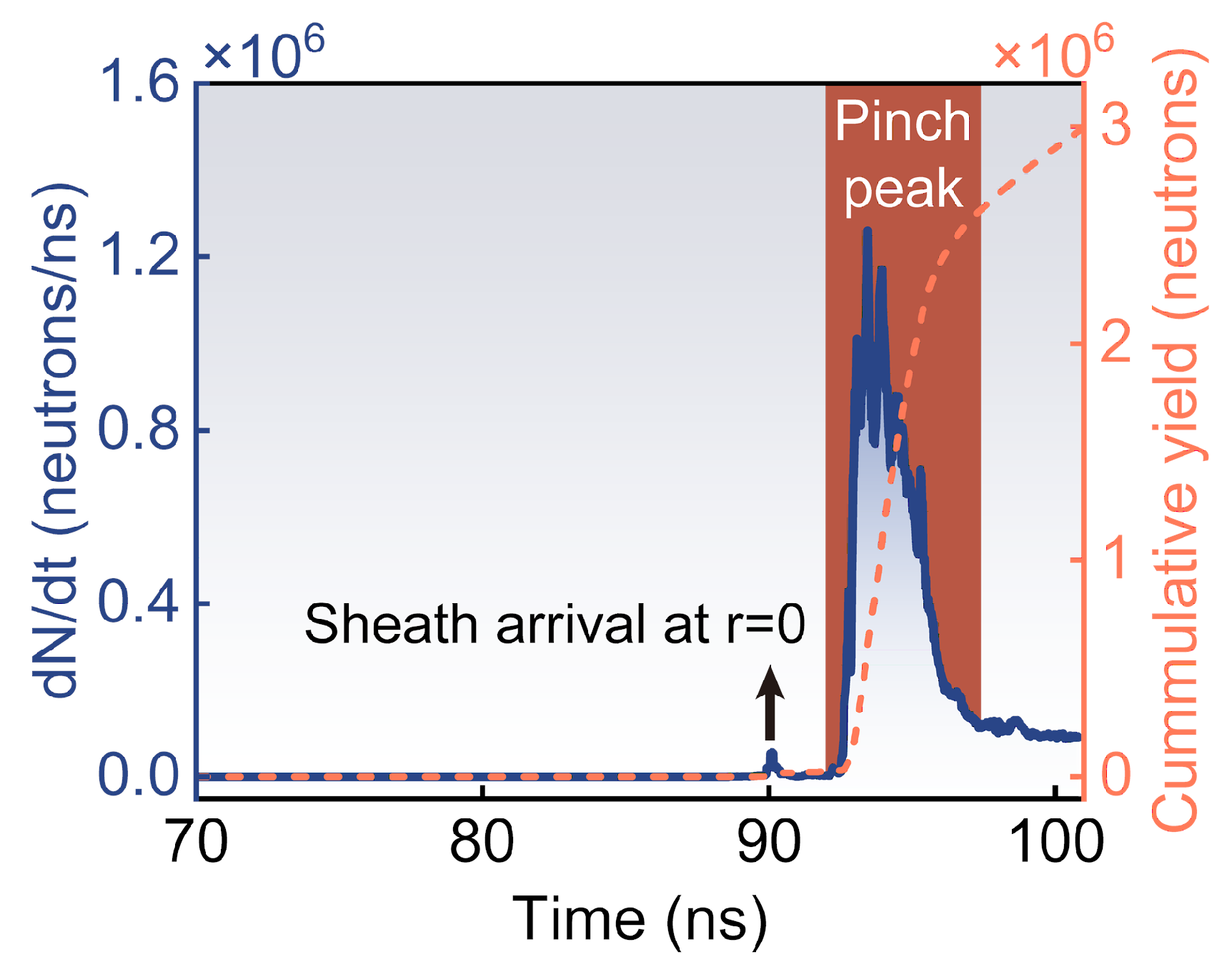
Figure 12: Time evolution of the instantaneous neutron production rate and cumulative yield, highlighting the sharp burst during pinch formation.
Influence of Extended Ohm Terms and Model Robustness
Parametric scans of key numerical (grid, timestep, conductivity limiter, divergence cleaning factor) and closure (electron temperature proportionality) parameters demonstrate that global sheath dynamics and yields are stable (<3% differences). Inclusion of electron pressure gradient and Hall terms, while mainly influencing sheath width and instability, is numerically stable and qualitatively affects pinch timing and structure without shifting global yield predictions outside expected uncertainties.
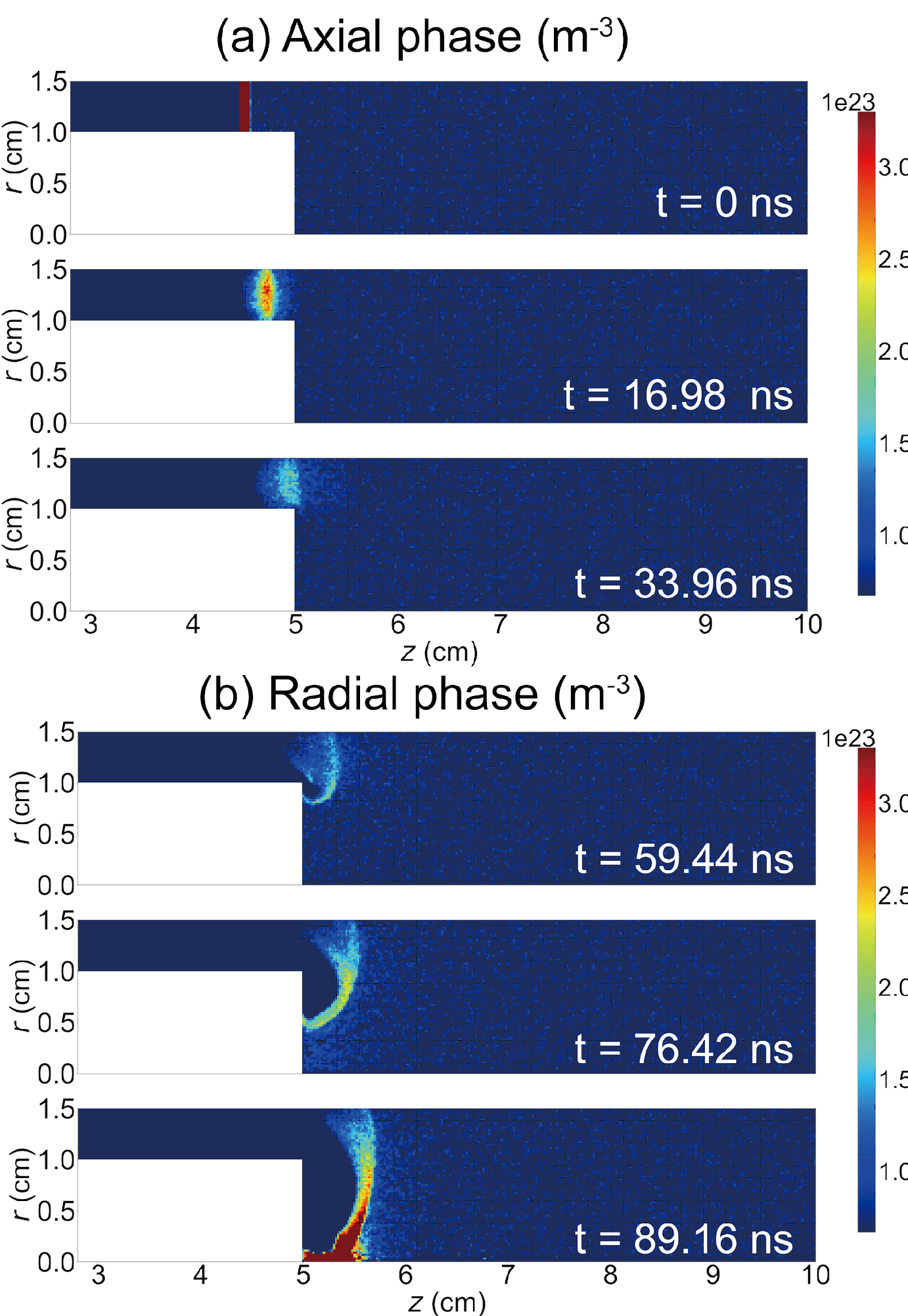
Figure 13: Including the electron-pressure gradient term slightly accelerates sheath propagation and broadens the dense region.
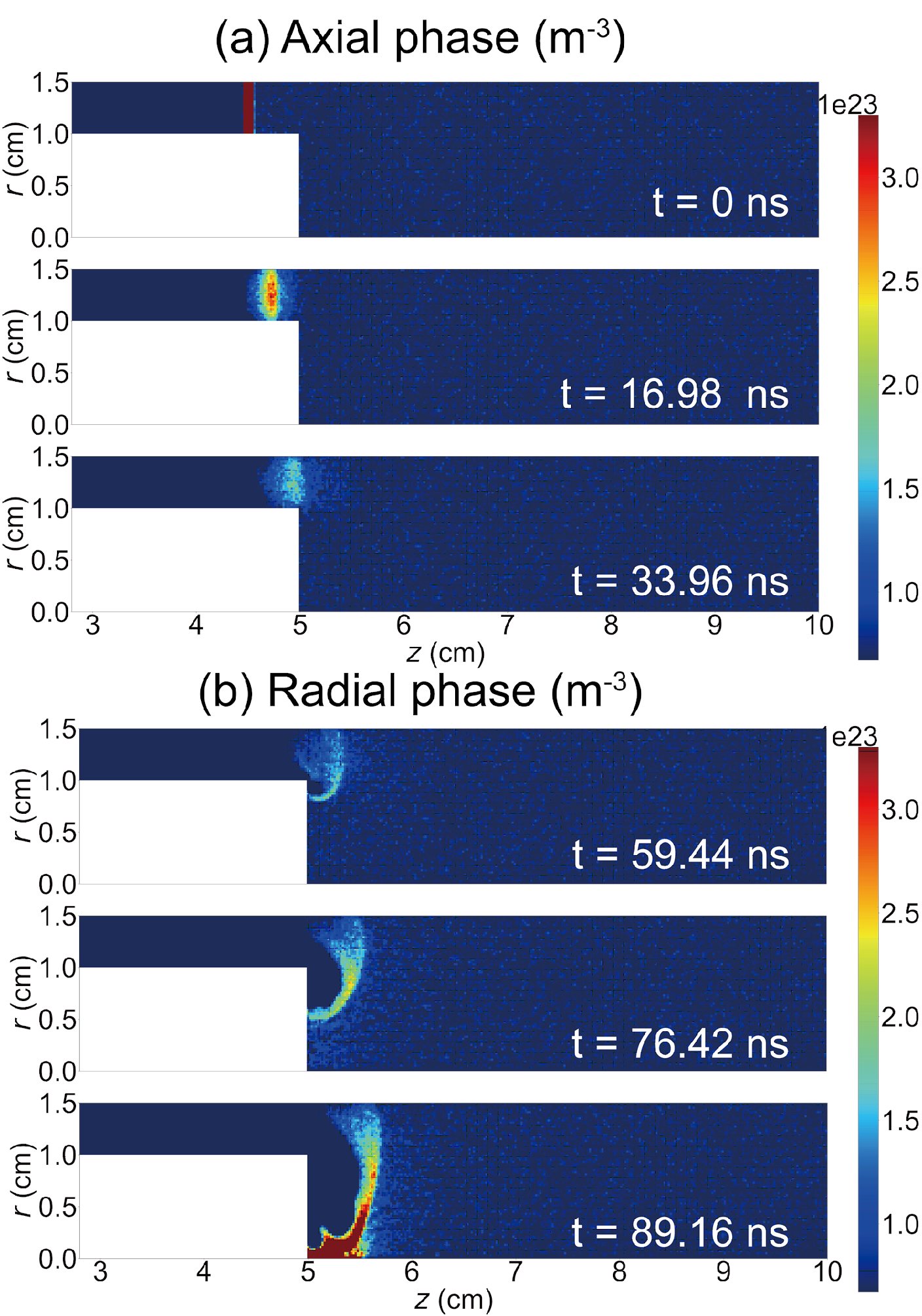
Figure 14: Both electron-pressure gradient and Hall terms enhance early acceleration and small-scale structure/instability.
The results establish that, for macroscopic DPF parameters, uncertainties from hybrid closure are subleading compared to physical model limitations—emphasizing the need for improved electron energy treatment for next-generation predictive modeling.
Computational Cost and Scaling
The hybrid model achieves nearly fully kinetic-level accuracy in neutron yield and sheath dynamics, yet is 5-6 orders of magnitude less expensive than a fully explicit kinetic simulation, with typical runs of 2−3×10⁴ s wall-clock time on modest CPU resources. This enables realistic multi-dimensional parameter exploration, optimization, and scenario planning for experimental DPF campaigns—tasks infeasible with pure PIC codes at relevant densities and sizes.
Limitations and Implications
The axisymmetric quasi-neutral hybrid approach does not resolve Debye-scale sheath phenomena, Bmax≈37.60 and higher azimuthal instabilities, or electron-scale kinetic effects such as pressure anisotropy or non-collisional transport. Extending the model to 3D and integrating a nontrivial electron energy equation will be essential for capturing physics such as rapid pinch decay, asymmetric blowout, and detailed turbulence-driven heating. Nevertheless, for net neutron production and energetics, the present model constitutes a crucial advancement in balancing efficiency and quantitative predictivity.
Conclusion
This work substantiates that a fully electromagnetic, hybrid PIC-fluid framework can quantitatively reproduce DPF discharge evolution and neutron yield at a minor computational fraction of a kinetic solution. The approach enables robust, physically consistent neutron source modeling suitable for optimization and design studies. Its success motivates future development towards 3D geometries, improved electron dynamics, and automated yield optimization—a necessary foundation for high-yield, economically scalable pulsed-fusion sources.
Reference:
"A Fully Electromagnetic Hybrid PIC-Fluid Model for Predictive Fusion Neutron Yield in Dense Plasma Focus," (2604.09032).