Recent development in high-precision high-fidelity spectrographs for exoplanet research and characterization
Abstract: High-precision high-fidelity spectrographs are the most powerful instruments for exoplanets detection and characterization. The sub-m/s radial-velocity precision, required to detect Earth-mass exoplanets, necessitates tackling all the sources of instrumental and stellar instabilities. We present the new high-precision high-fidelity spectrographs ESPRESSO, NIRPS, ANDES and RISTRETTO designed, developed, and operated with support of PlanetS.
- The development of HISPEC for Keck and MODHIS for TMT: science cases and predicted sensitivities (2023)
- EXPRES I. HD~3651 an Ideal RV Benchmark (2020)
- State of the Field: Extreme Precision Radial Velocities (2016)
- ESPRESSO@VLT -- On-sky performance and first results (2020)
- ESPRESSO on VLT: An Instrument for Exoplanet Research (2017)
- Precision velocimetry planet hunting with PARAS: Current performance and lessons to inform future extreme precision radial velocity instruments (2016)
- ESPRESSO: The next European exoplanet hunter (2014)
- Single mode, extreme precision Doppler spectrographs (2012)
- SOPHIE+: First results of an octagonal-section fiber for high-precision radial velocity measurements (2012)
- Higher-precision radial velocity measurements with the SOPHIE spectrograph using octagonal-section fibers (2011)
Summary
- The paper presents novel calibration strategies and sub-m/s radial velocity techniques critical for detecting Earth analogs.
- It details advanced instrument designs for ESPRESSO, NIRPS, ANDES, and RISTRETTO, emphasizing mechanical stability and innovative spectral calibration.
- It demonstrates the integration of hardware advances with data-driven activity mitigation to enable precise exoplanet atmosphere and mass characterization.
High-Precision, High-Fidelity Spectrographs for Exoplanet Research and Characterization
Overview
This paper presents a comprehensive technical review of high-precision, high-fidelity spectrographs developed for exoplanet detection and characterization, focusing on ESPRESSO, NIRPS, ANDES, and RISTRETTO. Emphasis is placed on instrumental design, calibration strategies, and the synergy between hardware advances and astrophysical data analysis. The discussion is framed in the context of the requirements for sub-metre-per-second radial velocity (RV) precision—a prerequisite for detecting Earth analogs and probing exoplanet atmospheres. The systematic approaches to calibration and stellar activity mitigation are detailed, underlining the instrumental and analytical path towards the next generation of exoplanetary science.
Evolution of High-Precision Spectrographs
The radial velocity (RV) technique has underpinned the majority of exoplanet discoveries, especially prior to space-based photometric missions. Achieving RV precision at the ∼10 cm s−1 level, required for terrestrial-mass planet detection, fundamentally depends on the minimization of systematic instrumental drifts and the precise calibration of spectral line positions. The transition from early generation spectrographs (e.g., CORAVEL, HARPS) to current ultra-stable systems constitutes an iterative process of mitigating instrumental and astrophysical noise sources via spectral fidelity, environmental control, innovative illumination schemes, and advanced calibration sources.
ESPRESSO@VLT: Instrumentation and Science
ESPRESSO, installed at the VLT incoherent focus, achieves a spectral resolution up to R>190,000 and is designed for modes spanning bright to very faint targets, with multiplexed operation enabled via both 1-UT and 4-UT configurations. Engineering targets include exceptional thermo-mechanical and illumination stability, yielding a long-term RV stability at the sub-m/s level.
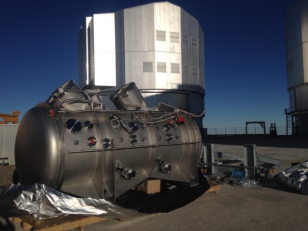
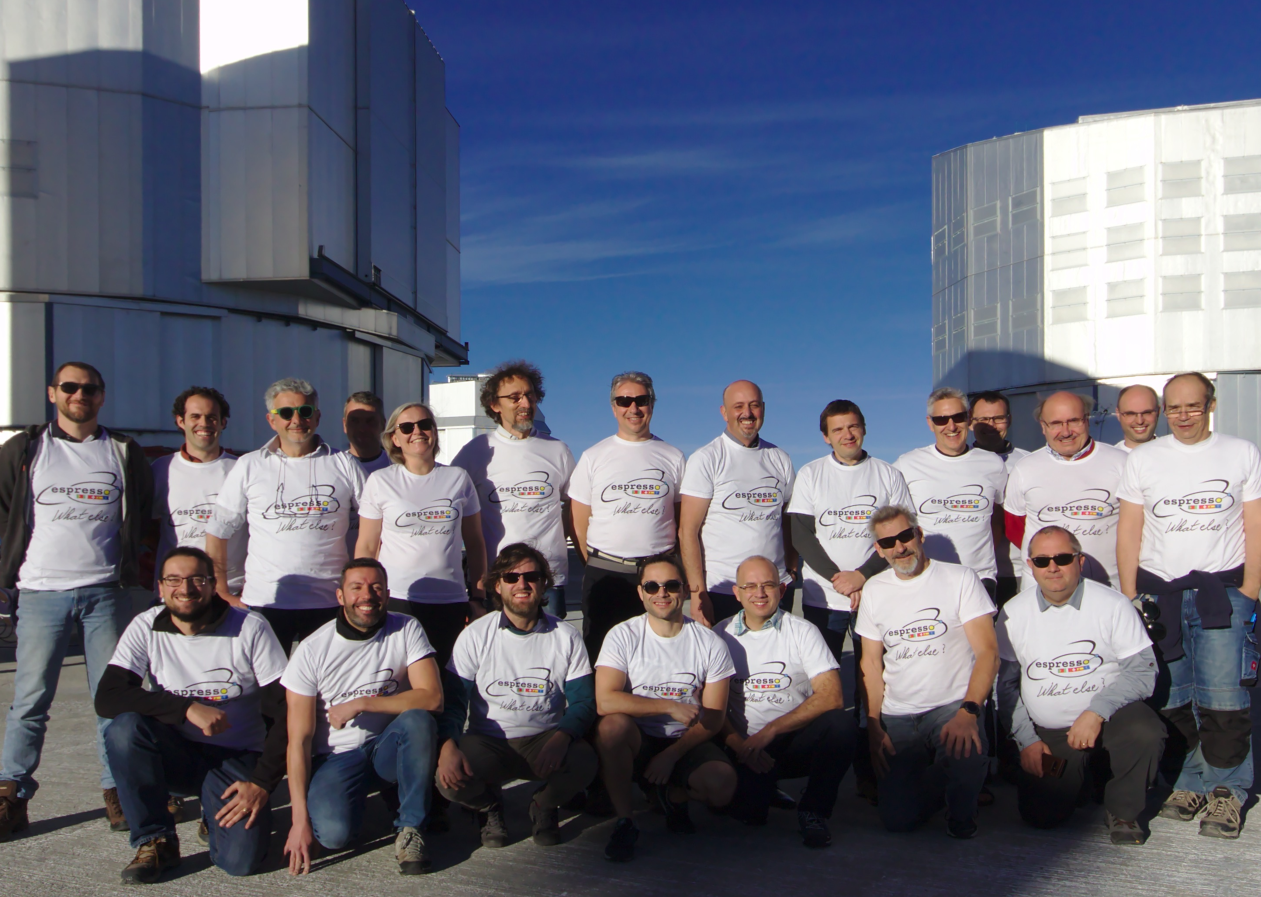
Figure 1: ESPRESSO vacuum chamber deployed in the VLT platform.
The ESPRESSO observing programs have demonstrated:
- Routine RV scatters <1 m s−1 for quiet targets without post-processing, exemplified by sub-meter-per-second residuals after planet and activity signal subtraction.
- Robust characterization of small exoplanet masses with coupled photometric data, refining the radius-mass relation and constraining compositional models.
- Transmission spectroscopy yielding the detection of atomic and molecular species (e.g., Fe, Ba, Co, Sr) in exoplanet atmospheres, sensitivity to atmospheric winds, and constraints on chemical heterogeneity.
- High-precision follow-up of transiting planet discoveries from K2 and TESS, enabling mass measurement in the critical regime demarcating rocky and volatile-rich worlds.
NIRPS: Near-Infrared Precision for M Dwarfs
NIRPS, deployed on the ESO 3.6-m telescope, extends RV precision into the near-IR, a domain critical for low-mass M stars. Its architecture combines adaptive optics (AO) for sub-arcsecond input, a fiber-injected cryogenic echelle spectrograph operating at R=75,000–$90,000$, and dual-sized fiber feeds. Modal noise mitigation is achieved by dynamic AO scanning and fiber agitation, enabling photon-noise-limited performance down to <1 m s−1.
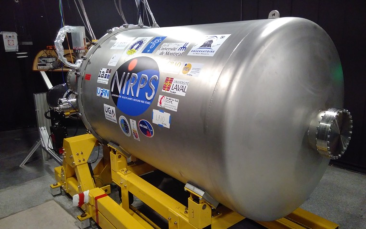
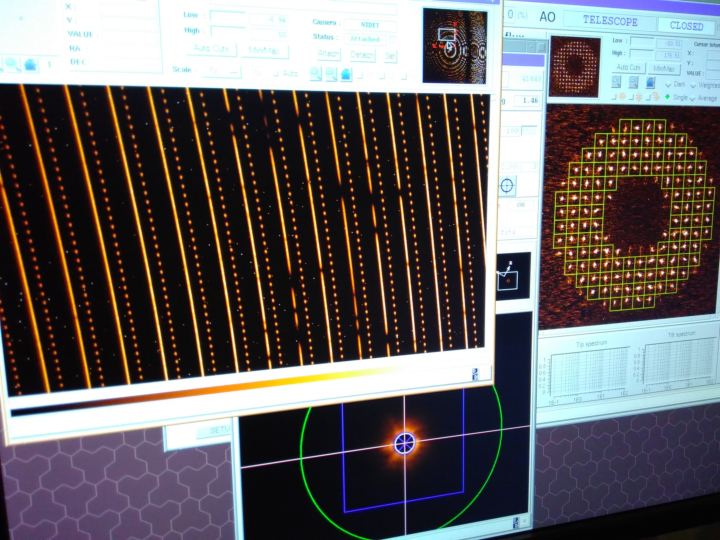
Figure 2: NIRPS spectrograph vacuum vessel and first light acquisition showing raw spectra and AO subsystem.
NIRPS delivers:
- Consistent sub-m/s RV precision demonstrated on M-dwarf standards and planetary hosts.
- RV residuals of $0.8$ m s−10 for Proxima Centauri, supporting planet confirmation and the push towards detecting Mars-mass planets.
- Enhanced efficiency in the H band, outperforming predecessor spectrographs, verified by smaller RV uncertainties and lower residuals in MARVELS such as TOI-406.
- Demonstrated atmospheric characterization capability, with the detection of key tracers such as the He triplet and variable components from mass loss.
Integration with HARPS via a dichroic splitter provides the unique capability for simultaneous optical-NIR coverage (378–1920 nm, with a gap), improving RV information content and enabling chromatic disentangling of stellar activity.
ANDES@ELT: The Next Generation
ANDES, the high-dispersion spectrograph for the ELT, is positioned to leverage the unprecedented collecting area and angular resolution of the 39-m primary. Its fiber-fed, multi-arm design will span 0.4–1.8 −11m at −12, with provisions for extension to 0.35–2.4 −13m. The RIZ arm, led by the University of Geneva, employs a slit reformatting strategy for large étendue and advanced thermal/vacuum control for −14 cm s−15 stability.
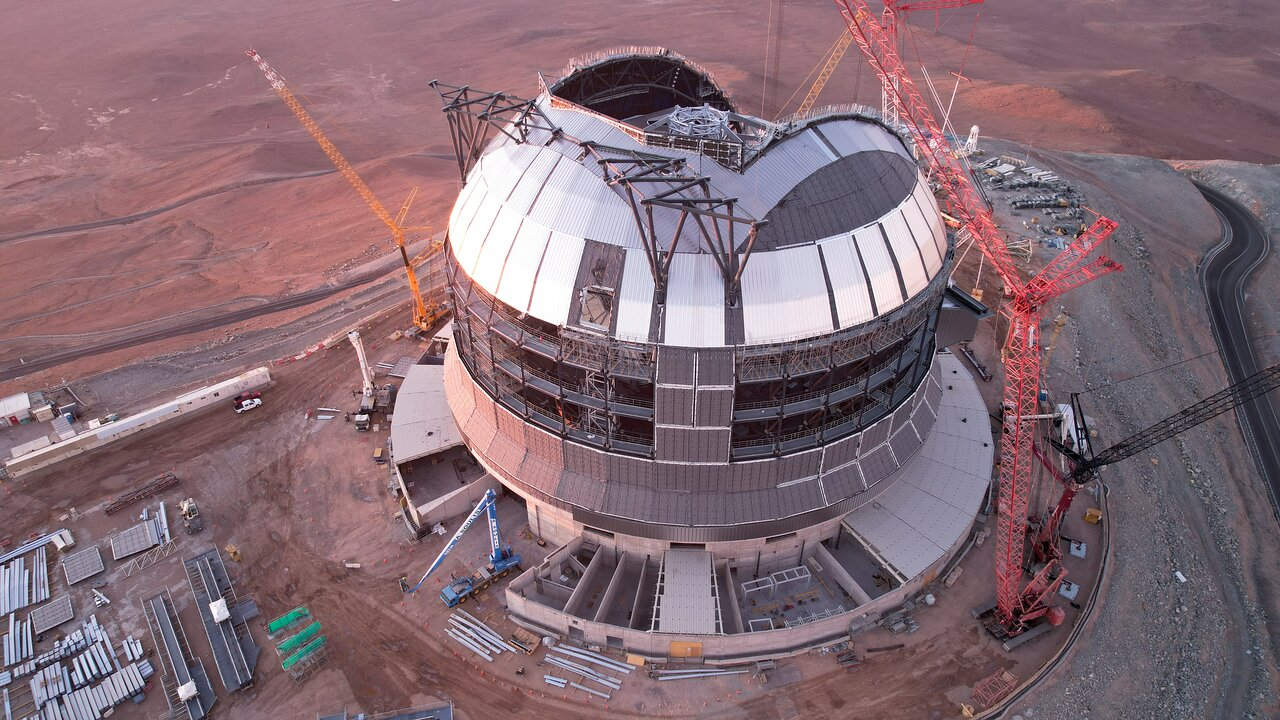
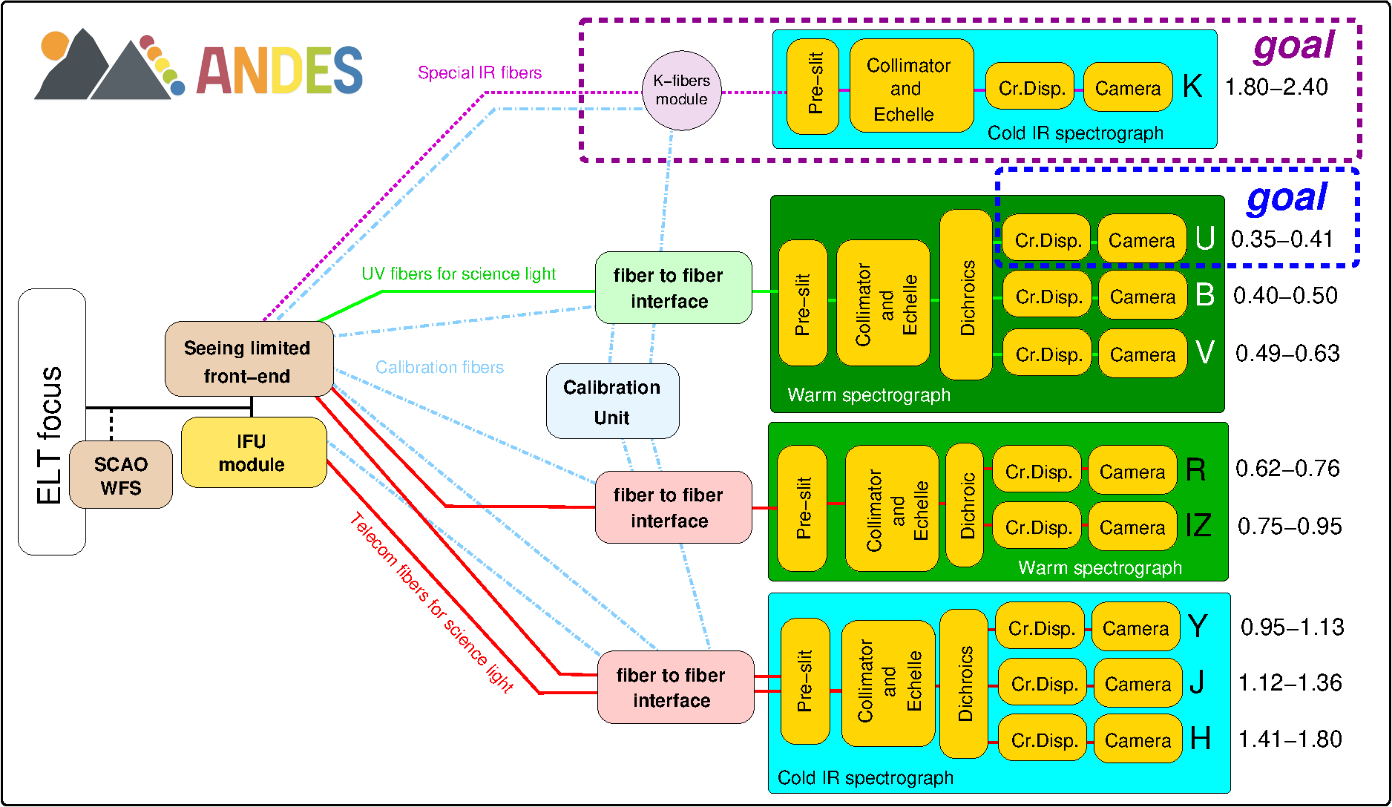
Figure 3: ELT under construction and ANDES instrument architecture.
Key science priorities for ANDES:
- Priority 1: High-fidelity transmission spectroscopy of exoplanet atmospheres, specifically targeting habitable-zone rocky planets.
- Priority 2: Search for variations of fundamental constants via high-redshift spectral diagnostics.
- Priority 3: Reflected light spectroscopy for non-transiting planets, exploiting ELT's diffraction limit and AO-fed input.
- Priority 4: Direct measurement of the cosmological redshift drift (the Sandage test).
ELT+ANDES will directly address the detection of atmospheric biosignature molecules (H−16O, O−17, CH−18) in terrestrial exoplanets with multi-night integrations, as well as facilitate exoplanet surface and climate studies through reflected light observations.
RISTRETTO: Diffraction-Limited Spectroscopy
RISTRETTO is an experiment for VLT that integrates an extreme AO (XAO) module, a coronagraphic integral-field unit at the diffraction limit (37 mas at visible wavelengths), and a high-resolution (R=140,000) visible spectrograph (620–840 nm). Its baseline science driver is the reflected-light detection and characterization of Proxima b, extending to a sample of resolved giant and sub-Neptune planets.
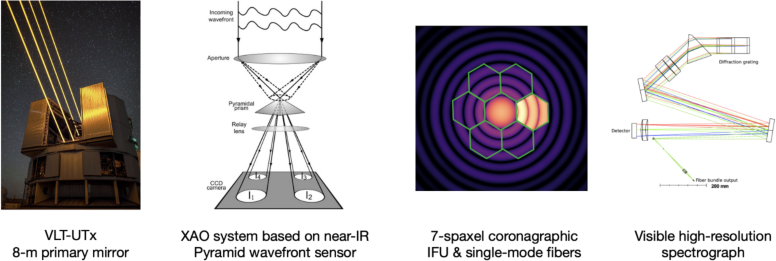
Figure 4: RISTRETTO instrument schematic, detailing the XAO, coronagraph, and spectrograph integration.
The concept demonstrates that, for favorable targets, direct spectroscopy of planetary reflected light is feasible with existing 8-m-class facilities, providing direct albedo constraints, orbital phase curves, Doppler mapping, and spectral retrievals for planetary atmospheres. RISTRETTO's architecture serves as a prototype for future ELT instrumentation.
Additional RISTRETTO science extends to protoplanet accretion studies (H−19), resolved disk kinematics, spatially-resolved stellar photospheres, and Solar System body surface/atmosphere characterization at unprecedented spatial and spectral resolution.
Wavelength Calibration: Challenges and Solutions
The requirement for sub-m/s RV stability necessitates innovative and robust calibration strategies. The standard approach fuses hollow-cathode lamps (e.g., ThAr, UNe) for absolute reference with Fabry-Pérot (FP) etalons for calibration microstructure and drift tracking. The discovery of intrinsic FP chromatic drifts, if uncorrected, can bias RVs at the R>190,000010s of cm sR>190,0001 level over multi-year baselines. This is mitigated by daily re-calibration and in-depth modeling.
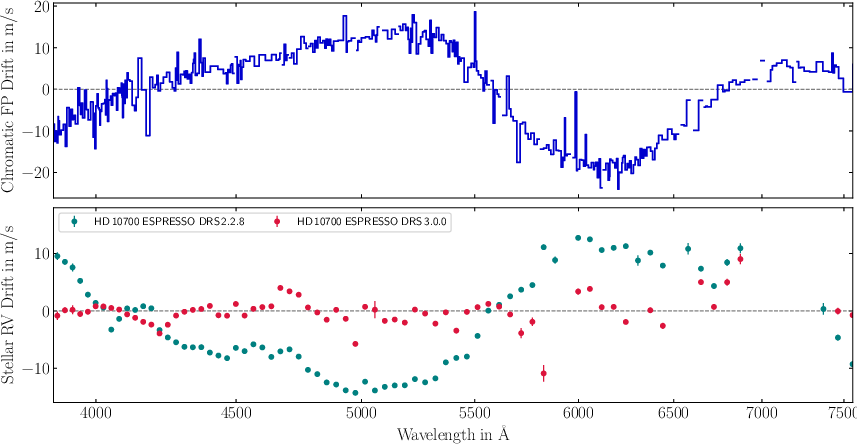
Figure 5: Measured chromatic drift of the ESPRESSO FP etalon and the corresponding impact on inferred stellar RVs prior to improved recalibration.
Laser frequency combs (LFCs), offering mode-locked, equally spaced lines with radio-frequency stability, have begun to supplant traditional lamps, though practical issues around mode filtering and nonlinear broadening persist. LFC/ThAr/FP comparison reveals that proper modeling of the instrumental LSF is mandatory; naive LSF assumptions induce intra-order RV discrepancies up to 30–40 m sR>190,0002. Forward-modeling using non-parametric LSFs, as enabled by dense LFC data, reduces such inconsistencies to a few m sR>190,0003.
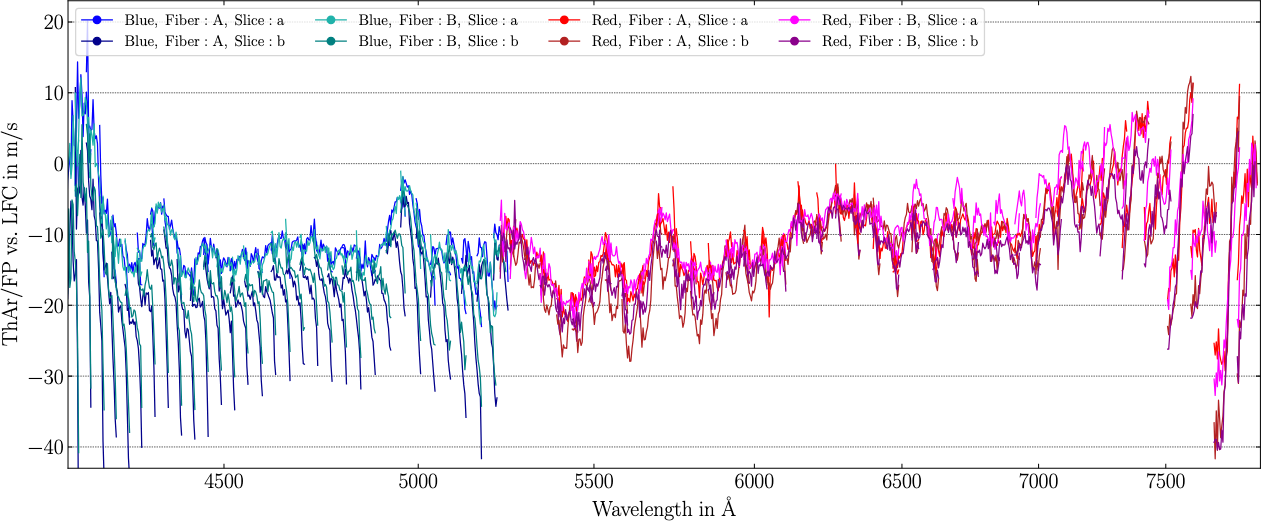
Figure 6: Comparison of ESPRESSO wavelength solution discrepancies between ThAr/FP and LFC calibrators, highlighting the importance of LSF modeling.
Alternate calibration concepts, such as distributing a satellite-based frequency comb (the R>190,0004ANCESTOR proposal), could in principle enable global metrology standardization.
Stellar Activity Mitigation: Continuous Disk-Integrated Solar Observations
Stellar photospheric and magnetic activity signals persist as a dominant noise source for EPRV science. The synthesis of quasi-continuous solar disk-integrated spectra with instruments such as the HARPS-N Solar Telescope establishes gold-standard benchmarks for both data-driven and training-intensive (e.g., neural network) mitigation strategies. The near-continuous solar time series, now at 10-year baselines, has driven the development and testing of advanced correction frameworks, including SCALPEL and YARARA, demonstrated the planetary detectability threshold at the R>190,000520 cm sR>190,0006 level, and revealed instrumental systematics on intra- and inter-night timescales.
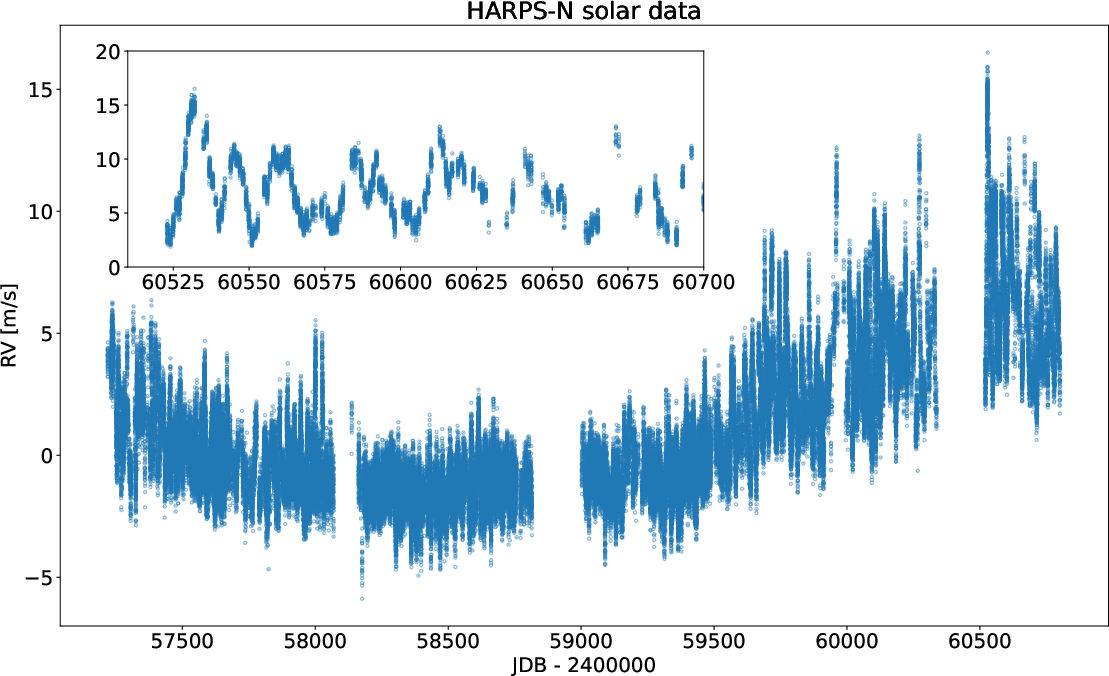
Figure 7: Ten-year baseline of HARPS-N solar RVs, illustrating the modulation by the solar magnetic cycle.
The wide deployment of solar feeds across new spectrographs underlines the community recognition of their essential role in instrument characterization and activity modeling.
Conclusion
The reviewed suite of high-precision spectrographs—ESPRESSO, NIRPS, ANDES, and RISTRETTO—establish the technical roadmap for detecting and characterizing terrestrial exoplanets via both RVs and direct spectroscopy. The discussed hardware advances are directly coupled to progress in calibration procedures, data reduction pipelines, and activity mitigation, facilitating the transition towards systematic atmospheric studies and the search for habitability signatures. Future exoplanet science, especially in synergy with missions like PLATO, will rely critically on these spectrographs for reliable mass determination, compositional inference, and biosignature detection. The spectrum of challenges in stability, calibration, and stellar variability remains, but the outlined approaches and prototype efforts provide robust paths forward for high-fidelity exoplanet characterization.
Paper to Video (Beta)
No one has generated a video about this paper yet.
Whiteboard
No one has generated a whiteboard explanation for this paper yet.
Paper Prompts
Sign up for free to create and run prompts on this paper.
Top Community Prompts
Open Problems
We haven't generated a list of open problems mentioned in this paper yet.
Continue Learning
- How do the calibration methodologies in ESPRESSO and NIRPS differ in achieving sub-m/s precision?
- What are the key challenges in minimizing instrumental drifts in high-fidelity spectrographs?
- How does stellar activity mitigation improve the reliability of radial velocity measurements?
- What impact does adaptive optics integration have on near-infrared spectrograph performance?
- Find recent papers about exoplanet spectrograph calibration.