- The paper presents a comprehensive empirical comparison using a dataset of over 2.8 million repositories to contrast OSS and open source AI paradigms.
- It identifies significant differences in collaboration intensity, openness, and user innovation, with OSS showing broader, decentralized engagement.
- The study highlights socio-technical factors, including infrastructural barriers and corporate strategies, that shape the divergent development models.
Divergence in Collaborative Development: From OSS to Open Source AI
Introduction
The proliferation of open-source development has historically centered on code artifacts, making traditional Open Source Software (OSS) a reference point for collaborative engineering. The emergent paradigm of Open Source AI Models (OSM) introduces distinct collaborative dynamics, owing to fundamental differences between code-centric and model-centric artifacts. This paper provides an extensive mixed-methods empirical study quantifying and characterizing the divergences between OSS and OSM paradigms, drawing from a combined dataset exceeding 2.8 million repositories and triangulating quantitative findings with semi-structured expert interviews. The analysis targets three principal dimensions of collaborative practice: collaboration intensity, openness, and user innovation, and identifies salient socio-technical factors underlying observed divergences.
Methodology Overview
A stratified sample of 1,428,792 OSS repositories from GitHub and 1,440,527 OSM repositories from Hugging Face (HF) Hub anchors the quantitative study. After extensive preprocessing—including bot account exclusion and sample balancing—the authors conduct statistical measurements, social network analysis, and large-scale thematic content analysis of repository communications, leveraging LLM-assisted annotation with human-in-the-loop validation. The primary pipeline architectures of OSS and OSM are also modeled and validated through community surveys.
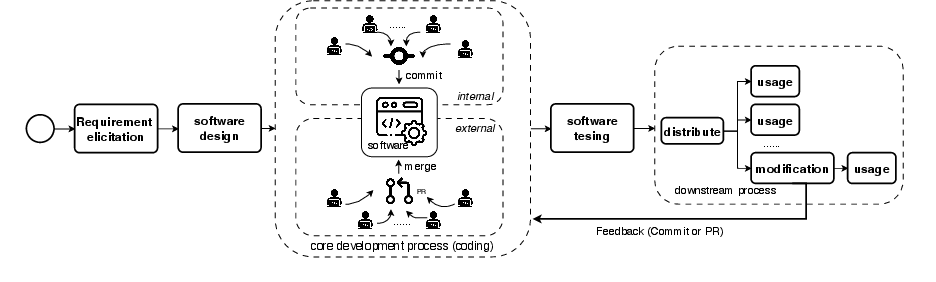
Figure 1: The classical OSS development pipeline emphasizes modular, iterative upstream and downstream collaboration.
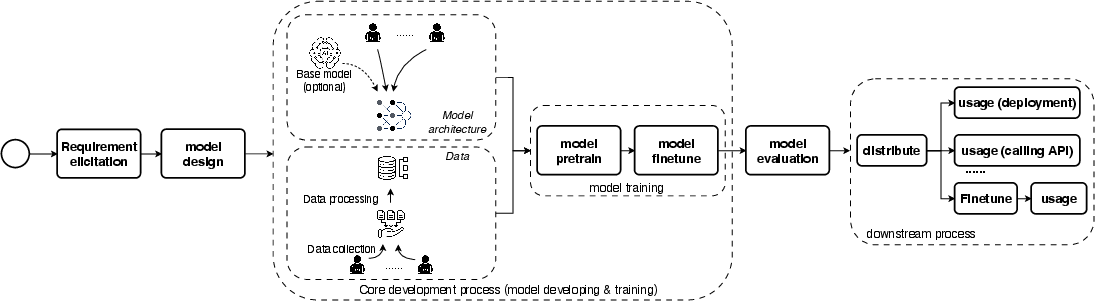
Figure 2: The OSM development pipeline foregrounds model-specific data, training, and downstream fine-tuning, eschewing the cyclical OSS upstream-downstream merge cycle.
Quantitative analyses are complemented by interviews with ten dual-domain experts from both industry and academia to contextualize observed distinctions and probe for causative socio-technical factors.
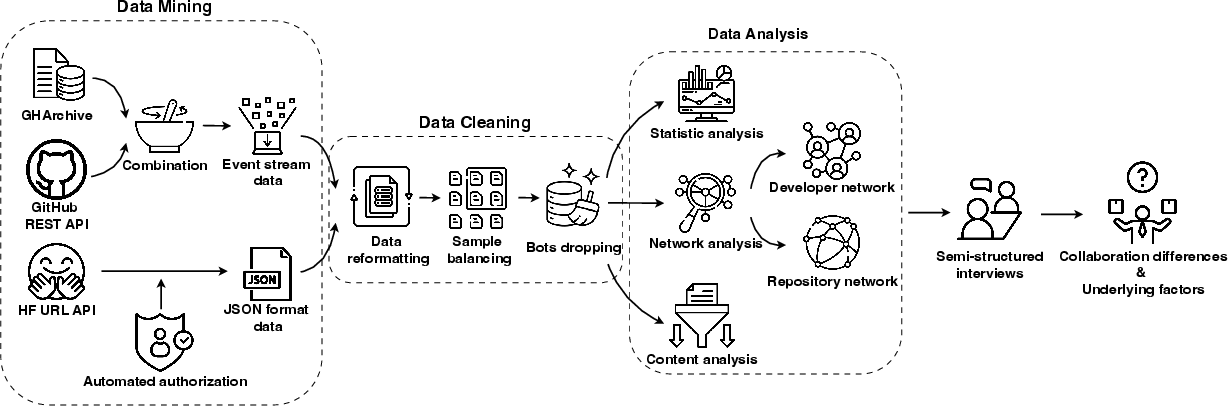
Figure 3: The overall study methodology integrates large-scale data mining and multi-level empirical analysis with expert interview triangulation.
Collaboration Intensity
The empirical analysis reveals a stark contrast in collaboration intensity measures between OSS and OSM. OSS repositories exhibit orders-of-magnitude higher medians and distributions for direct contributions (commits), knowledge exchange (issues/discussions), and preference signaling (stars/likes), a result robust across multiple statistical methods (e.g., Mann-Whitney U, p<0.001).
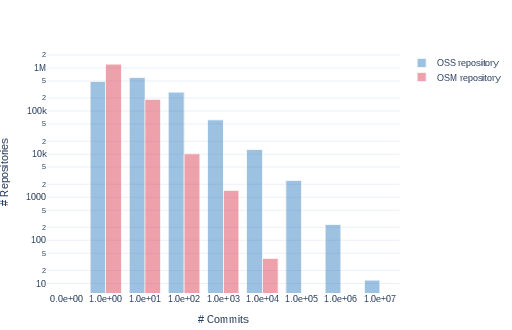
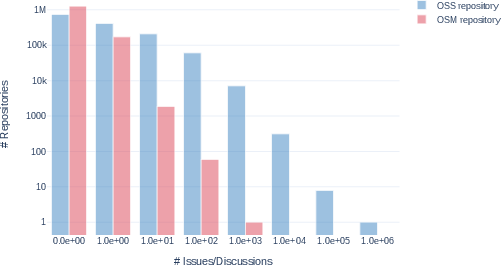
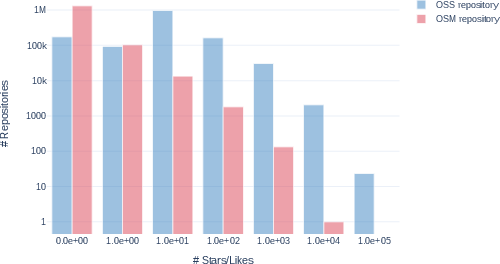
Figure 4: Distributions reveal extreme concentration and overall reduced activity in OSM compared to much broader, higher-frequency collaboration in OSS.
Social network analysis on the top 10,000 repositories of each category strengthens this result: OSS developer and project networks display significantly greater structural connectivity and diverse interaction patterns. The majority of high-impact OSM projects are concentrated around a small clique of organizational or staff accounts, suggesting not only lower absolute intensity but also decreased diversity and breadth of participant roles.
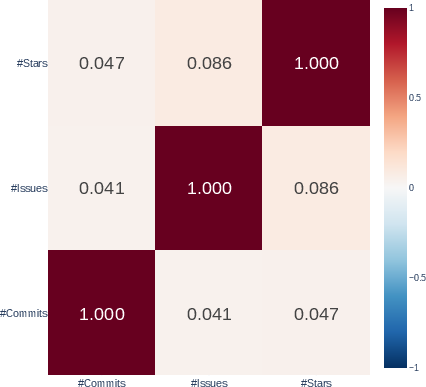
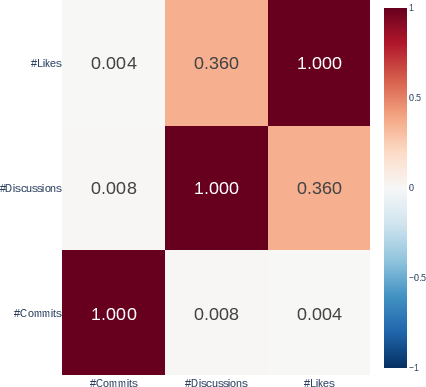
Figure 5: Feature correlation matrices show moderate and comparable relationships in OSS and OSM, confirming that reduced OSM activity cannot be ascribed to alternative metrics but reflects genuine and broad-based lower collaborative engagement.
Collaboration Openness
Collaboration openness in OSS is manifest in a high proportion of external contributions, decentralized project affiliations, and weak organization-repository coupling. In contrast, OSM direct collaboration is overwhelmingly committed to by organizational insiders or platform staff (98.91% in studied OSM repositories with organizational backing), with only a small minority of discussion and downstream engagement attributable to unaffiliated contributors. Community detection in the OSM developer-commit networks reveals tight overlays with formal organization boundaries, with 49.7% average community-organization overlap, underscoring the extent of structural enclosure of core collaborative activity.
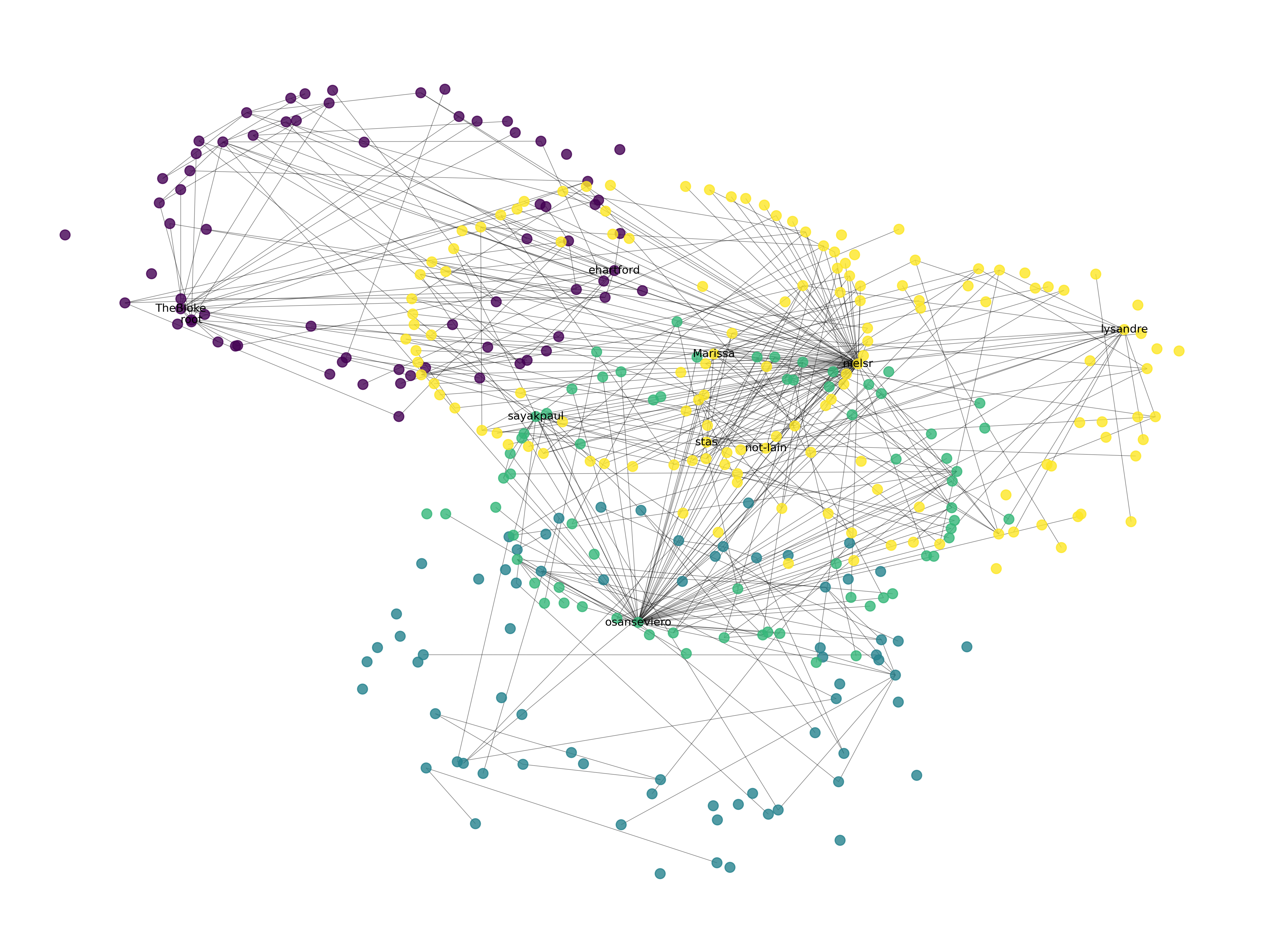
Figure 6: Visualization of the OSM user commit network emphasizes high intra-organizational clustering and limited genuine cross-organizational collaboration.
Despite this closed pattern for direct contributions, OSM retains partial openness at the knowledge exchange layer (e.g., public discussions), replicating some OSS-like inclusion for peripheral users.
User Innovation Patterns
Content analysis of communication reveals a transformative divergence in the locus of user innovation. In OSS, user messages are dominated by bug reports and improvement proposals (71%+), reflecting a practice of collaborative upstream artifact enhancement. In OSM, the majority of user engagement is around adaptive utilization—usage support, deployment challenges, and performance feedback—rather than modification or upstream improvement of the core model.
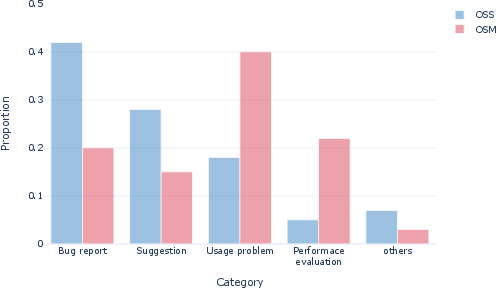
Figure 7: Communication in OSS repositories is dominated by improvement-oriented interactions, while OSM repositories are focused on adaptation and performance evaluation in applied contexts.
This shift implies that OSM user innovation is fundamentally adaptive and usage-driven, in contrast to the direct co-development cycle that characterizes OSS.
Underlying Socio-Technical Factors
Expert interviews surface a confluence of reinforcing barriers that drive and perpetuate the observed divergence:
- Technical/architectural barriers: The non-decomposable, non-traceable, and stochastic nature of model artifacts precludes fine-grained modular contributions and independent reproducibility, in contrast to codebases with clear line-based logic and modularity.
- Resource constraints: The cost and hardware requirements for meaningful OSM contributions (e.g., large-scale pre-training) exclude those without substantial resources, shifting the locus of user engagement downstream.
- Infrastructural mismatch: Existing code-centric platforms and tools (e.g., git) are poorly aligned with the semantic versioning, storage, and provenance needs of large models, limiting collaborative workflows.
- Corporate strategy: OSM releases are frequently driven by competitive positioning rather than open, peer-production motivations, which curtails collaborative openness in the critical development phases.
Theoretical and Practical Implications
The findings empirically demonstrate that OSS and OSM are fundamentally divergent collaborative paradigms. The results challenge the direct transferability of legacy OSS "bazaar" models and the underlying assumptions of commons-based peer production. Instead, OSM evolves toward a "hub-and-spoke" model, where core technical innovation is concentrated, and peripheral innovation is manifested as applied, adaptive, or combinatorial usage.
Potential avenues for enhancing OSM collaboration include operationalizing transparency through standardized, reproducible "training recipes," emulating modularity via parameter-efficient fine-tuning (PEFT) and adapter-based approaches, and re-platforming to model-native infrastructure for semantic diffing/versioning and managed resource sharing.
Theoretically, the study expands collaborative frameworks by foregrounding peripheral knowledge production, experimental participation (e.g., collective evaluation and red-teaming), and resource-based collaboration as critical loci of value generation in OSM. Designing effective collaborative infrastructure in AI will thus require both technical advances and new incentives that engage actors outside organizational silos and lower the frontier for modular participation.
Conclusion
This paper rigorously quantifies and characterizes the divergence between OSS and OSM development paradigms. OSM exhibits lower collaboration intensity, substantially reduced openness in core development, and a transition in user innovation from collaborative improvement to adaptive utilization. These distinctions are grounded in the socio-technical particularities of AI model development and reinforced by infrastructural and strategic factors. The implications are substantial: theoretical models of open source collaboration must be re-examined for their applicability to AI, and effective socio-technical systems for open AI must integrate solutions for transparency, modularity, and infrastructural alignment. Future work should further investigate emergent collaboration forms, study longitudinal evolution, and advance the design of model-native collaborative environments.