On-board Telemetry Monitoring in Autonomous Satellites: Challenges and Opportunities
Published 9 Apr 2026 in cs.AI and cs.LG | (2604.08424v1)
Abstract: The increasing autonomy of spacecraft demands fault-detection systems that are both reliable and explainable. This work addresses eXplainable Artificial Intelligence for onboard Fault Detection, Isolation and Recovery within the Attitude and Orbit Control Subsystem by introducing a framework that enhances interpretability in neural anomaly detectors. We propose a method to derive low-dimensional, semantically annotated encodings from intermediate neural activations, called peepholes. Applied to a convolutional autoencoder, the framework produces interpretable indicators that enable the identification and localization of anomalies in reaction-wheel telemetry. Peepholes analysis further reveals bias detection and supports fault localization. The proposed framework enables the semantic characterization of detected anomalies while requiring only a marginal increase in computational resources, thus supporting its feasibility for on-board deployment.
The paper introduces a novel framework for explainable anomaly detection that fuses a convolutional autoencoder with a peephole extractor for semantic insight.
It achieves nearly perfect detection with AUC scores of 1.0 in most cases and effectively distinguishes between diverse fault types.
The method provides actionable, interpretable diagnostics that enhance Fault Detection, Isolation, and Recovery in safety-critical satellite systems.
Explainable On-board Anomaly Detection for Autonomous Satellite Telemetry
Introduction
The transition towards fully autonomous satellite platforms requires robust, interpretable on-board Fault Detection, Isolation, and Recovery (FDIR) systems, especially for critical subsystems such as Attitude and Orbit Control Subsystems (AOCS) driven by Reaction Wheels (RWs). Black-box Deep Neural Networks (DNNs), while offering high performance in anomaly detection, lack the transparency demanded by safety-critical aerospace applications. The paper "On-board Telemetry Monitoring in Autonomous Satellites: Challenges and Opportunities" (2604.08424) addresses this gap by presenting a framework for explainable anomaly detection that integrates semantic interpretability with low computational overhead, enabling practical deployment in on-board environments.
Framework for Explainable Neural Anomaly Detection
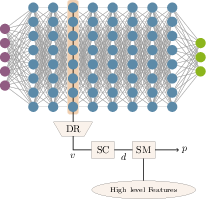
The proposed approach centers on augmenting a convolutional autoencoder-based anomaly detector with a non-neural "peephole" extractor that inspects and summarizes intermediate activations as low-dimensional, human-interpretable feature vectors. The "peephole" extraction pipeline consists of three principal stages: dimensionality reduction via Singular Value Decomposition (SVD), statistical characterization through Gaussian Mixture Model (GMM) clustering, and semantic mapping using empirical posteriors estimated from annotated data.
Figure 1: Block scheme of the proposed framework extracting peephole vectors p from intermediate neural activations via dimensionality reduction, clustering, and semantic mapping.
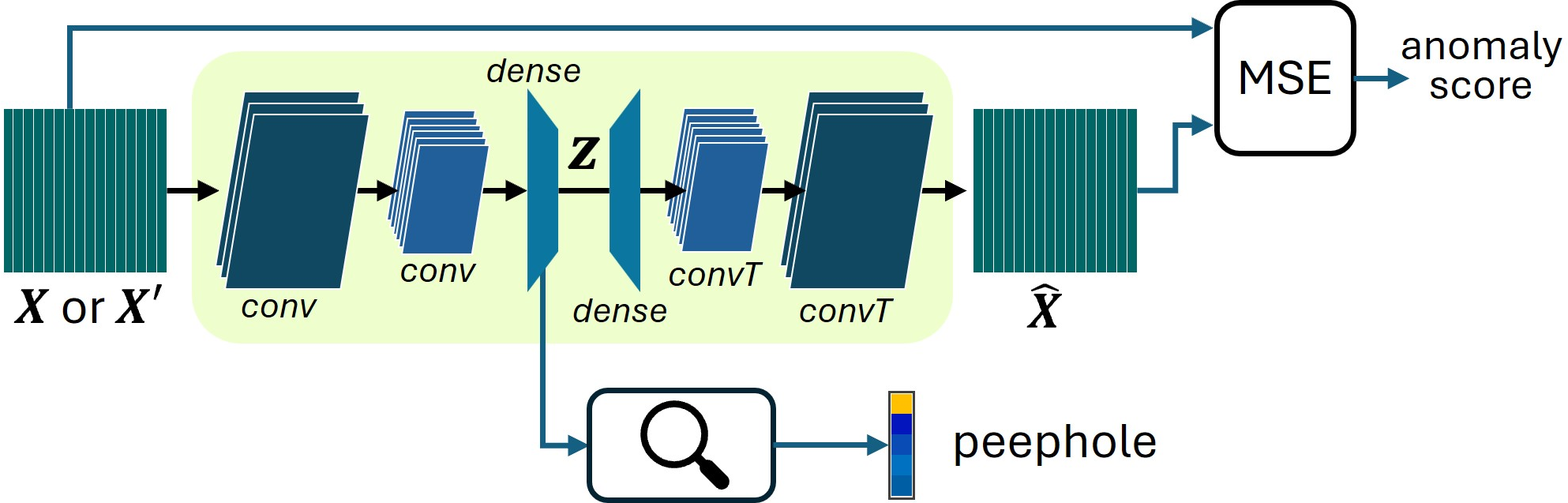
This mechanism enables the transformation of latent activations into compact descriptors reflecting underlying physical phenomena or failure signatures. The autoencoder processes telemetry data from 16 channels across four RWs, compresses data into latent representations, and outputs reconstruction errors as anomaly scores.
Figure 2: Block diagram of the autoencoder anomaly detector with semantic extraction (peephole) from the encoder's final activation layer.
Numerical Validation and Semantic Capabilities
The framework was validated on a specialized telemetry dataset with synthetic anomalies reflecting realistic RW faults, including Additive Gaussian Noise (GWN), constant offsets, impulsive events, power spectral alterations (PSA), and step changes. Two anomaly injection protocols were examined: global (all channels corrupted) and targeted (only one RW affected).
Figure 3: Illustration of perturbation applied to all telemetry channels as a stress-test condition.
The base autoencoder demonstrated nearly perfect anomaly detection for all corruption types, achieving an Area Under the ROC Curve (AUC) of 1.0 in most scenarios and at least 0.97 for RW-targeted offsets.
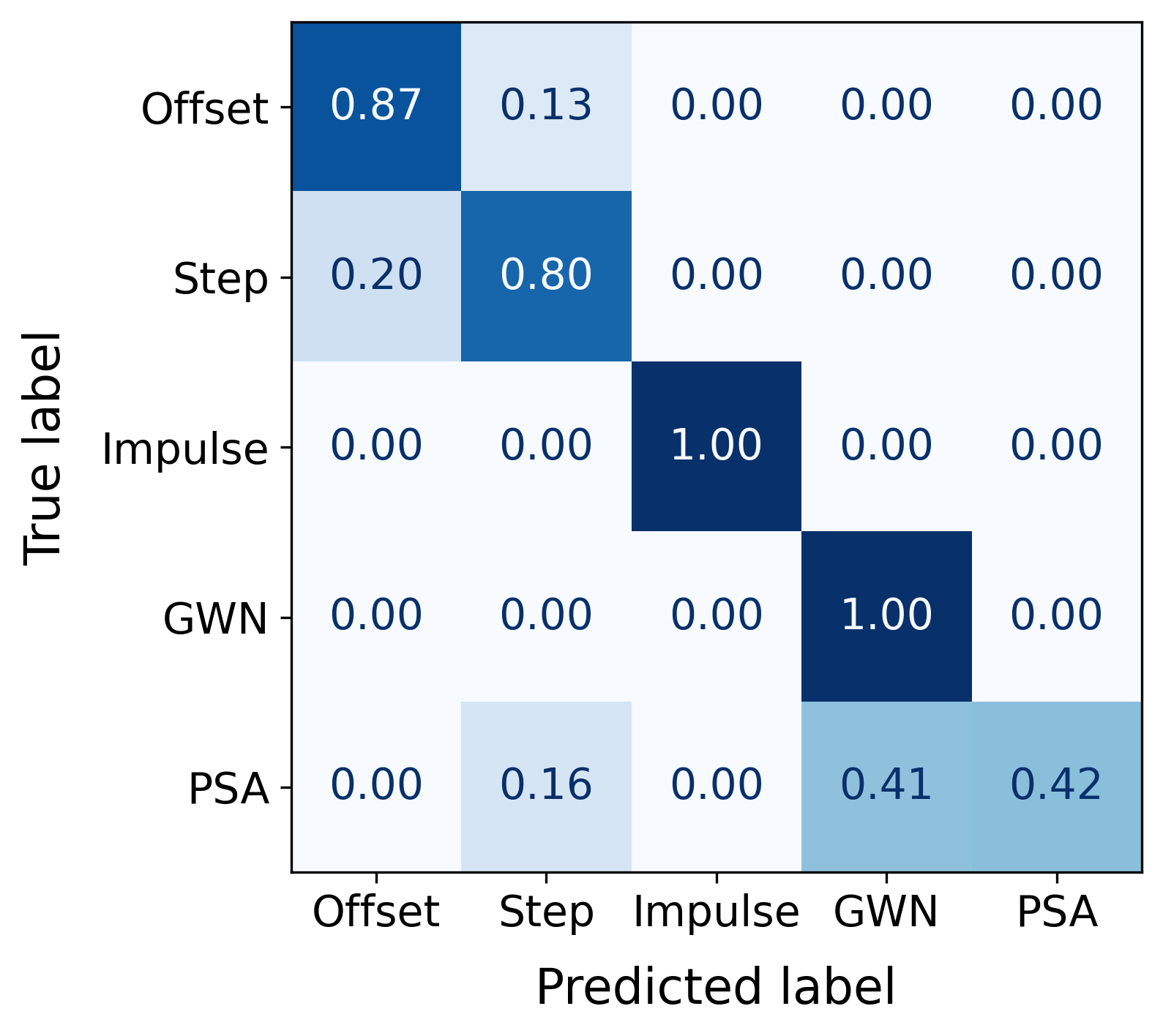
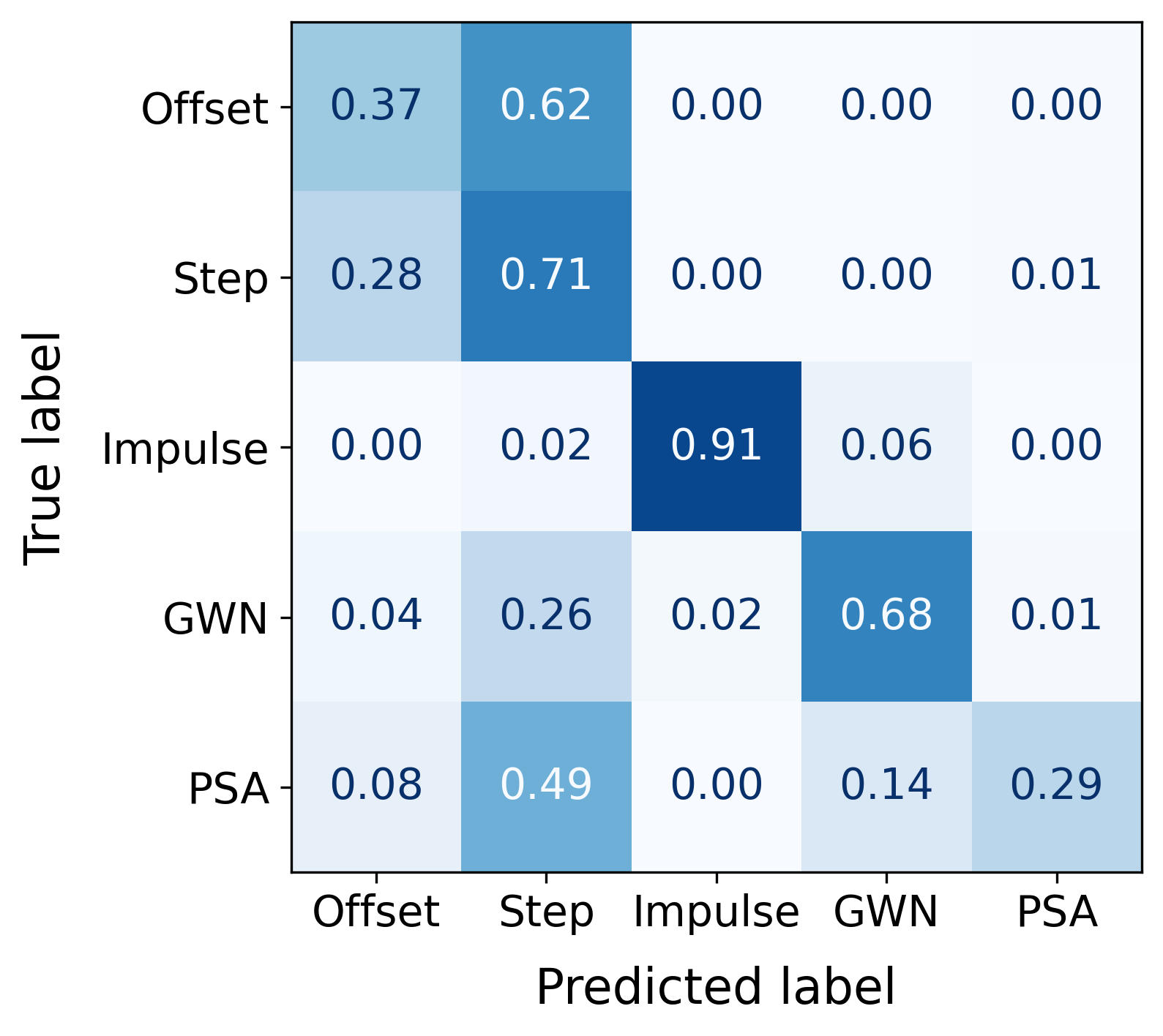
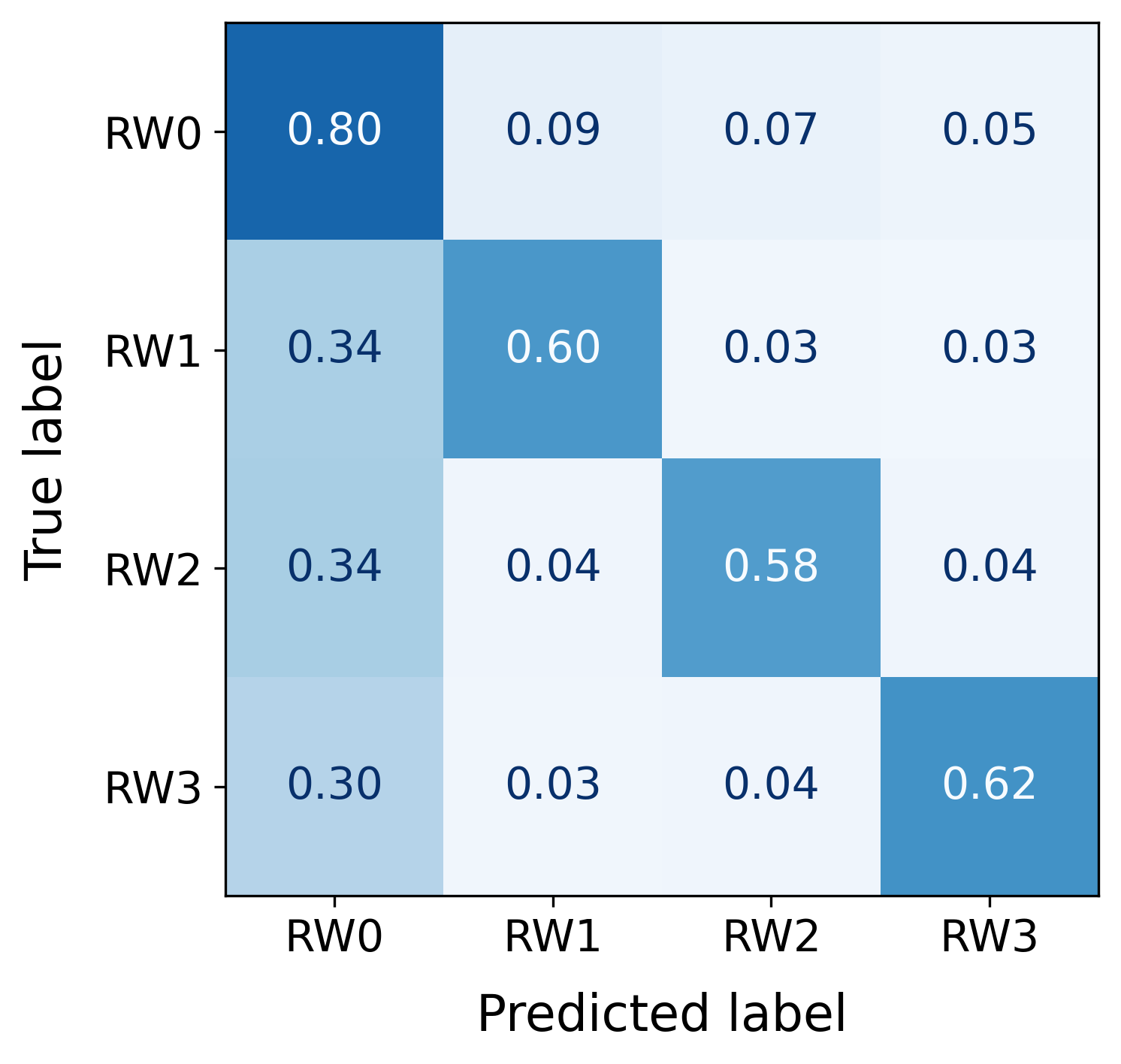
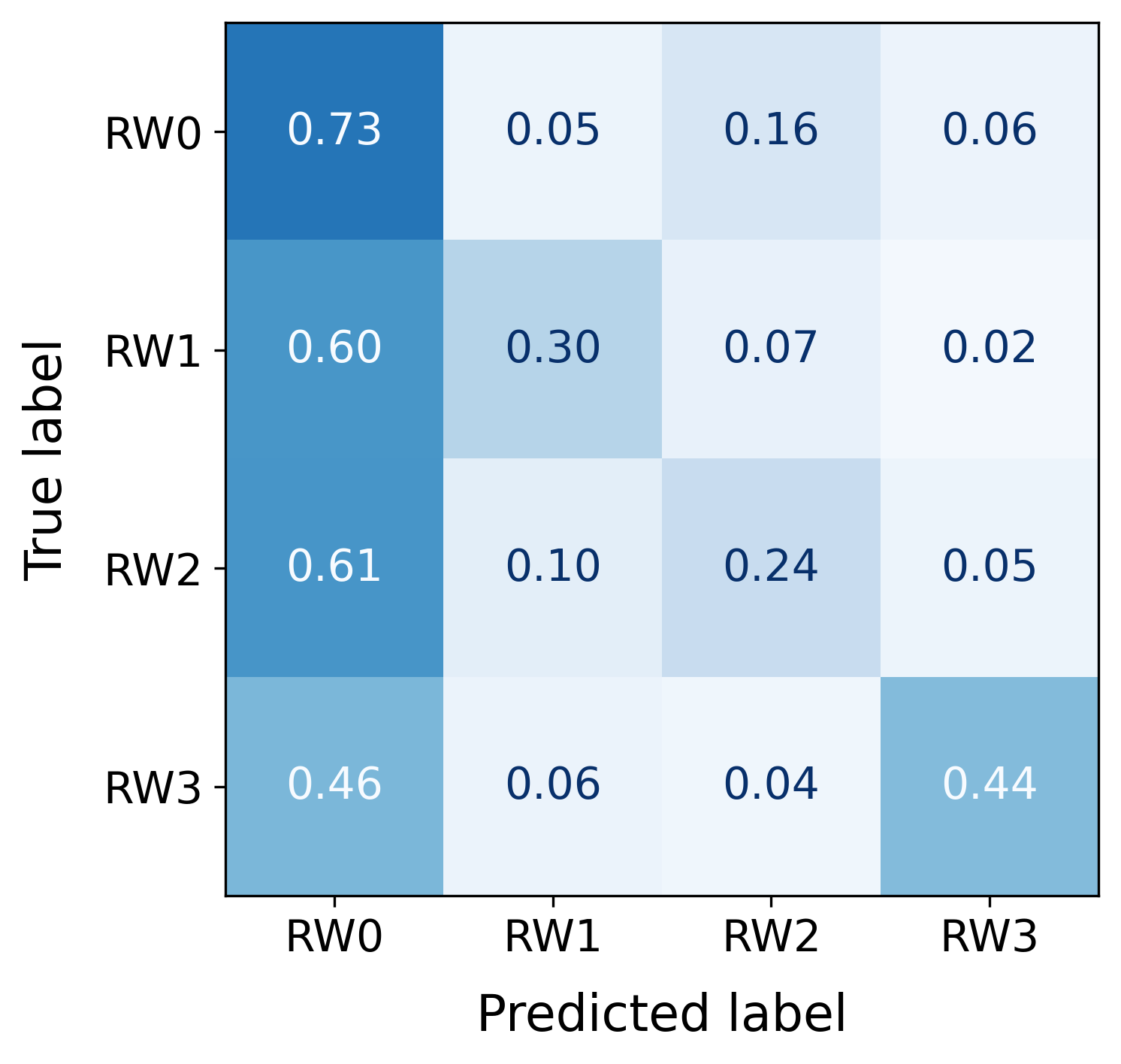
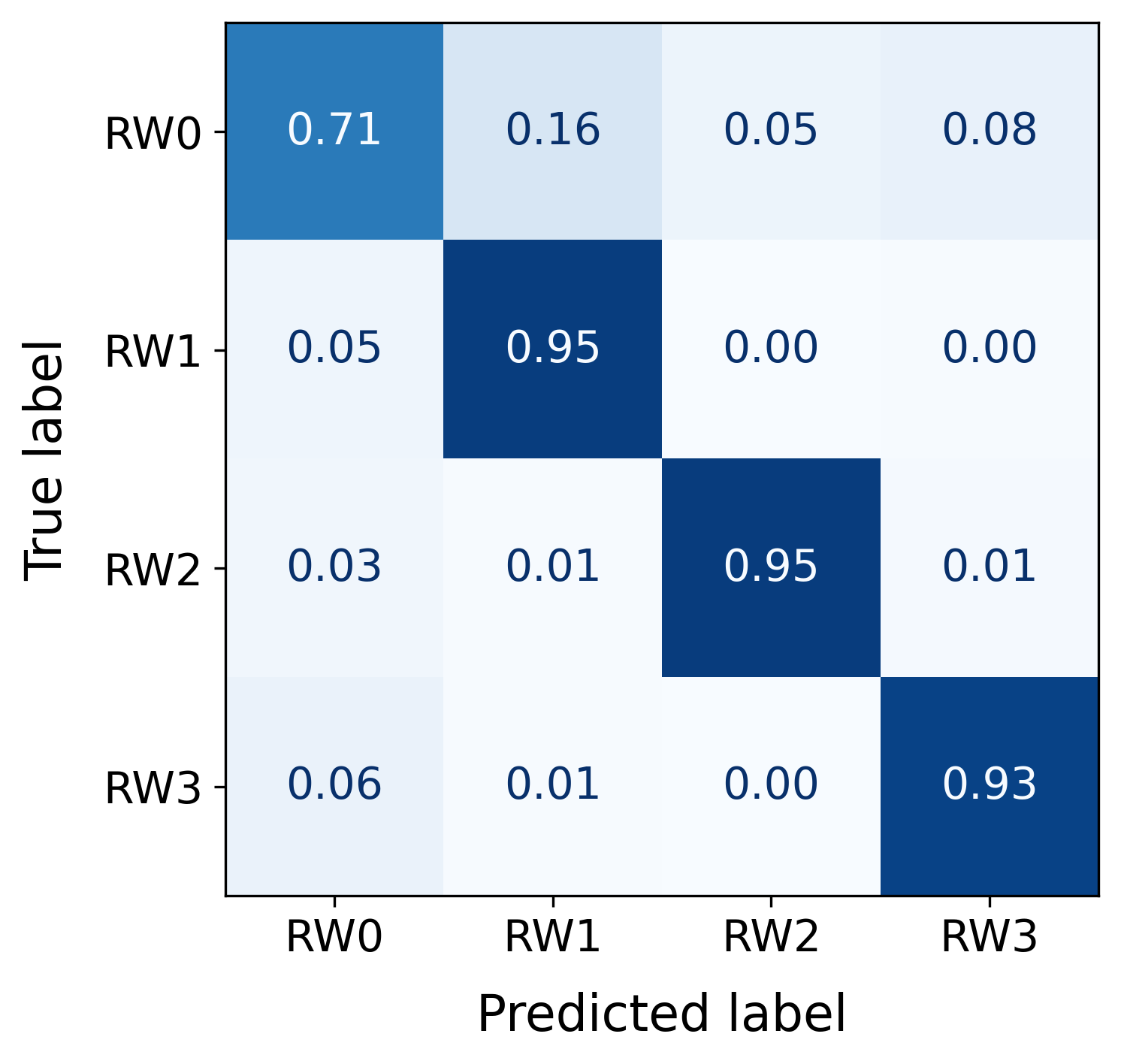
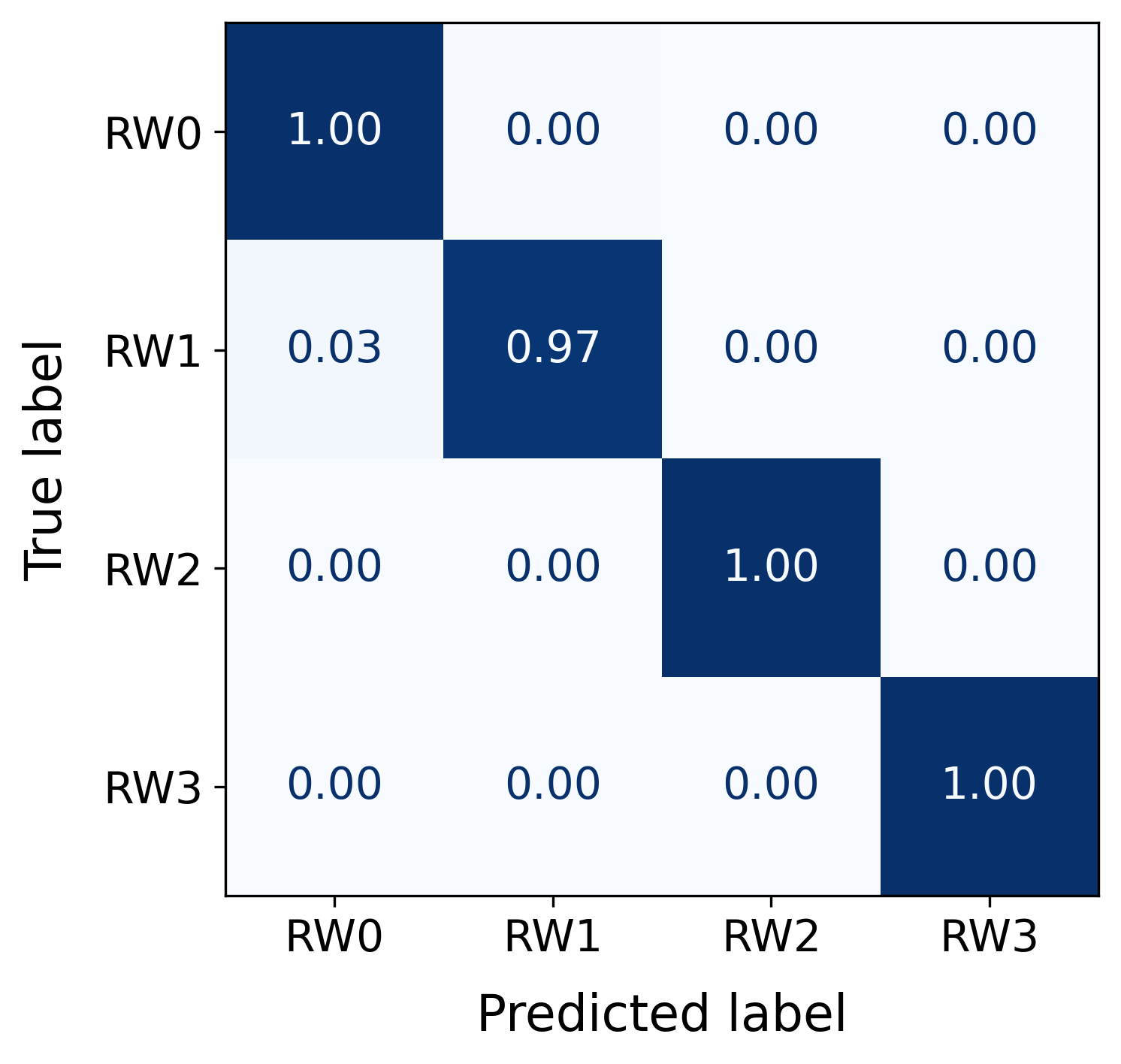
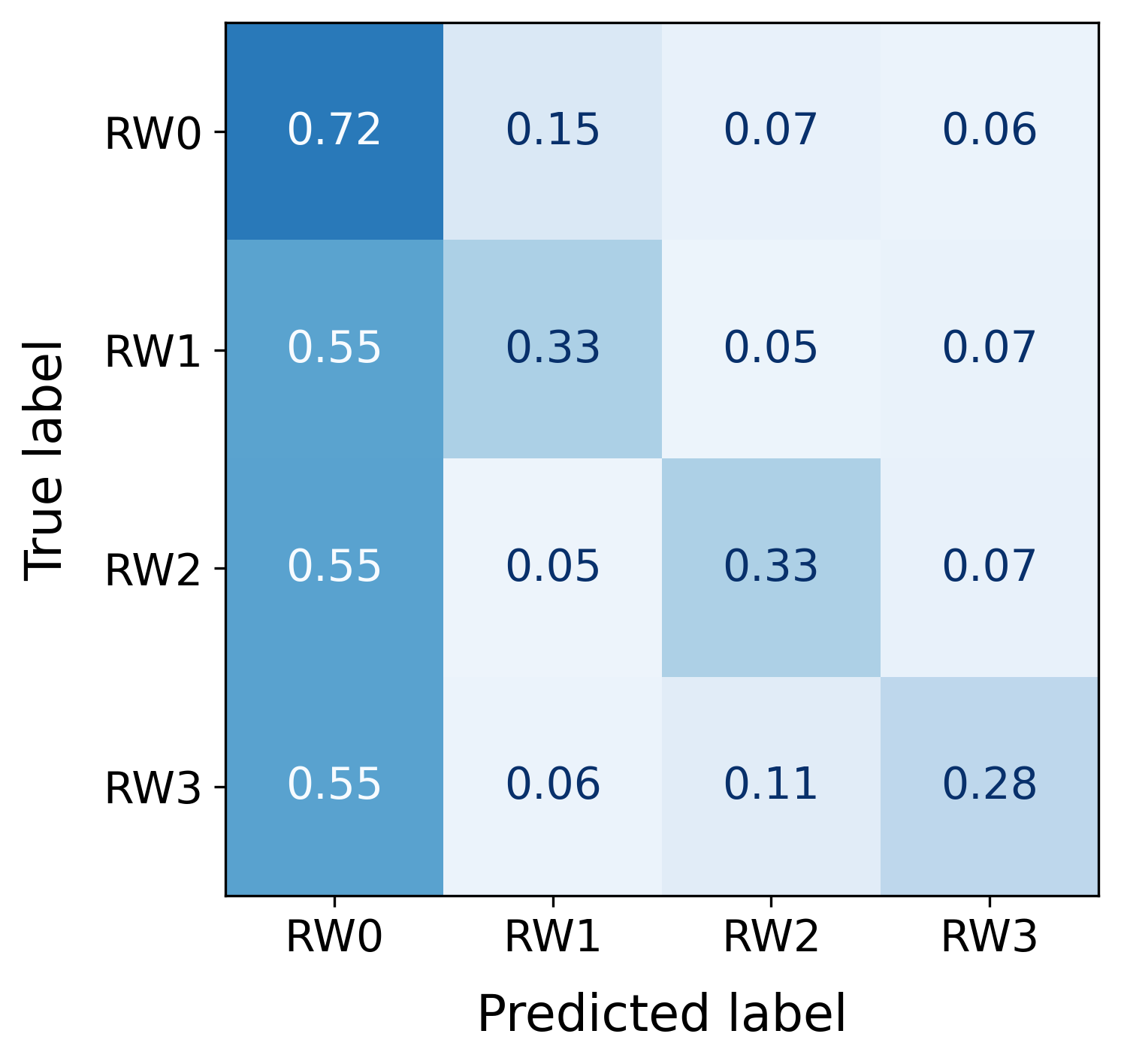
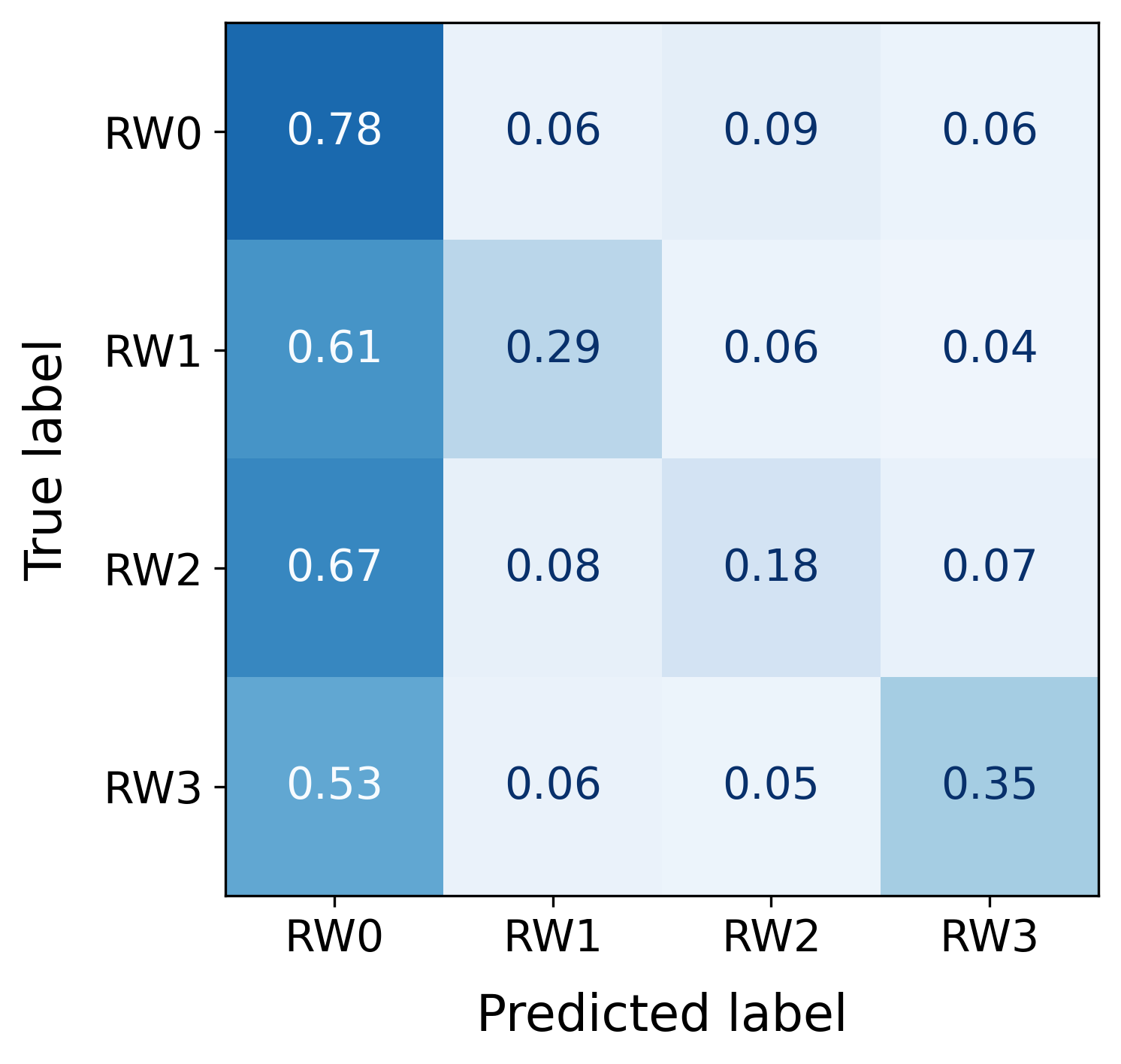
The semantic utility of peephole vectors was evaluated in terms of their ability to discriminate between anomaly types and to localize affected RWs solely from latent activations, without resorting to additional classification networks. Confusion matrices derived from peephole analysis show high alignment between detected and injected anomaly types, with clear separation between most fault families. Some overlap was observed for the PSA anomaly, indicating correlated latent representations with GWN and Step anomalies. RW localization was more challenging but still exhibited differentiability, especially for impulsive and noise faults, though certain biases in RW0 attribution were detected.
Figure 4: Confusion matrices for RW-level identification and anomaly type classification using peephole vectors reveal both detection efficacy and latent attribution bias.
A domain-expert-labeled real anomaly in the test set further confirmed the framework's capability to generate temporally resolved, semantically meaningful signatures, aligning with physically interpretable patterns in raw telemetry and supporting operator investigations.
Figure 5: Visualization of RW telemetry, autoencoder scores, and a time-resolved heatmap of peephole vectors during a true anomalous event.
Theoretical and Practical Implications
The integration of semantic inspection directly into the latent space of on-board DNNs provides interpretable, low-latency health indicators that facilitate both operational decision-making and ground-based post-event analysis. Unlike previous work relying on post hoc explainability or additional neural heads, this approach preserves computational efficiency while exposing model focus, bias, and latent failure taxonomies.
The demonstrated ability to localize faults and highlight representational biases has significant implications for satellite certification, operational trust, and human-in-the-loop oversight, particularly under EU regulatory mandates for explainability in critical AI-based systems. The general peephole extraction framework is agnostic to the specific neural architecture and supports adaptation to other telemetry or control environments.
Future Developments
This line of research enables several trajectories:
Formal bias analysis and mitigation: The occurrence of RW attribution bias in the unsupervised detector suggests further studies on regularization and architecture selection to promote fair and balanced latent encodings.
Incremental and continual learning: As on-board systems accumulate new anomalies post-launch, the framework allows updating the semantic mapping without retraining the complete anomaly detector.
Cross-subsystem monitoring: The peephole methodology can be combined with physics-informed neural networks and extended to encompass power, thermal, or payload telemetry for multi-domain FDIR.
Model selection and hardware integration: Building on advances in TinyML, FPGA/SoC deployment, and mission-hardened neural operators, the lightweight nature of peephole extraction aligns with current trends in intelligent edge computing for space applications.
Conclusion
This work advances the operationalization of explainable neural anomaly detection for on-board satellite FDIR. By deriving semantically annotated peephole vectors from latent neural activations, the proposed framework enables interpretable, actionable, and computationally efficient health monitoring. Numerical results affirm its ability to detect, classify, and localize diverse fault types, uncover model biases, and support expert validation in real-life telemetry scenarios. The approach is a concrete step toward trustworthy autonomous satellite operations meeting emerging standards in safety, transparency, and human oversight.