- The paper introduces a GAN and LLM data augmentation framework to develop the SinaSarc dataset with user-specific historical behavior for Chinese sarcasm detection.
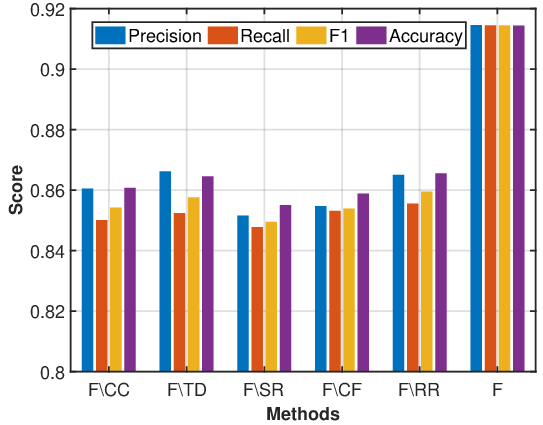
- The proposed architecture extends BERT by incorporating multi-dimensional user behavior embeddings, achieving F1-scores around 0.915 for both sarcastic and non-sarcastic classes.
- Robustness experiments show the model’s high data efficiency and resilience to label noise and class imbalance, emphasizing the importance of dynamic user-centric modeling.
GAN and LLM-Driven Data Augmentation for Dynamic Linguistic Pattern Modeling in Chinese Sarcasm Detection
Introduction
This paper, "A GAN and LLM-Driven Data Augmentation Framework for Dynamic Linguistic Pattern Modeling in Chinese Sarcasm Detection" (2604.08381), addresses two major issues in Chinese sarcasm detection: the scarcity of large-scale, annotated datasets and the insufficient modeling of user-specific linguistic patterns. The authors propose a hybrid framework integrating Generative Adversarial Networks (GANs) and LLMs for data augmentation and user behavior modeling, culminating in the construction of the SinaSarc dataset. This dataset is distinguished by its inclusion of target comments, context, and rich user historical behavior, facilitating the dynamic modeling of idiosyncratic sarcasm tendencies. The detection architecture extends BERT to incorporate multi-faceted information, including long-term user patterns, delivering substantially improved detection accuracy.
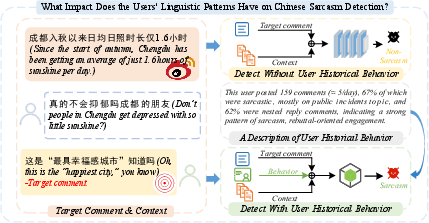
Figure 1: Example highlighting the necessity of leveraging user historical linguistic patterns for disambiguating sarcasm in Chinese comments.
The paper contextualizes its contribution within three well-established paradigms in sarcasm detection: rule-based approaches, traditional and neural machine learning models, and deep learning architectures. Rule-based methods, while interpretable, are rigid and fail to generalize to implicit forms of sarcasm due to their dependence on surface-level rules. Machine learning models alleviate some manual burden via statistical feature learning, but remain constrained by feature engineering bottlenecks. Deep learning approaches (e.g., BiLSTMs, BERT, graph-based models) better capture contextual and semantic dependencies. However, even advanced neural methods for Chinese sarcasm detection have overlooked user-level linguistic diversity, primarily due to dataset limitations with respect to user history annotations.
Framework Design
The core innovation lies in the unified GAN and LLM-driven augmentation procedure, which feeds into a dynamic sarcasm detection pipeline.
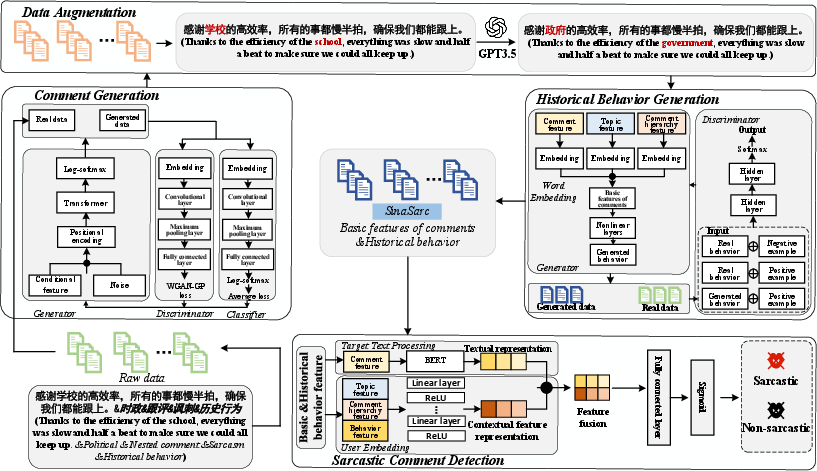
Figure 2: Schematic overview of the GAN-LLM hybrid augmentation and sarcasm detection pipeline.
Data Collection and Annotation
The authors collect large-scale raw data from Sina Weibo, emphasizing topical diversity and user coverage. Following preprocessing and annotation (using a three-category sarcasm schema and group adjudication for ambiguous cases), initial samples are expanded via GAN-driven conditional comment generation and refined with GPT-3.5-based context-aware augmentation. The GAN also synthesizes pseudo user historical features, such as sarcasm rate and topic engagement distribution, critical for modeling user-specific sarcasm idiosyncrasies.
Architecture for Sarcasm Detection
The sarcasm classification architecture integrates:
- BERT-based Text Encoder: Captures semantic and syntactic features from comment content.
- User Historical Behavior Embedding: Processes multi-dimensional user behavior metrics via a dedicated MLP.
- Feature Fusion Block: Concatenates text and behavior representations for final discrimination.
This architecture allows the model to reason not only on isolated text and immediate context but also on user-conditional long-term linguistic tendencies, essential for resolving implicit sarcasm.
Experimental Results
Evaluation is comprehensive, comparing the proposed model to classical ML (Random Forest, SVM, AdaBoost), neural (LSTM variants), pre-trained transformers (BERT, RoBERTa, SBERT), and LLMs (GPT-4-Turbo, Qwen2, Baichuan2, Gemini, Mixtral). Performance is reported on the SinaSarc dataset with balanced sarcastic and non-sarcastic labels.
Key Results:
Robustness Analyses
Robustness to label noise is evaluated by injecting varying proportions of adversarial label flips. The proposed method demonstrates minimal performance degradation relative to baselines, attributed to its access to auxiliary user and contextual signals.
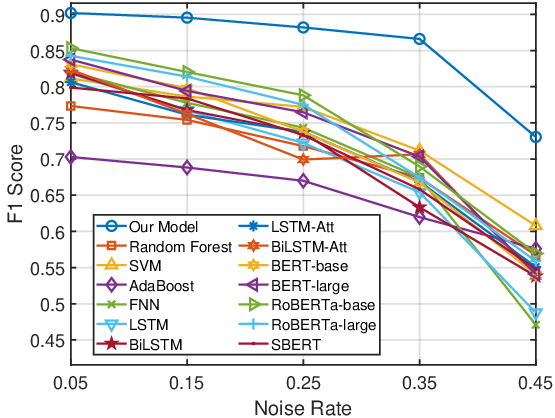
Figure 4: Model resilience to increasing training label noise, showing minimal deterioration for the proposed approach.
Experimental variation in the sarcasm prevalence (data set imbalance) shows consistently superior results for the proposed approach, regardless of sarcastic label proportion.
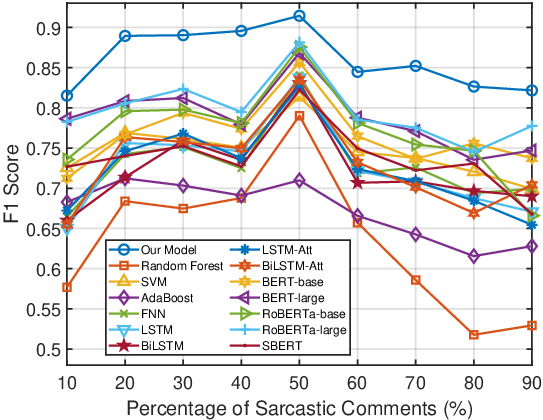
Figure 5: Robustness to class imbalance, with the proposed model maintaining superior accuracy as the proportion of sarcasm varies.
Data efficiency is confirmed by comparing model performance as a function of available labeled data: the proposed approach significantly outperforms baselines across all dataset scales.
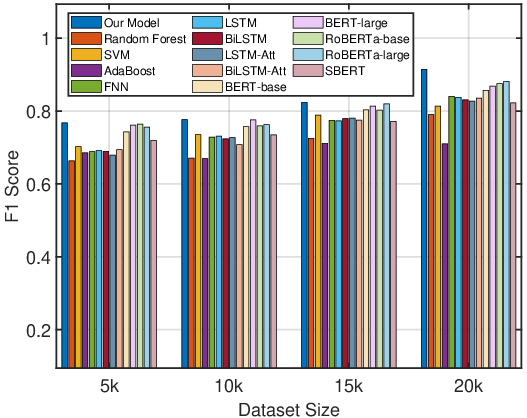
Figure 6: Performance gains with increasing dataset size, highlighting the data efficiency of the proposed feature fusion approach.
Representation Analysis and Case Study
Qualitative assessment via t-SNE visualization of learned embeddings demonstrates that only the proposed model achieves clear linear separation of sarcastic and non-sarcastic samples, corroborating its improved feature disentanglement.
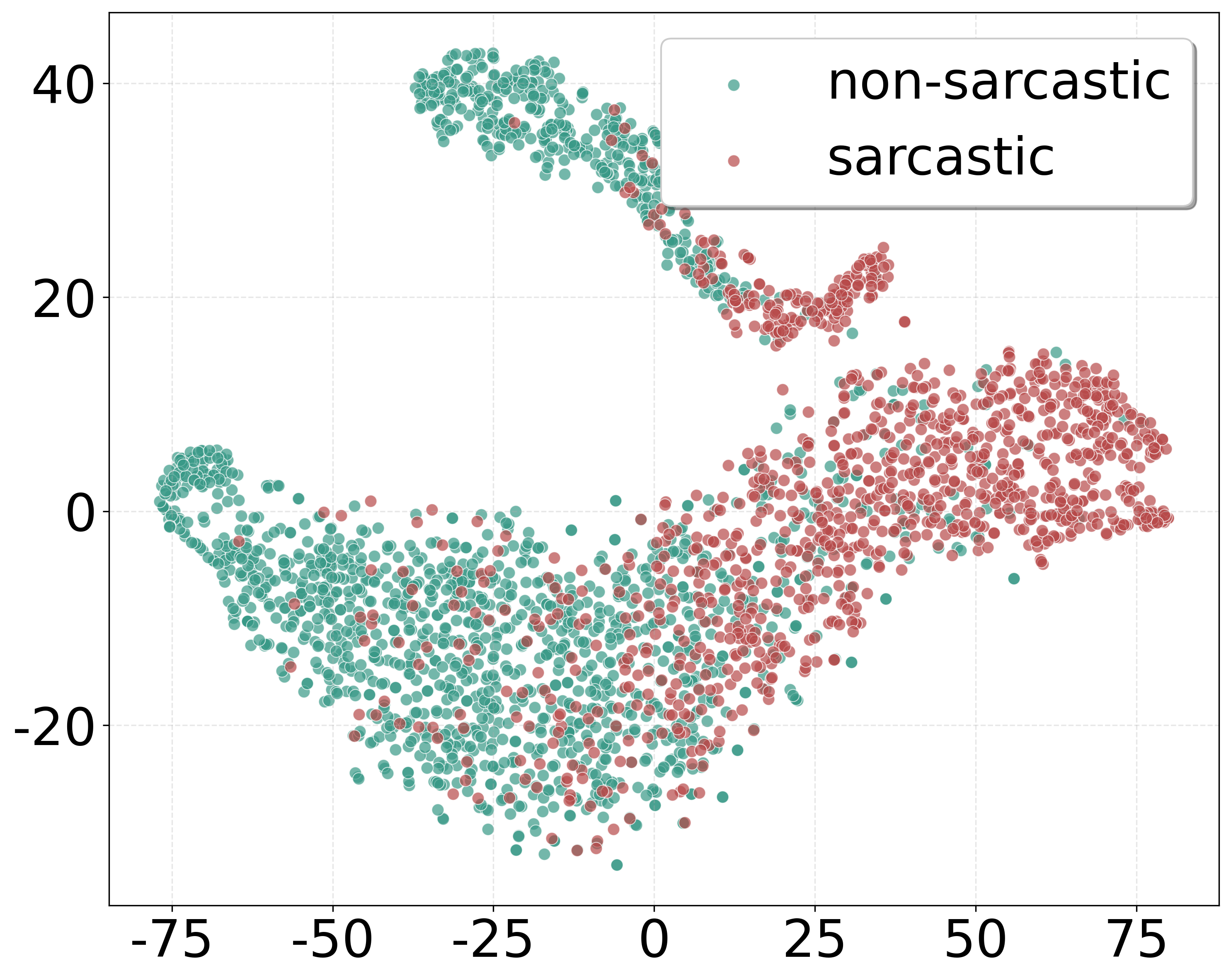
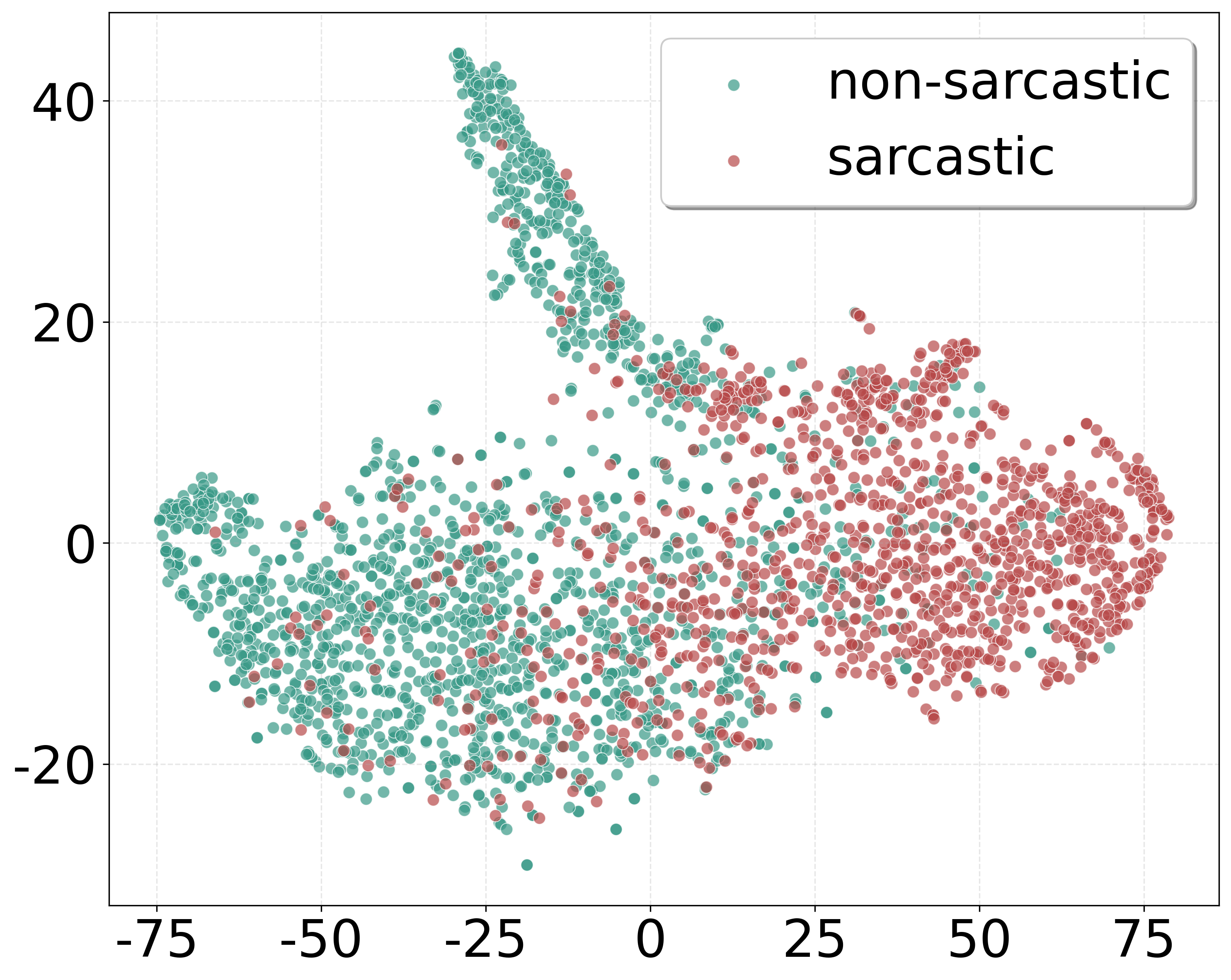
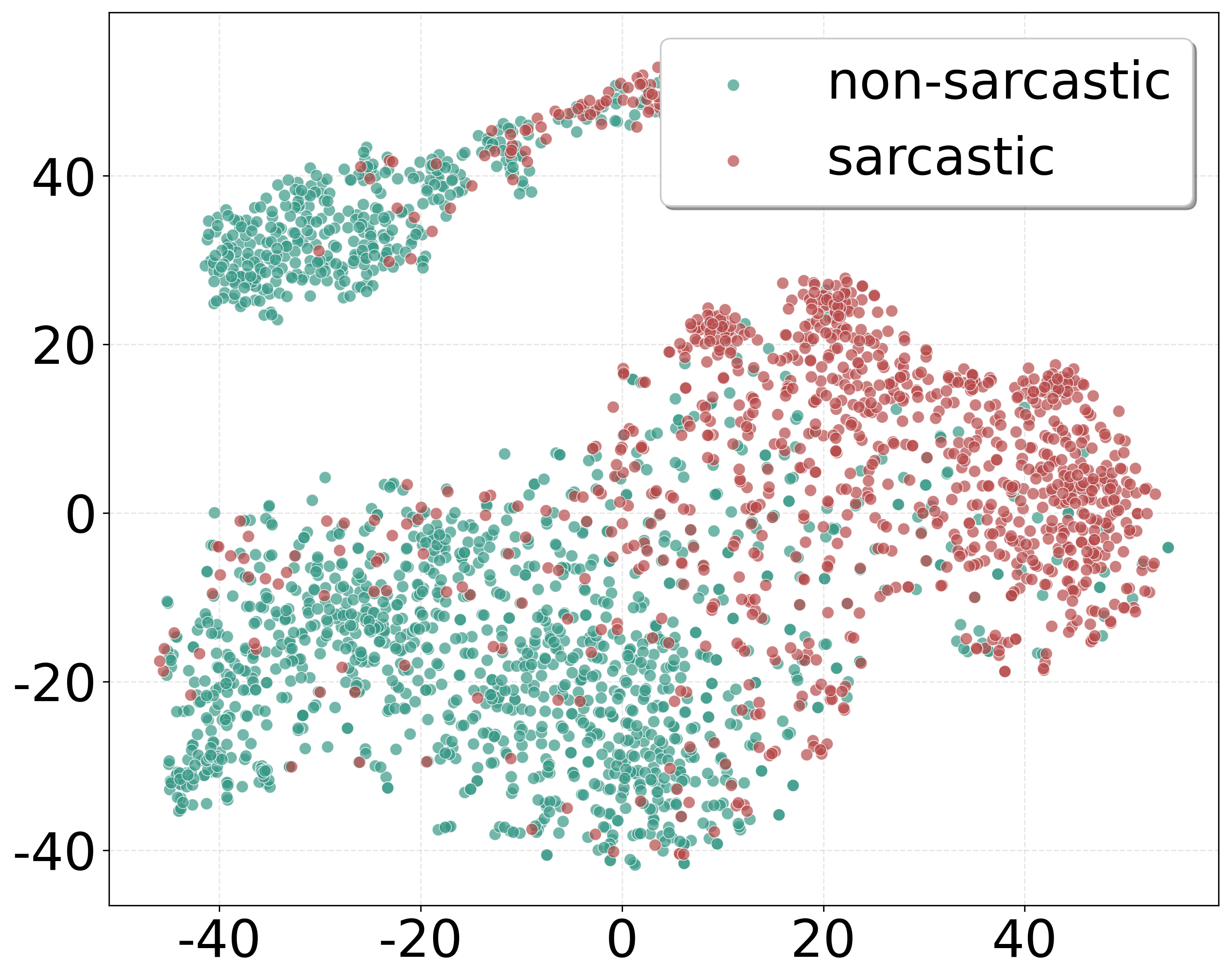
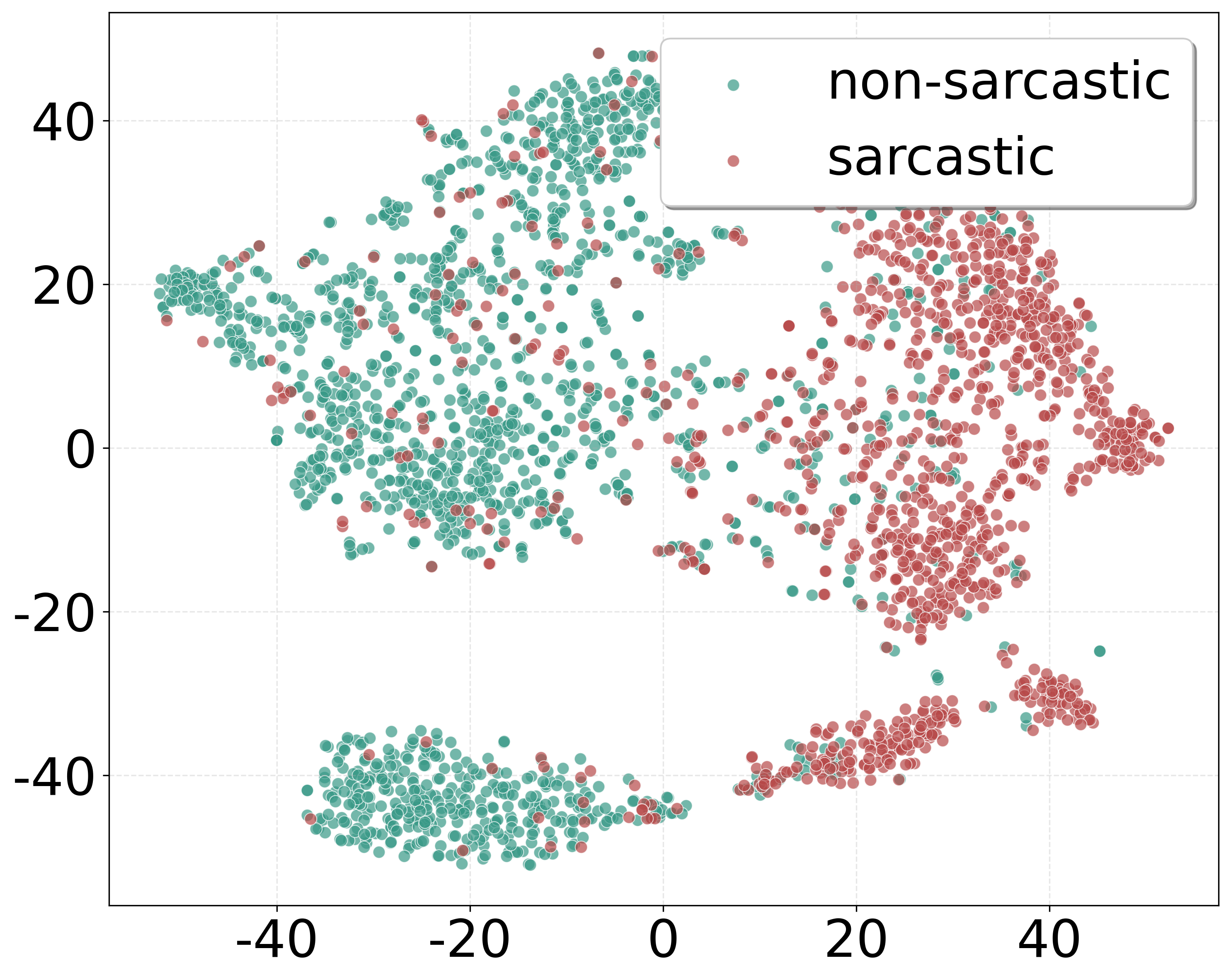
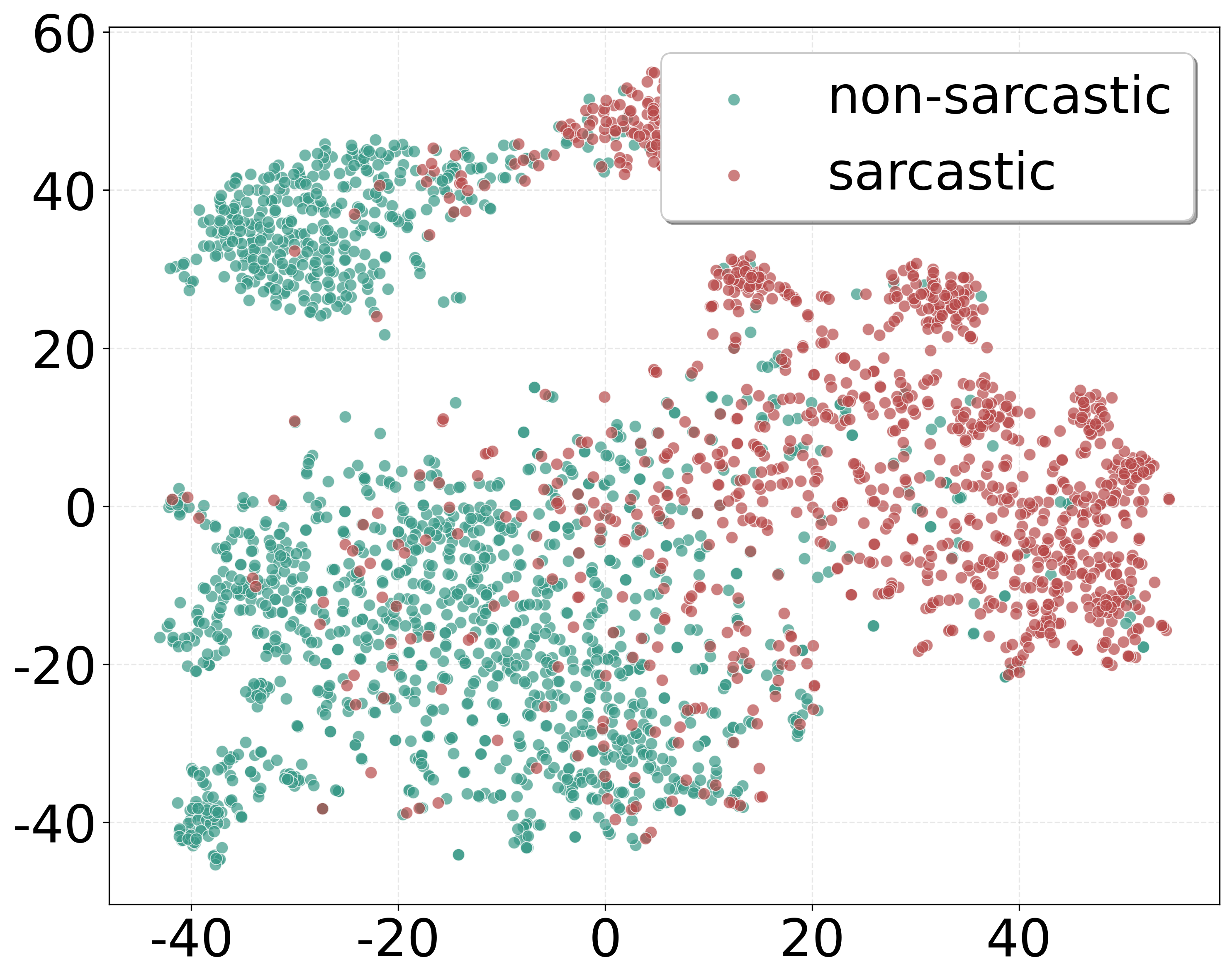
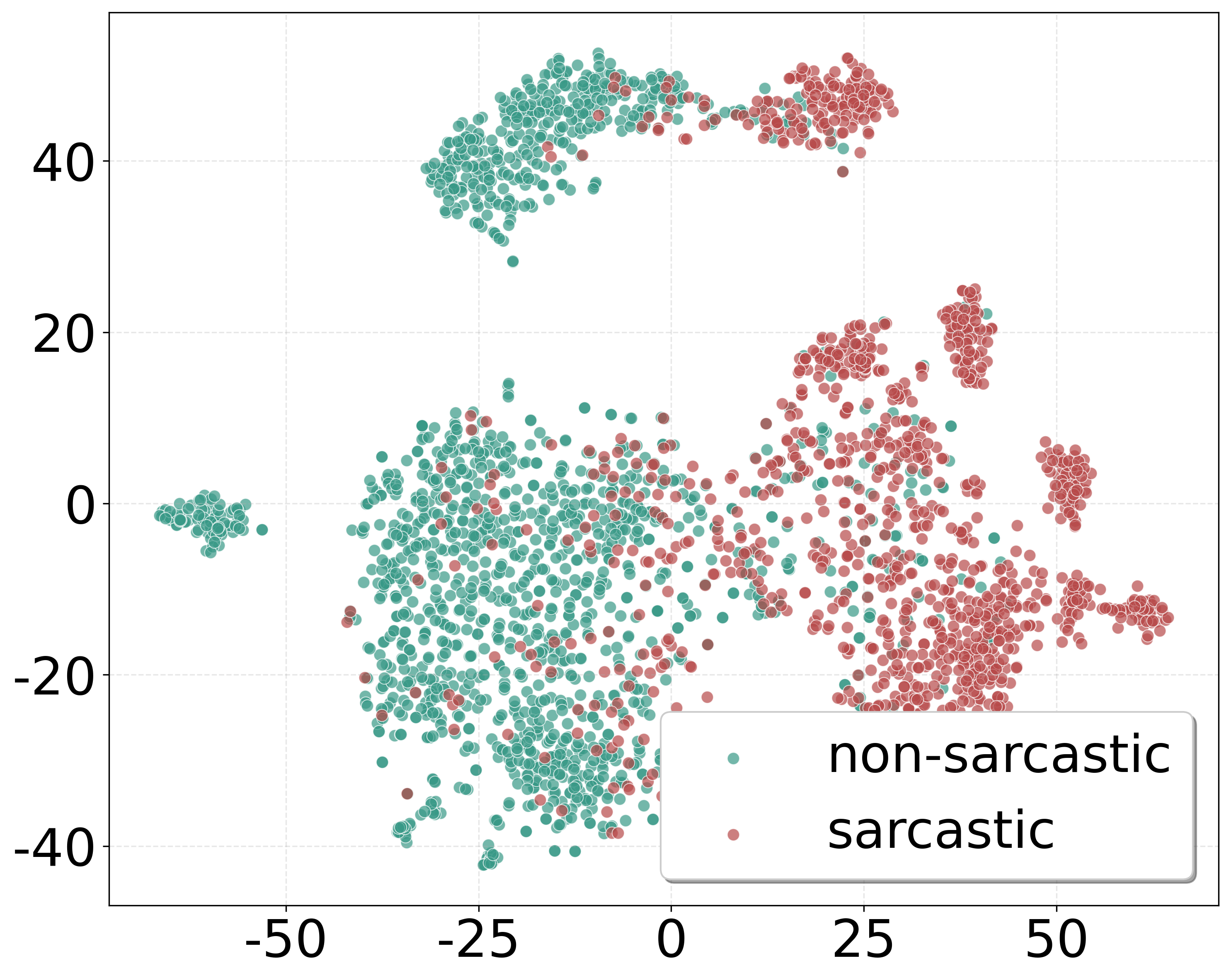
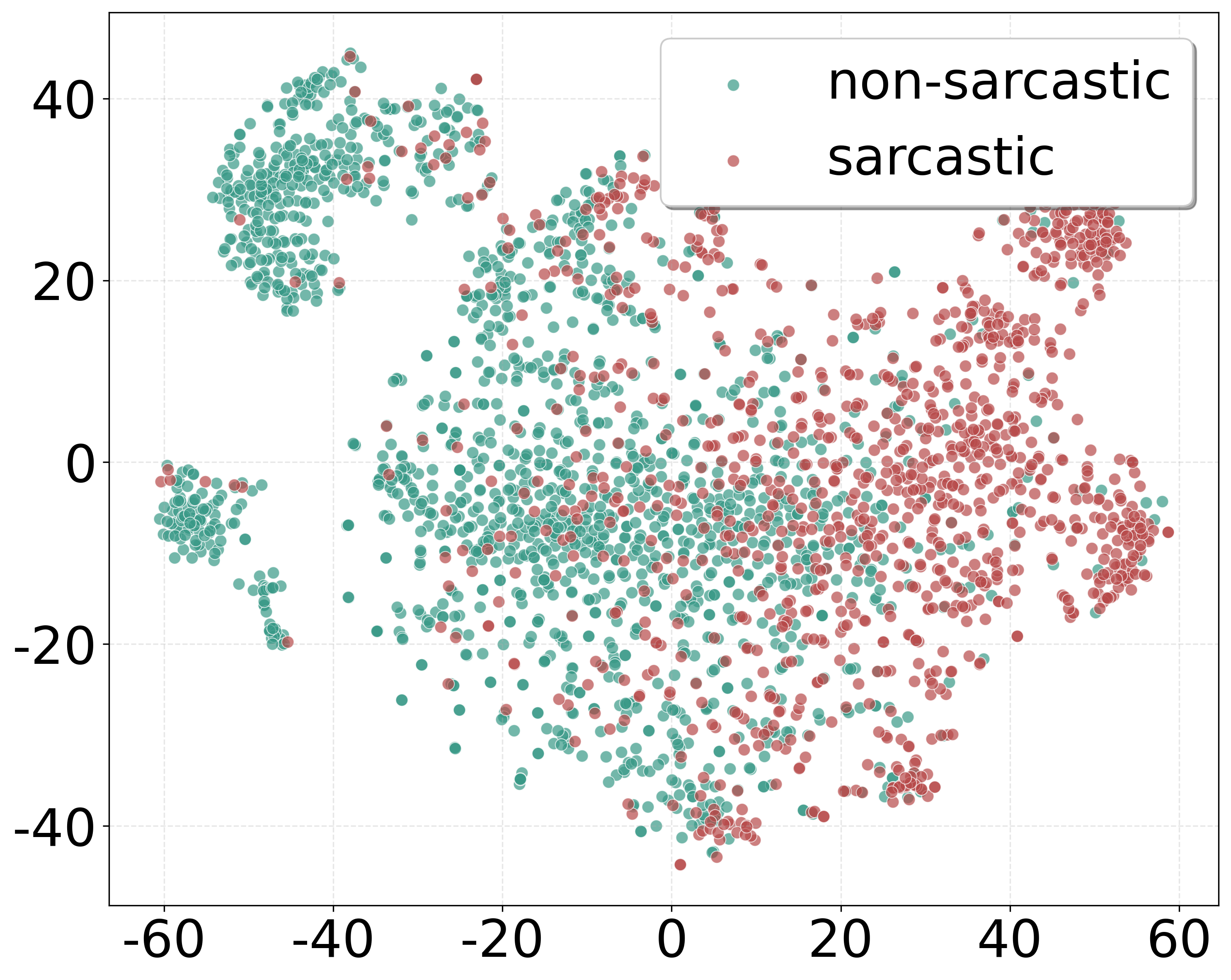
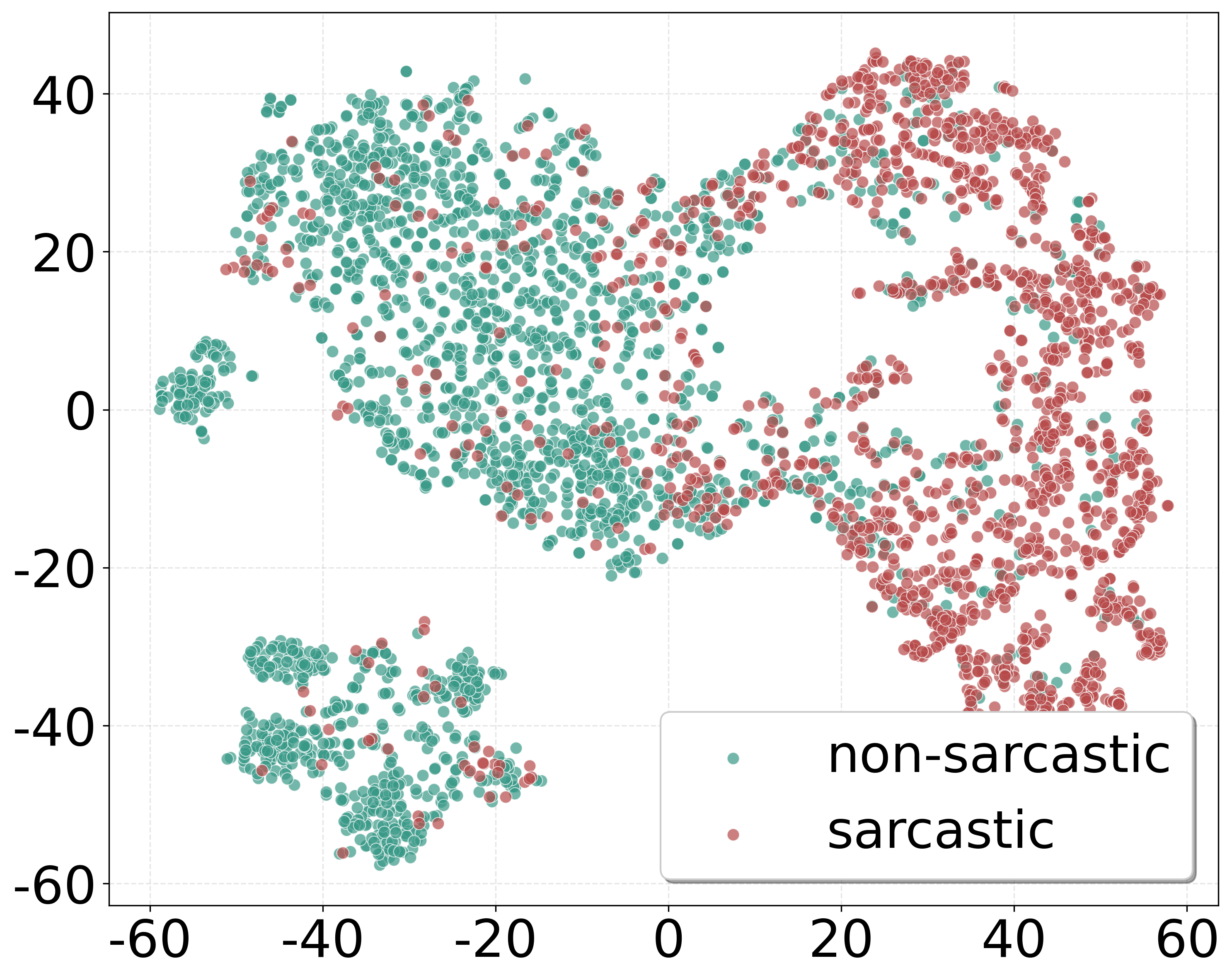
Figure 7: t-SNE visualization of learned representations; only the proposed approach yields distinct clusters for sarcasm classes.
Case analyses evidence that remaining errors are often due to external world knowledge or highly context-dependent metaphors, suggesting limitations driven more by language and knowledge rather than model expressivity per se.
Implications and Future Directions
This work demonstrates that integrating user historical behavior into sarcasm detection architectures—enabled by scalable GAN and LLM data augmentation—substantially enhances both accuracy and robustness, surpassing even SOTA LLMs when user-centric signals are absent. The findings challenge the prevailing text/context-centric paradigm, suggesting that personalization and long-term user modeling are indispensable for nuanced NLP tasks such as sarcasm and pragmatic language understanding in social media.
Practically, the framework provides a template for efficient construction of resource-rich datasets with user conditionality, which will accelerate research in user-adaptive LLMs. Theoretically, the results support a shift towards architectures that jointly model utterances and speaker history, echoing developments in dialog systems and persona-based modeling.
Future extensions could augment the current approach with external knowledge graphs for entity disambiguation, explicit rhetorical device modeling (such as metaphor recognition), and multimodal inputs reflective of richer social media posts. The hybrid augmentation methodology can be adapted to other subjectively labeled phenomena in social media, including humor, irony, and intent detection.
Conclusion
The proposed GAN and LLM-driven data augmentation framework, validated on the SinaSarc dataset, substantiates the essential role of user historical behavior in Chinese sarcasm detection. Through the synthesis of user-aware labeled data and model architectures that jointly embed text and user signals, the framework achieves high accuracy, noise robustness, and data efficiency. The results underscore the necessity of dynamic, user-centric modeling for higher-order pragmatic tasks in NLP. Continued advances in dataset construction, external knowledge integration, and expansion to multimodal and cross-lingual sarcasm will likely propel future theoretical and practical developments.