- The paper demonstrates that despite large followings, influencer betting tips yield a negative ROI with an average capital loss of 25.24% for influencers and 38.27% for simulated followers.
- The methodology involved scraping 5,467 verified pre-match bets, normalizing figures to USD, and stratifying odds into low, medium, and high categories to assess risk-return profiles.
- The study highlights that no staking strategy, including Fixed Return, overcomes the negative expected value, questioning the portrayed profitability of these influencers.
Introduction
The rapid expansion of regulated sports betting in Nigeria has produced a uniquely influential and largely unregulated ecosystem of social media betting tipsters. This study, "The Statistical Profitability of Social Media Sports Betting Influencers: Evidence from the Nigerian Market" (2604.08251), provides a comprehensive empirical investigation into the financial outcomes of following the betting advice of three dominant Nigerian tipsters, collectively commanding over 4.7 million social media followers. Over a two-year period, 5,467 pre-match bet slips posted before outcomes were known were tracked and cross-verified, encompassing approximately \$4.8 million in original stake volume. This framework decisively eliminates survivorship bias and enables an evidence-based assessment of actual win rates, return on investment (ROI), and capital attrition rates for both influencers and modelled followers.
Data Collection and Methodological Framework
Three high-profile Nigerian sports betting influencers active on Stake.com and with millions of followers across X and Telegram were selected: @mrbanks, @louiedi13, and @bossolamilekan1. A custom data extraction system was deployed to scrape all betting slips, filtered to include only true pre-match predictions. Each bet was individually verified through direct Stake.com links, allowing for extraction of actual odds, stake size, and payout results. All figures were normalized to USD for cross-comparability, and strictly administrative or voided bets were excluded.
Odds were stratified into three discrete risk categories—Low (<10), Medium (10–100), and High (>100)—to probe risk/reward characteristics. Four staking strategies were simulated (Flat, Inverse, Square Root, Fixed Return) to examine whether capital management techniques could mitigate losses or extract profit from the posted tips.
Empirical Findings
Win Rates and Capital Depletion
A core finding is the pronounced deficit between the win rates projected by the influencers' curated social media presence and the statistical realities of their betting portfolios. The aggregate hit rate across all tracked bets is only 10.39%. Individual influencer win rates vary from 6% (@mrbanks) to 24% (@bossolamilekan1). However, win rate does not directly translate to profitability due to variations in average odds and variance.
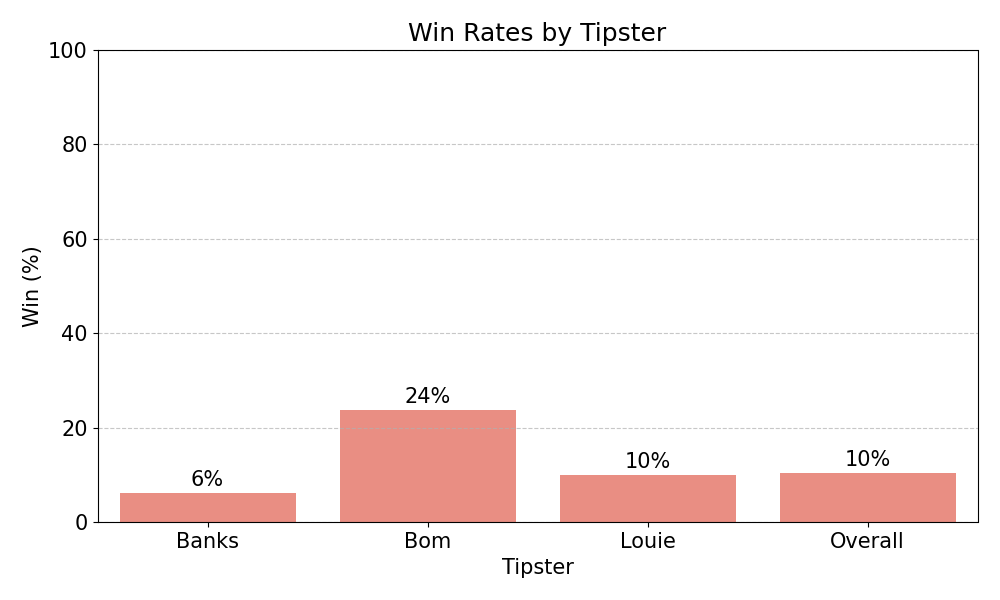
Figure 1: Win rates for each tipster, highlighting the low predictive accuracy across all three.
Aggregate ROI for the tipsters themselves is deeply negative: the best-performing influencer lost 9.3% of capital, while the worst lost 26.6%. Cumulatively, these influencers incurred a capital loss of 25.24% of staked funds.
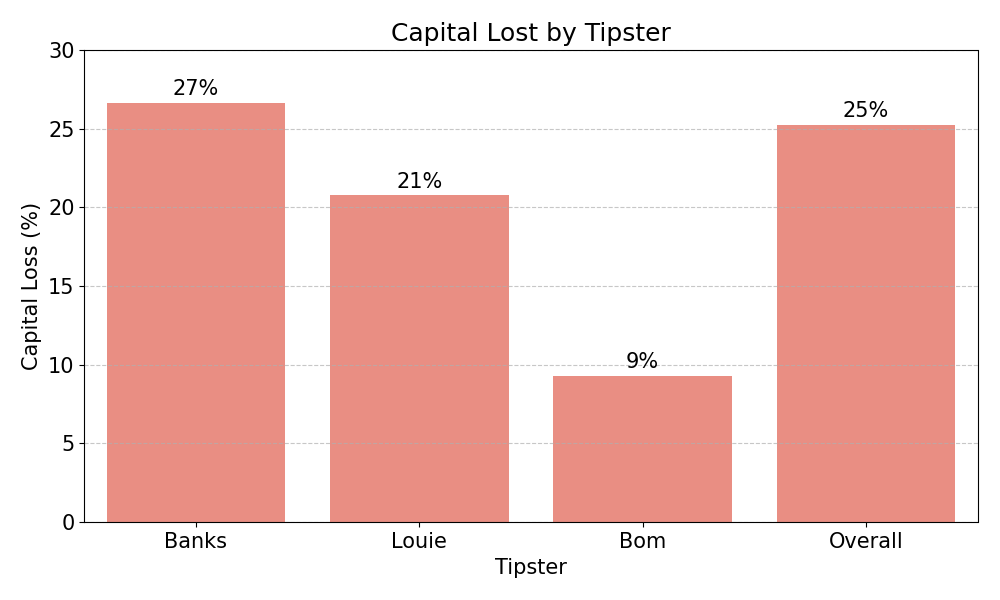
Figure 2: Comparative capital losses by influencer, quantitatively demonstrating the systemic depletion of staked capital.
When simulating follower behavior—applying a flat staking system to every recommendation—the modeled capital loss intensifies further to 38.27%.
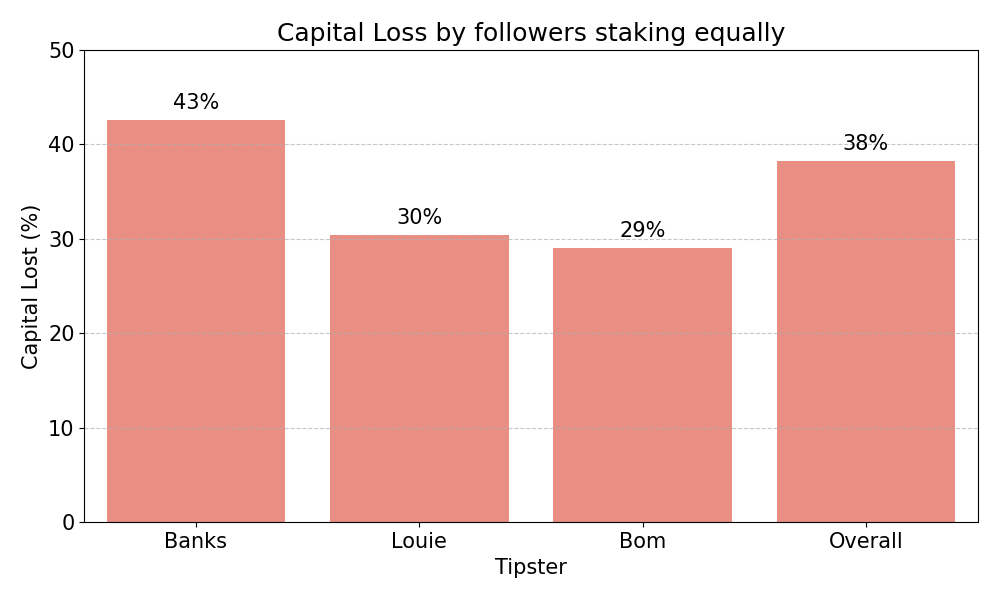
Figure 3: Simulated capital loss after a follower flat-stakes all influencer tips, illustrating amplified risk for retail followers.
Odds Stratification and Long-Shot Risk
The odds distribution analysis reveals that most followed bets are medium-odds accumulators (10–100x), with low odds (<10) representing the only segment with relatively moderate risk. The high-odds category (>100), often advertised as "life-changing" bets, results in catastrophic average losses of 74% of capital risked, decisively quantifying the negative expected value of long-shot accumulators.
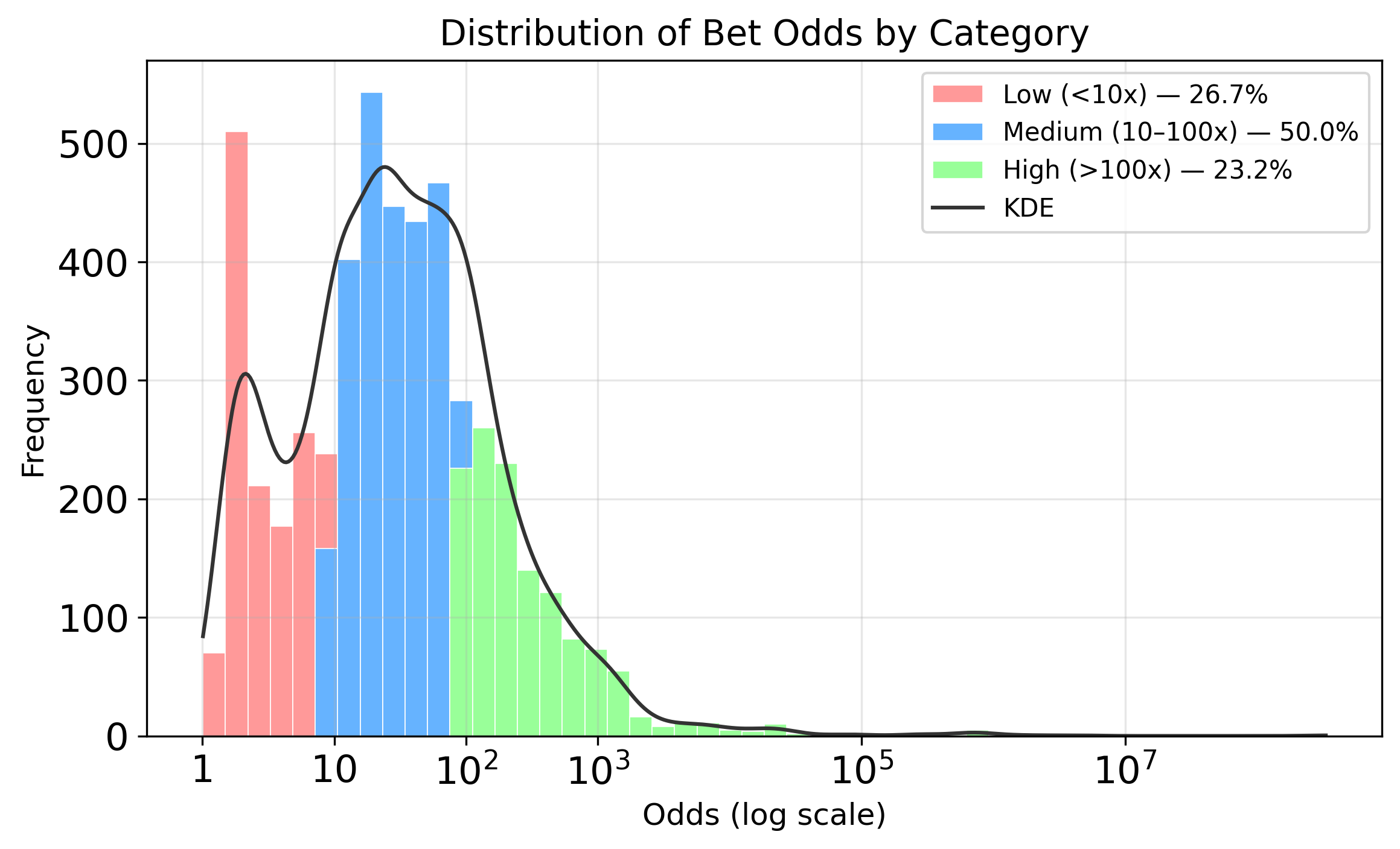
Figure 4: Distribution of bets across odds categories showing a majority in the medium-risk segment.
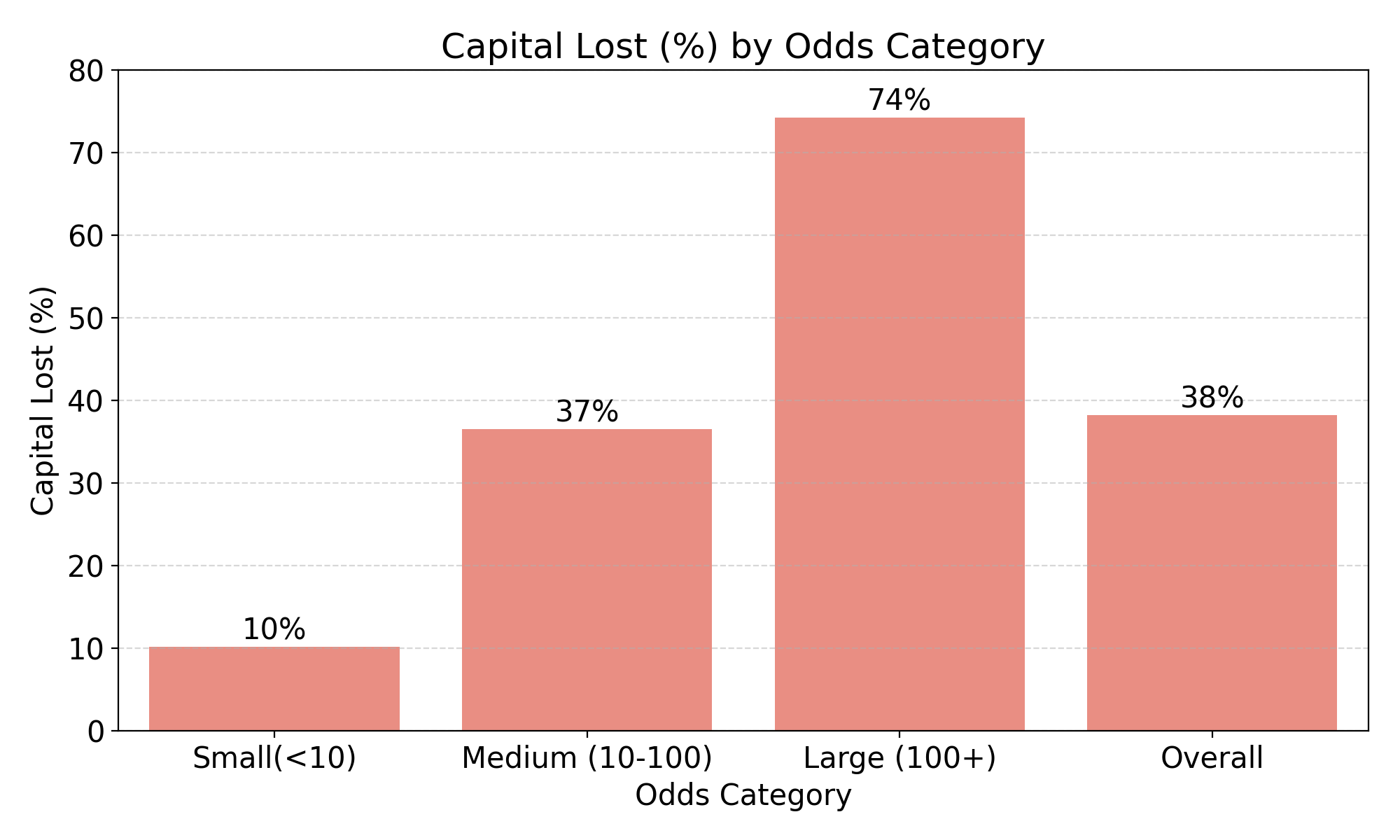
Figure 5: Capital loss by odds category, exposing the extreme risk associated with high-odds betting promoted by influencers.
Impact of Staking Systems
Static and dynamic staking strategies (Flat, Inverse, Square Root, Fixed Return) were implemented to explore the limits of bankroll management. While the Fixed Return strategy marginally slows capital depletion, no configuration yields a positive expected return—all approaches result in net losses. The variance between strategies is significant (ANOVA p<0.05) in terms of loss rate, but not in sign; all lead to systemic capital erosion.
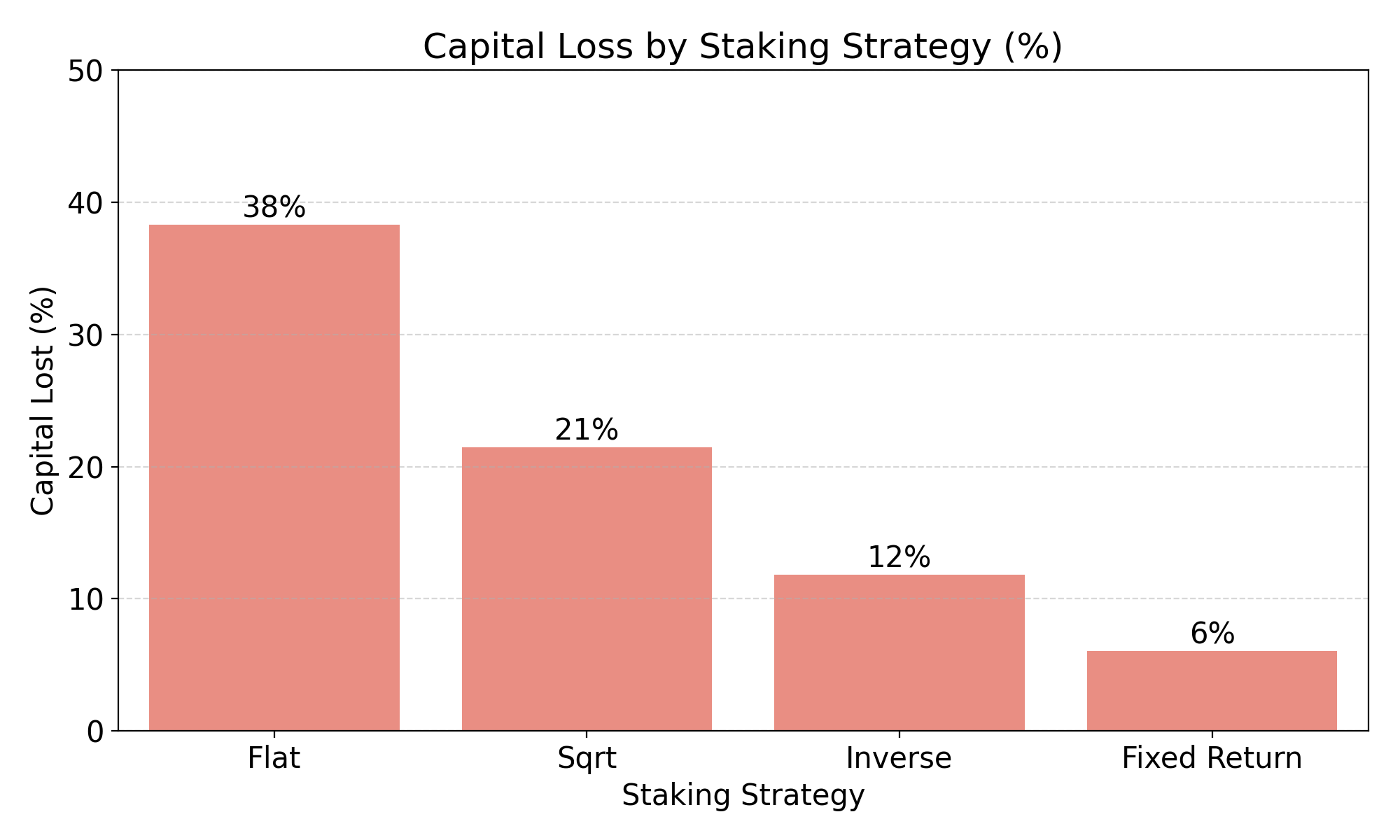
Figure 6: Losses from various staking strategies, confirming that capital management does not reverse negative expected value.
Notably, the choice of influencer has no statistically significant effect on returns (ANOVA p=0.1246), demonstrating that none offer an edge; their performance is essentially indistinguishable from random selection within the loss-inducing model.
Theoretical and Practical Implications
The study's empirical validation of heavy, persistent losses—regardless of tipster, staking strategy, or odds profile—directly confronts the illusion of influencer betting profitability. The data suggest that user-facing projections of wealth are not a function of betting skill, but are instead likely due to sportsbook affiliate commissions, which derive strictly from recruiting losing bettors.
This finding has direct regulatory implications. The lack of mandatory disclosure concerning affiliate relationships and the portrayal of betting as a legitimate source of income (rather than strictly entertainment) introduces significant risk to vulnerable populations in Nigeria, especially under current economic conditions. From a consumer protection standpoint, mandatory transparency for affiliate income and educational literacy on survivorship bias are warranted.
From a technical standpoint, the result reinforces the efficient market hypothesis as applied to retail sports betting in Nigeria: there is no arbitrage or exploitable edge available through public influencers under current conditions. Strategies for profit extraction from these bet flows are mathematically dominated by variance and negative expected value (the bookmaker margin).
Limitations and Directions for Future Research
The use of Stake.com as the underlying verification system offers excellent data integrity but limits granularity with respect to domestic platform microstructure (e.g., early cash-outs, accumulator insurance). Exploring these phenomena on indigenous Nigerian markets and with smaller, non-mega tipsters may reveal variations in risk characteristics. Behavioral studies are needed to decode persistent user engagement despite strongly negative expected returns, with implications for the design of effective intervention and education programs.
Conclusion
This investigation demonstrates, with statistically robust evidence, that following the advice of prominent Nigerian sports betting influencers on social media results in significant, predictable capital losses. There is no configuration of influencer selection or stake sizing that can convert their tips into a net-positive expectation. The influencers' apparent financial success is decoupled from actual betting returns and better explained by affiliate commission structures, raising urgent issues for gambling regulation, transparency, and financial literacy in expanding African betting markets.

