- The paper introduces a contrastive explanation framework that distinguishes the optimal avoidance maneuver from alternatives by highlighting key cost improvements.
- The methodology formulates collision avoidance as a multi-objective optimization problem using human-interpretable metrics for risk, compliance, and efficiency.
- Empirical results reveal that tailored contrastive explanations significantly enhance operator situational awareness and decision support in complex maritime settings.
Contrastive Explanation Approaches for Human-Supervised Maritime Collision Avoidance
Automated maritime collision avoidance, governed by MASS and corresponding CASs, is constrained by intricate operational environments and regulatory frameworks such as COLREGs. These limitations necessitate ongoing human supervision to ensure safe and compliant maneuvering decisions. Human operators, particularly deck officers, require high-level Situational Awareness (SA) derived not only from transparent state-action information but also from intelligible explanations of CAS objectives and rationale. The paper formalizes collision avoidance as a multi-objective optimization problem, where the CAS evaluates candidate trajectories using a linearly additive cost function—each component explicitly tied to human-interpretable objectives such as collision risk, COLREG compliance, and operational efficiency.
Contrastive Explanations: Framework and Methodology
Addressing established gaps in human-factor interfaces, the authors introduce a contrastive explanation generation framework suitable for optimization-based CASs. This framework hinges on juxtaposing the CAS-selected solution trajectory (fact) against supervisor-selected or algorithmically filtered alternatives (foils), exposing the causal features—cost components—for which the solution trajectory exhibits minimum cost attribution relative to its alternatives. The approach leverages option-centric and post-hoc explainability paradigms, aligning with cognitive theory and recent robotics literature, to selectively communicate not the full causal chain but the salient differentiators between options.
The foil selection strategy, rooted in SB-MPC's candidate trajectories, filters alternatives through constraints reflecting intuitive maneuver characteristics (e.g., Port Turn, Reduced Speed), mirroring navigator communication preferences. Explanations are constructed by prioritizing the objective with the largest relative improvement for the fact over the foil, and mapping costs to semantically meaningful measures (e.g., CPA, speed offsets). The framework supports ahead-of-time simulation and event-triggered explanation generation, providing contextually timed and actionable insights for the operator.
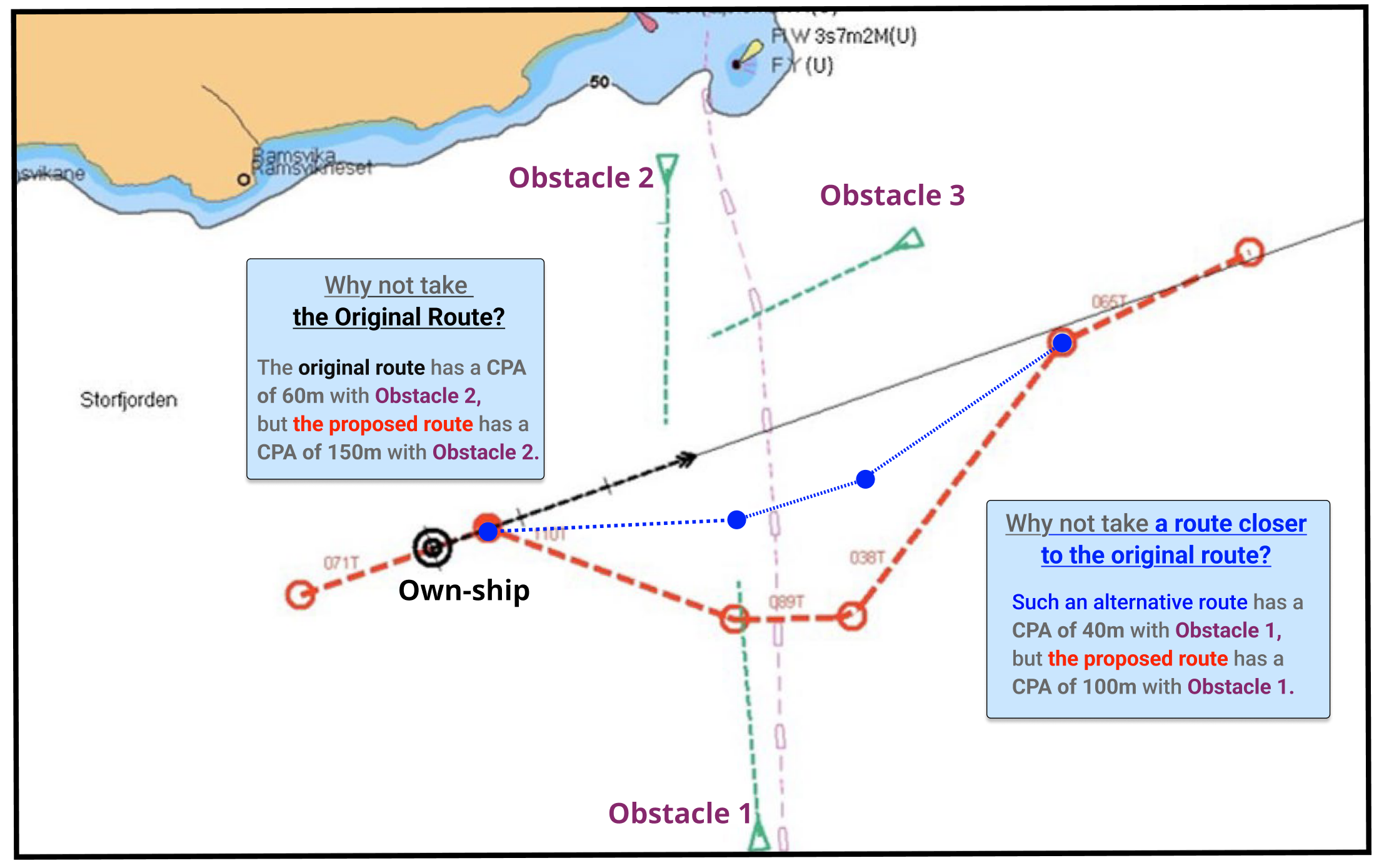
Figure 1: Contrastive explanations overlaid on ECDIS visualize the rationale behind a collision avoidance maneuver by contrasting the system's proposed, nominal, and alternative routes.
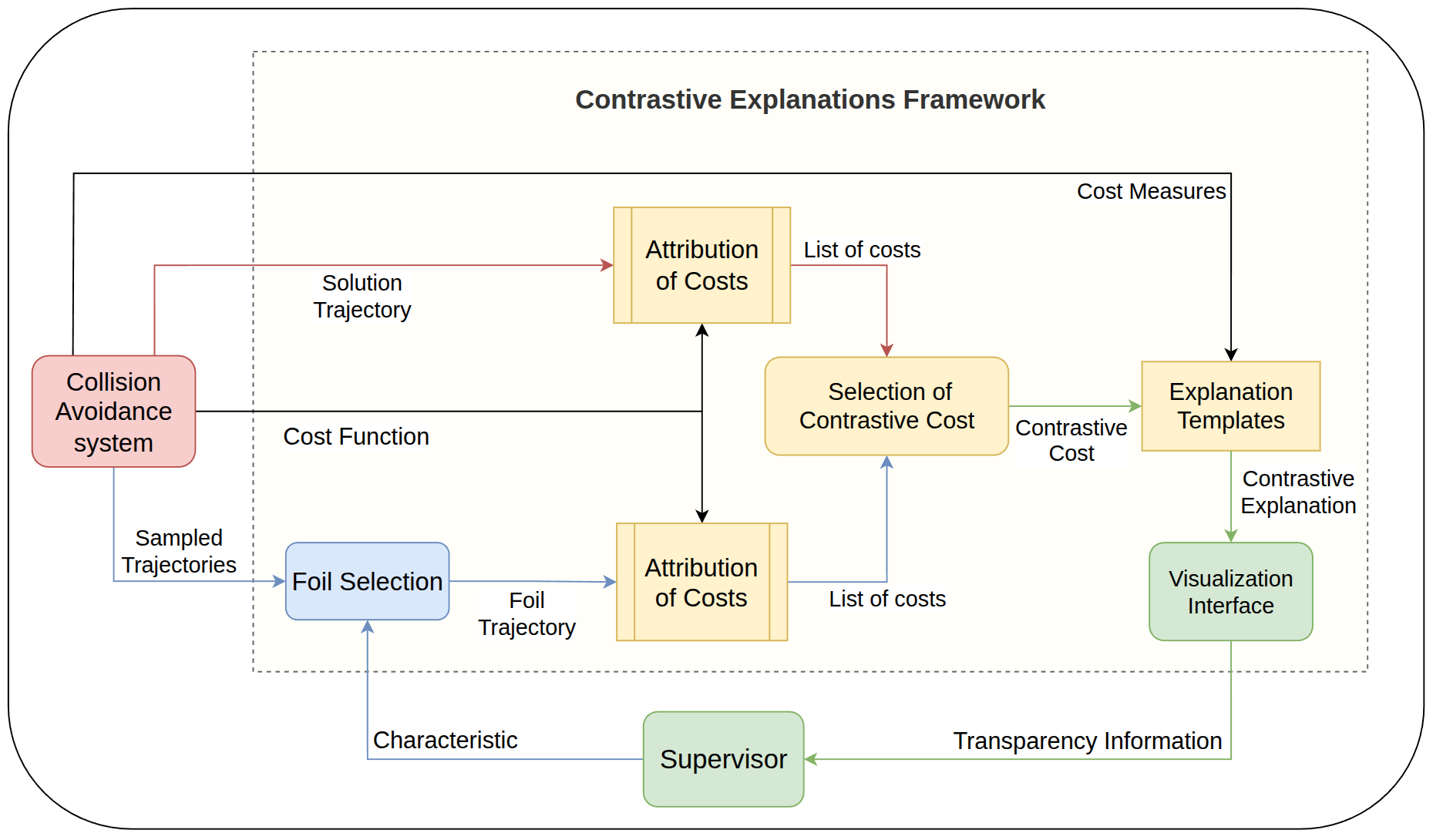
Figure 2: The framework extracts objective-specific costs from the CAS, generates contrastive explanations, and visualizes them for operator supervision.
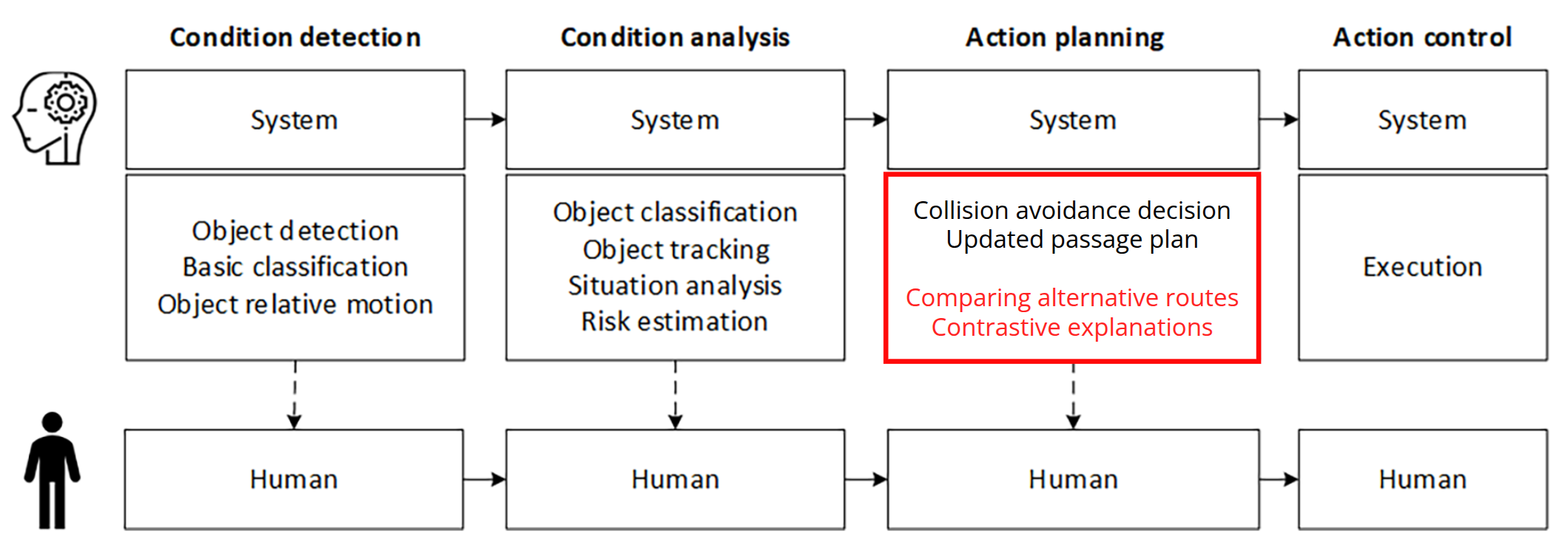
Figure 3: Position of contrastive explanations within adapted PSW transparency layers supporting the action planning stage.
Interface Design and Experimental Scenarios
The visualization interface, drawing from transparency layer literature, integrates map-based trajectory views, tabular action parameters, textual contrastive explanations, and perceptual data on target vessels. This multi-modal presentation is designed to blend real-time transparency with succinct, contextually relevant contrastive explanations. The interface supports operational scenarios ranging from single to multi-vessel encounters, with complexity modulated to probe the explanatory value across varying supervisory workloads.
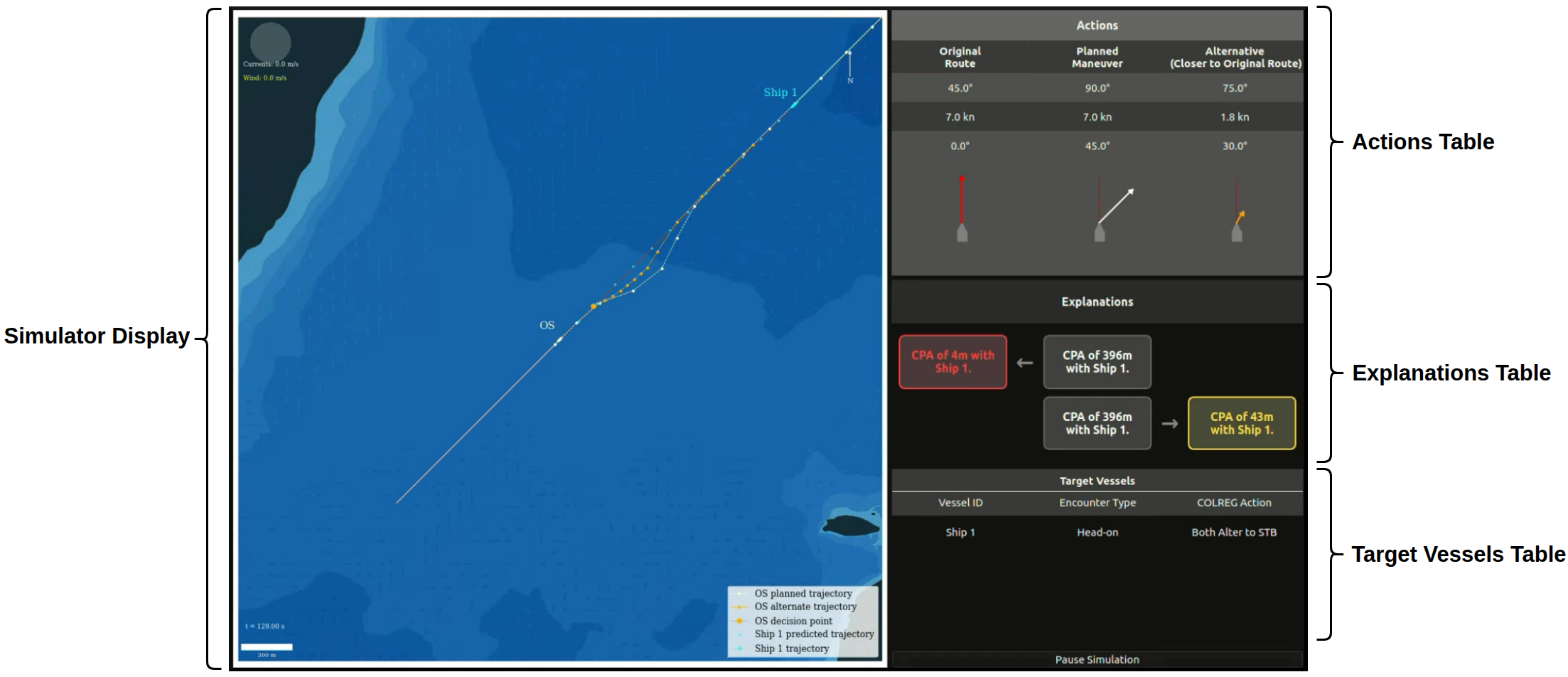
Figure 4: The visualization interface spatially organizes transparency information, maneuver actions, and contrastive explanations for CAS supervision.
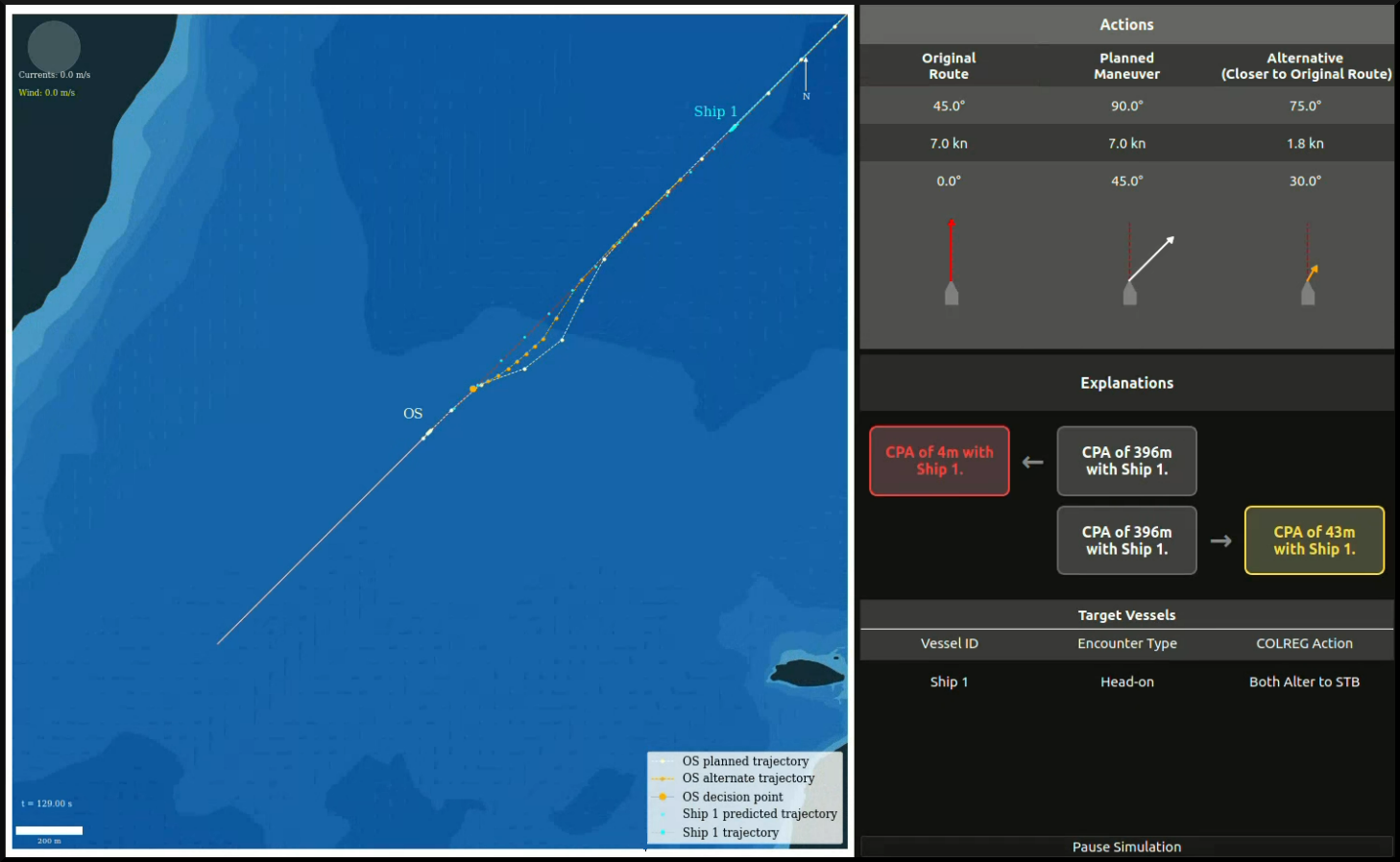
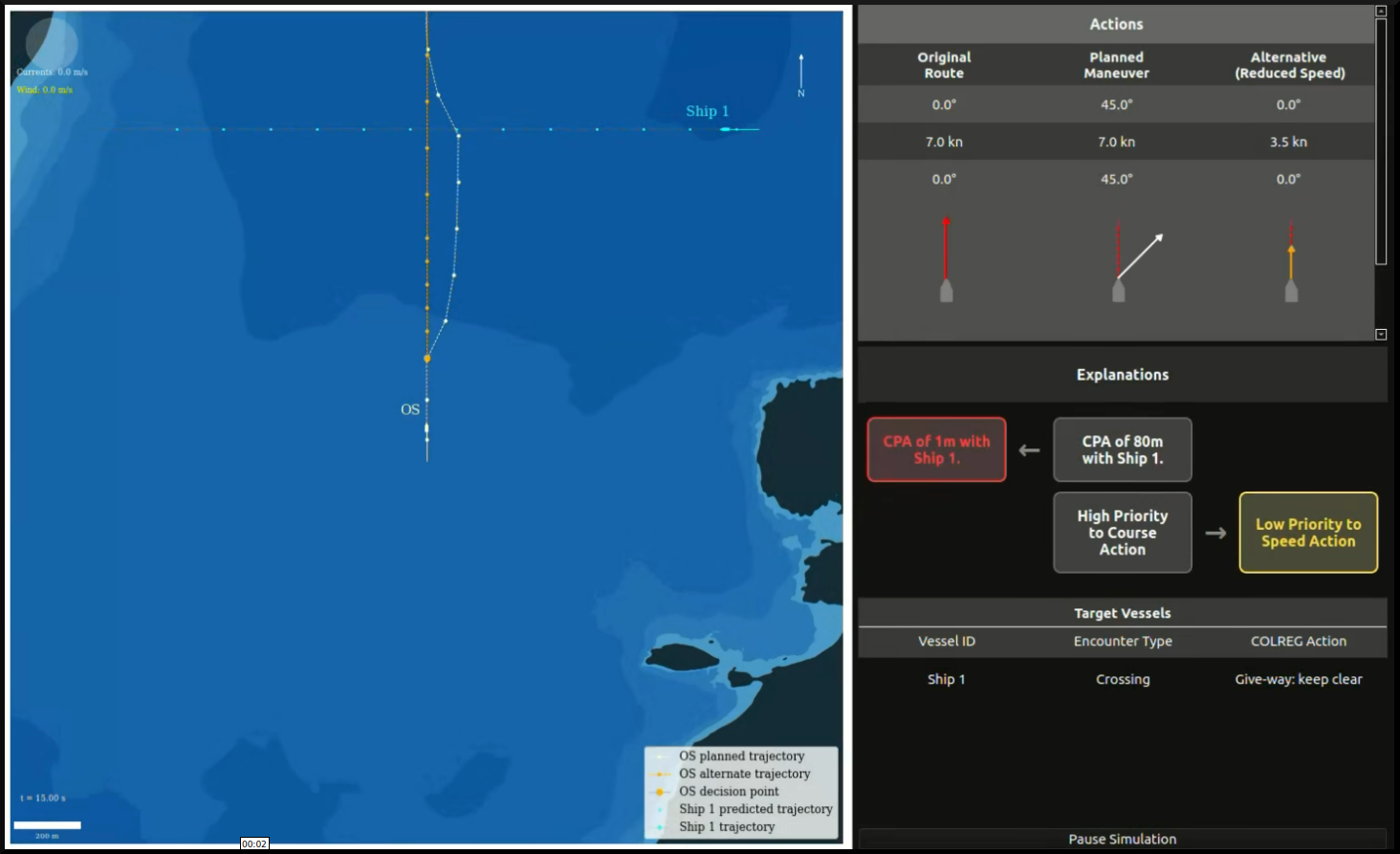
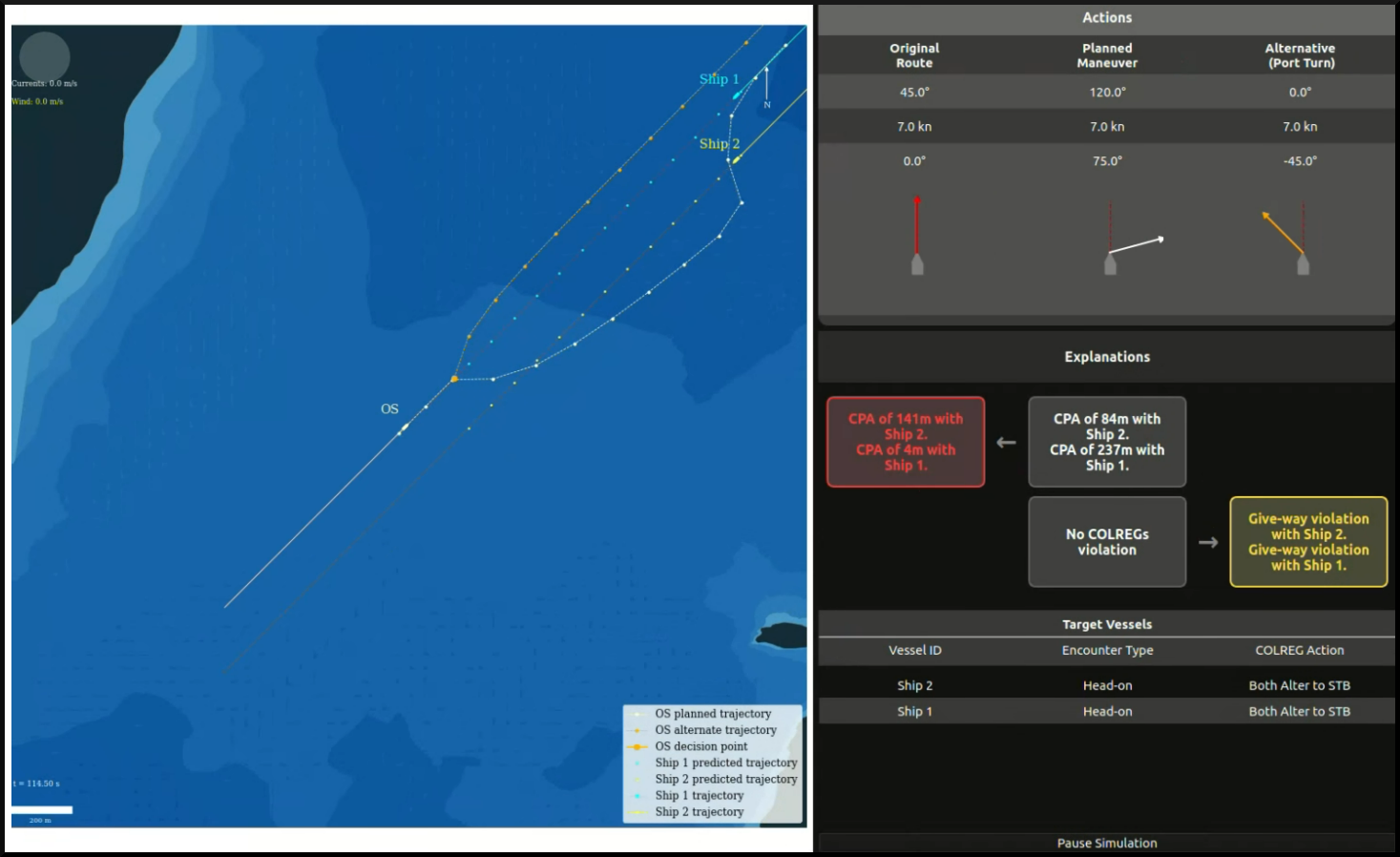
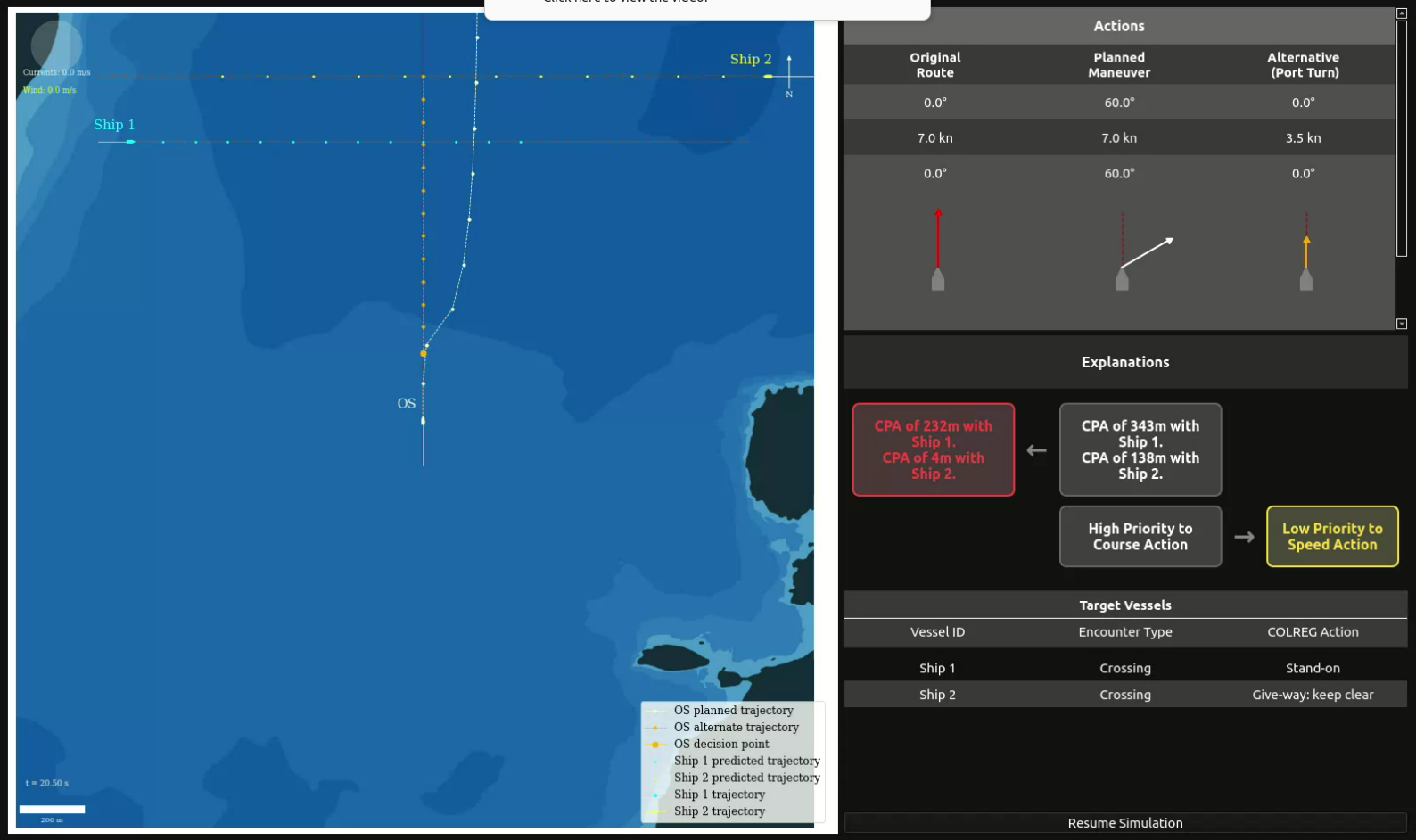
Figure 5: User study scenarios include head-on and crossing encounters, with respective alternative maneuvers and associated explanations.
Empirical Evaluation: User Study Insights
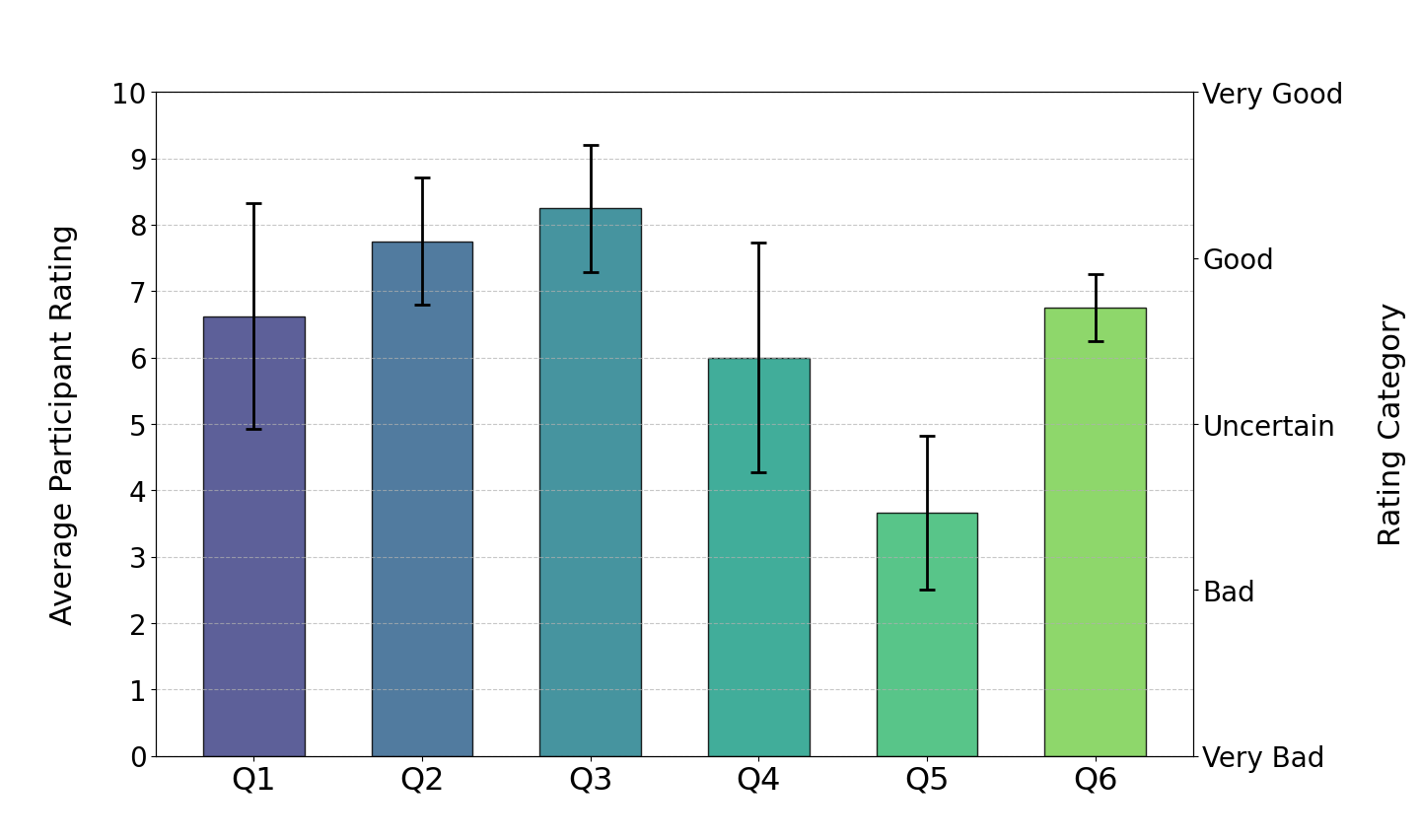
An exploratory user study was conducted with four certified deck officers overseeing CAS actions within simulated vessel encounters. The trial design, grounded in practical maritime scenarios, elicits both quantitative and qualitative feedback on explanation utility, maneuver comparison, information sufficiency, impact on response time, and overall preference.
Key findings from participant feedback:
Implications, Limitations, and Future Directions
The research demonstrates that contrastive explanations enhance human-machine interaction by enabling supervisors to reason about CAS objectives and trade-offs in avoidance maneuvers. Selective explanatory strategies mitigate information overload and foster trust, especially in contexts where alternatives reflect operator expectations or scenario dynamics.
Practically, implementation of contrastive explanations in MASS interfaces can facilitate safer operations by improving decision accountability and procedural compliance. Theoretically, the work highlights the necessity of context-aware and interactive explanation modalities in human-in-the-loop optimization systems and opens avenues for conversational AI integration, richer interface overlays (ECDIS/ARPA), and systematic evaluation against other explanation forms.
Limitations stem from the small sample size and potential novelty effect, warranting caution in generalizing findings. Further validation through scenario-based user trials, expanded alternative selection mechanisms, and integration with CASs capable of intent negotiation is recommended. Demand-driven and scenario-specific explanation approaches emerge as promising directions for balancing explanatory value against cognitive workload.
Conclusion
This paper advances explainability in maritime CAS supervision by formalizing and empirically examining contrastive explanation frameworks tailored to optimization-based planners. Empirical results suggest contrastive explanations significantly support operator understanding and decision-making, particularly in complex navigation scenarios. Demand-driven and adaptive explanation strategies, enriched interface modalities, and further studies with advanced CASs are identified as essential for optimizing human-AI teaming in maritime autonomy.