- The paper introduces NIRVANA, detailing a dataset capturing keystroke-level and conversational dynamics in student-AI essay writing.
- It employs a custom writing platform to record detailed interaction events, enabling quantitative analysis of AI query frequency, essay metrics, and writer profiles.
- Findings indicate that higher AI query frequency correlates with longer, less readable essays, offering actionable insights for pedagogical and policy interventions.
NIRVANA: A Comprehensive Dataset for Reproducing Student-AI Essay Writing Dynamics
Introduction and Context
The NIRVANA dataset represents a substantial advancement in empirical research on AI-assisted academic writing, documenting keystroke-level behaviors and full conversational histories as university students complete argumentative essays with unrestricted access to ChatGPT. Unlike survey-based studies, NIRVANA reconstructs the temporal dynamics of AI usage, capturing not only when and how students seek assistance but also the exact pathways by which AI-generated content is incorporated into their writing. This enables rigorous quantitative and qualitative analysis of student–AI interaction patterns, critical for informing pedagogical design and policy amid increasing adoption of generative AI in education.
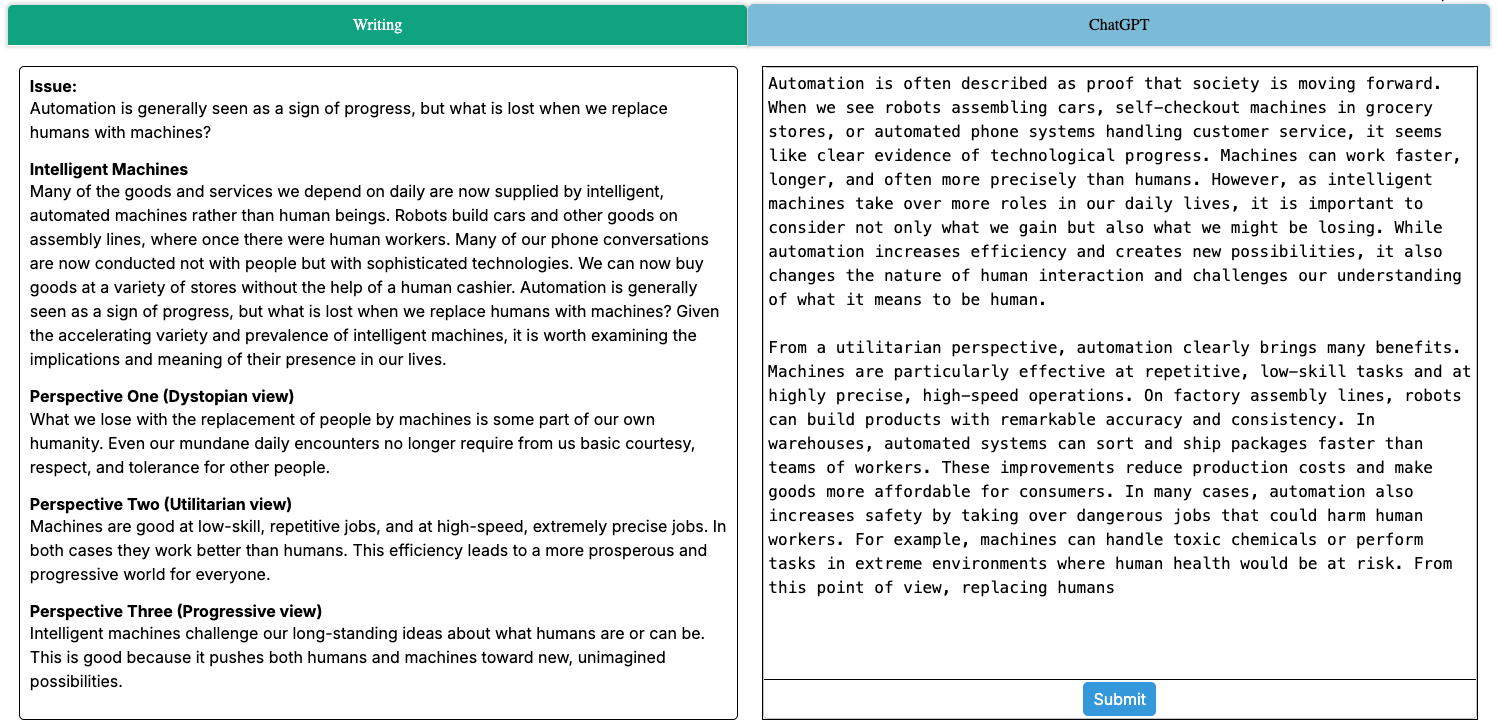
Figure 1: Screenshot of the editor interface where student essays were composed and monitored during data collection.
Dataset Collection Methodology
NIRVANA was collected via a custom writing platform integrating an in-house instance of ChatGPT (GPT-3.5-turbo), supporting authentic student-driven interaction. The platform monitored all keystroke events (insertions, deletions, cursor movements, copy–paste), ChatGPT queries, responses, and event timestamps. Students completed an ACT-style argumentative prompt over approximately 30 minutes, following a pre-survey capturing demographic and attitudinal measures (self-efficacy, TAM) and a post-survey evaluating perceived ownership and creativity support. Seventy-seven participants were recruited from U.S. university mailing lists and Prolific, spanning a diverse range of backgrounds.
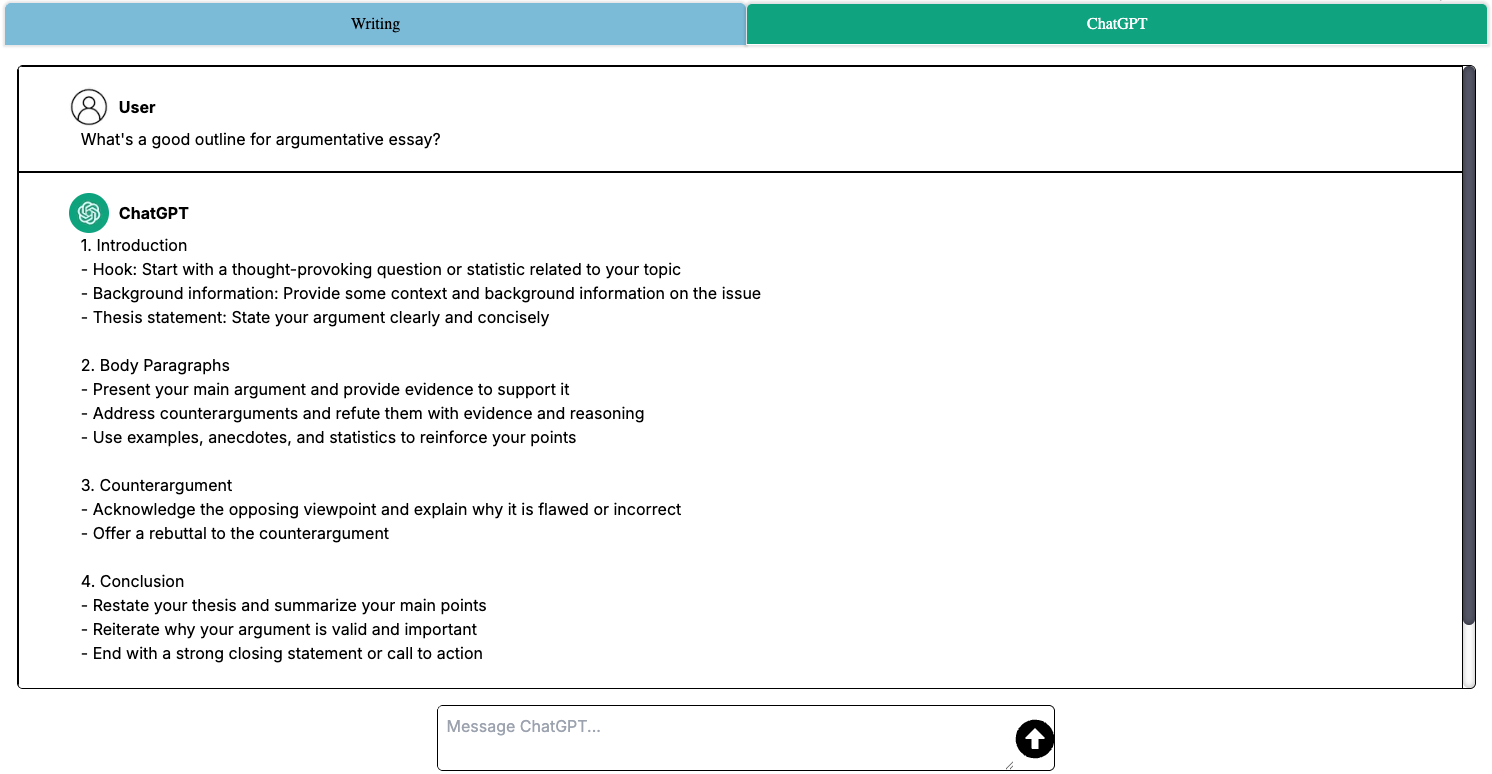
Figure 2: Screenshot of the in-house ChatGPT interface provided to participants within the writing environment.
Quantitative Analysis of AI Usage Patterns
The dataset supports high-resolution quantitative characterization of essay metrics (length, readability, time taken) and AI interaction patterns (number, content, timing of queries). The observed word count distribution (μ=382, σ=235) and the inquiry counts (mean $4.51$, skew $2.24$), demonstrate substantial inter-participant variability.
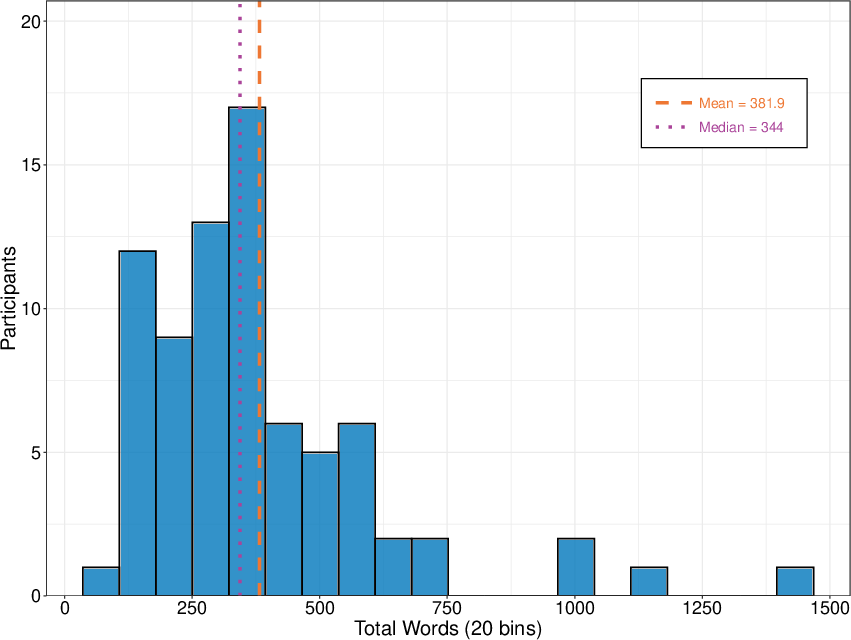
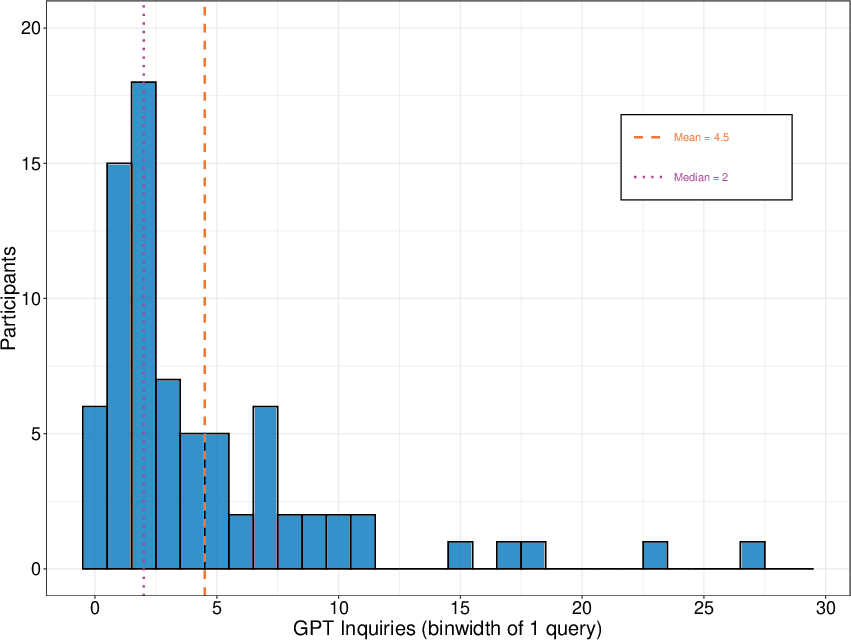
Figure 3: Distribution of essay word counts across all participants.
Spearman rank correlations show that query frequency is significantly associated with essay length (ρ=0.485) and time taken (ρ=0.493), but not with perceived ownership or creativity support. Higher query counts yield longer and less readable essays, as measured by Dale-Chall scores (ρ=0.380), suggesting that increased engagement with AI is linked to both more voluminous and more complex output.
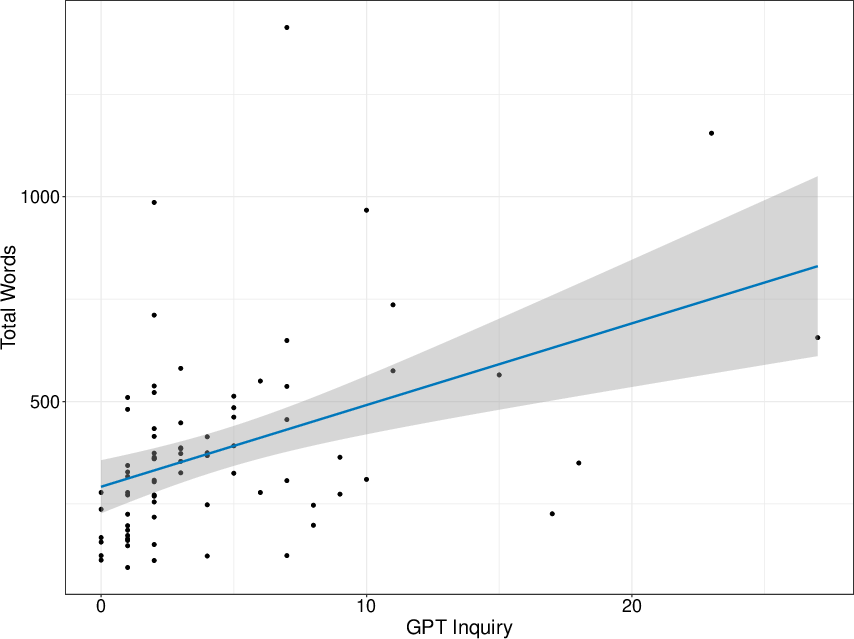
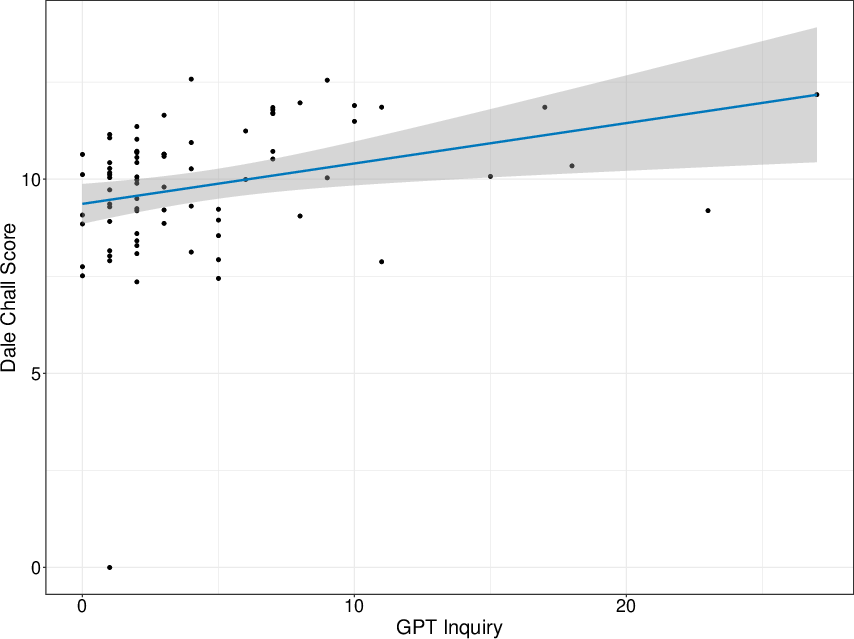
Figure 4: Word count correlation between ChatGPT query frequency and essay length.
Human Contribution and Writer Profiling
Two key behavioral metrics were introduced: Human Contribution Ratio (HCR), representing the proportion of final essay words authored by the participant, and Human Edit Ratio (HER), quantifying the proportion of editing activity attributable to the participant, including deletions of AI-generated text. Both distributions reveal polarization—most essays are either predominantly human-written or heavily AI-authored, with few blended cases.
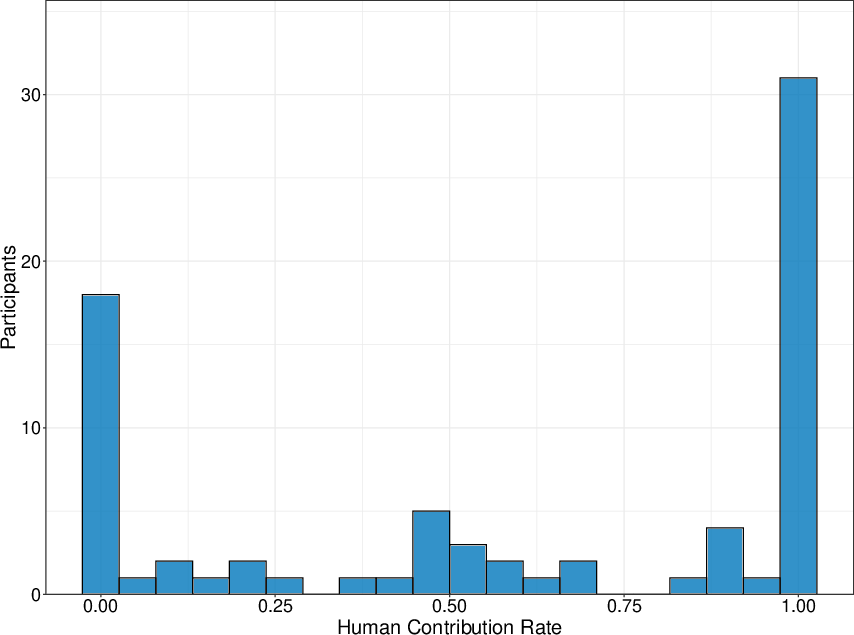
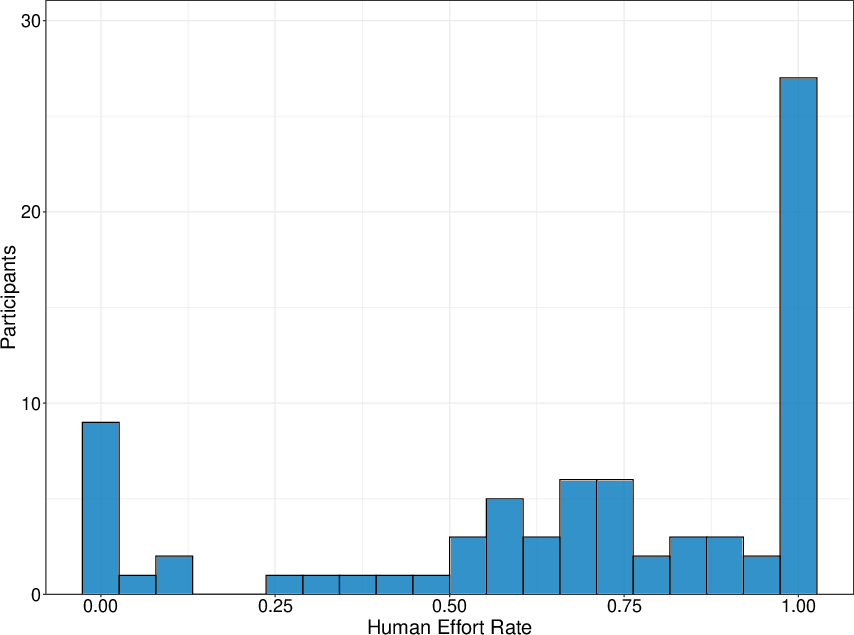
Figure 5: Distribution of the Human Contribution Ratio (HCR) across participants.
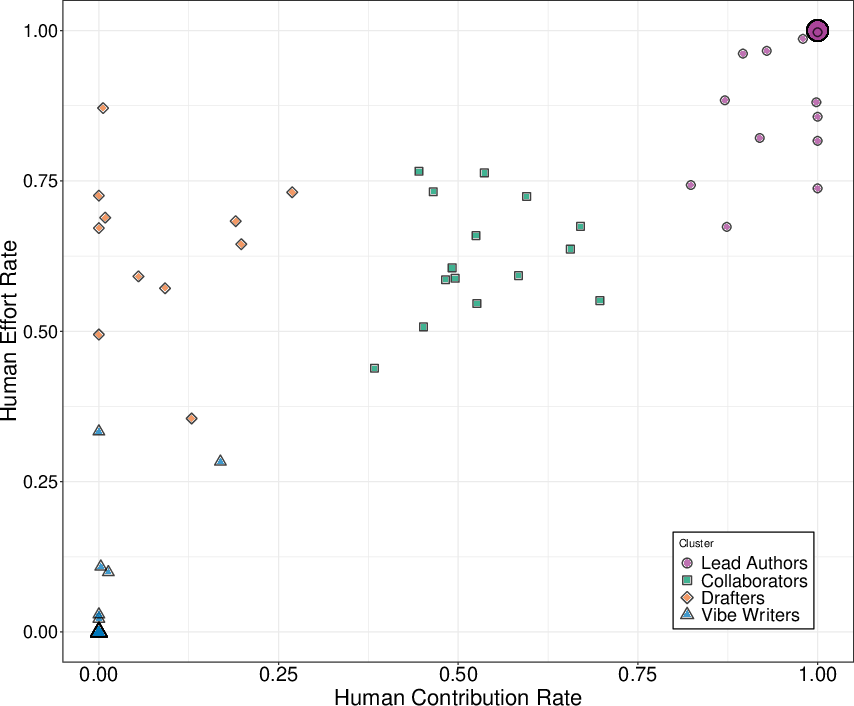
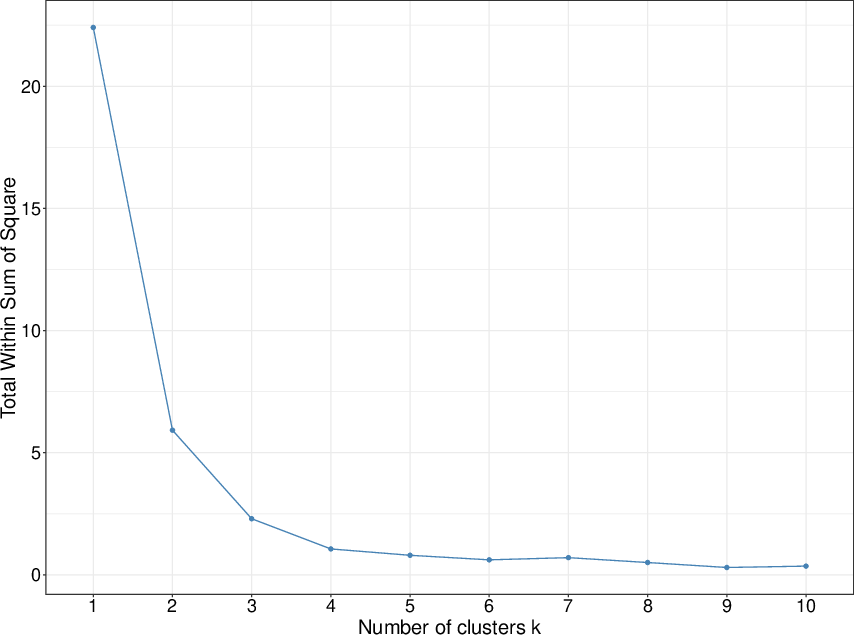
K-means clustering (with K=4, confirmed via SSE elbow method) based on HCR and HER identifies four primary writer profiles:
Statistical comparisons reveal strong differences: Collaborators query ChatGPT more frequently than Lead Authors; Vibe Writers produce essays most rapidly, but with lowest perceived ownership; Lead Authors' essays are more readable (lower Dale-Chall scores), and they report higher authorship agency.
(Figures 6–9)
Figure 7: Inquiry usage distribution across writer clusters.
Figure 8: Task completion time across clusters.
Figure 9: Dale-Chall readability scores across clusters.
Figure 10: Perceived Ownership score distribution across clusters.
Replay Interface and Qualitative Analysis
To enable in-depth, process-level review beyond aggregate metrics, a replay interface was developed, allowing chronological reconstruction of essay composition and AI interaction. Researchers can visualize text growth, pinpoint pivotal events (queries, copies, edits), and correlate them with student-AI exchanges. Case studies illuminate the nuanced engagement patterns: some students use AI for ideation while writing independently; others 'vibe write', outsourcing essay authorship to ChatGPT; a subset initially drafts essays themselves but ultimately adopt AI-generated rewrites.
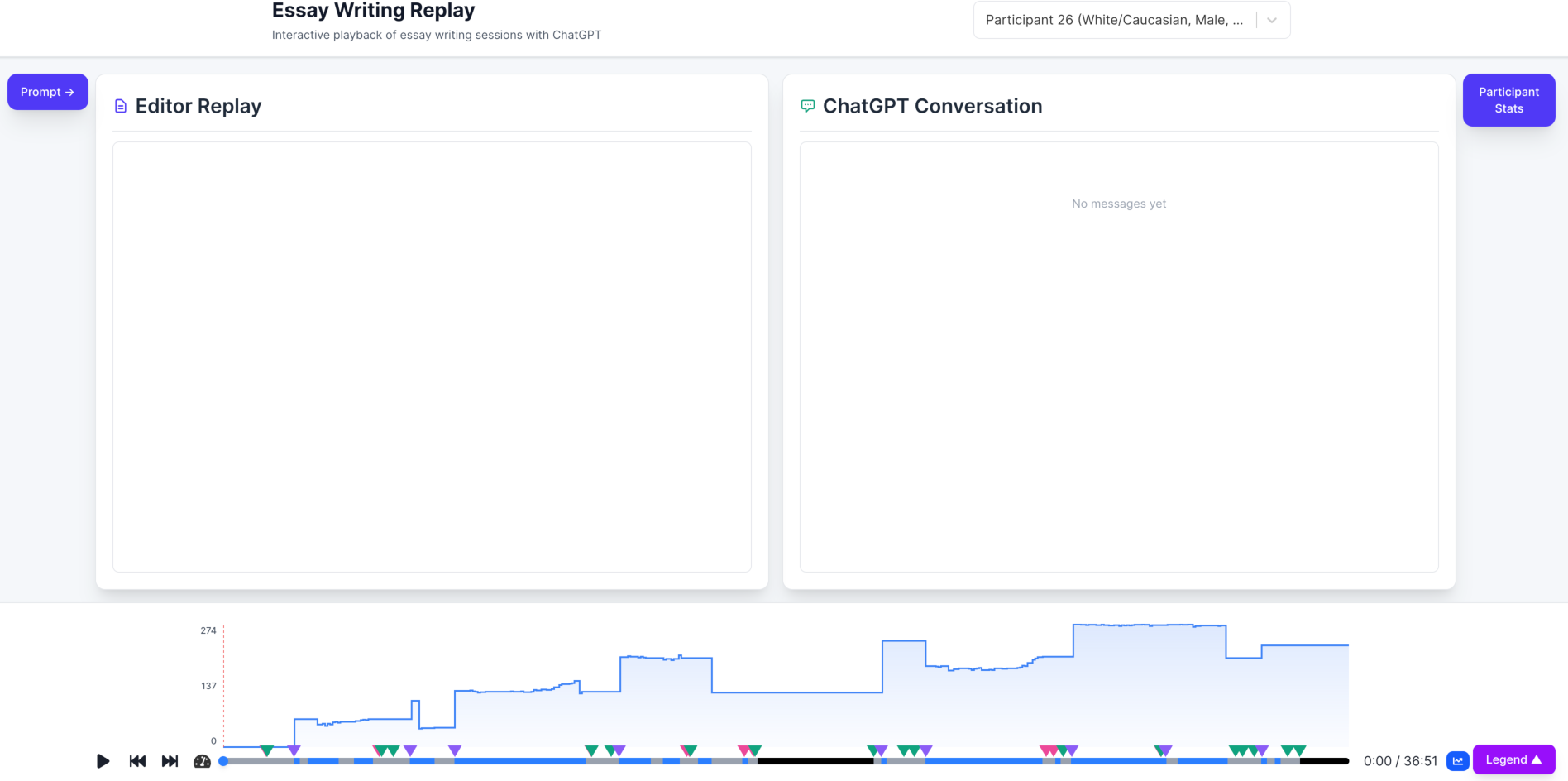
Figure 11: Example of the writing replay interface for participant P26, capturing text evolution and AI interaction events.
Theoretical and Practical Implications
NIRVANA provides critical empirical evidence to dissect the spectrum of student involvement with generative AI, exposing the limitations of final-product analysis and enabling nuanced assessment of cognitive engagement. The clustering framework yields actionable pedagogical insight: scaffolding assignments toward independent drafting with selective AI use fosters greater ownership and agency, while metrics such as HER differentiate superficial editing from substantive engagement.
The findings complicate simple narratives about AI dependency: while most students retain authorship, a notable minority fully delegate essay generation. The dataset, with its full traceability, is instrumental for investigating academic integrity issues, developing AI policy guardrails, and benchmarking detection systems (2604.07344). Furthermore, it is highly relevant for evaluating the impact of AI assistance on learning outcomes and critical thinking—recent meta-analyses show positive effects on learning performance but ambiguous effects on higher-order thinking, emphasizing the need for process-based research [wang_effect_2025], [lee_impact_2025].
Future Directions
NIRVANA supports further exploration in several domains:
Conclusion
NIRVANA constitutes a comprehensive, reproducible framework for studying authentic student–AI writing interaction at temporal granularity. It delivers critical empirical resources for learning science, HCI, and NLP communities to develop evidence-based pedagogical and policy responses to generative AI, enabling sophisticated analysis of academic integrity, learning outcomes, and authorial agency. Through its dataset and replay tools, it establishes a foundation for advancing research, supporting responsible AI integration, and designing adaptive educational systems as generative technologies reshape academic writing.