- The paper presents FaceTell, a system that leverages facial reflections to decode on-screen content in video conferencing, achieving near-perfect accuracy.
- It uses a combination of face segmentation, super-resolution enhancement, and two-tier neural classification to infer application usage.
- Experimental evaluation on diverse settings validates its performance, while proposed countermeasures address emerging privacy threats.
Screen Attack via Facial Reflections in Video Conferencing: A Technical Analysis of FaceTell
Introduction and Motivation
The proliferation of video conferencing has prompted renewed scrutiny of privacy attacks exploiting optical side channels. The paper "Turn Your Face Into An Attack Surface: Screen Attack Using Facial Reflections in Video Conferencing" (2604.06729) identifies human faces as a previously unconsidered surface for remote eavesdropping during ubiquitous online meetings. Unlike prior work centered on specular objects such as eyeglasses, which are not omnipresent and exhibit geometric constraints, the human face remains the primary focal point and a stable reflector illuminated simultaneously by ambient environmental and display sources. The paper substantiates, theoretically and empirically, that facial regions encode subtle optical cues of screen content. This motivates FaceTell: a system designed to extract and decode these cues for secondary activity inference.

Figure 1: An example of screen-based attacks, illustrating the attacker inferring on-screen activities by analyzing light patterns reflected on the victim's face in video conferencing streams.
Theoretical Foundation of Facial Reflection Attacks
The authors present a formal radiometric and geometric model characterizing light propagation from the screen to facial points and subsequently to the camera. Leveraging the Phong reflection model, the analysis demonstrates that each face region accumulates a weighted sum of luminance contributions from localized screen zones, dictated by angular incidence and spatial parameters. Simulation and experimental validation verify fine spatial sensitivity—distinct facial areas preferentially reflect light from corresponding screen segments. The minimal differentiable content analysis establishes the lower bound for screen area that induces statistically significant facial optical modulation. These results delineate the physical plausibility and limitations of exploiting diffuse-specular blends in facial reflectance for screen context inference.
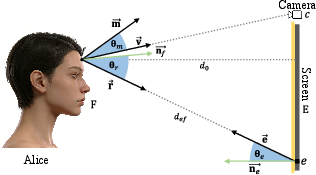
Figure 2: Theoretical modeling of facial reflections in video conferencing, depicting geometric relationships among screen, facial surface, and camera.
FaceTell System Architecture
FaceTell comprises two main pipelines: (1) face segmentation and super-resolution reconstruction from dynamic, bandwidth-constrained video streams; and (2) two-tier neural classification of screen content via facial reflectance features.
Face Segmentation and Reconstruction
FaceTell employs Mask R-CNN for robust face isolation, followed by Haar feature cascade for precision segmentation. Given that raw meeting frames exhibit variable, often suboptimal resolutions and faces occupy only a minor fraction of the frame (mean ratio ≈16%), the system applies the CAMixerSR super-resolution network to upscale and normalize facial images. This step is empirically shown essential—ablation removes it induces >7% accuracy drop.
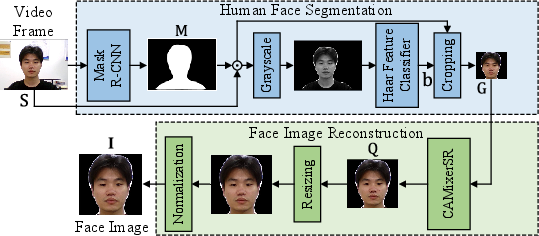
Figure 3: Workflow of face segmentation and reconstruction, showing detection, cropping, and enhancement of face regions from video frames.
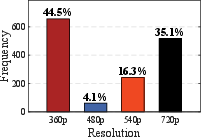
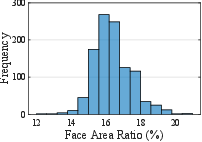
Figure 4: Histogram of video resolutions, revealing substantial prevalence of low-resolution frames in typical online meetings.
Screen Content Inference
FaceTell models application inference as a classification task on enhanced facial feature maps. Feature extraction utilizes a residual block coupled with a CBAM (Convolutional Block Attention Module), achieving channel and spatial attention for robust abstraction. A two-tier hierarchy first predicts coarse category, then fine-grained application within category using dedicated predictors. Temporal label smoothing is realized via a Heuristic Label Correction (HLC) algorithm, operationalizing empirical session duration priors to correct spurious predictions.
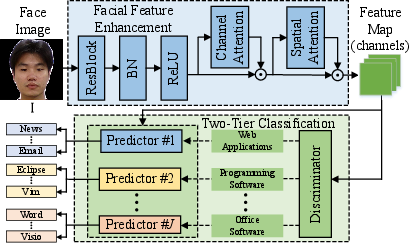
Figure 5: The framework of FaceTell’s screen content inference component, illustrating feature enhancement and hierarchical classification.
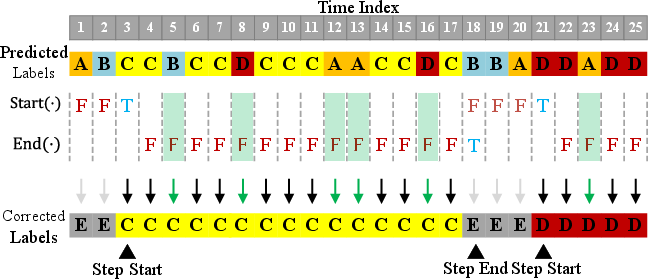
Figure 6: Illustration of heuristic label correction, showing temporal smoothing of application labels based on continuity heuristics.
Experimental Evaluation
Dataset and Setup
FaceTell is evaluated on >12 hours of video data from 24 subjects across 13 environments, covering 28 popular applications and four conferencing platforms on three commodity laptops. Each subject sequentially uses all applications; extensive metadata ensures rigorous annotation.
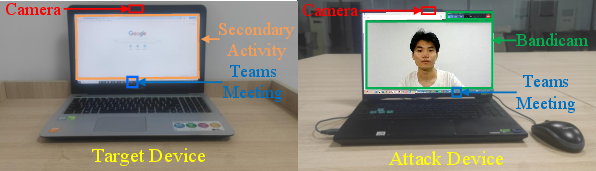
Figure 7: Device setups during data collection, illustrating attack-target configuration across diverse settings.
Accuracy and Ablation
FaceTell achieves 99.32% application prediction accuracy and 99.85% for category inference. Performance declines are observed only between visually similar applications (e.g., Microsoft Office Suite, IDEs), as displayed by confusion matrix analysis.
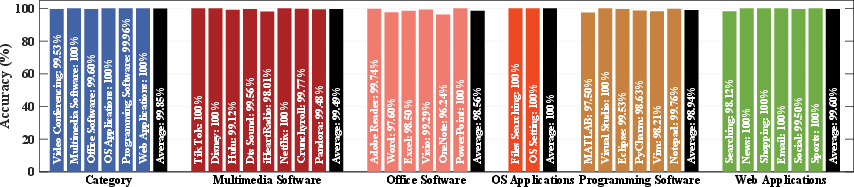
Figure 8: Overall performance of FaceTell, reporting classification accuracy for categories and applications.
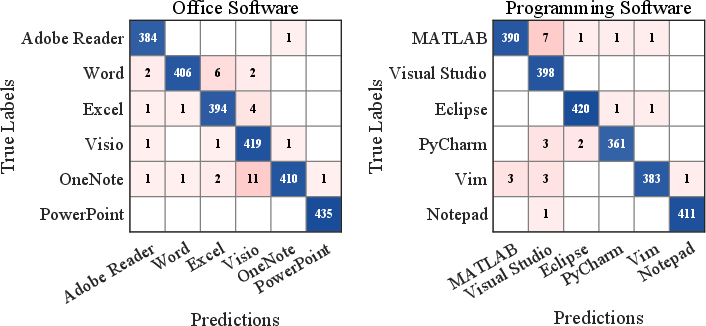
Figure 9: Confusion matrices for office and programming software, highlighting errors among visually similar UI layouts.
Ablation studies confirm criticality of super-resolution, attention modules, two-tier classification, and label correction, each contributing 7–27% improvements. t-SNE visualization demonstrates distinct clustering at category level; intra-category clusters show partial overlap reflecting UI similarities.
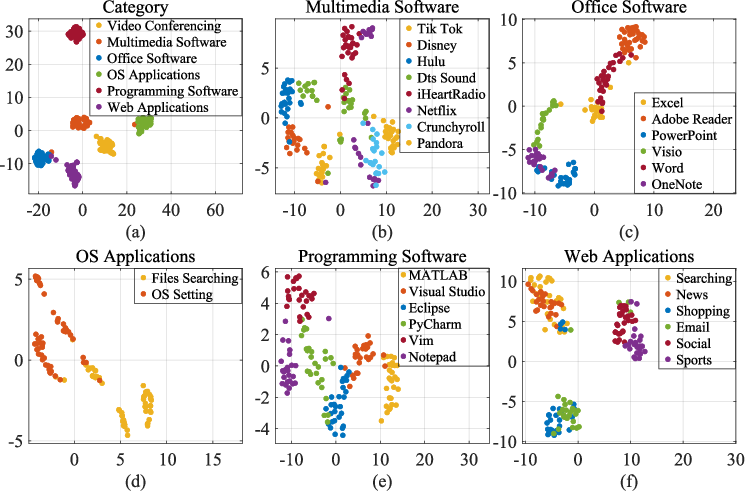
Figure 10: Feature visualization using t-SNE, confirming category discriminator’s separability and partially overlapping application predictors.
Inference speed per frame averages 124 ms. Runtime profiling establishes FaceTell's scalability, supporting simultaneous attack on two victims with manageable CPU/GPU utilization.
Robustness to Practical Impact Factors
FaceTell exhibits resilience to subject gender (difference <1%), facial occlusions (performance restored to >99% post-HLC), varying face-screen distances/angles (maintained >96% accuracy in recommended 50–100 cm/angle range), and realistic ambient light intensities (face illuminance <130 lux). Severe degradations are observed only with excessive face-screen separation, strong ambient light (>300 lux), multiple screens, outdoor environments, and skin smoothing filters.
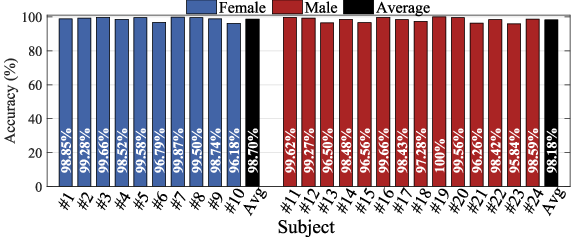
Figure 11: Application prediction accuracy across subjects, confirming robustness to gender and occlusion.
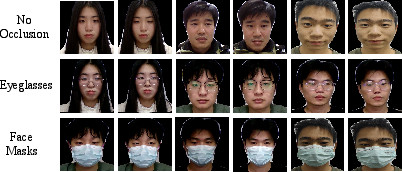
Figure 12: Face images under different occlusion conditions, showing highlighted regions for reflection sensitivity.
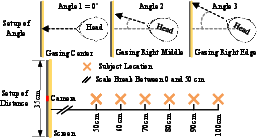
Figure 13: Setups for varying distances and angles, benchmarking FaceTell's robustness to physical configuration.
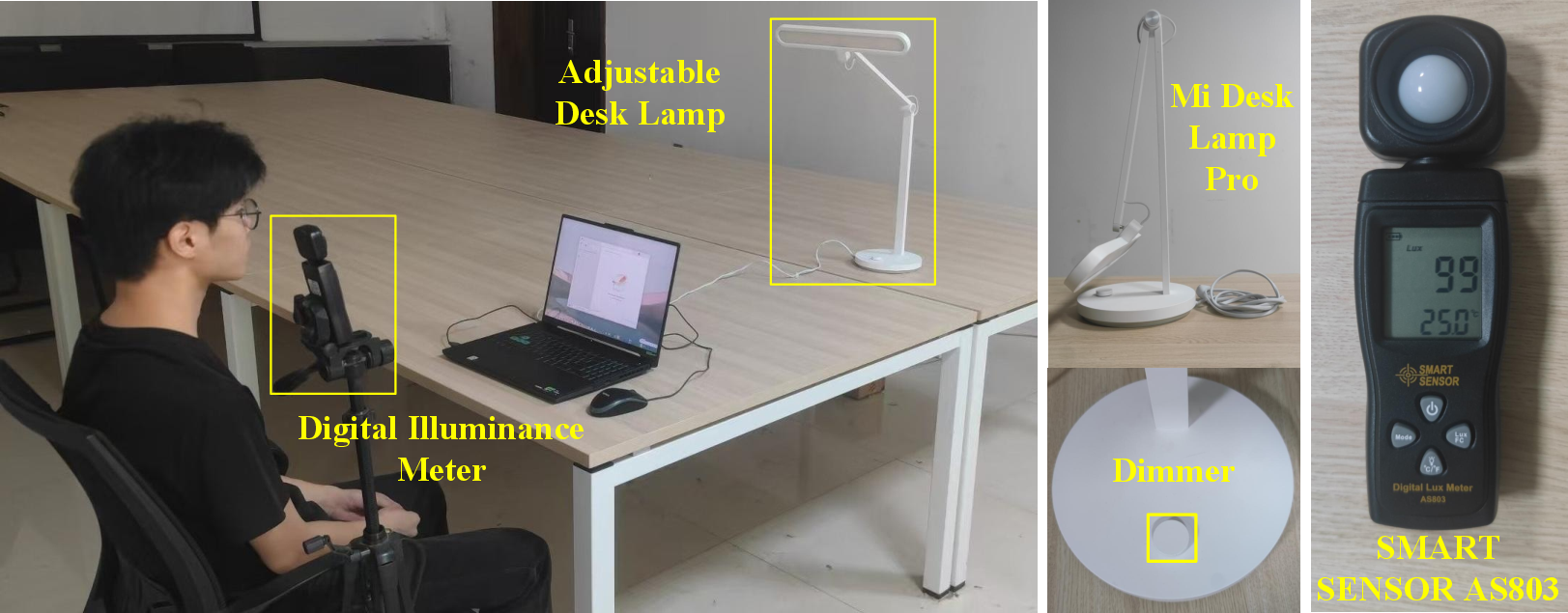
Figure 14: Ambient light testbed, enabling controlled illumination studies for resilience evaluation.
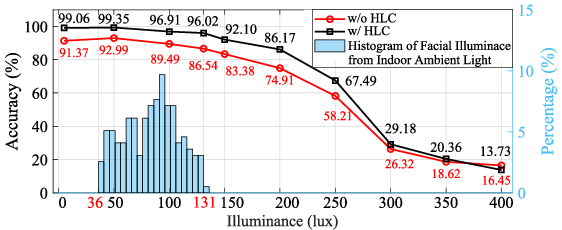
Figure 15: Accuracy as a function of ambient light intensity, detailing FaceTell’s performance curve under indoor lighting.
Limitations
FaceTell’s efficacy is sharply reduced in scenarios with multiple screens (accuracy 15%), outdoor environments (13.99%), and skin smoothing filters (17.91%). Dark mode settings, though less catastrophic, drop prediction accuracy to 64.13%. Extension to unseen applications relies on coarse category generalization, which yields 82.88% for YouTube in multimedia grouping.
Countermeasures
Three countermeasures are proposed:
- Additional Dynamic Light Sources: Introducing secondary light sources outside camera FoV significantly degrades screen content partitioning.
- Skin Smoothing Filters: Software-based smoothing distorts facial optical patterns, undermining attack accuracy.
- Adversarial Perturbations: Deployment of adversarial filters on outgoing video feeds leverages classifier vulnerabilities, impeding FaceTell’s predictive capacity.
Implications and Future Directions
The demonstration of facial reflection as a viable side-channel in remote settings necessitates reassessment of privacy guarantees in video conferencing. The attack’s generalization across platforms and hardware confirms systemic risk. Practical mitigations are feasible, but not universally adopted due to usability constraints. Theoretical implications extend to broader optical side-channel research, suggesting that highly distributed, low-resolution diffuse reflectors can encode actionable ambient context under controlled models with sufficient feature enhancement. Future developments may focus on generalizing to more adversarial environments, robustness to multi-screen/user scenarios, and defensive technologies including perturbation-based privacy filters and real-time detection of screen-attacks.
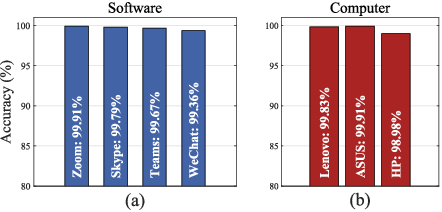
Figure 16: Performance under different video conferencing platforms and hardware, illustrating generalization across platforms.
Conclusion
FaceTell constitutes a comprehensive system exploiting facial reflections in video conference streams for remote screen content inference. High accuracy, real-time feasibility, and robustness to practical impact factors are empirically demonstrated. Several strong claims—most notably the efficacy of side-channel application prediction via facial reflectance with near-perfect accuracy under real-world conditions—contradict prior limitations assumed for diffuse surfaces. Theoretical analysis and ablation empirically validate the system architecture and correction methodology. Practical and ethical implications are profound, and proposed countermeasures offer actionable guidance. This work reframes the privacy threat landscape for remote video systems, opening new avenues for both offensive and defensive research in optical side channels and adversarial robustness.