- The paper introduces MARMamba, a streamlined UNet-like model that leverages orientation-augmented state-space modules to improve CT metal artifact reduction.
- Its methodology integrates multi-scale Mamba modules, Flip Mamba Blocks, and an Average Maximum Feed-Forward Network to enhance artifact detection and preserve anatomical details.
- Experimental results show state-of-the-art performance with superior PSNR, SSIM, and low computational demand across varying implant sizes.
Introduction
Metal artifact reduction (MAR) in computed tomography (CT) remains an active research area due to the disruptive effect of metal implants on diagnostic image quality. Traditional approaches spanning sinogram correction and dual-domain deep learning architectures have produced reasonable progress but are hampered by the propensity for anatomical detail loss, resource intensiveness, or reliance on clinically impractical supplementary inputs. The paper "Balancing Efficiency and Restoration: Lightweight Mamba-Based Model for CT Metal Artifact Reduction" (2604.06622) directly addresses these challenges. The authors propose MARMamba, a lightweight, image-domain model leveraging recent advances in selective state-space models (SSM), specifically the Mamba architecture, and introduce multi-branch and pooling innovations to optimize artifact suppression while preserving anatomical fidelity and computational tractability.
MARMamba Architecture
MARMamba is constructed as a streamlined UNet-like architecture, discarding heavy multi-domain or sinogram-based augmentations in favor of purely image-domain processing. At each scale, the backbone integrates a multi-scale Mamba (MS-Mamba) module, whose design is engineered to harness global and orientation-specific context across the feature hierarchy (Figure 1).
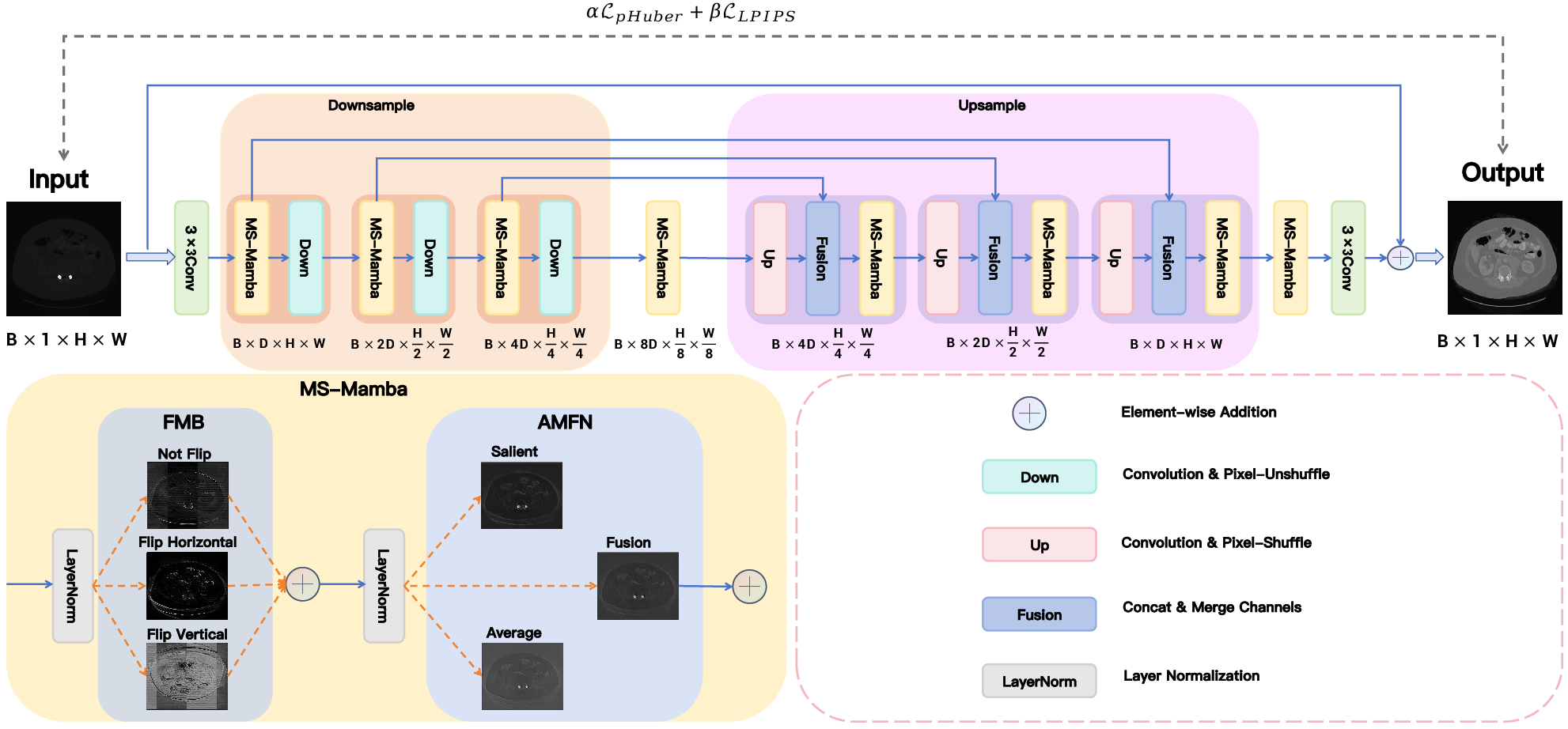
Figure 1: MARMamba backbone: UNet-like encoder-decoder with multi-stage upsampling/downsampling, using MS-Mamba at each stage.
The MS-Mamba is the architectural core, consisting of two principal submodules: Flip Mamba Block (FMB) and Average Maximum Feed-Forward Network (AMFN), each wrapped by normalization and skip connections. The FMB applies Mamba modules to original, horizontally flipped, and vertically flipped feature maps, then adaptively fuses their outputs to amplify directional and orientation-sensitive representations crucial for identifying and suppressing streak artifacts (Figure 2).
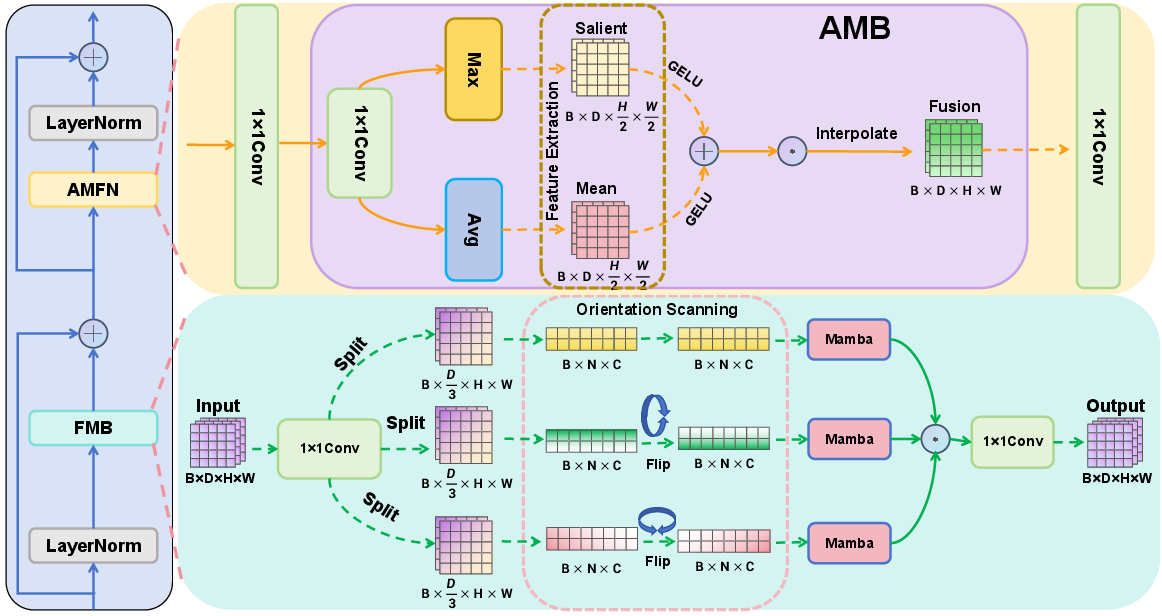
Figure 2: MS-Mamba internals: FMB performs orientation-augmented context extraction, while AMFN fuses pooled features.
The AMFN recursively aggregates global and dominant features through average and max pooling, then applies element-wise fusion, enabling complementarity between local saliency and contextual consistency. This combined architecture enables artifact detection and removal adaptable to the scale and directionality of metallic streaks, without attendant computational inflation or dependency on supplementary non-image data.
Training Paradigm and Loss Modulation
The model exploits a progressive image-size curriculum to mediate memory constraints while maximizing feature learning fidelity. The loss is a convex combination of Pseudo-Huber (for robustly bounded residual minimization) and LPIPS (for deep network-driven perceptual similarity), with ablation demonstrating that this blend maximizes both objective and visually perceptual restoration performance.
Numerical Evaluation
An extensive cross-comparison with leading dual-domain, Transformer-based, and physics-inspired MAR models is conducted. The SynDeepLesion dataset is used for controlled experiments, with four metal implant size categories. Metrics such as PSNR, SSIM, RMSE, and LPIPS are computed over both metal-excluded and metal-included regions (Figures 3–6 illustrate the various artifact scales).
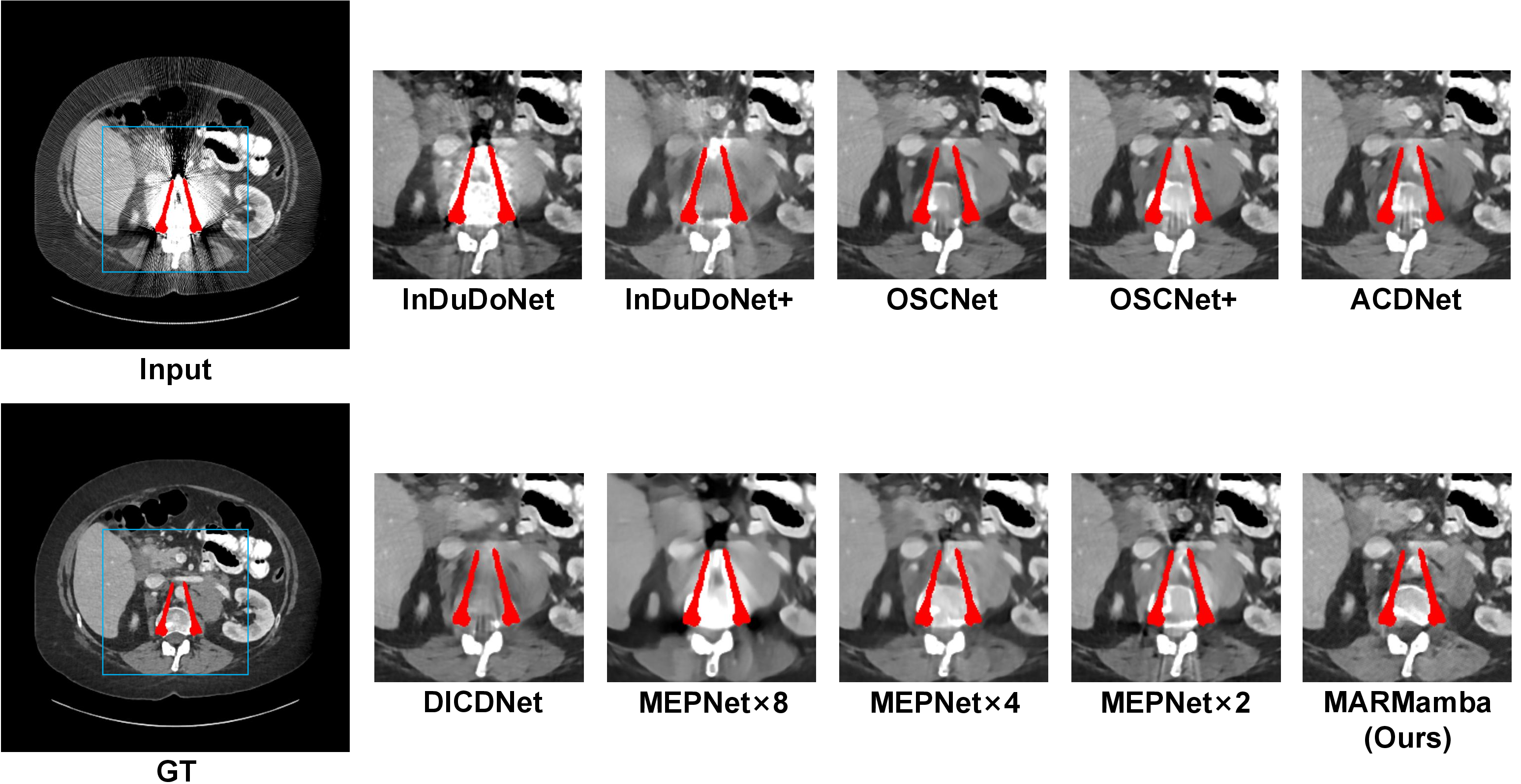
Figure 3: Large-scale metallic implant artifact mitigation across methods.
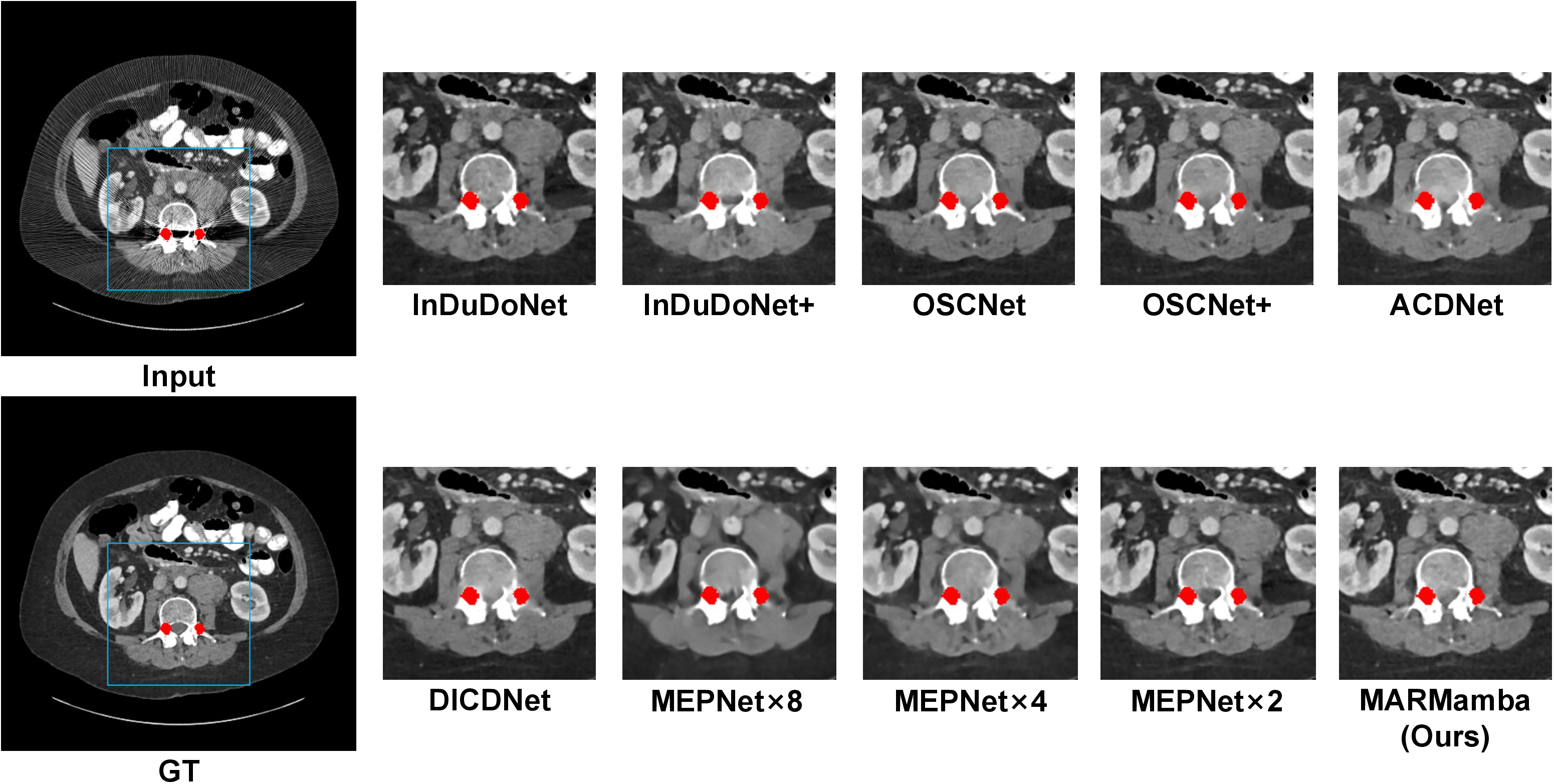
Figure 4: Restoration under medium metallic implants, highlighting artifact suppression near implant borders.
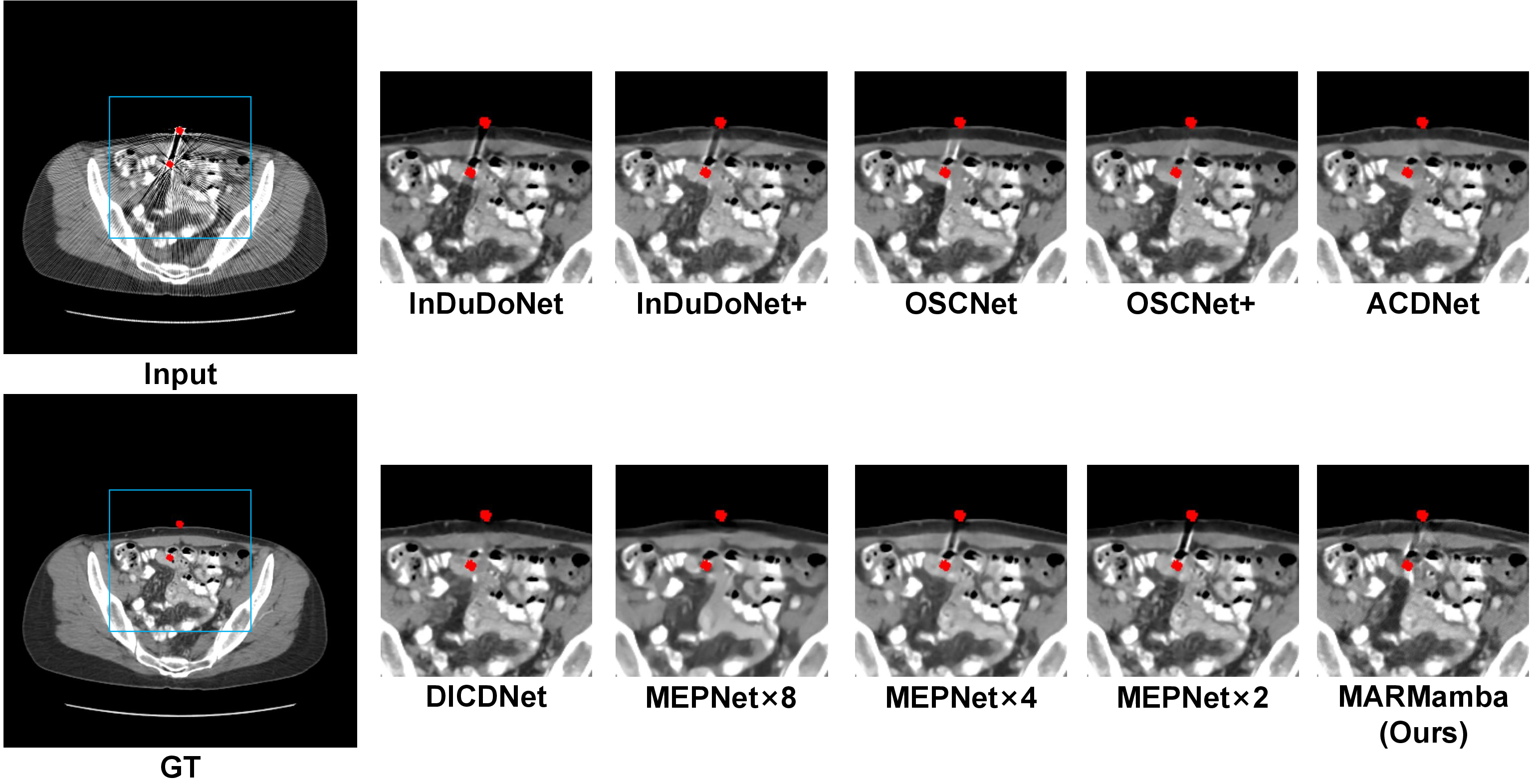
Figure 5: Artifact removal in images with small metallic implants, assessing texture and detail preservation.
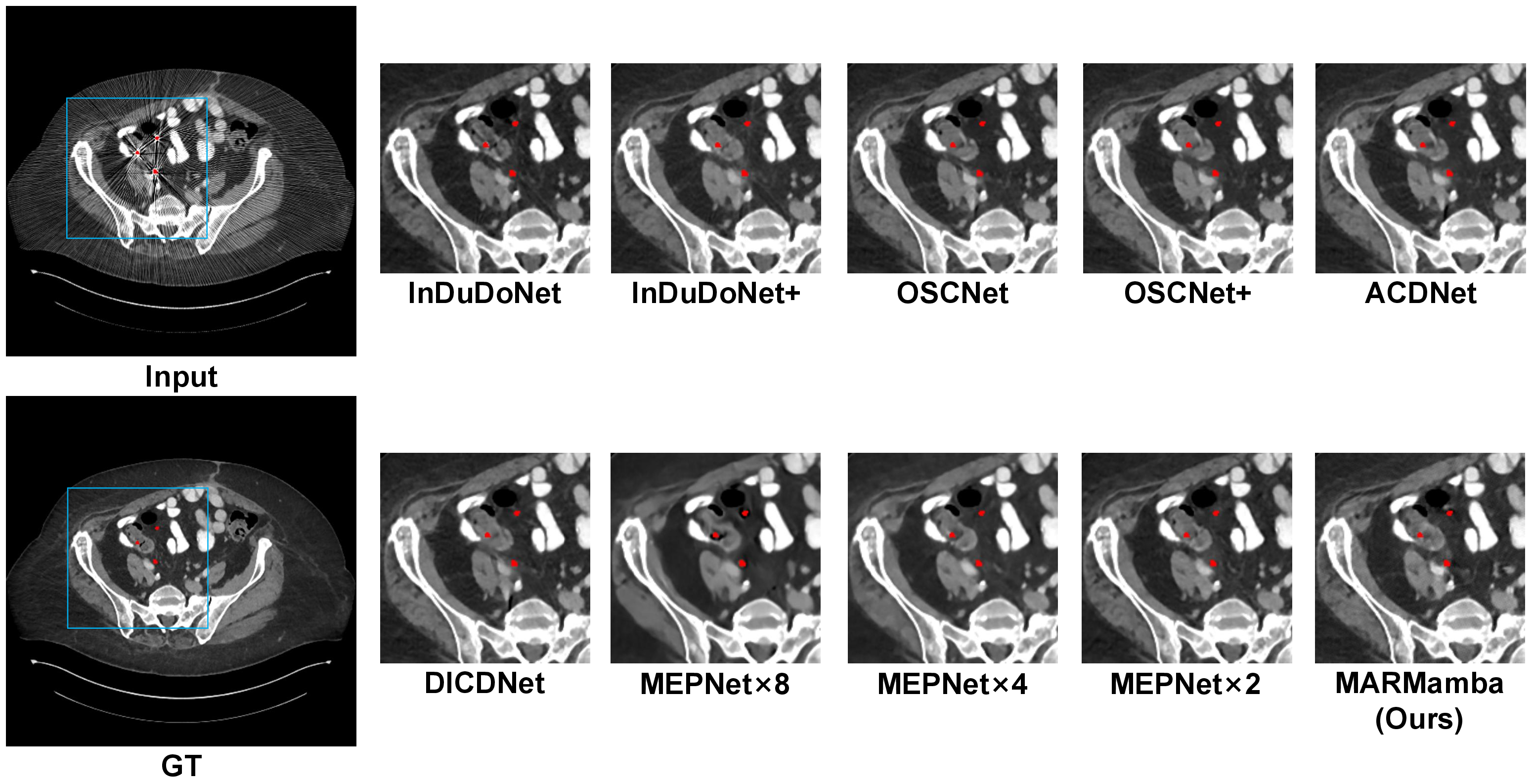
Figure 6: Tiny metallic implant scenario, emphasizing fine structure recovery.
MARMamba consistently surpasses all baselines, with state-of-the-art PSNR and SSIM on all scale subsets (e.g., for large artifacts: PSNR 47.60 dB, SSIM 0.9943, LPIPS 0.0368; for tiny artifacts: PSNR 52.03 dB, SSIM 0.9964, LPIPS 0.0263). Transformer-based methods (MARformer, MARViT, MARPVT) excel among non-Mamba approaches but lag slightly behind MARMamba, principally in structural detail retention and perceptual consistency.
Computational Resource Profile
MARMamba’s efficiency is substantiated through parameter and runtime comparisons (Table 1, Figures 8–9). Despite incorporating orientation-augmented SSM blocks, the model requires only 0.59M parameters—lower than or competitive with lightweight Transformer counterparts—while incurring minimal inference time increases. The analysis of MACs and GPU memory reveal that the approach scales efficiently with input size, with computational load, not memory, being the main limiting factor for large images.
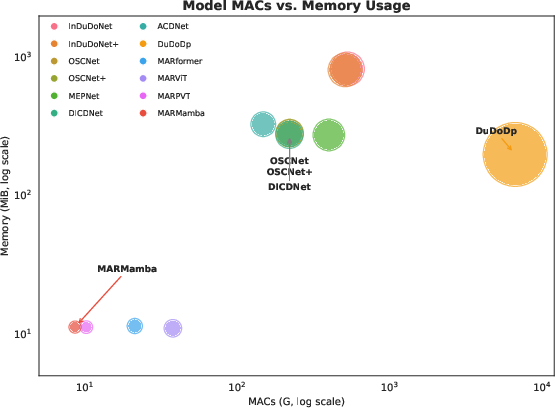
Figure 7: Computational load vs. memory usage; SSM and Transformer methods occupy the efficient lower-left zone.
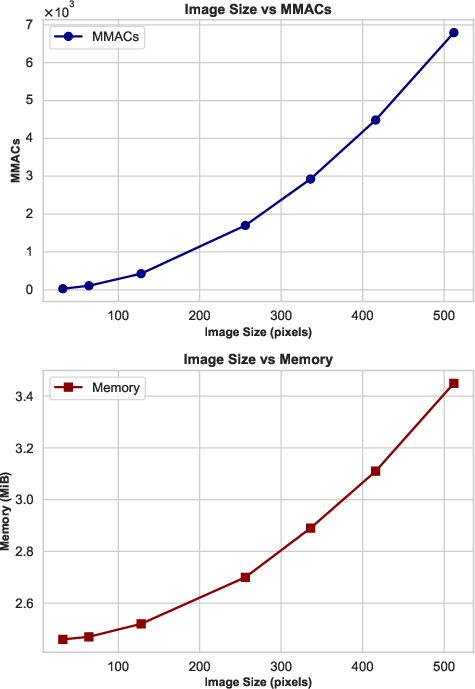
Figure 8: Scaling of computational and memory demands with input image size; complexity dominates at higher resolutions.
Qualitative and Clinical Relevance
Visual comparisons on synthetic and real-world images demonstrate the model's superiority in artifact suppression and detail preservation, while error maps confirm that remaining deviations are concentrated in low-contrast tissue, primarily attributable to current loss and feature extraction limitations (Figure 9).
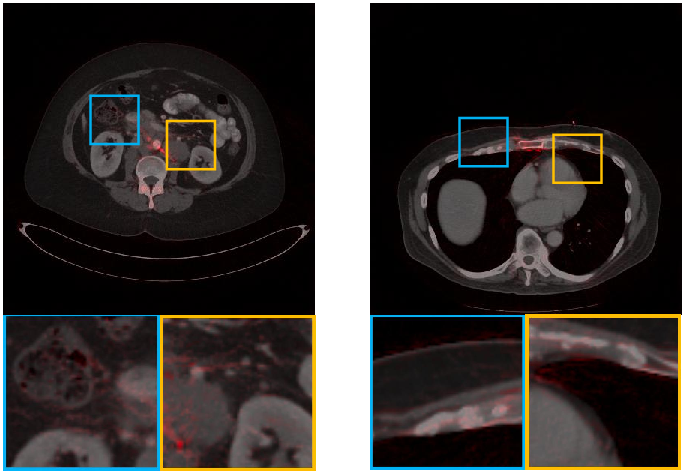
Figure 9: Error maps highlight restoration deficiencies, predominantly in low-contrast regions.
The clinical generalization is evaluated on CLINIC-metal, where subjective scoring positions MARMamba near the top but shows artifact-specific and domain-specific weaknesses, with models such as OSCNet+ and ACDNet displaying slightly higher robustness in some clinical cases. The authors identify limited training diversity and loss insensitivity to low-contrast errors as primary bottlenecks.
Ablation Studies
Systematic ablation validates the critical impact of both FMB and AMFN modules. Orientation-augmented FMB branches introduce up to 2% PSNR gain and 14% reduction in RMSE over conventional, direction-insensitive variants, for a negligible parameter and runtime overhead. AMFN’s hybrid pooling outperforms single-mode pooling by 0.7–0.8 dB in PSNR with negligible extra cost. Directional energy spectrum analysis in the frequency domain confirms orientation sensitivity and complementarity (Figure 10).
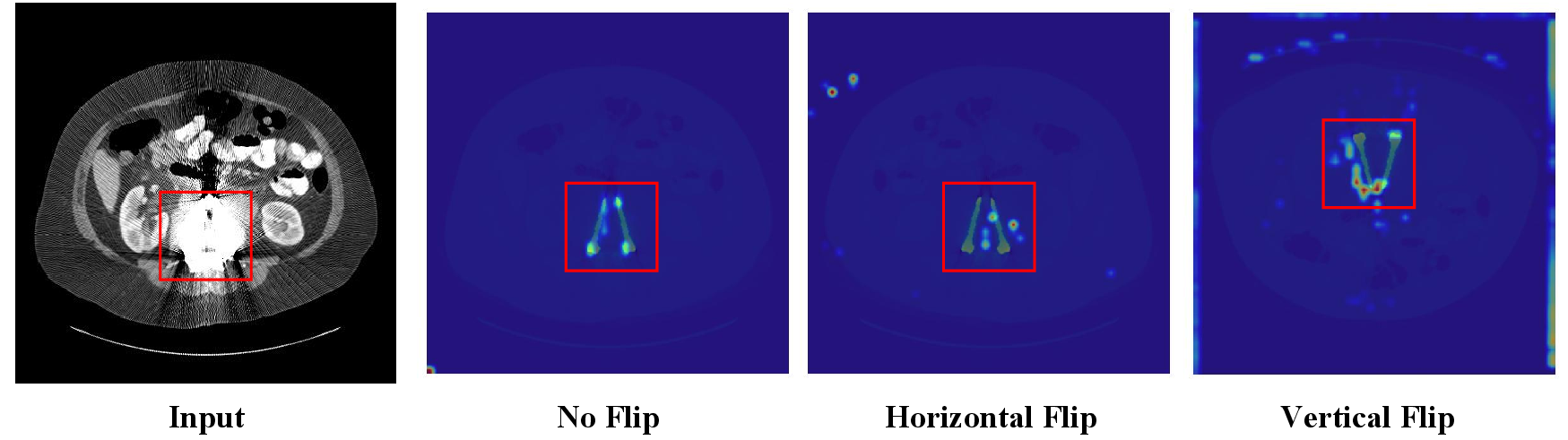
Figure 11: FMB feature maps illustrate adaptive spatial focus under flipping.
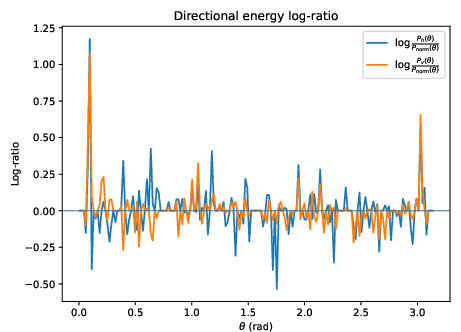
Figure 10: Frequency analysis reveals branch-selective orientation amplification.
Limitations and Future Directions
The authors thoroughly discuss current model limitations: (i) suboptimal performance in low-contrast tissue regions due to weak supervision and feature separability, (ii) bias and overfitting to synthetic artifact distributions, and (iii) slightly suboptimal inference efficiency versus the fastest Transformer models. Planned advances include contrast-aware feature augmentation, diversified/hybridized training with real clinical data, extension to volumetric (3D) inputs, device-level CUDA optimization, and physics-informed regularization for superior generalization and interpretability.
Conclusion
The MARMamba architecture represents a decisive step toward resolving the longstanding tension between artifact removal fidelity, preservation of anatomical texture, and computational efficiency in CT image MAR. By exploiting Mamba’s linear-time sequence modeling and innovating with orientation-augmented blocks and aggregated pooling, the model achieves best-in-class numerical and visual restoration across all metal artifact scales and regions within stringent resource budgets. The modular design and reliance solely on image-domain inputs position it for practical deployment in diverse clinical scenarios, subject to indicated refinements in data and optimization. MARMamba’s contributions also establish a template for broader adoption of lightweight, orientation- and context-aware SSMs in medical image restoration tasks.

