- The paper establishes that exploiting quantum interference in a multi-path protocol reduces transfer time below classical limits.
- It introduces analytic and numerical methods to solve the quantum brachistochrone problem under realistic resource constraints.
- The demonstrated protocol scales efficiently, achieving approximately 33% faster quantum state transfer compared to optimal classical strategies.
Quantum Advantage in Time-Optimal Quantum State Transfer
Introduction and Context
This work rigorously addresses quantum advantage in the context of optimal quantum state transfer on qubit lattices, focusing specifically on systems with both nearest-neighbor and long-range, time-controlled couplings. The study is motivated by the need to concretely define, demonstrate, and quantify quantum advantage outside of computational speedup, with a focus on the dynamical transport of single quantum excitations across networks. The core hypothesis is that quantum interference—specifically, the ability of quantum systems to coherently exploit multiple propagation paths—yields measurable speedup over any classical single-path protocol under physically meaningful resource constraints.
The investigation is framed in the context of established findings on quantum optimal control, quantum brachistochrone equations, and the physics of information transfer in engineered networks (2604.05915). The approach combines analytic derivations with advanced numerical schemes that scale efficiently to nontrivial system sizes.
Physical and Mathematical Framework
The system treated is a one-dimensional array of N identical qubits with all-to-all time-dependent couplings. An excitation launched at one end must be transferred to the opposite end in minimum time, with fidelity 1. The Hamiltonian is constrained by a resource bound of the form
p=1∑N−1gpm=1∑N−pJm,m+p2(t)=J02,
where Jm,n(t) are the real-valued, time-dependent coupling amplitudes, and the gp are rapidly increasing weights penalizing the use of longer-range interactions—reflecting hardware limitations in realistic architectures.
The authors highlight the conceptual connection to quantum interference in the double-slit paradigm, emphasizing that quantum evolution allows ballistic propagation via simultaneous occupation of an exponentially large set of interfering classical trajectories, bypassing the temporal bottleneck faced by any single path.
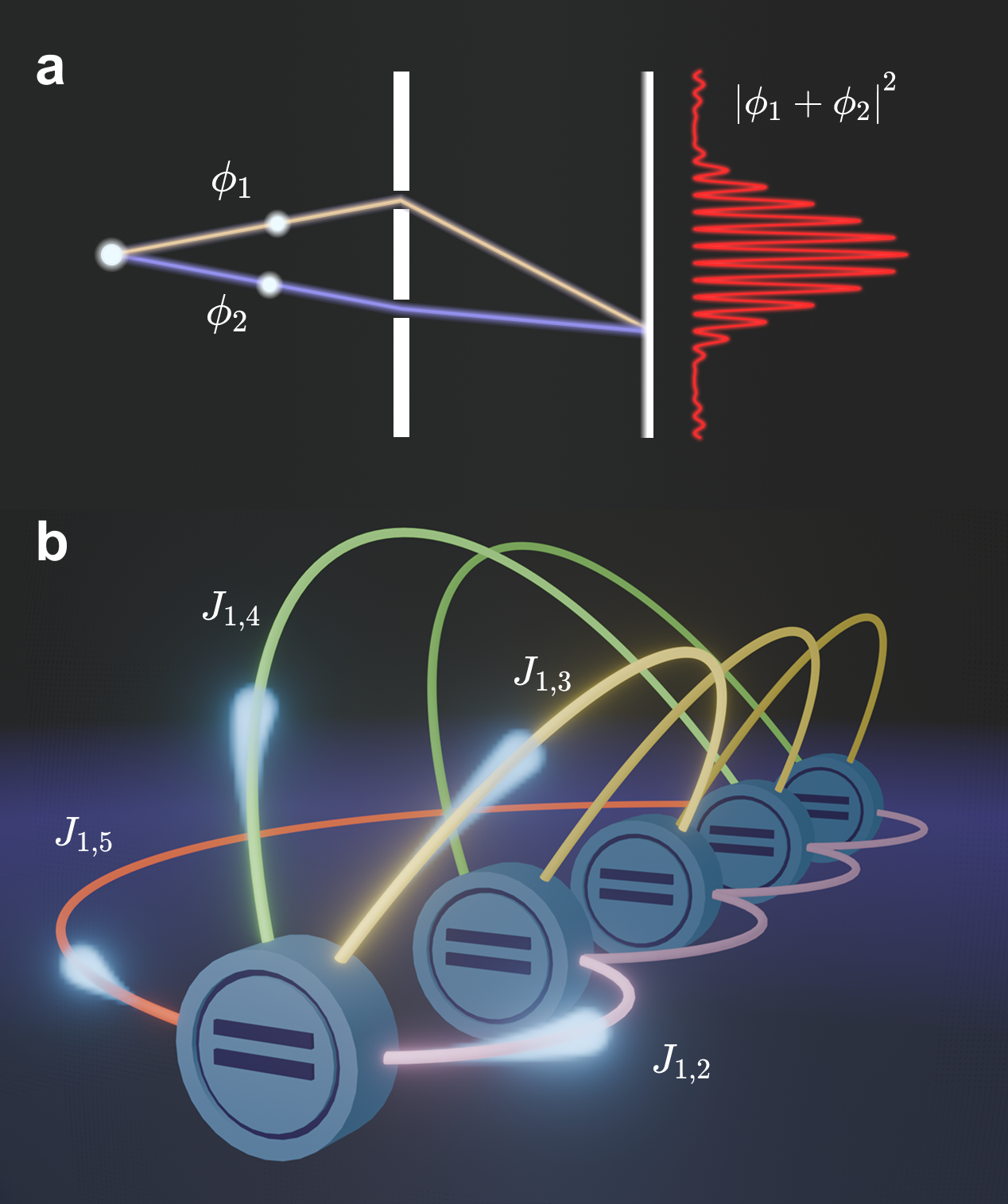
Figure 1: Quantum interference in time-optimal state transfer—classical versus quantum transport in a reconfigurable qubit lattice.
The control problem is formulated in terms of the quantum brachistochrone, seeking the time-optimal protocol under the constraint above. The variational problem is cast with Lagrange multipliers, leading to a set of coupled differential equations for the system's wavefunction and the control fields—ultimately simplified via chiral symmetry structure and reduction to an integrable Lax pair.
Quantum Advantage: Theoretical Analysis and Small-Scale Demonstration
The authors first provide full analytic solutions for a three-qubit system. Under resource constraints (parametrized by a weight g on the long-range 1−3 coupling), they derive that the optimal protocol involves time-dependent activation of both the direct and sequential 1→2→3 channels, with the excitation coherently split between these paths to exploit constructive quantum interference. For g≥2, the minimal transfer time is provably lower than the minimal time achievable by any classical protocol restricted to a single-path evolution. The optimal protocol's explicit time-dependence is analytically identified.
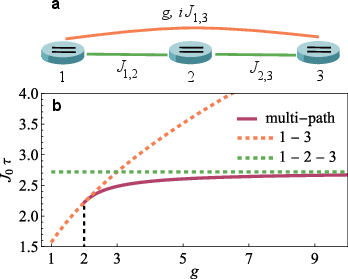
Figure 2: Speedup of state transfer due to quantum interference—minimal transfer times for classical single-path versus quantum multi-path protocols in a three-qubit system.
The argument is then generalized to longer chains. The exponential proliferation of available paths—2N−2 for a chain of length N—is highlighted, as is the rapid growth of computational complexity in classical evaluation of all single-path strategies. The main theoretical result is a lower bound for classical protocols' transfer time, and demonstration that the quantum protocol surpasses this bound.
Large-Scale Scaling and Numerical Results
The study extends the analysis to large p=1∑N−1gpm=1∑N−pJm,m+p2(t)=J02,0 via efficient numerical solvers for the Lax eigenvector equations. Employing physically motivated penalty weights (e.g., p=1∑N−1gpm=1∑N−pJm,m+p2(t)=J02,1), the authors obtain time-optimal transfer protocols for arrays up to p=1∑N−1gpm=1∑N−pJm,m+p2(t)=J02,2. The transfer dynamics are characterized by the simultaneous activation of a multitude of probability currents connecting remote sites, demonstrating highly nonlocal, interference-driven flows.
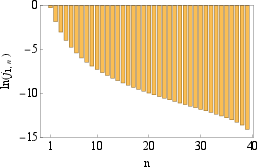
Figure 3: Probability currents for various transfer trajectories—under optimal control, the excitation simultaneously traverses all classical paths, not just a single route.
Comparison of the quantum protocol's speedup against the best possible classical protocol reveals a persistent sublinear scaling of transfer time with system size up to mid-scale arrays. For large p=1∑N−1gpm=1∑N−pJm,m+p2(t)=J02,3 the transfer time approaches a linear law, p=1∑N−1gpm=1∑N−pJm,m+p2(t)=J02,4, which is approximately 33% faster than the tightest classical bound.
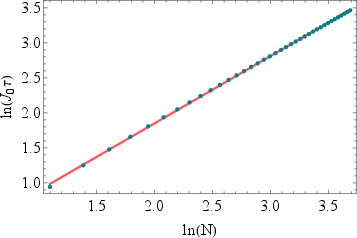
Figure 4: Scaling of transfer time with lattice size—quantum protocol exhibits sublinear/linear scaling, outperforming all classical transfer scenarios.
Implications, Robustness, and Future Outlook
By introducing a Bell-like inequality—i.e., a lower bound on classical transfer time, sharply violated by the quantum protocol—this work provides a stringent, operational definition of quantum advantage for quantum transport tasks. The results have immediate ramifications for quantum network engineering, quantum communication, and scalable architectures where state transfer under constrained resources is critical. The derived control laws are physically implementable, given the current state of tunable-coupling quantum devices.
Comparison with quantum optimal control literature situates this quantum transport speedup in direct analogy to advantages predicted for quantum search (Grover), quantum batteries, and quantum illumination—here, however, realized for concrete transport rather than computational or energetic tasks.
From a theoretical perspective, the methodology leverages integrability, symmetry, and optimal control, establishing a scalable framework for analogous analyses in higher-dimensional or more complex architectures.
Conclusion
This work provides a rigorous, general, and constructive demonstration of quantum advantage in the time-optimal transfer of quantum states across qubit lattices with realistic constraints. The ability to activate and interfere multiple propagation paths—all simultaneously—enables speedup unattainable by any convex mixture of classical single-trajectory protocols. The results suggest directions for exploiting interference-driven transport in quantum architectures and highlight the necessity of incorporating quantum control-theoretic insights in the engineering of fast, robust quantum information buses.
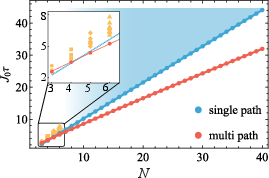
Figure 5: Demonstration of quantum advantage—the quantum protocol (red dots) consistently achieves lower transfer times than the best classical protocol (blue line) across increasing system sizes.
Future developments could focus on multi-excitation transfer, higher-dimensional connectivity, exploitations of topological symmetries, and the extension to open-system environments, as well as implications for distributed quantum computing and metrology.