- The paper finds that despite clear multiwavelength 2.1-year periodicity in gamma and UV bands, the X-ray analysis shows only stochastic features.
- The research employs targeted Swift-XRT observations along with methods like GLSP, SSA, and PDM to rigorously assess periodicity and trends.
- A significant long-term brightening trend across X-ray, gamma, and UV bands supports global jet power modulation possibly linked to a SMBHB system.
X-ray Periodicity and Long-Term Trend in PG 1553+113: Constraints from Targeted Swift-XRT Monitoring
Introduction
PG 1553+113 is a high-frequency peaked BL Lac object (HBL) blazar exhibiting significant multiwavelength variability. It has been the subject of extensive monitoring campaigns because its γ-ray, optical, and radio emissions show strong evidence for a ∼2.1-year periodicity, which makes it a compelling candidate for hosting a supermassive black hole binary (SMBHB). This paper critically investigates whether the X-ray band displays analogous periodicity and long-term trends as those confirmed at other wavelengths, utilizing two targeted Swift-XRT monitoring campaigns conducted around predicted high-emission states.
Context and Theoretical Framework
Multiwavelength periodic variability in PG 1553+113 has motivated several physical models, most centering on dynamical or geometric effects in an SMBHB system. Jet precession induced by binary torques, accretion-flow modulations due to circumbinary disk structures, and Doppler boosting from variable viewing angles are the primary mechanisms under consideration. Observationally, quasi-strict periodicity has been robustly established in the γ-ray and optical/UV bands, where the ∼2.1-year cycle is phase-coherent over multiple cycles. However, corresponding periodicity in the X-ray band has been less clear, with analyses reporting inconsistent periodic timescales, varying from 1.4 to 2.3 years, and significance levels that often do not survive rigorous tests for stochastic variability.
Observational Strategy and Data Analysis
Two focused Swift-XRT monitoring programs were designed to capture X-ray emission during epochs predicted to coincide with γ-ray maxima, based on extrapolations of the established periodic pattern. These campaigns were complemented with archival Swift data, Swift-UVOT UV/optical photometry, and public Fermi-LAT γ-ray light curves, enabling construction of densely sampled multiwavelength datasets. The analysis involved careful data quality inspection, optimal source/background extraction, and consistent fitting (power-law models for X-ray spectra), ensuring well-vetted time series.
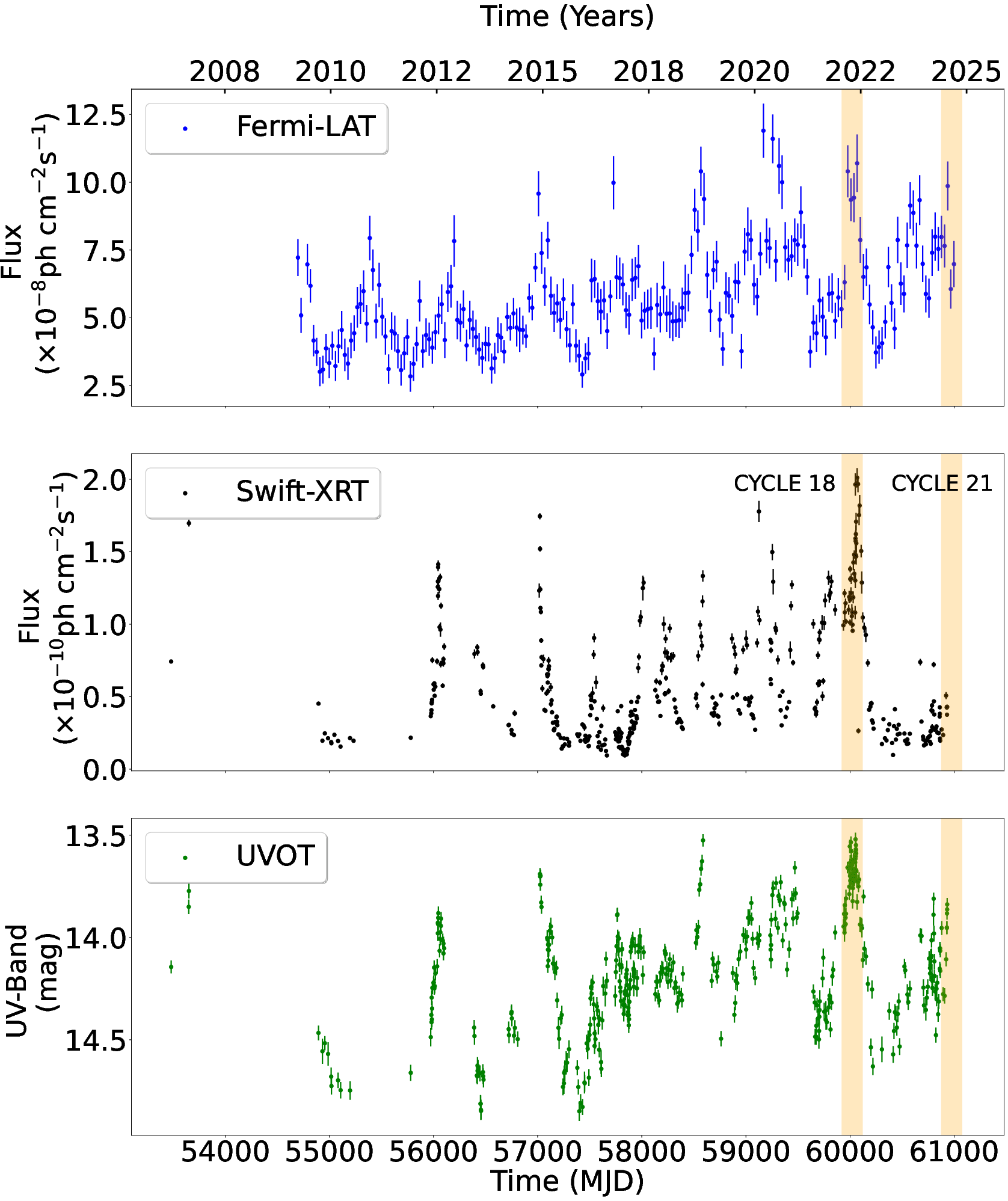
Figure 1: Multiwavelength light curves of PG 1553+113 (Fermi-LAT γ-ray, Swift-XRT X-ray, and UVOT UV). Orange bands indicate Swift monitoring targeted at predicted high-emission phases.
Periodicity searches were performed using the Generalized Lomb-Scargle Periodogram (GLSP), Singular Spectrum Analysis (SSA), and Phase Dispersion Minimization (PDM), all of which are optimized for irregularly sampled, red-noise-contaminated active galactic nucleus (AGN) light curves. Trend analysis relied on seasonal decomposition coupled with linear regression, and interband correlations were quantified using the z-transformed discrete correlation function (z-DCF).
Results
Periodicity Assessment
The γ-ray light curve robustly confirms the established ∼2.1-year period with high local significance (>3σ). For the UV band, the period is also recovered (∼02.1–2.2 yr) at similarly high significance when using 30-day binned light curves, emphasizing suppression of short-scale stochastic variability. Unbinned UV and X-ray data, however, yield lower significance (∼1) and periodicities between 1.4 and 2.5 years, heavily contaminated by observational gaps and flaring events. Detailed simulation analyses, where 100,000 synthetic X-ray light curves with identical statistical properties were tested, reveal that the apparent periodicity in the X-ray band is not statistically robust and can be reproduced by gap-driven stochastic variability.
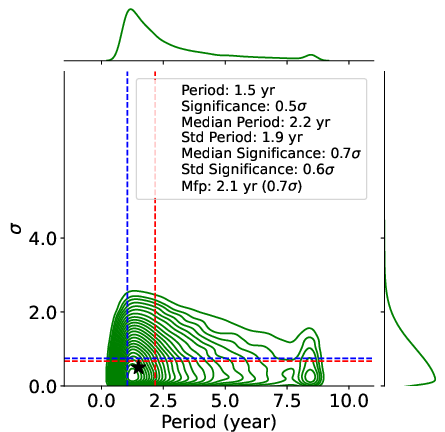
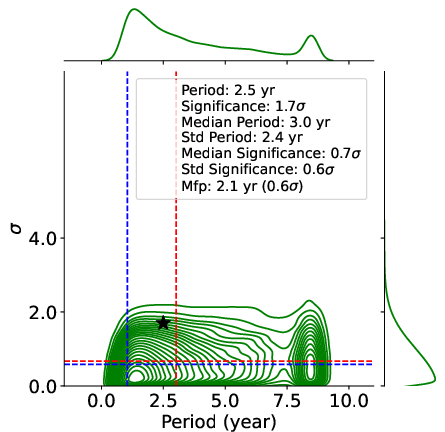
Figure 3: Distributions of recovered periods and significances for 100,000 artificial X-ray light curves, demonstrating that observed features are consistent with artifacts of data gaps rather than true periodicity.
Long-Term Linear Trend
Despite the absence of significant periodicity in the X-ray band, a clear, statistically significant long-term linear brightening trend is observed in X-rays, with a slope of ∼2, ∼3, in strong agreement with the trends quantified in the ∼4-ray (∼5, ∼6) and UV (∼7, ∼8) bands.
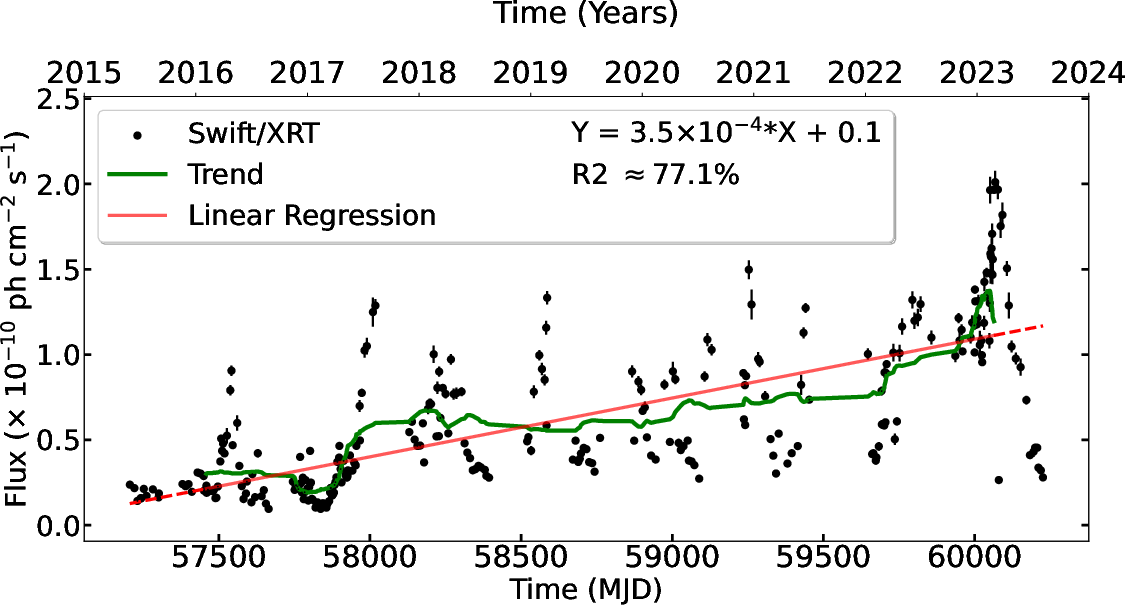
Figure 4: Trend decomposition of Swift-XRT X-ray data; the extracted long-term trend and associated linear fit are consistent and substantial (∼9).
Comparative trend analysis across bands supports the presence of a common, monotonic brightening mechanism operating over the full SED.
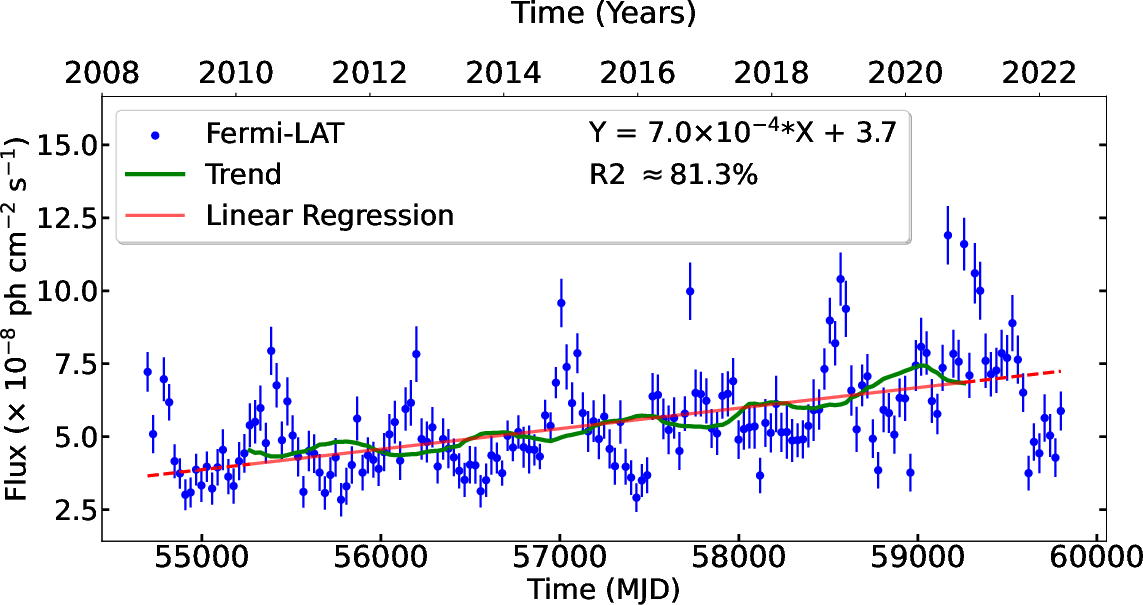
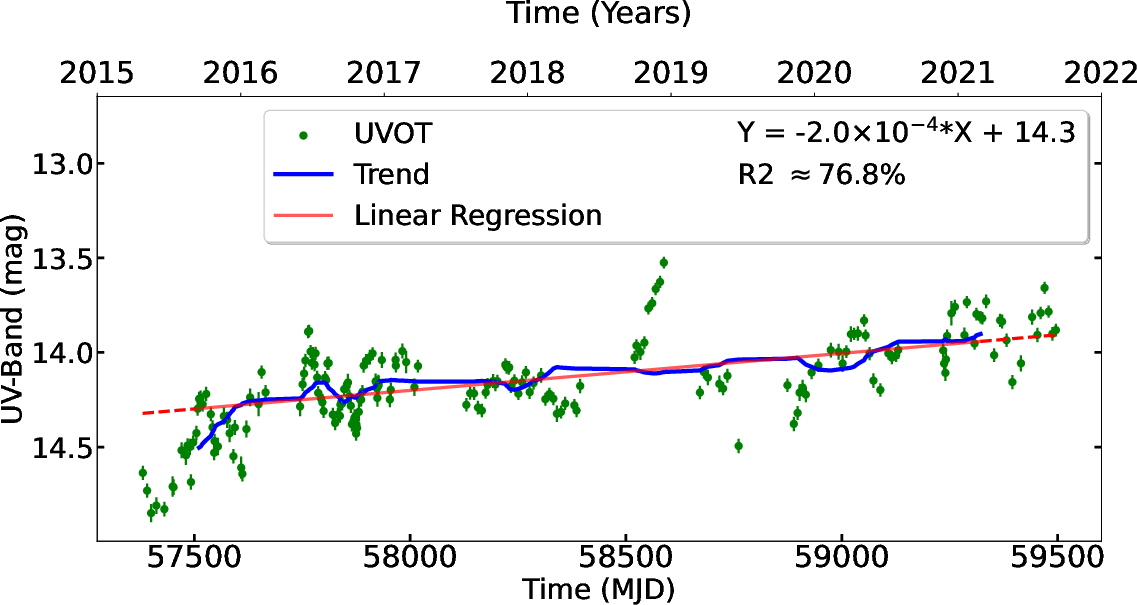
Figure 6: Trend analysis for γ0-ray (left) and UV (right) bands shows substantial, coherent linear trends over the monitored interval.
Interband Correlation and Spectral Variability
The z-DCF analysis between X-ray and γ1-ray bands reveals a marginal (γ2) contemporaneous correlation with a lag consistent with zero (γ3 d), in line with the near-zero lags observed between UV and γ4-ray (γ5 d, γ6). This contemporaneity is most apparent during epochs of coordinated MWL flaring but does not persist as a phase-coherent oscillation in X-rays.
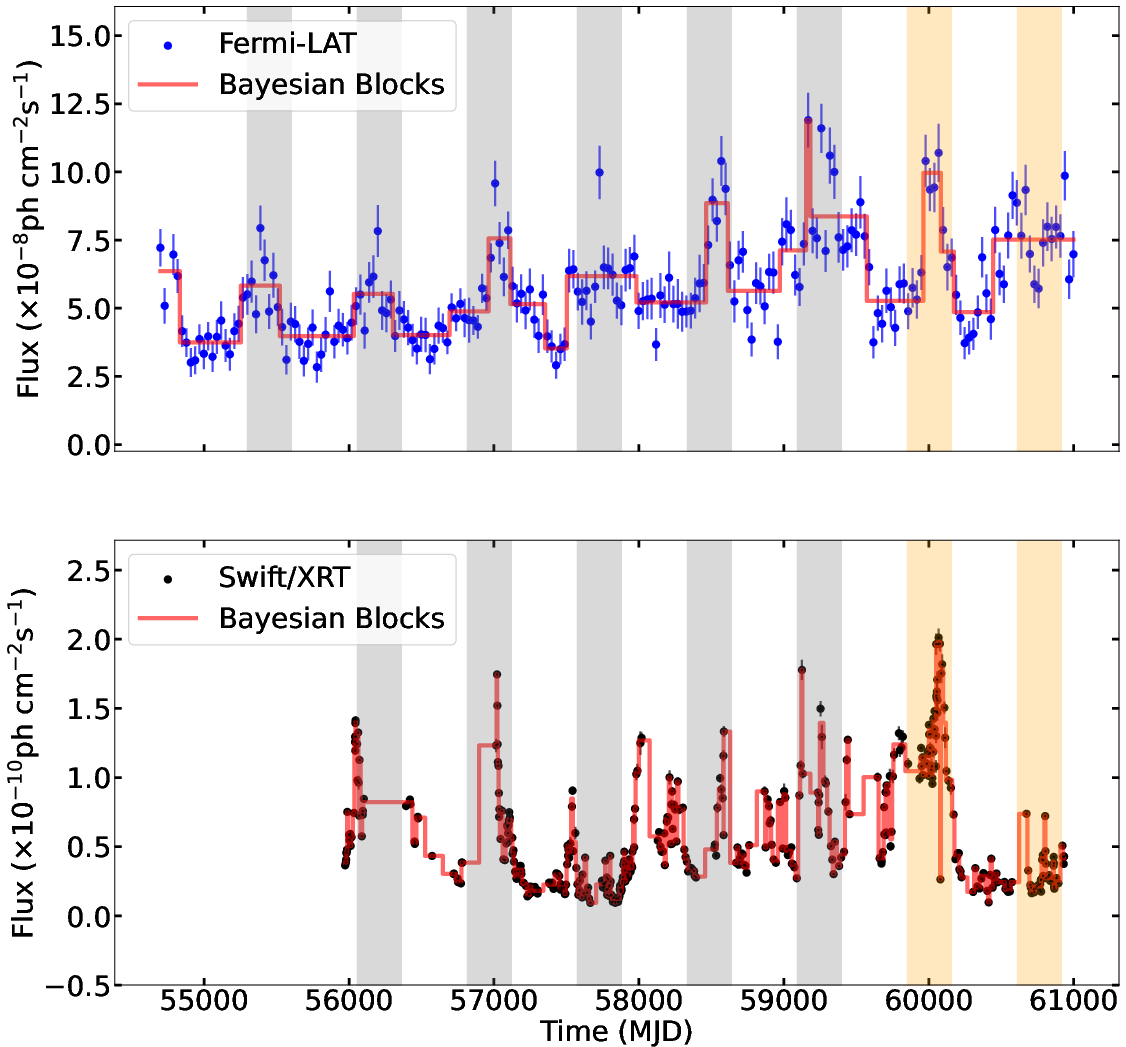
Figure 2: Bayesian blocks of the Fermi-LAT and Swift-XRT light curves; comparison enables direct assessment of correlated high-emission phases.
The power-law photon index of the X-ray emission displays a pronounced anti-correlation with flux (Spearman γ7, γ8), consistent with the harder-when-brighter trend characteristic of HBL synchrotron-dominated X-ray variability.
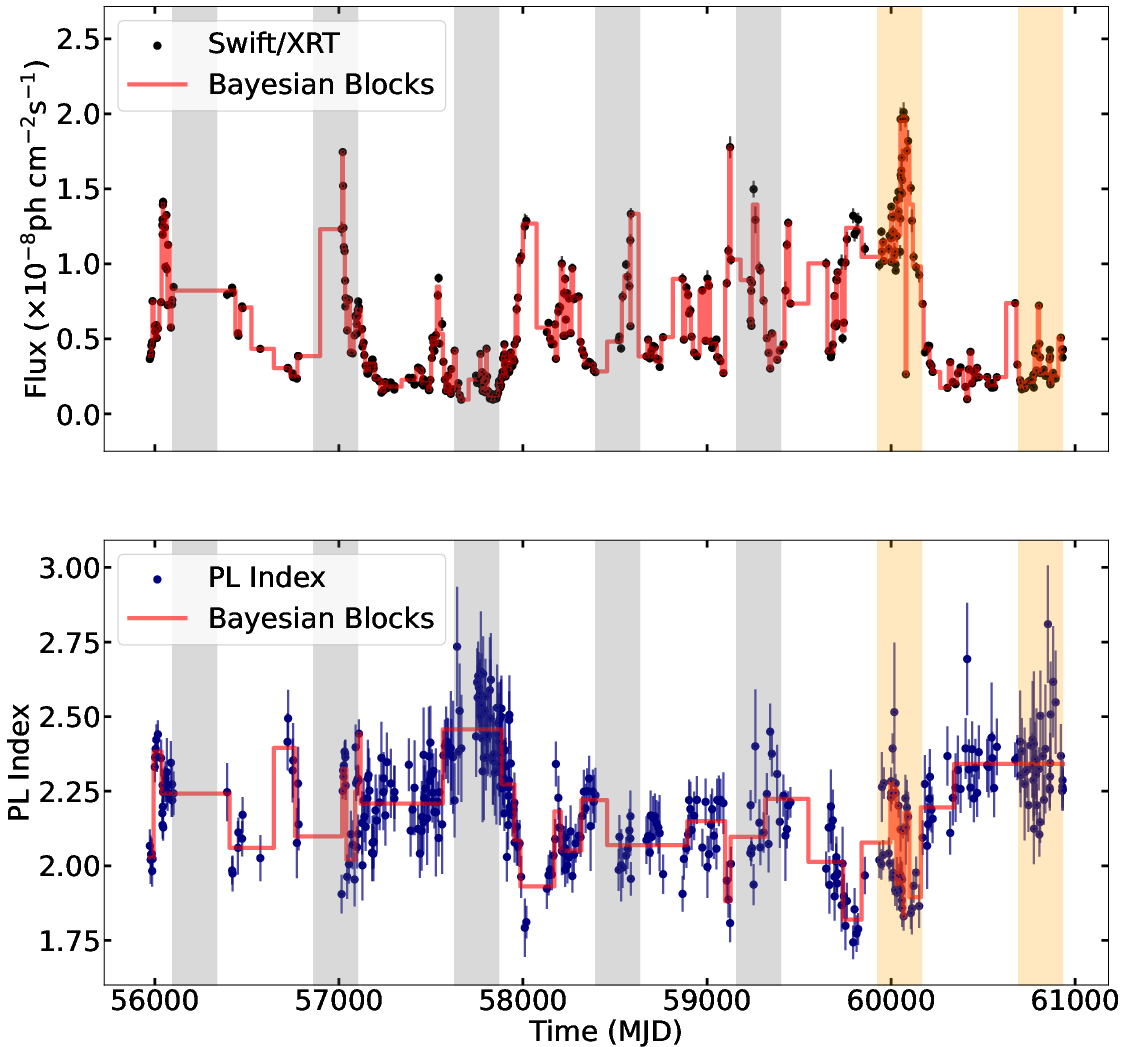
Figure 7: Bayesian block analysis of X-ray flux and spectral index reveals a strong anti-correlation, particularly during high-flux states.
Monitoring Campaign Efficacy
The strategy of timing targeted Swift observations with predicted γ9-ray high states proved effective for capturing high-flux X-ray and UV emission in Cycle 18 but was less predictive during Cycle 21, emphasizing the increased stochasticity of X-ray emission.
Implications and Theoretical Relevance
The absence of robust ∼02.1-year periodicity in X-rays, in contrast to ∼1-ray and UV/optical bands, constrains MWL emission models for PG 1553+113. The contemporaneous but non-periodic character of the X-ray response underscores the dominant role of stochastic processes—rapid particle injection, turbulent acceleration, and fast synchrotron cooling—at X-ray energies. The coherent, long-term brightening trend across all monitored bands strongly supports scenarios involving global, secular changes in jet power or dynamical evolution of the accretion/jet system, as predicted by binary-SMBH and circumbinary disk lump models.
Crucially, these results establish the need for multi-epoch, phase-targeted MWL monitoring to disentangle periodic, stochastic, and trend components in blazar emission. For future studies, especially in AGN exhibiting candidate periodicity, extended campaigns and denser X-ray sampling will be essential for distinguishing genuine phase-coherent multi-band periodicity from red-noise artifacts.
Conclusion
This comprehensive, multi-campaign Swift study demonstrates that while PG 1553+113 exhibits a clear linear brightening trend in X-rays, analogous to the trends in ∼2-ray and UV bands, firm evidence for ∼32.1-year periodicity in the X-ray band is lacking. This outcome constrains models for the physical origin of periodic variability and emphasizes the critical role of both stochastic variability and sparse X-ray sampling in diluting periodic signals. The coherent trend found across bands provides compelling evidence for a unifying long-term process, potentially linked to jet dynamics modulated by a SMBHB system. Ongoing and future targeted campaigns, with denser X-ray coverage and coordinated MWL observations, will be necessary to conclusively resolve the role of phase-coherent periodicity versus stochastic variability in high-energy blazar emission.

