- The paper introduces a machine unlearning framework, PECKER, that achieves precise critical knowledge erasure in diffusion models via parameter saliency-driven distillation.
- It employs alternating pseudo-score supervision with saliency masking and class-differentiated updates to remove sensitive concepts while preserving retained classes.
- Experimental results on datasets like CIFAR-10 demonstrate superior forgetting accuracy, visual consistency, and reduced computational cost compared to prior methods.
Precisely Efficient Critical Knowledge Erasure in Diffusion Models: The PECKER Framework
Introduction
The proliferation of generative diffusion models in real-world deployments has intensified regulatory requirements around privacy, compliance, and content moderation. Consequently, machine unlearning (MU)—the targeted removal of specific data or concept associations from pretrained models—has become vital, particularly for sensitive concepts such as individual faces, nudity, or protected categories. Existing MU approaches suffer from significant computational overhead, inefficient and unfocused gradient updates, and possible degradation in the quality and utility of retained classes. The paper "PECKER: A Precisely Efficient Critical Knowledge Erasure Recipe For Machine Unlearning in Diffusion Models" (2604.05634) introduces PECKER, an efficient, privacy-preserving MU framework for diffusion models utilizing parameter saliency-driven distillation. PECKER provides targeted, efficient erasure of critical knowledge with minimal computational burden while preserving generative fidelity for non-forgotten classes.
Methodology
PECKER's workflow is characterized by three interconnected components: alternating pseudo-score network supervision, saliency scoring and masking, and class-differentiated parameter updates. The approach operates in a data-free distillation paradigm, aligning closely with regulatory and privacy constraints.
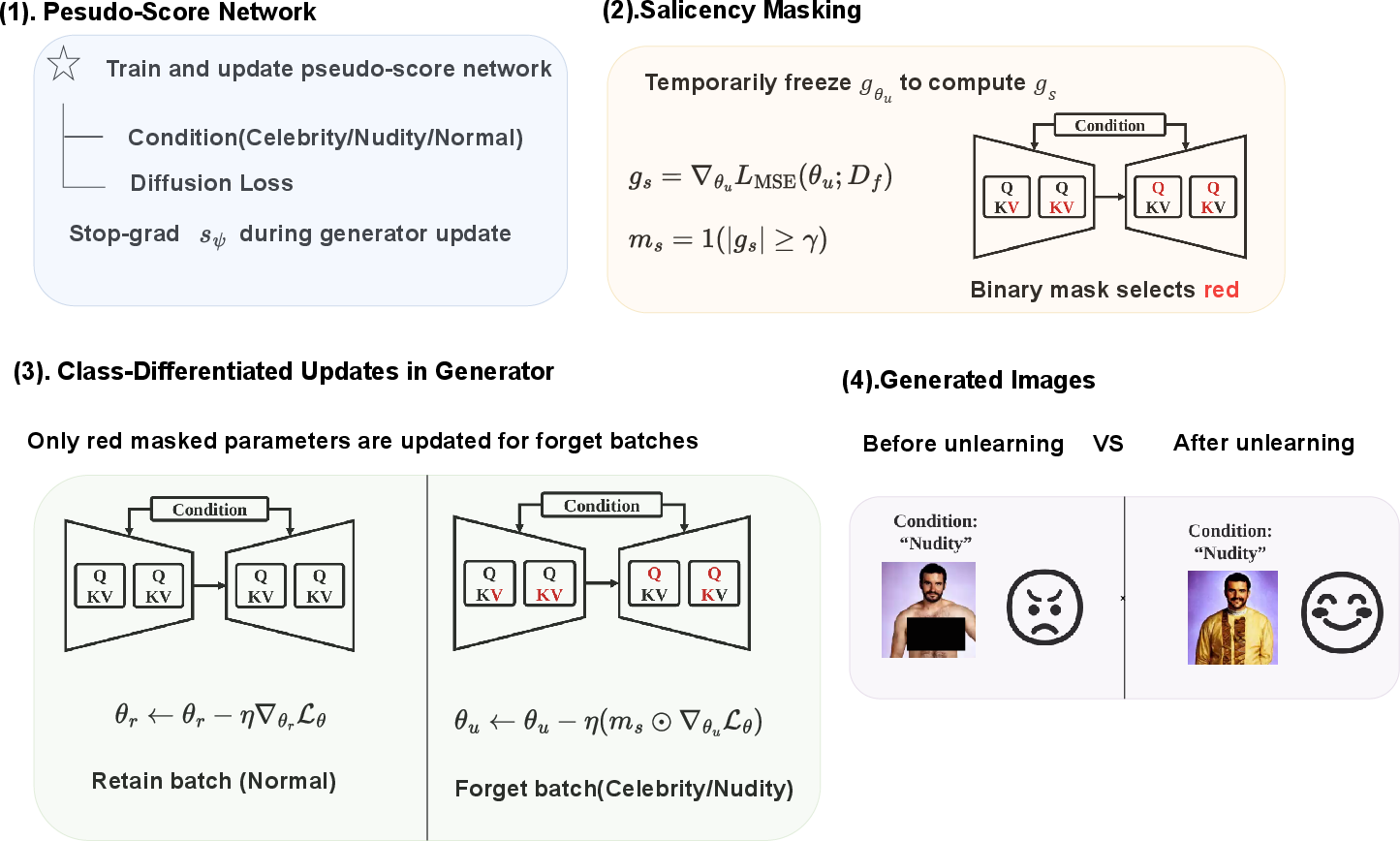
Figure 1: Schematic of PECKER—alternating pseudo-score supervision, gradient-based saliency masking, and class-differentiated parameter updates enable precise and efficient unlearning.
- Alternating Pseudo-Score Supervision: A lightweight pseudo-score network supplies data-free, class-shifted supervision during generator training. Gradients are stopped through the pseudo-score network when updating the generator to ensure data-free supervision fidelity.
- Saliency Scoring and Masking: Saliency is calculated by temporarily freezing the generator and computing gradient magnitudes under an MSE objective on the to-be-forgotten class. A binary saliency mask selects parameters with significant involvement in encoding the forget semantics.
- Class-Differentiated Updates: During training, parameter updates for batches from the forget class are masked to only affect salient parameters, accelerating convergence and narrowing the erasure region. For retained classes, full-parameter updates maintain generative quality.
This approach outperforms prior behavior-level-only and indiscriminate update strategies—including Score Forgetting Distillation (SFD) and Selective Amnesia (SA)—by localizing updates, preserving retained performance, and minimizing redundant computations.
Experimental Results
Class Forgetting: CIFAR-10 and STL-10
Extensive benchmarking on DDPMs pretrained on CIFAR-10 and STL-10 demonstrates that PECKER achieves a superior balance between forgetting efficacy and generative performance on retained classes. The method realizes a uniformly high forgetting accuracy (UA), competitive or better FID and IS, and a substantial reduction in computational cost.
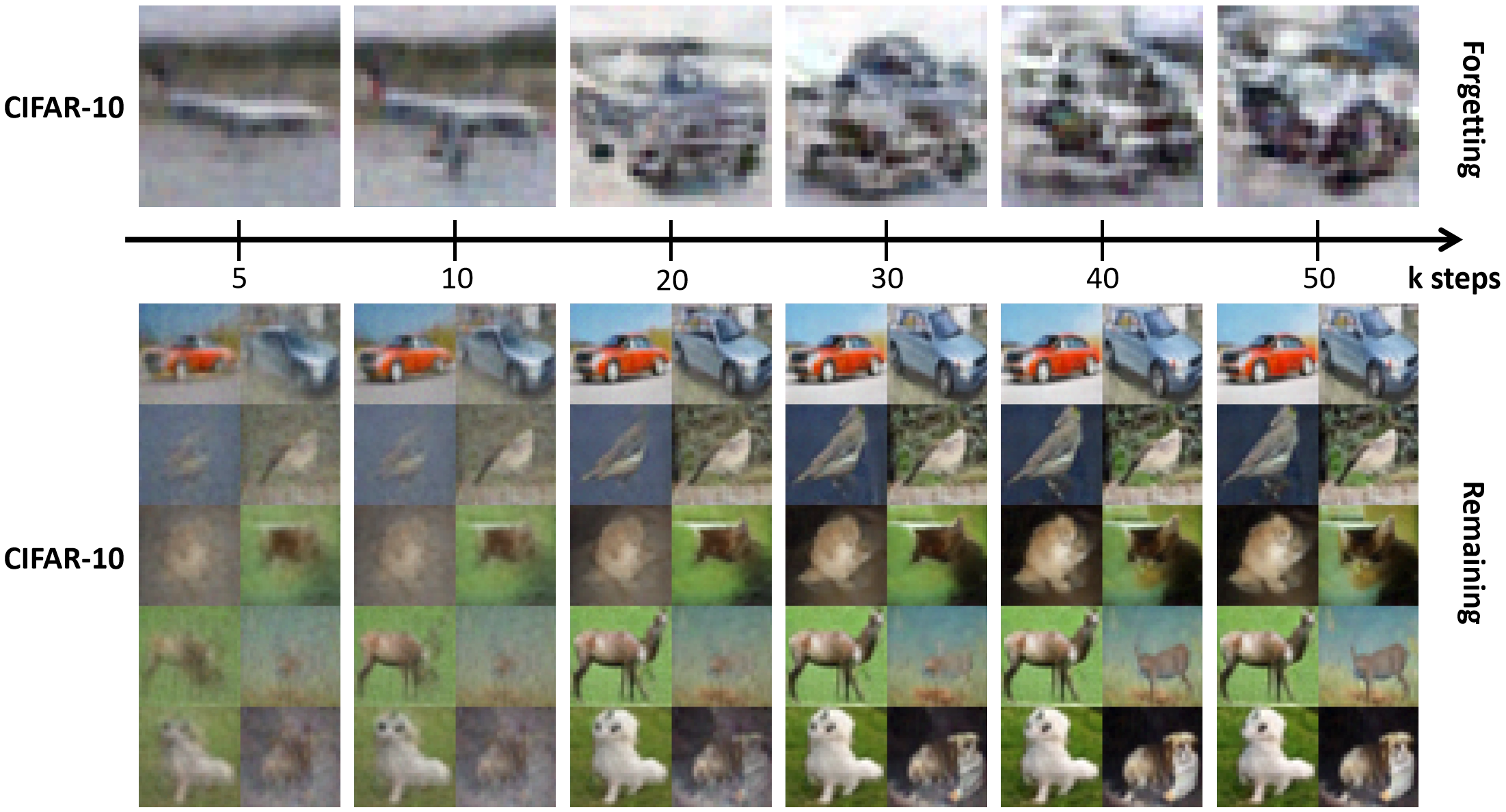
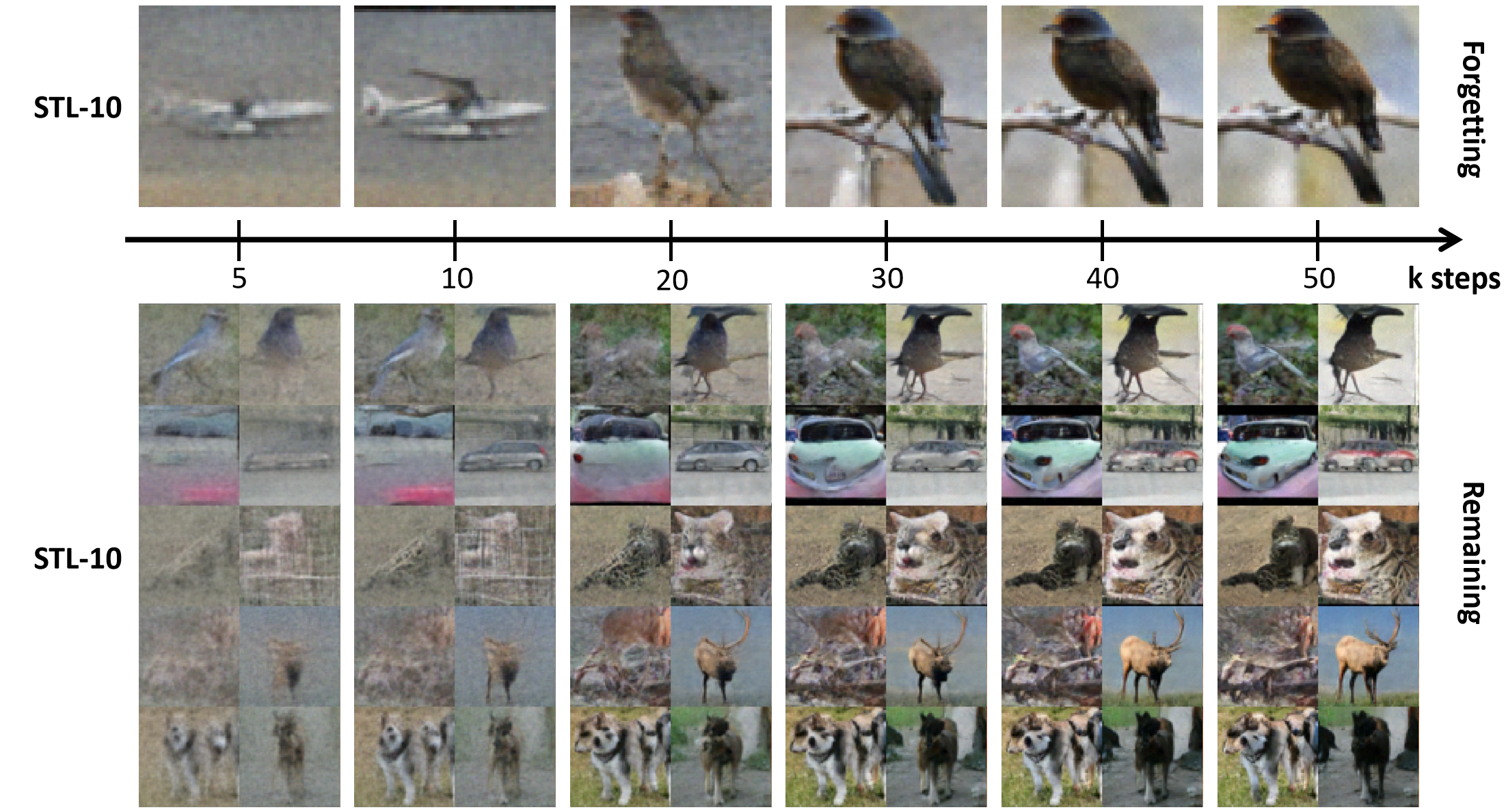
Figure 2: Example generations along the forgetting trajectory for both the forgotten class and retained classes on CIFAR-10.
Comparative analysis of PECKER and SFD reveals:
- Faster Forgetting and Stable Retention: PECKER's FID on retained classes drops more rapidly (notably between 10k–30k steps), and maintains high, stable UA across all training checkpoints, surpassing the instability and oscillatory performance of SFD.
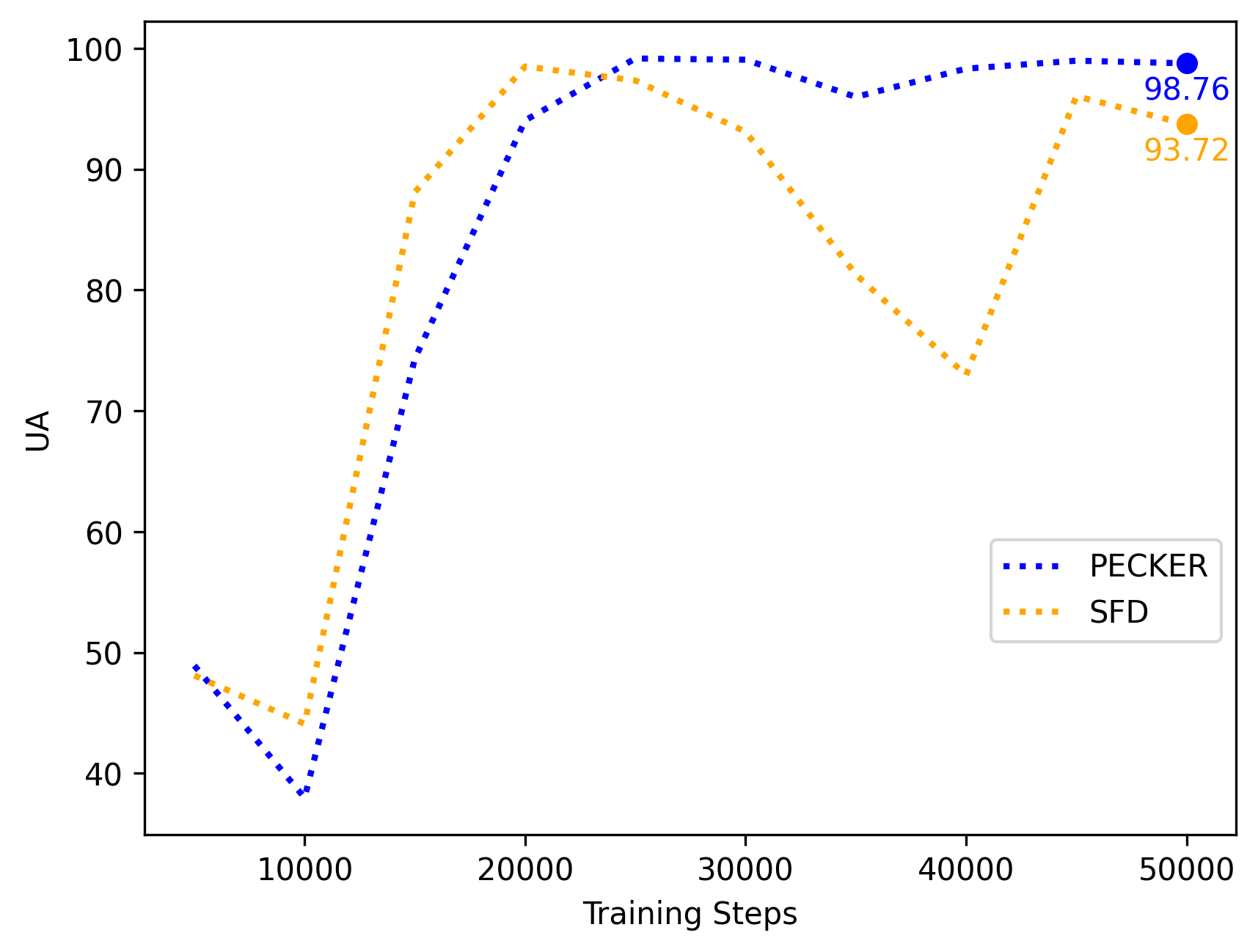
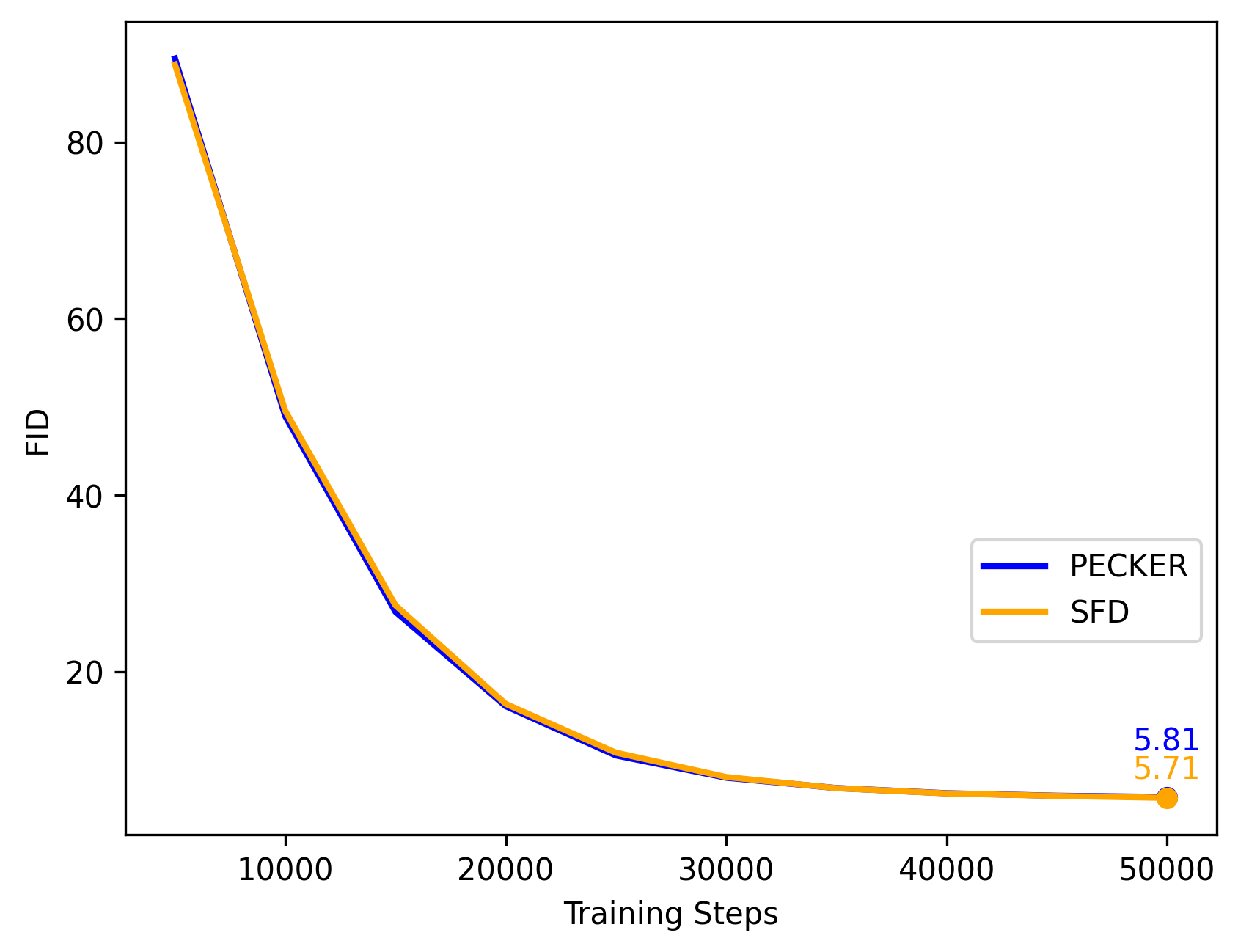
Figure 3: UA and FID curves for PECKER vs. SFD on CIFAR-10 over 50k training steps, showcasing PECKER’s rapid convergence and consistent forgetting accuracy.
- Visual Consistency: Visual examination confirms the semantic erasure of the forgotten class, with retained class generations unaffected.
Application to Concept Forgetting
Celebrity Forgetting
PECKER effectively targets and erases associations with sensitive entities, exemplified by experiments on Brad Pitt and Angelina Jolie. The methodology replaces the targeted individual's likeness with a generic substitute, as seen across training checkpoints.
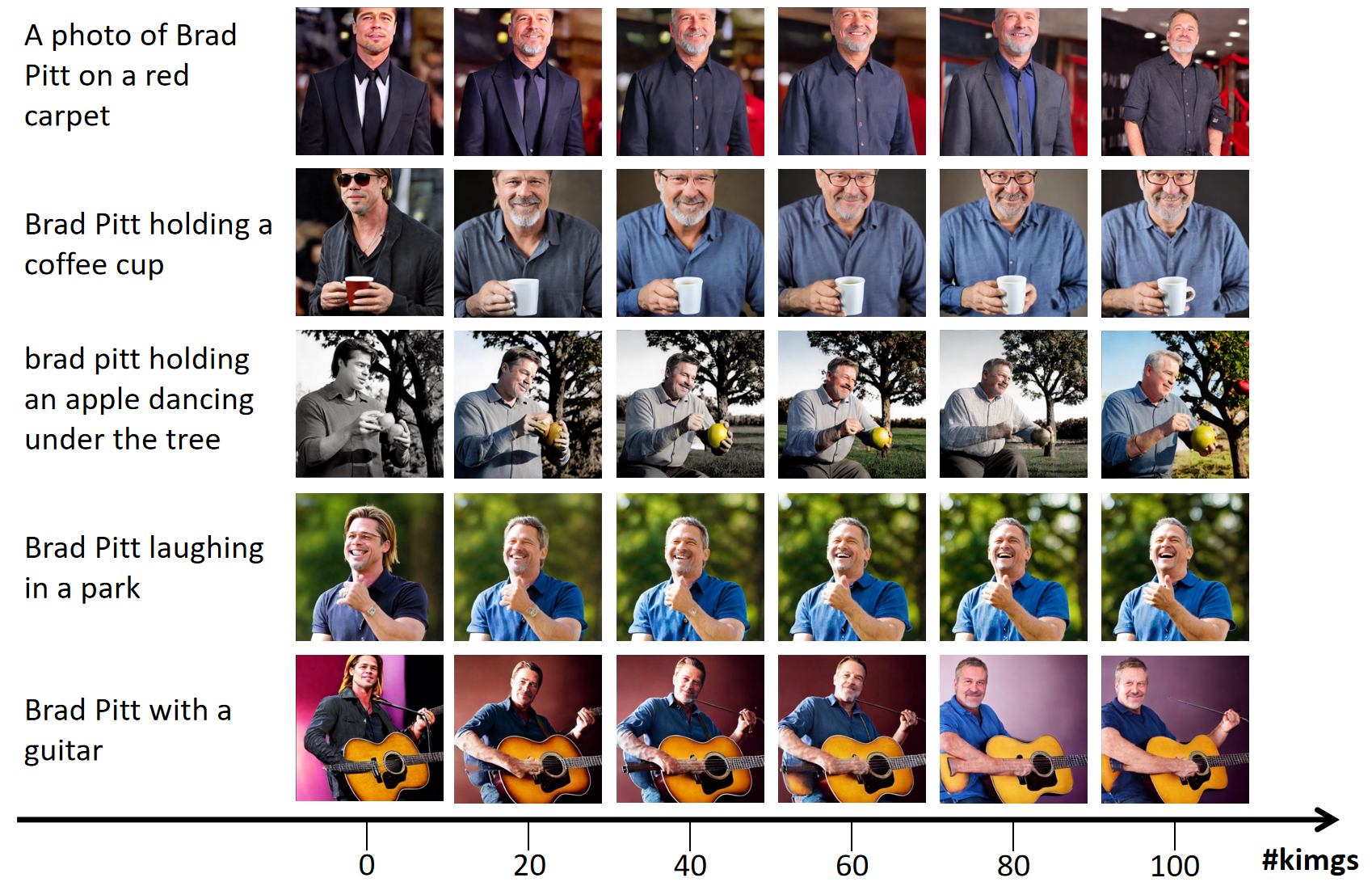
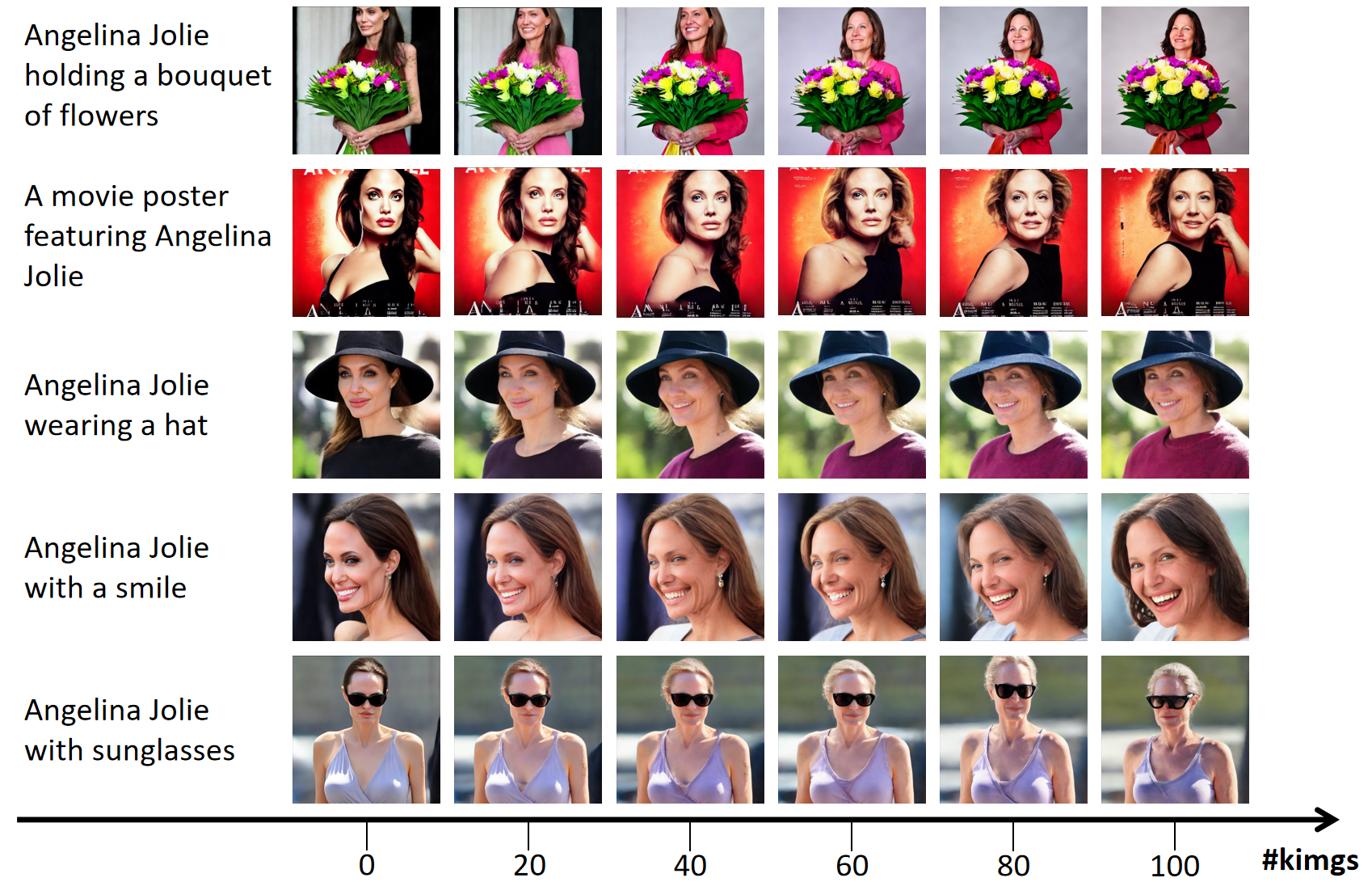
Figure 4: Progression of celebrity forgetting, as the model transitions from highly faithful generations of Brad Pitt and Angelina Jolie to generic middle-aged individuals.
Quantitative results using the Giphy Celebrity Detection (GCD) benchmark demonstrate state-of-the-art reduction in correct celebrity identification probabilities. However, PECKER’s reliance on saliency-based erasure yields increased "Prop. w/o Faces" rates, reflecting more aggressive face feature removal—an explicit trade-off.
Nudity Forgetting
PECKER outperforms all baselines on inappropriate content mitigation benchmarks (I2P), achieving the lowest inappropriate probability and maximum exposure rates with only 100k training images (compared to 300k for SFD).
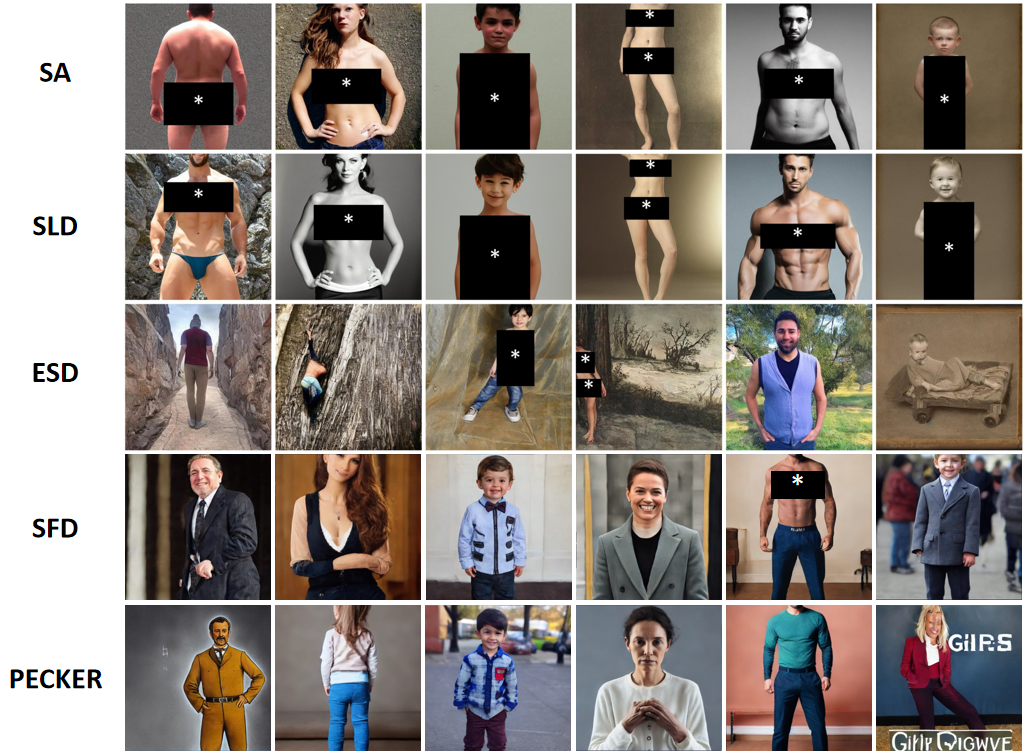
Figure 5: Generated samples from various diffusion models for NSFW prompts, with sensitive content censored.
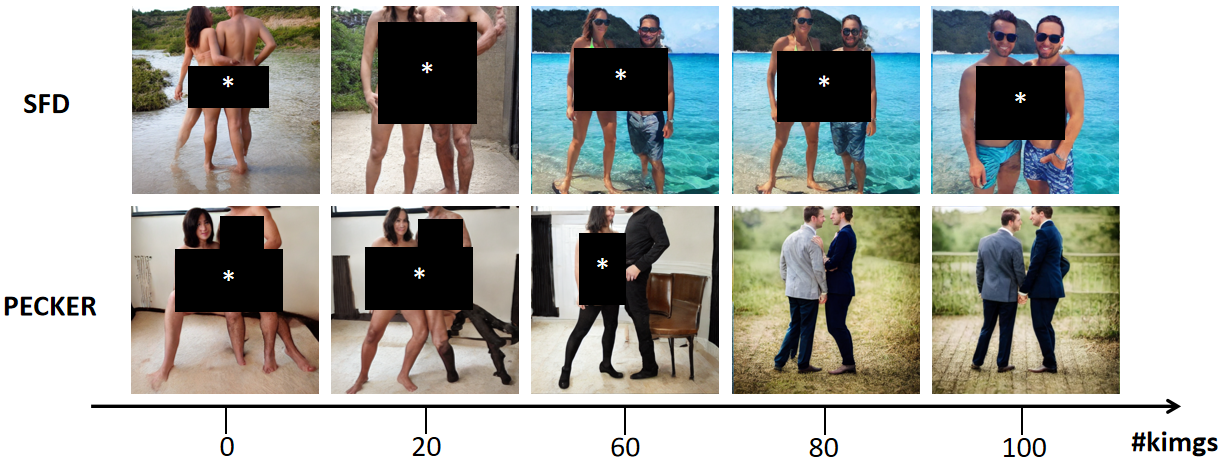
Figure 6: The nudity forgetting process across checkpoints—PECKER rapidly suppresses explicit content far more effectively than SFD.
This result underlines PECKER's efficient convergence and superior efficacy in data-sensitive MU tasks.
Theoretical and Practical Implications
PECKER advances the field by structurally aligning machine unlearning with parameter saliency, resolving the inefficiencies associated with distributed semantic encoding in diffusion models. By prioritizing gradient updates along critical parameters, it enables rapid, focused erasure of undesired knowledge without decimating overall model capability or incurring prohibitive computational expenditure.
From a compliance and deployment perspective, PECKER provides a practical mechanism for "right to be forgotten" enforcements or content moderation—a necessity for regulatory adherence (e.g., GDPR) in production-scale generative AI. The framework's data-free design and generality support its application in privacy-critical or resource-limited settings where retraining is infeasible.
Future Directions
While PECKER's efficiency and efficacy are validated on class- and concept-level unlearning in moderate-resolution regimes, future research must address its extension to ultra-large-scale, high-resolution models, as well as scenarios with nested or compositional concept forgetting. Optimization of the pseudo-score network and the development of sharper, context-dependent saliency metrics may enhance both unlearning specificity and retained generative quality.
Conclusion
PECKER introduces a parameter saliency-aware distillation framework for MU in diffusion models, achieving rapidly convergent and highly targeted forgetting while protecting the quality of retained outputs. The method positions itself as a robust, scalable, and privacy-preserving solution for compliance-oriented post-hoc model editing, setting a technical foundation for future work on efficient and reliable unlearning in foundation generative models.

