- The paper refines transit parameters and rules out significant TTVs, establishing a stable orbital configuration for WASP-11b.
- It employs multi-band photometry with MCMC fitting to update the orbital period, inclination, and system separation, reinforcing previous measurements.
- Atmospheric retrieval using PLATON reveals a Rayleigh scattering slope and a temperature of ~1000 K, indicating a haze-dominated optical spectrum.
Investigating Transit Timing and Optical Transmission Spectrum of WASP-11 b/HAT-P-10 b
Introduction
The manuscript presents a comprehensive analysis of the hot Jupiter WASP-11 b/HAT-P-10 b utilizing newly acquired and archival transit photometry, along with radial-velocity and atmospheric modeling. WASP-11 b (also referred to as HAT-P-10 b) orbits a K-dwarf and represents a typical member of the population of inflated, low-density hot Jupiters, making it a valuable testbed for both dynamical evolution studies and atmospheric characterization.
Observational Dataset and Light Curve Modeling
The SPEARNET global network enabled the acquisition of 31 new, multi-band photometric transit light curves, covering 2016–2024. These data were combined with archival light curves (ground-based and TESS; total of 50 epochs spanning 16 years) to derive updated system parameters and investigate long-term orbital stability.
The TransitFit package was used for simultaneous, multi-filter Markov Chain Monte Carlo fitting, with state-of-the-art limb-darkening treatment via LDTk. Key system parameters were robustly constrained:
- Orbital period: 3.7224797±7×10⁻⁸ days
- Inclination: i=88.28±0.06∘
- Scaled separation: a/R⋆=12.17±0.04
These refinements align with recent literature values and solidify the foundation for subsequent timing and atmospheric analyses.
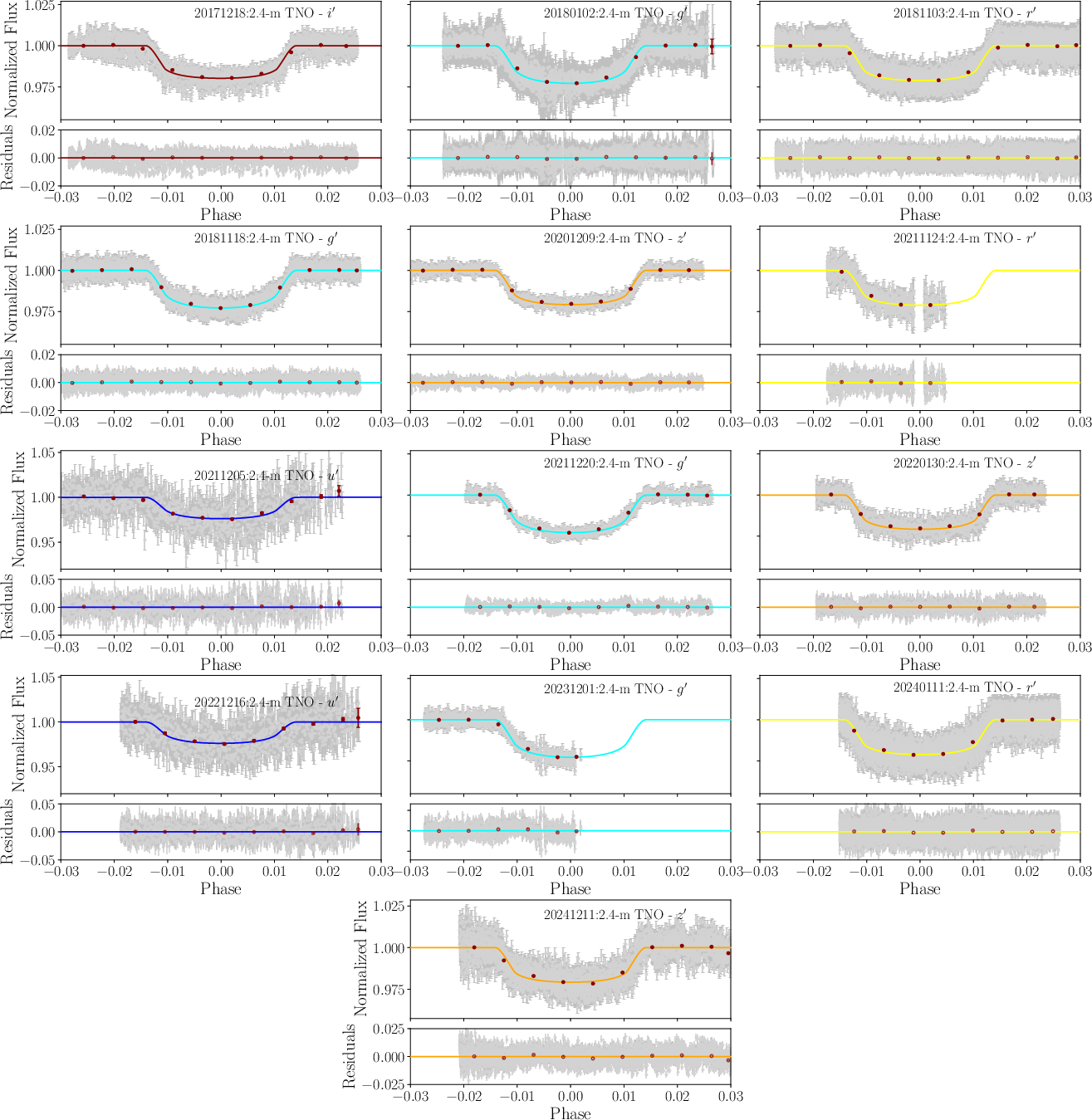
Figure 2: Normalized transit light curve from TRT-GAO in the R filter; the best-fit TransitFit model is overlaid.
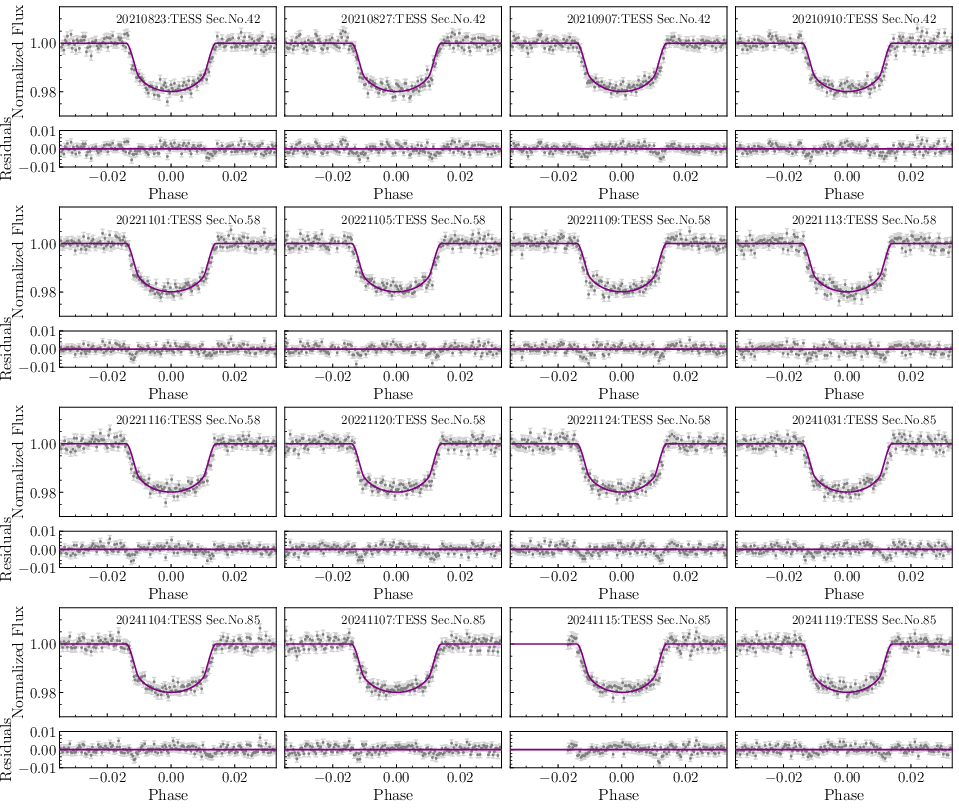
Figure 1: 2.4-m TNT acquired normalized light curves and TransitFit residuals.
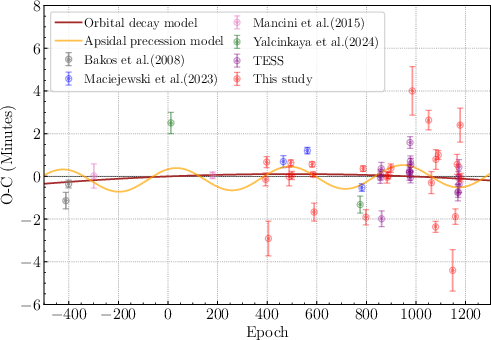
Figure 3: TESS observed light curves with model residuals, illustrating data quality and systematics control.
Transit Timing Analysis and Dynamical Constraints
A core focus was on transit timing variation (TTV) analysis, leveraging a 16-year time baseline. Three models were considered:
- Linear ephemeris (constant-period)
- Quadratic ephemeris (testing for orbital decay)
- Apsidal precession (nonzero eccentricity with varying argument of periastron)
MCMC analysis yields an updated linear ephemeris with negligible evidence for any non-linearity in orbital period:
- Quadratic model: dPd/dE=−6−9+9×10−10 days/orbit (not statistically distinct from zero)
- Derived tidal quality factor for the host star: Q⋆′∼5.1×10², incongruent with standard theoretical expectations (105–107)
- BIC differences between linear, decay, and apsidal models are minimal, indicating no decisive preference
No statistically significant periodic TTV signals are detected, either via Generalized Lomb-Scargle periodograms or O–C residual inspection, precluding compelling evidence for additional planetary companions with strong perturbing influence.
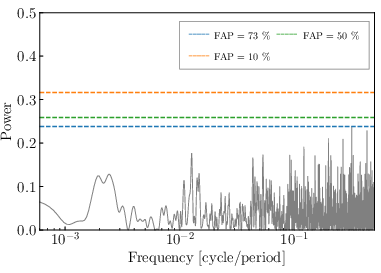
Figure 4: O−C diagram aggregating all epochs, with the fits for linear, orbital decay, and apsidal models.
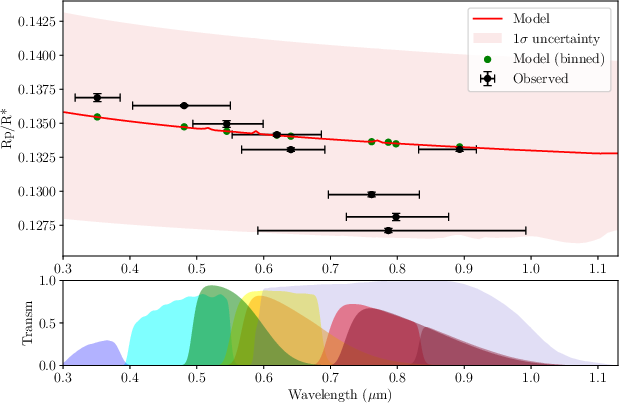
Figure 5: GLS periodogram of TTV residuals indicating no significant accompanying periodicities.
The RV data, also analyzed for line-of-sight acceleration indicative of long-term secular evolution or massive distant companions, show no significant trend, consistent with the timing results.
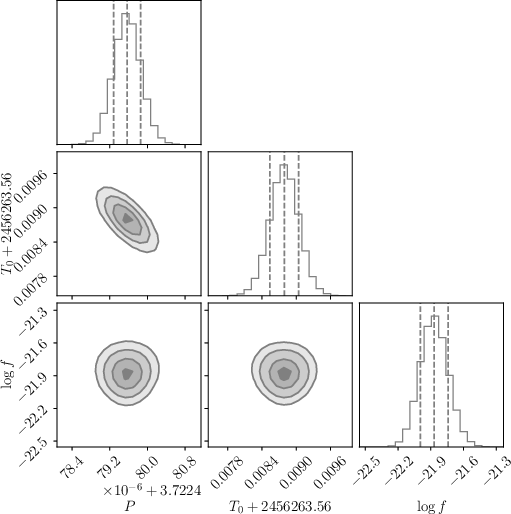
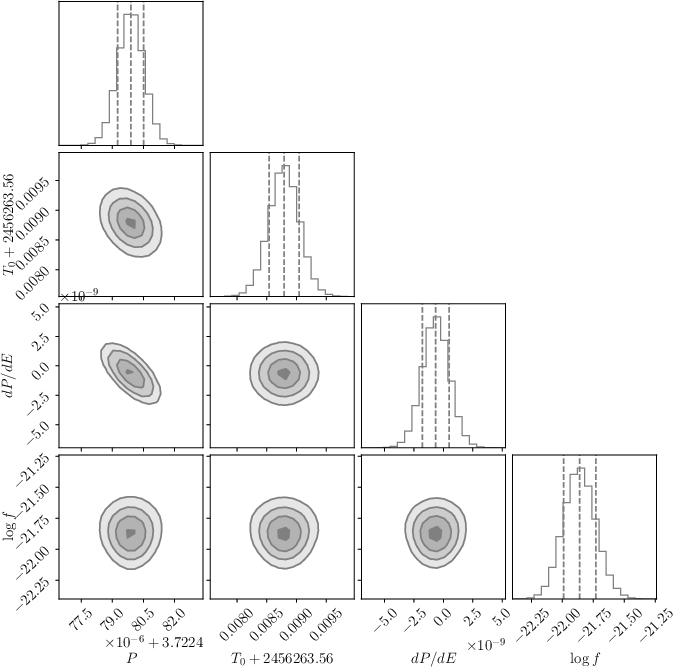
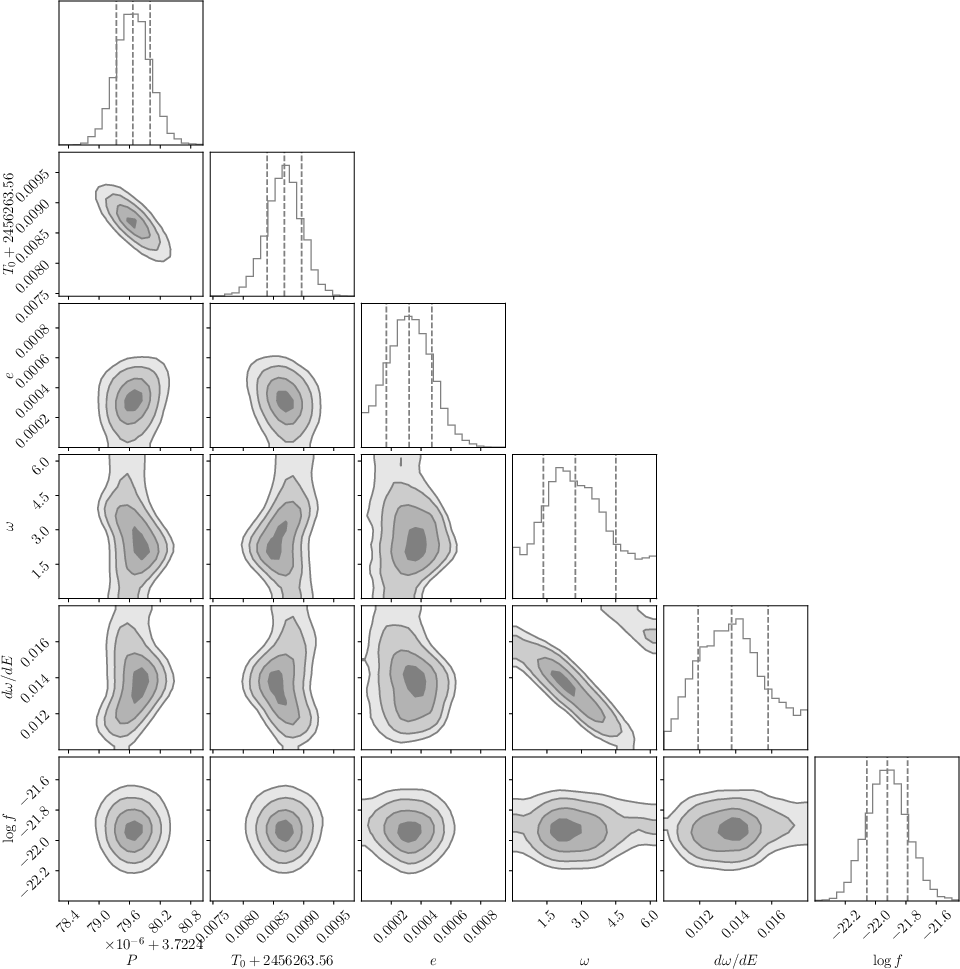
Figure 6: MCMC posterior distributions for model parameters, illustrating parameter degeneracies and model indistinguishability.
Transmission Spectrum and Atmospheric Retrieval
Optical-to-near-IR transit depths, derived from the multi-band transit photometry, were forward-modeled and retrieved using PLATON, exploring a parameter space spanning temperature, metallicity, C/O ratio, and Rayleigh scattering properties. The retrieved transmission spectrum exhibits:
- A pronounced Rayleigh scattering slope from the blue optical to near-infrared
- Retrieved temperature T∼1000 K
- C/O ratio i=88.28±0.06∘0 (poorly constrained, requiring further NIR data for molecule detection)
- i=88.28±0.06∘1
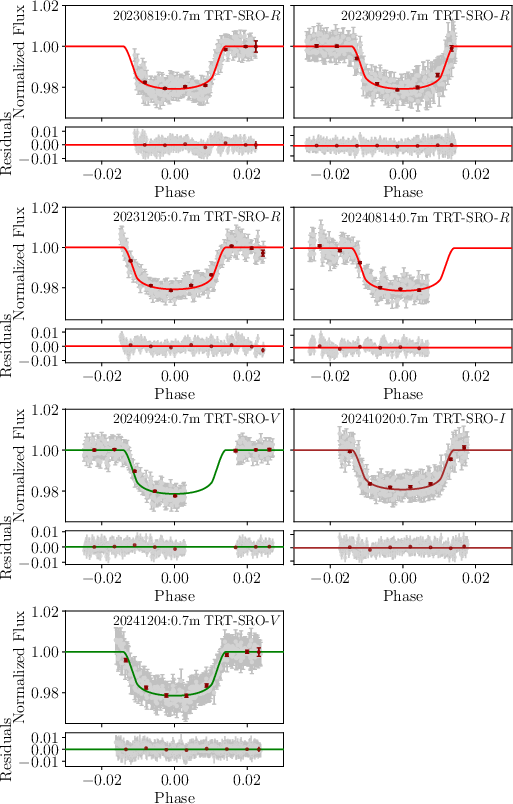
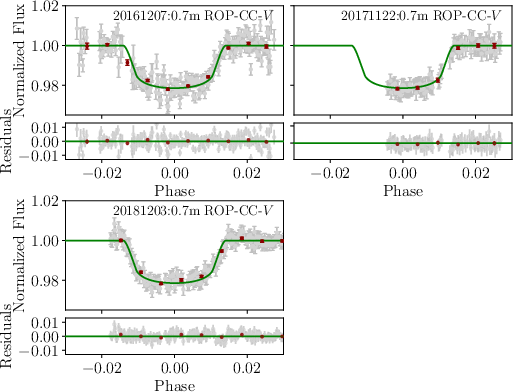
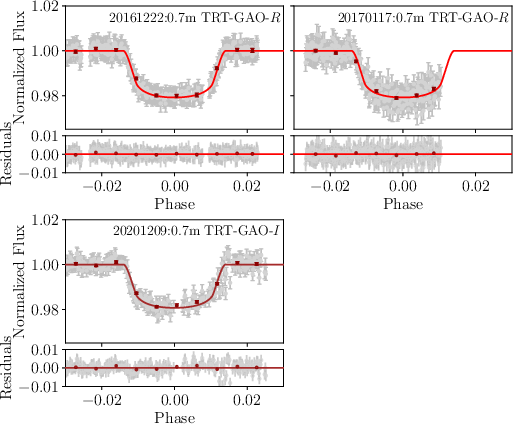
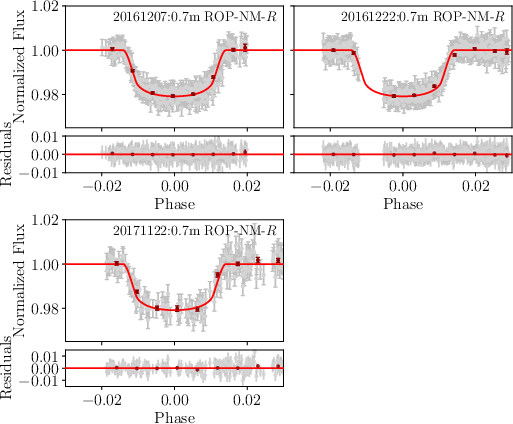
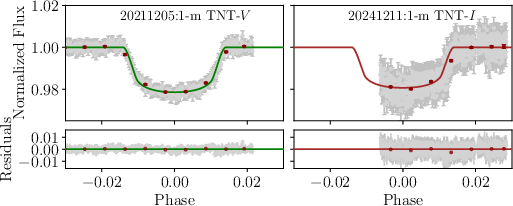
Figure 8: Multi-band transmission spectrum and best-fit PLATON models; filter profiles shown below.
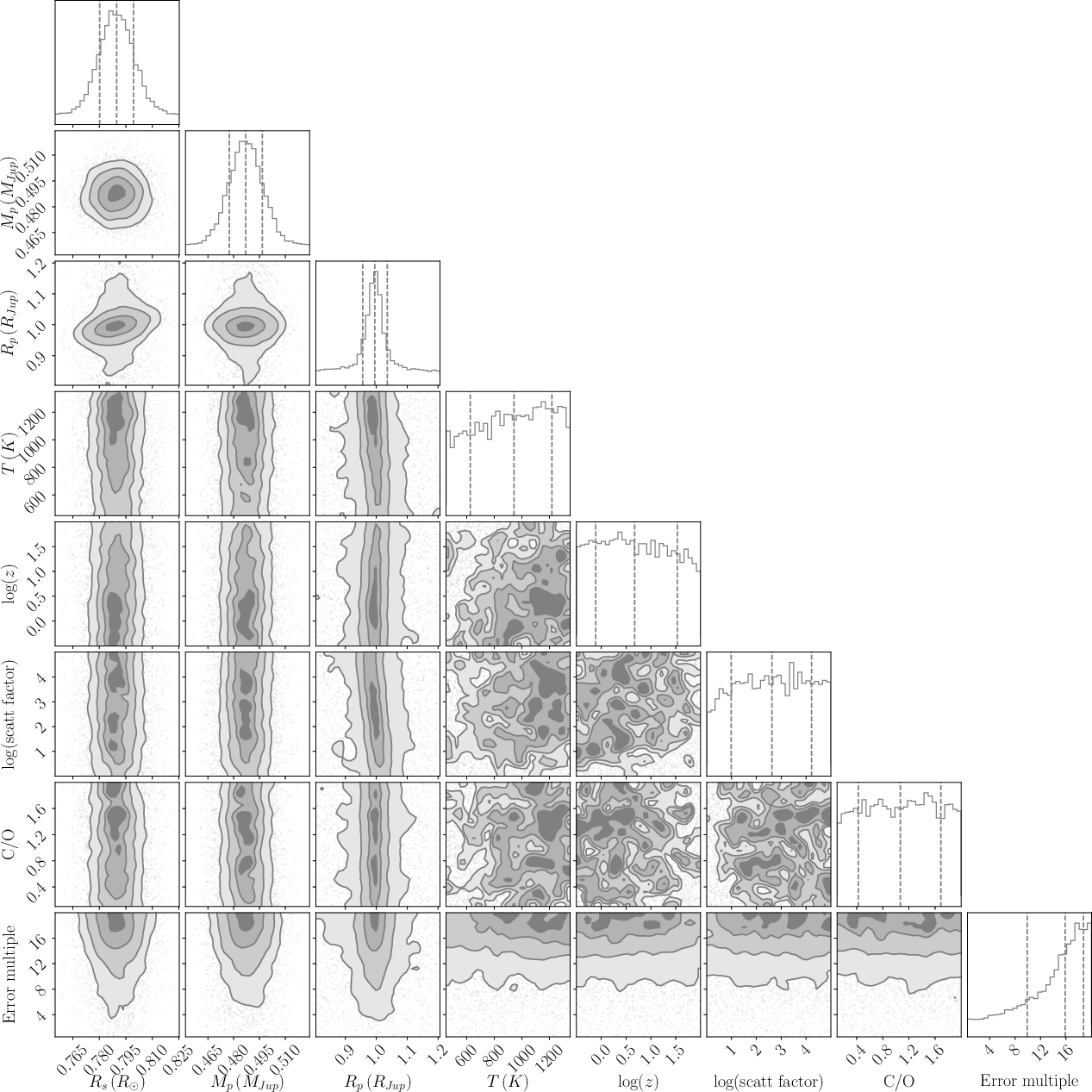
Figure 7: Posterior distributions for key atmospheric parameters from PLATON retrieval.
These spectral characteristics are consistent with Rayleigh haze-dominated atmospheres observed in other temperate hot Jupiters such as WASP-6 b and HAT-P-12 b. The slope could originate in planetary atmospheric processes, but the host’s binary nature and potential for unresolved dilution or stellar activity must be considered. TESS photometry shows no clear evidence of activity, and the Rayleigh slope amplitude is comparable to other hazy, low-gravity exoplanets.
Discussion and Theoretical Implications
The absence of significant TTVs supports a dynamically quiescent planetary system. The null detection of orbital decay distinguishes WASP-11 b/HAT-P-10 b from classical cases (e.g., WASP-12b), with the tidal dissipation parameter constraints setting weak limits on planetary migration and lifetime. The lack of excess RV acceleration further excludes the presence of massive outer companions.
Atmospheric retrieval confirms that even for K-dwarf hosts and comparatively cool hot Jupiters, high-altitude haze layers can dominate optical transmission regions. The retrieved Rayleigh scattering signature can be considered robust against standard systematics, though future observations—particularly spanning the infrared to target key molecular absorbers—are necessary for compositional disambiguation.
The present work demonstrates the scientific leverage provided by extensive, homogeneous time-series photometry, combined with state-of-the-art retrieval and dynamical modeling frameworks (TransitFit, PLATON). By setting stringent upper limits on orbital evolution and refining the planetary radius–wavelength relation, this study motivates expanded, multi-instrument programs for long baseline dynamical and atmospheric monitoring of hot Jupiter systems.
Conclusion
WASP-11 b/HAT-P-10 b stands as a dynamically stable, haze-rich hot Jupiter without evidence for orbital decay, apsidal motion, or significant TTVs. These findings suggest an isolated, long-lived configuration and an atmosphere dominated by Rayleigh scattering in the optical, similar to other members of the class but lacking strong evidence for additional planets or dramatic tidal inspiral. Continued high-precision photometric and spectroscopic monitoring will be required to probe for subtle dynamical effects, clarify atmospheric composition, and test for telluric or instrumental systematics that might affect transmission slopes.
For comprehensive dynamical evolution and atmospheric frameworks, the methods and results outlined set a benchmark for similar systems, supporting theoretical models of hot Jupiter migration and atmospheric hazes, and refining constraints on exoplanetary system architectures (2604.05570).

