- The paper demonstrates through high-resolution 3D RMHD simulations that ambient morphology and jet orientation critically govern radio galaxy morphologies.
- The paper shows that jet propagation along major, intermediate, and minor axes results in distinct structures: X-shaped, double-boomerang, and classical double-lobed forms.
- The paper quantifies how variations in jet magnetization and turbulence affect terminal hotspots, lobe symmetry, and feedback-driven evolution.
Galactic-Scale Evolution of Classical and Complex Radio Galaxies: Impact of Ambient Morphology and Jet Geometry
Introduction
This study addresses the coupling between relativistic AGN jets and the ambient medium within host galaxies, emphasizing how triaxial baryonic distributions and jet-intrinsic parameters dictate the morpho-dynamical evolution of classical and complex radio galaxies on galactic (tens of kpc) scales. The analysis establishes the explicit dependency of emergent jet morphologies—such as double-lobed, X-shaped, and double-boomerang radio galaxies—on both the jet launch orientation with respect to the galactic principal axes and the internal magnetohydrodynamic properties of the jets (e.g., Lorentz factor, magnetization, injection geometry).
Observational Axis Alignment Trends
Empirical studies, revisited in this work, demonstrate that large-scale radio jets do not display a uniform alignment with the optical major axes of their host galaxies. For structures exceeding 200 kpc, a robust trend emerges: jets in giant radio galaxies (GRGs) typically propagate along the host minor axis, while X-shaped radio galaxies (XRGs) feature primary jets aligned with the major axis and wings tracing the minor axis. Representative cases and survey-based statistical findings are provided and reanalyzed, resolving previous controversies in the literature about radio-optical orientation correlations.
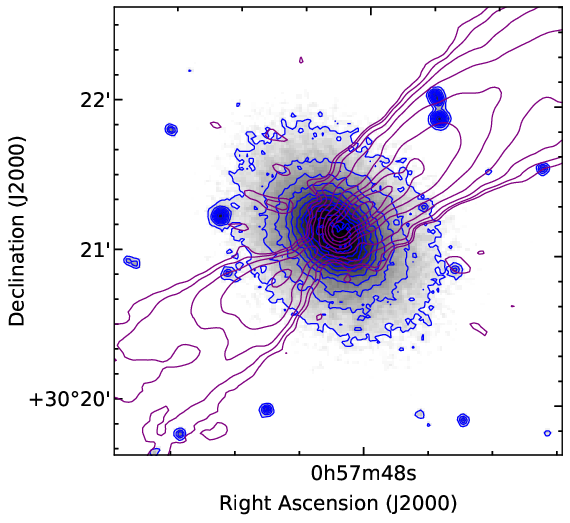
Figure 1: NGC 315 exhibits jet propagation aligned with the minor axis of its massive elliptical host, typical for GRGs.
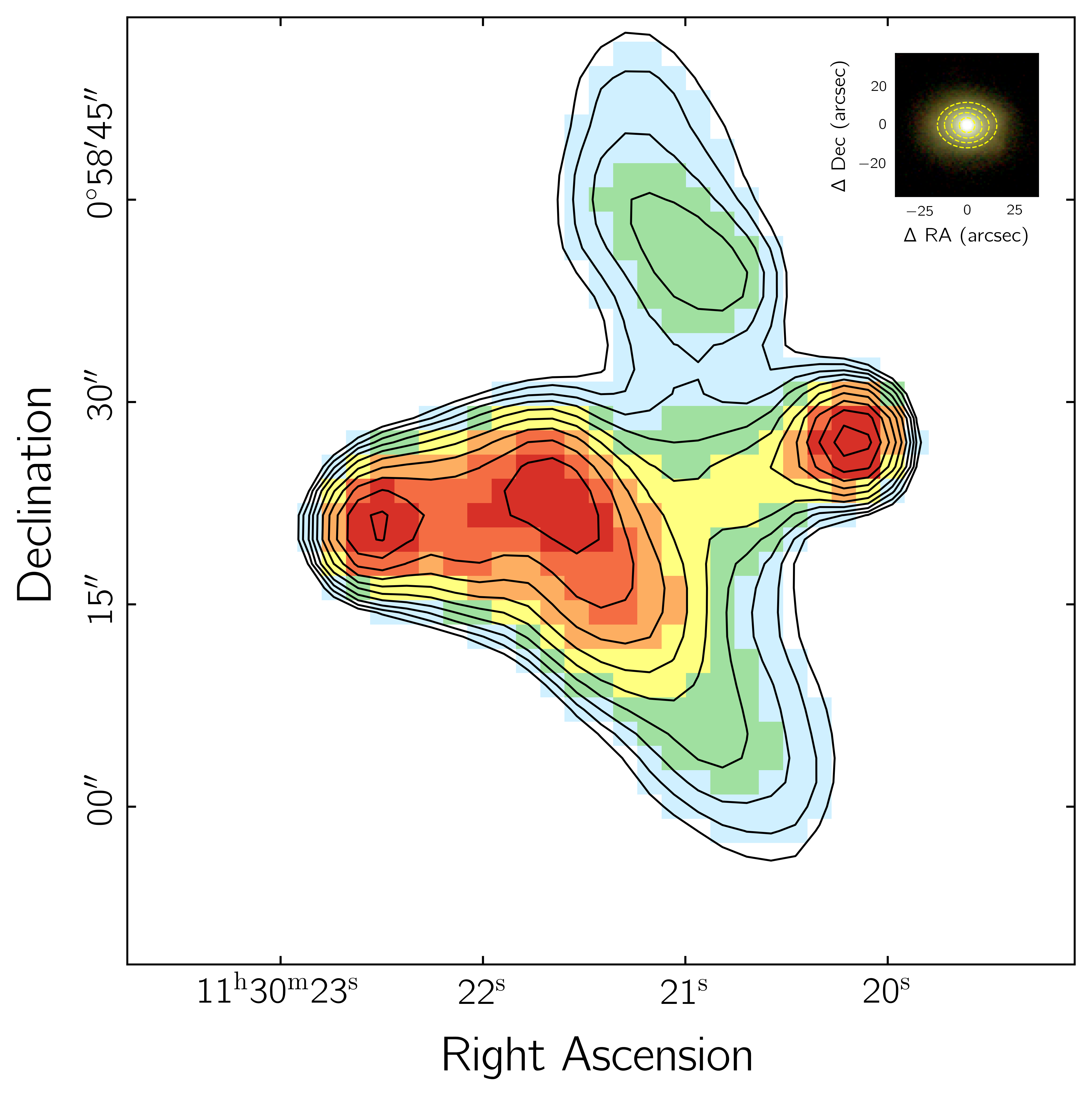
Figure 2: 4C +01.30 displays an XRG morphology, with the active jet aligned to the major axis and wings orthogonal, tracing the minor axis.
Crucially, the study investigates, with direct image overlays, the archetype morphologies—inclusive of classical doubles, GRGs, XRGs, and the ‘double-boomerang’ intermediate cases—highlighting how the jet direction relative to the ambient triaxial geometry modulates lateral lobe development, cocoon symmetry, and secondary structure formation. Counterexamples and cases without clear alignment are quantitatively discussed via new ΔPA statistics for GRG samples.
Numerical RMHD Simulations: Parameterization and Regimes
The core of the paper involves a suite of high-resolution 3D RMHD simulations (PLUTO code), systematically varying:
- Ambient medium axis orientation (major [maj5], intermediate [intm40], minor [min85])
- Jet injection Lorentz factor, radius, and magnetization (σ)
- All with fixed jet kinetic power Qj∼3×1044 erg/s
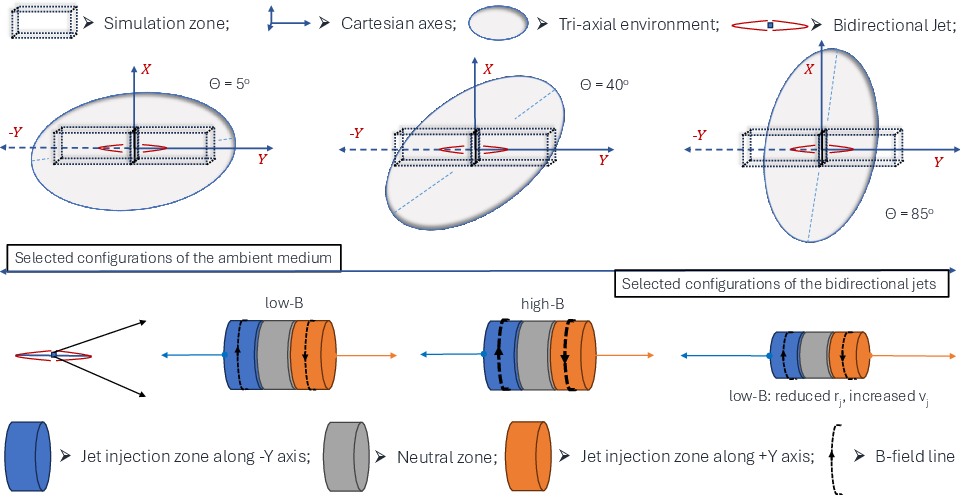
Figure 4: Schematic of simulation setup—triaxial medium, three jet propagation angles, and three jet-intrinsic parameter regimes.
This approach isolates the role of both extrinsic (environmental) and intrinsic (jet) properties in determining the onset of distinct radio morphologies in the early evolution phase (<10 Myr dynamical ages, jet extents ∼20–30 kpc).
Morphological and Radiative Outcomes: Trends and Diagnostics
Simulation results establish that:
- Major-axis propagation: Induces XRGs, as backflowing plasma is redirected by the stiffer density/pressure gradient toward the minor axis, forming wings; growth rate is slowest due to maximum hindrance.
- Intermediate angle: Generically produces double-boomerang/curved lobe structures akin to several ‘winged’ sources.
- Minor-axis propagation: Favors efficient propagation and classical double-lobed morphologies; reduced ambient resistance yields the fastest dynamical advance and, with high collimation, points to natural GRG progenitors.
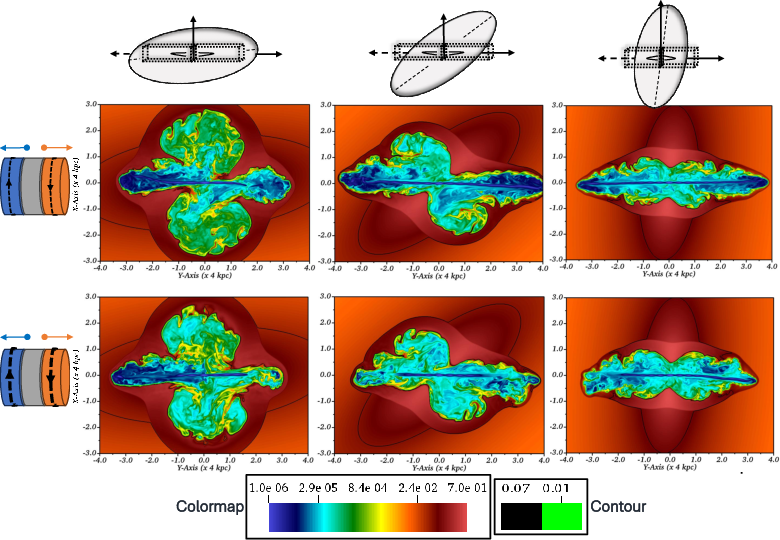
Figure 6: 2D simulation slices—major-axis jets yield XRGs, intermediate yields double-boomerang, minor yields classical doubles; higher magnetization suppresses cocoon expansion.
A targeted high-speed, high-collimation, low-B case (lowB_varRV_min85) demonstrates rapid, nose-cone–type advance Figure 7, supporting the premise that increased jet thrust and collimation—at fixed power—enables GRG formation.
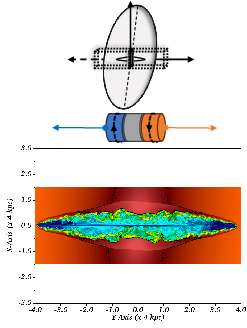
Figure 3: A high-thrust, narrow jet along the minor axis reaches 32 kpc in 2.6 Myr; a configuration highly favorable for GRG genesis.
Synthetic radio maps at 1 GHz directly connect the dynamical outcome to observational properties, especially the presence or absence of terminal hotspots/warmspots, prominence of wings, and radiative filling factors. High-σ jets systematically develop bright, terminal hotspots in all morphological classes, while low-σ cases yield diffuse/warmspot features, emphasizing the critical role of the jet’s initial magnetic energy fraction in radiative diagnostics.
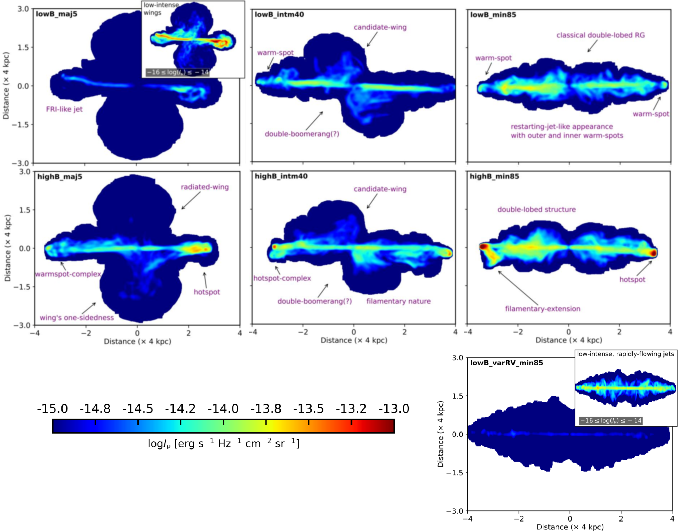
Figure 5: 1 GHz intensity maps—hotspot prominence and lobe/wings morphology depend strongly on jet magnetization, not just jet power.
Magnetic field transport and amplification are traced directly Figure 9, and mass entrainment in the cocoon is shown to decrease with increasing jet magnetization Figure 10.
Discriminating Between Backflow and Jet Precession Scenarios
A direct quantitative comparison overlays the simulated backflow-driven double-boomerang structures with analytic precessing-jet models, showing that such morphologies—length ratios, curvature, lobe separation—can be mimicked by both mechanisms, rendering morphology alone a non-unique diagnostic for formation channel determination.
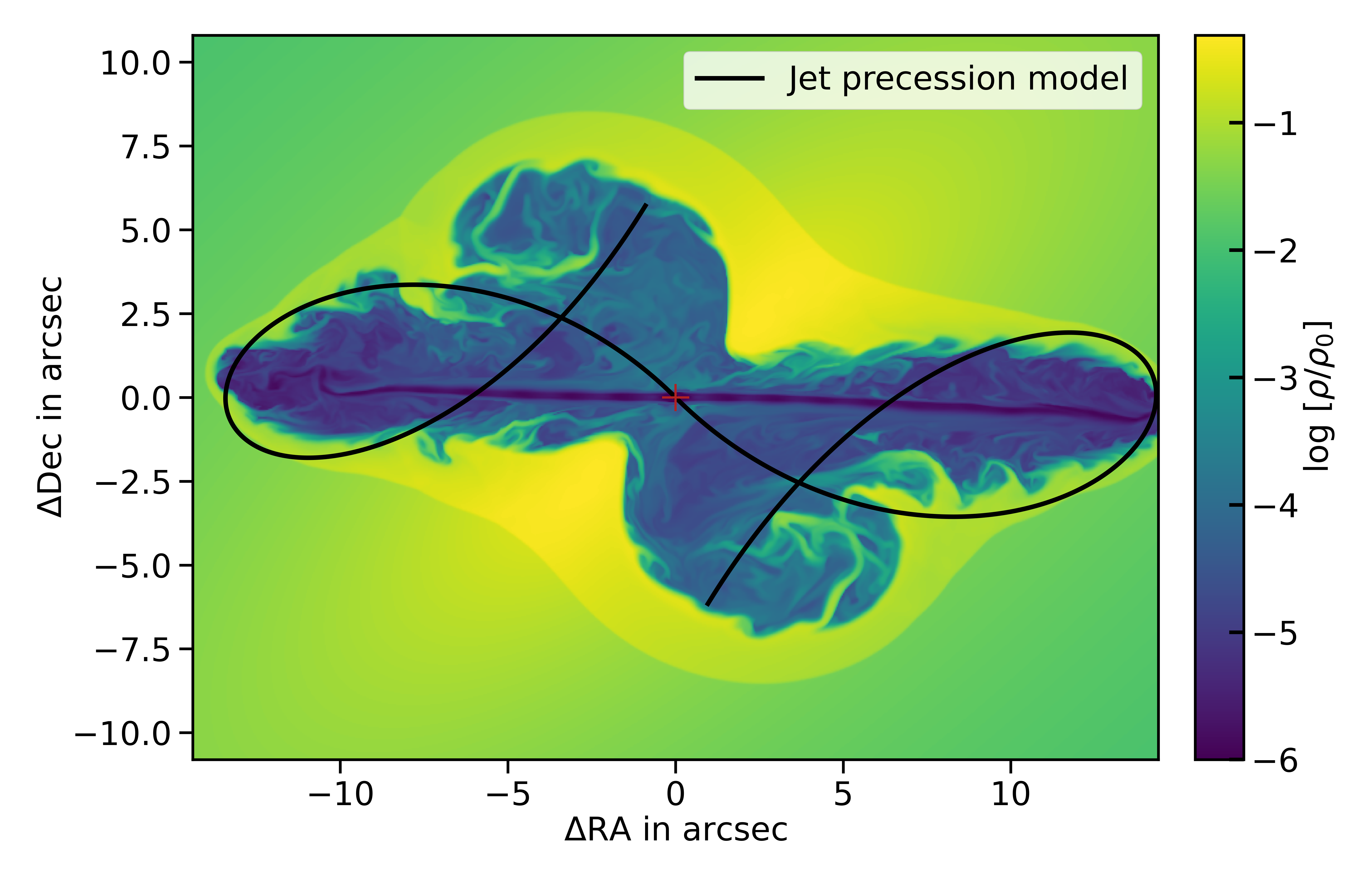
Figure 7: Comparison of simulated backflow double-boomerang with analytic precession trajectory; both yield similar projected radio structures.
Quantitative Morphological and Turbulence Metrics
The study establishes that early jet environment coupling decisively impacts lobe advance speed, length-age trajectories, and divergence from idealized 1D analytic growth laws. Analytical models over-predict expansion, neglecting de-collimation and multidimensional instabilities.
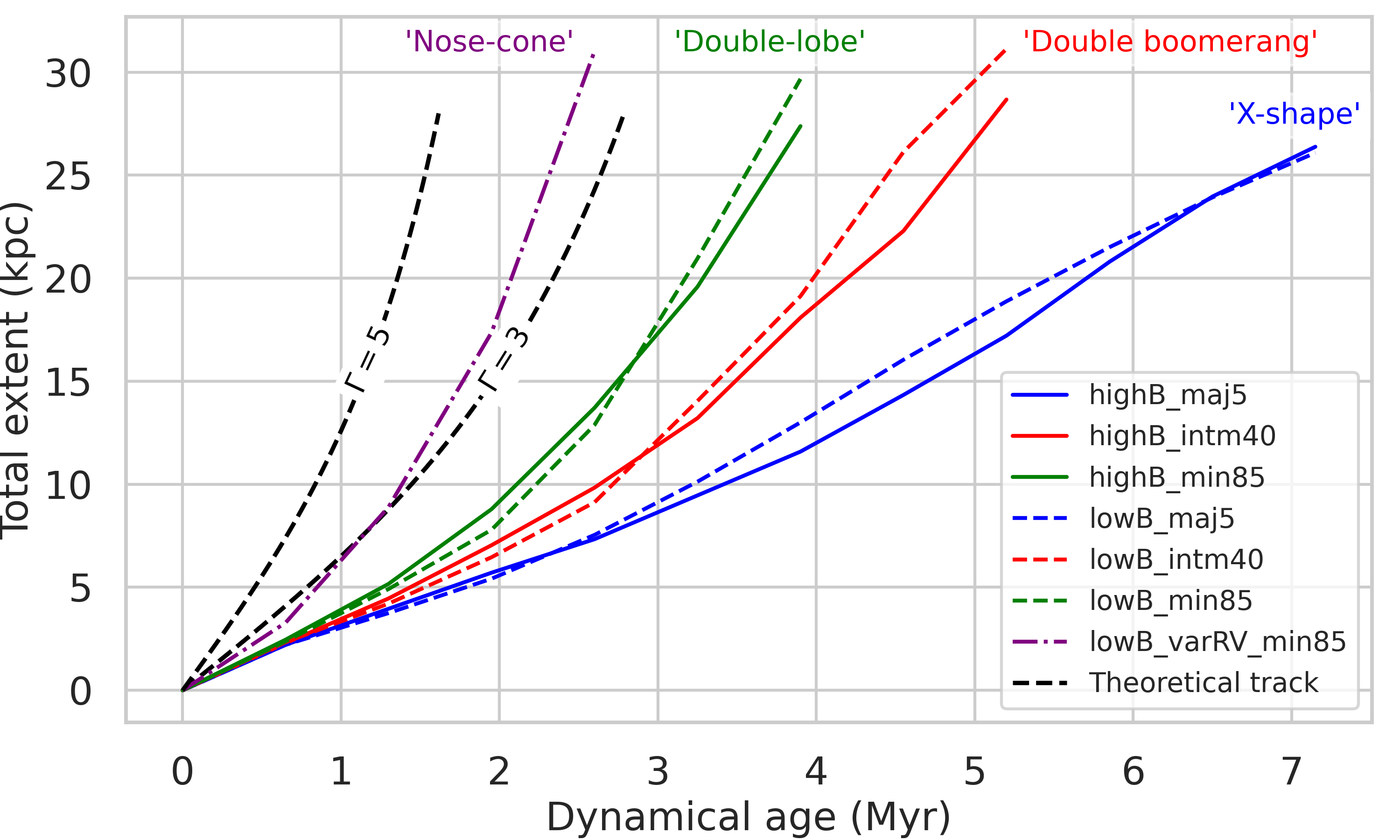
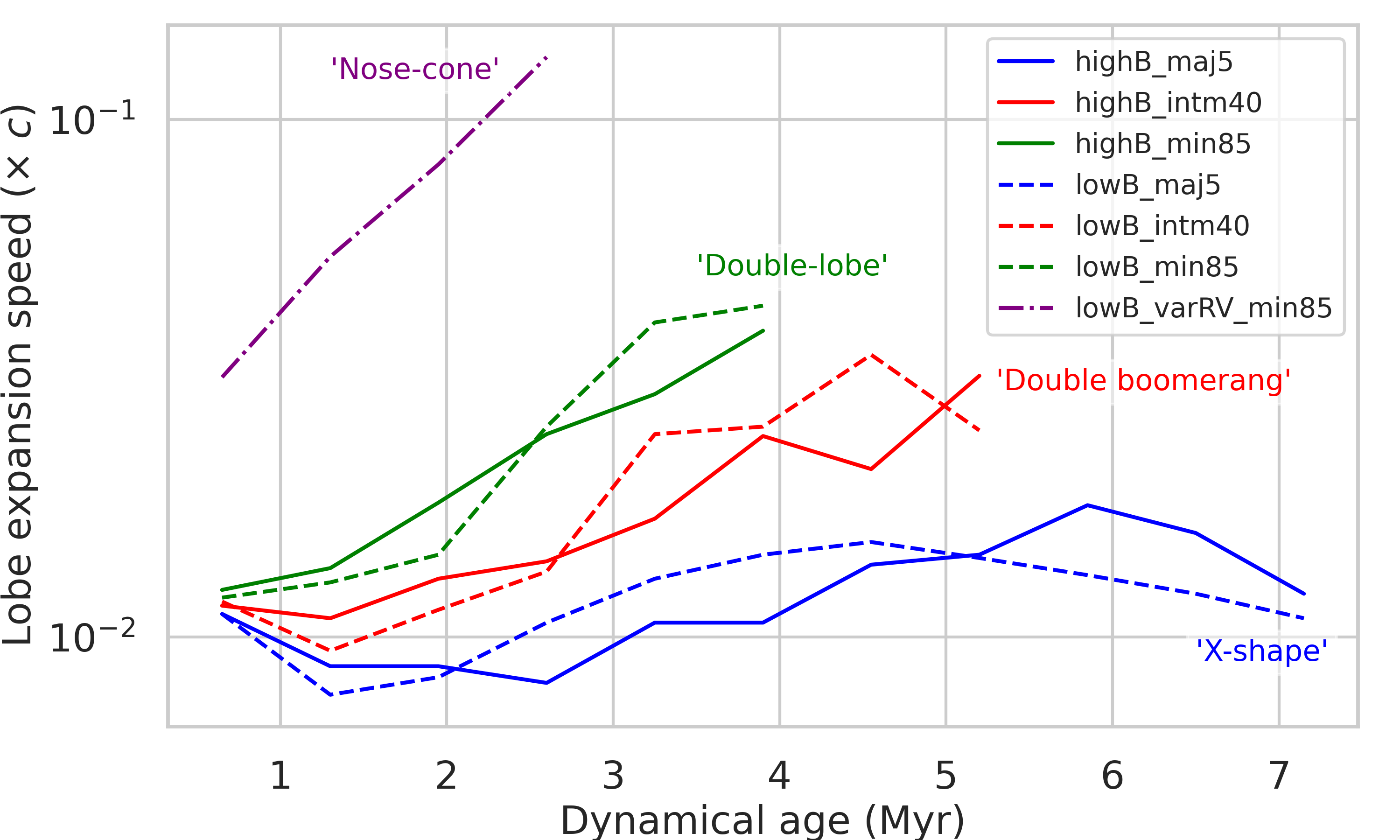
Figure 8: Lobe length vs. time and lobe velocity evolution: 3D simulations (all with equal Qj) diverge from 1D analytic models; high-thrust jets show maximal deviation.
Magnetized cocoon turbulence is quantified across morphologies and regions (lobe, wing, central). High-magnetization jets suppress δBN on sub-kpc scales but still allow substantial turbulence in wings, consistent with observed in situ re-acceleration and polarized emission structures.
(Figure 13, Figure 14)
Figure 9: Cocoon turbulence amplitude saturates above ∼1 kpc in all morphologies; higher σ0 smooths small-scale structures.
Figure 10: Tracer-based segmentation of XRG morphology; turbulence is maximal in the active lobe, intermediate in the central backflow, and present (but reduced) in wings.
Counterexamples and Parameter-Space Mapping
Simulations with systematically varied jet density and injection geometry (HeavyJ cases) reproduce observed outliers: (1) Major-axis jets lacking classical XRG wing development, and (2) minor-axis jets that disrupt and de-collimate before forming giant, straight lobes—demonstrating causal links between jet internal structure and deviation from main alignment-morphology trends.
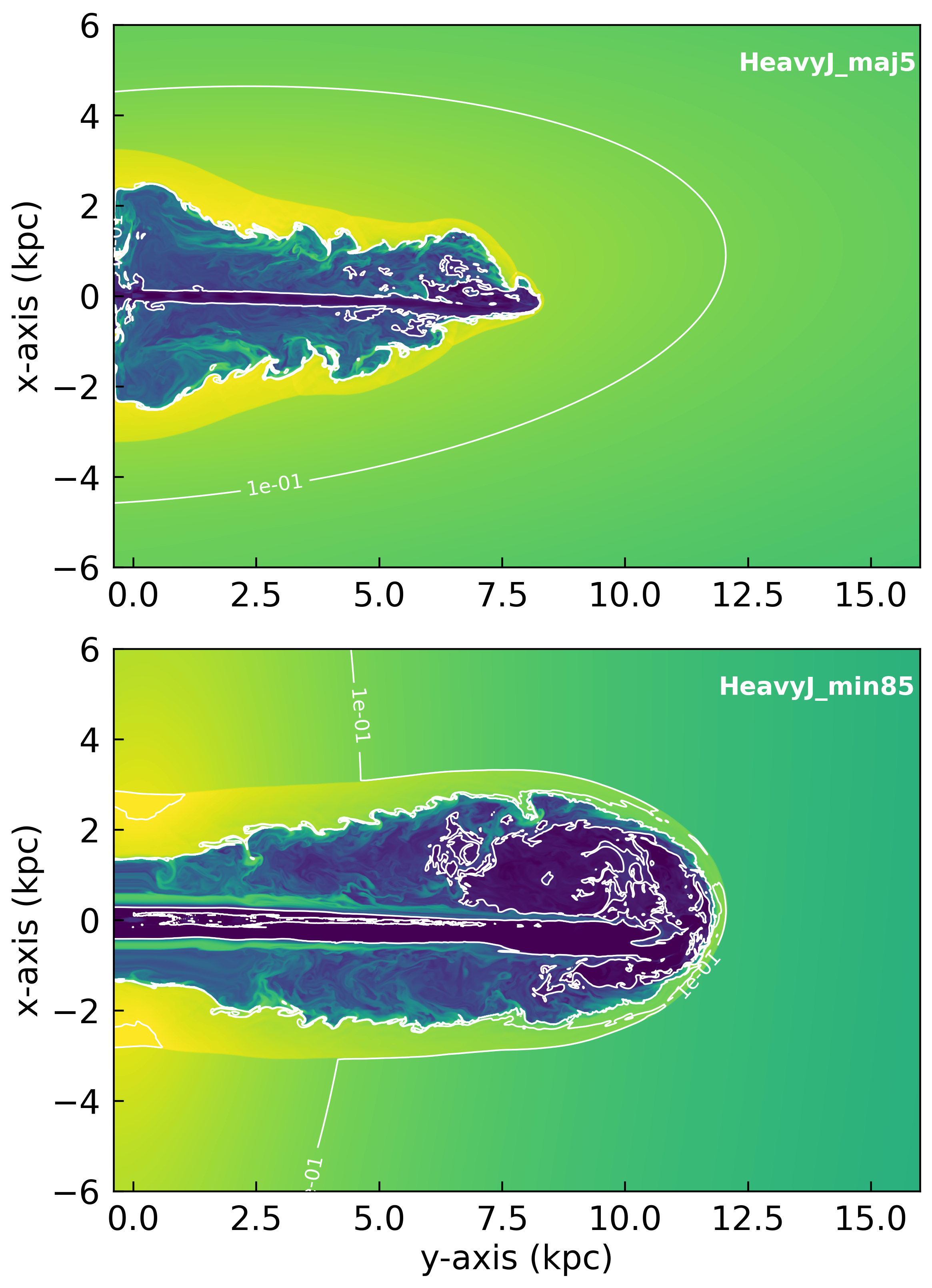
Figure 11: "HeavyJ_maj5" (major-axis, dense jet) suppresses wing formation; "HeavyJ_min85" (minor-axis, dense) fails to collimate and rapidly disrupts.
A new σ1PA distribution for observed GRGs quantifies the non-uniformity of real-world axis alignment, confirming minority populations at odds with naive expectations, motivating expanded future simulation regimes.
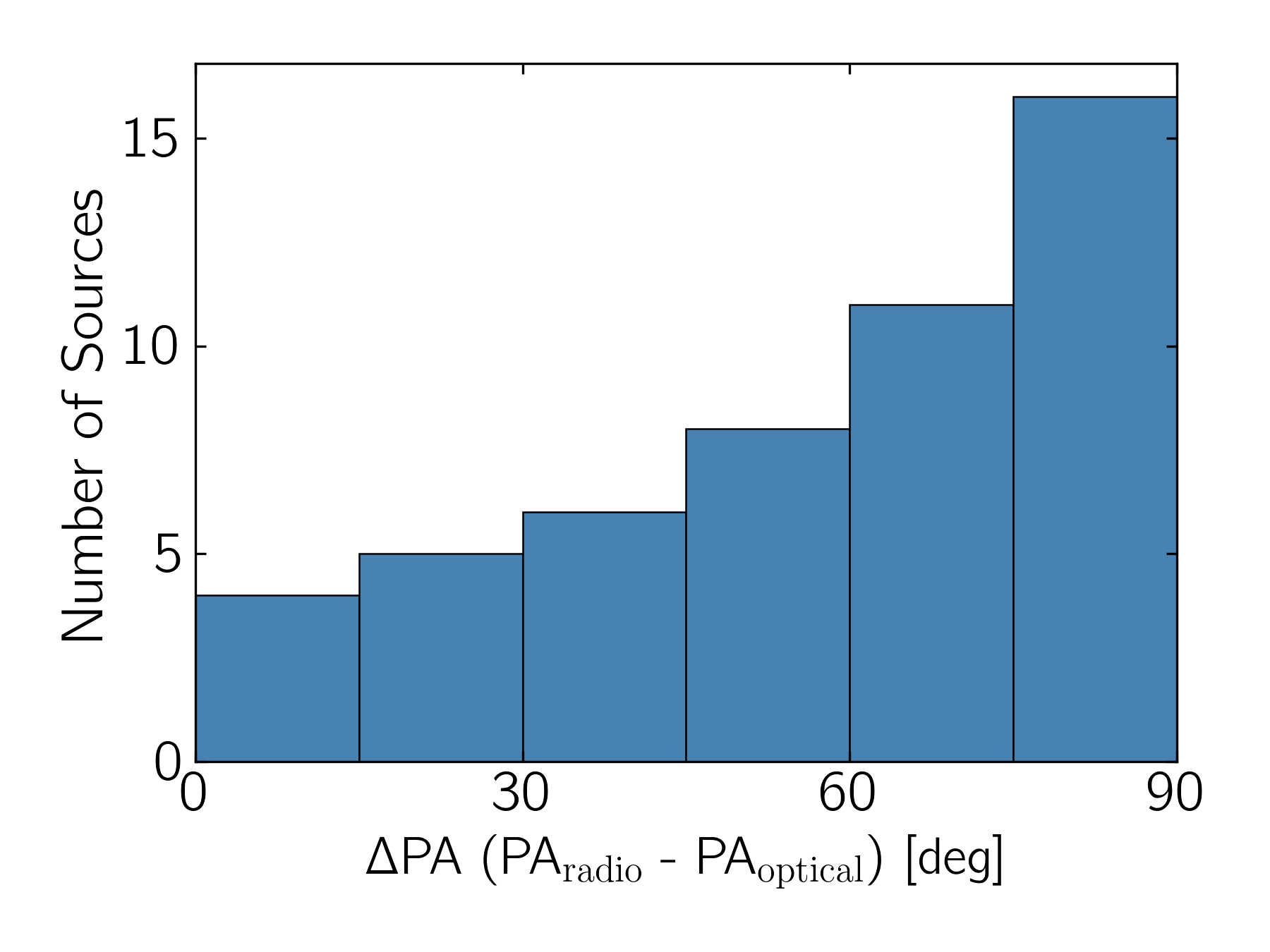
Figure 12: Distribution of σ2PA between jet and optical major axis for GRGs; multiple sources deviate from the expected minor-axis trend.
Extended Simulations: Classical vs. Giant RGs
Long-duration simulations further support the criticality of jet collimation and spine stability (for fixed power): jets with higher Lorentz factor and reduced radius remain collimated and rapidly evolving, directly paralleling the properties of observed megaparsec-scale GRGs.
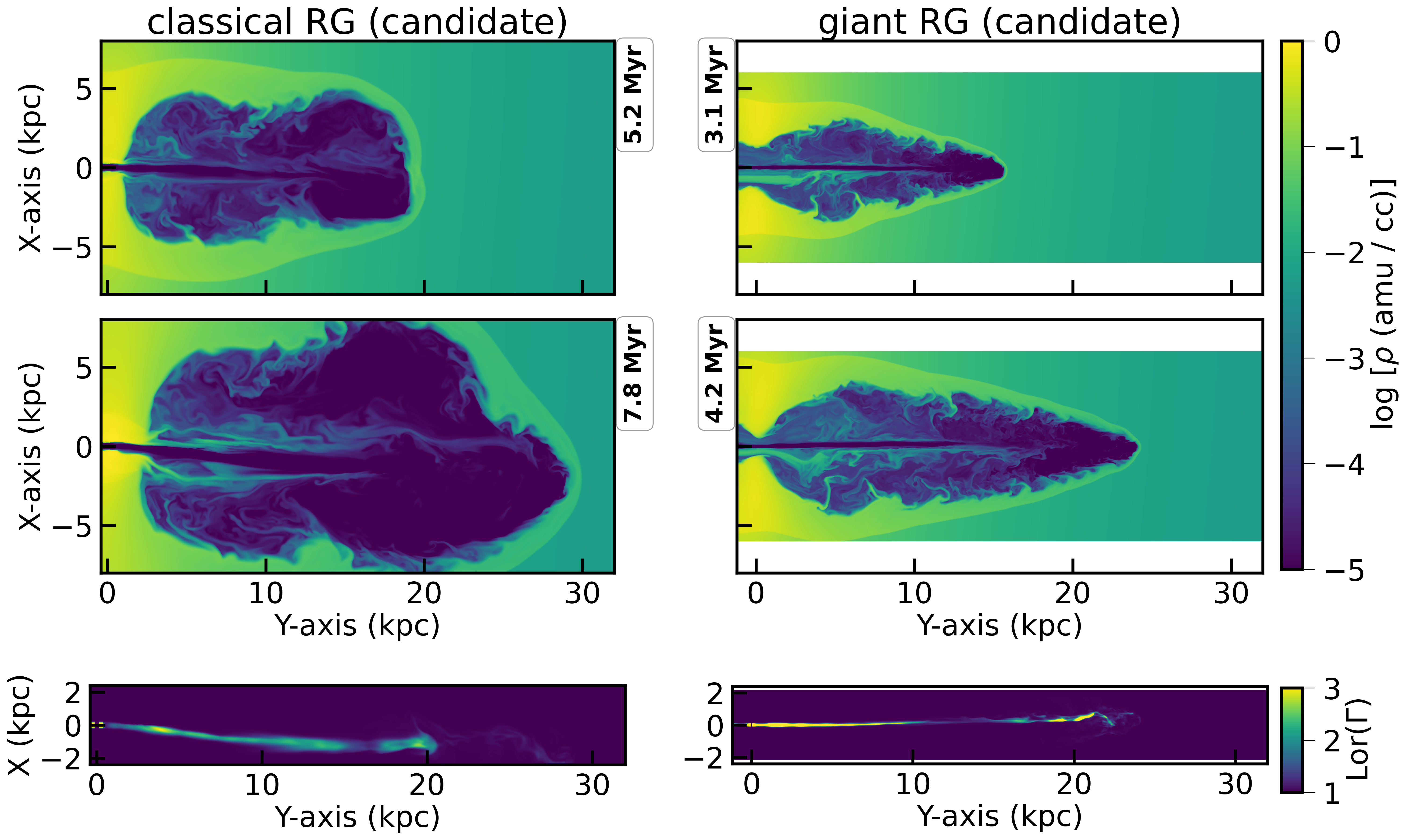
Figure 13: Large-scale, long-term evolution—highly collimated, high-thrust jet vs. decollimated, wide-lobed counterpart with identical power.
Three-Dimensional Magnetic Structure and Polarization
Volume renderings and synthetic polarization maps confirm that high-σ3 runs develop field topologies with strong terminal compression, field collimation along the jet axis, and enhanced polarization signatures at the working surface—consistent with deep observations and theoretical expectations.
(Figure 18, Figure 19)
Figure 14: 3D magnetic topology: high-σ4 runs preserve flux to the head, low-σ5 cases become tangled/diffusive.
Figure 15: Synthetic projected polarization maps: strong field alignment and compression at jet termini, especially for high-magnetization cases.
Implications and Future Directions
This work solidifies that galactic-scale jet evolution, dictated by orientation within triaxial hosts and subtle variations in jet internal structure, establishes the foundation for the observed diversity in radio galaxy morphologies at much larger scales. The study provides a stringent framework for evaluating formation channels of GRGs, XRGs, and intermediate cases, and validates the primacy of the jet thrust/collimation and host pressure gradients over classical jet kinetic power as critical parameters. The findings on turbulence and magnetic stabilization have direct implications for the interpretation of radio-polarimetric data and feedback energetics in group/cluster environments.
Theoretically, the identification of multi-channel degeneracy in the production of curved/winged morphology (precession vs. backflow) underscores the need for multimodal diagnostics combining deep radio continuum, polarization, and time-variable observations, complemented by expanded RMHD simulations.
Future work will extend simulation domains to hundreds of kpc/Mpc and integrate advanced particle acceleration modules and GPU-optimized code bases, addressing the multiscale nature of observed systems. Observationally, new data releases from facilities such as LOFAR and ASKAP are poised to further constrain the incidence and properties of RG outliers.
Conclusion
This paper demonstrates, via integrated observation–simulation analysis, that the complex suite of classical, giant, and X-shaped radio galaxy morphologies is fundamentally a consequence of the coupled evolution of relativistic jets and triaxial ambient media, with jet orientation, thrust/collimation, and magnetization serving as the controlling parameters. The results provide a predictive physical basis for the variety of radio structures encountered and reveal pathways to resolving the longstanding open questions of radio galaxy evolution and feedback.