- The paper demonstrates that integrating ADAPT-VQE and LUCJ ansätze with q-sc-EOM yields accurate excited state computations even in strongly correlated regimes.
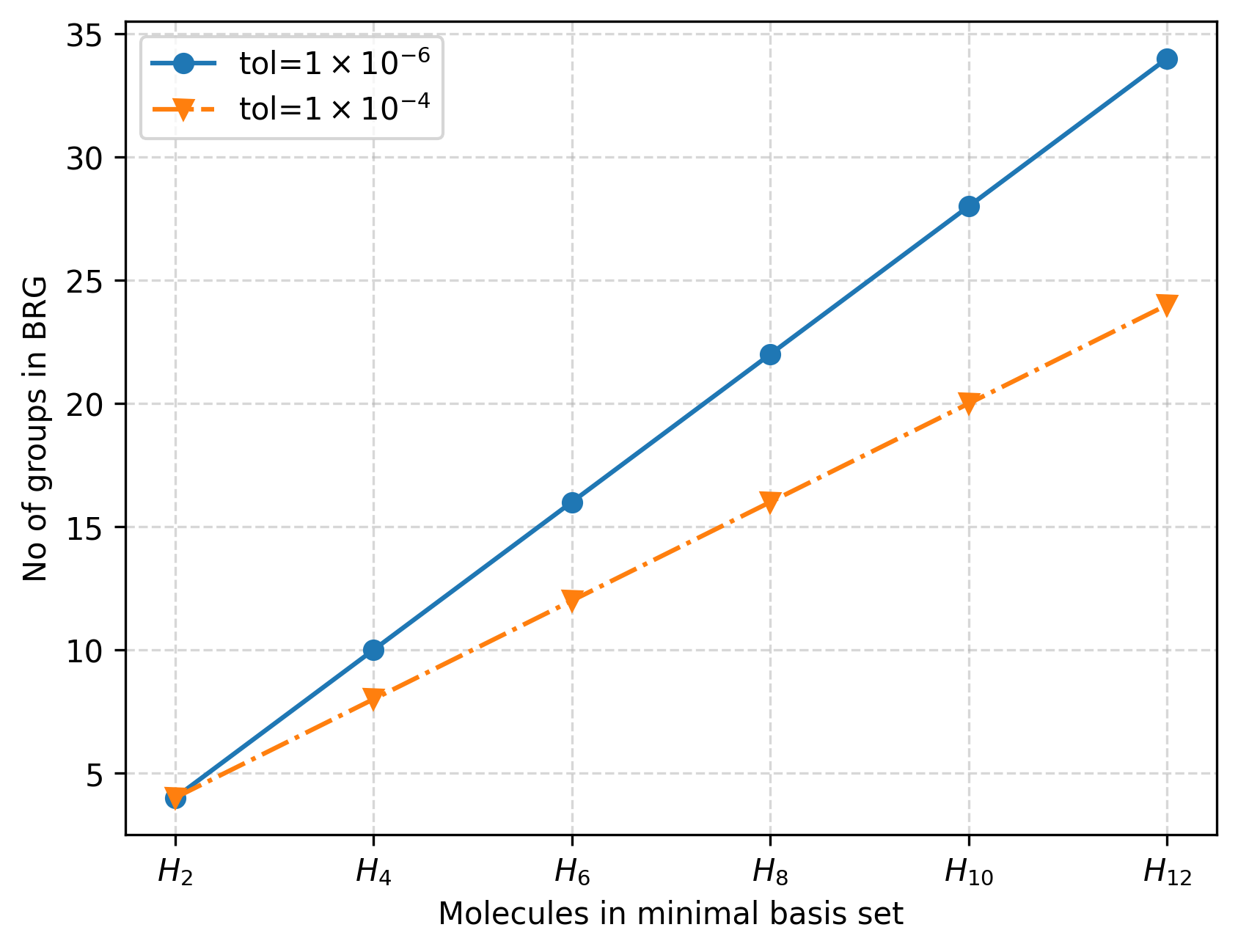
- It shows that using Davidson diagonalization and basis rotation grouping reduces measurement scaling from O(N^12) to O(N^5) while achieving sub-milliHartree accuracy.
- Error mitigation strategies, including Pauli grouping and symmetry postselection on quantum hardware, effectively tackle gate noise and calibration challenges.
Quantum Subspace Methods for Molecular Excited States: q-sc-EOM Accuracy, Resource Scaling, and Hardware Benchmarks
Introduction
This study presents a rigorous assessment of quantum self-consistent equation-of-motion (q-sc-EOM) methods for computing molecular excited states and their implementation on near-term quantum hardware (2604.05380). The paper articulates three central advances: (1) the evaluation of q-sc-EOM accuracy versus classical and quantum benchmarks in strongly correlated regimes, (2) substantial reduction of computational resources via Davidson diagonalization and basis rotation grouping (BRG), and (3) a detailed analysis of hardware implementation incorporating advanced error mitigation strategies. The integration of ADAPT-VQE and LUCJ ansätze for ground state construction with q-sc-EOM for excited state computation is shown to outperform state-of-the-art classical approaches in select regimes and to approach chemically relevant numerical thresholds under hardware mitigation.
Algorithmic Framework
Ground state preparation leverages both the ADAPT-VQE and LUCJ ansätze. ADAPT-VQE dynamically grows the variational ansatz by iteratively adding operators with the largest energy gradients, systematically capturing strong correlation effects with high parameter efficiency. The LUCJ ansatz imposes hardware-friendly locality constraints on cluster orbital and Jastrow operators, optimizing for circuit depth on NISQ devices.
Excited states are targeted via q-sc-EOM, which formulates the problem as a subspace eigenvalue equation using self-consistent excitation/ionization/de-excitation operators projected onto a variational reference. This approach guarantees orthogonality by satisfying the killer condition and maintains proper size extensivity. q-sc-EOM naturally accommodates multi-reference ground states, difficult for classical coupled cluster based EOM (EOM-CCSD), especially in bond breaking and conical intersection scenarios.
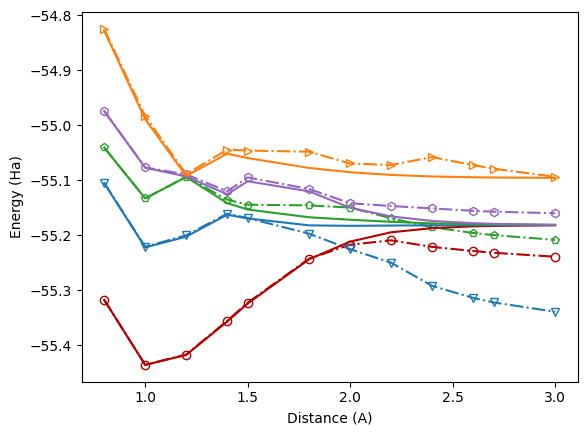
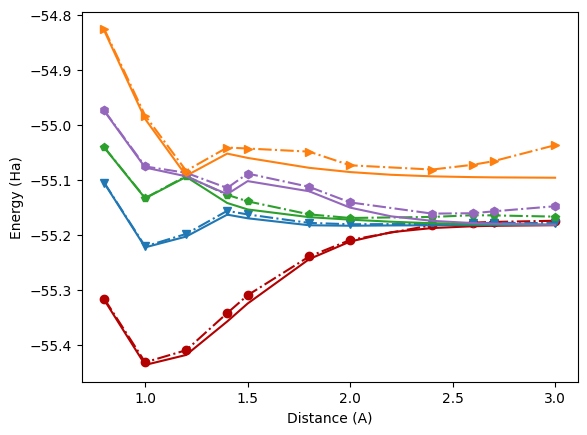
Figure 1: EOM-CCSD versus FCI for potential energy surfaces in NH3; EOM-CCSD breaks down in multireference regions, highlighting limits of scalable classical methods.
Accuracy Analysis: Strong Correlation and Excited-State Surfaces
Simulations for challenging bond-breaking regimes in NH3 and H2O explicitly demonstrate the superiority of quantum subspace approaches. When two N–H bonds are simultaneously dissociated in NH3, ADAPT-VQE + q-sc-EOM generates ground and excited surfaces closely aligned with FCI (full configuration interaction), even through regimes with strong multireference character. This accuracy is retained in the presence of realistic shot noise for reasonable shot counts.
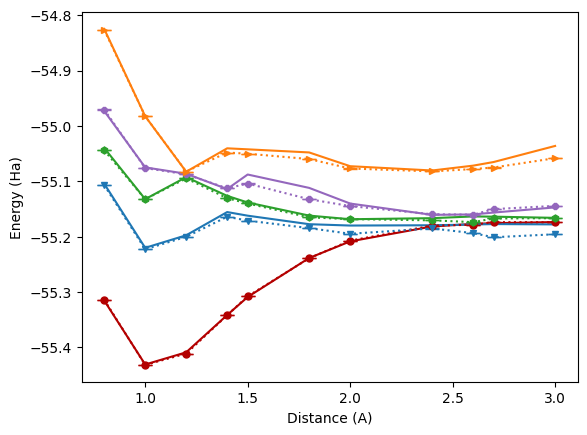
Figure 2: ADAPT-VQE + q-sc-EOM produces excited-state potential energy curves of NH3 virtually indistinguishable from FCI, whereas EOM-CCSD fails in strong correlation.
Importantly, for H2O with ten electrons in seven spatial orbitals, the quantum algorithm matches FCI for both ground and excited surfaces. In contrast, EOM-CCSD is shown to fail in these regions. The quantum treatment natively captures doubly excited states inaccessible to perturbative or single-reference classical approaches.
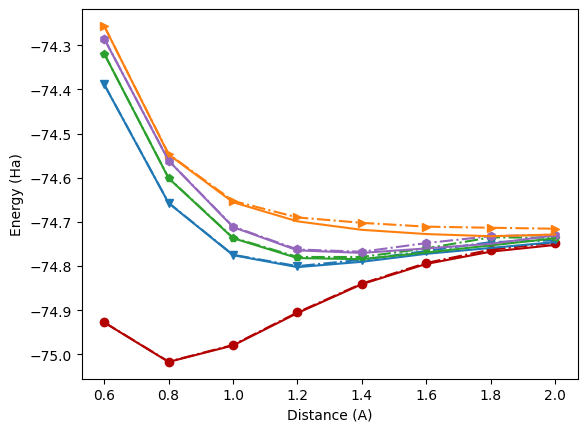
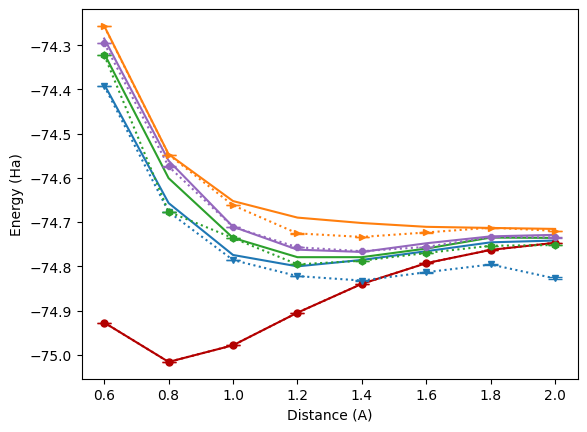
Figure 3: ADAPT-VQE + q-sc-EOM (exact) vs FCI for H2O bond breaking; quantum and FCI results are coincident, affirming the rigorous excited-state treatment.
Resource Scaling: Davidson Diagonalization and Basis Rotation Grouping
A significant obstacle for subspace excited-state approaches has been the steep scaling in the number of required quantum measurements: naïvely, the number of Hamiltonian and overlap matrix elements to estimate scales as O(N12) for N molecular orbitals. The study introduces two complementary strategies for mitigating this bottleneck:
The cumulative effect sets a near-optimal measurement protocol for general subspace methods. Empirical tests show ground and excited-state errors below 32 Ha in hydrogen chains, verifying that accuracy is preserved under these decompositions.
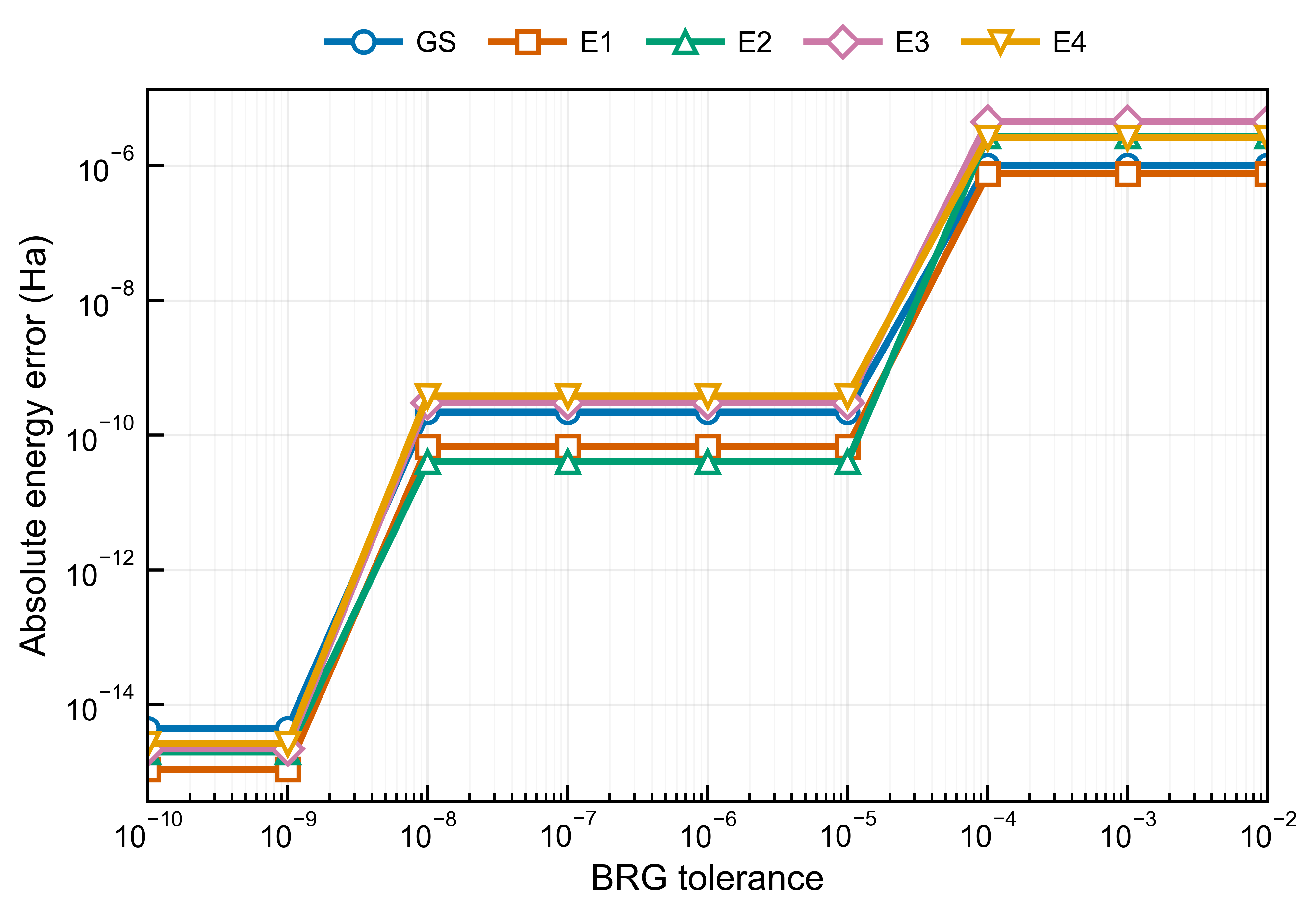
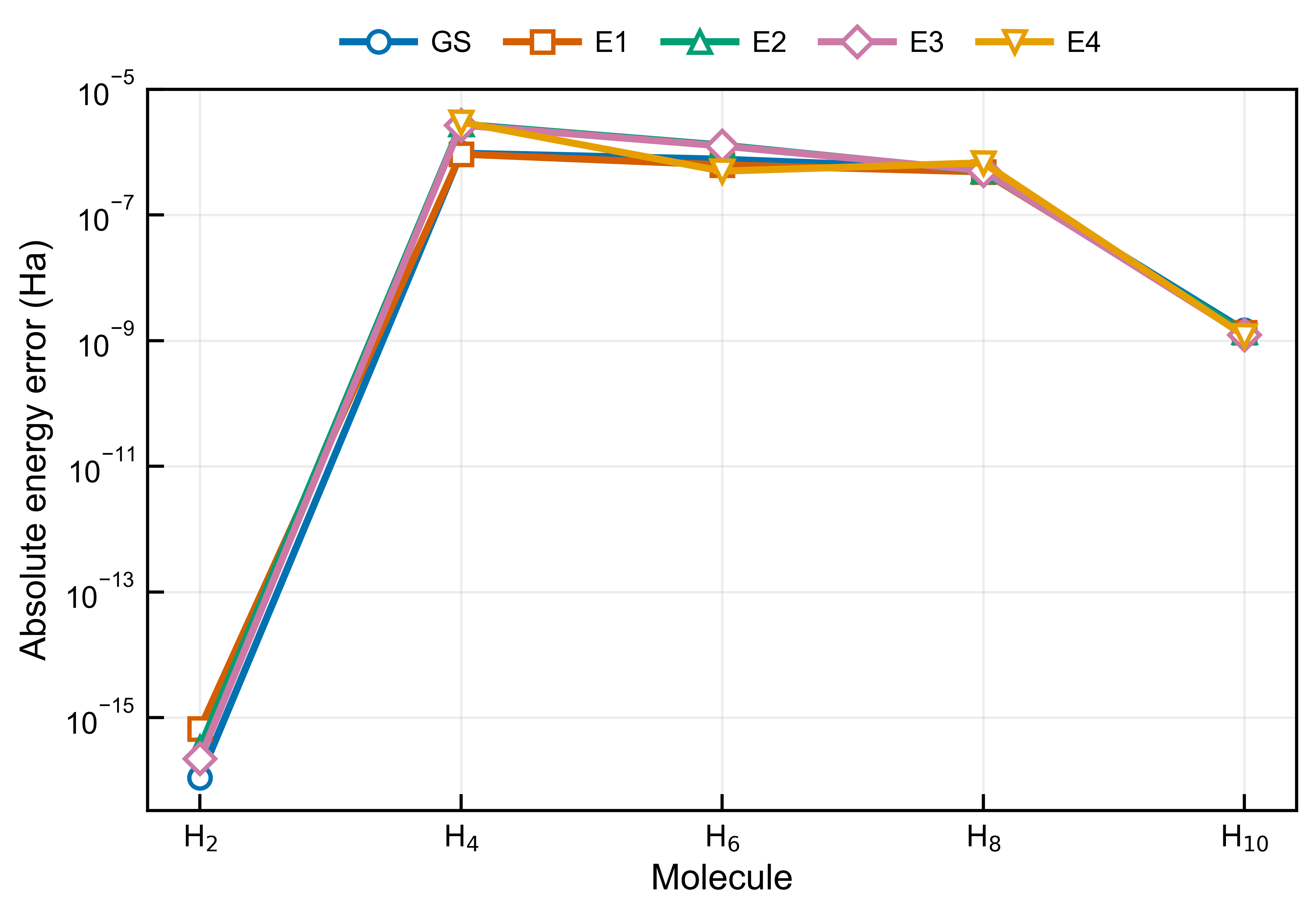
Figure 5: q-sc-EOM excitation energy errors in H33 (left panel) and absolute errors across H34–H35 (right panel); BRG maintains errors orders of magnitude below chemical accuracy for fixed tolerance.
Error Mitigation and Quantum Hardware Implementation
A comprehensive stack of error mitigation strategies was deployed on IBM quantum backends (e.g., Pittsburgh and Torino):
- Pauli Grouping efficiently compresses measurements by grouping commuting Pauli strings.
- M3 Readout Error Mitigation corrects qubit assignment errors using local calibration data and quasi-probabilities.
- Symmetry Postselection restricts outcomes to physically valid particle and spin sectors, suppressing errors in number-conserving subspaces.
- Adaptive Shot Allocation dynamically distributes budget toward high-variance matrix elements.
Hardware results for H36 and H37O (minimal basis, small active spaces) indicate shot noise alone is not the accuracy bottleneck—systematic errors from gate noise, calibration drift, and crosstalk dominate, saturating mean absolute errors at 38 mHa for excited states with symmetry postselection.
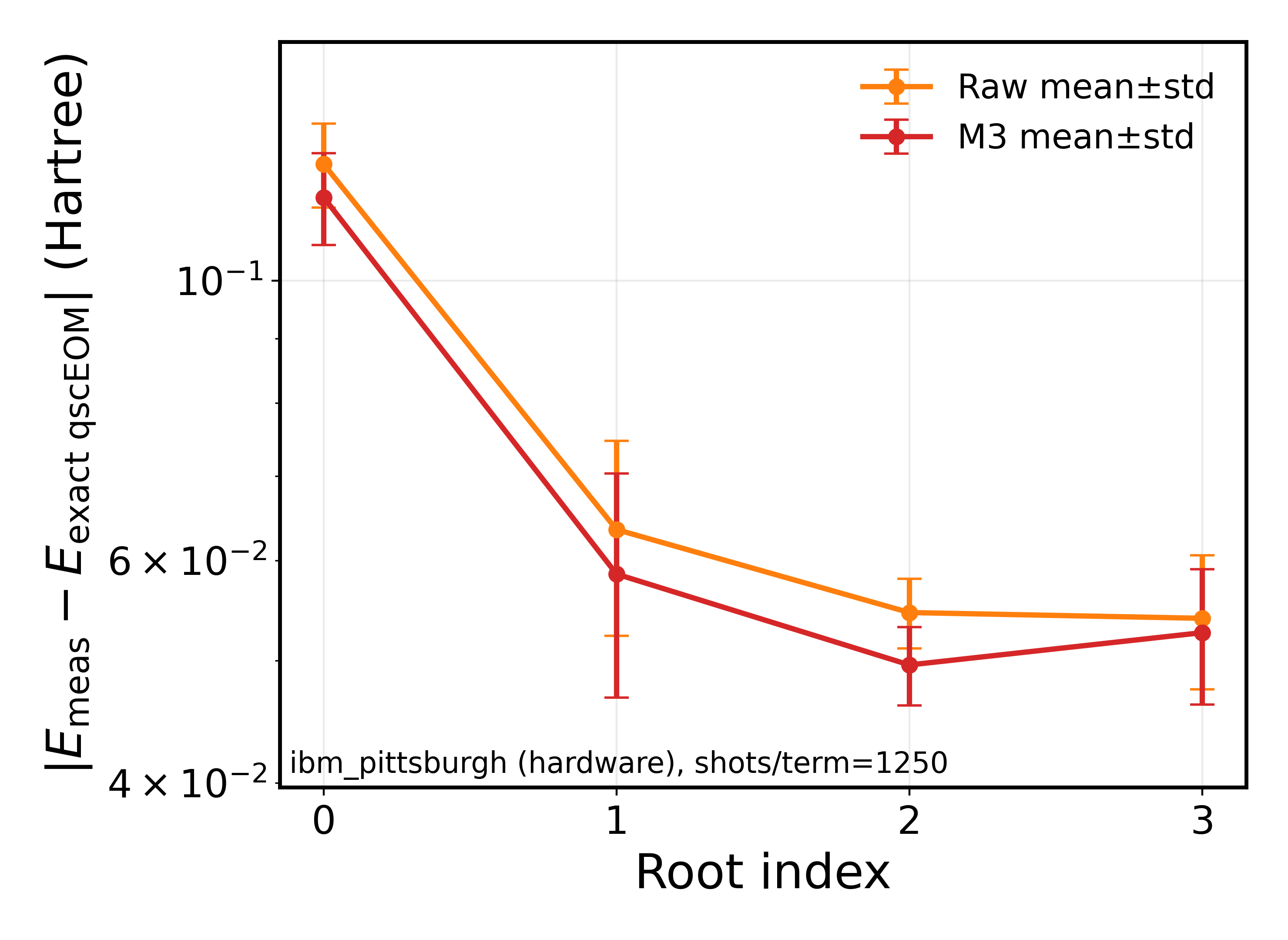
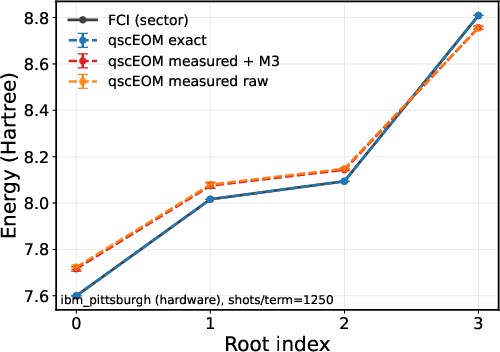
Figure 6: Root-wise q-sc-EOM errors for H39O (2e,2o) on IBM hardware; Pauli grouping + M3 + symmetry projection mitigate errors but gate errors remain the limiting factor.
Comparisons between fake backends (injecting realistic noise) and actual hardware confirm that readout and sampling effects are subdominant. Advanced circuit-level mitigation (e.g. twirling, dynamical decoupling) did not yield further gains, suggesting that errors from CNOT gates and idle decoherence are the principal constraints. Symmetry projection yielded the most consistent error suppression.
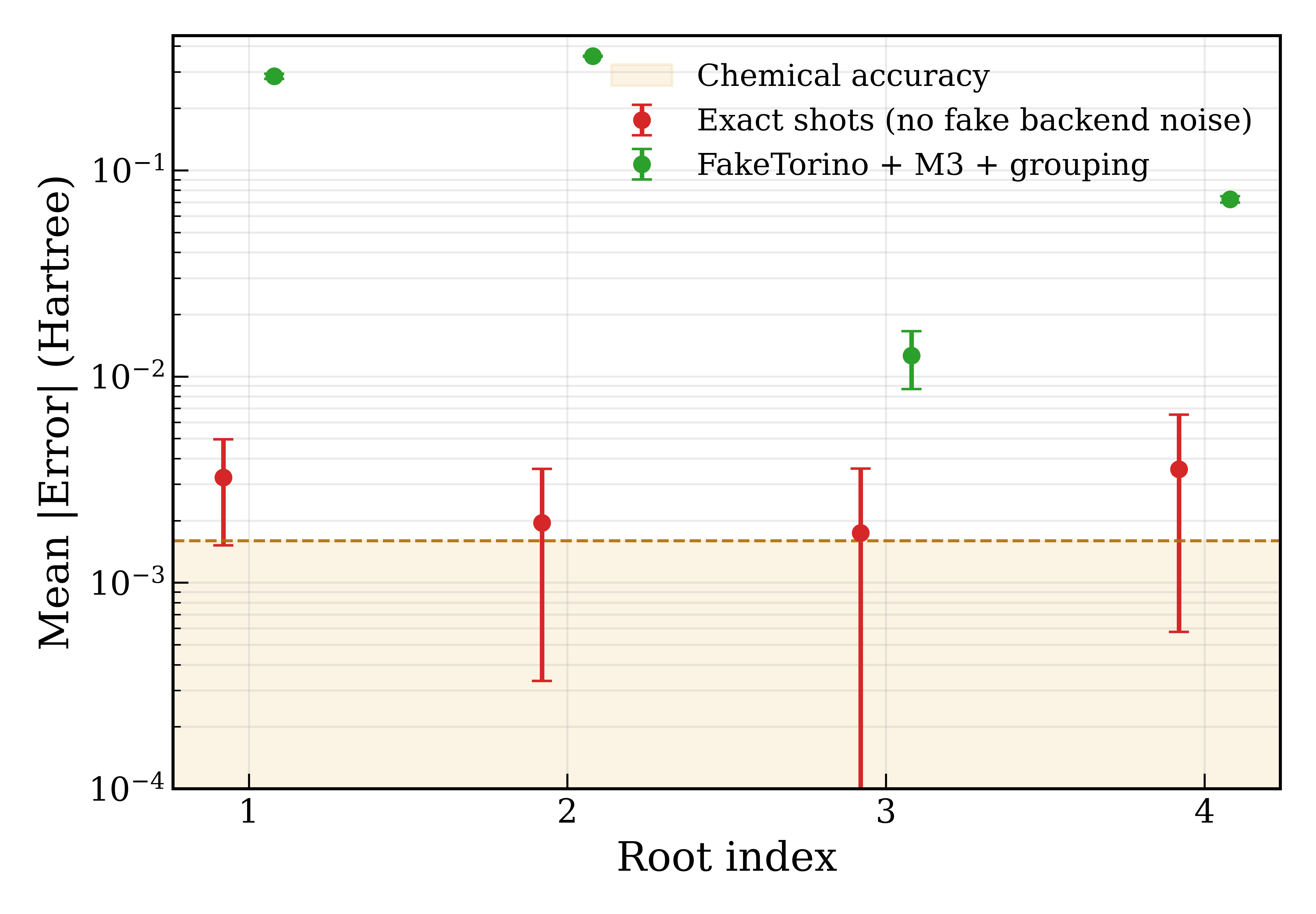
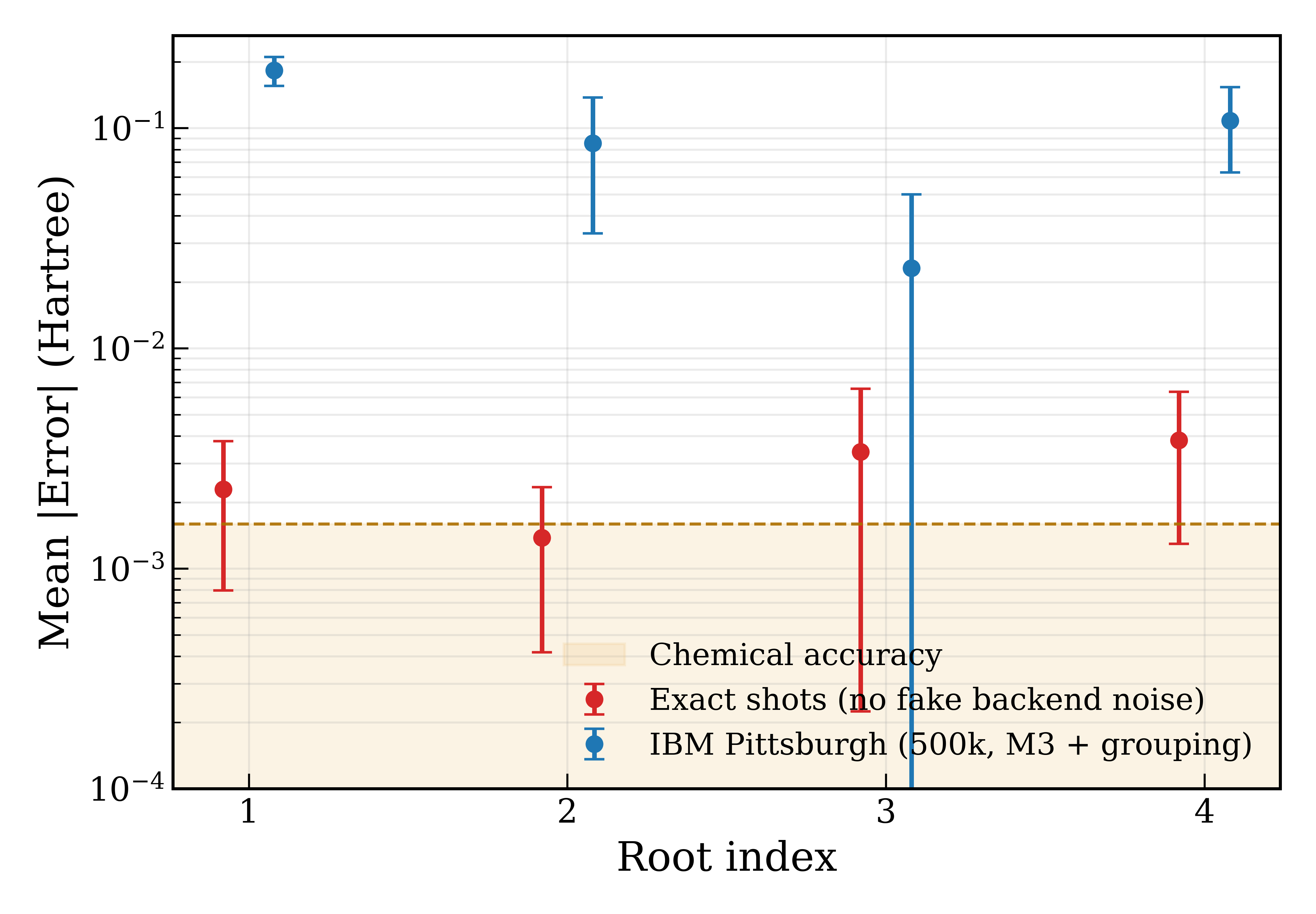
Figure 7: Hardware (IBM Pittsburgh) vs simulation (Fake Torino) for H20; state-dependent errors show that gate noise is main source of deviation, with error mitigation reducing but not eliminating systematic biases.
Discussion and Implications
The findings substantiate the capability of quantum subspace diagonalization to surpass classical single-reference excited-state approaches in bond-breaking and multi-reference regimes. The integration of robust, compact ansätze (ADAPT-VQE, LUCJ) with q-sc-EOM provides a systematic path towards excited-state algorithms that retain theoretical rigor (size extensivity, orthogonality, linear response) and practical accuracy.
Resource reduction through the Davidson algorithm and BRG represents a critical step in moving towards quantum advantage in chemically relevant excited-state problems. The ability to reduce operational count while maintaining sub-milliHartree errors is especially promising for near-term/small- to medium-scale molecular applications.
On quantum hardware, the dominant limiting factors are not sampling or readout noise but persistent gate accumulation errors. Mitigation protocols (M3, symmetry postselection) can partially address these issues, but achieving sub-10 mHa accuracy, necessary for predictive quantum chemistry, will require advances in hardware fidelity and development of targeted error mitigation protocols for multi-root subspace problems.
Conclusion
This work demonstrates that q-sc-EOM-based quantum subspace methods, with well-chosen ansätze and optimized measurement strategies, achieve accurate molecular excited states for strongly correlated electronic problems beyond the current reach of scalable classical EOM-CCSD. The proposed resource compression techniques (Davidson, BRG) substantially lower the cost of excited-state quantum algorithms, making them viable for near-term devices as hardware matures. Systematic error mitigation tailored to subspace diagonalization further narrows the gap to chemically relevant precision. Collectively, these results signal a clear route to practical quantum computation of excited-state properties in complex photochemical, catalytic, and materials problems as hardware capabilities improve.