- The paper demonstrates a robust gamma-ray detection in LLAGN through stacking 14.4 years of Fermi-LAT data, highlighting significant contributions from spiral galaxies.
- The paper employs rigorous stacking analyses and broadband SED modeling to differentiate between star formation and jet contributions in the gamma-ray regime.
- The paper establishes scaling relations between gamma-ray and infrared luminosities, indicating that star formation activity is the dominant driver of subthreshold gamma-ray emission in most LLAGN.
Gamma-ray Emission from Low-Luminosity AGN: A Comprehensive Population Study
Introduction
This essay offers a detailed technical synthesis of "Characterizing the Gamma-ray Emission from Low-Luminosity AGN" (2604.05028). The study presents a systematic analysis of γ-ray signatures from low-luminosity active galactic nuclei (LLAGN), leveraging 14.4 years of Fermi-LAT data. The authors adopt both stacking and broadband SED modeling approaches, providing novel population-level insights and emission mechanism constraints. Results are interpreted in the context of accretion mode phenomenology, jet physics, and the star formation–AGN connection. The implications for the γ-ray luminosity scaling relations, the role of host galaxy morphology, and jet energetics in particle-dominated environments are considered.
Sample Selection, Methodology, and Stacking Analysis
The population is selected from the Palomar spectroscopic survey, targeting northern bright galaxies with robust nuclear classifications based on emission line diagnostics. The final subthreshold (i.e., below catalogue detection threshold) sample comprises 186 LLAGN, after removing known γ-ray blazars, ambiguous associations, and bright FermiLAT-detected sources. The analysis applies a likelihood stacking procedure informed by rigorous background modeling (incorporating the latest 4FGL-DR3, Galactic, and isotropic templates) and advanced event-type stratification using Pass 8 data.
The central stacking result yields a significant γ-ray detection for the full subthreshold sample, with a TS of 31.2, corresponding to 5.2σ:
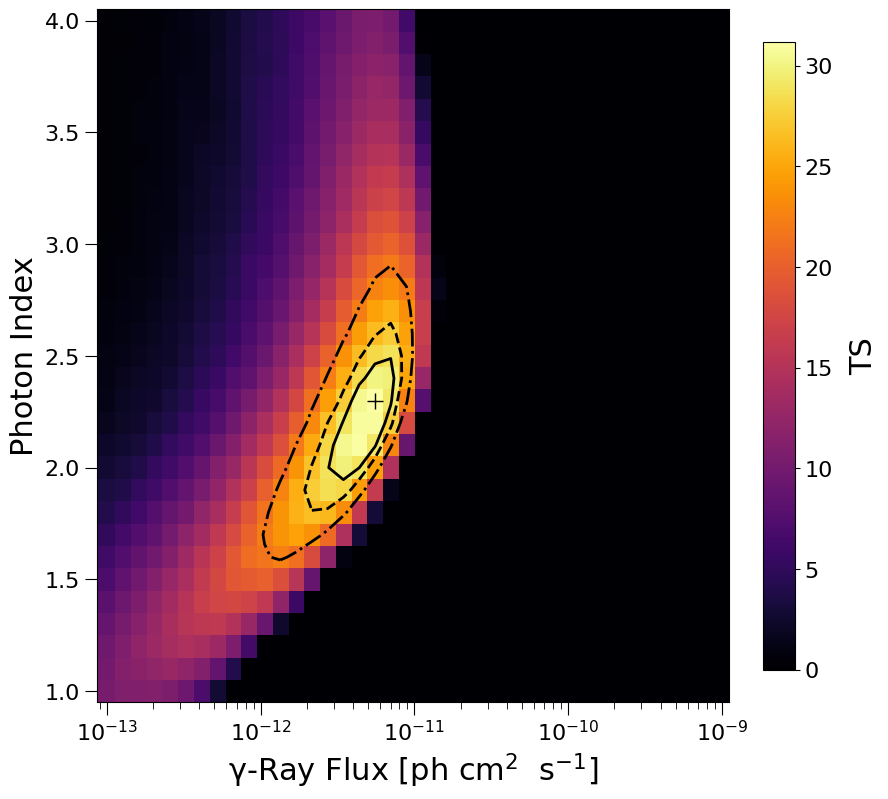
Figure 1: Stacked TS profile for the sample of subthreshold LLAGN, demonstrating the global maximum and confidence contours in flux–photon index space.
The analysis confirms the detection is not dominated by a handful of bright outliers, as demonstrated by the cumulative TS evolution:
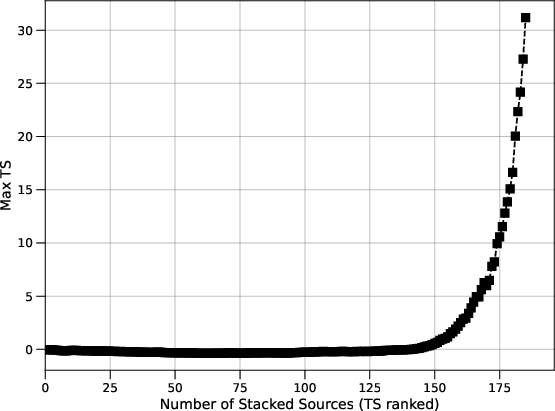
Figure 2: The maximum TS as a function of the number of stacked sources, indicating the broad collective contribution from the LLAGN population.
Best-fit parameters for the subthreshold stack are an integrated flux (1–800 GeV) of 5.5−2.1+3.3×10⁻¹² ph cm−2 s−1 and photon index of 2.3−0.3+0.2. Strong signals are observed particularly in spiral host galaxies, with a TS of 39.7 (6.0σ), while non-spirals show no signal, indicating a morphology-dependent origin of γ0-ray emission.
Subpopulation Diagnostics: Seyferts, LINERs, Transitions, and Morphology Effects
Detailed stacking across physically motivated subclasses (Seyferts, LINERs, transition nuclei) reveals the highest statistical significance among transitions (TS=23.7, γ1), followed by Seyferts (TS=11.0, γ2) and LINERs (TS=5.2, γ3). Photon index and flux differences are not statistically robust given covariance, but, notably, LINERs with detected broad lines (proxy for bona fide SMBH accretion) exhibit higher marginal significance than those without.
Subsampling by host morphology reveals that all significant γ4-ray emission arises exclusively from spiral galaxies:
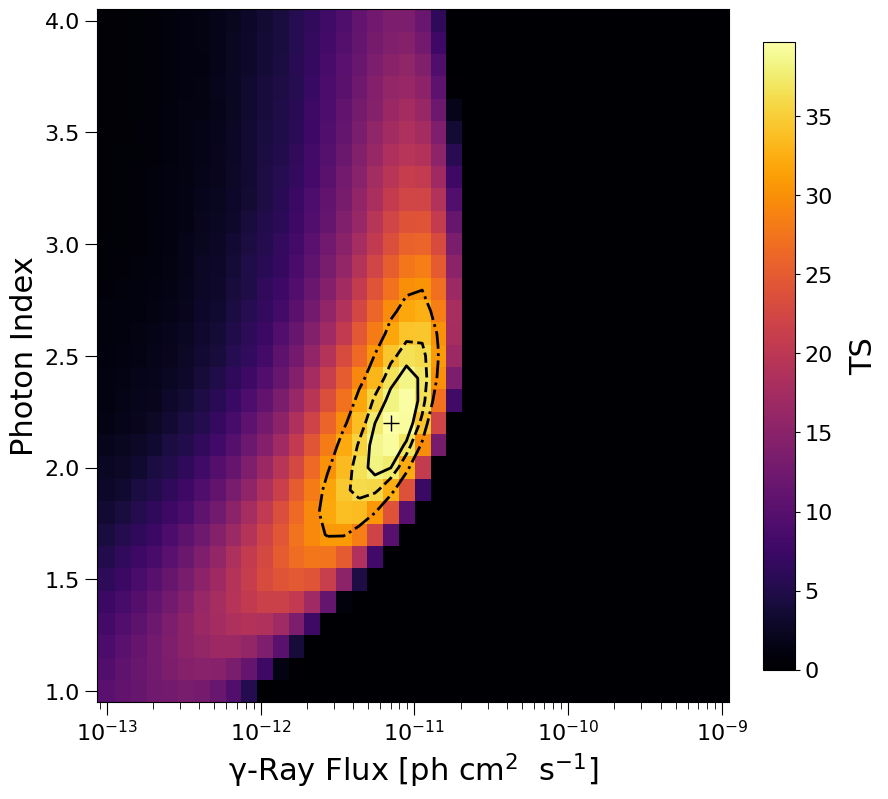
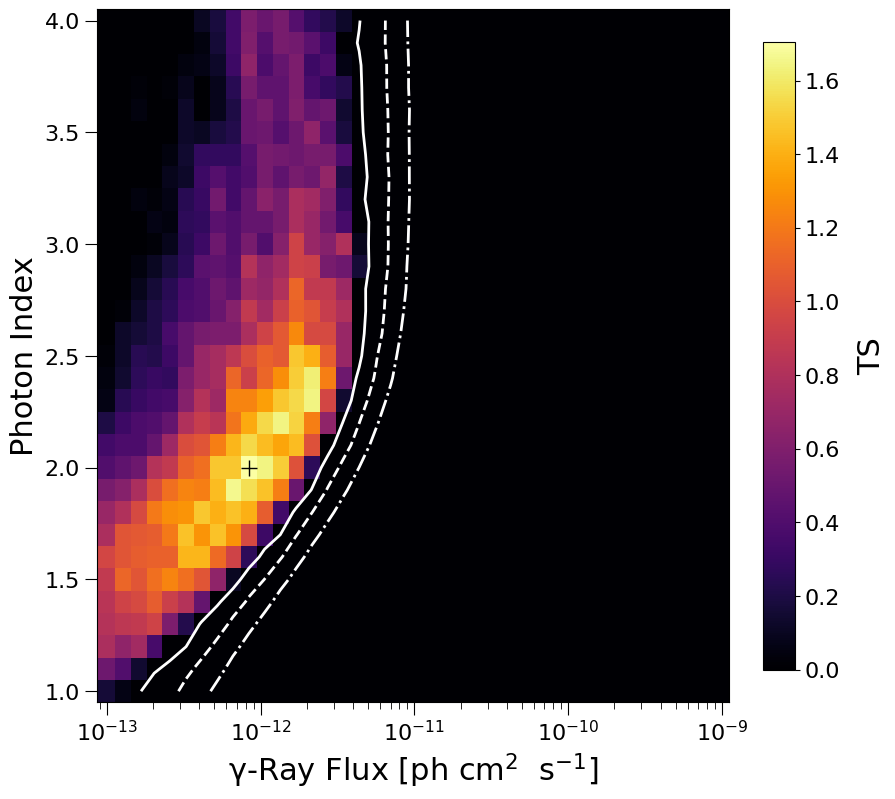
Figure 3: Stacked TS profiles for spirals (left) and non-spirals (right); signal is confined to spirals.
This suggests that star formation activity (SFA) is a plausible primary driver of γ5-ray flux in the bulk of undetected LLAGN, consistent with empirical knowledge of the star formation rate in spirals.
To clarify the emission origin, population-scaling correlations are derived. A luminosity–luminosity stacking analysis assesses the relationship of γ6-ray output to integrated IR (8–1000 μm; SFR tracer) and core radio (15 GHz; jet tracer) luminosities.
The γ7–γ8 correlation for spirals matches the established scaling for star-forming galaxies (SFGs) in both slope and normalization:
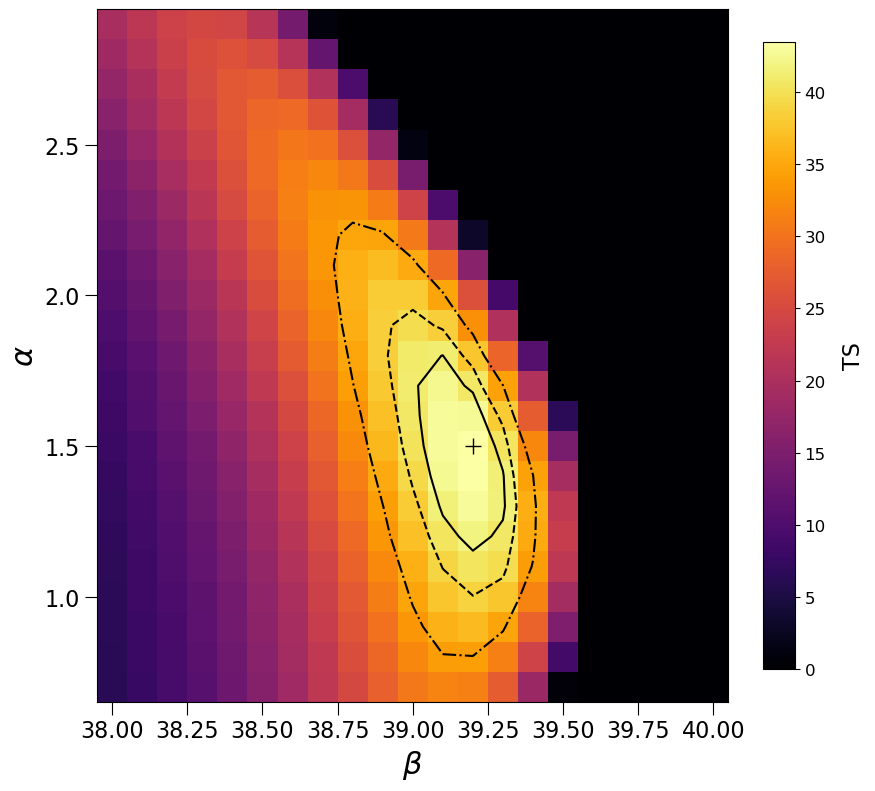
Figure 4: Stacked profile establishing the γ9–γ0 scaling relation for sampled spirals with IR data.
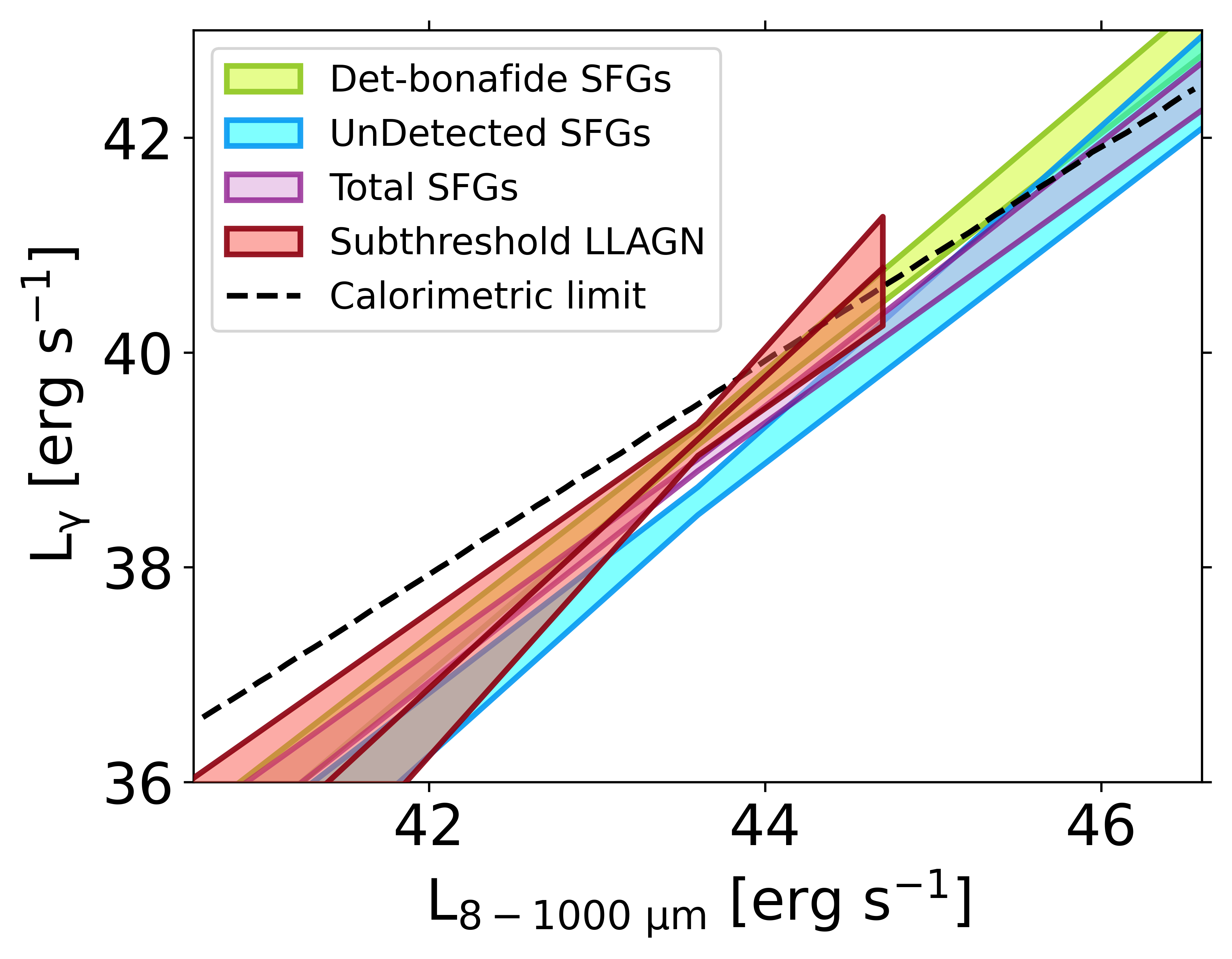
Figure 5: The γ1–γ2 correlation for subthreshold LLAGN (red band) compared to SFGs; the agreement supports a star formation-dominated origin.
Simultaneously, the γ3–γ4 relation is statistically significant (TS=37.5, γ5 all, TS=24.3, γ6 for spirals), hinting at a possible additional jet or AGN core contribution:
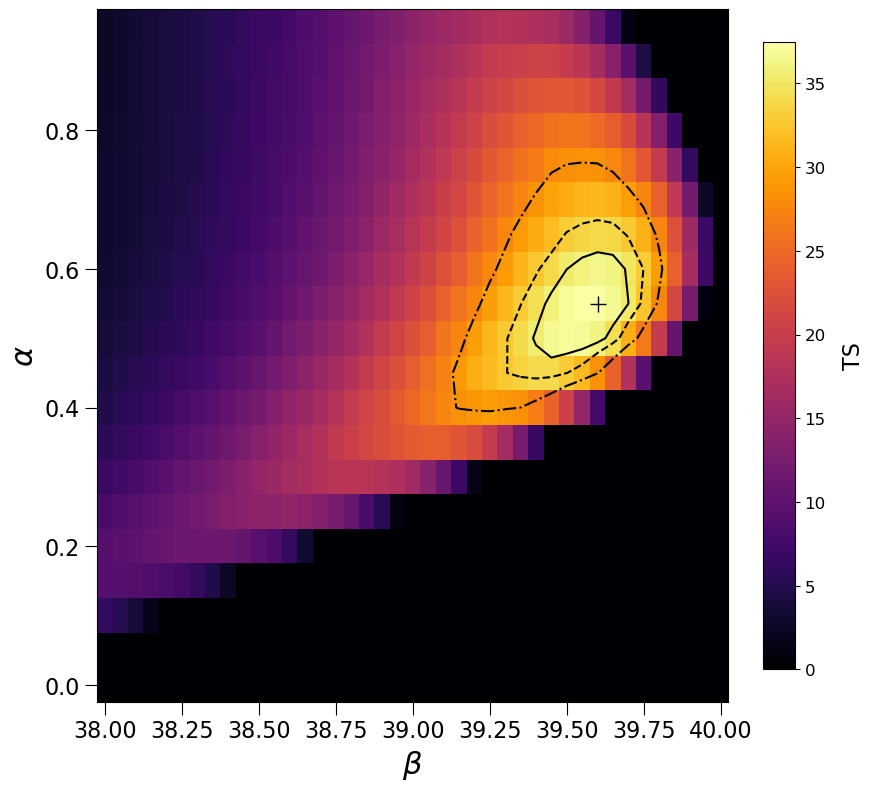
Figure 6: Stacked profile for the γ7–γ8 correlation in sources with available radio data.
Direct tests using mixed three-parameter regression suggest—though not at high significance—that both SFA and compact jets may contribute to the subthreshold emission, but intrinsic sample non-homogeneity and parameter degeneracy (star formation–jet connection via radio–IR correlation) preclude definitive source attribution.
Emission Properties: Control Sample and Source Characteristics
A synthetic control sample of featureless, emission-line-free galaxies from the Palomar catalog, matched for distance and BH mass, exhibits no stacked γ9-ray excess, confirming the physical association of the observed signal to LLAGN–host activity:
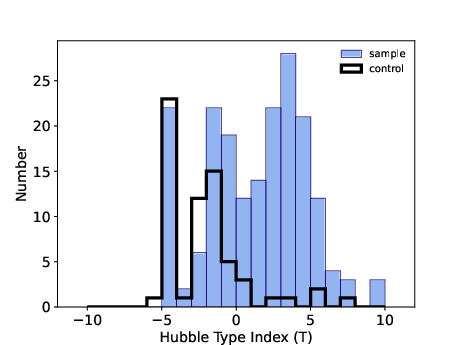
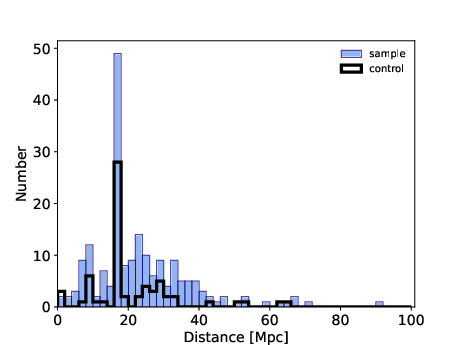
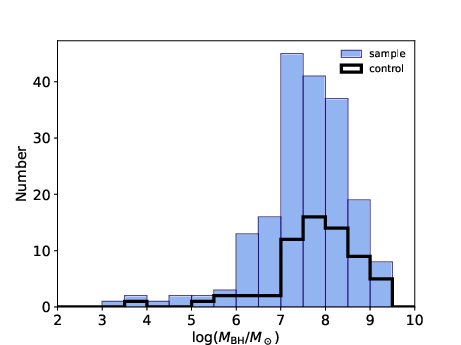
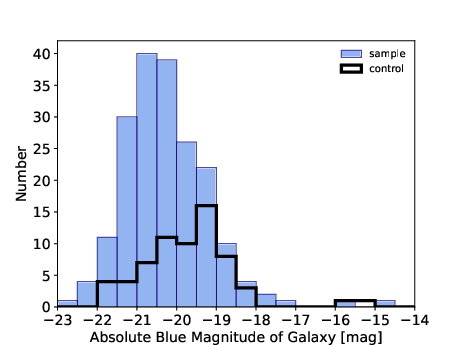
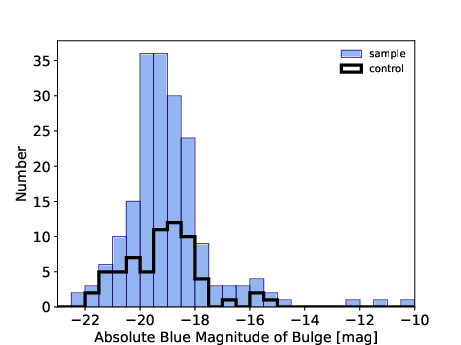
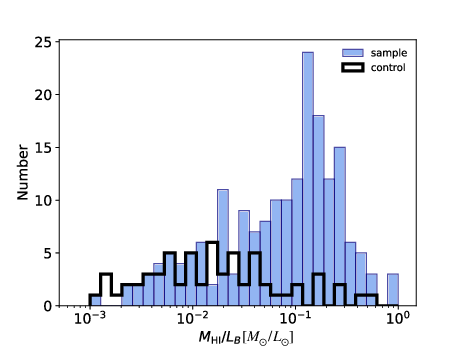
Figure 7: Comparative host-galaxy/AGN parameters for control and LLAGN samples, exposing differences driven primarily by host morphology, luminosity, and HI content.
This morphological and HI mass distinction, with higher HI masses and blue luminosity in LLAGN hosts, further implicates the star-forming ISM in the observed γ0-ray signal.
Broadband SED Modeling and Jet Emission Scenarios
For robustly LAT-detected LLAGN (NGC 315, NGC 4261, NGC 4374/M84), broadband multiwavelength SEDs are constructed and modeled using steady-state, one-zone SSC jet models, with region size and jet power tightly constrained by VLBI jet kinematics:
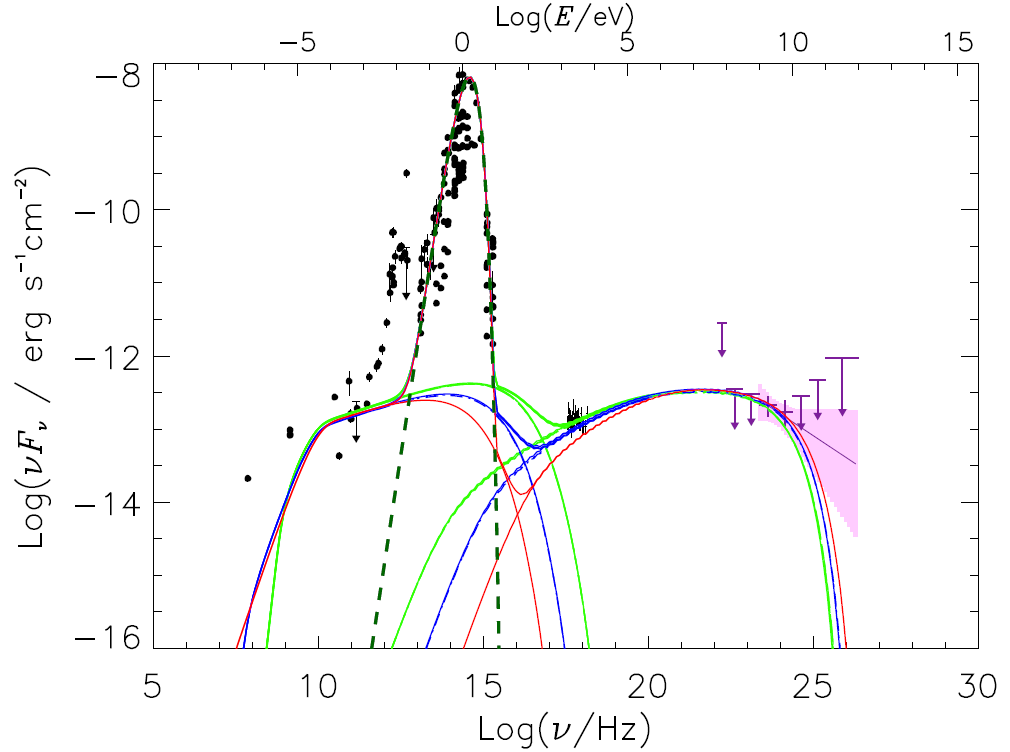
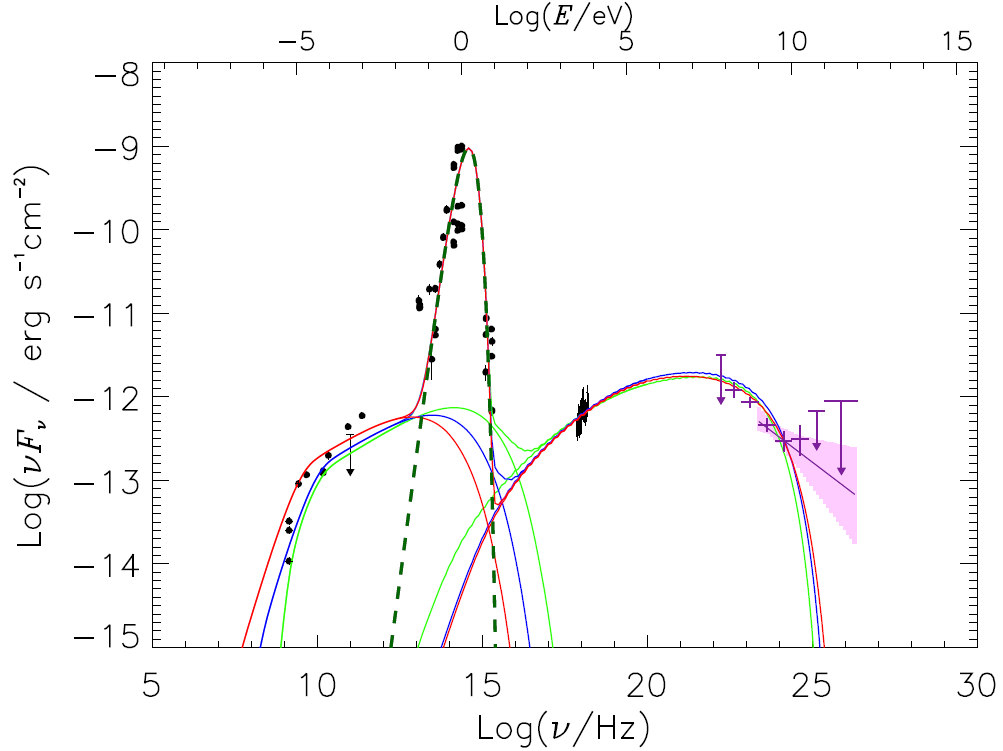
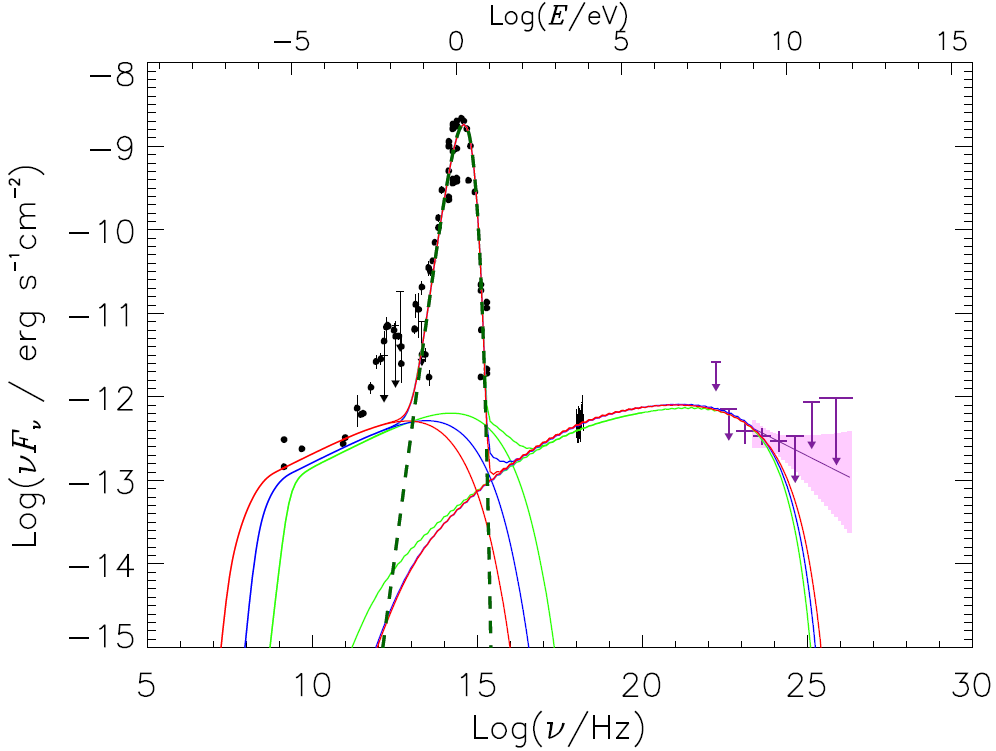
Figure 8: Broadband (radio-to-γ1-ray) SEDs for M84, NGC 315, and NGC 4261, overlaid with best-fit SSC models constrained by jet energetics and VLBI/equipment parameters.
Key findings:
- Only mildly relativistic jets (γ2–1.5, γ3), weakly magnetized (γ4), with small emission region sizes (γ5–γ6), are compatible with joint X-ray/LAT spectra and jet power constraints.
- No significant external Compton or SFR-related component is required or admissible; the γ7-ray emission can be entirely attributed to jet SSC processes in these misaligned FR I systems.
- The SED cutoff energies and apparent non-detections at TeV energies are consistent with the model-predicted lack of high-energy upscattering in such particle-dominated, low-power jets.
Theoretical and Practical Implications
This population-level and emission-mechanism analysis demonstrates that, for the majority of local LLAGN, compact jets are not the dominant source of γ8-ray emission—SFA in spirals, consistent with star-forming galaxy scaling, predominates at flux levels below the LAT sensitivity threshold. Only in a minority of LLAGN with classical FR I morphology and early-type hosts (i.e., elliptical galaxies like NGC 315, 4261, and 4374) does jet-related SSC emission unambiguously govern the observed multi-band γ9-ray spectral energy distribution. Notably, the detection of VHE 5.2σ0-rays from NGC 4278 by LHAASO underscores the need to account for unusual, possibly Doppler-boosted or nonstandard jet environments in outlier LLAGN.
The public release of the stacking analysis tool and methodology will empower further studies of faint 5.2σ1-ray populations (both AGN and non-AGN), enabling systematic cross-class comparisons and improved constraints on the physical drivers of extragalactic high-energy emission. The ambiguous differentiation of star formation versus jet signatures at the faint-end remains a methodological and theoretical challenge, calling for larger, morphologically resolved samples and deeper high-resolution radio and IR follow-up.
Conclusion
This comprehensive analysis bridges population and source-level perspectives on LLAGN 5.2σ2-ray emission. The core results can be summarized as:
- Robust detection of average 5.2σ3-ray emission from the local LLAGN population via stacking, with strong dependence on host galaxy morphology (confined to spirals).
- Scaling relations confirm star formation activity as the dominant 5.2σ4-ray source for most undetected LLAGN, mirroring known SFG relations.
- Jet energetics and SED modeling rigorously constrain compact jet properties in detected early-type FR I LLAGN, requiring slow, particle-dominated, weakly magnetized inner jet regions to explain the broadband spectra.
- Population heterogeneity and emission process degeneracies remain central themes, underscoring the need for multiwavelength, morphologically resolved studies and continued technical advances in faint source analysis.
The results enrich our understanding of the link between host galaxy properties, accretion mode, and the observable high-energy output of AGN, with direct consequences for the census of cosmic 5.2σ5-ray backgrounds and feedback in galaxy evolution.