- The paper presents COMB, a novel open-source platform that enables controlled in-hive robotic interactions with Apis mellifera colonies.
- It utilizes a shared XY positioning stage, modular payloads, and a sealed Movable Access Window to ensure minimal disruption and high repeatability.
- Key experimental validations show precise waggle dance mimicry, high-resolution comb imaging, and accurate electromagnetic actuation under ecological conditions.
Introduction and Motivation
The study of collective behavior, communication, and social dynamics in Apis mellifera necessitates tools that access and interact with the in-hive environment with minimal disruption. Existing robotic systems for bee experiments typically comprise custom, task-specific hardware, often ill-suited for adaptation or high-throughput replication. Persistent issues of hive interface fouling, mechanical durability, and spatial constraints impede broad adoption and reproducibility of these systems.
The paper "COMB: Common Open Modular robotic platform for Bees" (2604.04980) systematically addresses these limitations by proposing a compact, open-source, and modular robotic base, the COMB platform, built for standard observation hives. Its design integrates a shared XY positioning stage, a modular payload interface, and a sealed Movable Access Window (MAW) for tool insertion—facilitating controlled sensing and actuation within live colonies while minimizing disruption to bee homeostasis and workspace hygiene.
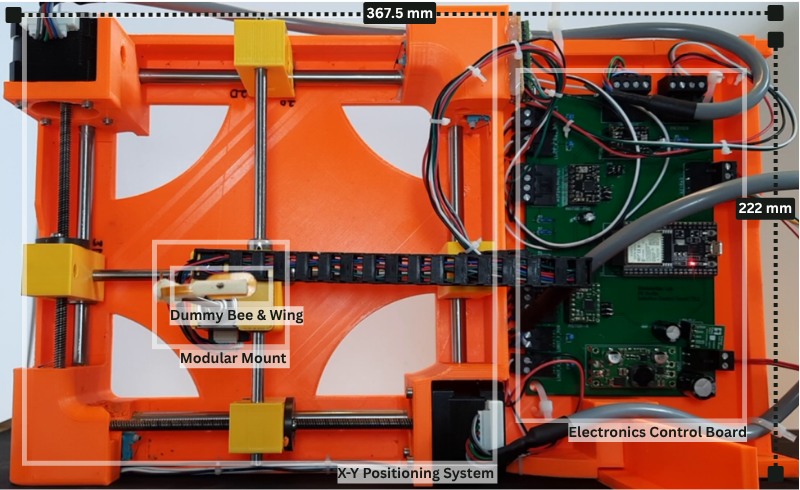
Figure 1: COMB in dance-signaling configuration, demonstrating compact integration with a standard observation hive.
Hardware Architecture and Hive Interface
Mechanical System
COMB’s mechanical core consists of a planar (XY) positioning stage dimensioned to the German Deutsch-Normalmaß (DNM) frame standard, which is prevalent in European apiculture. All primary actuation and control components reside outside the hive-climate interface, restricting exposure to propolis, temperature gradients, and colony disturbances, while positioning modules (payloads) at the comb’s surface. This architecture optimally supports both real-time interaction tasks (waggle-dance signaling, shaking actuation) and observation modalities (surface imaging, brood monitoring) with consistent precision.
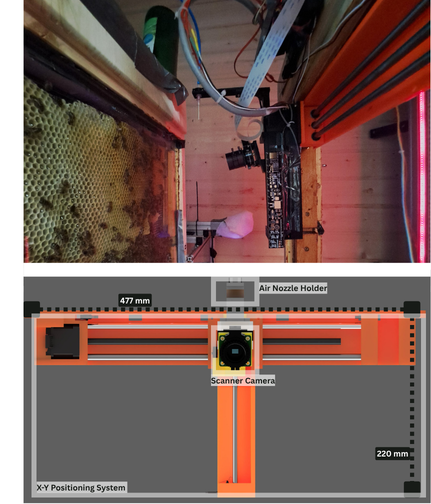
Figure 2: COMB configured in comb-scanning mode for high-throughput, repeatable imaging of the colony interior.
Movable Access Window (MAW)
A critical innovation is the MAW—a polycarbonate-sealed rotary insert—that provides repeatable, tool-specific access through the hive’s glass interface. MAW’s laminated composite design ensures thermal, olfactory, and aerodynamic isolation between the hive and external platforms. Radial clearance and sealing geometry minimize leakage and mitigate fouling from propolis, a recurring source of failure in earlier systems.
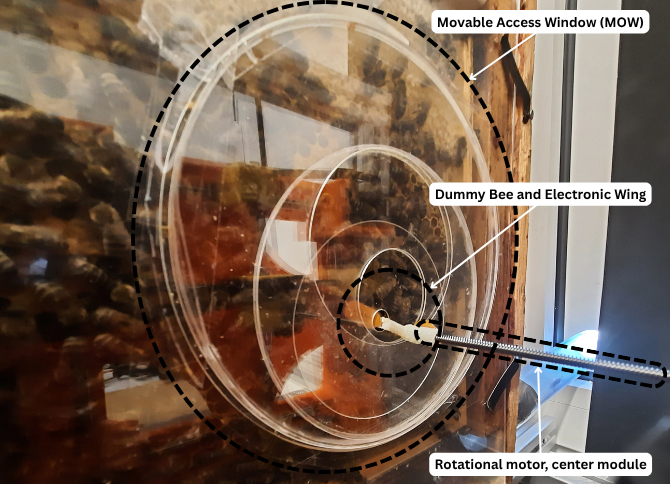
Figure 3: Movable Access Window (MAW) with dance-signal bee module insertion, preserving environmental isolation and access modularity.
Embedded Control and Payload Modularity
The primary control unit is ESP32-based, supporting deterministic trajectory execution, payload synchronization, and stage calibration. Individual stepper drivers actuate the XY axes; auxiliary channels modulate payload-specific actuators (e.g., flapper coil, dummy bee axis). The embedded architecture facilitates both scriptable experiment routines and manual operator intervention for robust in-hive deployment, minimizing dependency on tethered host systems.
COMB’s interface supports hot-swappable payloads, translating to rapid mode shifts (e.g., from dance signaling to comb scanning) without mechanical or electronic redesign. Payload connectivity and signaling conform to standard electrical and spatial specifications to ensure compatibility and reproducibility.
Payload Demonstrations and Mechatronic Characterization
Three representative payloads validate the versatility and applicability of the COMB platform:
1. Biomimetic Dance-Signal Payload:
The bee-dummy module, driven by programmed XY stage patterns, facilitates highly repeatable waggle dance motion for closed-loop interaction experiments. Trajectory tracking across repeated runs demonstrates a root-mean-square (RMS) cross-track error of 1.63 mm, with along-track RMS error of 1.33 mm and overall Euclidean error at 2.32 mm RMS, meeting the stringent tolerances required in behavioral mimicry.
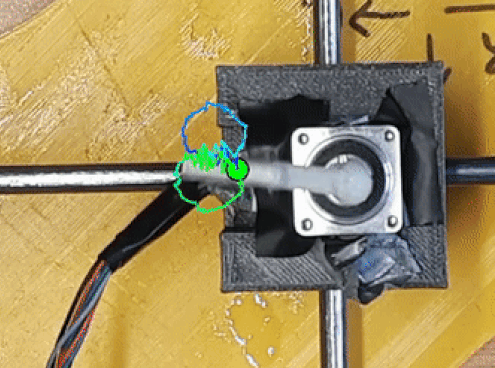
Figure 4: Tracked bee-dummy trajectory during waggle execution, illustrating millimeter-scale repeatability of COMB’s staged motion.
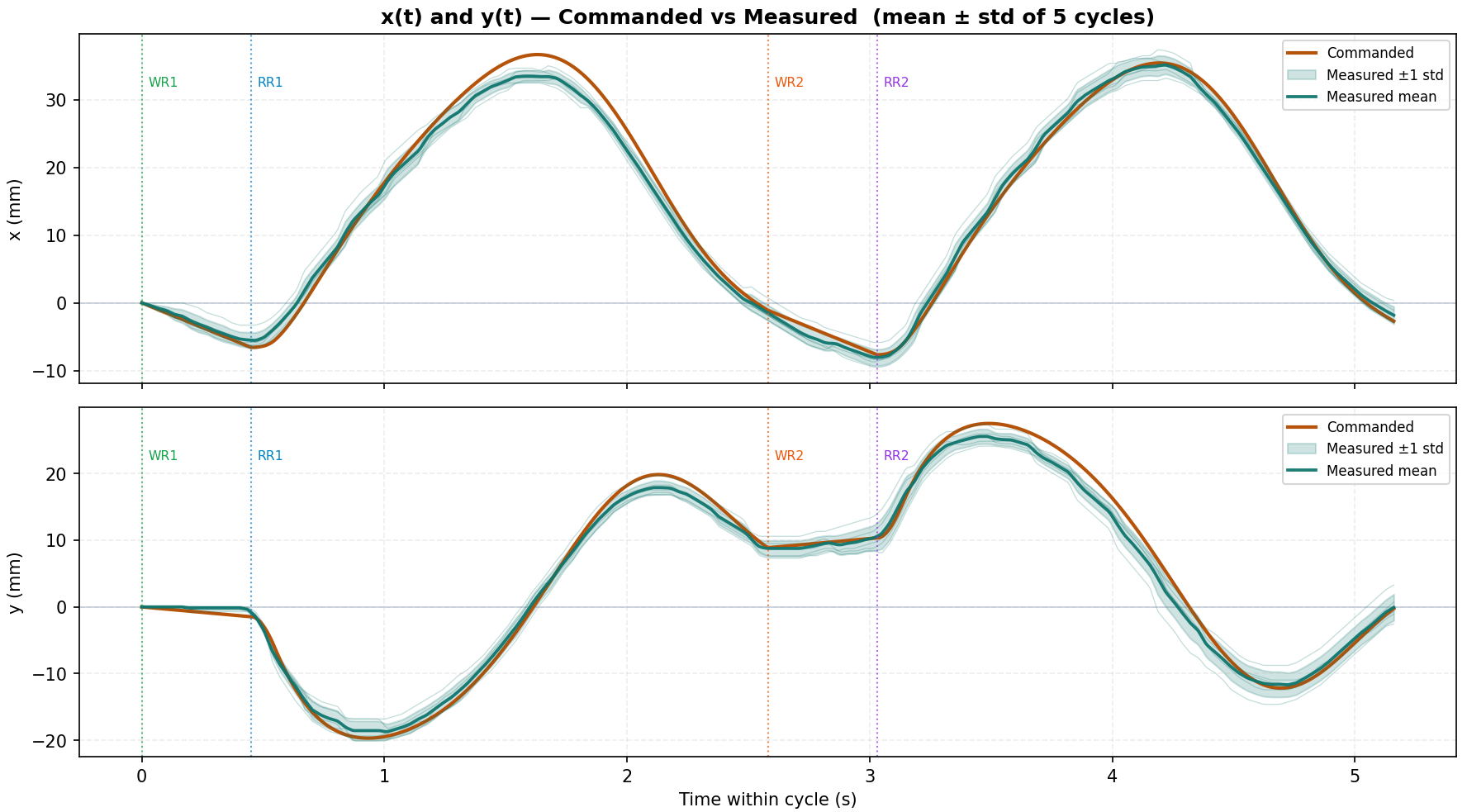
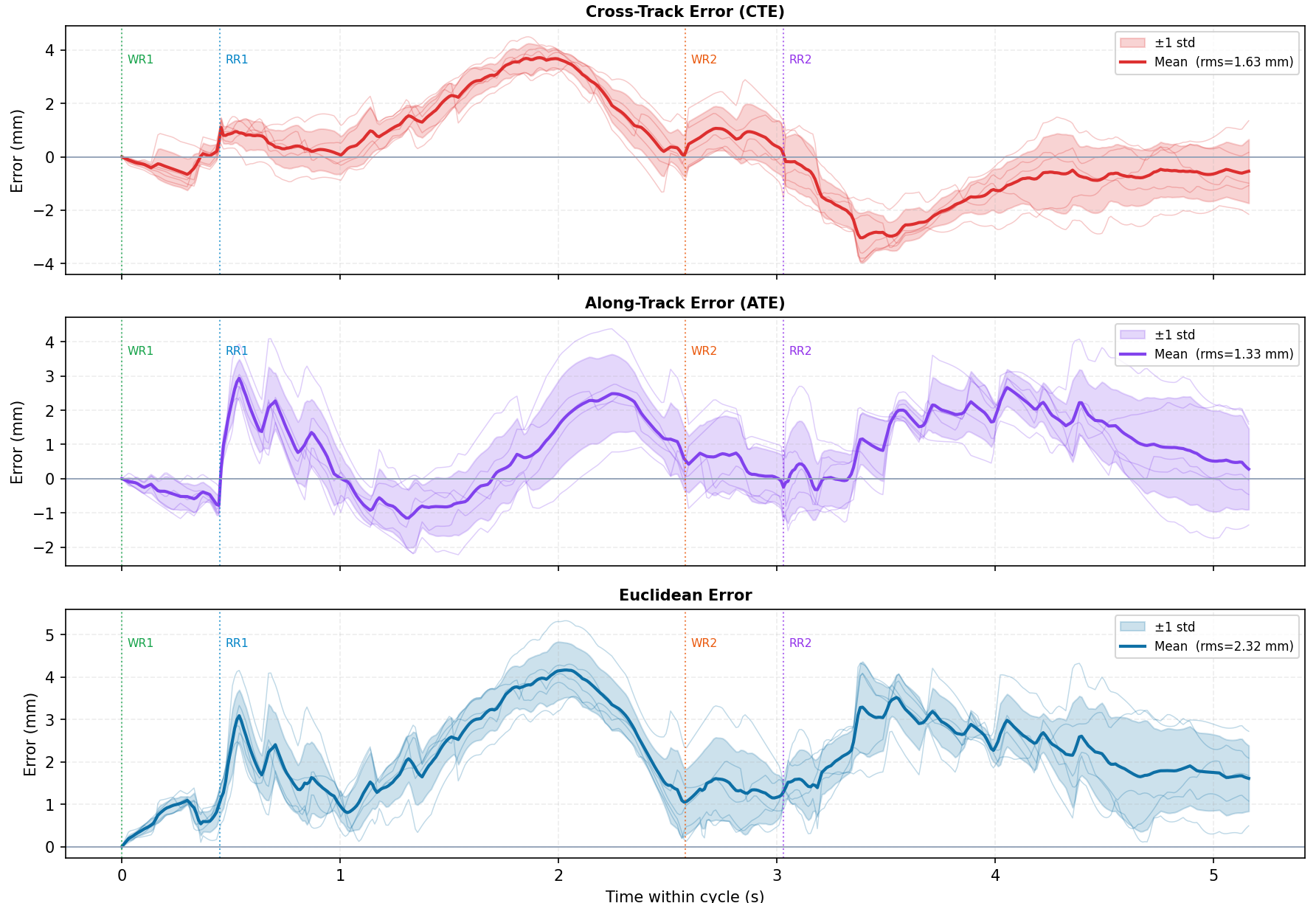
Figure 5: Averaged trajectory and cross-track/along-track error decomposition across five runs.
2. Comb-Scanning Imaging Payload:
The imaging module employs programmatic raster motion to acquire overlapping image tiles, which are later computationally mosaicked. With nominal >55% overlap, the system achieves robust, high-resolution surface reconstructions appropriate for long-term brood developmental studies and spatiotemporal behavioral observation.
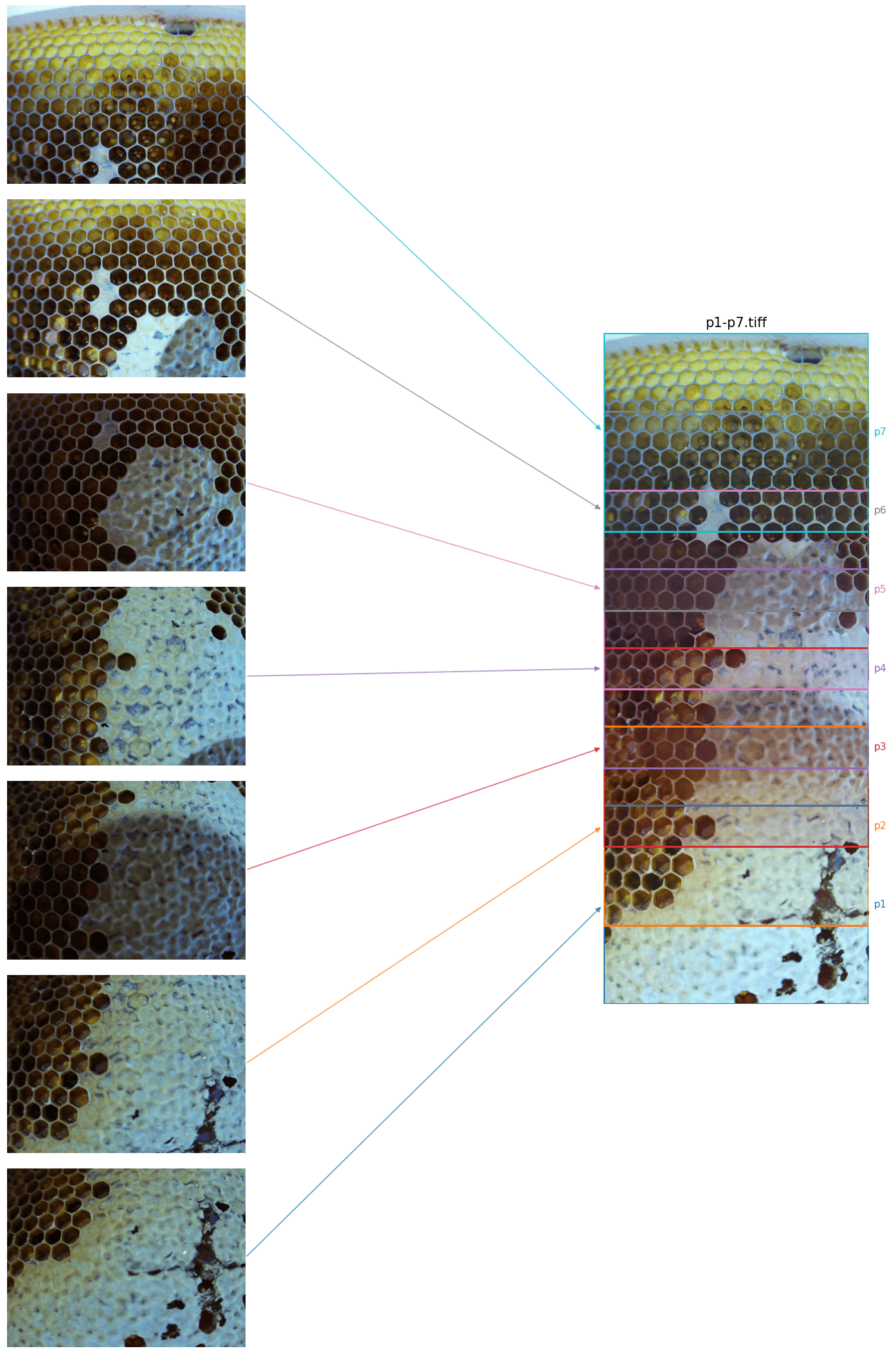
Figure 6: Vertical comb image mosaic constructed from seven scans, demonstrating high-resolution and repeatable comb coverage.
3. Electromagnetic Wing/Flapper Actuator:
A flexible PCB coil and permanent magnet assembly modulate localized oscillatory signals at biologically relevant frequencies. Video-tracked frequency spectra indicate precise control at both 13.88 Hz (within the natural shaking/waggle-signaling regime) and elevated drive regimes (27.95 Hz), substantiating the payload’s utility for signal injection studies.
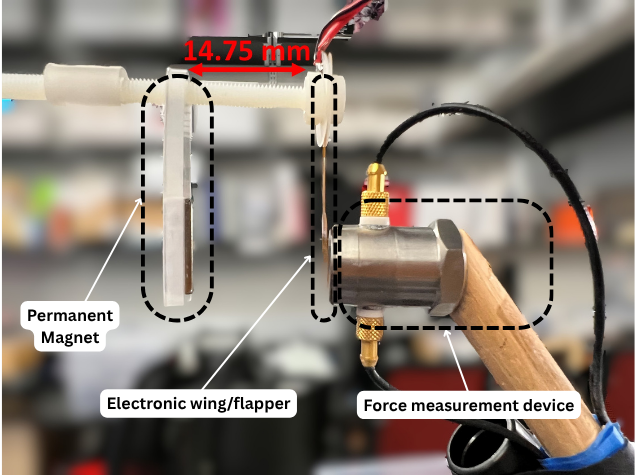
Figure 7: Electronic Wing Actuator module, shown separated from the permanent magnet for clarity.
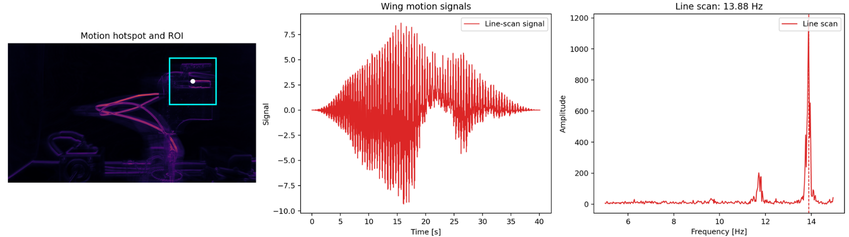
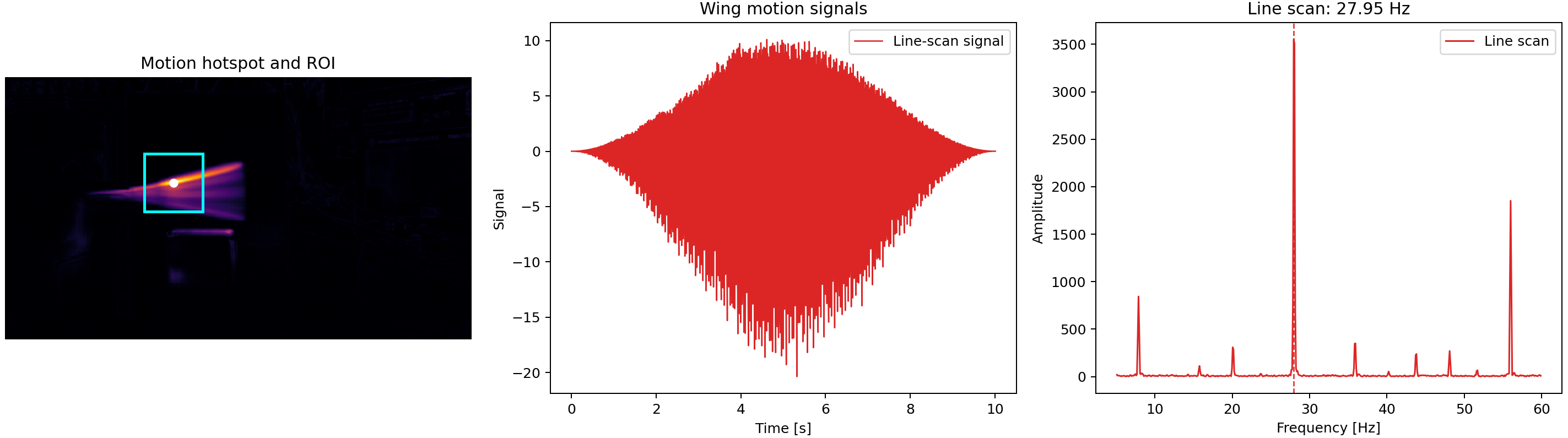
Figure 8: Frequency analysis of the wing actuator at two distinct regimes: (a) 13 Hz, (b) 28 Hz.
Robustness and Hive Integration
COMB’s in-hive deployment validates the efficacy of MAW and the durability of polycarbonate as a hive interface. Seasonal evaluations confirm that propolis accumulation remains manageable with routine solvent maintenance; physical compatibility tests reveal no adverse colony responses, suggesting the system’s suitability for continuous, live experiments.
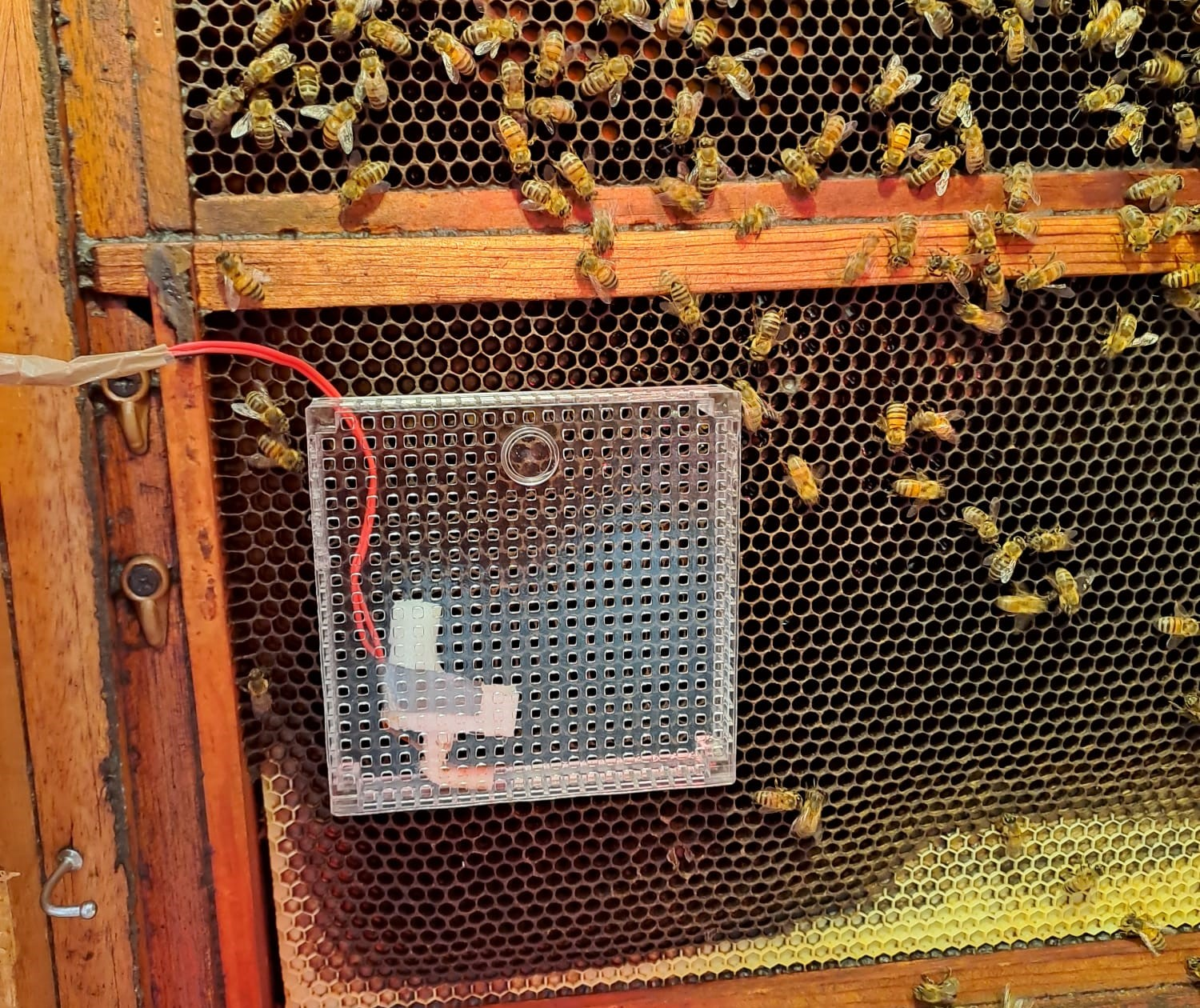
Figure 9: Bee dummy and flapper actuators deployed for hive-scent acquisition without provoking defensive bee responses.
Implications and Prospects
COMB operationalizes in-hive robotics for the study of communication, sensory integration, and social cue modulation under ecological validity, overcoming the ephemerality and exclusivity of prior custom platforms. Its open-source hardware and software stack catalyze reproducible, extensible experiments in behavioral entomology, biohybrid robotics, and collective systems. The platform’s modularity directly enables rapid implementation of new sensing and actuation paradigms (e.g., trophallaxis robots, in-hive electric field measurements, closed-loop social cue manipulation).
In future iterations, augmenting the planar kinematic workspace to full 3D would facilitate richer biomimetic primitives and enable studies of more complex comb geometries and visual occlusion. Integration with distributed sensor networks or in-hive environmental feedback loops would allow tightly coupled closed-loop behavioral studies and real-time collective monitoring. The standardization fostered by COMB further supports comparative studies across research groups, accelerating theoretical advances in embodied collective cognition and swarm engineering.
Conclusion
COMB provides a reusable, adaptable, and high-precision mechatronic base for controlled in-hive robotics, embedding robust engineering within the practical and ecological constraints of Apis mellifera research. Its modular approach unifies disparate experimental paradigms within a single platform, establishing a foundational infrastructure for both empirical bee behavioral studies and advanced animal-robot interaction methodologies.
(2604.04980)