- The paper introduces a modular approach combining BridgeDepth, Mask R-CNN, and SAM-6D for robust 6D pose estimation in cluttered industrial bins.
- It leverages multi-view temporal fusion via a Pose Buffer to suppress jitter and improve collision checking for stable grasp planning.
- The system achieves 600 MPPH with maintained 96–99% success rates, demonstrating its viability for low-cost industrial automation.
Pickalo: Modular 6D Pose-Based Pipeline for Low-Cost Industrial Bin Picking
System Architecture and Design Choices
Pickalo presents a modular bin-picking pipeline targeting high-throughput, robust object extraction in cluttered industrial bins using exclusively low-cost commercial RGB-D sensors and open-source software modules. The architecture builds explicit 6D object-level scene understanding, using a wrist-mounted camera for active multi-view exploration, thus circumventing occlusion and coverage limitations typical of fixed global sensing.
The core perception pipeline integrates three key subsystems: depth enhancement via BridgeDepth, class-agnostic instance segmentation using a Mask R-CNN trained on synthetic renderings, and zero-shot 6D pose estimation provided by SAM-6D. Multi-view temporal consistency is enforced through a Pose Buffer, which fuses identifications and explicitly deals with object symmetries. Grasp planning is decoupled from perception: offline-generated, geometry-aware antipodal grasp annotations are ranked online by a multi-metric score and rapidly filtered with collision checking against a composited scene model.
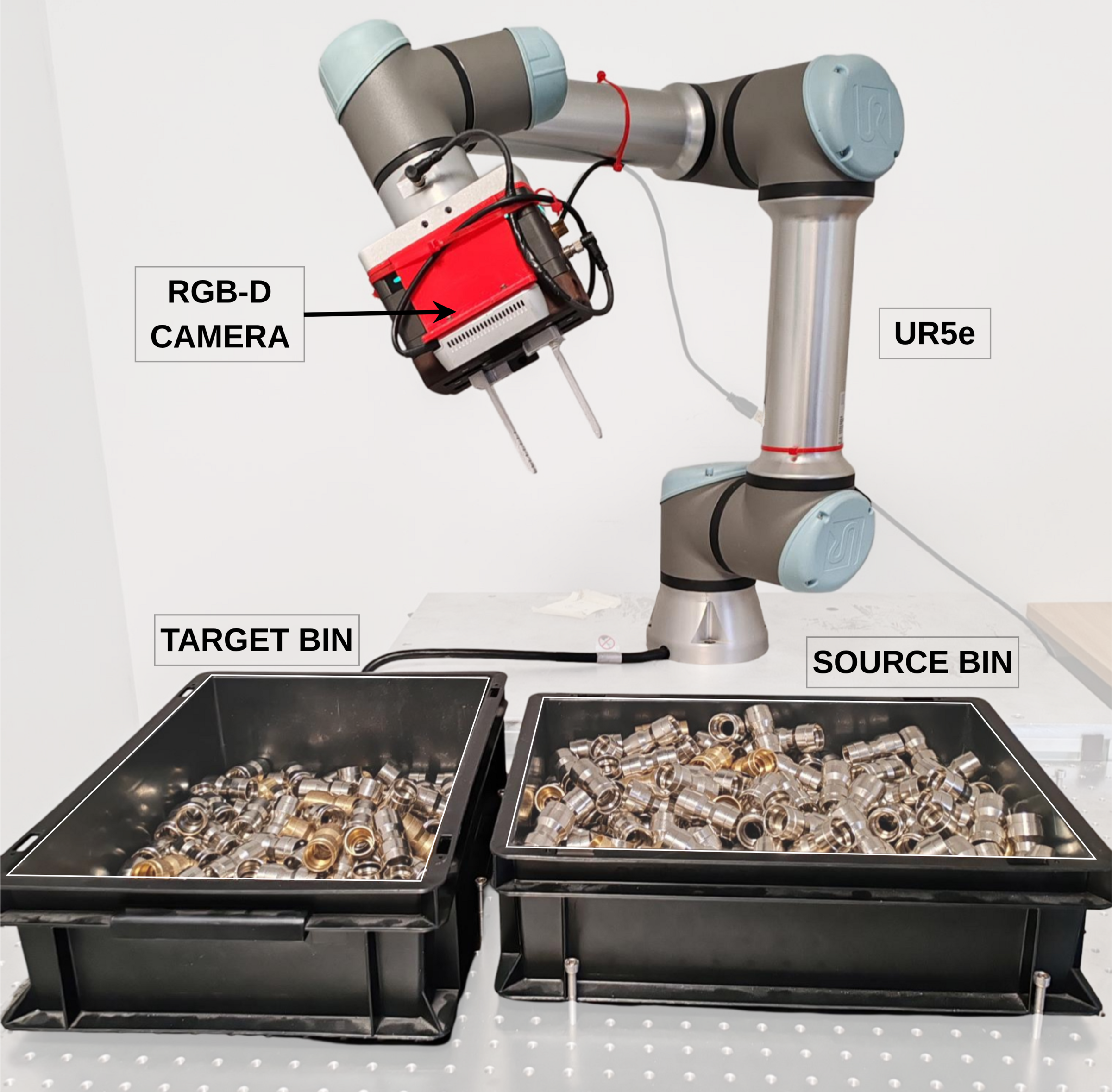
Figure 1: The hardware setup employs a UR5e manipulator with a low-cost depth camera for perception, targeting densely cluttered metallic objects in standard euroboxes.
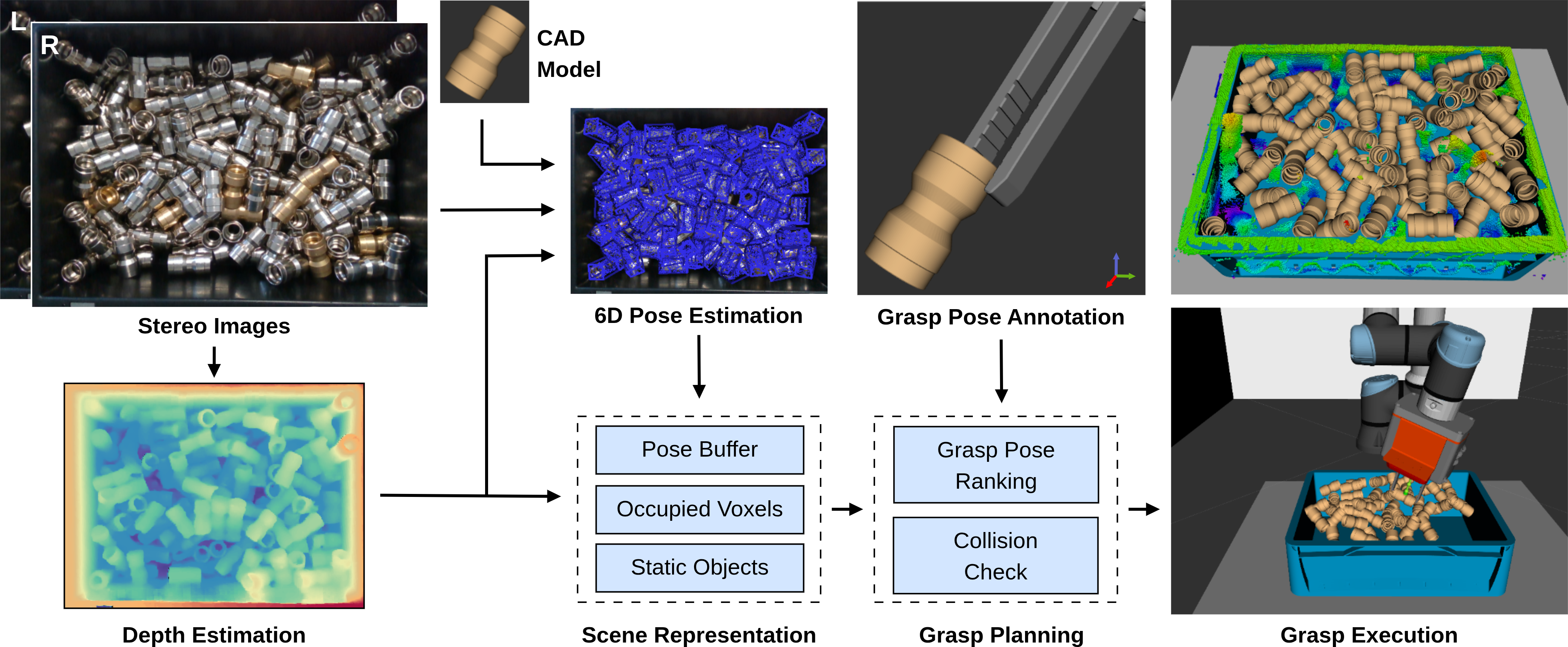
Figure 2: Pipeline overview—stereo imaging enables refined depth, which is fused for 6D pose estimation and multi-view scene state; validated object and bin models then inform grasp planning with fast collision reasoning.
This explicit modularization facilitates straightforward ablation and replacement of perception, fusion, and planning components. The system is engineered for cycle time minimization: computationally expensive phases (image inference, pose association) are masked by parallelizing robot execution and new acquisition.
Enhanced Depth Estimation and Its Role
A major impediment for bin-picking in real settings using affordable sensors is the degradation of depth maps (holes, severe noise) induced by reflective/textureless industrial objects. Pickalo addresses this by employing BridgeDepth, a state-of-the-art foundation model that merges stereo and monocular cues to densify and denoise the depth channel, optimizing the tradeoff between accuracy and real-time feasibility [guan2025bridgedepth]. Empirical evaluations demonstrate a pronounced improvement in pose stability and collision checking consistency, especially for long-horizon runs and as bins are depleted.
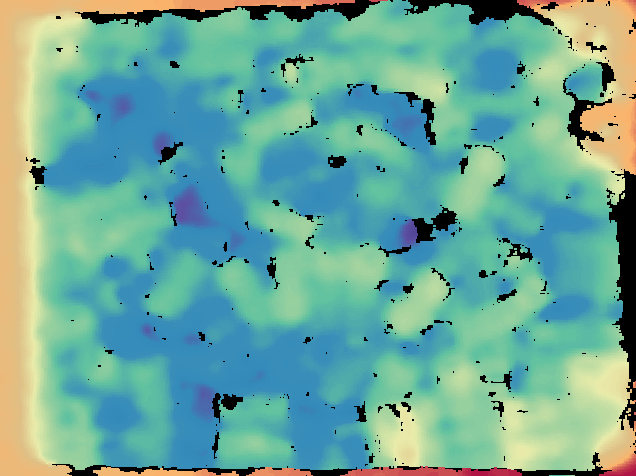
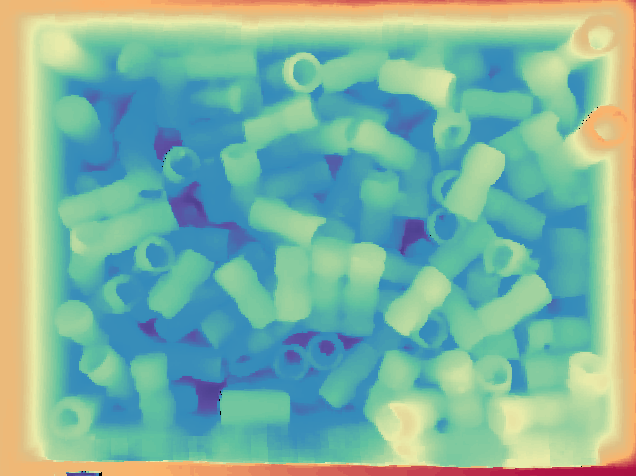
Figure 3: Comparison between noisy raw RealSense depth (left) and denoised, artifact-free depth produced by BridgeDepth (right).
Instance Segmentation and Zero-Shot 6D Pose Estimation
Pickalo leverages a Mask R-CNN instance segmentation backbone, trained with synthetic (BlenderProc2-generated) datasets directly derived from object CADs. This approach enables fast deployment on arbitrary new objects without requiring manual annotation. For 6D OPE, the pipeline integrates SAM-6D, a foundation model offering robust zero-shot pose estimation on unseen objects, which is further refined for execution speed.
Pose hypotheses are filtered by a physical plausibility module: a candidate pose is discarded if its centroid lies closer to the sensor than the mean observed depth within the segment mask, removing frequent spurious matches in concave scenes or severe clutter.
Temporal Fusion via Pose Buffer
To suppress pose jitter and outlier-induced instability, particularly crucial in heavy occlusion and tight bins, Pickalo maintains a Pose Buffer—a memory structure that aligns and averages pose estimates for each object across multiple views using SE(3)/quaternion means, and explicit symmetry group matching. A pose is promoted to active state only if supported by redundant multi-view evidence. Objects not confirmed in subsequent frames are invalidated. This design effectively reduces false-positive grasps and stabilizes scene comprehension, as quantitatively verified in the ablation studies.
Grasp Planning and Collision Reasoning
Pickalo's grasp planning is strictly pose-centric. For each category, large sets of antipodal, geometry-validated grasps are generated offline using mesh-driven heuristics (contact normal rays, collision avoidance with gripper model). Online, each detected object instance is populated with feasible grasp candidates, which are assigned a utility score reflecting vertical approach, minimal wrist rotation, pose confidence, and stacking height. Only the highest-ranking subset undergoes full collision and IK checking against the current scene state.
This two-stage process ensures that grasps are both stable and executable, without exhaustive online search, maintaining industrial cycle time targets. When no valid grasp is available, the system iterates with a new viewpoint, preventing the execution of risky or infeasible attempts.
Experimental Results and Ablation Analysis
The system was deployed on a UR5e with a parallel-jaw gripper, targeting three classes of metallic objects of increasing geometric complexity (square, cylindrical, complex; see Figure 4). Evaluation scenarios reproduce unconstrained factory bin conditions: heavily filled euroboxes, random object distribution, varied lighting, and no structured-light aids.
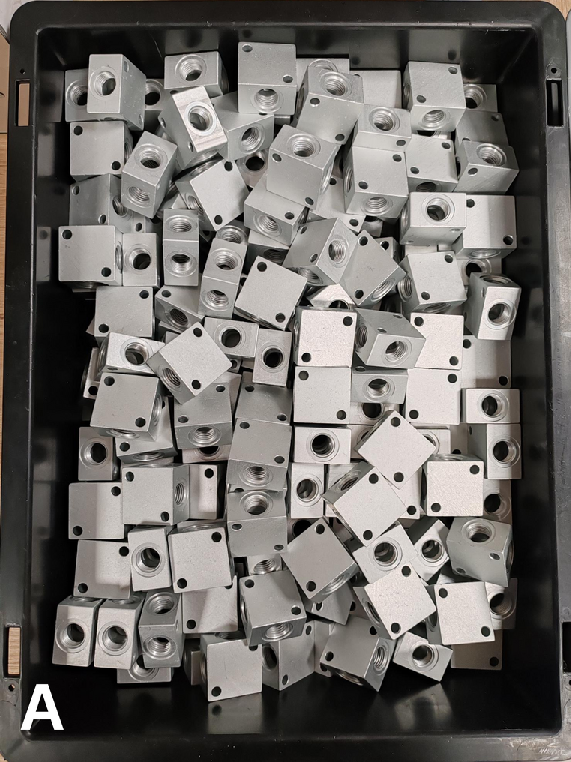
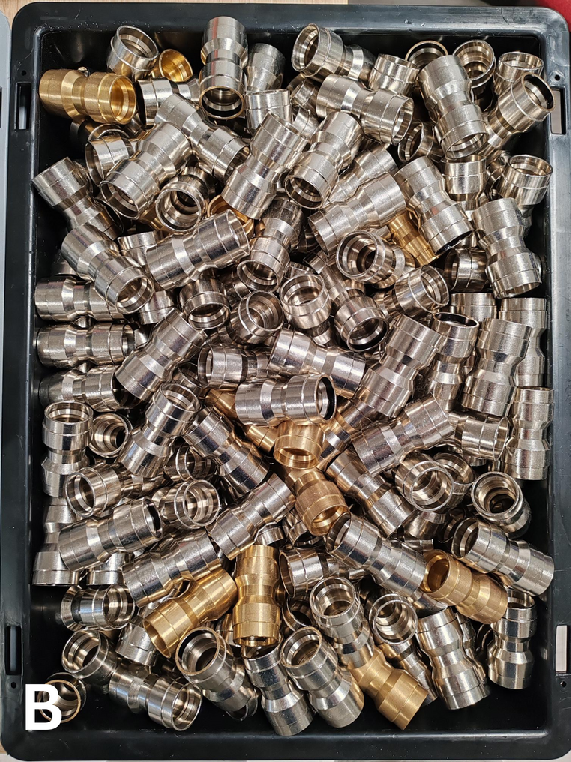
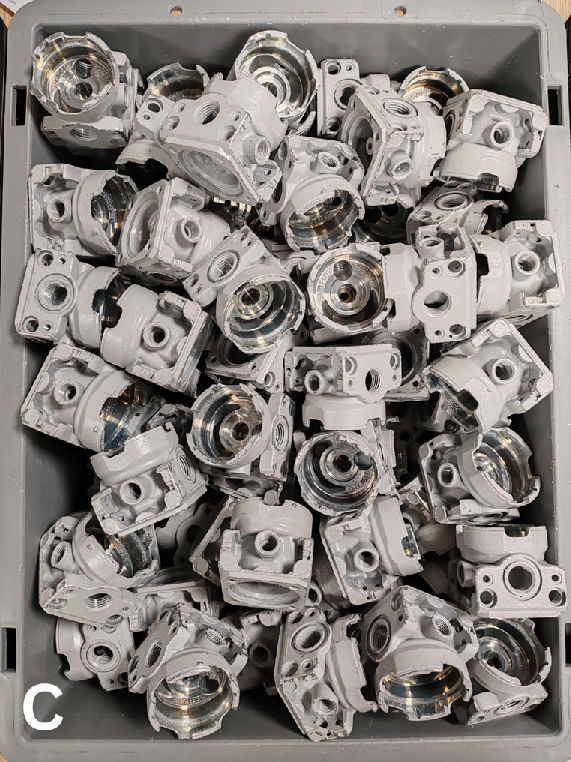
Figure 4: Evaluation objects: (A) square, (B) cylindrical, (C) nonconvex/complex geometry.
Pickalo achieves 600 mean picks per hour (MPPH) with sustained success rates of 96–99% for 30-minute continuous runs, showing negligible degradation except when the bin is nearly empty and objects are difficult to reach. The Early Exit Rate (failure to find valid grasp) remains below 5% even under maximum clutter.
Ablation reveals that naive use of raw RealSense depth, while initially permitting marginally higher pick rates, rapidly deteriorates performance: after 30 minutes, success rates drop to 88%, with Early Exit Rates nearly doubling due to catastrophically misestimated poses and collision checks. By contrast, BridgeDepth maintains high performance and long-term stability.
Multi-view fusion via the Pose Buffer further boosts pipeline reliability. Disabling it leads to an 11–13% decline in grasp success due to increased false positives and execution errors. Pose estimation error statistics (measured on the high-precision XYZ-IBD dataset) confirm reduced noise and bias in the fused configuration.
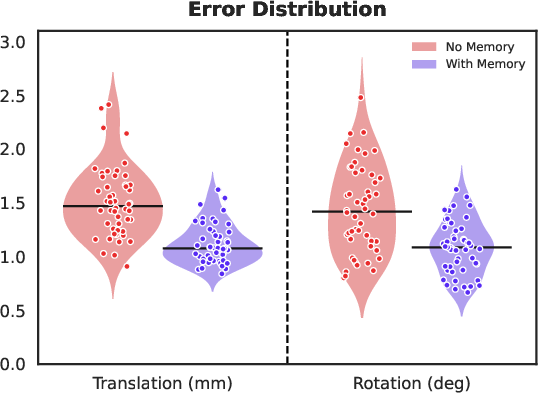
Figure 5: Distribution of object pose estimation errors with Pose Buffer disabled (left) vs. enabled (right): Buffer strongly suppresses both mean and variance.
Pipeline throughput and grasp success remain stable as the bin is depleted, only degrading when remaining objects are inaccessible to the gripper (final 10–20% fill level). This quantifies Pickalo's intrinsic robustness to both initial high-clutter and late-stage sparse scenarios.
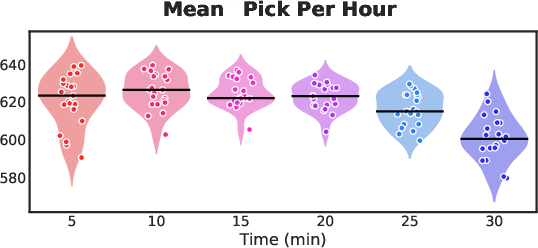
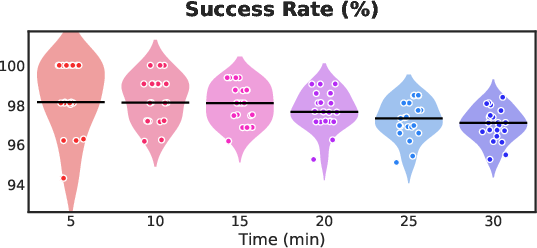
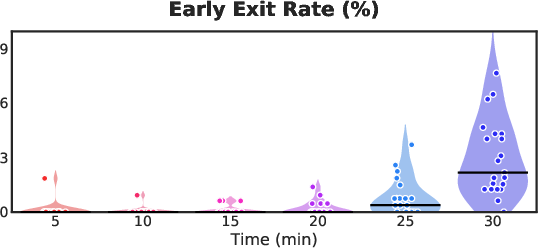
Figure 6: Temporal evolution of throughput (MPPH), success rate, and early exits, measured at 5-minute intervals during protracted bin-emptying tasks.
Implications and Future Directions
Pickalo delivers an industrial-grade bin-picking solution leveraging open-source algorithms and affordable hardware, with explicit 6DoF object-level reasoning superior to geometry-only grasp detectors where pose control is imperative. The modular architecture allows for targeted upgrades (segmentation, OPE, grasp ranking, motion planning) without disrupting other pipeline elements.
Practical implications include vastly reducing adoption barriers for automated picking in small- to mid-sized factories, as no expensive structured-light setups or industrial-grade sensors are needed. The use of foundation models for perception (BridgeDepth, SAM-6D) substantially closes the gap between academic demonstrators and production-grade systems.
Theoretically, the integration of multi-view fusion, symmetry-aware pose association, and utility-based grasp selection presents a blueprint for scalable, maintainable grasping pipelines. The pose-centric approach also provides a foundation for easy downstream process integration (e.g., workpiece inspection, assembly).
Future developments may include domain-adaptive synthetic data generation for segmentation in bulk settings, more expressive multimodal multi-object tracking in the pose buffer, and closed-loop motion primitives for the final “edge cases” toward 100% bin-emptying success.
Conclusion
Pickalo demonstrates that high-reliability, high-throughput bin picking is attainable in real-world industrial environments with low-cost sensors and an open, modular architecture by combining advanced depth estimation, robust zero-shot 6D pose fusion, and stable geometry-aware grasping. The work delineates clear performance gains from both depth foundation models and temporal fusion and establishes a reproducible, flexible blueprint for future research and deployment in practical automated manipulation (2604.04690).

