- The paper establishes tight bounds on the minimum window size (Θ(m)) and exploration time for both KT0 and KT1 visibility models.
- It introduces deterministic, label-oblivious algorithms using adversarial gadgets and dynamic map construction to tackle exploration in T-interval-connected graphs.
- The study underscores that even slight improvements in local visibility dramatically reduce exploration time, revealing key trade-offs in dynamic network exploration.
Tight Bounds for Single-Agent Exploration in T-Interval-Connected Graphs
Introduction
This paper tackles deterministic single-agent exploration in T-interval-connected dynamic graphs, a standard model for dynamic networks where the intersection of all edge-sets in any window of T consecutive time-steps is connected. The agent possesses no global knowledge concerning the window size T, the number of vertices n, or the number of edges m. The work systematically establishes tight bounds on the minimum window size required to guarantee exploration and optimal exploration time under two visibility models: KT0 (minimal port-only visibility, no local neighbor IDs) and KT1 (one-hop neighbor IDs are visible).
Let G=(V,E) denote the underlying network. The dynamic nature is encoded by temporal edge-sets E(t)⊆E. T0-interval-connectivity asserts that for any interval T1, the intersection graph T2 is connected. The agent must visit all vertices, starting from an arbitrary position, with no a priori knowledge of T3, T4, or T5.
- T6: the agent sees only port numbers for available outgoing edges at its current location.
- T7: the agent additionally observes the identifiers of neighboring nodes.
The core combinatorial quantities studied are:
- T8: minimum window size T9 such that, with visibility model T0, there exists a deterministic exploration algorithm for all T1-interval-connected graphs with T2 nodes and T3 edges.
- Exploration time: the total number of agent moves needed, given sufficiently large T4.
Main Results
Minimum Window Size: Tight Bounds
The authors establish that in both visibility settings, any deterministic exploration algorithm requires and suffices with a window T5 for all large enough T6:
- Lower Bound: T7 is proven using gadgets that adversarially confine the agent for T8 steps unless the window is at least T9 (see Lemma 11 and Theorem~4; examples depicted below).
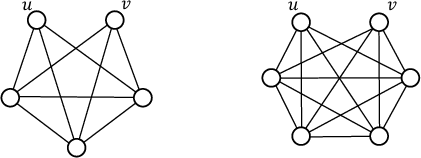
Figure 1: T0 (left) and T1 (right), which serve as adversarial gadgets forcing T2 delay before the agent can reach a "gate" node.
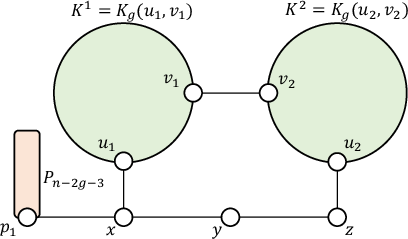
Figure 2: The underlying graph for the lower bound construction in Theorem~4, demonstrating the trap architecture.
- Upper Bound: The paper presents deterministic label-oblivious algorithms for both T3 and T4 requiring window size T5, where T6. The upper and lower bounds match up to polylogarithmic factors and are asymptotically tight when T7.
- When parameterized solely by T8, these results yield T9.
Exploration Time: Tight Bounds
Given sufficiently large n0, optimal exploration time matches lower bounds:
Further, for n9 the time and window size are matched. For m0, exploration incurs an extra multiplicative factor of m1 due to the absence of neighbor identity information, an unavoidable overhead supported by lower-bound constructions.
Algorithmic Techniques and Proof Insights
- Adversarial Gadgets: The m2 family (complete graph with one missing edge) allows the adversary to confine the agent among "trap" vertices, utilizing minimal temporal edge deletions, while preserving m3-interval-connectivity. This strategy leverages combinatorial properties of the gadget such that, unless the window is wide enough, exploration of all nodes is infeasible.
- Greedy Exploration with Map Construction (for m4): The presented algorithm builds an evolving map, dynamically eliminates unavailable edges, and greedily searches for the closest unvisited node by shortest path, guaranteeing progress on the always-present spanning tree (shown to exist by a window-size argument).
- Redundant Traversals in m5: In the absence of neighbor IDs, explicit resetting, and detection of unused ports is critical. The algorithm must repeatedly attempt all possible unexplored ports, which, given adversarial port assignments, result in m6 extra steps per edge, thus inflating asymptotic exploration time.
Numerical & Theoretical Highlights
- All upper and lower bounds are tight for m7 and for m8 as the main parameter (i.e., clique-like graphs).
- The precise gap between upper and lower bounds for general m9 is confined to an KT00 multiplicative factor.
- The algorithms make no use of global parameters, such as KT01, KT02, or KT03, and operate under adversarial, strongly dynamic conditions.
Implications and Future Work
The results precisely characterize deterministic single-agent exploration in highly dynamic environments, establishing that the minimal visibility jump from KT04 to KT05 yields a linear-to-quadratic reduction in exploration time, and that the bottleneck is inherently the topological edge count KT06 under adversarial schedules. Practically, this means that efficient deterministic exploration is feasible only if interval connectivity is, on average, commensurate with the edge set size, and that small changes in local visibility yield substantial algorithmic gains.
An open line is the potential of randomization: the authors note that randomization could potentially break through the linear-in-KT07 window-size barrier or reduce the quadratic time in KT08. Other future directions include precisely quantifying the polylogarithmic gap for irregular or sparse graphs and analyzing the trade-off between memory complexity and exploration efficiency.
Conclusion
The paper settles the deterministic single-agent interval-connectivity exploration problem for arbitrary KT09 and KT10, deriving tight window size and time bounds for both weak and strong local observation models. The lower bounds are established through robust adversarial constructions, while the upper bounds leverage efficient, memoryless (apart from map construction) exploration strategies. This work provides clarity on the interplay between structural dynamics, visibility, and exploration complexity in temporal graphs, establishing a foundational reference point for future algorithms and lower bound studies in the domain of mobile agents and network exploration.
