- The paper introduces a multidimensional taxonomy to formally identify long-tail, safety-critical trajectories in autonomous vehicle scenarios.
- It leverages attribute-guided augmentation and adaptive contrastive learning to robustly enhance prediction accuracy for rare, complex events.
- Experimental results on benchmarks like nuScenes demonstrate significant reductions in prediction error and a 66% runtime acceleration.
Scene-aware Adaptive Iterative Learning (SAIL) for Long-Tail Trajectory Prediction in Autonomous Vehicles
Introduction and Motivation
Long-tail scenario prediction in autonomous vehicle (AV) operation is a major limitation for deep learning-based behavioral forecasting, with distributions dominated by easily predicted "head" events and rare, safety-critical "tail" cases that are typically underrepresented in training data. This intrinsic data imbalance, alongside the lack of principled, multi-perspective long-tail definitions, has limited the predictive fidelity in edge cases that are crucial for real-world safety assurance. "SAIL: Scene-aware Adaptive Iterative Learning for Long-Tail Trajectory Prediction in Autonomous Vehicles" (2604.04573) provides a systematic approach: constructing a multidimensional taxonomy for long-tail trajectory identification, leveraging attribute-guided augmentation, and integrating adaptive contrastive learning with dynamic pseudo-label supervision to specifically enhance robustness and accuracy in tail events.
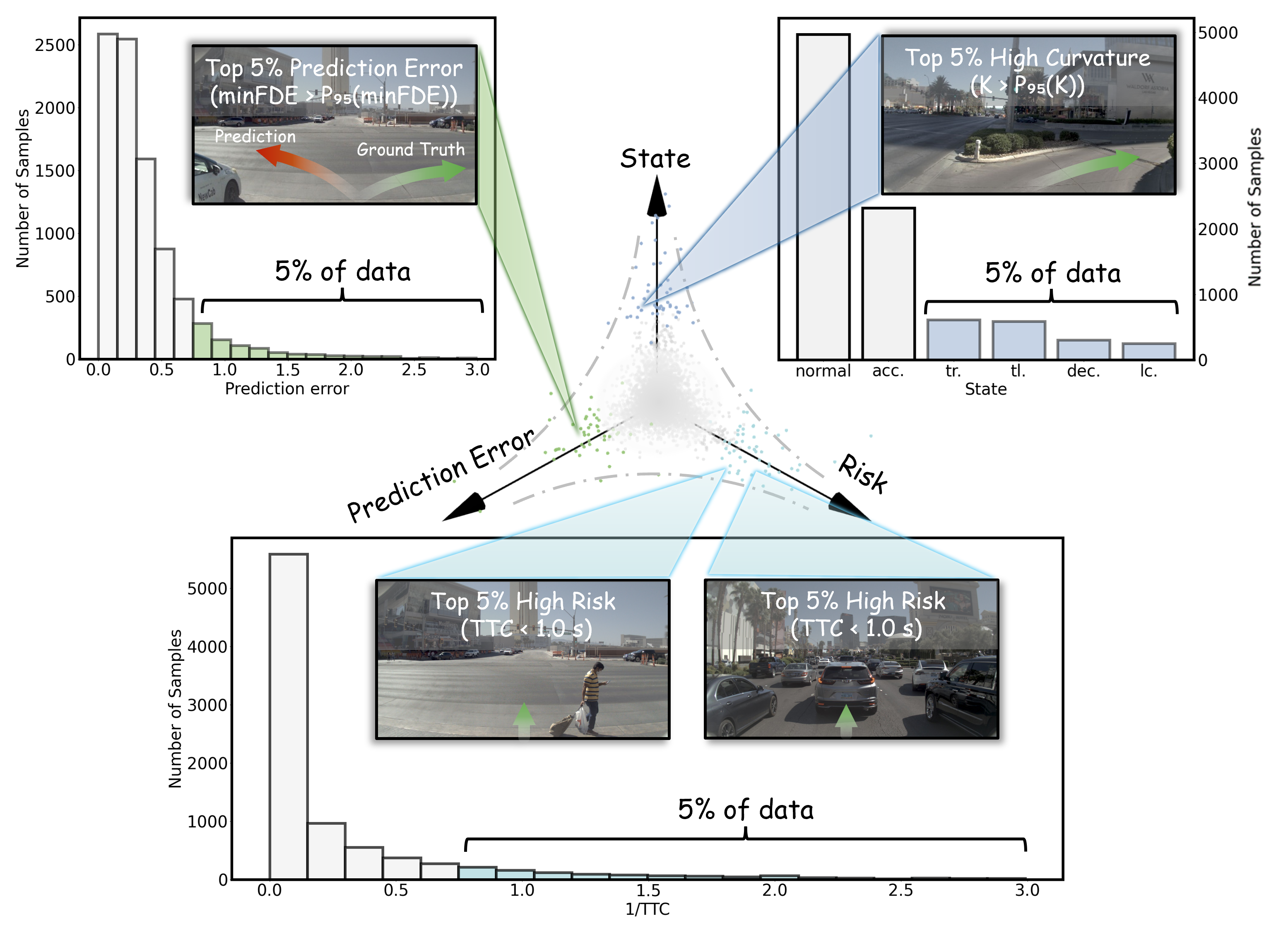
Figure 1: Vehicle trajectories exhibit a pronounced long-tail characteristic along model error, collision risk, and kinematic state complexity axes; the critical top 5% of each distribution corresponds to unique, safety-critical operational designs.
Multi-dimensional Attribute Framework
The central innovation of SAIL lies in rigorously formalizing long-tail trajectories via three complementary attribute spaces:
- Prediction Error: Post hoc model-based unpredictability, operationalized as minimum final displacement error across modalities, reflecting scenario contextual uncertainty.
- Collision Risk: Model-agnostic, physical risk via the maximum inverse time-to-collision (InvTTC) across all agent-agent pairs, identifying highest-likelihood conflict windows.
- State Complexity: Single-agent motion irregularity quantified as a weighted sum of maximal jerk and yaw rate, capturing dynamic maneuver intricacy and behavioral infrequency.
These interlocking definitions jointly represent tail cases overlooked by single-dimensional frequency- or error-based heuristics. The statistical analysis of nuScenes data shows the independence and complementarity of these attributes, with Jaccard overlap among top 5% subsets as low as 1.4%–5.7%.
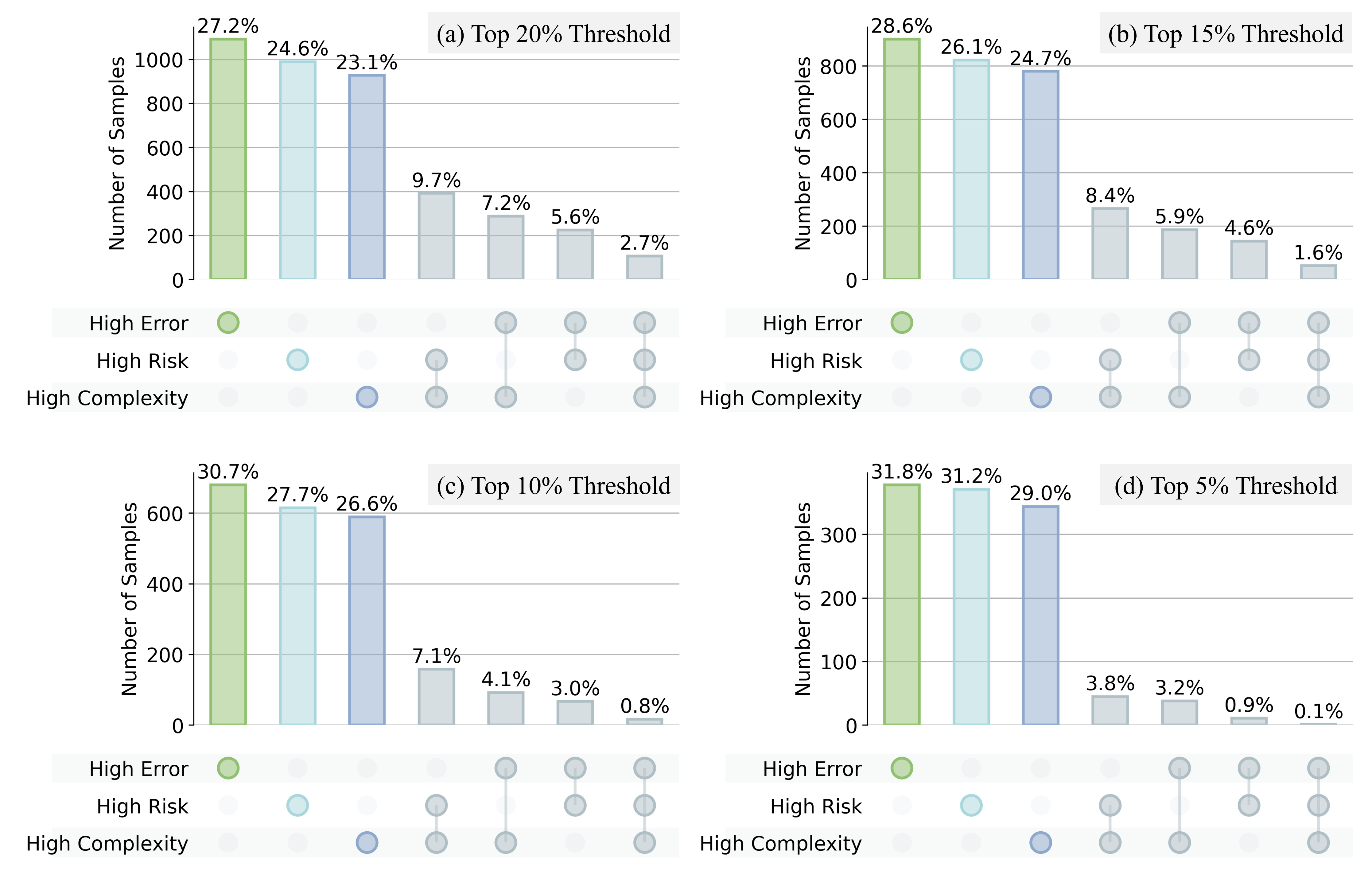
Figure 2: UpSet diagrams reveal limited intersection among attribute-based tail sets, underscoring the necessity for multidimensional taxonomies.
SAIL Architecture
The SAIL pipeline, depicted in Figure 3, proceeds as follows:
- Attribute-Guided Trajectory Augmentation (AGTA) utilizes the attribute vector for each trajectory to select between a bank of targeted augmentations (Simplify, Shift, Mask, Subset). A dynamic strategy generator (an MLP) maps (ye,yr,ys) to augmentation probabilities and intensities, producing challenging contrastive samples tailored to underrepresented operational modes.
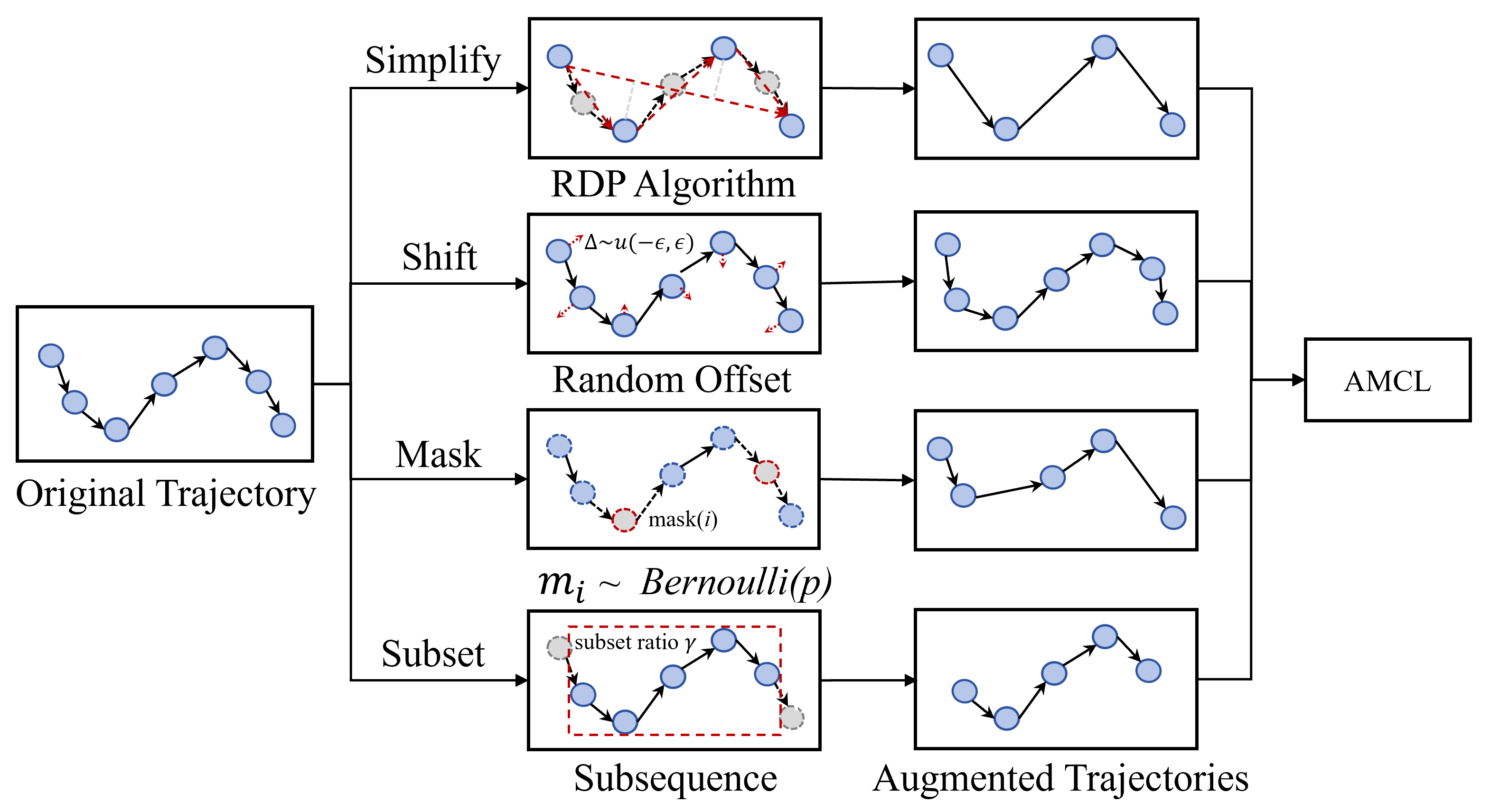
Figure 4: AGTA applies attribute-driven selection of augmentation functions for robust contrastive view generation.
- Scene Representation and Attribute Disentanglement: Fused agent and map context embedding via Transformer and GAT flows into three parallel self-attention extractors, one per attribute, with explicit auxiliary regression targets. This decouples latent reasoning across unpredictability, risk, and motion complexity, as shown by downstream subspace separation.
- Adaptive Contrastive Learning:
- A two-stage process integrates unsupervised and supervised contrastive learning on representation memory banks. Adaptive Momentum Contrastive Learning (AMCL) replaces static momentum schedules in MoCo-like structures with cosine transitions and implements similarity-weighted hard-negative mining.
- Pseudo-labels for contrastive supervision are generated via periodic K-means clustering of the evolving feature manifold (Evolving Feature Clustering, EFC). This dynamic update is critical: early-stage clusters provide inconsistent signals, but warm-up and progressive updates produce highly stable and meaningful partitions (as measured by ARI).
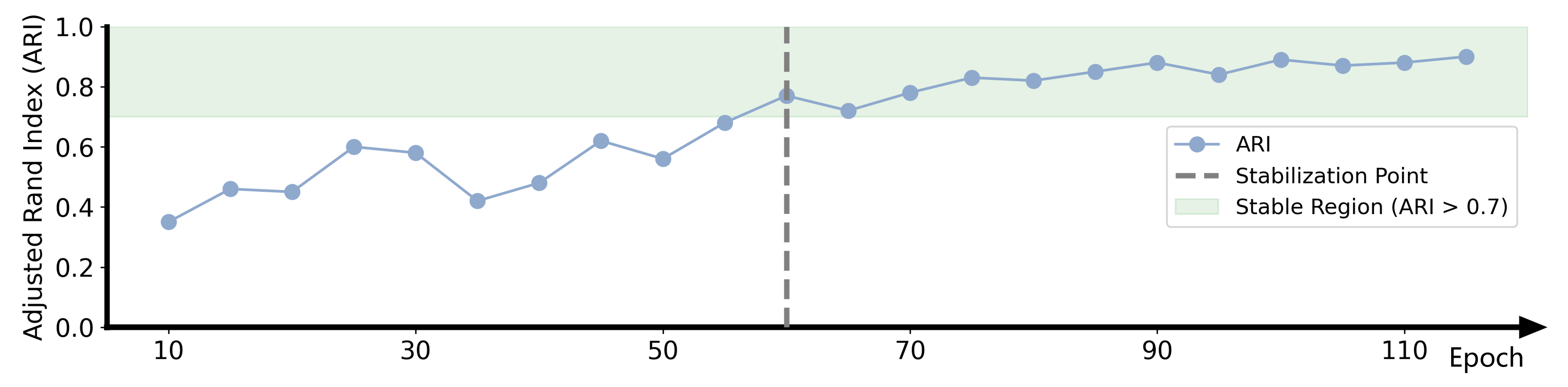
Figure 5: Adjusted Rand Index analysis demonstrates that EFC yields highly consistent cluster pseudo-labels post-warmup.
- Focused Decoupled Contrastive Learning (FDCL) applies joint class-aware and intra-class focusing weights, sharpening optimization on hard positive pairs for tail classes, in contrast to generic contrastive or LDAM-like objectives.
- Attribute-aware Trajectory Generator: Decoding uses dynamically gated combinations of attribute features, allowing the generator to reweight its representation basis according to observed scenario demands.
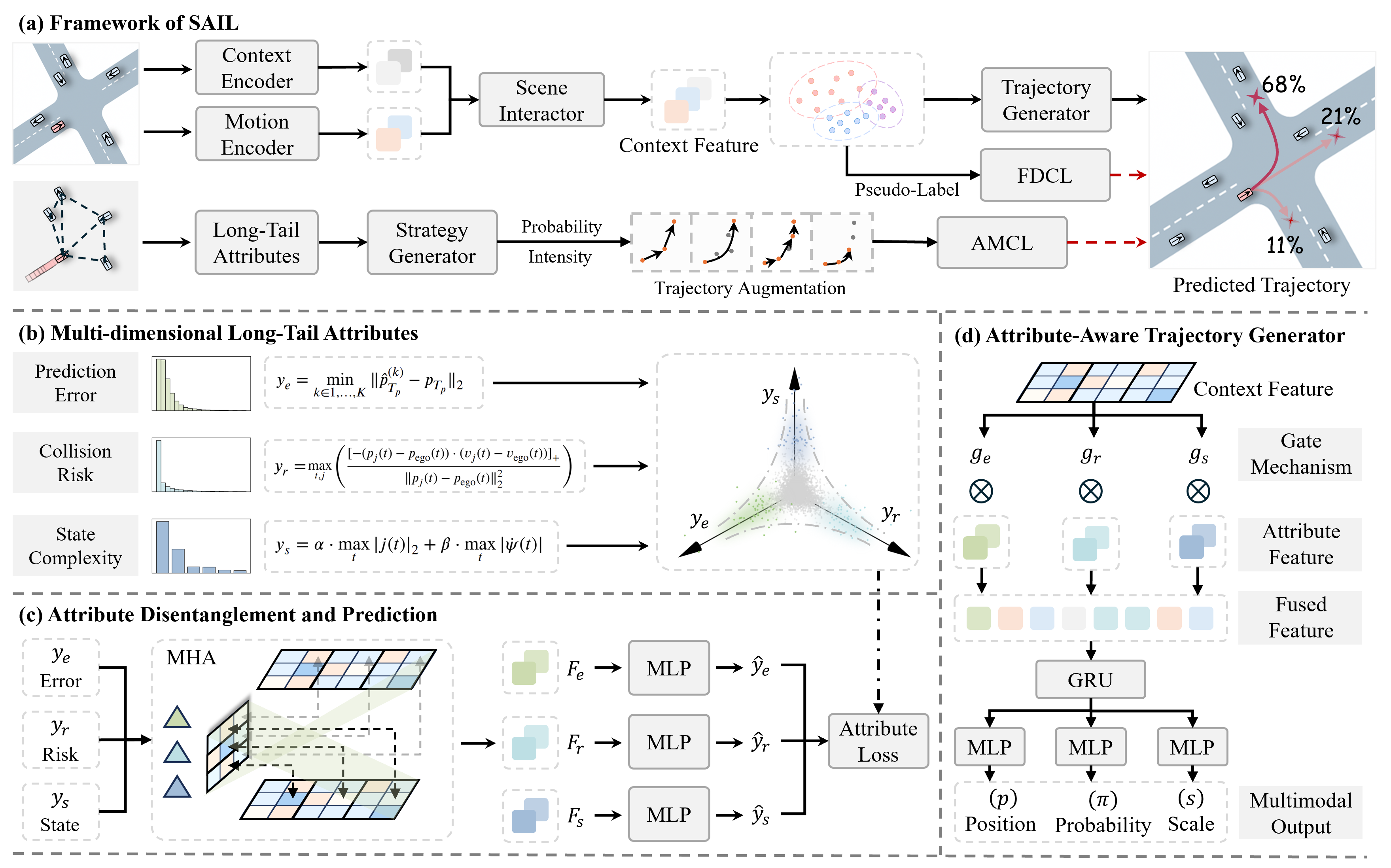
Figure 3: SAIL system architecture, with detailed visualization of each core module and their data flows.
Experimental Evaluation
Rigorous experiments on nuScenes and ETH/UCY benchmark the framework both on the aggregate dataset and attribute-separated tail subsets. The results are especially notable in long-tail regimes:
- On nuScenes, for the hardest 1% by model error, SAIL achieves a 28.8% minFDE improvement over previous SOTA (CSD), and retains leading performance as the tail threshold is relaxed to 5%.
- Under collision risk and state complexity stratification, SAIL consistently outperforms the Q-EANet and other competitive architectures, especially at longer prediction horizons where uncertainty and risk are compounded.
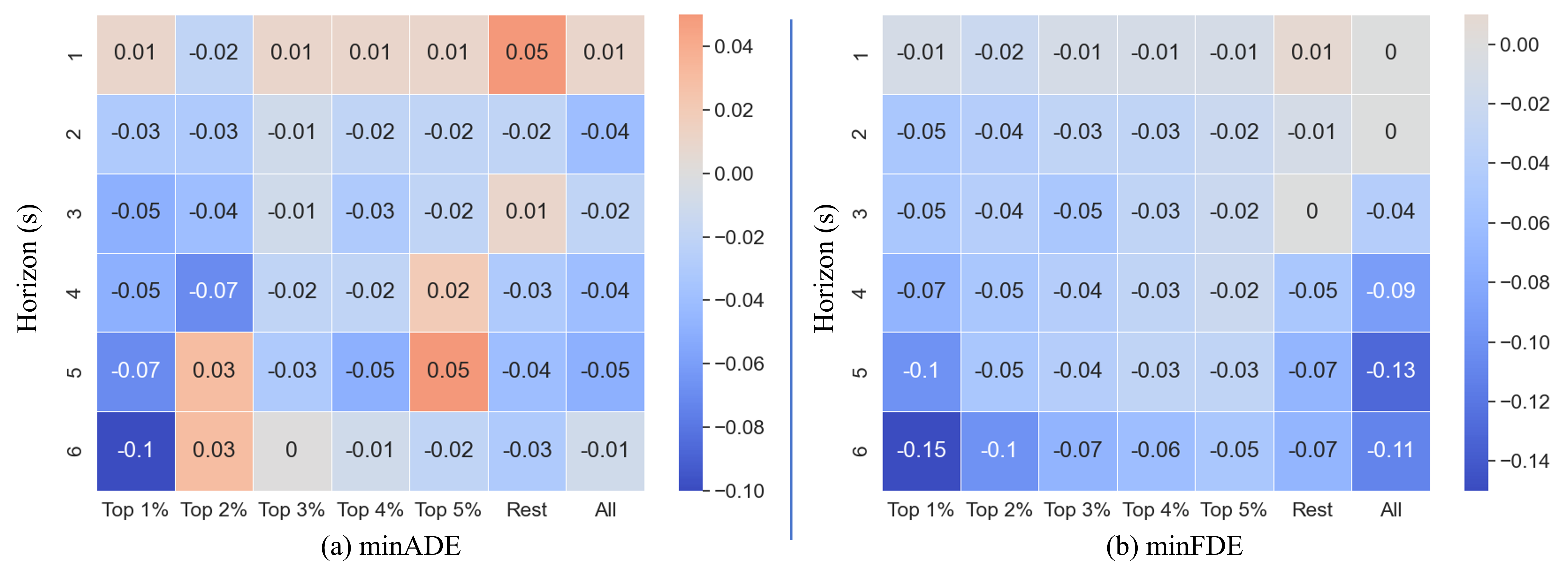
Figure 6: SAIL shows performance gains—negative differential indicates improvement—over Q-EANet across horizons and risk bins.
- Worst-case analysis (model-agnostic hard sample selection) confirms that SAIL both decreases extreme outlier errors and maintains top results as tail coverage expands.
- Ablation studies confirm that the explicit multi-attribute supervision and adaptive contrastive pipeline are both necessary for robustness in tail cases; random augmentation or conventional momentum schedules significantly degrade rare event performance.
Efficiency and Scalability
Attribute prediction, augmentation, and contrastive branches are strictly used for training; at inference, SAIL operates at a streamlined 18 ms/scene, a 66% acceleration over the next-fastest SOTA and highly suitable for real-time deployment Figure 7.
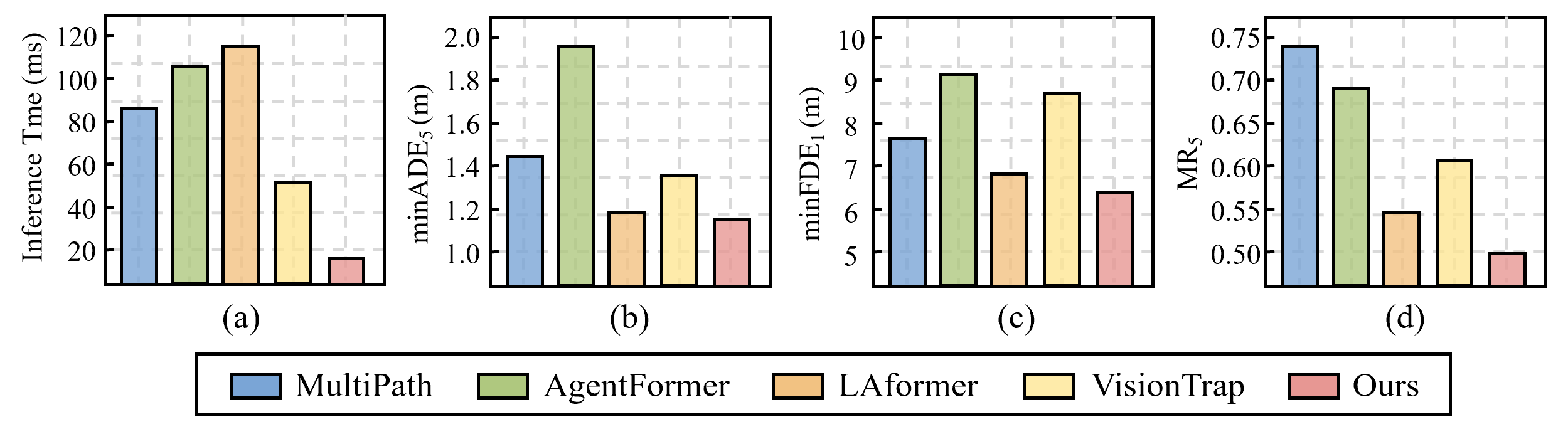
Figure 7: SAIL attains superior prediction accuracy while offering the lowest runtime latency among leading models.
Qualitative Analysis
t-SNE embedding of attribute-selected tail samples confirms that the learned embedding spaces for error, risk, and state complexity are structurally distinct yet continuous, with meaningful overlaps for scenarios lying at multi-attribute intersection Figure 8.
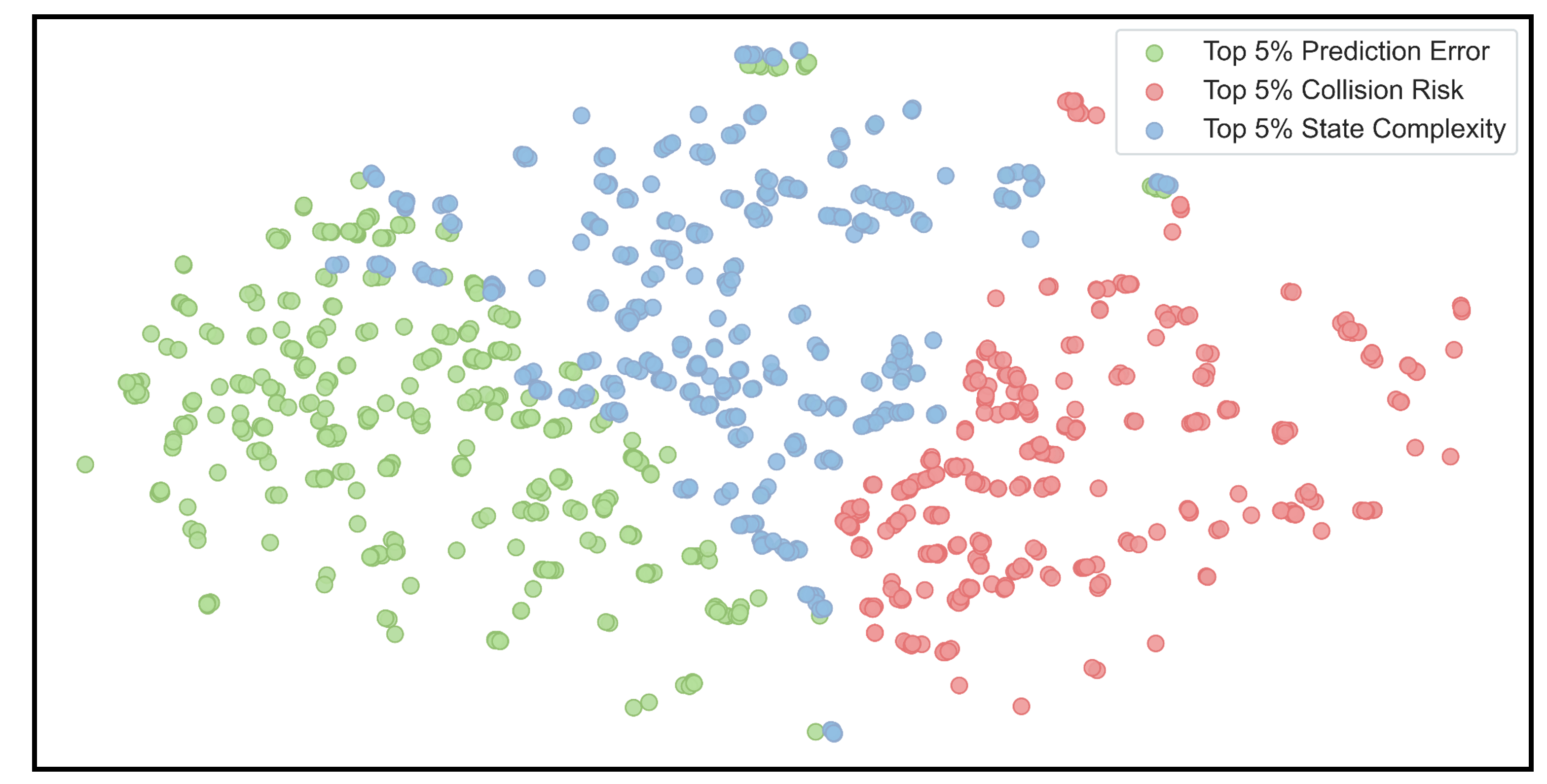
Figure 8: t-SNE visualization demonstrates quasi-orthogonality and partly-overlapping structure of the learned attribute manifolds.
Qualitative case analysis (Figures 9 and 10) demonstrates SAIL's superiority in high-curvature and abrupt speed change cases. Failure cases, however, remain in severely occluded or under-specified contexts, motivating further integration with V2X/cloud perception.
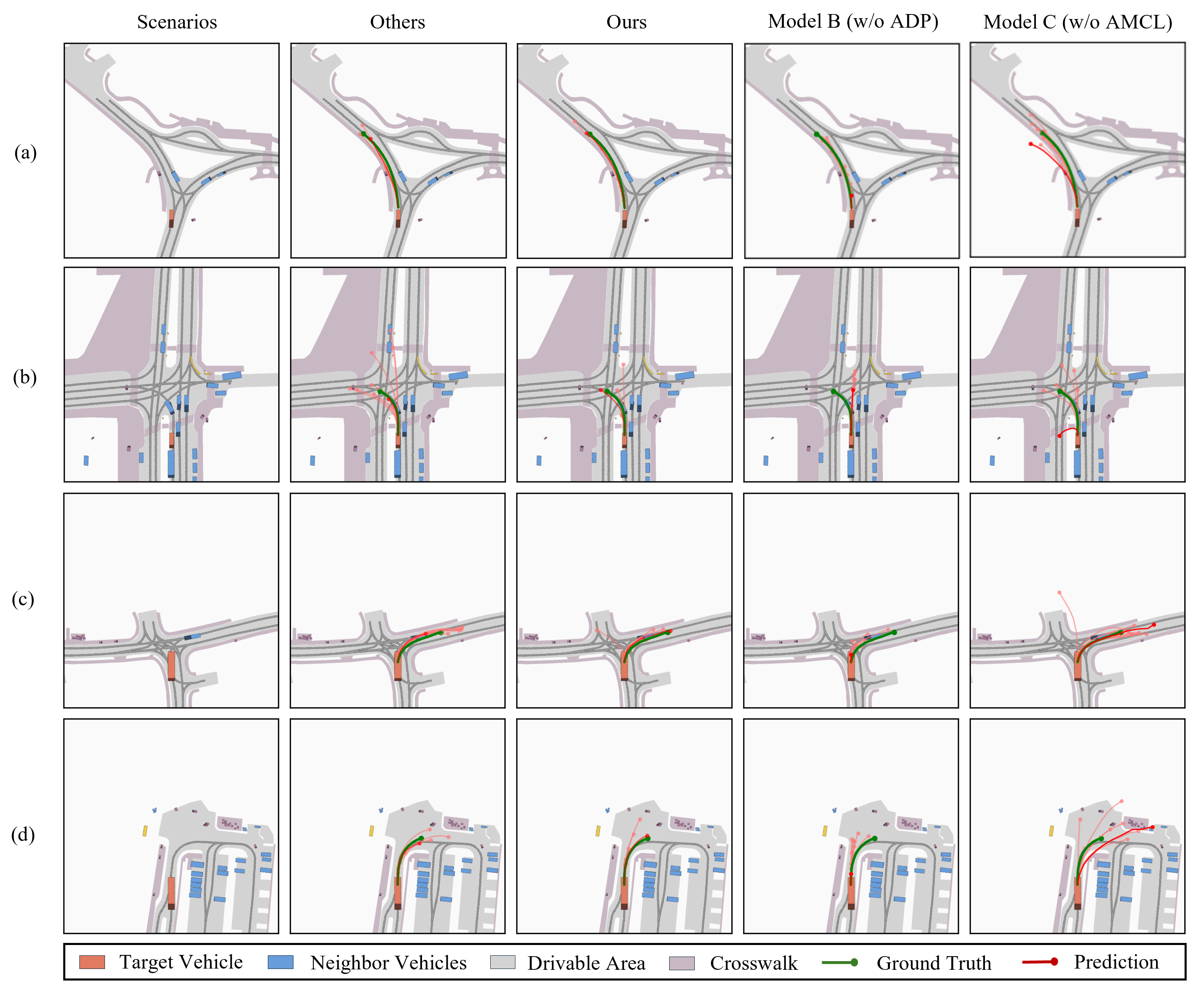
Figure 9: SAIL accurately predicts long-tail, high-curvature turning behaviors that baseline and ablations fail to capture.
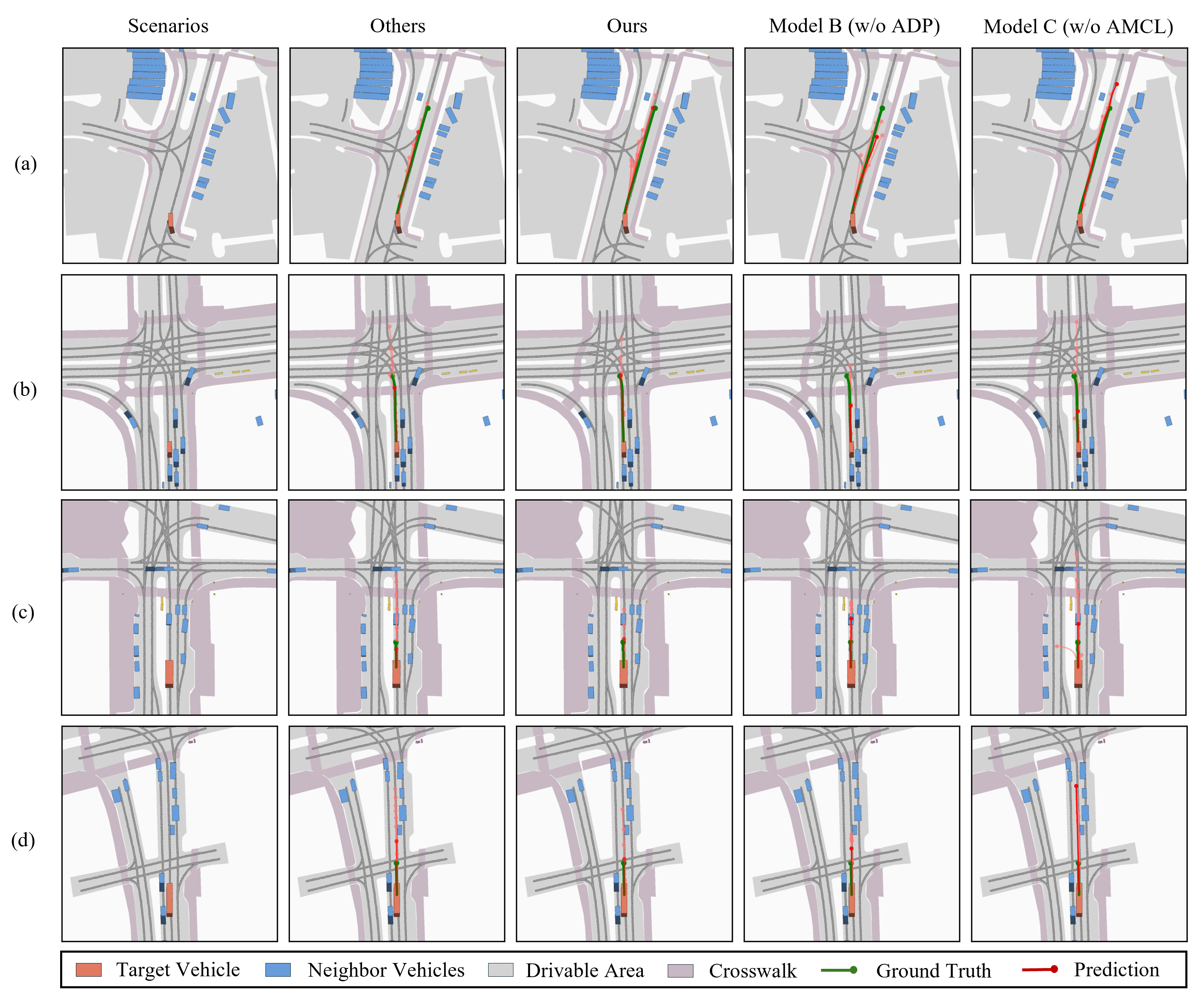
Figure 10: SAIL robustly adapts to abrupt acceleration/deceleration events, surpassing conventional models particularly under rare maneuver onsets.
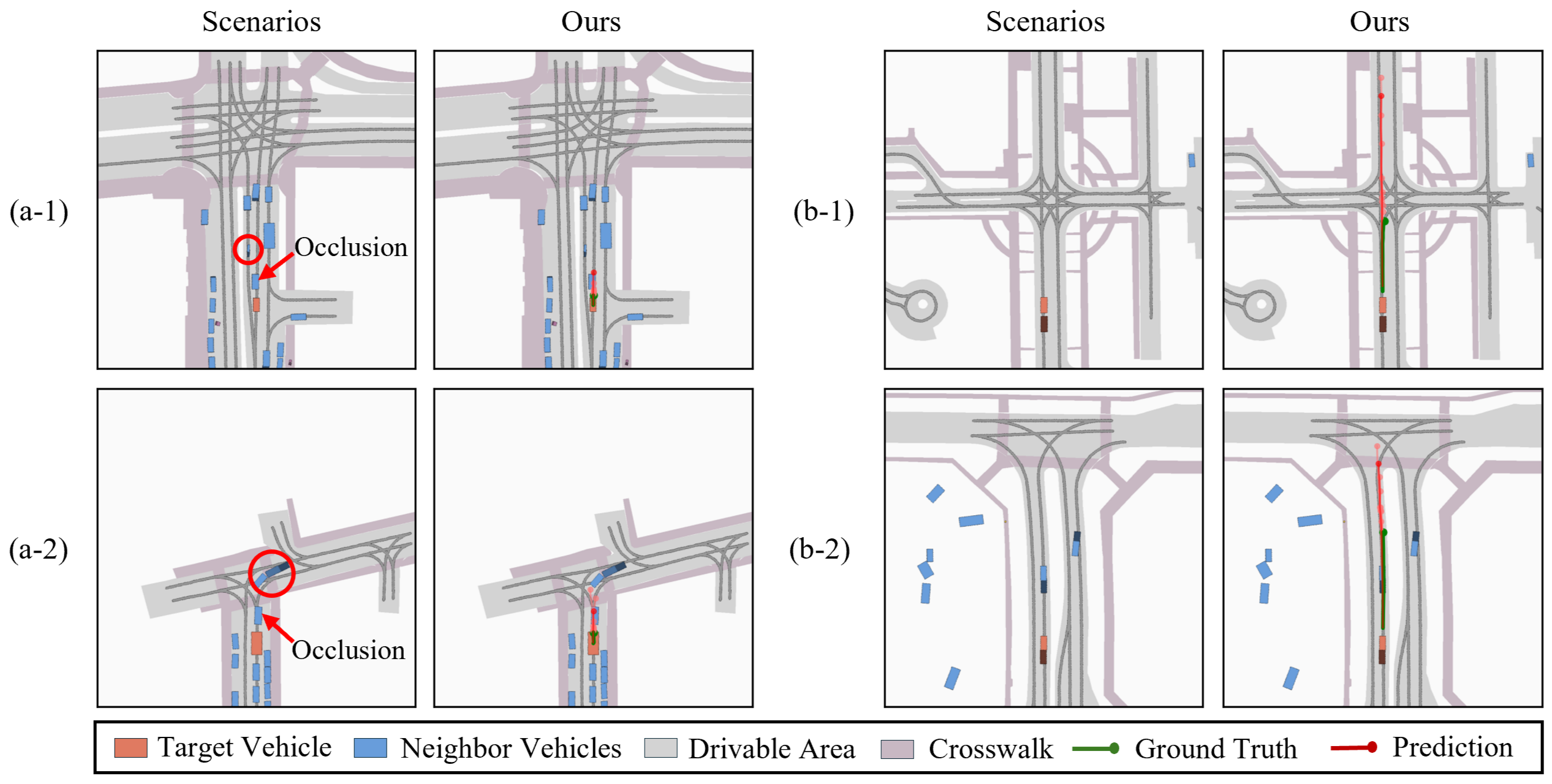
Figure 11: Prediction failures occur under extreme visual occlusion or absent traffic light context.
Theoretical and Practical Implications
SAIL's architecture demonstrates that high-variance, safety-critical outlier behaviors can be robustly learned by explicitly modeling multidimensional long-tail structure. The general attribute-guided augmentation and decoupled contrastive representation approaches are model- and task-agnostic, offering extensibility to other sequential prediction domains with long-tail phenomena (e.g., rare disease progression, unusual user activity in recommender systems).
The insight that multiple metrics (error, risk, complexity) reveal orthogonal axes of rarity—rather than relying on simplistic class imbalance—will drive new research into richer, more safety-aligned evaluation protocols.
From a deployment perspective, the efficient test-time architecture and clear gains in risk-stratified metrics position SAIL for integration with city-scale AV fleets, especially as regulatory scrutiny targets edge-case reliability.
Future Directions
Looking forward, one critical bottleneck remains in scenarios where all key information is unobservable (e.g., occlusion, ambiguous right-of-way). Integrating V2X communication, common-sense reasoning via LLMs, and map-based priors may further reduce catastrophic prediction risk. Moreover, deploying SAIL-like attribute frameworks within generative scenario design loops (e.g., diffusion-based adversarial scenario synthesis) can expand rare event coverage and further reduce the generalization gap.
Conclusion
SAIL offers a rigorous, scalable, and effective framework for long-tail trajectory prediction, combining multidimensional attribute identification, attribute-guided augmentation, and adaptive contrastive learning. The results evidence state-of-the-art performance with strong generalization across agent classes and scenario complexities. This approach establishes a new standard for addressing the long-tail challenge in behavior prediction for real-world autonomous vehicle navigation.
(2604.04573)