- The paper introduces HighFM, a masked autoencoding Vision Transformer tailored for high-frequency EO data to enable real-time cloud and fire segmentation.
- It demonstrates significant performance gains, with balanced accuracies of 0.831 for cloud segmentation and 0.925 for active fire detection over traditional models.
- The study emphasizes that aligning temporal granularity with the target phenomenon is crucial for effective transfer learning in rapidly evolving environmental monitoring.
HighFM: Foundation Models for High-Frequency Earth Observation Data
Motivation and Context
The need for rapid and precise monitoring of fast-evolving environmental phenomena, especially climate-driven disasters, necessitates EO systems optimized for high temporal resolution and robust transferability across downstream tasks. While the proliferation of high-resolution, low-revisit-rate satellite data (e.g. Sentinel-2, Landsat) has fueled significant advances in EO Foundation Models, these models remain unsuitable for real-time applications due to their limited revisit intervals. Geostationary platforms such as MSG/SEVIRI offer lower spatial resolutions but provide temporally dense observations (every 15 min), uniquely positioning them for applications in wildfire tracking, cloud evolution, and other dynamic monitoring tasks.
HighFM addresses the gap by developing a masked autoencoding-based Vision Transformer foundation model optimized for high-frequency, multispectral EO data. This allows the capture of short-term spatial-spectral-temporal context, critical for accurate segmentation and detection under real-time operational constraints.
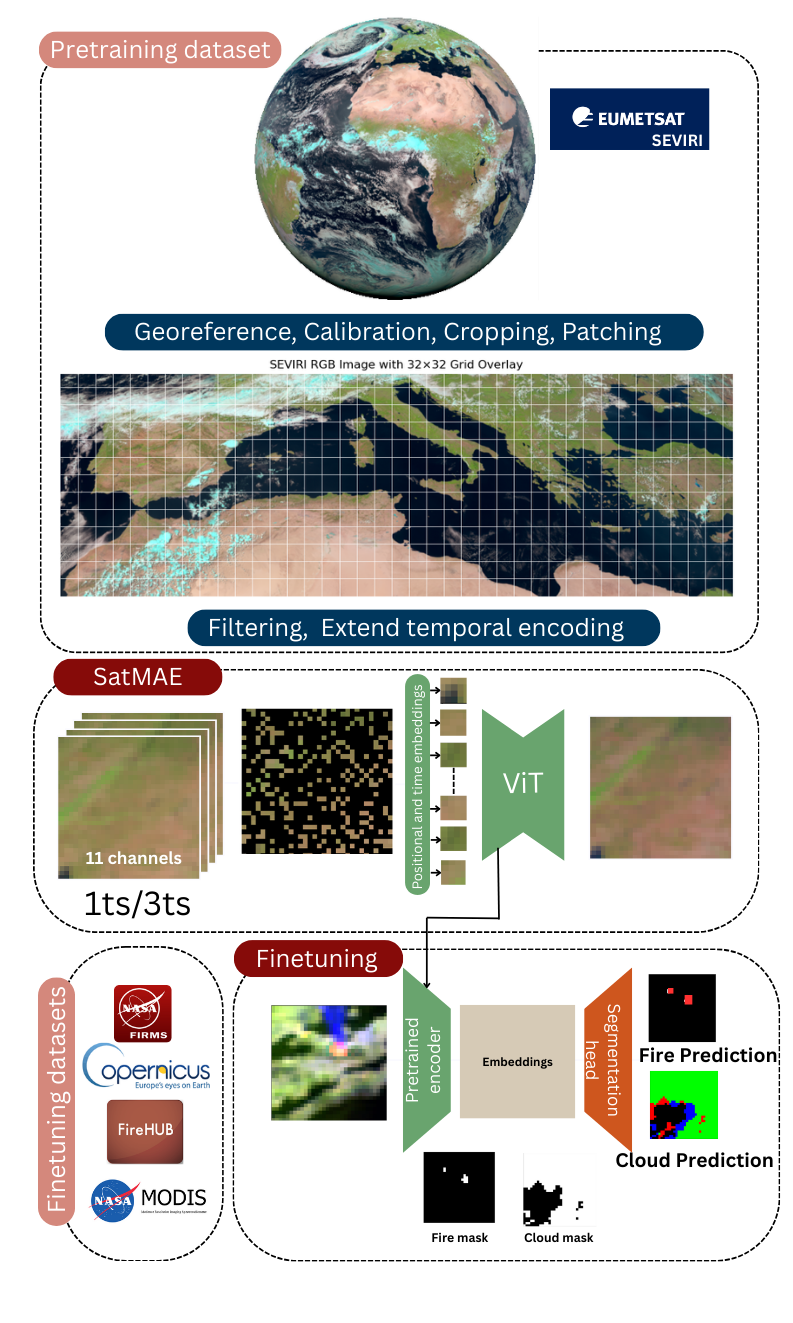
Figure 1: High level flowchart of our methodology.
Methodology
Data and Preprocessing
The HighFM pretraining corpus consists of over 2 TB of SEVIRI MSG radiance data (11 spectral bands, 15-minute cadence, restricted to May–September 2014–2019), targeting the peak Mediterranean fire season. The area of interest covers Europe, North Africa, and the Middle East, curated to minimize irrelevant (ocean-only or fully clouded) patches and temporally segmented to eliminate data leakage in downstream evaluation.
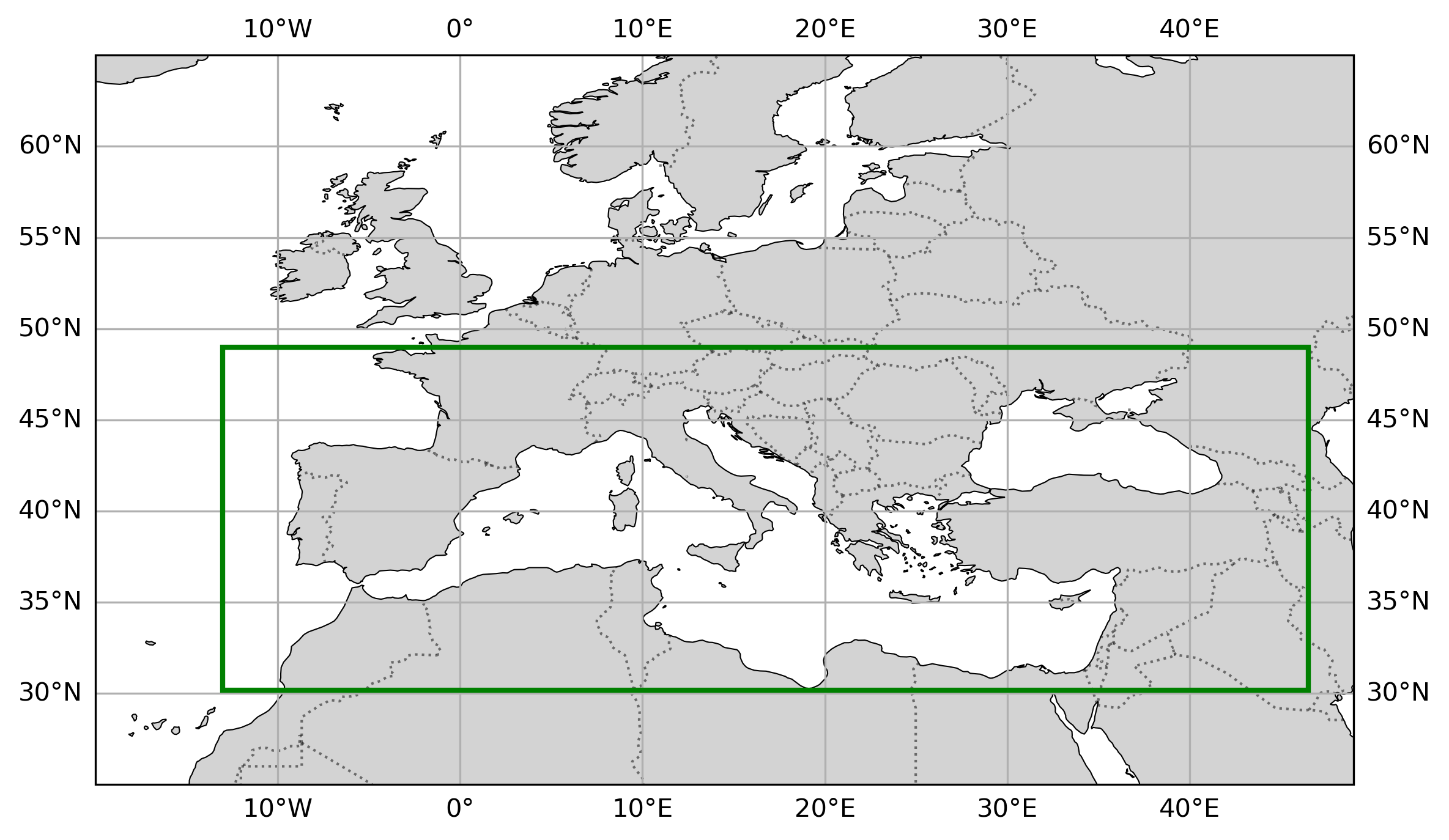
Figure 2: Area of Interest.
Cloud and fire segmentation downstream datasets comprise 2020–2024 SEVIRI data, with pixel-level masks derived from MODIS and FIRMS/VIIRS, co-registered to SEVIRI’s grid and further filtered for label reliability.
HighFM Architecture
The backbone is an adapted SatMAE implementation, with architectural modifications centered on temporal encoding. Unlike prior work focusing on slow phenomena, HighFM retains minute-level timestamp granularity, enhancing temporal representation for rapid event detection. Two model variants are trained: HighFM_ST (single-timestep) and HighFM_MT (three-timestep, intra-hour input), enabling controlled ablation of temporal context utility.
The core mechanism is masked autoencoding with a ViT-Base encoder and a task-specific upsampling decoder. The training pipeline masks large fractions of input patches, leveraging the inherent spatial sparsity of EO noise (e.g., clouds, sensor dropouts) and forcing learning of nontrivial spatiotemporal-spectral priors.
During fine-tuning, the pretrained encoder is paired with segmentation heads for pixel-level cloud and fire detection. Two loss regimes are considered: weighted cross-entropy (high recall focus) and Dice loss (precision/IoU).
Experimental Results
HighFM is benchmarked against a range of baselines, including U-Net (scratch), ViT-Base (scratch/ImageNet), Copernicus-FM, and Panopticon. All models share the ViT-Base backbone for comparison rigor.
Cloud Segmentation: HighFM_MT statistically outperforms all baselines in balanced accuracy (0.831 CE, 0.829 Dice), no-cloud IoU (0.683/0.678), and cloud IoU (0.737/0.740) across cross-entropy and Dice loss variants. Minor gains by baseline models in cloud recall are offset by poorer no-cloud recall and precision.
Active Fire Detection: For the highly imbalanced fire dataset, HighFM_MT yields the highest balanced accuracy (0.925 CE, 0.748 Dice), fire recall (0.890/0.497), and fire IoU (0.079/0.352), substantially surpassing both pure supervised and large-scale pretraining baselines in recall-oriented and precision-oriented settings, respectively.
Qualitative results (Figure 3) confirm compact, localized predictions with minimal false positives/negatives for HighFM, particularly under recall-optimized training—a crucial property for operational disaster warning.
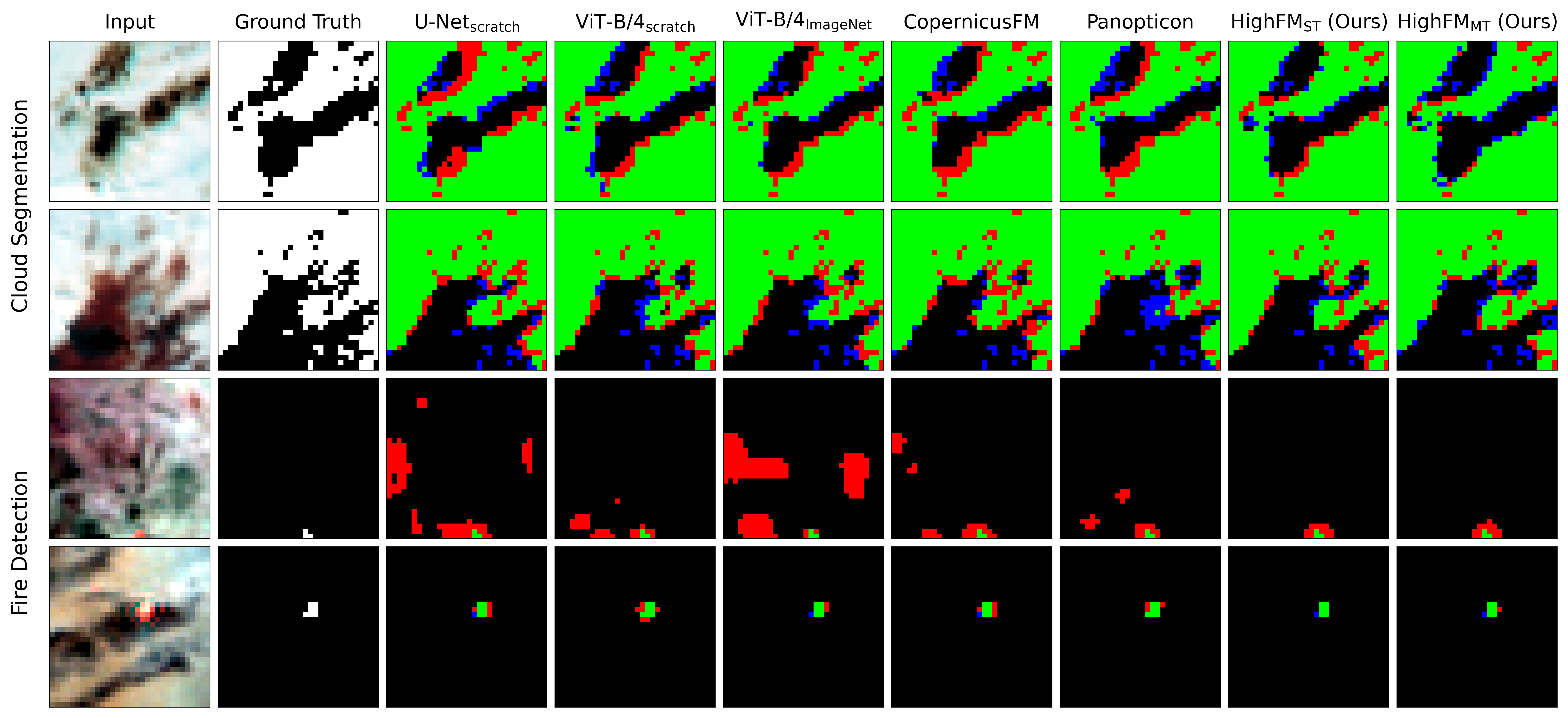
Figure 3: Qualitative results on test samples for cloud and fire tasks using models trained under both CE (recall) and Dice (precision) objectives.
Implications and Theoretical Considerations
HighFM establishes the empirical advantage of temporally dense, domain-matched pretraining over both inductive (U-Net, ViT scratch) and misaligned (ImageNet) or overly general (Panopticon, Copernicus-FM) pretraining strategies. The retention of fine-grained temporal encoding is validated, with the multi-timestep variant showing consistent superiority.
From a theoretical perspective, this indicates that transfer learning in EO is not strictly monotonic with dataset size or generic coverage; temporal alignment with target phenomena is critical. This aligns with emerging trends in domain-specific pretraining for EO, as in SatVision-TOA (Spradlin et al., 2024) and Prithvi (Szwarcman et al., 2024), but extends this paradigm by explicitly anchoring the design to high-frequency, geostationary sampling regimes.
The modular HighFM-SatMAE framework is inherently extensible to other temporally dense platforms (e.g., GOES, Himawari), as well as scalable to multimodal fusion, by virtue of its transformer-based architecture.
Societal and Practical Impact
Real-time EO systems are vital for civil protection, operational response, and high-consequence forecasting (e.g., disaster mitigation, solar energy management). HighFM’s performance confirms the criticality of leveraging sensor- and mission-aligned pretraining for maximum operational value. The model’s robustness across recall-optimized (detection) and precision-optimized (intervention) metrics underscores its applicability to both early warning and detailed situational awareness.
Future Directions
Current limitations include sensor-specificity and lack of multimodal fusion. The operating hypothesis underlying HighFM is directly testable with multimodal (SAR, VIS, IR) data streams and resolution-agnostic training. The extension of HighFM to the upcoming MTG platform and cross-sensor self-supervised pretraining is a natural research trajectory, with significant potential for universal real-time EO representations.
Integration with dynamic retrieval and online adaptation methods (continuous pretraining with new events/disasters), will further enhance long-term operational relevance.
Conclusion
HighFM demonstrates that foundation models tailored to high-frequency EO data and trained with temporally granular masked autoencoding yield state-of-the-art semantic segmentation and detection results for real-time environmental monitoring. These findings advocate for mission- and phenomenon-aligned pretraining over generic FMs for high-impact, temporally sensitive EO scenarios. The generalizable architecture and demonstrated gains suggest broad applicability in rapid response EO and dynamic earth system science.

