- The paper introduces an analytical model based on Alexeev hydrodynamic equations that derives explicit streamwise and transverse velocity profiles with deviations below 3% from experiments.
- A super-exponential turbulent correction and matched asymptotic expansions yield kink-type solutions that accurately predict near-wall streak spacing and structure.
- The unified framework links transverse velocity dynamics with streak formation, offering insights for improved turbulence modeling and control strategies.
Analytical Framework Based on Alexeev Hydrodynamic Equations
This work formulates an analytical treatment for turbulent channel and pipe flows using the Alexeev hydrodynamic equations (AHE), an extension of the incompressible Navier-Stokes framework with an additional parameter τ introducing higher-order fluctuation and dissipation scales. The mean streamwise velocity U(y) is decomposed into a weighted laminar (parabolic) component UL(y) and a nonlinear turbulent correction UT(y):
U(y)=U0[γUT(y)+(1−γ)UL(y)],
with γ determined by viscous dissipation minimization.
For stationary two-dimensional flow, an explicit analytical solution for UT is derived from a reduced form of AHE, resulting in a super-exponential profile, while the improved fit to empirical data requires a superposition of two UT branches corresponding to positive and negative sign choices for the fluctuation scale δ. The model yields velocity profiles with deviations from experimental observations below 1% for U(y)0 and less than U(y)1 up to U(y)2.
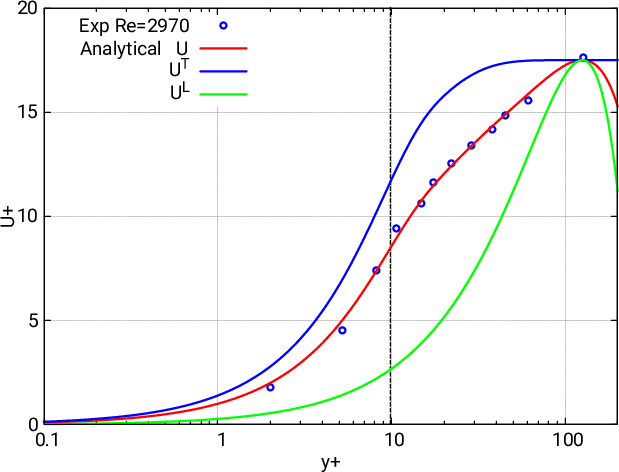
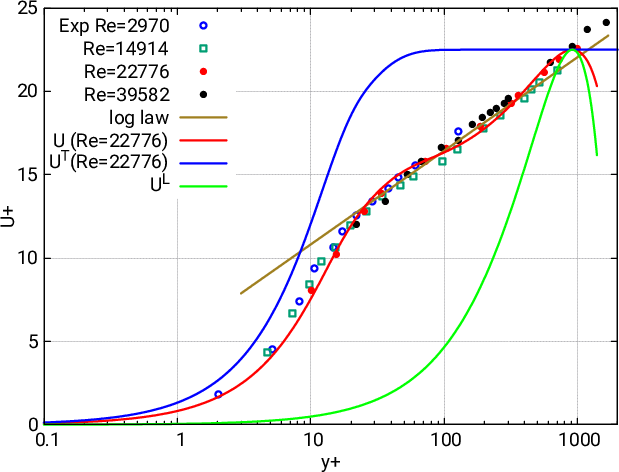
Figure 1: Streamwise mean velocity U(y)3 in wall units compared to Wei & Willmarth's channel flow data for two U(y)4; laminar, turbulent, and composite analytical profiles shown against experiment.
Coupled Transverse Velocity Dynamics
The paper advances beyond traditional turbulence closures by deriving a consistent analytical form for the transverse (wall-normal) velocity component U(y)5. Applying a linearized treatment for moderate U(y)6, the transverse field is expressed as a sum over sinusoidal modes with temporal oscillatory evolution:
U(y)7
where U(y)8 encodes the spatial mode and fluctuation timescale. The leading spatial mode reflects experimental findings, with measured U(y)9 dynamics and sinusoidal form matching amplitude and structure observed in open-channel and pipe flows.
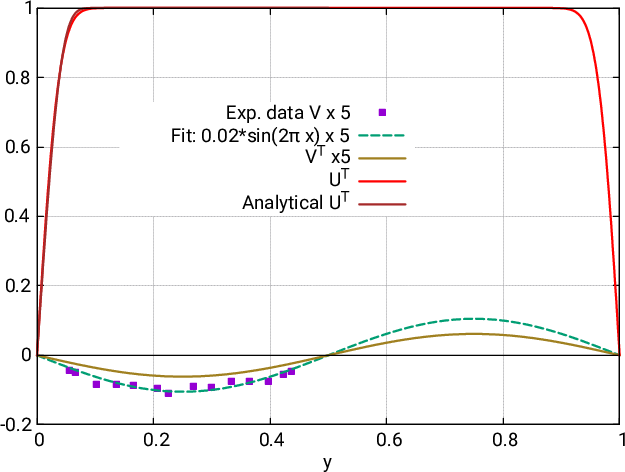
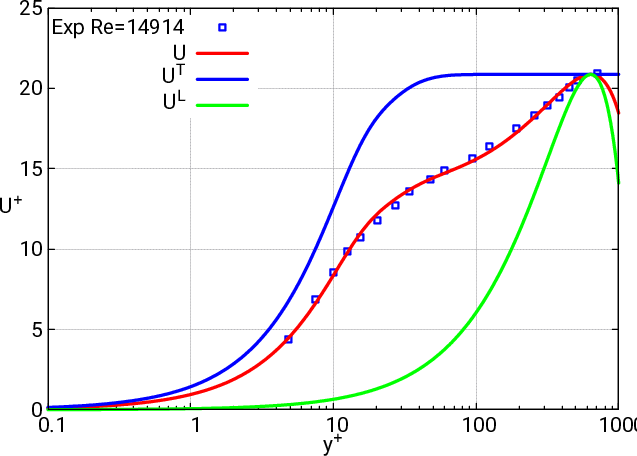
Figure 2: Comparison of vertical velocity UL(y)0 from experiment, least-squares sinusoidal fit, and analytical mode shape, demonstrating spatial structure agreement.
Analytical Kink-Type Solutions for Streak Representation
One of the central contributions is the analytical derivation of kink-type solutions for the turbulent streamwise component UL(y)1. Using the quasi-steady limit for UL(y)2 under the rapid transverse mode variation, the equation
UL(y)3
is analyzed. For the dominant transverse mode, the solution is constructed via matched asymptotic expansions, revealing a sequence of spatially localized, monotonic "kinks" (error function-like transitions) of thickness UL(y)4, separating nearly uniform streamwise velocity plateaus.
The kink solutions accurately predict streak spacing via
UL(y)5
with UL(y)6 determined by Reynolds number and matching experimental observations of near-wall streak separation, typically UL(y)7 wall units at moderate UL(y)8.
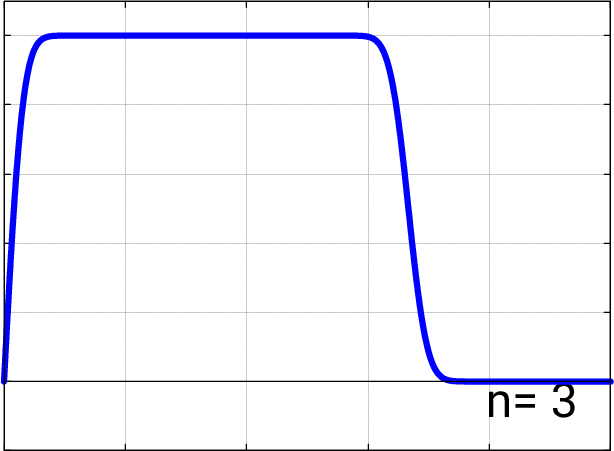
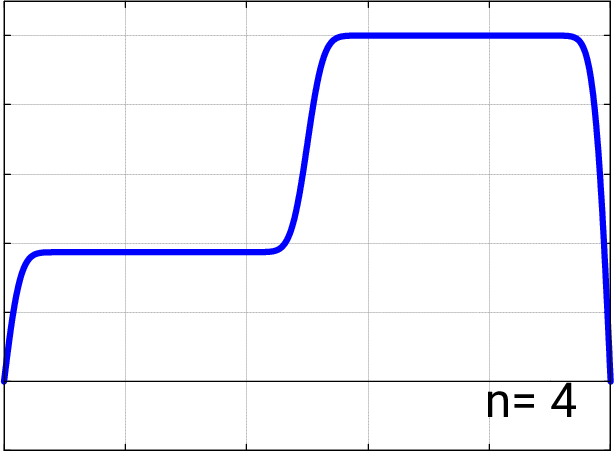
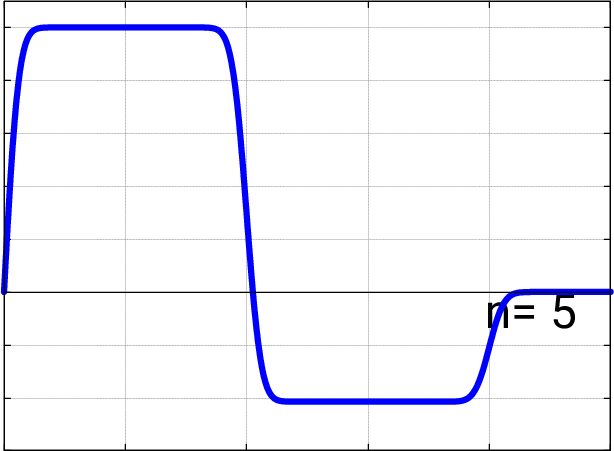
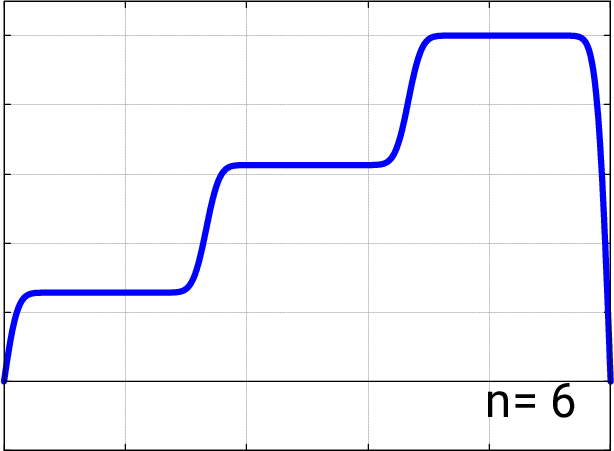
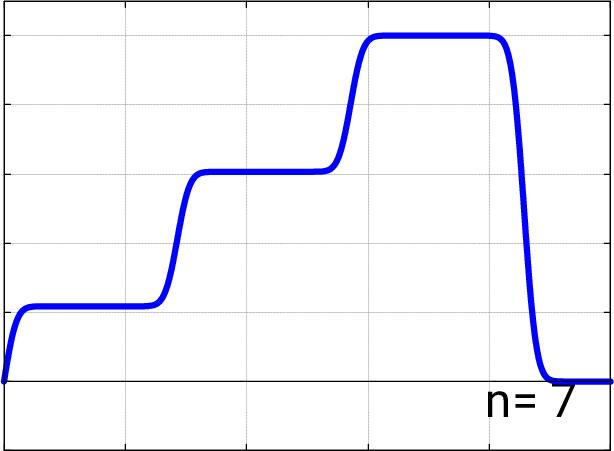
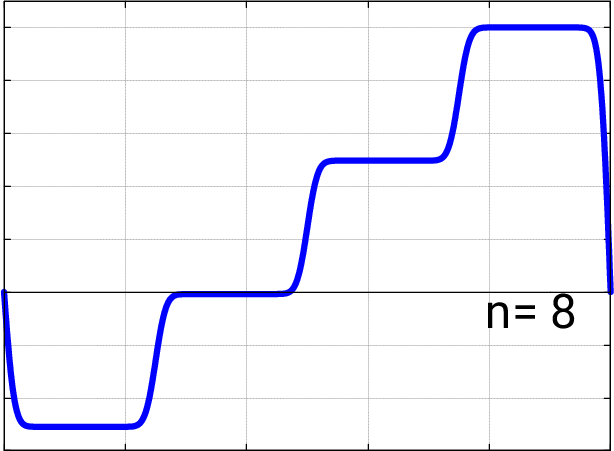
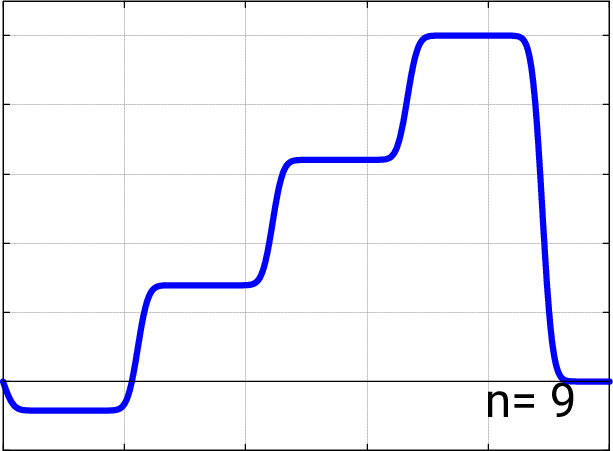
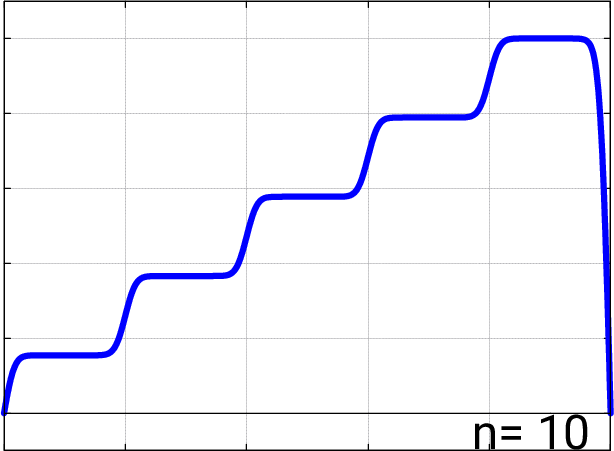
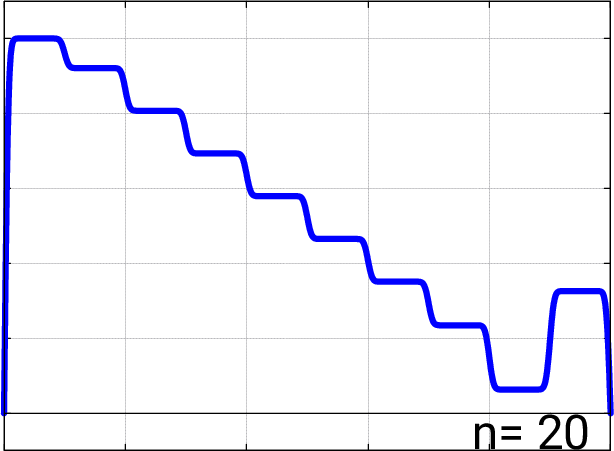
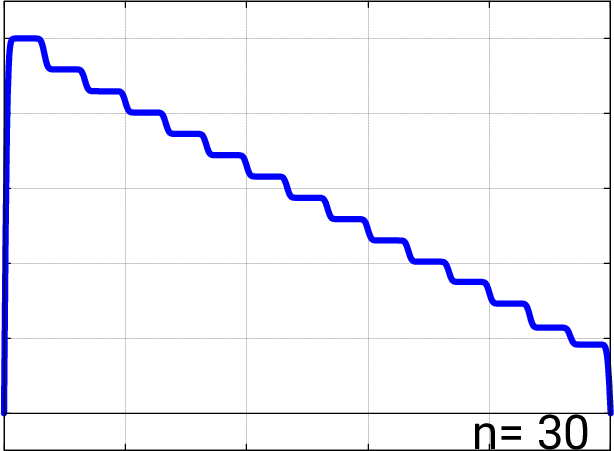
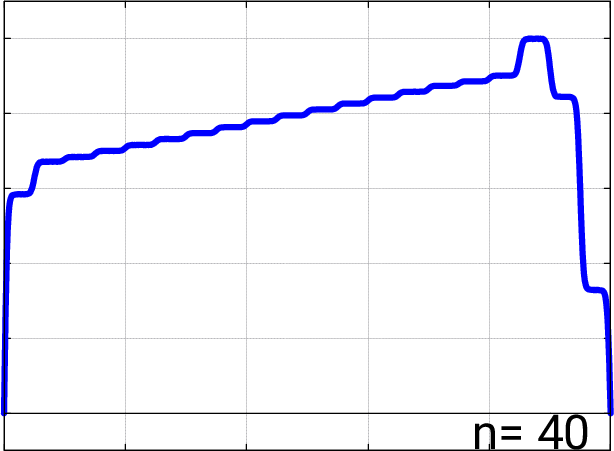
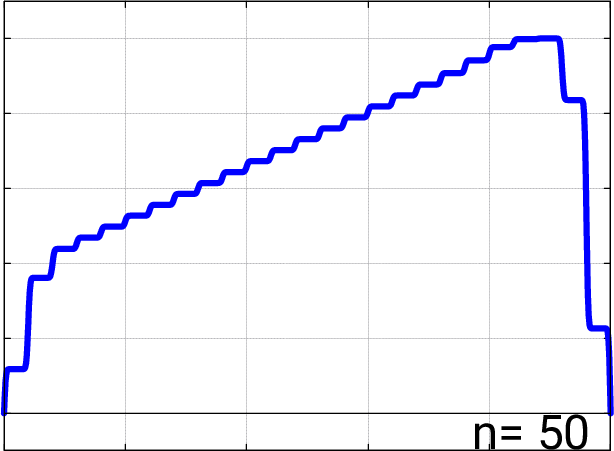
Figure 3: Kink-type solutions for varying mode parameter UL(y)9; each panel shows the spatial structure of UT(y)0 highlighting localized transitions.
Quantitative Agreement with Experimental Data
The analytical model is validated against comprehensive data sets from Wei & Willmarth (channel), Pasch et al. (channel, LDV), and Princeton Superpipe (pipe, very high UT(y)1). Across all data, the composite solution composed of the analytical UT(y)2 and UT(y)3 tracks measured profiles to within experimental uncertainty, with notable improvement over log-law-based closures at both moderate and high UT(y)4. For Superpipe data, deviation remains under UT(y)5 even at UT(y)6, except where surface roughness may dominate.
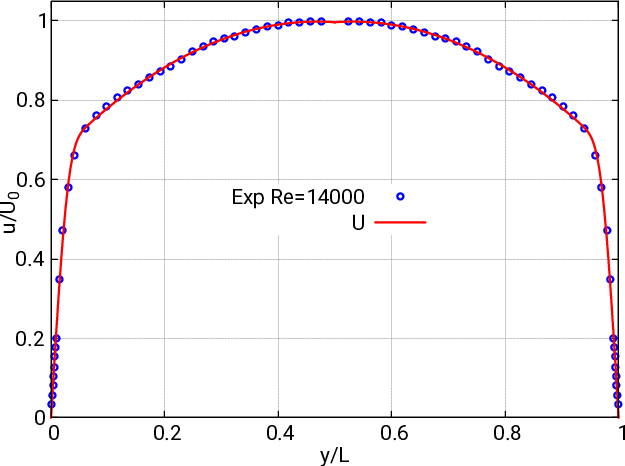
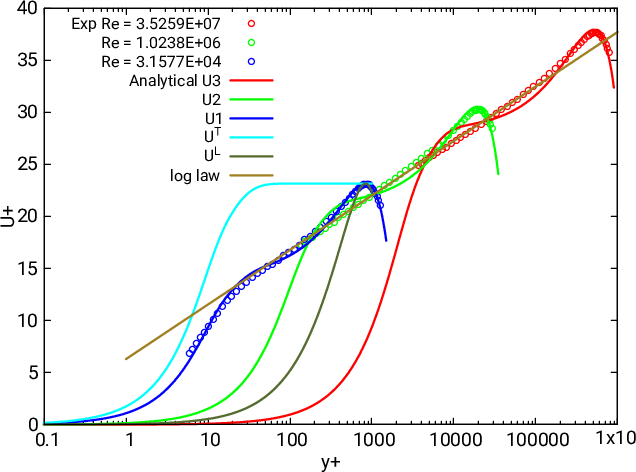
Figure 4: Streamwise velocity profiles showing composite model prediction versus experimental measurements in both channel and pipe geometry, spanning a broad UT(y)7 regime.
The model's transverse velocity field and associated streak structure also closely reproduce observed features: the amplitude and wavelength of secondary velocity are in accord with open channel and secondary flow literature, and streak intensity and spacing are quantitatively consistent with wall-resolved PIV and LDV measurements.
Theoretical and Practical Implications
This analytical formulation achieves several advances:
- Unified treatment: It provides closed-form, parameter-minimized expressions capturing both mean velocity and coherent structure formation, linking secondary flow and streamwise streaks in a single hydrodynamic closure.
- Predictive streak properties: Spacing, thickness, and amplitude of streaks emerge analytically, making explicit their dependence on UT(y)8, fluctuation scale UT(y)9, and mode parameter U(y)=U0[γUT(y)+(1−γ)UL(y)],0, unlike empirical wall-scaling rules.
- Quantitative fit: Deviations below U(y)=U0[γUT(y)+(1−γ)UL(y)],1 with multiple independent data sets, encompassing both smooth and rough wall regimes.
These results suggest the AHE-based approach could inform analytical wall models for RANS/LES, control-oriented reduced order models, and provide insight into streak and vortex formation mechanisms central to near-wall mixing and drag generation.
Potential for Future Developments
Further extensions could account for nonlinear saturation of transverse velocity, more realistic wall constraints, and generalizations to arbitrary wall-bounded geometries. The connection between U(y)=U0[γUT(y)+(1−γ)UL(y)],2 scaling and underlying molecular or multi-scale structure remains an avenue for theoretical refinement. The analytical characterization of coherent structures within a unified hydrodynamic system may find applications in turbulence modeling, flow control, and theoretical studies of transitional and fully developed shear flows.
Conclusion
This paper presents an analytical model for turbulent channel flow with explicit solutions for streamwise and transverse velocity fields. The approach yields accurate mean velocity profiles, analytically predicts streak spacing and structure, and connects secondary motion to coherent streak formation via kink-type solutions. Strong quantitative agreement with benchmark experiments is demonstrated. The results clarify the mechanistic role of transverse velocity in structuring streamwise streaks and highlight potential for analytical extensions to complex wall-bounded flows.