- The paper establishes a detailed Earth-directed transport-survival kernel that quantifies stage-specific filters from ejection to Earth capture.
- It demonstrates that Mars is uniquely capable of hard panspermia due to favorable transfer times and survival conditions, while extrasolar channels are severely suppressed.
- The analysis differentiates soft panspermia as a viable chemical enrichment process, despite the stringent survival criteria for viable replicators.
Quantitative Limits on Natural Panspermia to Earth: Donor Classes, Transport, Survival, and Establishment
Introduction and Motivation
This work establishes a rigorous, hierarchical analysis of natural panspermia scenarios for seeding life on Earth, sharply distinguishing hard (replicator delivery) and soft (chemical enrichment) panspermia. The paper treats the terrestrial-origin question not as a binary assertion of "life here or elsewhere," but as a ranked comparison among origin channels after imposing full constraints from planetary ejection, escape, transfer, interception, atmospheric entry, terminal impact, and post-delivery establishment. The central methodological innovation is the Earth-directed transport-survival kernel, K⊕(i), parameterizing physical bottlenecks in a fully stage-wise fashion specific to biologically loaded impact ejecta. This rigorous framework isolates the transport penalties that competitively suppress various external donor classes, decoupling dynamical and biological uncertainties.
Earth-Directed Transport-Survival Kernel
The physical viability of panspermia channels is governed by the conjunction of stage-specific filters rather than a singular dynamical or biological parameter. For hard panspermia (transfer of viable replicators), the kernel decomposes into launch-shock, system escape, phase-space transfer, radiation survival, Earth interception (with explicit gravitational focusing), atmospheric entry survival, and terminal loading. Three decisive screening scales define donor credibility:
- Launch shock: Only low-shock spall ejecta (p≲1–3 GPa for D. radiodurans) are plausibly viable; this restricts the biologically relevant carrier population.
- Shielded burial: Entry into Earth filters for cargo buried at least $2$–$5$ cm beneath the surface; longer interplanetary or interstellar flight times escalate the required burial depth to meter scale (see Eqn. (6)).
- Capture kinematics: Extrasolar system capture is governed by the low-velocity (v∞≲4kms−1) regime, which is statistically rare in the Galactic field.
The donor class hierarchy thus collapses if either the required shielding exceeds the attainable spall fragment size or if capture probabilities are vanishingly small, compounding long-flight survival penalty with capture suppression.
(Figure 1)
Figure 1: Minimum required burial depth as a function of donor–Earth flight time; Earth entry sets the shallow-depth floor, while the radiation branch dominates at Myr timescales.
Solar System Transfer: Mars as the Only Serious Hard-Panspermia Donor
Direct evidence for lithic transfer via martian meteorites validates the physical plausibility of Mars–Earth hard panspermia. Mars presents a rare conjunction: low escape velocity (∼5kms−1), demonstrated spall survival for select extremophiles, empirical ejection and capture to Earth, and early aqueous habitability. However, survival-weighted analysis reveals a stark bifurcation between the rare (but biologically privileged) 102–104 yr fast transfer tail and the dynamically common but biologically suppressed 105–p≲10 yr regime.
Critically, only centimeter-to-decimeter-scale lithic packages are unambiguously viable for short flights; meter-class boulders are necessary for Myr exposure, and the spall spectrum steeply suppresses large fragments. Entry and terminal loading are not generic sterilizers for sufficiently buried cargo but act as additional size-dependent filters. The local thermal and shock environment, not bulk kinetic energy, sets survival odds.
Extrasolar and Intergalactic Panspermia: Quantitative Suppression
Extrasolar panspermia, whether from sibling birth-cluster systems or the Galactic field, faces an overwhelming conjunction of physical filters: long transfer times demanding multi-meter shielding, low-probability Solar System capture constrained to low–p≲11 objects, and timing constraints set by Earth’s rapid biosphere clock. Even under optimistically assumed parameters, the expected Earth-seeding number from the birth cluster is suppressed by at least p≲12 (before factoring in the establishment probability), demanding source-side biological productivity enhancements of four to five orders of magnitude to be competitive with local or Mars sources. Galactic field donors require enhancement factors of p≲13 or greater.
Intergalactic panspermia is excluded on first principles: travel times of p≲14–p≲15 yr and encounter speeds of hundreds of km/s preclude capture and survival even for multi-meter boulders. Both Galactic and intergalactic channels are already negligible at the transport level, prior to consideration of biological probabilities.
Survival-Weighted Population Viability and Carrier Architecture
The paper introduces a survival-weighted buried-volume fraction p≲16, directly quantifying what proportion of the spall ejection population remains viable after enforcing both entry and radiation shielding constraints (spectrum-integrated over carrier sizes):
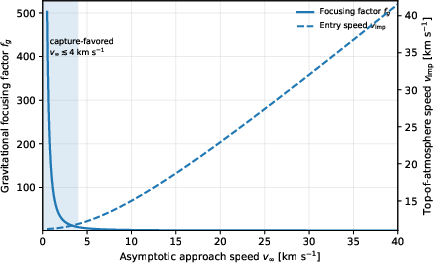
Figure 2: Survival-weighted buried-volume fraction p≲17 as a function of transfer duration for different maximum spall fragment radii. For p≲18, all plausible Myr channels are essentially closed.
This analysis demonstrates—using steeply declining spall fragment size distributions—that the common Myr martian meteorite transfer is biologically noncompetitive unless the viable ejecta tail extends to multi-meter sizes, a scenario unsupported by current empirical data for spallation yield.
Soft Panspermia and Chemical Enrichment
Soft panspermia, defined as the transfer of organics, minerals, and catalytic redox phases without viable cells, is directly evidenced by the influx of meteoritic organics and returned sample data (including nucleobases and amino acids) from asteroids. The chemical kernel is markedly less stringent than the viability kernel for replicators: delivered chemistry can nontrivially enrich prebiotic inventories without surviving the full burial and shielding requirements of hard panspermia.
Channel Ranking, Source-Side Thresholds, and Broader Implications
Channel odds are made explicit as the ratio of source-side biological enhancement factors required to offset each class's transport penalty:
| Donor Class |
Effective Transport Penalty p≲19 |
Required Enhancement 3 GPa0 |
| Fast Mars tail |
Not transport-closed; 3 GPa1 |
3 GPa2 |
| Typical Martian Meteorite |
3 GPa3 |
3 GPa4 |
| Sibling birth-cluster |
3 GPa5 (ceiling) |
3 GPa6 |
| Generic Galactic field |
3 GPa7 (ceiling) |
3 GPa8 |
| Intergalactic |
Effectively zero |
Unbounded |
Only indigenous terrestrial origin and (conditionally) early Mars avoid substantial source-side biological overperformance requirements. The analysis not only rules out many classes of hard panspermia for Earth's actual history, but also supplies a systematic surrogate criterion: a nonlocal donor must produce at least 3 GPa9–$2$0 times the product of occupancy, ejection, and establishment probabilities compared to indigenous Earth for its channel to be competitive.
Practical and Theoretical Implications
The analysis implies several concrete constraints:
- Fast Mars-to-Earth transfer is the only physically plausible hard-panspermia alternative to indigenous terrestrial origin; confirmation of a past Martian biosphere would dramatically alter channel weighting.
- Extrasolar hard panspermia, whether between stars or from the Galactic field, is not a viable competitor for Earth's seeding on empirical transport grounds.
- The gating variables—pressure loading, burial depth, cumulative radiation dose, entry and impact dynamics—dominate channel suppression, not generic statements about impact energy or bulk transfer rates.
- Soft panspermia as chemical enrichment is robustly supported and almost certainly contributed to the early chemical context of terrestrial life.
- At the Galactic scale, the suppression of $2$1 (galactic panspermia kernel) implies that biosphere appearance frequencies are unlikely to be limited by interstellar transfer—local genesis remains necessary except possibly between neighboring planets.
Conclusion
A hierarchical, quantitative framework for natural panspermia demonstrates that Earth-originating life remains the dominant inference given current knowledge. Early Mars is uniquely situated as a non-terrestrial donor, contingent upon independent demonstration of past Martian biology; all extrasolar and intergalactic hard panspermia models are quantitatively noncompetitive for Earth’s actual origin history. Soft panspermia, by contrast, is highly plausible as a robust mechanism for prebiotic enrichment. These results substantially constrain panspermia as an alternative to indigenous terrestrial abiogenesis and provide a template for future channel analysis in exoplanetary contexts.
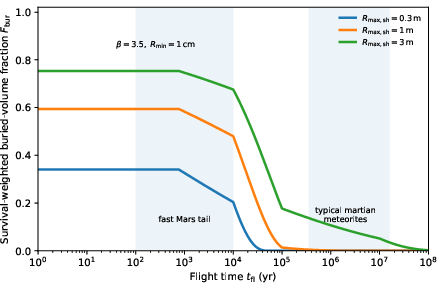
Figure 3: Earth-interception kinematics as a function of asymptotic encounter speed, showcasing the geometric enhancement via gravitational focusing and the corresponding entry speeds imposed by Earth’s gravity well, irrespective of capture regime.

