- The paper demonstrates that DFT calculations uncover symmetry-enforced multifold nodes and type-II Weyl excitations in chiral topological semimetals.
- It quantifies how orbital hybridization alters band dispersions, revealing parabolic deviations in typically flat bands near high-symmetry points.
- It shows that nontrivial surface states and Fermi arcs emerge, highlighting the potential for topological node engineering in quantum device applications.
Overview and Research Context
The paper systematically investigates chiral topological semimetals PdAsS, PdSbSe, and PdBiTe in space group P213, focusing on unconventional quasiparticle excitations, nodal structures, and orbital-driven low-energy band dispersions. Utilizing DFT calculations both with and without spin-orbit coupling (SOC), the study reveals a complex interplay between symmetry-enforced degeneracies, orbital hybridization, and accidental band crossings.
Theoretical progress in topological semimetals extends high-energy analogs like Dirac and Weyl fermions to crystalline solids, but the flexibility of crystal symmetries enables emergent quasiparticles such as spin-1, double Weyl, Rarita-Schwinger-Weyl (RSW), and double spin-1 excitations, with unique topological charges (C=±2,±4). Chiral space groups facilitate nontrivial Fermi arcs and surface states, crucial for quantum phenomena and technological applications.
Numerical Results and Novel Findings
Multifold Node Excitations
DFT calculations reproduce symmetry-enforced multifold nodes:
- Spin-1 excitations at Γ
- Double Weyl nodes at R
The energies of spin-1 nodes are ∼−0.5 to −0.85 eV below EF, with double Weyl nodes in the −0.8 to −0.9 eV window. Dispersion analysis reveals that the nominally flat middle band of spin-1 excitations becomes parabolic in PdBiTe due to strong orbital hybridization, while PdAsS and PdSbSe maintain a flat band over small regions.
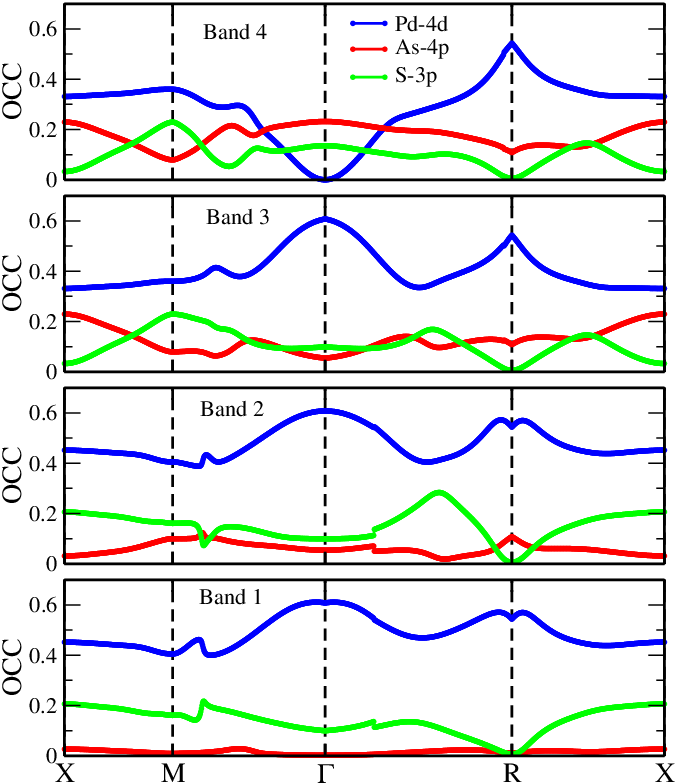
Figure 1: Orbital character contributions to the bands forming multifold nodes without SOC. Band 1-3 form spin-1 excitation at Γ; Band 1-4 produce the double Weyl point at R.
Weyl Nodes and Topological Characteristics
A strong claim is the identification of previously undocumented type-II Weyl points:
- Eight type-II Weyl points on Γ-R in absence of SOC
- Twelve type-II Weyl nodes at general momenta with SOC, all carrying C=±2,±40
These Weyl points exhibit linear band crossings that violate Lorentz invariance (type-II). This finding contradicts existing knowledge, where Weyl nodes are typically associated with SOC, highlighting accidental degeneracies arising from local structural and electronic environment.
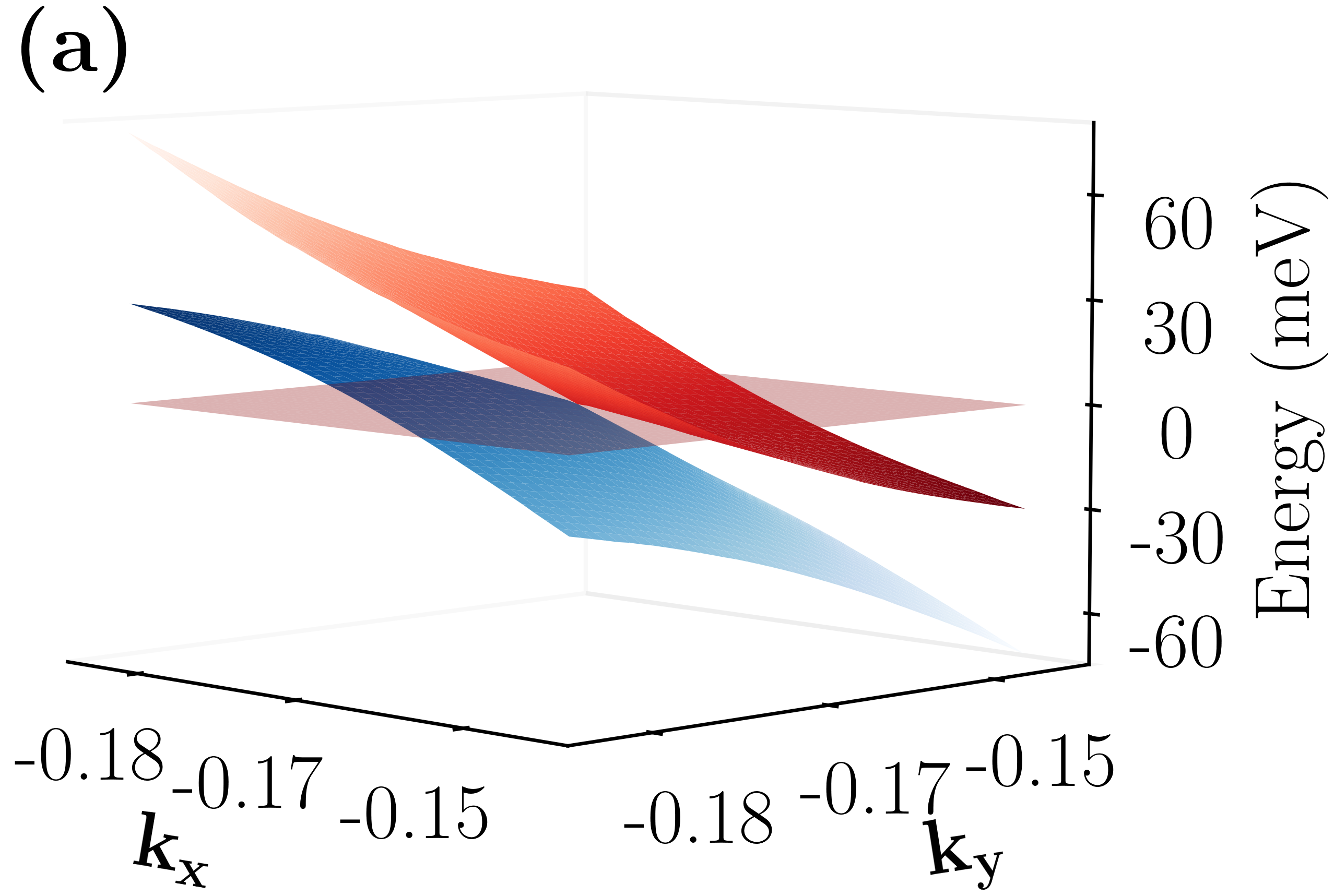
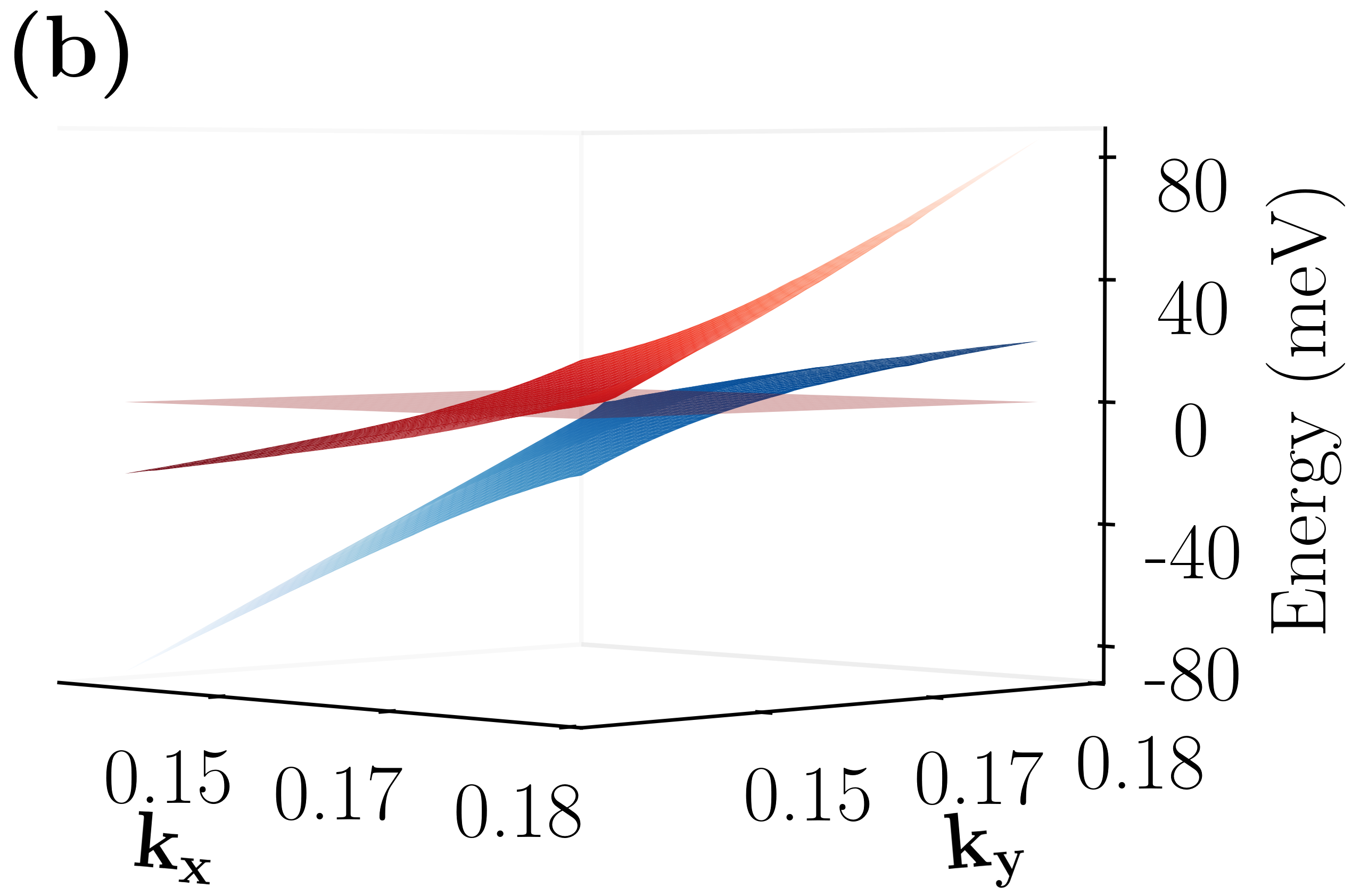
Figure 2: Three-dimensional energy dispersion around the obtained Weyl points for PdSbSe and PdBiTe in absence of SOC, demonstrating the linear band crossings and type-II nature.
SOC Effects and Higher-Fold Degeneracies
Including SOC splits the multifold degeneracies:
- C=±2,±41: six states become fourfold RSWP (spin-3/2) and twofold (spin-1/2, Weyl point)
- R: fourfold becomes sixfold (double spin-1), plus Kramers doublet
Energy splittings and chirality for these nodes are quantified:
- C=±2,±42 and C=±2,±43 values detailed for each compound, with band chirality consistent with theoretical expectations.
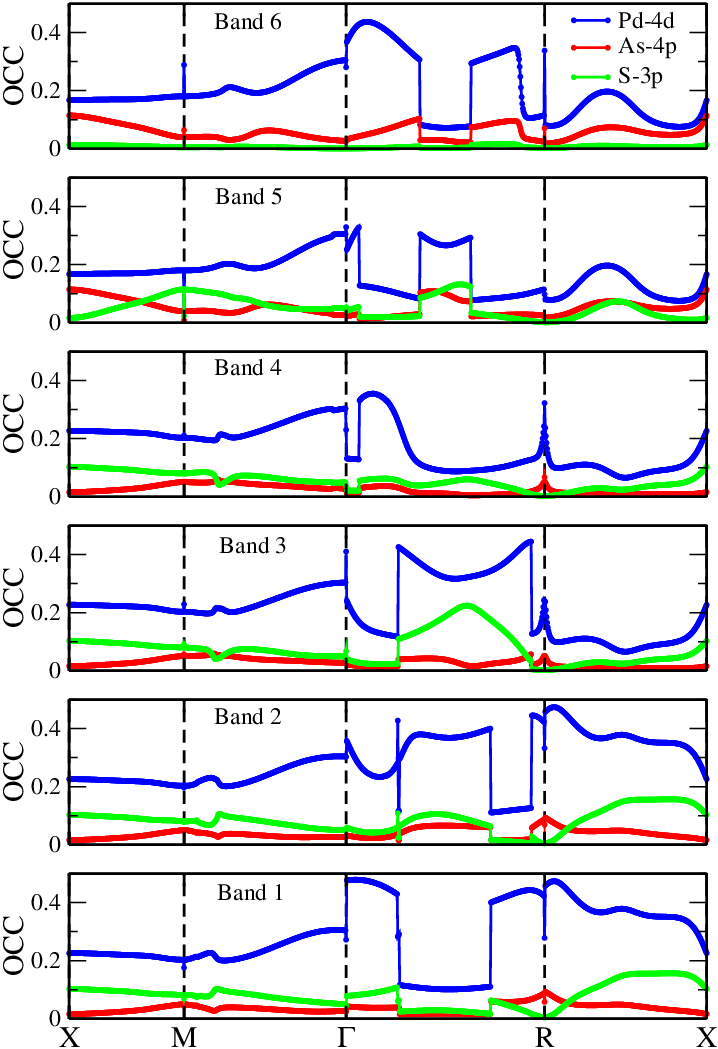
Figure 3: Projected orbital contributions to bands constituting multifold nodes in presence of SOC; Band 1-4 give RSWP at C=±2,±44, Band 1-6 form double spin-1 excitation at R.
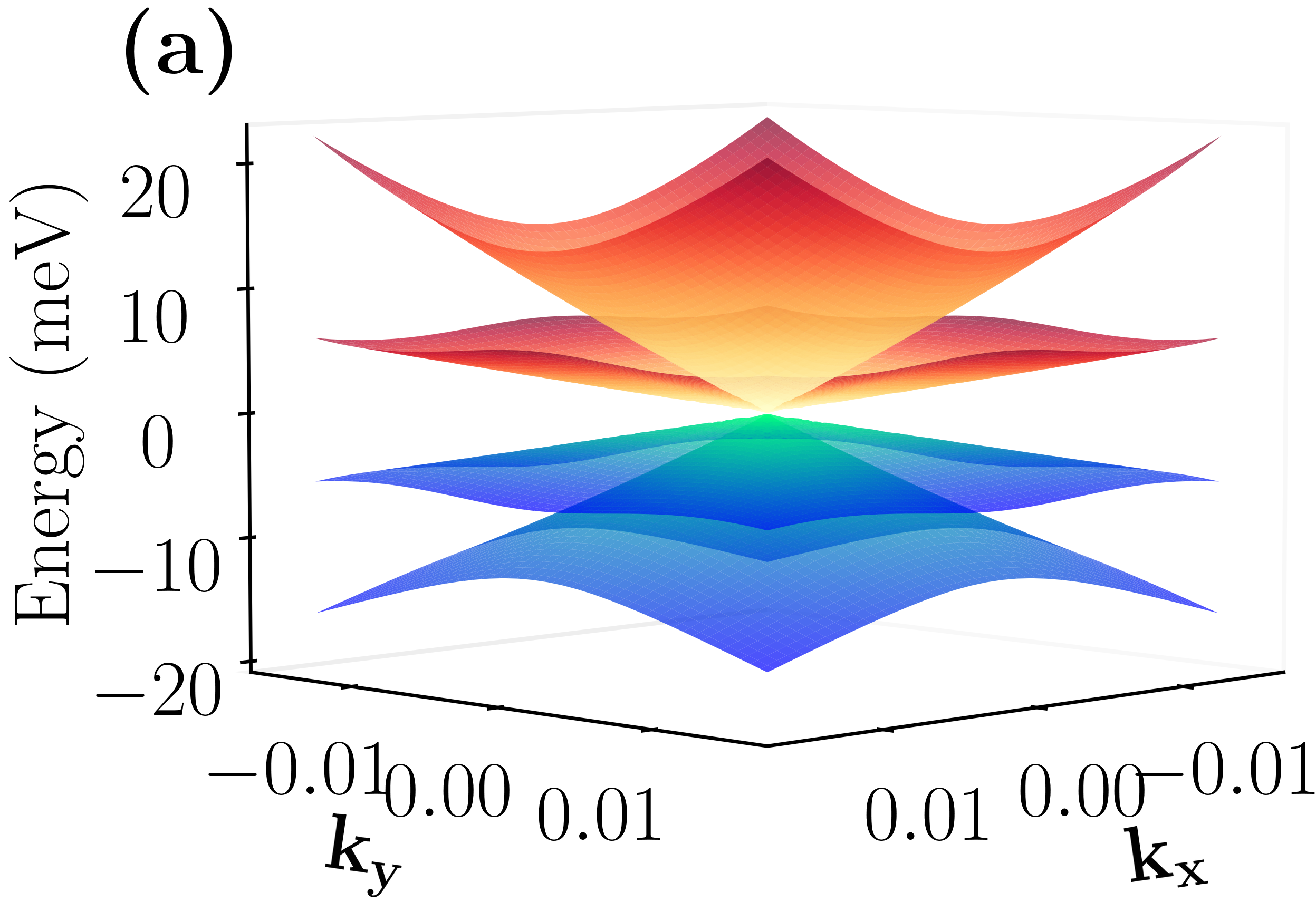
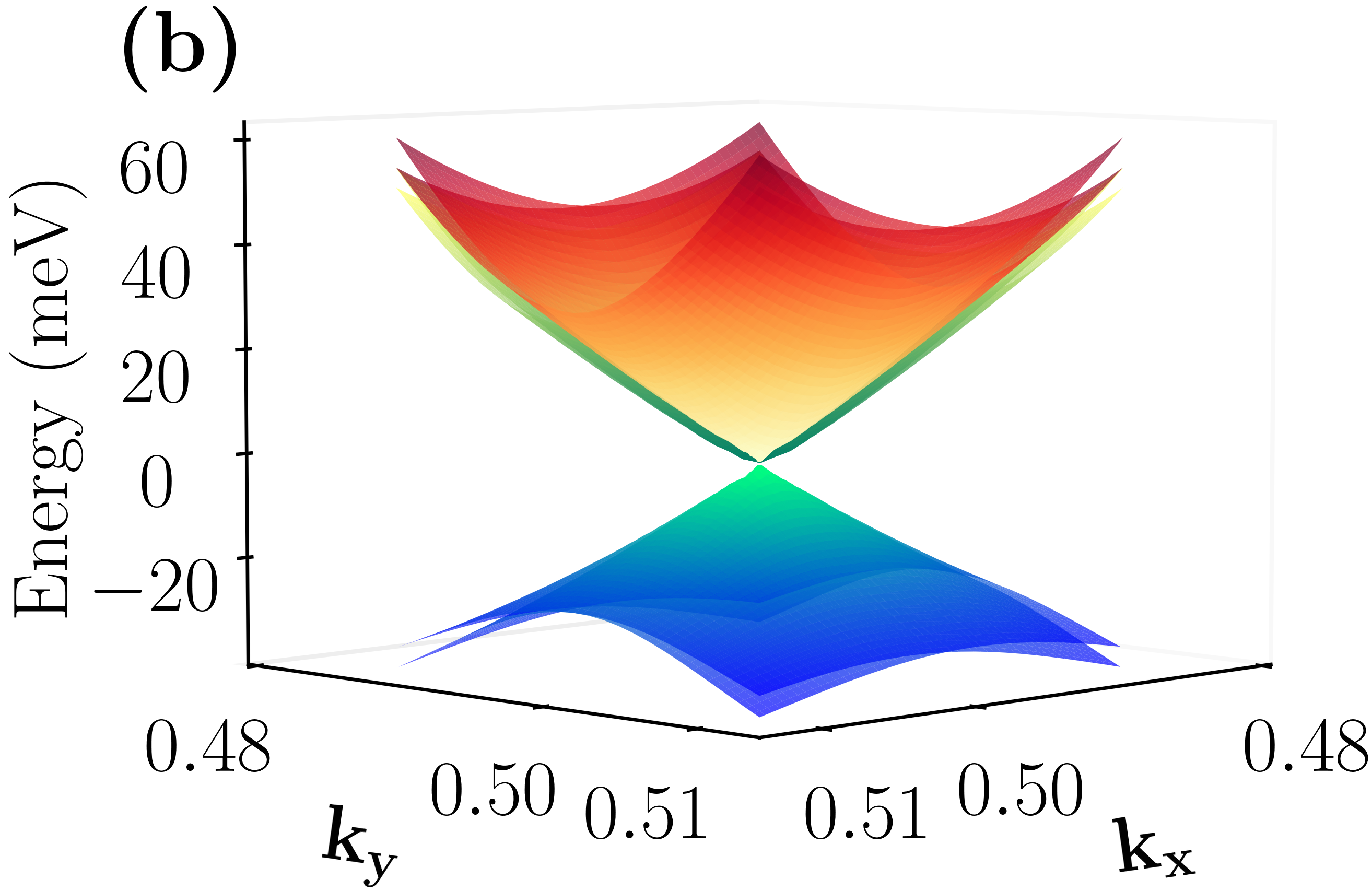
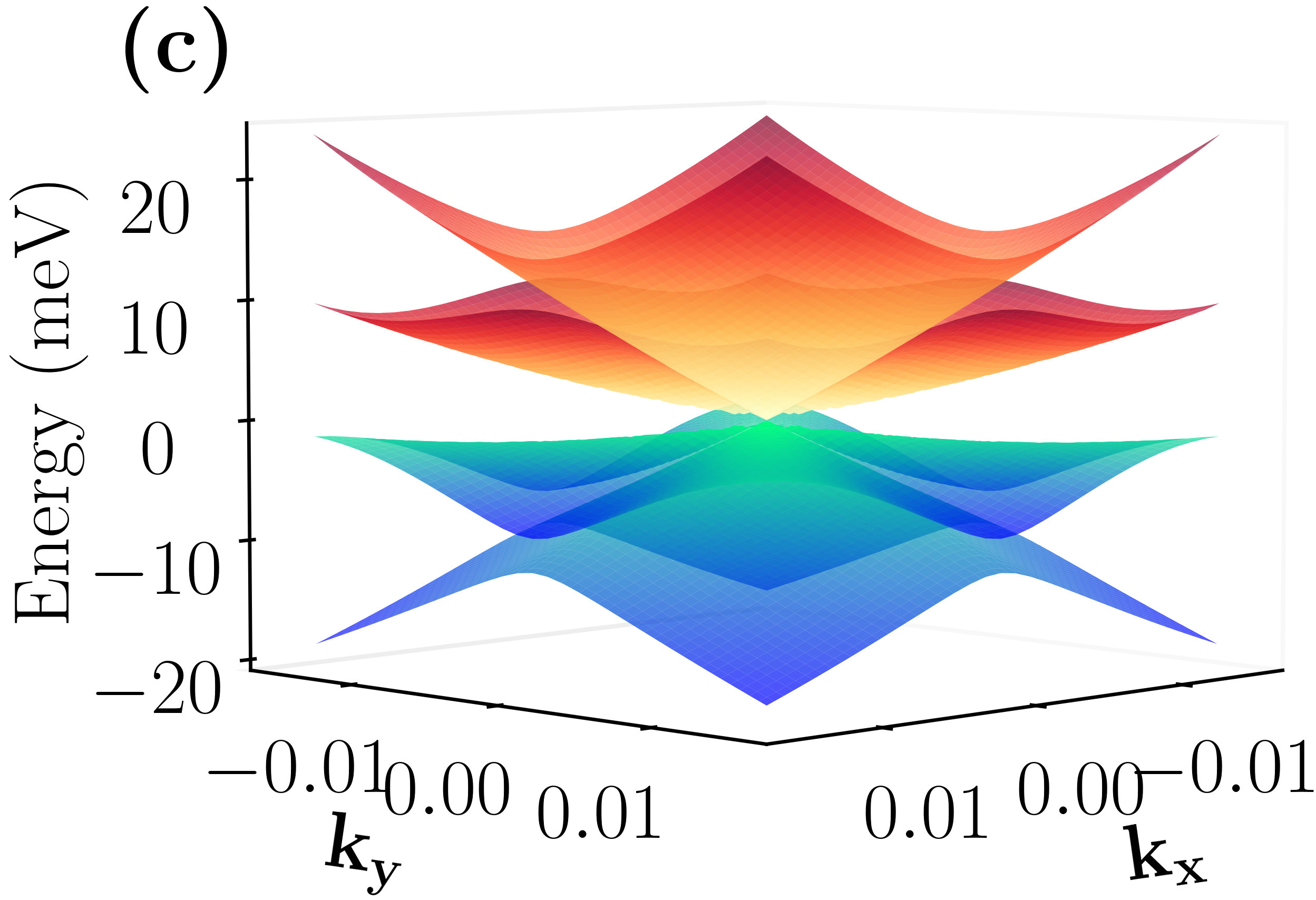
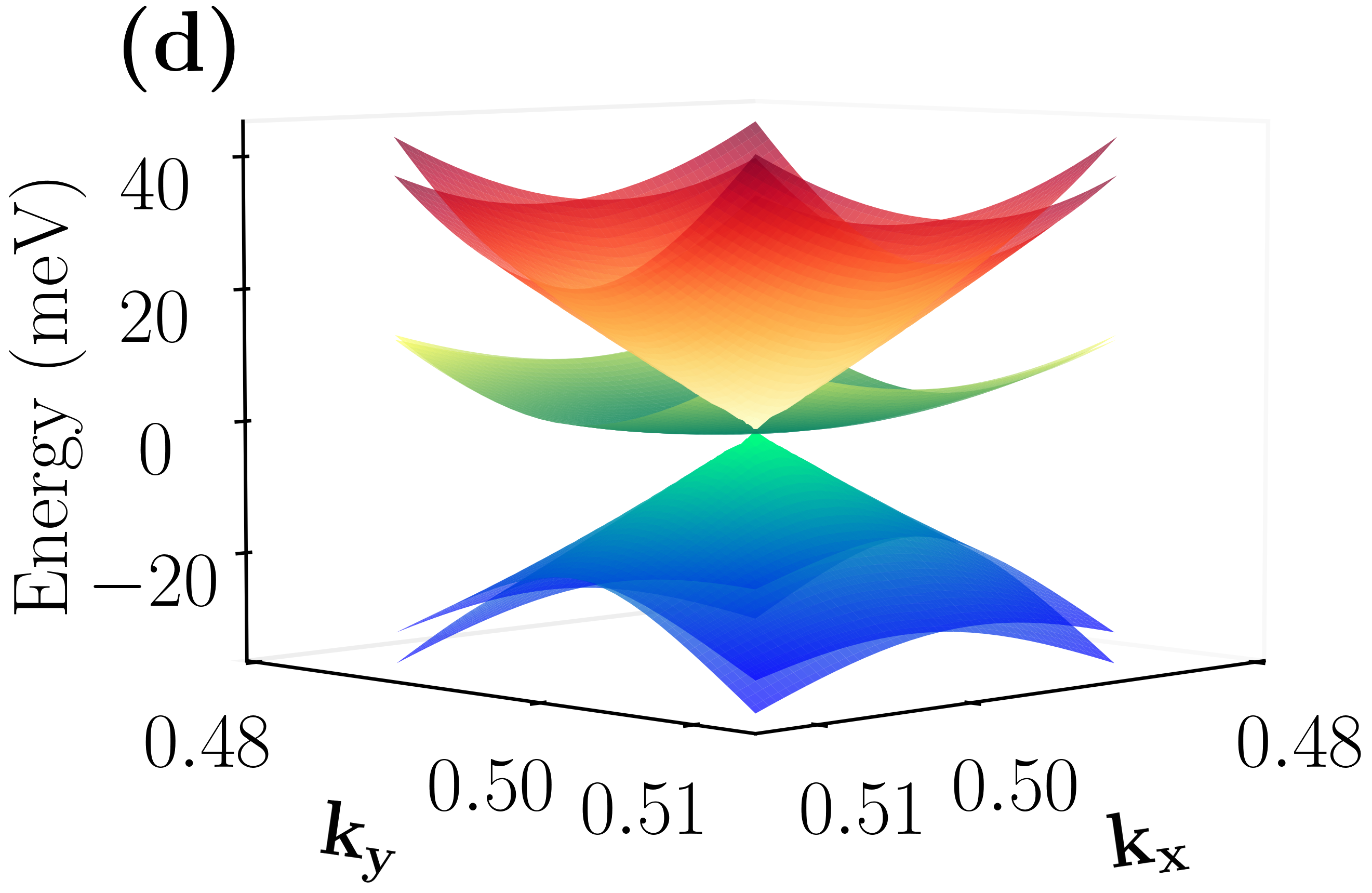
Figure 4: Three-dimensional dispersion around high symmetry points C=±2,±45 and R with SOC: RSWP at C=±2,±46 and double spin-1 excitation at R for PdSbSe and PdBiTe.
Surface States and Fermi Arcs
Surface spectral analysis using Wannier-based tight-binding and Green function methods reveals non-trivial surface states and Fermi arcs:
- Two types of surface states, SSC=±2,±47 connecting projections of RSWP and double spin-1 nodes, and SSC=±2,±48 connecting distinct C=±2,±49 points.
- Fermi arcs are most prominent in PdSbSe; PdBiTe and PdAsS have faint or obscured arcs due to strong bulk band projections.
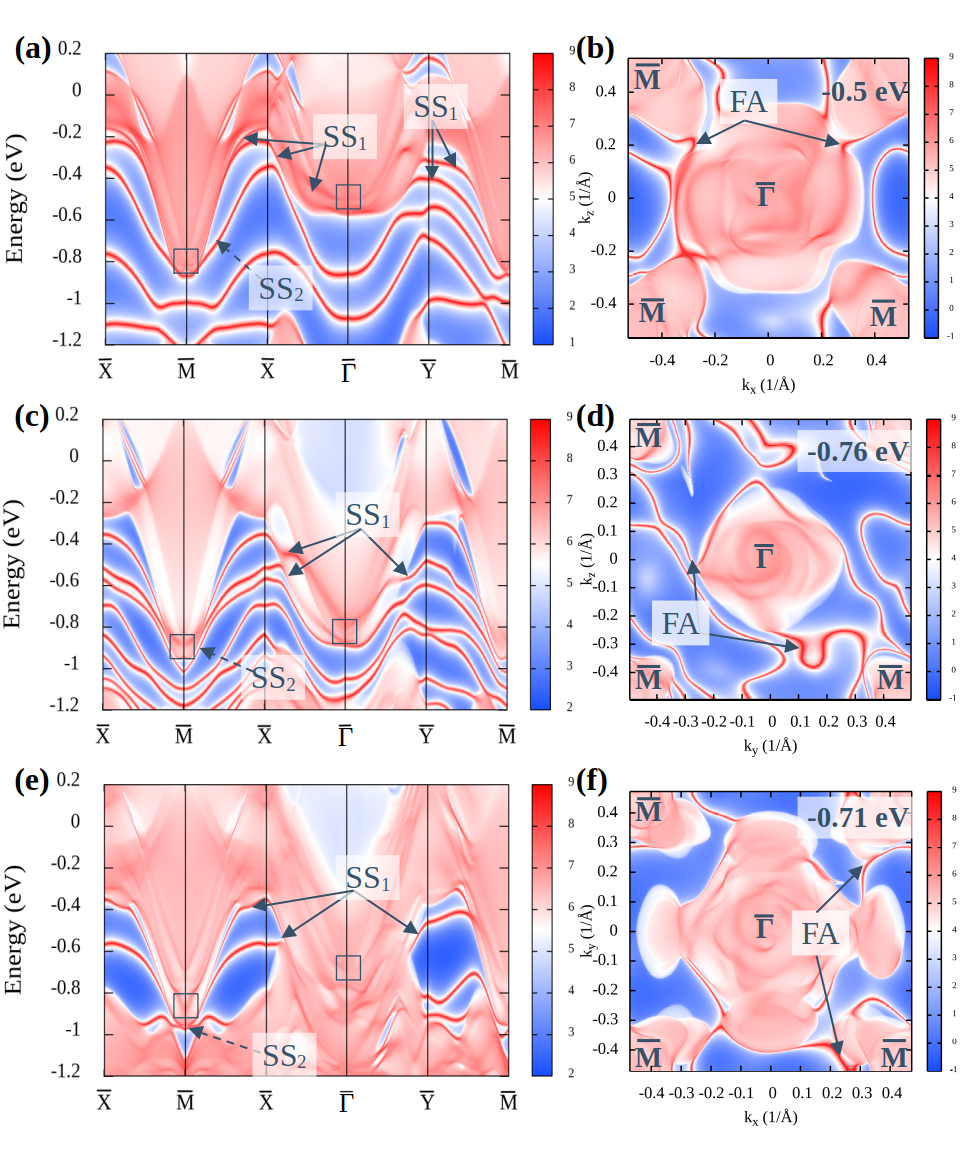
Figure 5: Surface states and Fermi arcs for PdAsS, PdSbSe, and PdBiTe, with non-trivial surface states marked and Fermi arcs most unambiguously visible in PdSbSe.
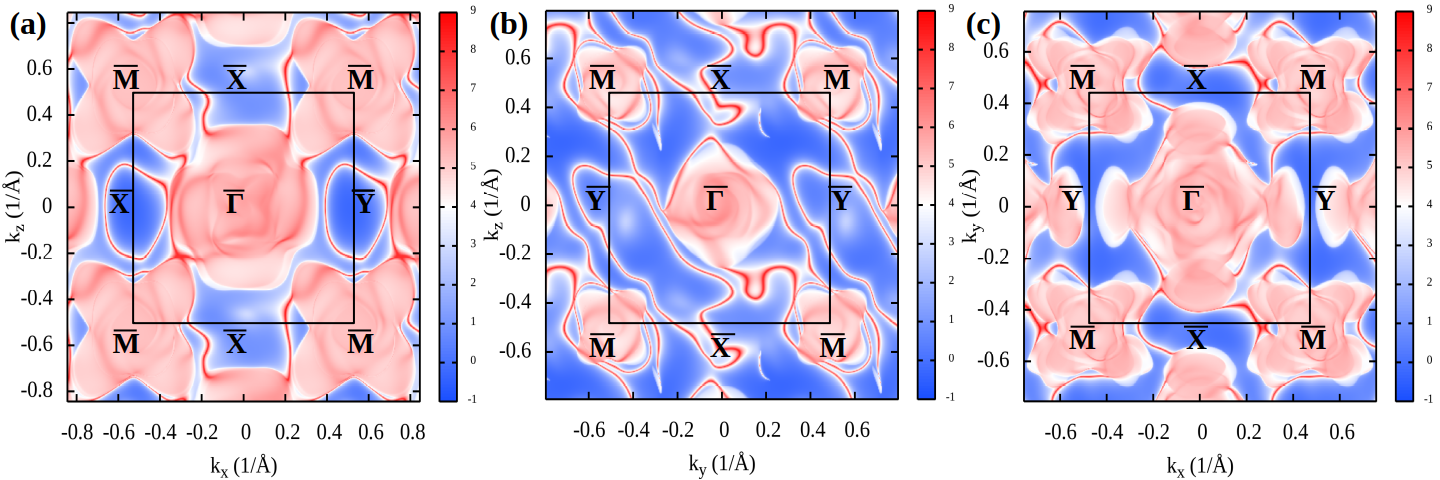
Figure 6: Constant energy plots of surface Brillouin zones revealing Fermi arc patterns for PdAsS, PdSbSe, and PdBiTe at characteristic node energies.
Physical Implications and Theoretical Insights
Orbital Hybridization and Band Anomalies
The study correlates orbital character and hybridization with deviations from idealized band dispersions at multifold nodes. In PdBiTe, extensive hybridization between Pd-4d, Bi-6p, and Te-4p orbitals results in parabolic dispersion of the middle band in spin-1 excitations, while PdAsS and PdSbSe retain atomic-like flat bands due to weaker hybridization.
Orbital-driven band features imply tunability of topological excitations via chemical substitution and band-structure engineering. Such control is relevant for tailoring chiral transport, nonlinear optical, and spintronic properties for device applications.
Surface-State Topology and Arc Observability
Resolution of Fermi arcs is shown to depend on the detailed bulk band dispersions and not solely the presence of topological charge. This indicates that engineering band separation and minimizing bulk projections are essential for observable topological surface phenomena.
Topological Node Engineering and Future Prospects
The identification of accidental Weyl crossings, especially type-II, in absence of SOC expands the catalog of topological quasiparticles and suggests that node engineering via fine-tuned local chemistry is feasible. These results encourage further exploration of ternary and quaternary chiral compounds.
Chiral topological semimetals offer robust quantized response to circularly polarized light. The presence of unconventional excitations with high topological charge and multifold surface connectivity could be exploited for high-efficiency photocurrent generation, magnetochiral anisotropy, and quantum information processing.
Conclusion
This study provides a comprehensive first-principles analysis of PdAsS, PdSbSe, and PdBiTe as chiral topological semimetal candidates hosting multifold and Weyl excitations. Strong numerical evidence supports twelve new type-II Weyl points at general k-points with SOC, and eight on high-symmetry lines without SOC, challenging established paradigms. Low-energy band dispersions are found to deviate from symmetry-driven expectations due to orbital hybridization, introducing parabolic or linear profiles in bands normally considered flat. Surface-state analysis reveals non-trivial connectivity, with arc observability conditioned by bulk-band behavior. These results lay the foundation for topological node engineering and suggest fertile ground for emergent quantum effects and device applications leveraging structural chirality and band dispersion control.