- The paper shows how quantum principles fundamentally alter plasma dynamics through first-principles simulations and high-precision experiments.
- It details the use of advanced methods like FPIMC, DFT, and QMD to capture quantum statistical effects, such as electron degeneracy and many-body interactions.
- The work establishes clear quantum phase boundaries and modeling protocols applicable to fusion research, astrophysical plasmas, and nanoscale systems.
Quantum Effects in Plasmas: Physics, Applications, and Computational Advances
Introduction and Historical Context
This paper presents an authoritative synthesis of quantum effects in plasmas, integrating historical developments, fundamental physics, contemporary applications, and major advances in simulation and theory (2604.03757). The authors systematically clarify where quantum mechanics decisively alters plasma dynamics and detail the methods that enable predictive, first-principles modeling across regimes from laboratory fusion plasmas to astrophysical objects.
The origin of quantum plasma physics traces back to the quantum revolution—Planck's quantization hypothesis and the subsequent confirmation of quantized atomic structure by experiments with low-pressure gas discharges (e.g., the Franck-Hertz experiment). The paper devotes considerable attention to Planck’s derivation of the radiation law and the foundational role of photon quantization as confirmed by black-body measurements. The vivid contrast between equilibrium measurements Figure 1 and theoretical descriptions established the necessity of quantum statistics for understanding electromagnetic emission and absorption.
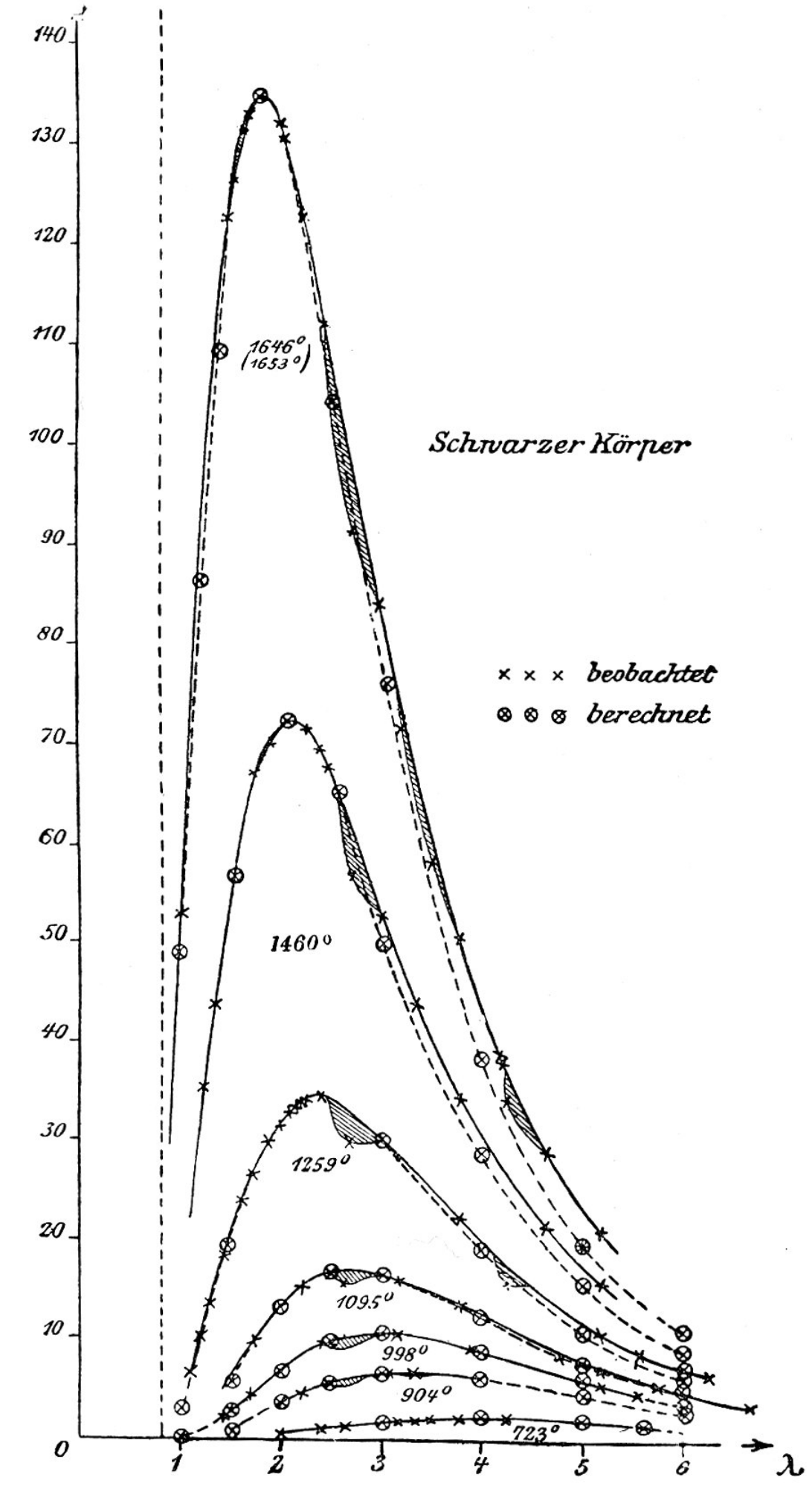
Figure 1: Radiation energy vs. wavelength for seven temperatures, demonstrating experimental (crosses) deviation from Wien's law at long wavelengths—a critical observation leading to Planck's quantum hypothesis.
Moreover, Planck’s second derivation using combinatorial/statistical arguments, compared with modern Bose and Fermi counting Figure 2, contextualizes the quantum foundation underlying modern plasma kinetic theory and transport.
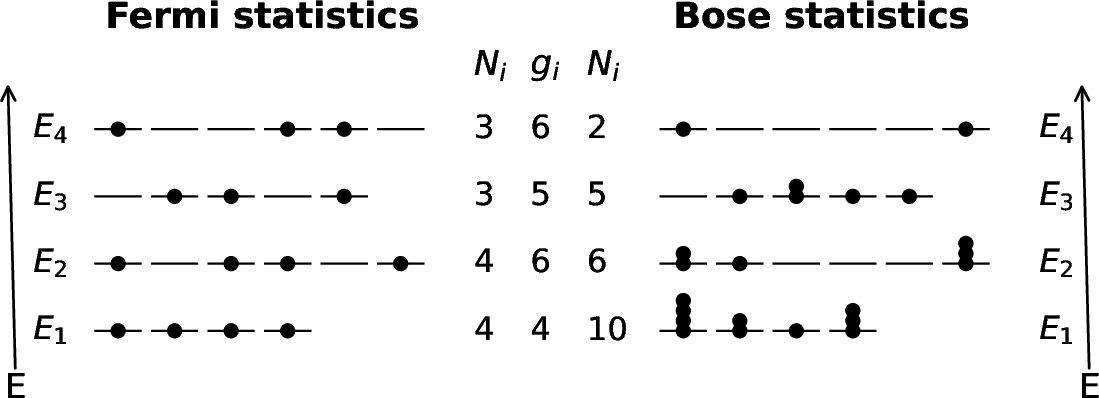
Figure 2: Planck's derivation contrasted with Fermi and Bose statistics—visualizing microstate configurations central to quantum distribution functions.
Quantum Effects: Single- and Many-Particle Physics
Quantum mechanics fundamentally alters single-particle behavior through spatial delocalization, diffraction, interference, and tunneling; these effects become paramount when the de Broglie wavelength exceeds characteristic system scales. Plasma electrons demonstrate quantum behavior at high density/low temperature, as illustrated by the necessity of quantum extension to avoid atomic collapse Figure 3 and as parameterized by the electron degeneracy parameter (χ) and the thermal wavelength.
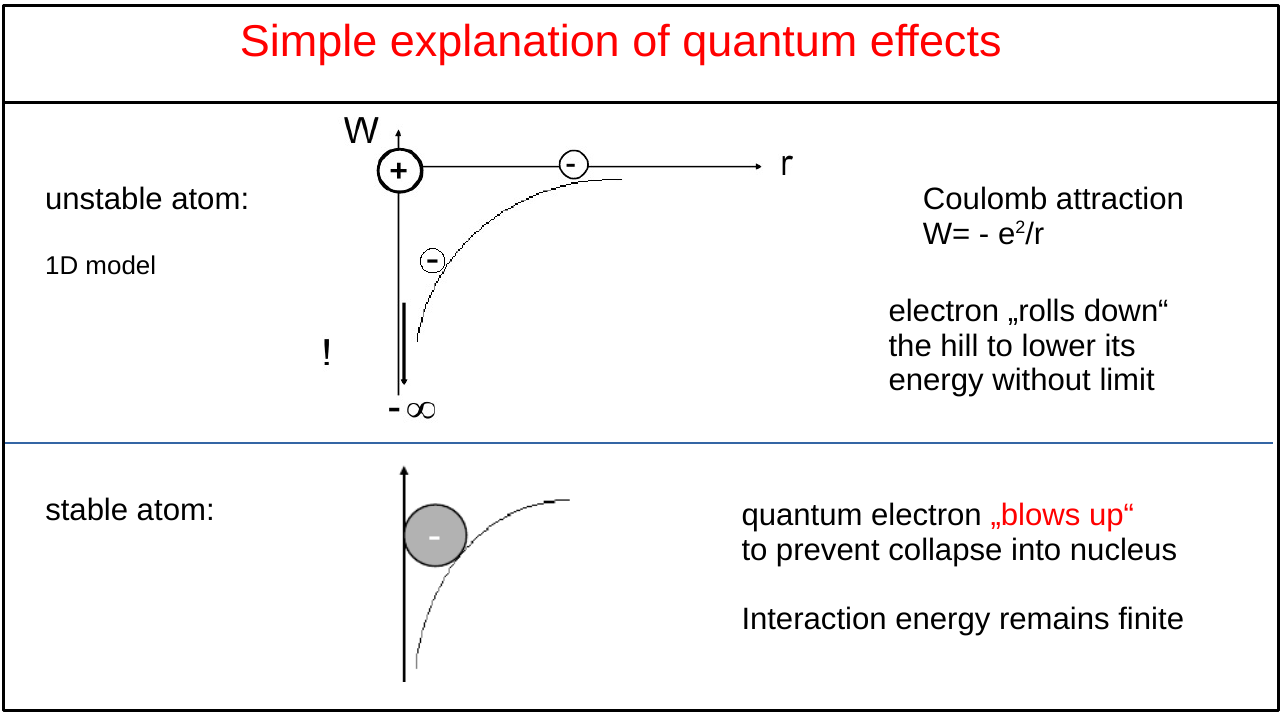
Figure 3: Quantum delocalization stabilizes the atom by suppressing collapse—key to quantum stability in plasma species.
The relevance of quantum effects is a function of the ratio λ/d, with quantum coherence, entanglement, and collective phenomena emerging when λ≳d, where d is an interparticle separation Figure 4.
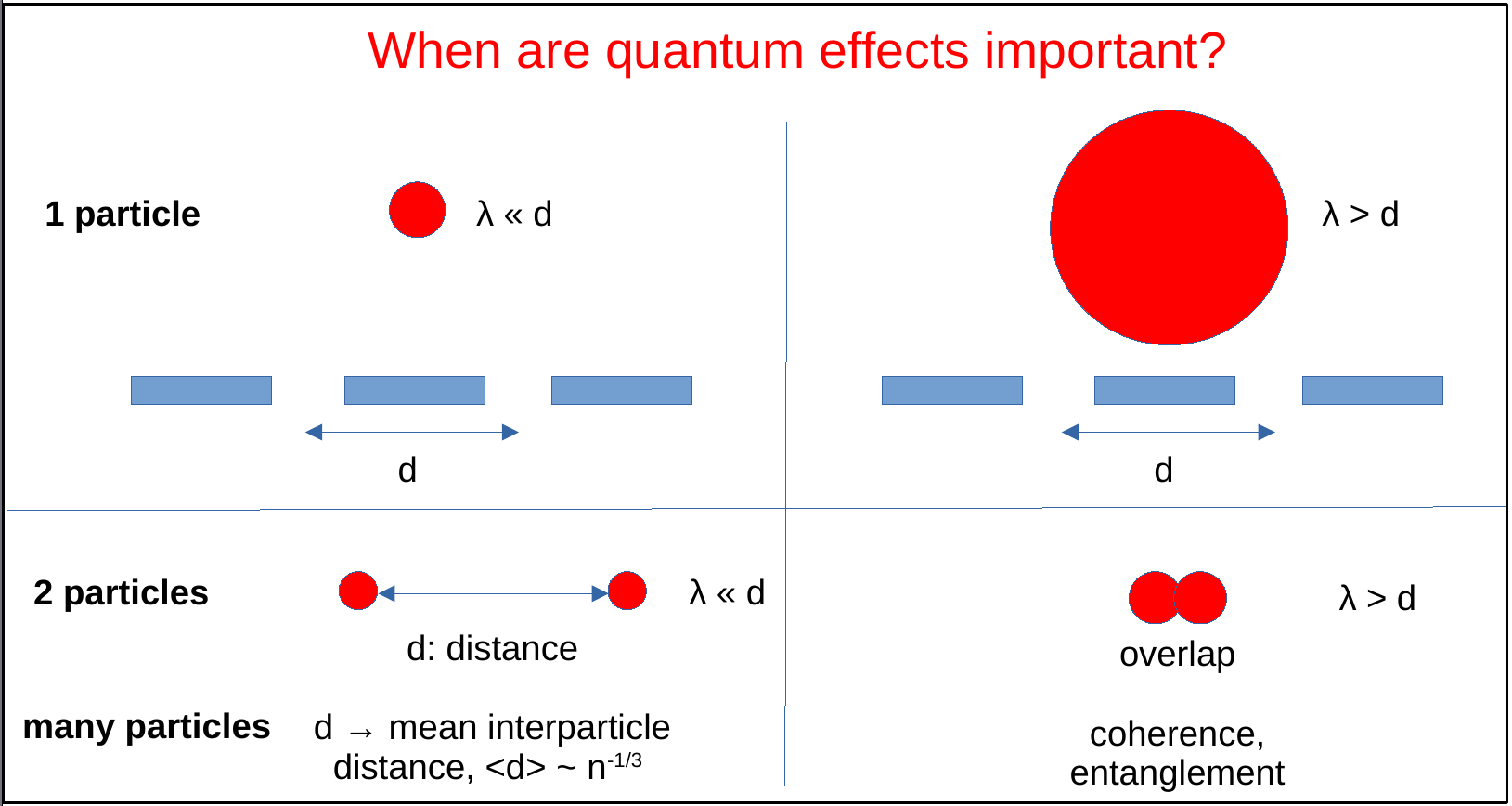
Figure 4: Criteria for quantum relevance—diffraction/interference for single particle (λ≳d), coherence and entanglement for pairs, and degeneracy for dense many-body systems.
Crucially, for many-particle systems, Fermi statistics, the Pauli exclusion principle, and the resulting Fermi energy EF∼n2/3 generate non-trivial features in the equation of state, transport, and optical response. Exchange, Pauli blocking, and quantum statistical effects (as elucidated in Figure 5) become dominant in degenerate electron systems, strongly modifying electron-electron and electron-ion scattering.
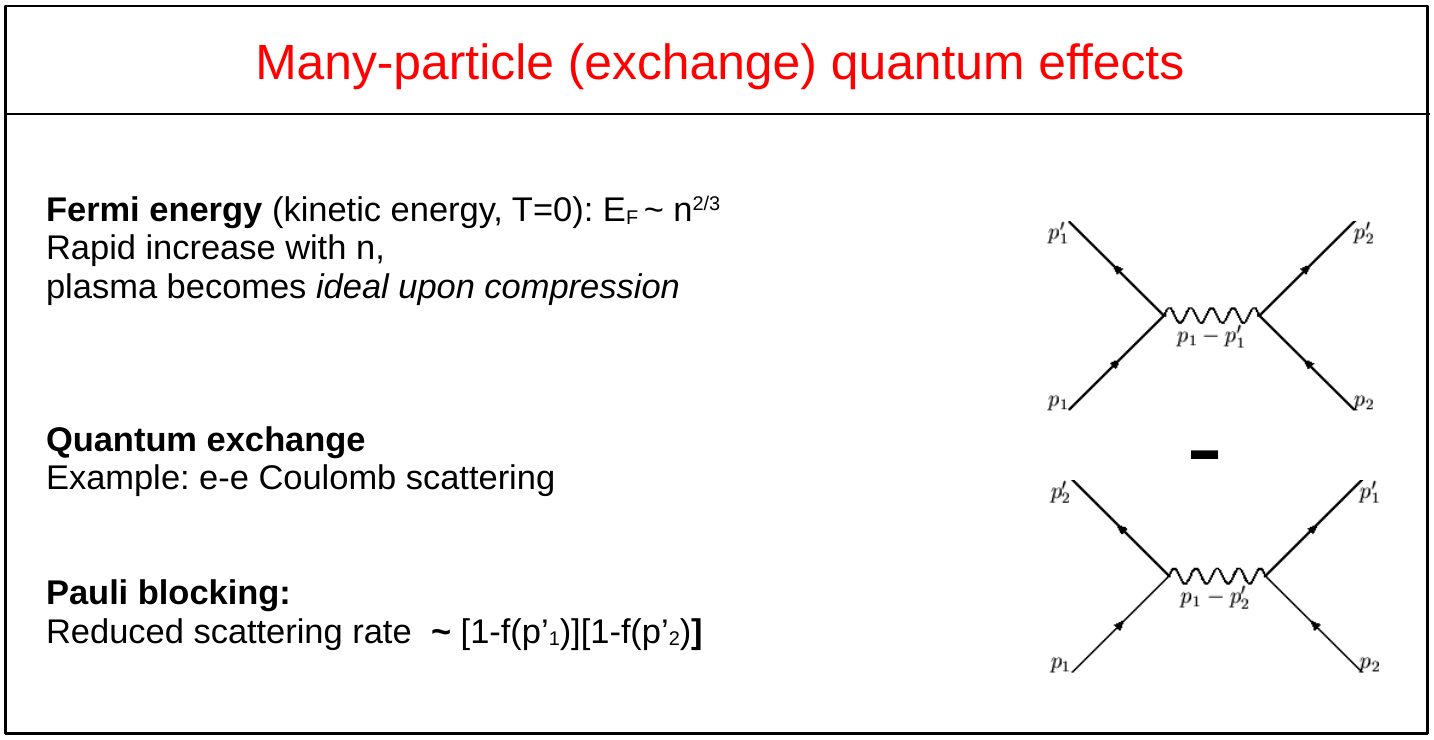
Figure 5: N-particle quantum effects—the Fermi energy’s dependence on density, momentum exchange in scattering, and Pauli blocking.
Quantum Plasma Regimes, Diagnostics, and Phenomena
Parameter Regimes
The manuscript defines the quantum/classical crossover with parameters such as Θ=kBT/EF, χ=nΛ3, classical and quantum coupling (Γ, rs), and the effective degree of ionization λ/d0. These distinctions establish clear phase boundaries in the density-temperature plane Figure 6, demarcating classical, degenerate, strongly coupled, and warm dense matter (WDM) regimes, with WDM occupying a critical region for fusion and planetary interiors.
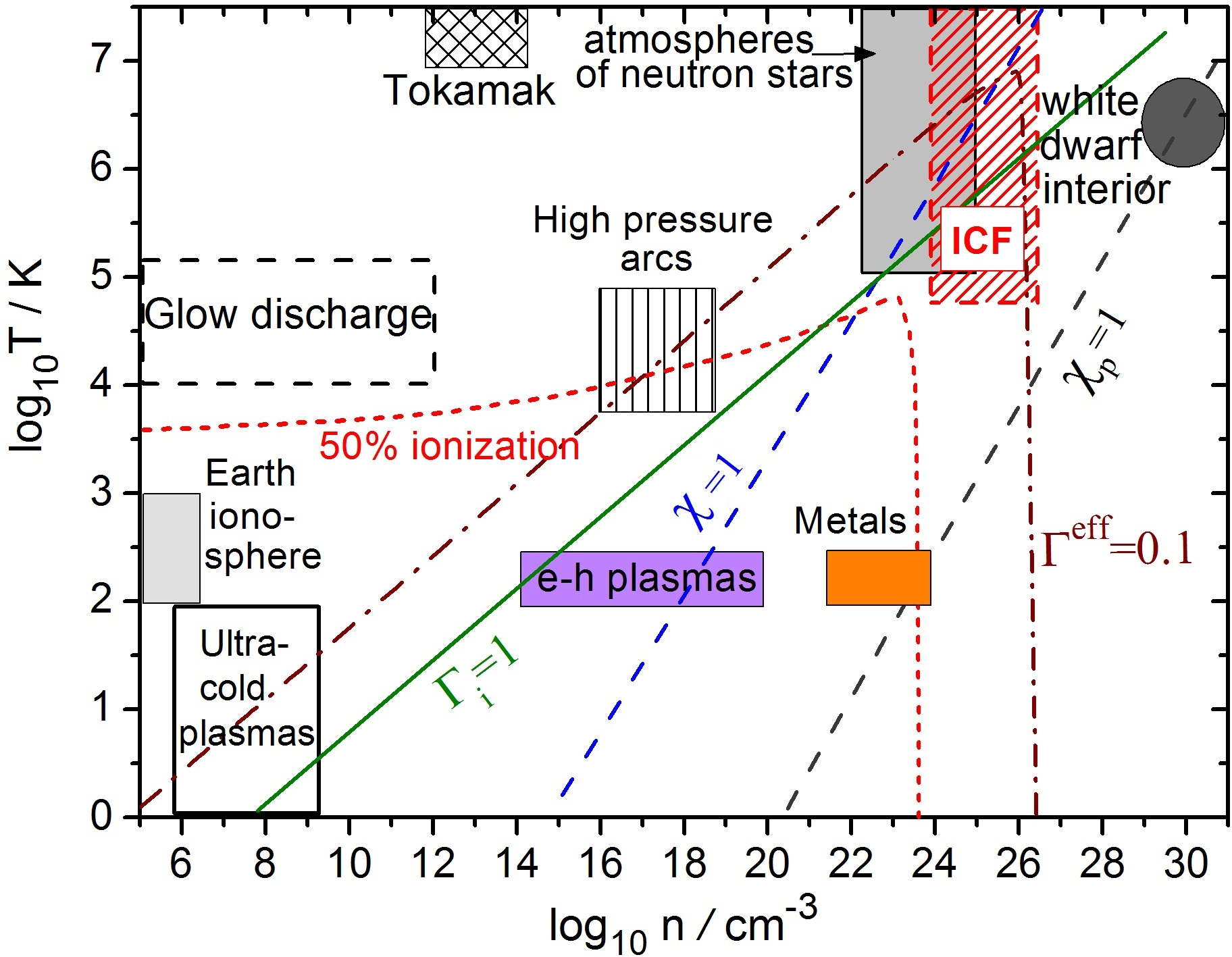
Figure 6: Density-temperature phase space for plasmas, highlighting experimental and astrophysical regions of interest, quantum/classical boundaries, and onset of strong coupling.
Quantum Effects in Low-Pressure and Boundary Plasmas
Quantum signatures appear in low-ionization, low-pressure plasmas through atomic structure (defining spectroscopy, line emission, and diagnostics) and through electron-impact processes (as in the Franck-Hertz experiment, Figure 7), which provided direct evidence for quantized atomic energy levels.
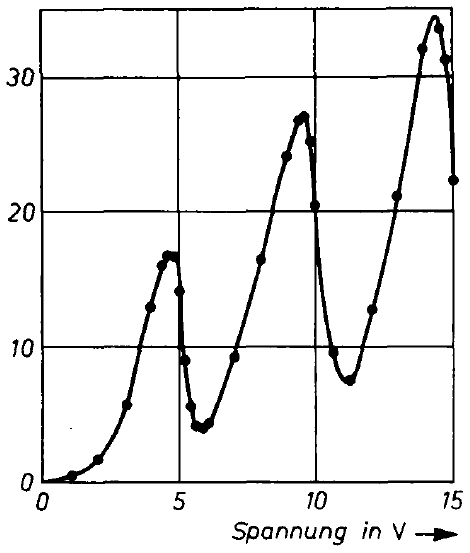
Figure 7: Franck-Hertz current-voltage characteristic showing quantized energy loss—experimental verification of discrete atomic levels in discharge plasmas.
The paper also addresses intricate spatiotemporal discharge phenomena, such as striations and spatially modulated emission (Figures 8–10), directly tied to quantum energy quantization in excitation and ionization processes.
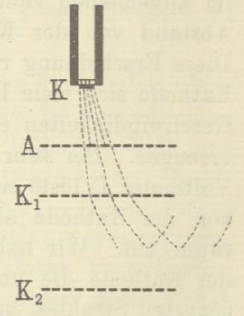
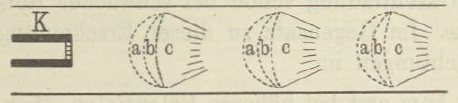
Figure 8: (Left) Electron acceleration and scattering in complex discharge geometries, (Right) Observation of spatially periodic striations manifesting quantum energy thresholds.
Quantum Interfaces and Surface Effects
At the plasma-solid boundary, quantum mechanics prescribes the structure and characteristics of double layers, electron emission, and atomic-scale modification processes Figure 9. These effects dominate plasma-material interaction, necessitating quantum treatment for accurate surface and interface modeling.
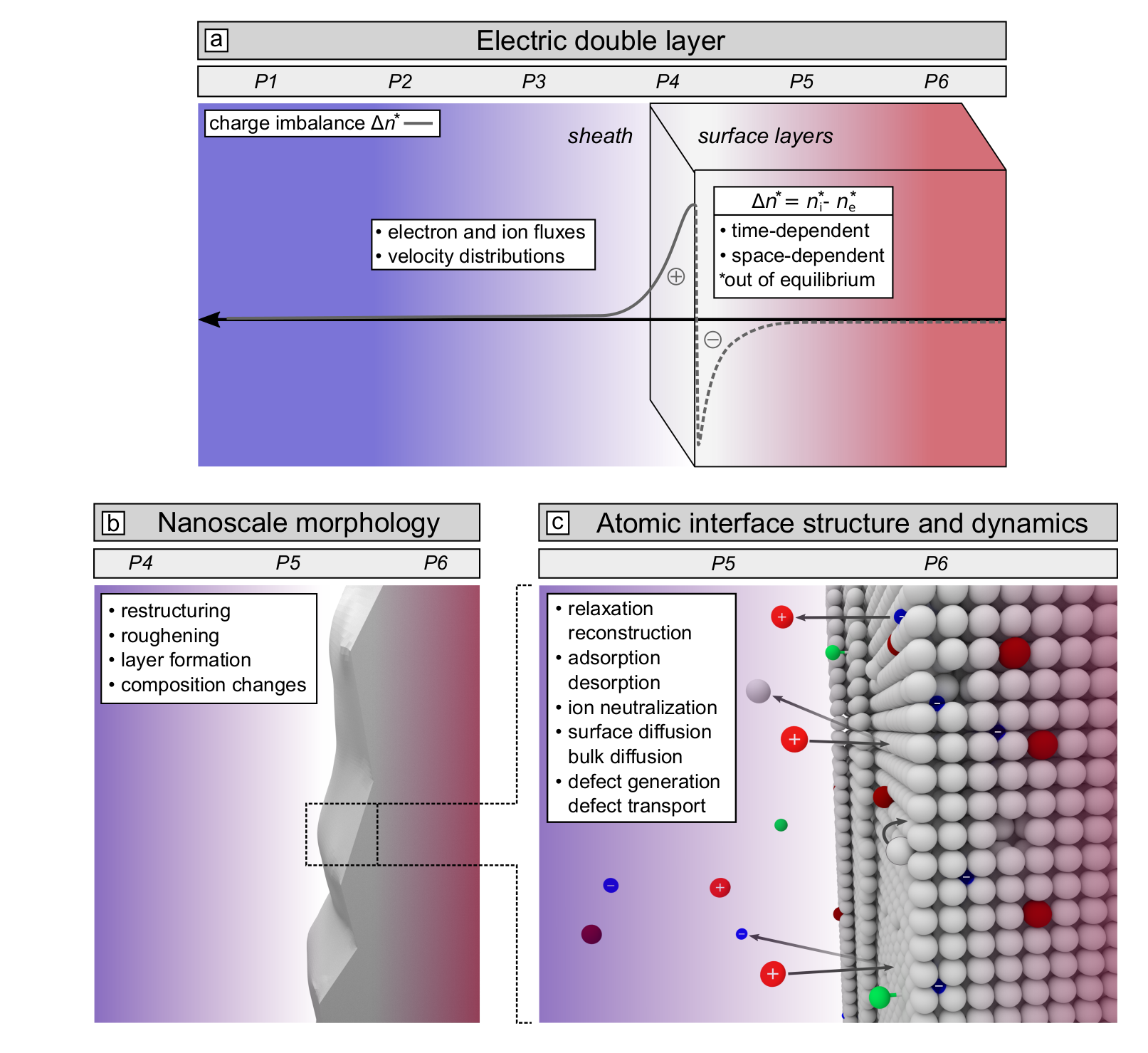
Figure 9: Multiscale quantum processes at the plasma-solid interface, from macroscopic sheath formation to atomic-scale modifications.
High-Temperature, Strongly Coupled, and Astrophysical Plasmas
In inertial confinement fusion (ICF) or magnetic fusion plasmas, quantum effects govern reaction rates, tunneling, and screening. The manuscript details the triple product (λ/d1) requirements for ignition Figure 10 and underscores that even in nominally classical high-temperature fusion conditions, quantum mechanics is indispensable for fusion cross sections and nuclear reaction rates.
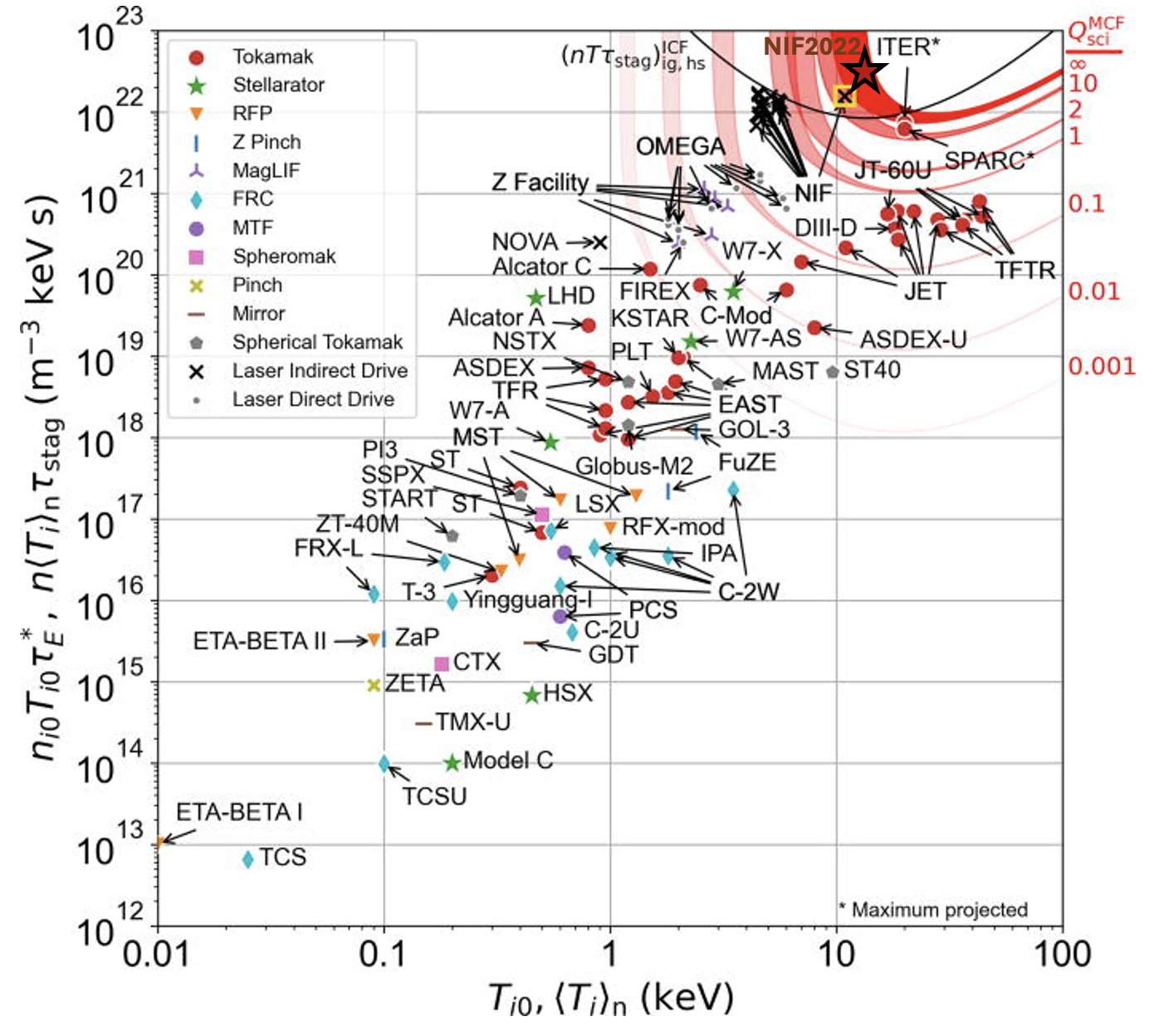
Figure 10: Evolution of the fusion triple product in inertial and magnetic confinement, illustrating proximity to the ignition threshold.
Quantum plasmas in astrophysical settings, such as white dwarfs, neutron stars, or giant planet interiors, are characterized by extreme densities, strong coupling, and the coexistence of quantum degeneracy and correlations, reflected in rich phase diagrams Figure 11.
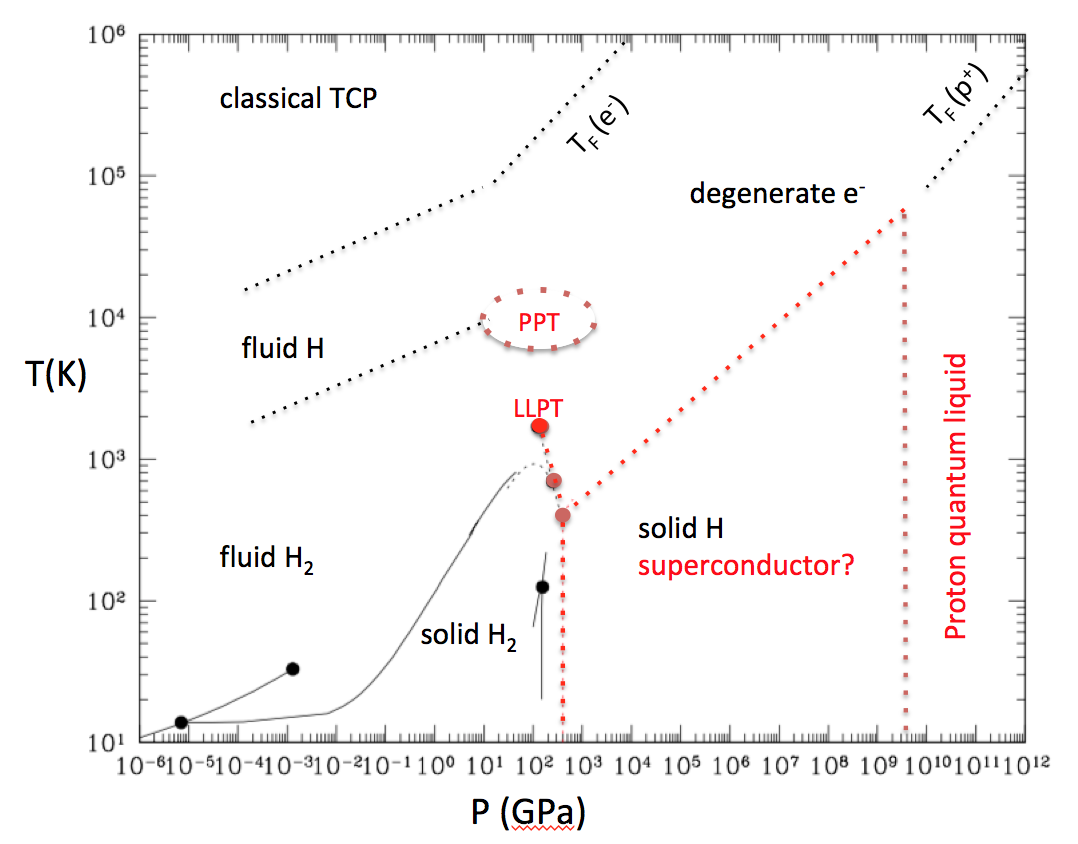
Figure 11: Quantum plasma phase diagram for hydrogen, displaying quantum/classical crossovers and conjectured phase transitions.
First-Principles Computational Methods and Predictive Modeling
The authors deliver an extensive critical survey of simulation techniques essential for predictive quantum plasma modeling. A clear hierarchy is established:
- Fermionic Path Integral Monte Carlo (FPIMC): Ab initio, numerically exact treatment of finite-λ/d2, strongly correlated, and degenerate systems. Figure 12 visualizes PIMC configurations, emphasizing quantum delocalization and the difficulty (sign problem) of sampling fermionic states.
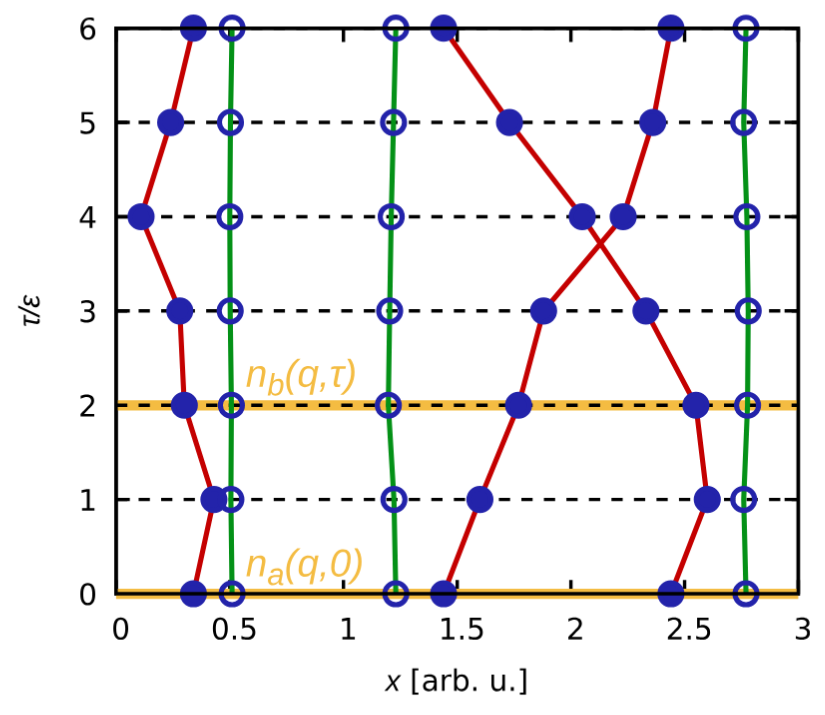
Figure 12: PIMC configuration space showing path permutations and quantum electron delocalization.
- Configuration PIMC, Coupled Electron-Ion MC, and Machine Learning Approaches: Address various parameter regimes and system sizes, overcoming to varying degrees the exponential cost associated with the fermion sign problem Figure 13.
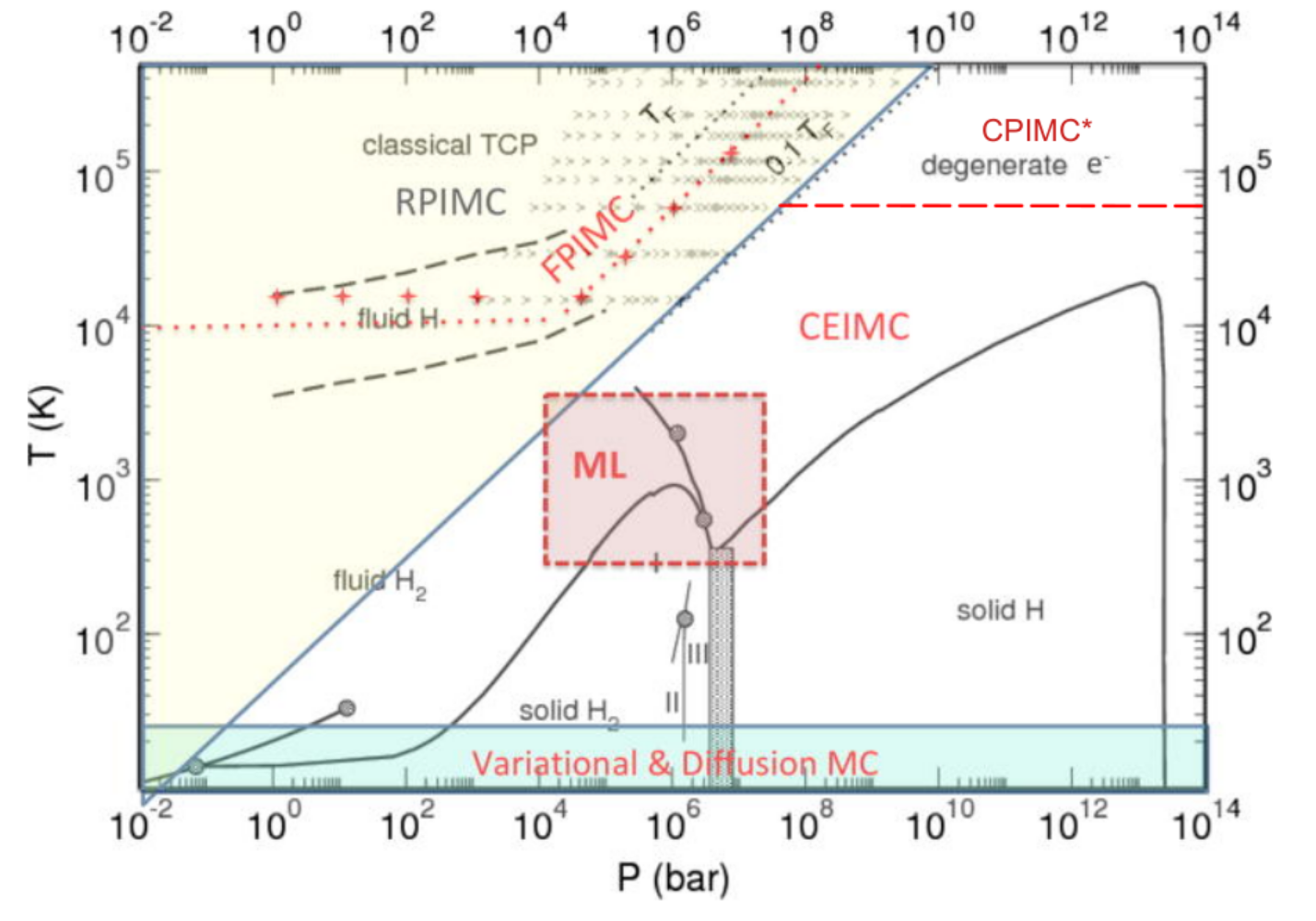
Figure 13: Applicability domains for quantum MC methods in dense hydrogen—FPIMC, RPIMC, CPIMC, CEIMC, and ML-based extensions.
- DFT and Quantum Molecular Dynamics (QMD): Used for larger system sizes; accuracy is contingent on the exchange-correlation functional’s treatment of quantum and correlation effects (Figure 14 demonstrates the effect of density-induced Fermi-surface raising on X-ray absorption spectra).
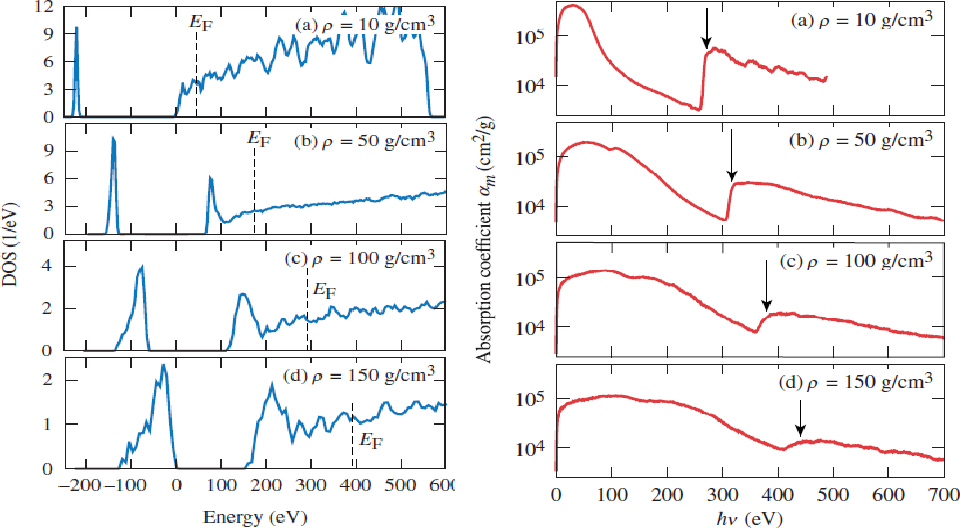
Figure 14: DFT-QMD results for carbon: density-of-states and X-ray absorption, highlighting the quantum effect of Fermi-surface elevation.
- Hybrid and Downfolding Strategies: The paper emphasizes leveraging FPIMC results to systematically benchmark and improve lower-level models (e.g., DFT functionals, kinetic equations, and chemical models), establishing robust downfolding protocols for transferability and validation.
Experimental Probing of Quantum Plasmas
X-ray Thomson scattering (XRTS) is highlighted as a premier diagnostic sensitive to both quantum statistics and many-body correlations Figure 15. The form, symmetry, and detailed balance of the dynamic structure factor are directly tied to quantum behavior; detailed quantitative interpretation now demands high-precision QMC or DFT input for electron correlation and spectral features.
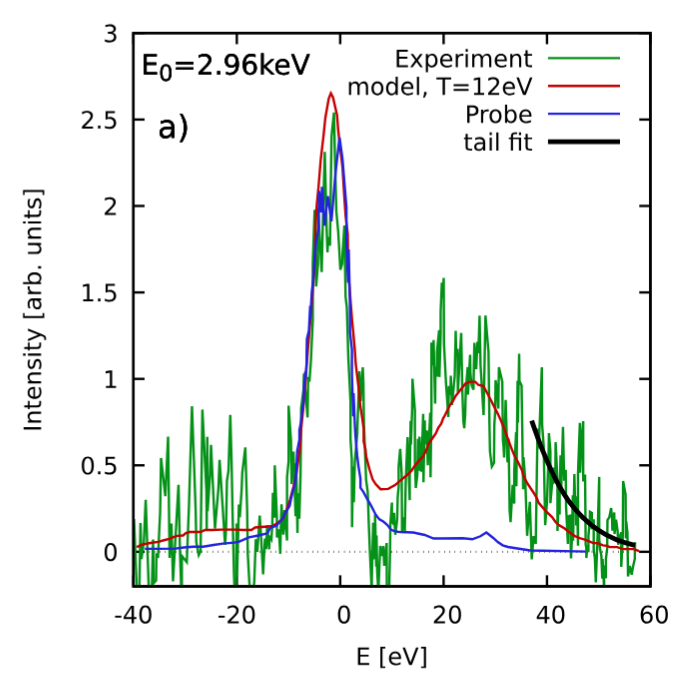
Figure 15: XRTS signal from isochorically heated Be, elucidating quantum plasmon features and experimental-model comparisons.
Similarly, state-of-the-art experiments in laser-driven shock compression and spectroscopy (Figures 23–24) enable stringent validation of theoretical predictions for EOS, opacity, and ionization—requiring quantum-accurate calculations for interpretation.
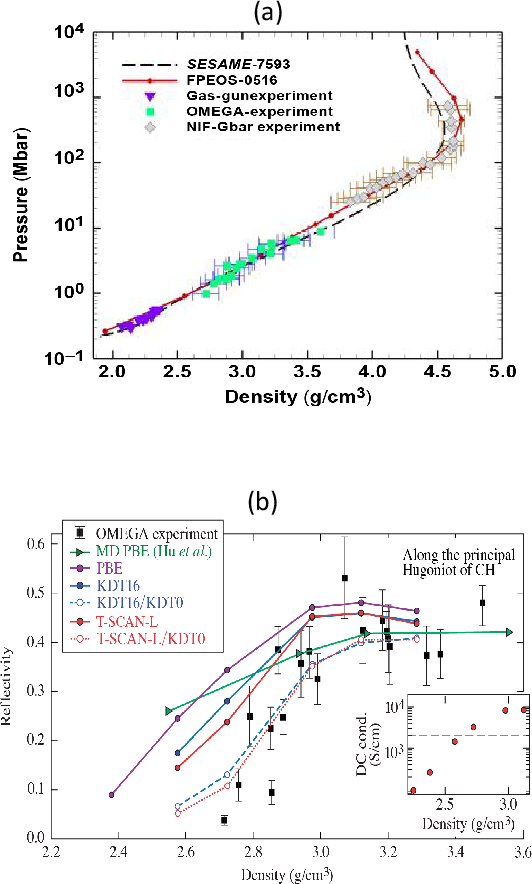
Figure 16: Comparison of DFT-QMD and experimental Hugoniot and reflectivity for polystyrene under shock compression; accuracy hinges on the inclusion of quantum XC effects.
Theoretical Implications and Future Prospects
The manuscript critiques oversimplified or controversial approaches (e.g., some quantum hydrodynamics models, spin-dominated effects in astrophysical context) when unsupported by correct scaling and experimental validation. It emphasizes the necessity of consistent many-body quantum mechanics for predictive modeling.
Practical implications are far-reaching:
- Fusion Research: Quantum accuracy in dense plasma conditions underpins reliable ICF design and interpretation of ignition experiments (Figures 12, 15).
- Planetary and Stellar Physics: Quantum EOS and transport data are indispensable for the modeling of giant planet interiors and stellar evolution.
- Condensed Matter and Nanoplasmonics: Results for jellium, electron-hole plasmas, and quantum structure provide direct input for functional development and nanoscale device modeling.
Methodologically, ongoing advances in QMC and hybrid simulation methods, combined with experimental calibration (via XRTS and spectroscopic probes), are rapidly closing the predictive gap in WDM and quantum plasma research. Systematic downfolding and data-driven functional optimization, anchored by rigorous first-principles computation, represent the most promising avenues for continued progress.
Conclusion
This work establishes a comprehensive, quantitatively grounded framework for understanding and simulating quantum effects in plasmas. By delineating the boundaries of quantum/classical regimes, elucidating the decisive role of quantum statistics and correlations, detailing state-of-the-art experiments and simulation methods, and formalizing a robust downfolding/benchmarking methodology, the authors chart a clear course for predictive, cross-disciplinary plasma modeling. The proposed integration of first-principles simulation data, experimentally validated functionals, and scalable computational protocols is poised to transform both theoretical and applied plasma science, from laboratory fusion to astrophysical modeling.