- The paper proposes a hybrid method that dynamically selects between automata learning and process mining for automated generation of user journey models.
- It evaluates the tradeoffs between aggressive state merging in AL and expert-tuned state abstractions in PM using synthetic and real-world event logs.
- Experimental results emphasize the importance of preprocessing and adaptive parameter tuning to optimize precision, recall, and overall model performance.
Comparative Evaluation of Automata Learning and Process Mining for User Journey Modeling
Motivation and Problem Statement
As service-oriented business models proliferate, capturing and analyzing user experiences becomes imperative for the success of digital services. Traditionally, user journey models—which formalize sequences of user interactions with a service provider—have been crafted manually, relying heavily on domain expertise and limited scalability. This paper addresses the critical challenge of automated generation of behavioral models (finite-state representations) from event logs, focusing on two established paradigms: Automata Learning (AL) and Process Mining (PM). The work further introduces a hybrid method that leverages the strengths of both AL and PM to adaptively select the optimal modeling approach based on event log characteristics.
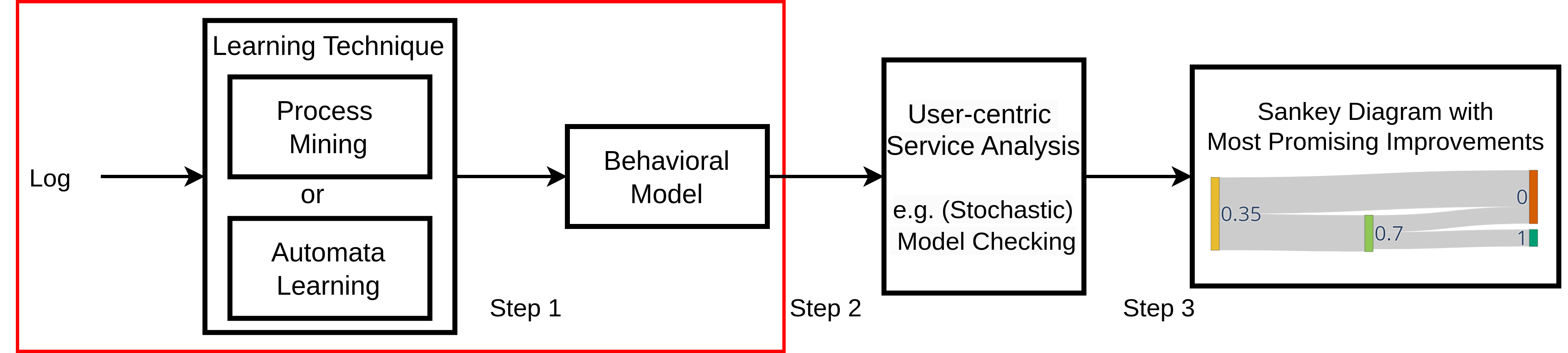
Figure 1: Three step procedure for the creation and analysis of user journey models. This work focuses on Step 1, the automatic creation of behavioral models from event logs.
Overview of Modeling Techniques
Process Mining (PM)
Process Mining extracts behavioral models, such as transition systems and Petri nets, from process event logs. The core of PM involves process discovery, with Directly-Follows Graphs (DFGs) and Directly-Follows Systems (DFSs) serving as fundamental representations for sequential and concurrent user behavior. PM techniques excel at capturing observable sequences and offer flexibility in the abstraction of state representations (e.g., trace prefix/suffix, set, list, multiset), enabling adjustment of modeling granularity. Nevertheless, PM often requires expert domain knowledge for optimal parameterization, especially in handling trace variants and loop structures. PM tends to underapproximate in large, highly varied logs due to state abstraction choices.
Automata Learning (AL)
Automata Learning aims to infer a minimal automaton—deterministic or probabilistic—from observed traces. Passive AL, specifically state merging algorithms like Alergia, construct frequency prefix tree acceptors (FPTAs) and utilize statistical confidence bounds (Hoeffding’s inequality parameterized by α) to guide merges. The confidence parameter α adjusts the learner’s sensitivity to distributional features of the event log: low α leads to aggressive merging (overapproximation), while high α results in cautious merging (underapproximation). AL is agnostic to domain specifics and seeks maximal generality but is sensitive to log size and distribution.
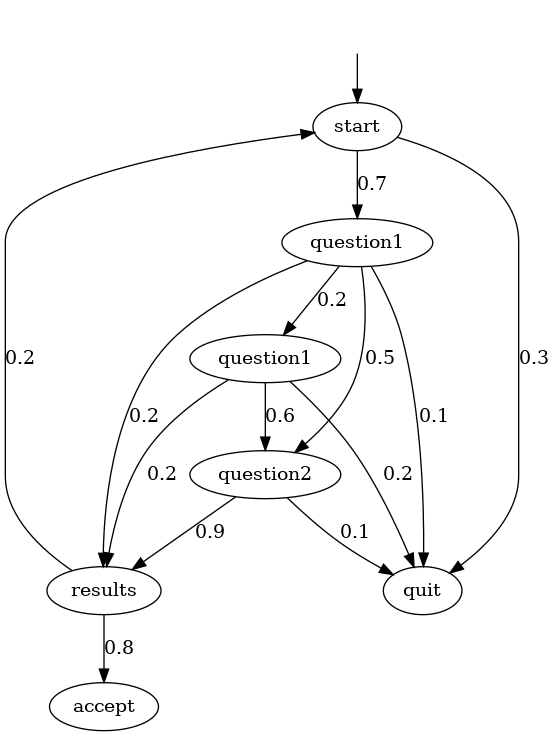
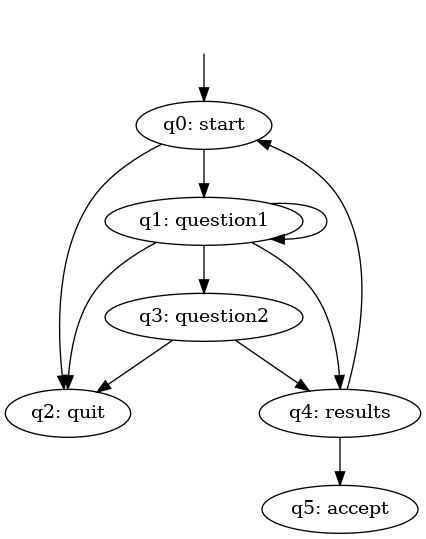
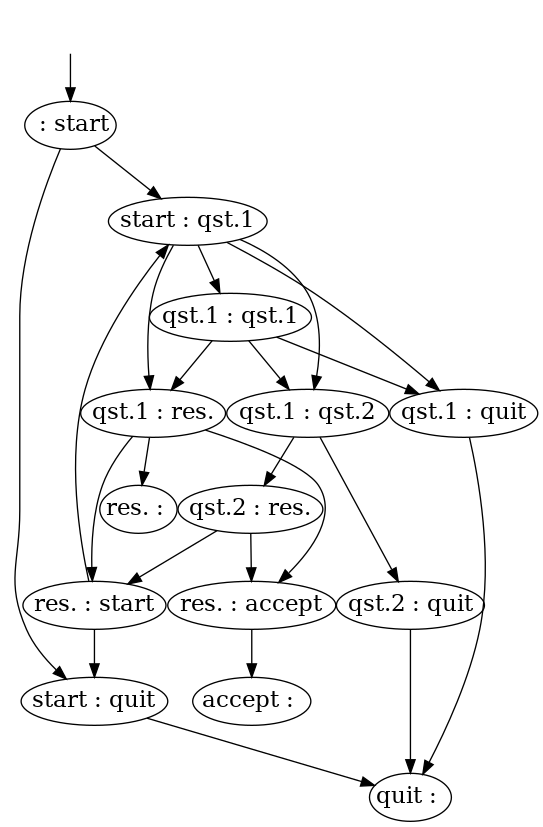
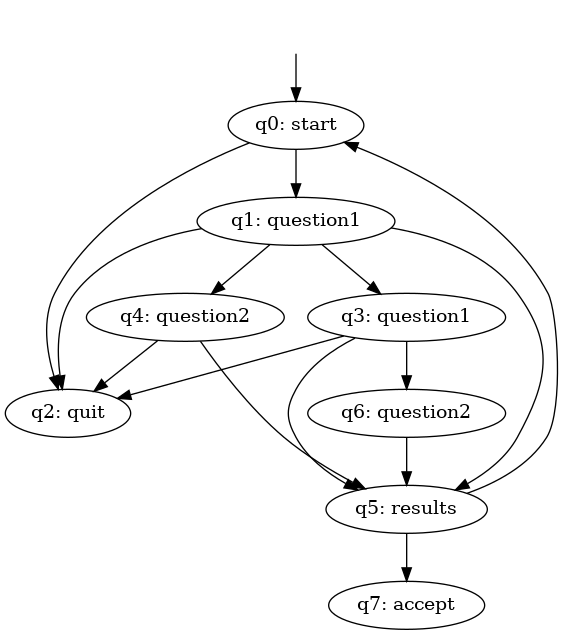
Figure 2: Ground-truth Markov chain of the assessment system serving as the reference for model comparisons.
Methodological Contributions
Hybrid Approach
The paper proposes a hybrid approach that dynamically selects between PM and AL. The selection is governed by a certainty threshold function λapprox, which combines the number of distinct trace variants ($\var(L)$), log size (∣L∣), and event set cardinality (∣A∣):
$\lambda_\mathrm{approx} = \frac{|A| \cdot \log_{10}(\var(L))}{|L|}$
AL is chosen for logs that are sufficiently large and well-distributed; PM is applied for sparse or highly variable logs. The α parameter for Alergia is tuned using a sigmoid function of log size, which avoids both over- and under-approximation in typical user journey scenarios.
Experimental Analysis
Synthetic Benchmark Evaluation
A comprehensive suite of synthesized benchmarks was generated from process trees reflecting real-world user journey characteristics (sequential structures, branching, loops, duplicate events). Multiple configurations of AL (varying α0) and PM (different state representations) were assessed. Key findings include:
- AL achieves best precision and recall on large, well-distributed logs when α1 is properly tuned (e.g., α2).
- PM with DFG and domain-informed state abstractions performs well on sparse logs but risks underfitting as log size grows.
- The hybrid approach robustly balances over- vs. underapproximation, automatically switching at the intersection of AL and PM performance curves.
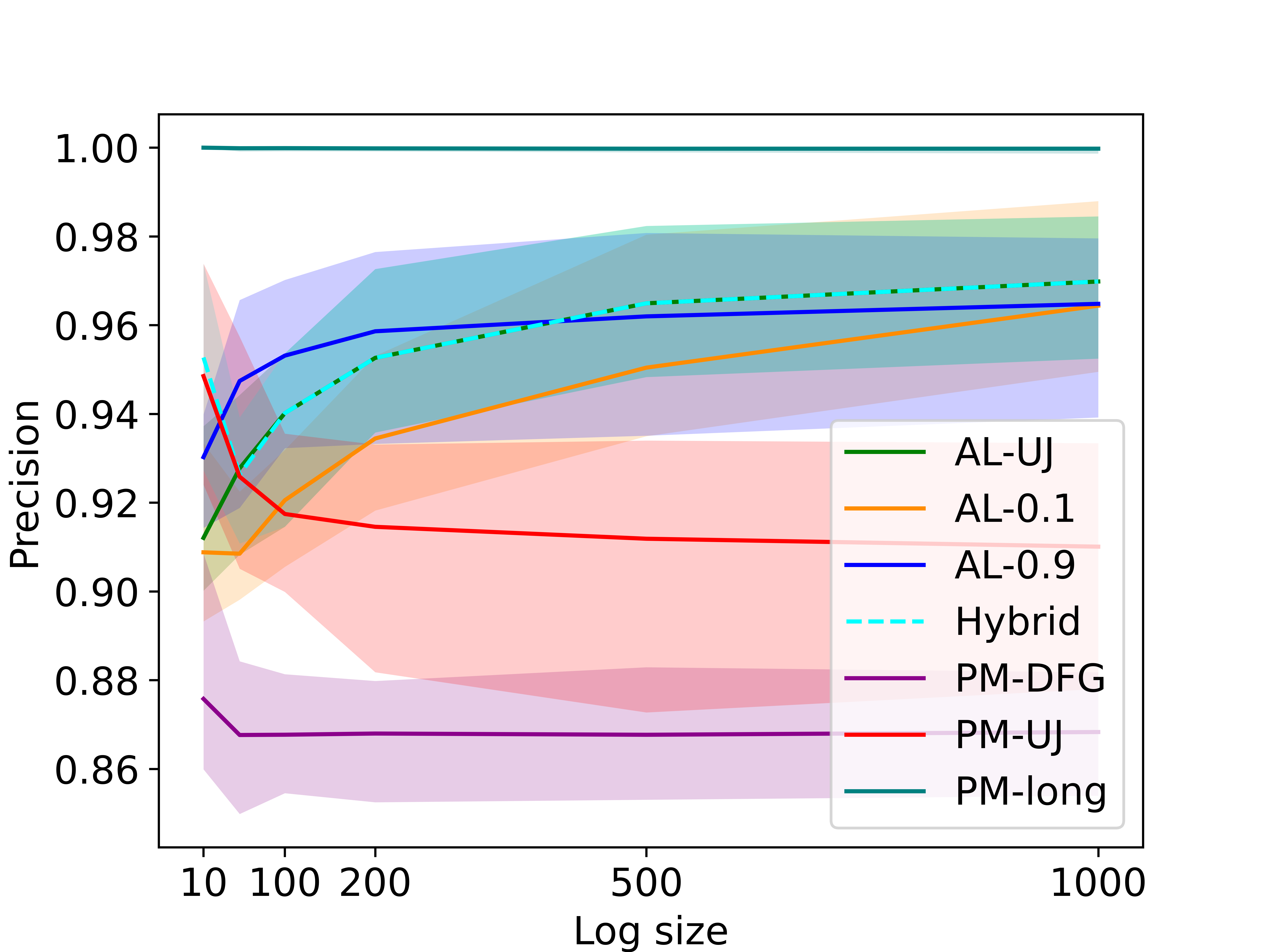
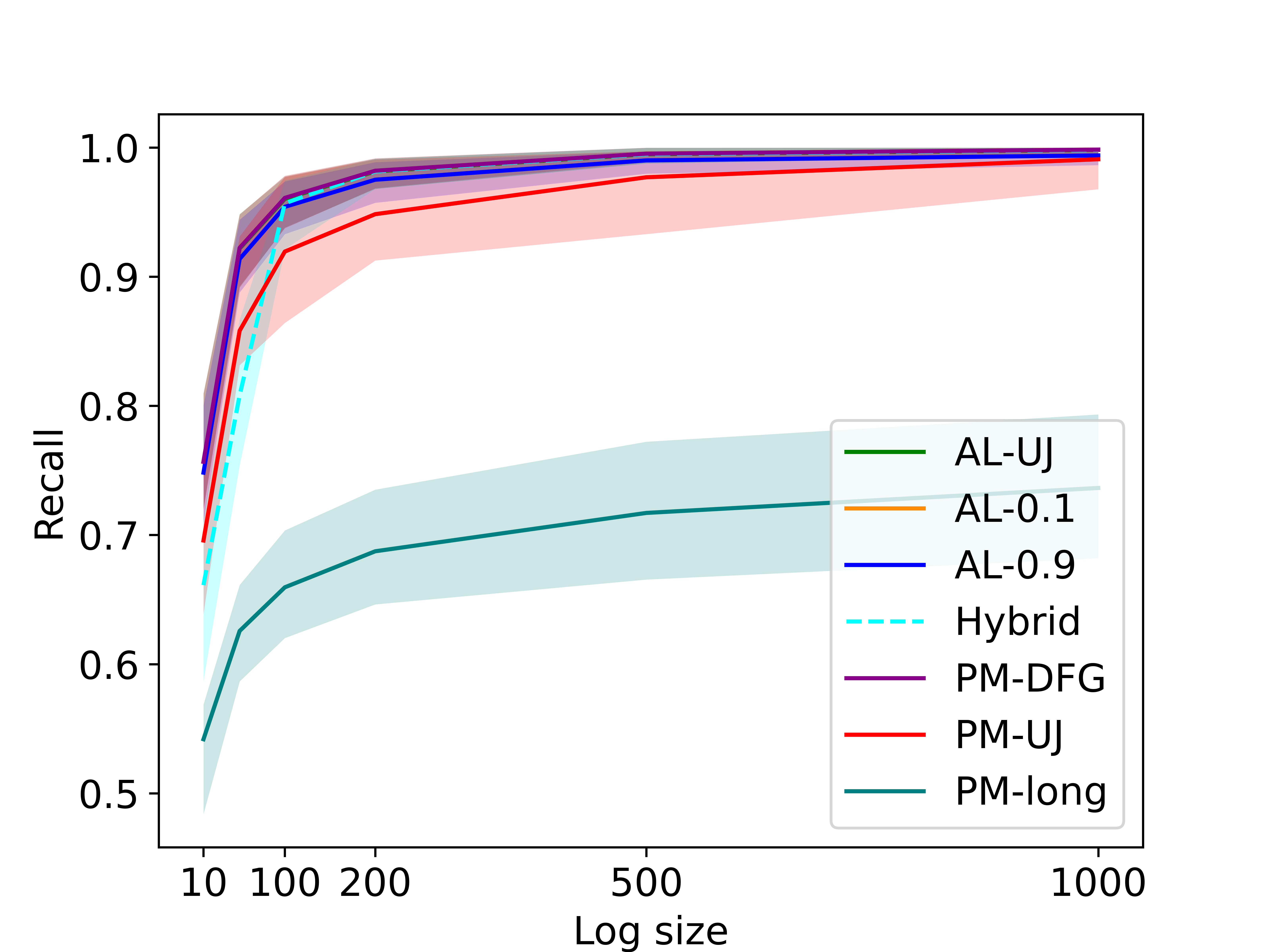
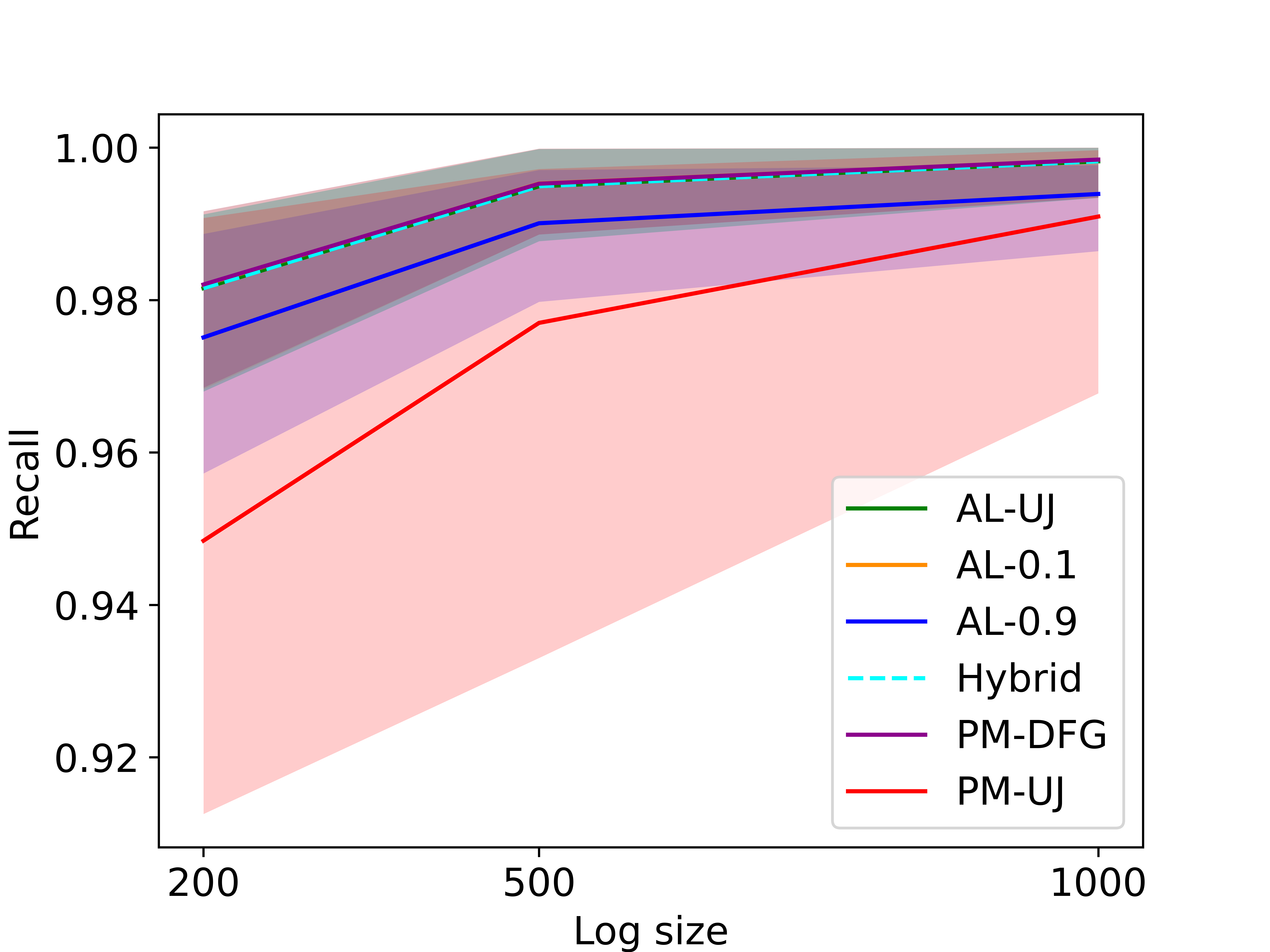
Figure 3: Average precision results across configurations, showing hybrid approach performance.
Real-World Case Studies
Four real-world event logs (GrepS, BPIC12, BPIC17a, BPIC17b) were analyzed with and without preprocessing. Main results:
- AL generalizes well for large logs (BPIC), but struggles on sparse logs (GrepS); PM excels in sparse scenarios.
- Preprocessing (to address log quality and structure) improves both PM and AL performance.
- Model overlap and recall experiments confirm the complementary nature: AL models tend to overapproximate, PM models underapproximate. The hybrid method selects appropriate techniques for each case.
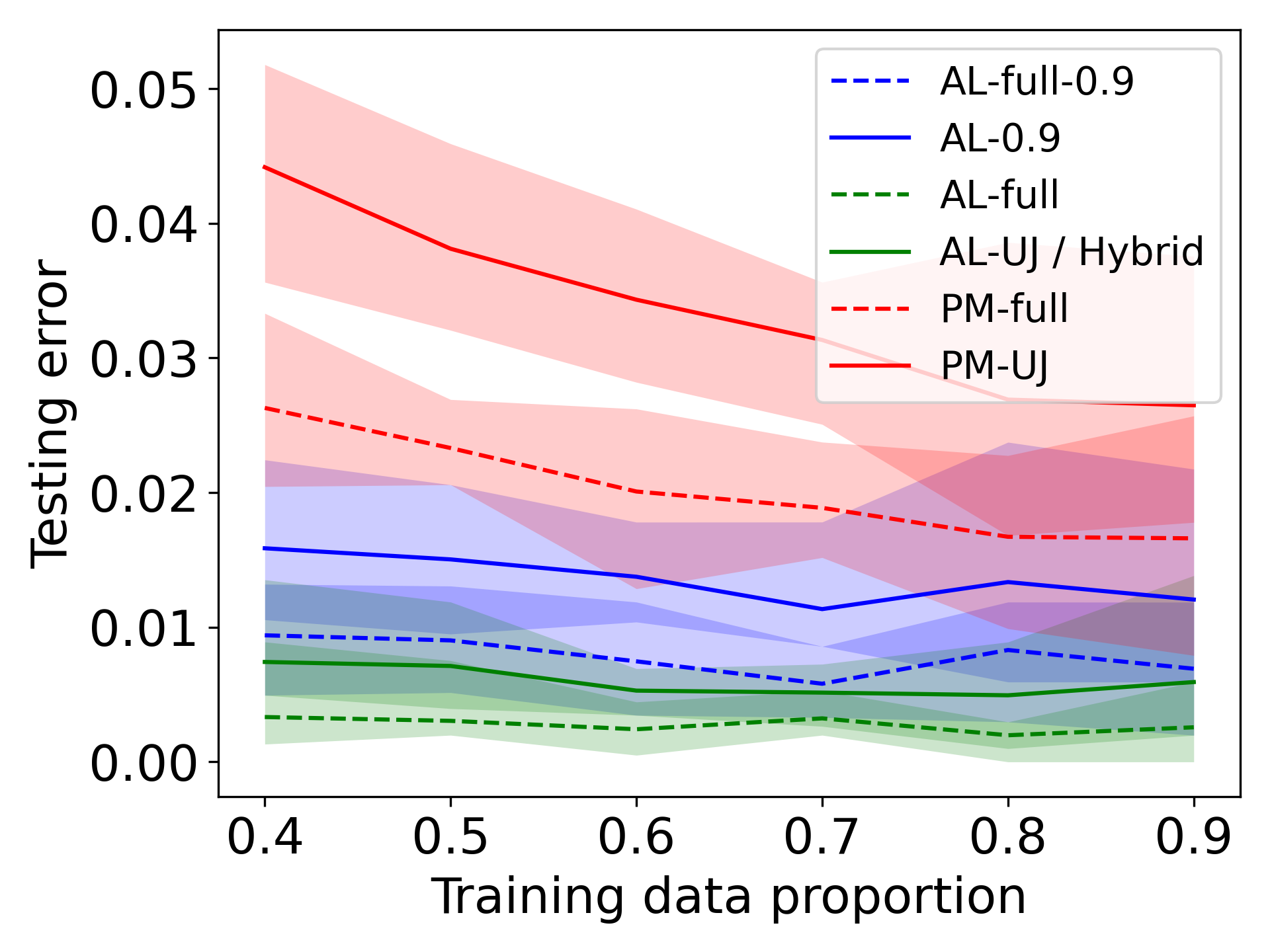
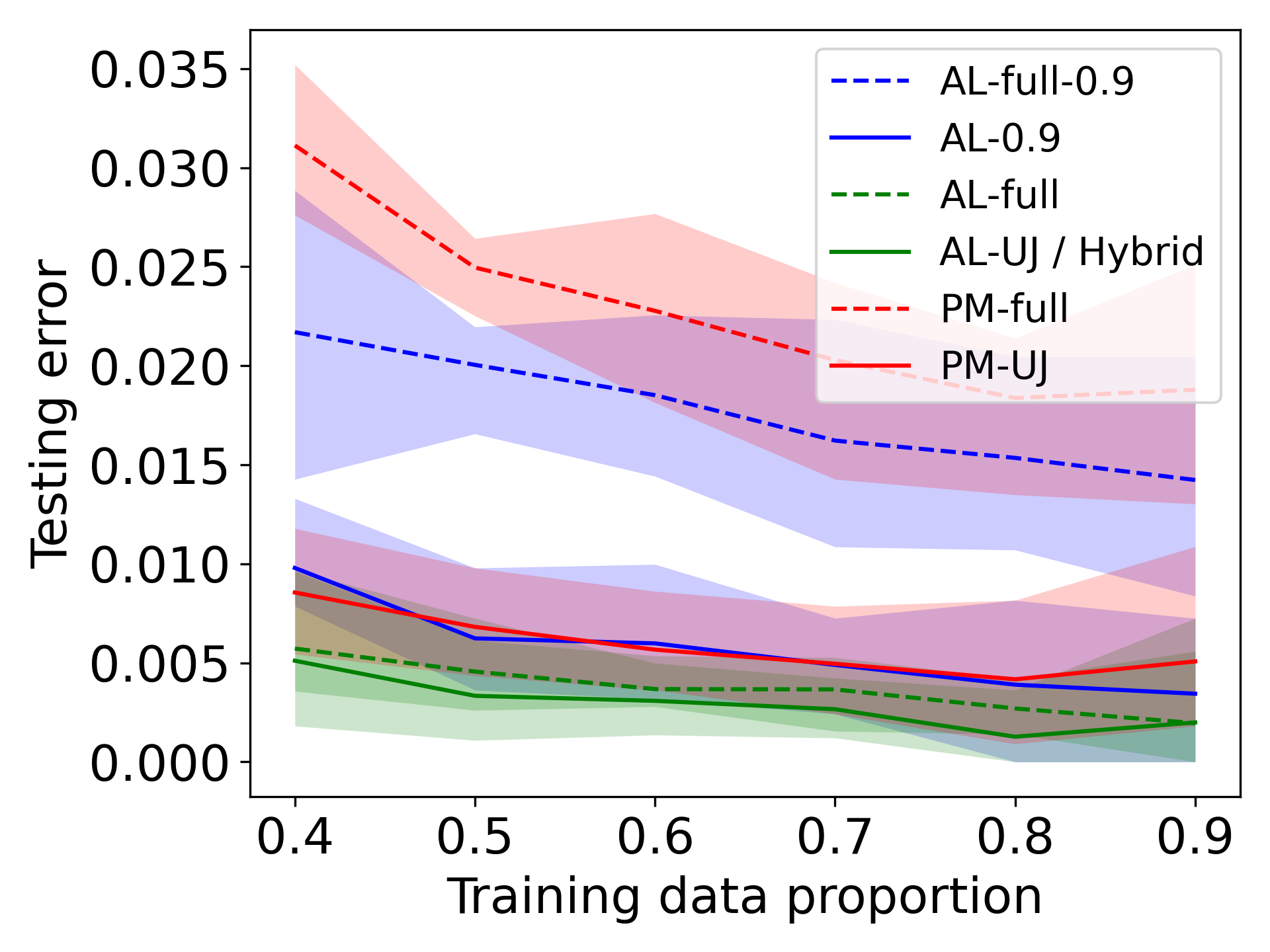
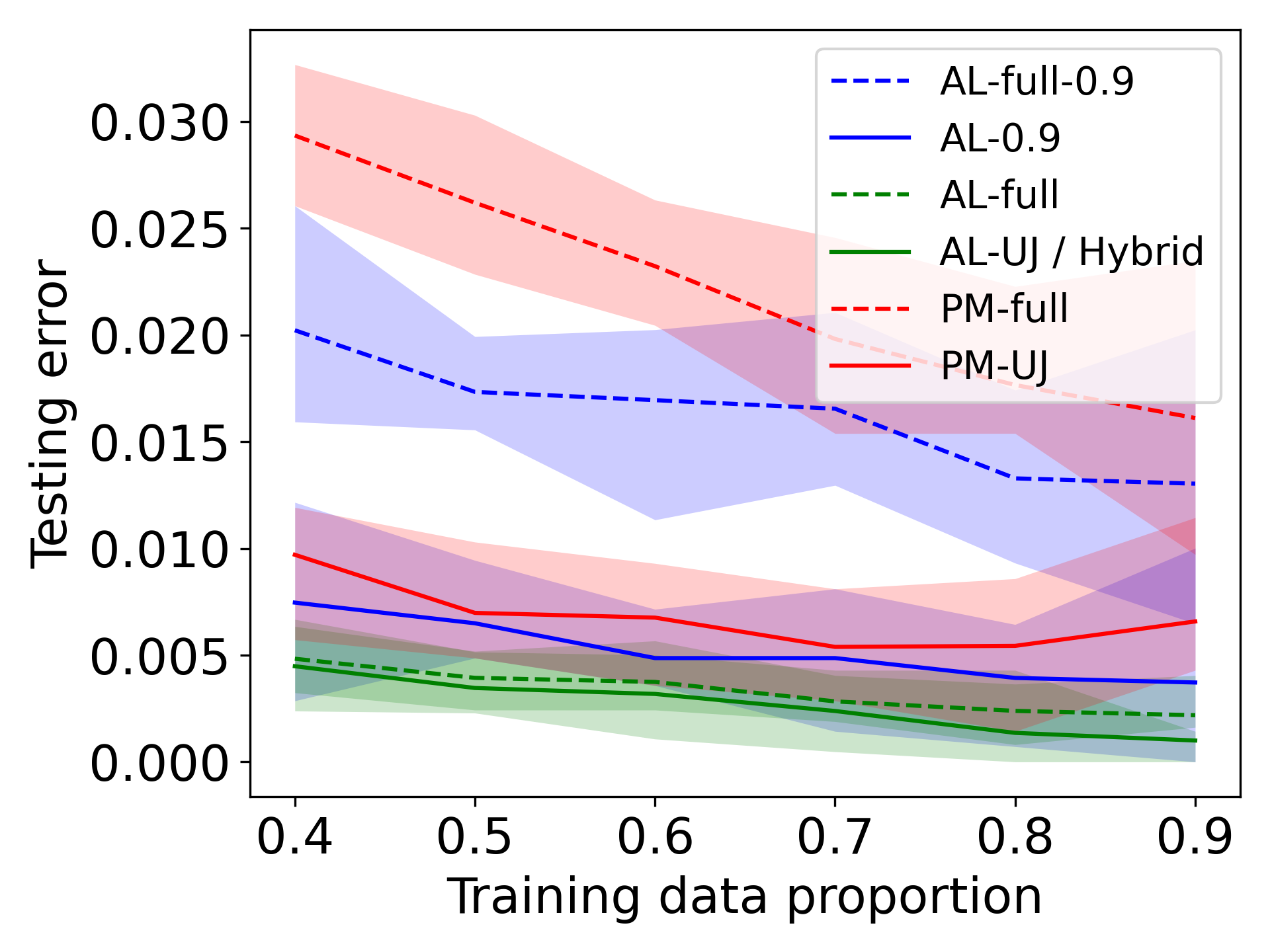
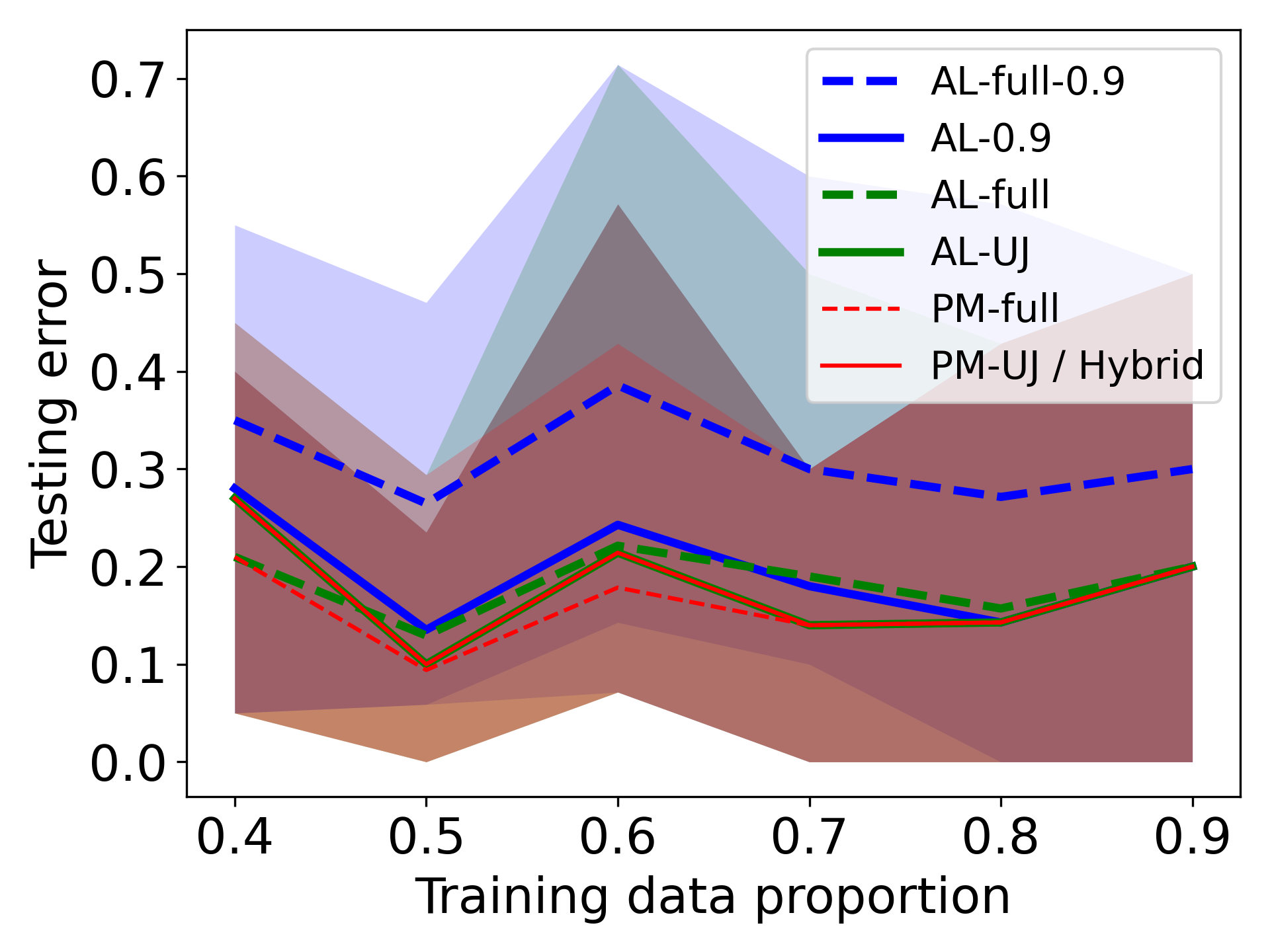
Figure 4: Results from BPIC12 case study, demonstrating model overlap and applicability.
Implications and Future Directions
Practical Implications
The hybrid method is directly actionable in software engineering and service analytics contexts, automating the creation of user journey models that support advanced analyses (e.g., model checking, visualization, bottleneck detection). Significant practical recommendations include:
- Apply PM for early-stage services or sparse logs, leveraging domain knowledge for state abstractions.
- Use AL for mature services with large, representative logs, tuning α3 for accurate behavioral coverage.
- Preprocessing is essential for enhancing log quality and should be applied regardless of method.
Theoretical Insights
The findings articulate the tradeoff between over- and under-approximation in data-driven model inference, highlighting the critical role of log characteristics and parameter tuning. The hybridization paradigm underscores the value of algorithmic adaptability in behavioral modeling.
Speculation on AI Developments
The study suggests that automated model selection based on log heuristics may become standard practice in AI-driven service analytics. Integrating process mining and automata learning into hybrid, self-tuning pipelines can enhance the scalability and robustness of user-centric analytics, with potential expansion to other domains such as software product lines and digital twins.
Conclusion
This work presents an authoritative comparative assessment of automata learning and process mining for user journey modeling and introduces a hybrid method that reliably selects the most accurate modeling technique for a given event log. The extensive empirical and practical analysis demonstrates that automated behavioral model construction is feasible and effective, provided log quality and distributional assumptions are adequately managed. The hybrid approach enables scalable, tool-driven analysis of user journeys, advancing both theoretical understanding and practical capability for user-centric service development (2604.03686).

