- The paper demonstrates that batching texts up to 100 and stacking 10 coding dimensions achieves over 80% annotation cost reduction with minimal accuracy loss.
- It systematically evaluates eight LLMs across 376 experimental conditions using expert-labeled tweets annotated on four variables.
- The study reveals that errors from efficient prompt design are smaller than typical human inter-coder disagreements, challenging the traditional one-text-per-prompt paradigm.
Maximizing LLM Annotation Efficiency with Batch Prompting and Variable Stacking
Introduction
The utilization of LLMs for automated text classification is prevalent in the social sciences, especially for large-scale datasets such as social media corpora. A persistent methodological convention has been to classify one text per variable per prompt, yielding substantial API call and token overhead. The paper "Researchers waste 80% of LLM annotation costs by classifying one text at a time" (2604.03684) challenges this canonical practice. It investigates the empirical trade-offs between cost savings and accuracy degradation when substantially increasing batch size (number of items per prompt) and stacking multiple coding dimensions (variables) within the same prompt for real-world annotation tasks.
Experimental Design and Methodology
The authors systematically evaluate the impact of batching and variable stacking on LLM-based classification quality in a codebook-driven context typical of the social sciences. The benchmark dataset comprises 3,962 expert-labeled tweets annotated on four distinct variables: relevance, problem/solution, stance, and topic. Eight production LLMs spanning four providers (Anthropic, OpenAI, Google, Alibaba) are evaluated across a comprehensive design spanning:
- Batch sizes: 1, 5, 10, 25, 50, 100, 250, 500, 1000
- Variable stacking levels: 1, 4, 10, 25 coding dimensions per prompt
- Prompt controls: Matching prompt length without increasing annotation complexity
In total, 963,151 classifications over 376 experimental conditions are analyzed, with results benchmarked against expert ground-truth and with careful control on model temperature settings, prompt length, and shuffling order.
Key Results
Batching Effects: Cost Savings and Accuracy
For most LLMs, batching up to 100 items per prompt incurs negligible classification quality loss. Specifically, six out of eight models exhibit less than two percentage points (pp) reduction in accuracy through a batch size of 100, corresponding to over 80% reduction in annotation costs.
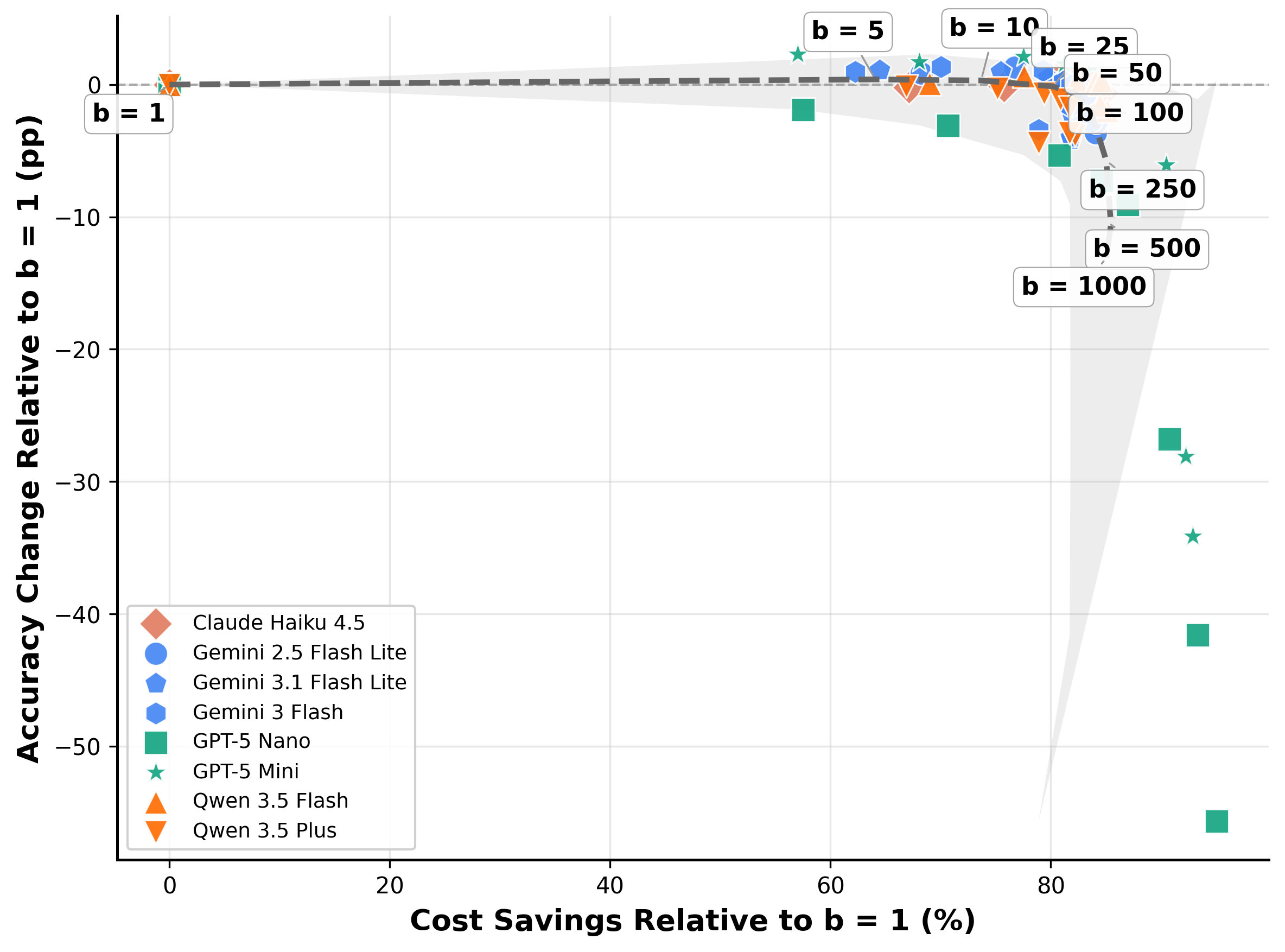
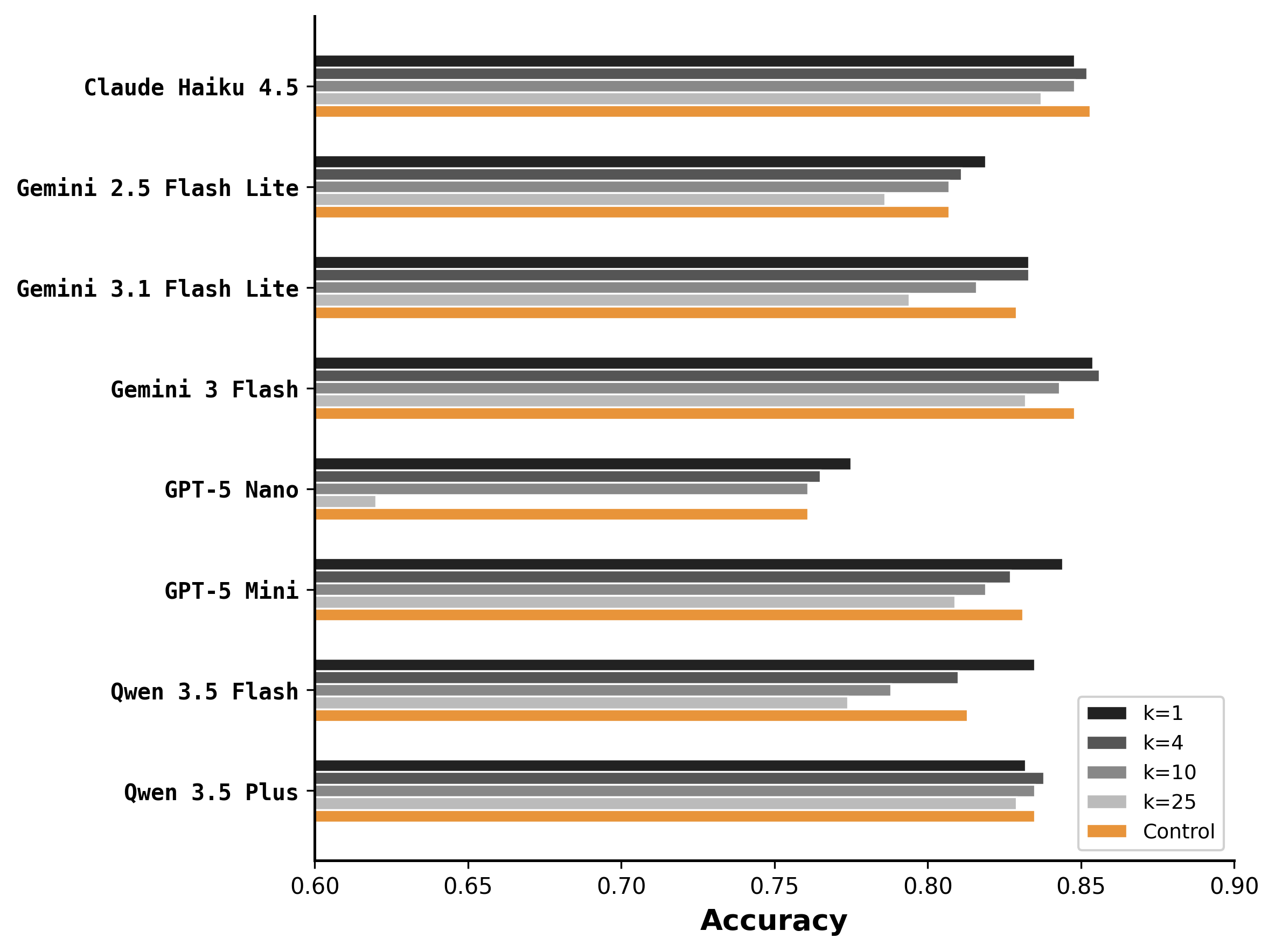
Figure 1: Batching and stacking are safe within bounds; (A) depicts cost savings vs. accuracy change across batch sizes, and (B) illustrates the impact of stacking coding dimensions.
Losses become substantial only at extreme batch sizes (b≥250), primarily driven by model-specific parsing failures; notably, OpenAI's GPT-5-mini and GPT-5-nano show catastrophic accuracy collapse at these batch sizes due to their inability to run at deterministic temperatures. Parse failures for other models remain well below 1.5% across all conditions.
Accuracy degradation is variable dependent: the binary relevance variable shows the highest relative sensitivity at extreme batch sizes, while multiclass tasks such as topic even display improved accuracy at larger batch sizes, consistent with an auto-demonstration effect where multiple co-presented items facilitate category calibration.
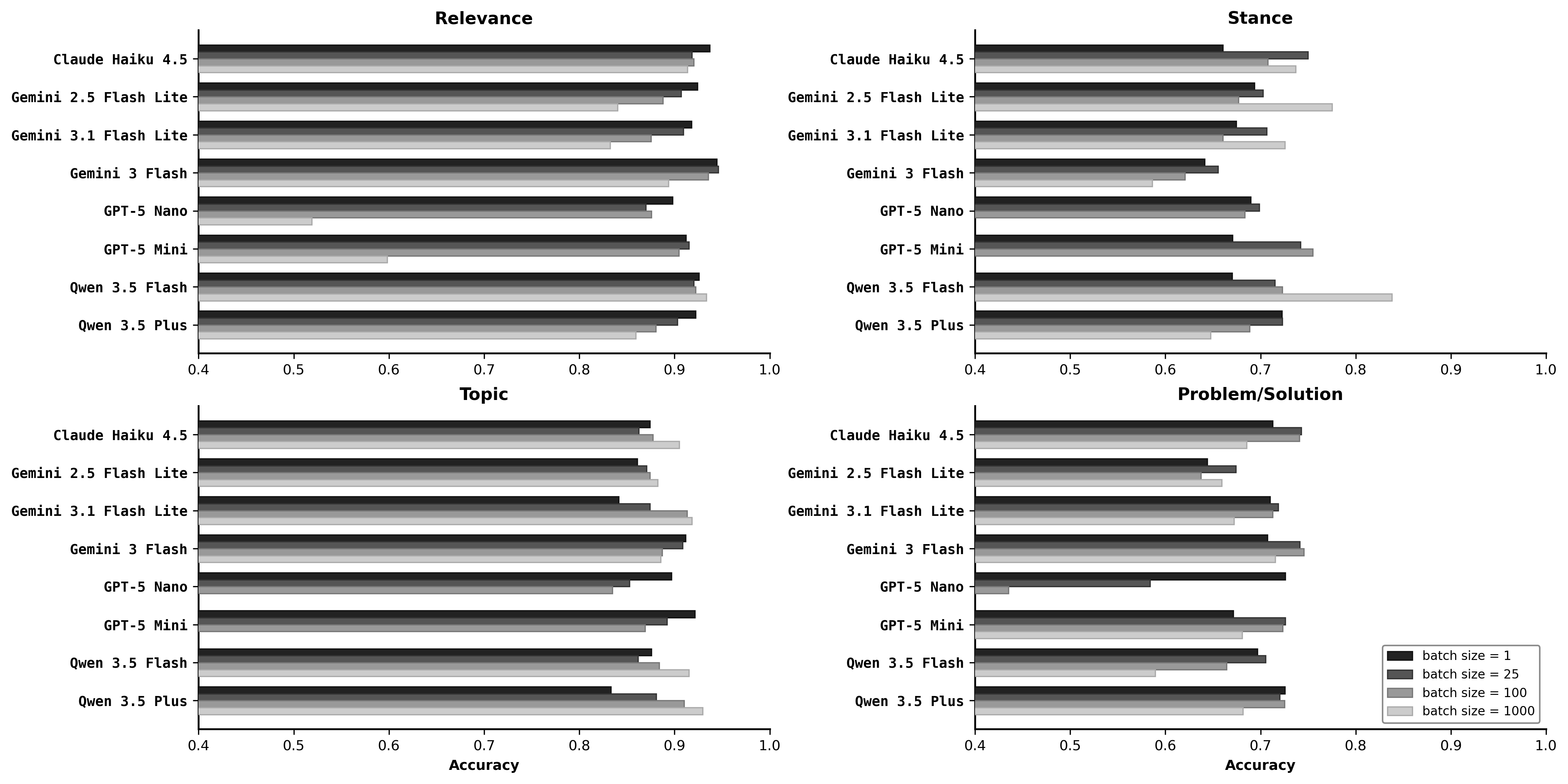
Figure 2: Model- and variable-wise accuracy for increasing batch sizes, with the majority maintaining stability through b=100; topic classification commonly improves with batch size.
Variable Stacking: Task Complexity Limits
Stacking up to 10 coding dimensions per prompt results in a marginal accuracy loss (max 2.2 pp for all but the most unstable OpenAI model), with performance remaining stable. At 25 dimensions, accuracy declines by 1.6--6.1 pp for most models, with a single model (GPT-5-nano) showing 15.5 pp degradation, again implicating model architecture idiosyncrasy. The effect of stacking is additive, not multiplicative with batching: degradation from increased batch size and number of variables sums rather than compounds, which has key operational implications.
Control prompts matching the length of the largest stacked condition but lacking annotation complexity show zero loss, confirming that decreased accuracy is attributable to task multiplicity—not prompt/token length—per se.
Model Dependence and Cost-Benefit
Model selection exerts a greater influence on accuracy than batching or stacking within the recommended safe bounds. For the majority of the tested state-of-the-art and mid-tier models, the induced measurement error from efficient prompt design is smaller than human inter-coder disagreement inherent in ground-truth construction, which ranged from 6–21%. Consequently, researchers encoding 100,000 texts on four variables can cut annotation expenses by over 80% with batch sizes of 25–100 and fully stacked coding variables, with only negligible quality impacts.
Practical and Theoretical Implications
This study offers compelling evidence to reconsider and revise the “one prompt, one text, one variable” paradigm in LLM annotation pipelines. Researchers are incentivized to adopt batch and stacked prompting as defaults, reporting these choices alongside model selection and prompt structure in all future LLM-based studies.
From a theoretical perspective, the distinct degradation patterns across variables and models signal open questions concerning the representation and compositional capabilities of LLMs—particularly under chain-of-thought or non-deterministic decoding regimes. The observed auto-demonstration effect for multiclass tasks underscores the importance of context-aware prompting strategies.
While the empirical boundary for batch and stack size is well-defined for short, English-language social media texts, further work is required to generalize these results to longer-form documents, multilingual corpora, and more complex annotation schemes.
Conclusion
Batch prompting and variable stacking constitute safe, high-yield strategies for LLM-based text annotation within defined operational bounds. For six of eight contemporary production LLMs, batch sizes up to 100 and stacking up to 10 coding dimensions per prompt yield over 80% cost reductions with accuracy losses substantially lower than typical inter-coder variability. Selection of LLM backend is a larger determinant of annotation quality than prompt configuration within these limits. Future research should address generalizability to other domains and seek architectural explanations for batch- and stack-induced failure modes, guiding both best practice and model development.

