- The paper introduces a tangible, modular kit that decomposes flute components into generator, resonator, and connector modules for hands-on acoustic reasoning.
- It presents a detailed methodology enabling precise control over pitch, timbre, onset, and expressive range through configurable physical parameters.
- Empirical user studies reveal that the iterative designer–player loop enhances hypothesis-driven exploration and pedagogical applications in musical acoustics.
FlueBricks: A Modular System for Acoustic Reasoning in Flute-like Instrument Design
Introduction and Motivation
FlueBricks introduces a tangible, modular construction kit for flute-like instrument prototyping, directly targeting embodied acoustic reasoning for both novices and experts (2604.03636). The system is situated at the intersection of Human-Computer Interaction, musical acoustics, and educational technology, inspired by principles from tangible toolkits, constructionist pedagogy, and the physical affordances of traditional instrument making. The core hypothesis is that modularizing the generator, resonator, and connector elements of fipple-based aerophones and surfacing parameter-level controls enables deeper, iterative exploration of physical acoustics through hands-on configuration and real-time sonic feedback.
By decomposing flutes into fine-grained, acoustically meaningful modules, FlueBricks seeks to close the designer–player gap historically imposed by the complexity of acoustic fabrication and tuning. The system is compared against prior work on modular instrument kits (e.g., LeMo), 3D-printed musical objects, and DMI design, asserting a distinct orientation toward physical, as opposed to digital or purely visual, reasoning about sound. The research is further grounded in the observation that most music pedagogy omits the iterative, exploratory essence of acoustic sense-making, due to the static, opaque artifactness of conventional instruments.
System Architecture and Acoustic Modularity
FlueBricks operationalizes organological insights by modularizing parameter spaces that have strong, empirically supported impact on pitch, timbre, onset, and expressive range.
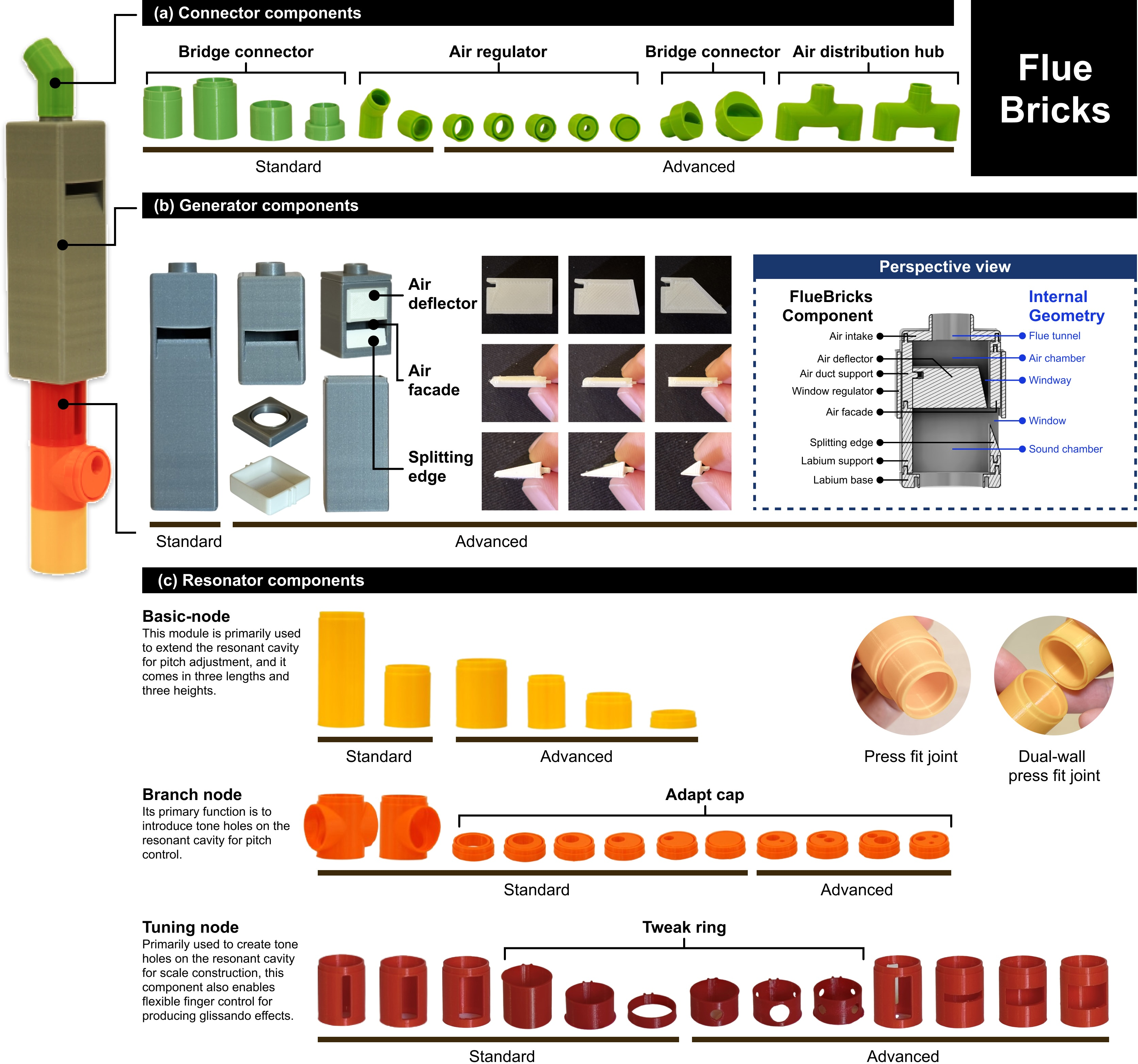
Figure 1: The FlueBricks system and modular component taxonomy, showing generator, resonator, and connector families supporting parameter-level acoustic control.
- Generator Modules: The generator is decomposed into eight submodules, mapping to flue tunnel, air chamber, windway, window, splitting edge, and sound chamber geometries. This approach is acoustically motivated: each constituent regulates airflow collimation, jet-edge coupling, and resonance onset [Fletcher1998, Mercer1951]. Notably, the platform supports both all-in-one variants for rapid configuration and advanced, fine-grained arrangements for detailed explorations of onset, overblowing thresholds, and timbral control.
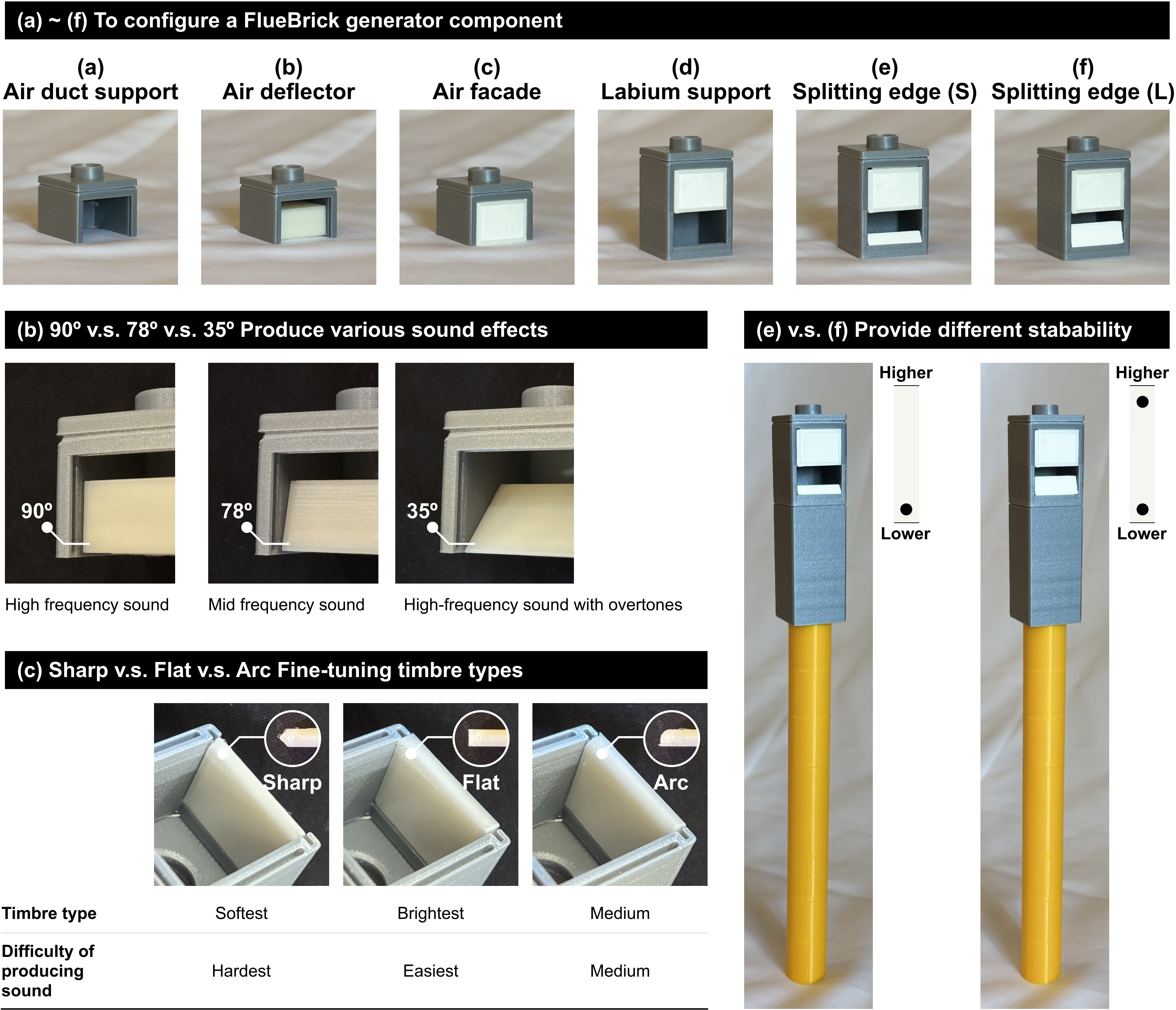
Figure 2: Example configuration of generator modules, showing parameteric manipulation of airflow, onset, and brightness via modular replacement.
- Resonator Modules: Resonators expose both discrete (basic node lengths, branch nodes for tone holes) and continuous controls (telescoping segments, tuning slots with tweak rings). This design enables direct manipulation of effective pipe length and open/closed boundary conditions, as well as tone-hole size/position, supporting experiments with intonation, fingerings, and microtonality.
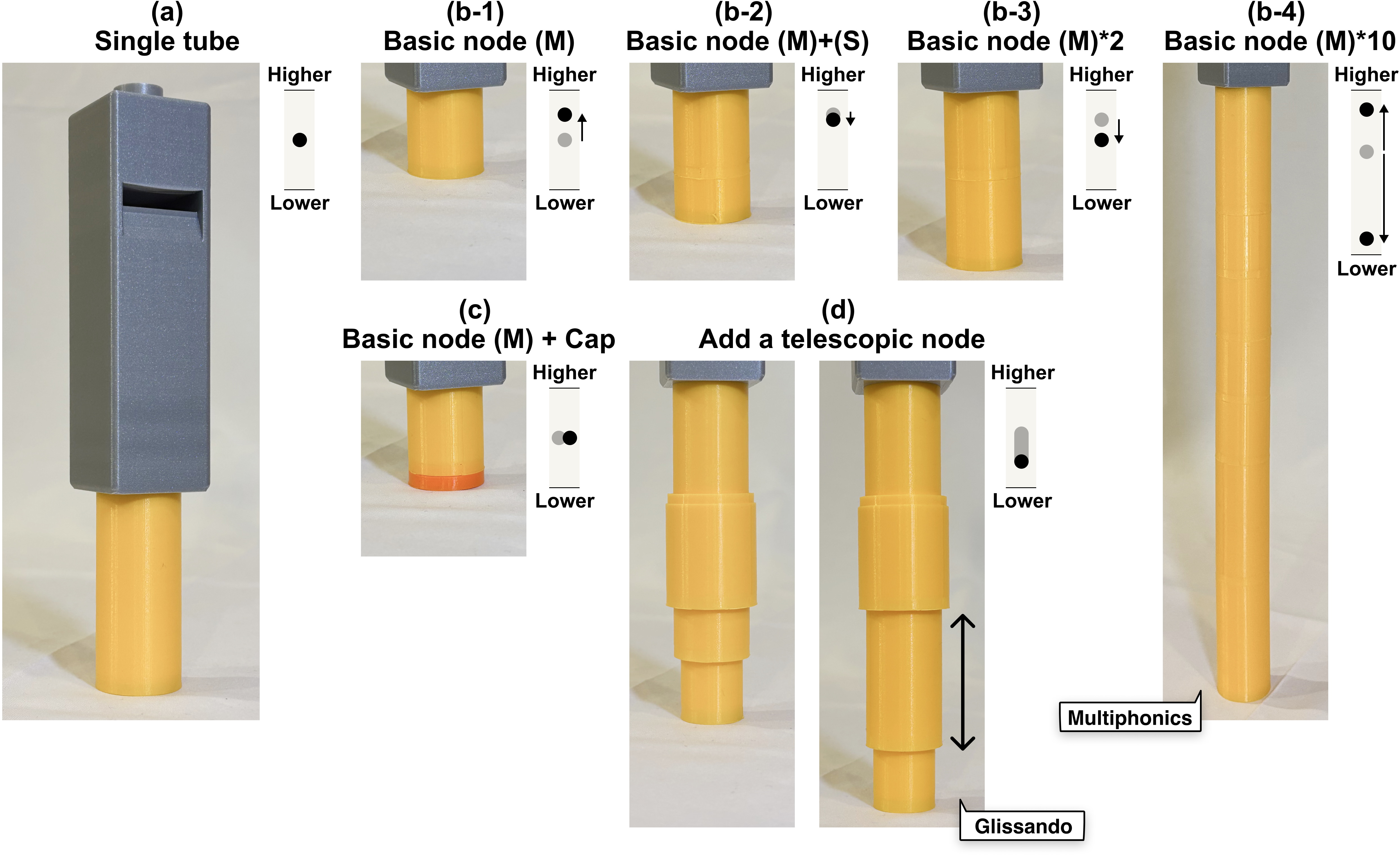
Figure 3: Resonator module manipulations—stacked nodes extend pitch downward, adapt caps effect closed-pipe behavior and telescoping permits glissando.
- Connector Modules: Connectors serve as infrastructural nodes, supporting hybrid topologies (e.g., bifurcated airflows for drones), ergonomic routing, and system integration with extant recorders. These components expand the design space beyond single-voice pipes, enabling rapid multi-instrument configurations and ergonomic improvements.
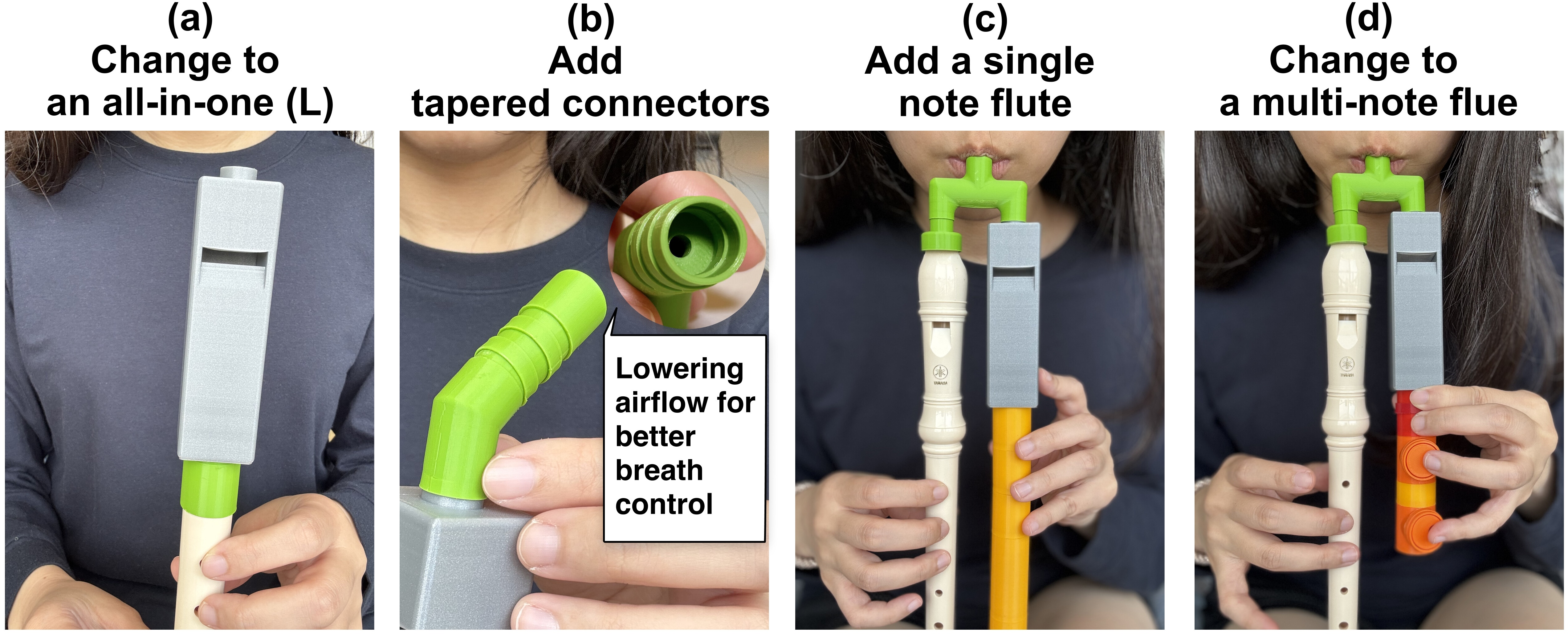
Figure 4: Connector modules enabling hybridization with standard recorders, ergonomic regulation, and parallel airflow for multi-note performance.
The joint system allows dynamic transition between designer (configurator) and player (performer) states—the "designer–player loop"—directly supporting the formation, testing, and refinement of acoustic hypotheses.
Empirical User Study: Protocol and Results
A user study was conducted with 12 participants spanning novice to professional woodwind backgrounds, employing a six-phase protocol alternating between open-ended exploration and goal-directed design.
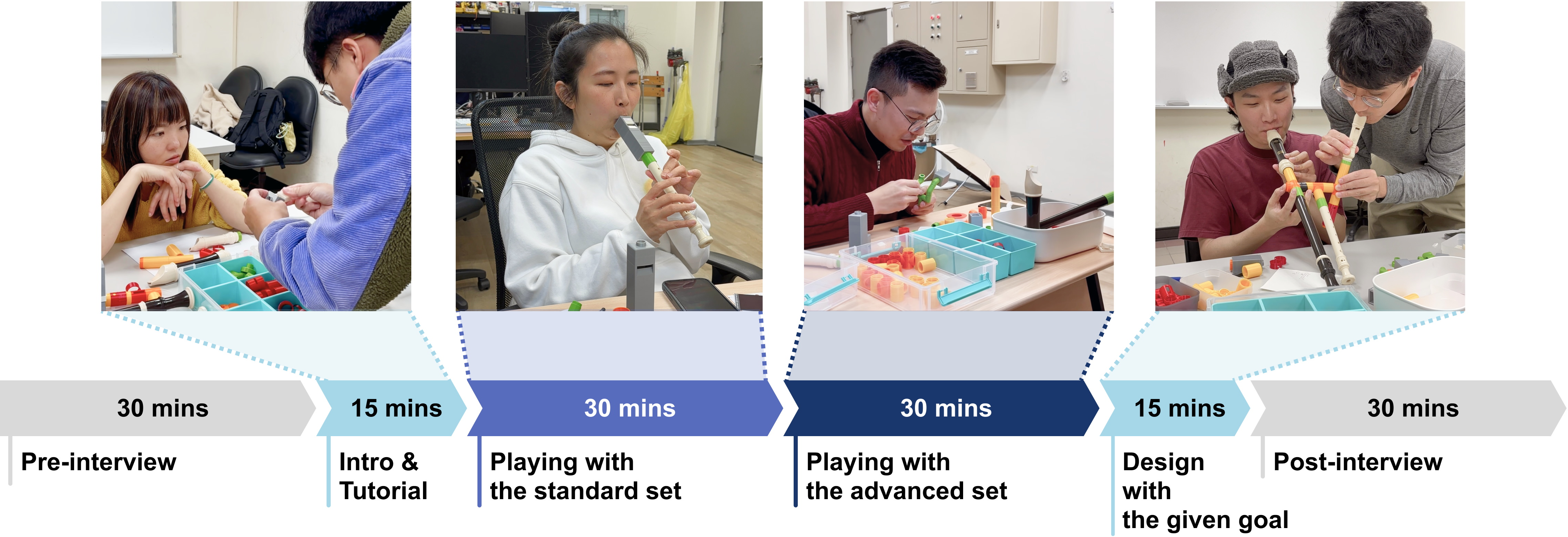
Figure 5: Study procedure overview, detailing the sequence and timing of interviews, exploration, and structured design tasks.
Module Usage Patterns
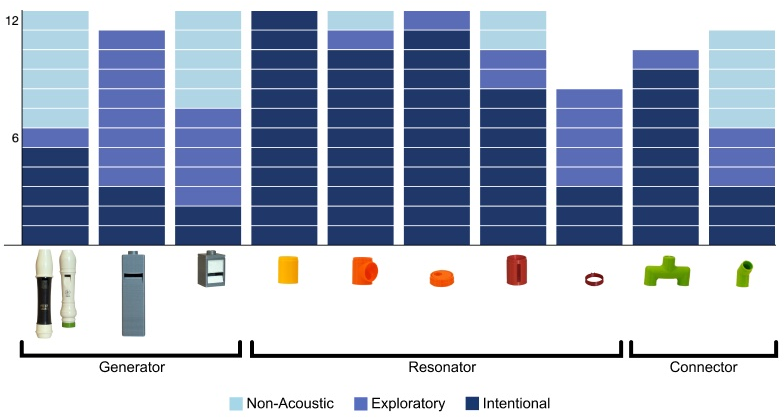
Analysis of module engagement revealed stratified interaction profiles:
Perceptual and Affective Outcomes
All participants demonstrated sensitivity to pitch modulation; only those with significant wind experience reported strong awareness of timbre, onset, and control. Perceived control and affect strictly correlated with woodwind background, not general musical expertise. Notably, one musician reported negative affect due to unpredictability, suggesting that instrument transparency and feedback are critical for novice engagement.
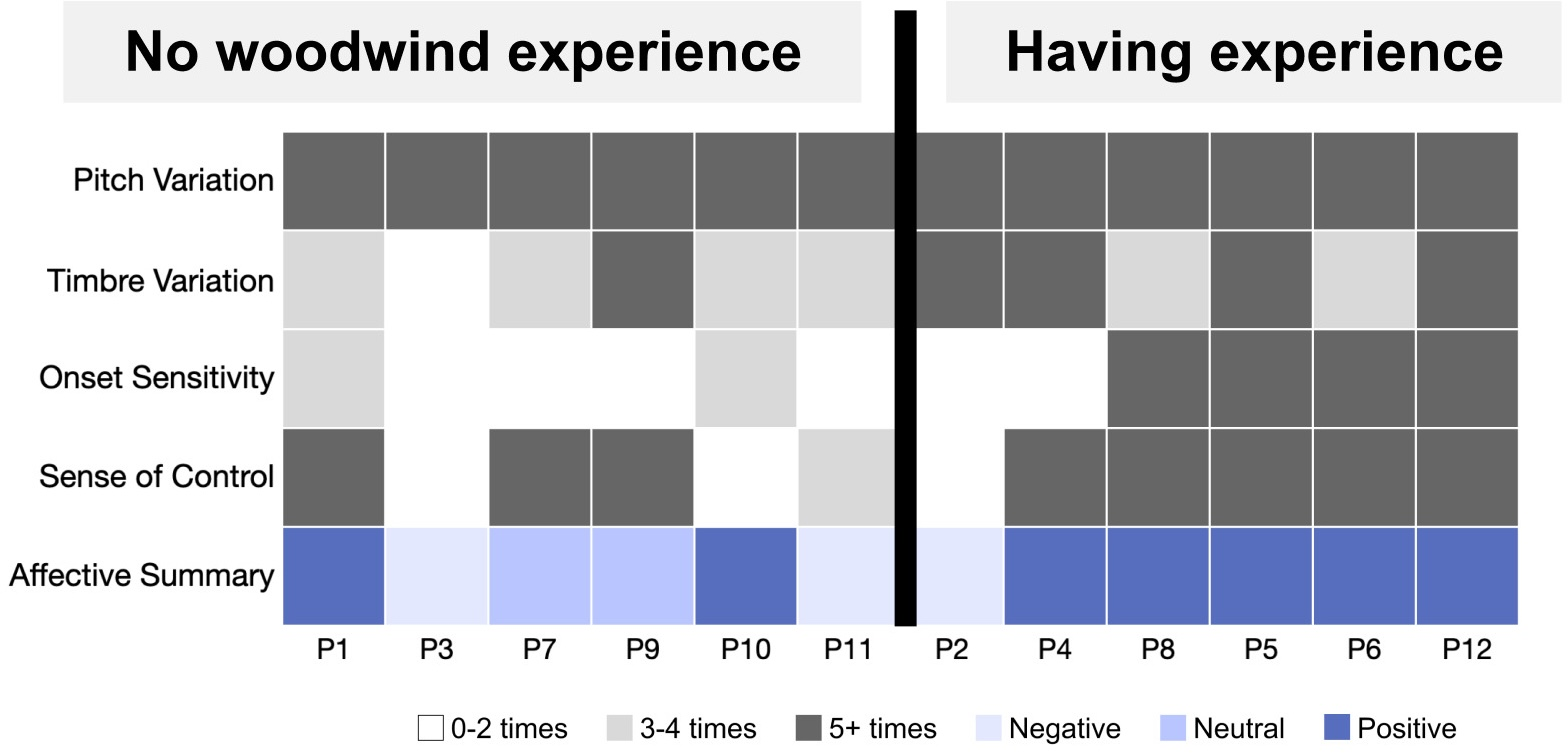
Figure 7: Perceptual/aesthetic dimension heatmap; sensitivity to control and timbral variation is concentrated among experienced woodwind participants.
The Designer–Player Loop and Acoustic Reasoning
The principal behavioral finding is the emergence of an iterative, hypothesis-driven, configure–evaluate loop—a tangible realization of "acoustic reasoning." This pattern is observed across all backgrounds, albeit with different rates of rule formation, scaffolding, and reinterpretation.
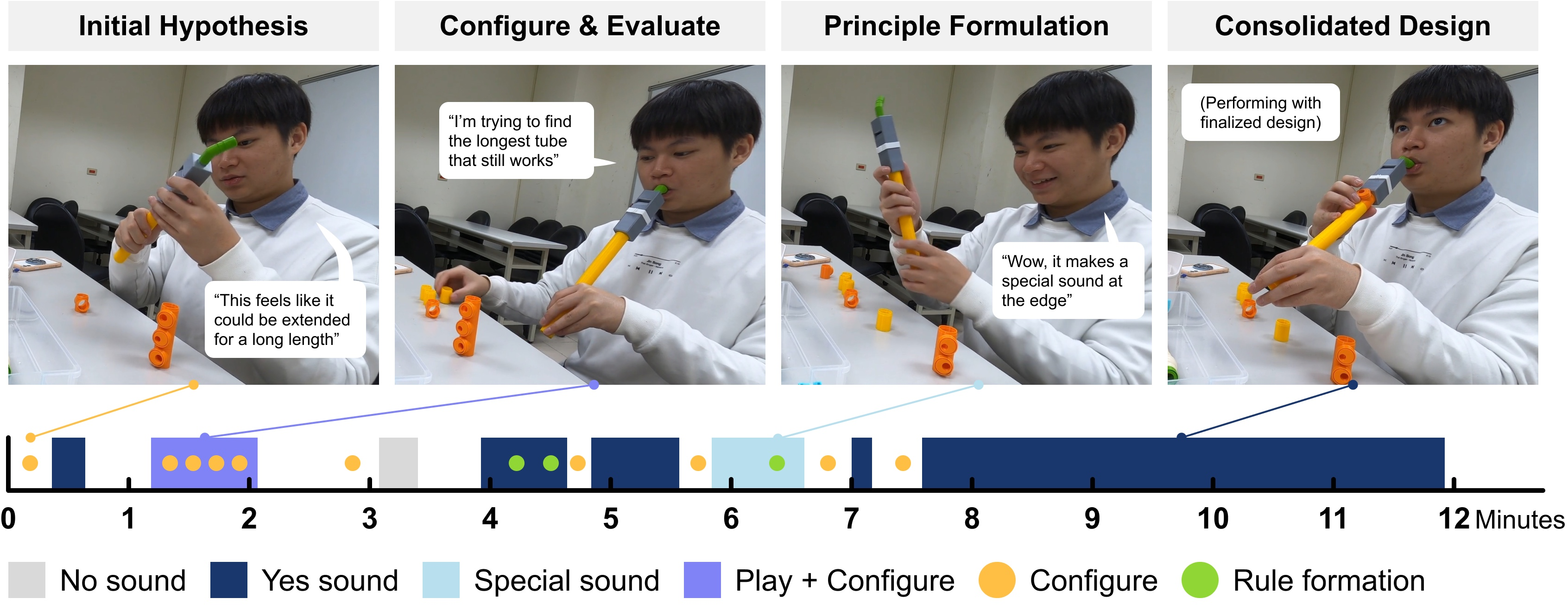
Figure 8: The designer–player loop in practice, showing rapid alternation between configuration and sonic evaluation.
Three canonical reasoning behaviors were classified:
- Instrument Scaffolding: Designing and reasoning by analogy to familiar instruments;
- Rule Formation: Articulation and repeated testing of parameter–sound correlations;
- Reinterpretation: Repurposing ambiguous modules, frequently yielding new affordances.
Timelines indicate advanced participants consolidate findings into performative acts (pedagogical showing, structured musical expression), while novices exhibit more exploration-oriented, trial-and-error engagement.
Expressive and Pedagogical Implications
Participants synthesized their explorations into diverse, expressive outcomes—novel instrument topologies, animal sound imitations, timbral manipulations, and didactic tools. Several pro musicians and music educators leveraged the kit for scaffolded, discovery-oriented teaching scenarios, while others demonstrated the kit's capacity for emergent play and creative performance.
One salient outcome is that all but one participant (a novice) constructed multi-note, musically controlled instruments by the end of the study, underscoring the accessibility and flexibility of the modular system for supporting embodied learning objectives.
Discussion: Theoretical and Practical Implications
FlueBricks operationalizes and extends the "objects-to-think-with" tradition (cf. Papert, constructionism) to physical acoustic reasoning, materializing previously esoteric and nontransparent acoustic variables as hands-on, reconfigurable levers. This approach affords several implications:
- Theory: The kit demonstrates that interleaving configuration and immediate sonic feedback scaffolds the rapid formation, revision, and consolidation of acoustic rules—in essence, externalizing the traditional lutherie cycle for the broader public. The omission of prescriptive templates and deliberate design ambiguity maximizes cognitive engagement via ambiguity as a resource, but this must be balanced with physical fidelity (to avoid confounded error signals) and adaptive scaffolding.
- Pedagogy: The approach has significant implications for science-of-sound curricula, enabling embodied, exploratory introduction to physical acoustics, timbre manipulation, and musical instrument evolution. It supports not only systematic, teacher-led instruction but also open-ended, curiosity-driven engagement.
- Broader Impact: FlueBricks’ modular paradigm points toward a scalable foundation for tangible music interfaces spanning pipe-based, free-reed, and possibly single-reed systems. Integration with digital logging, parametric design software, and fabrication processes could support curriculum-linked instrument design, adaptive tutorials, and even generative fabrication plans tuned to user performance.
Limitations and Future Directions
The current system leverages FFF 3D printing, which introduces tolerance/fidelity issues that sometimes impact stability and reliable comparison of parameter states. The study samples only single-session interactions and a limited user base. Further research should address:
- Material improvement for joint tolerance and repeatability;
- Integration of feedback logging and computational augmentation;
- Systematic classroom deployment with educators;
- Expansion beyond flute-like mechanisms to other wind/idiophone domains.
Conclusion
FlueBricks evidences that systematizing fine-grained acoustic parameters in physical modules, and tightly coupling hands-on configuration with immediate performative feedback, robustly supports acoustic reasoning for a broad spectrum of users. The construction kit paradigm demonstrated here informs future research and pedagogical practice in computationally supported musical instrument design, embodied learning, and tangible human–acoustic interaction (2604.03636).