- The paper introduces a novel first-principles formalism to define and calculate spin magnetic multipole moments in antiferromagnets.
- It employs nonlocal spin susceptibility derivatives to overcome origin-dependence and symmetry ambiguities in multipole expansions.
- The approach validates predictions for SOC effects and local responses in materials like Mn3Sn and α-Fe₂O₃, linking theory directly to experiment.
First-Principles Theory of Spin Magnetic Multipole Moments in Antiferromagnets
Introduction and Motivation
The paper "First-principles theory of spin magnetic multipole moments in antiferromagnets" (2604.03578) develops a comprehensive and quantitative formalism for spin magnetic multipole moments (SM3) of antiferromagnets (AFM). This research addresses the lack of a universal, operational definition for higher-order magnetic multipoles in AFM—a critical gap given the centrality of multipolar order parameters in theoretical and applied condensed matter physics. The approach overcomes inherent ambiguities in traditional multipole expansions arising in periodic solids, particularly origin- and unit-cell-dependence, and provides direct means to connect theoretical bulk multipoles with experimental observables when translational symmetry is weakly broken.
The central contribution is the recasting of all orders of SM3 as Taylor coefficients of a nonlocal spin susceptibility χ(q) in momentum space. Deriving from coarse-graining techniques applied to the macroscopic Maxwell equations, the approach avoids difficulties associated with the unbounded position operator in extended systems. Instead, the multipole moments are precisely defined as derivatives of χ(q), calculated from first-principles via variations of the energy density under static Zeeman perturbations. This nonlocal susceptibility yields a systematization where each multipole moment, including those of arbitrary order, arises naturally as a gauge-invariant, origin-independent, and experimentally relevant quantity.
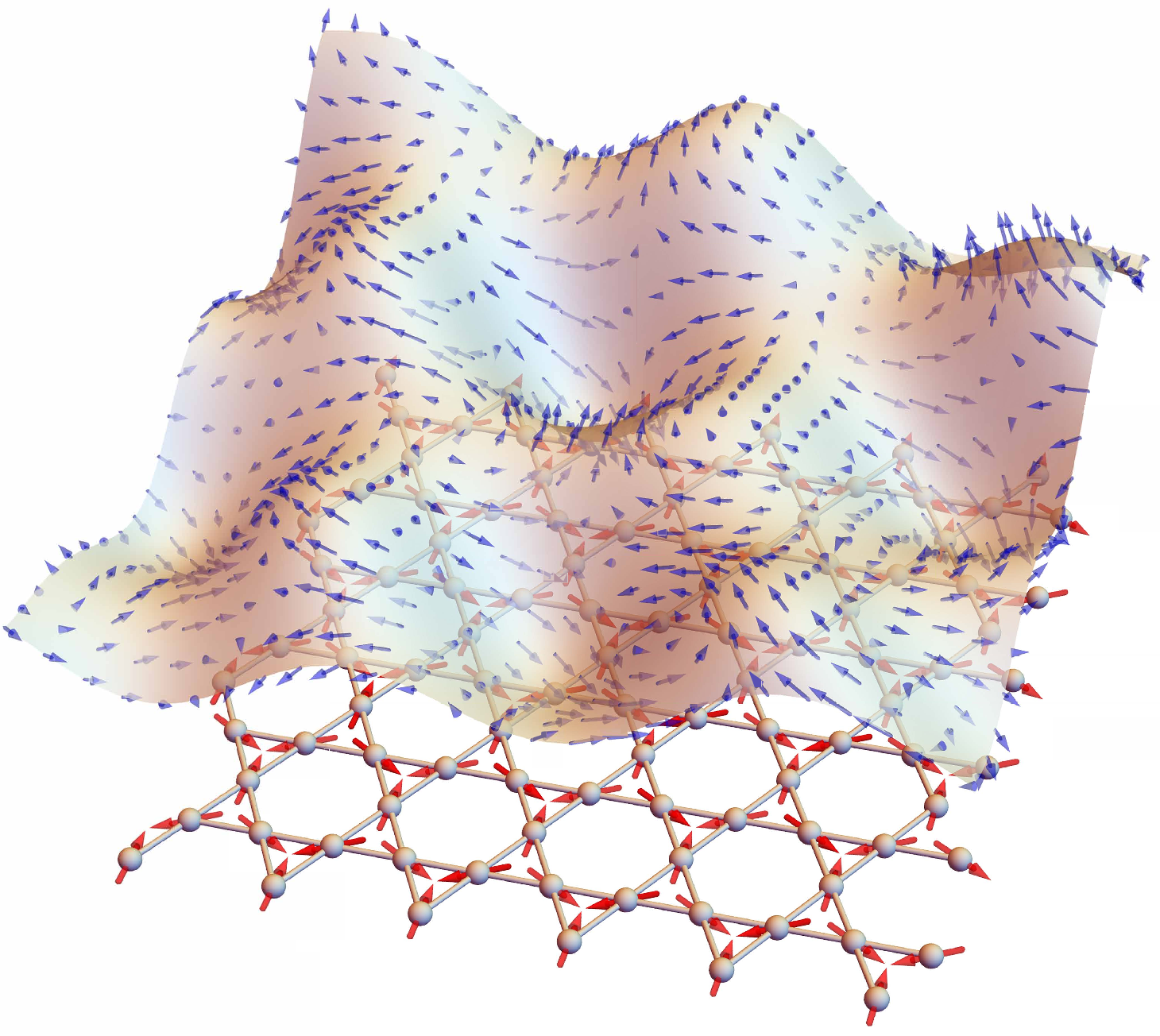
Figure 1: Schematic illustration of spin densities (blue arrows) created by a spatially nonuniform magnetic octupole for the toy model; this visualizes the emergence of higher-order multipolar spin textures in AFM.
The formalism establishes a transparent correspondence between the bulk SM3 (in the presence of perfect translation invariance) and the emergence of local spin densities when translational symmetry is weakly violated, e.g., near boundaries or in the presence of inhomogeneities. Particularly, it justifies the assignment of observable quantities to multipolar expansions in terms of local magnetic probes, textures, or gradients.
Symmetry, Spin-Orbit Coupling, and Extracting SM3
The theory rigorously incorporates symmetry constraints from both magnetic and spin point groups into the extraction of SM3, formulated via symmetry-constrained fitting of the calculated χ(q) on a grid of small q vectors. Both analytic and computational techniques are employed, enabling robust determination of tensorial multipoles consistent with all crystal and magnetic symmetries.
A key finding is the illumination of the role of spin-orbit coupling (SOC) in the formation and observability of higher-order spin multipoles. The formalism provides power-counting predictions for SOC dependence—identifying which SM3 components are symmetry-allowed in the absence of SOC and explicating how additional components emerge as perturbative corrections in the presence of SOC. Notably, for collinear AFM, certain odd-order spin multipoles exactly vanish in zero SOC, as dictated by symmetry and the absence of cross-gap matrix elements.
Application to Representative Antiferromagnets
Minimal Model
The method is systematically benchmarked on a toy model on an fcc lattice with local noncollinear magnetization. Analytic and fitted results for octupole moments from 30 show precise agreement, validating the computational protocol for both insulating and metallic regimes.
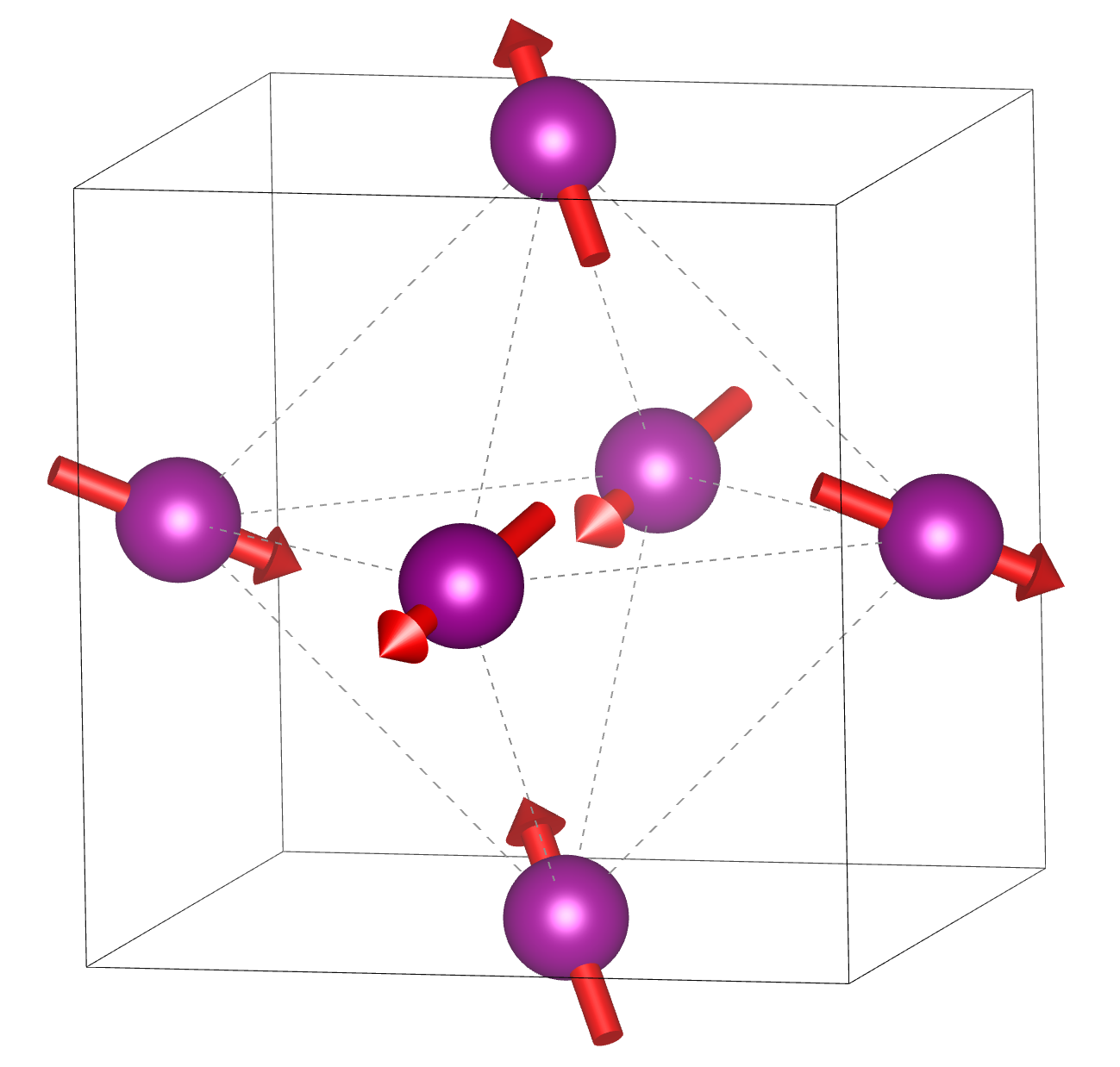
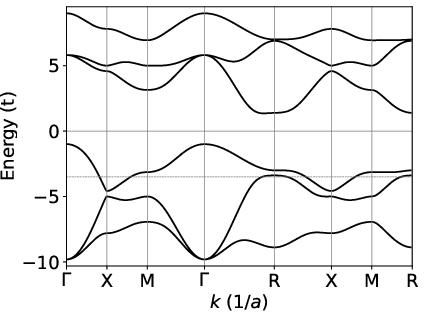
Figure 2: (a) Crystal structure and magnetic order of the toy model; (b) computed band structure, demonstrating parameter regimes for both insulating and metallic states.
31-Fe32O33
For weak ferromagnetic hematite, DFT reveals that the leading octupole components are strongly SOC-dependent and are several orders of magnitude smaller than naive estimates from local atomic moments due to rigorous symmetry constraints.
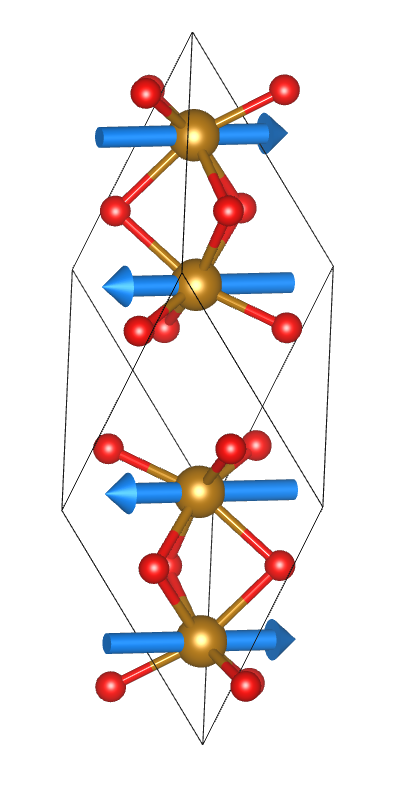
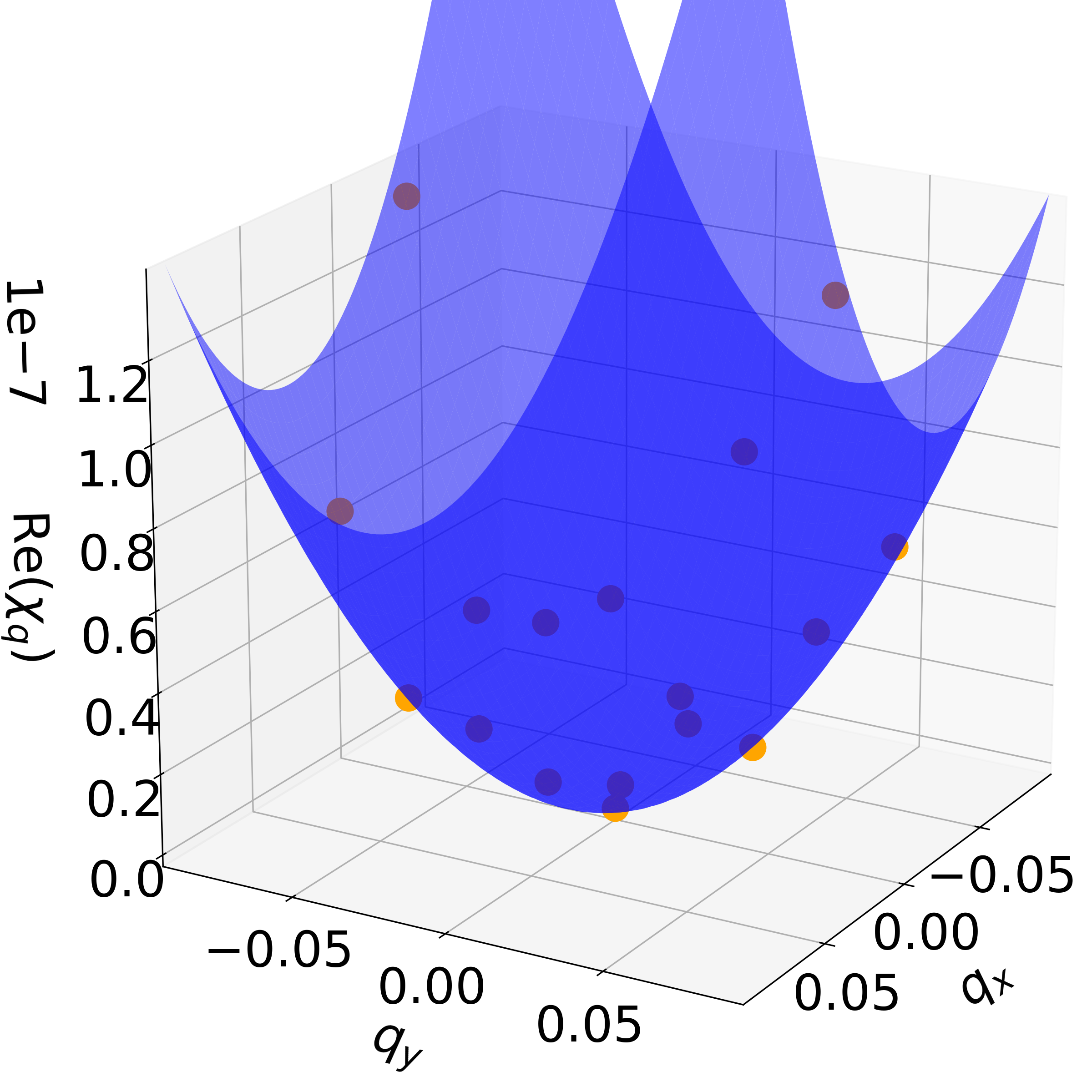
Figure 3: (a) Crystal structure and magnetic order of 34-Fe35O36 in its canted AFM state; (b) Calculated 37 and its octupolar fit in the (010) plane.
Mn38Sn
In the coplanar noncollinear AFM Mn39Sn, large octupole moments are found, orders of magnitude greater than in hematite, and are predominantly not SOC-induced. The dominant SMχ(q)0 terms faithfully reproduce cluster multipole phenomenology but without reference to ambiguous unit cell choices inherent in classical expansions.
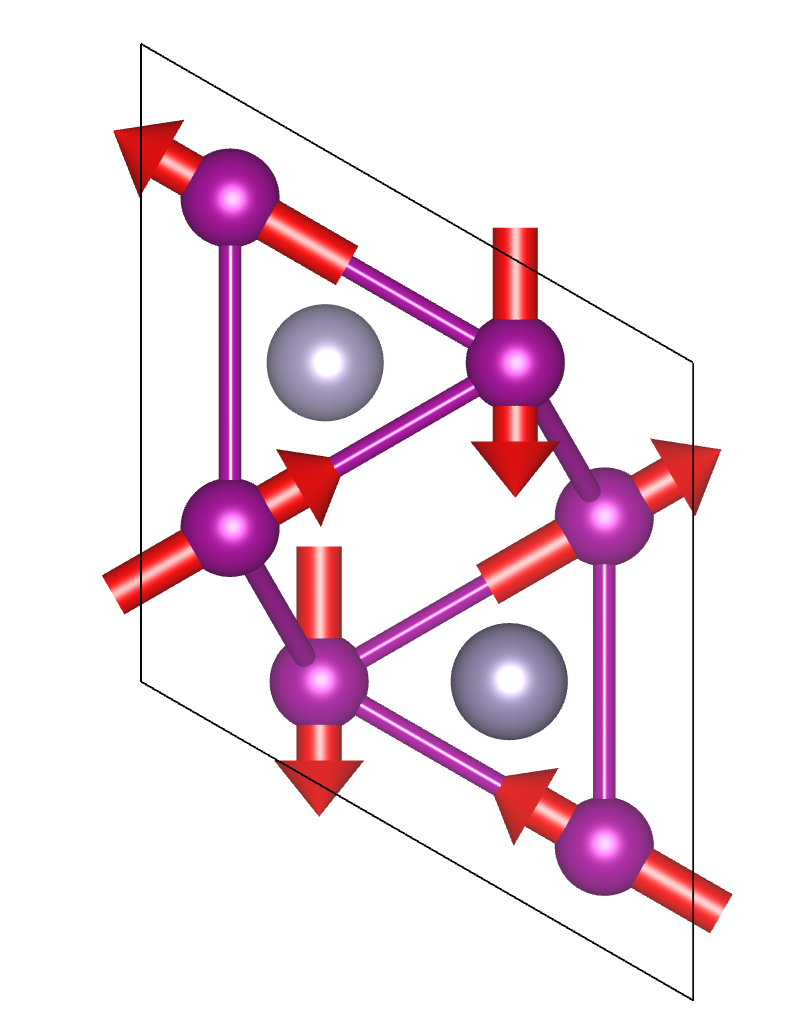
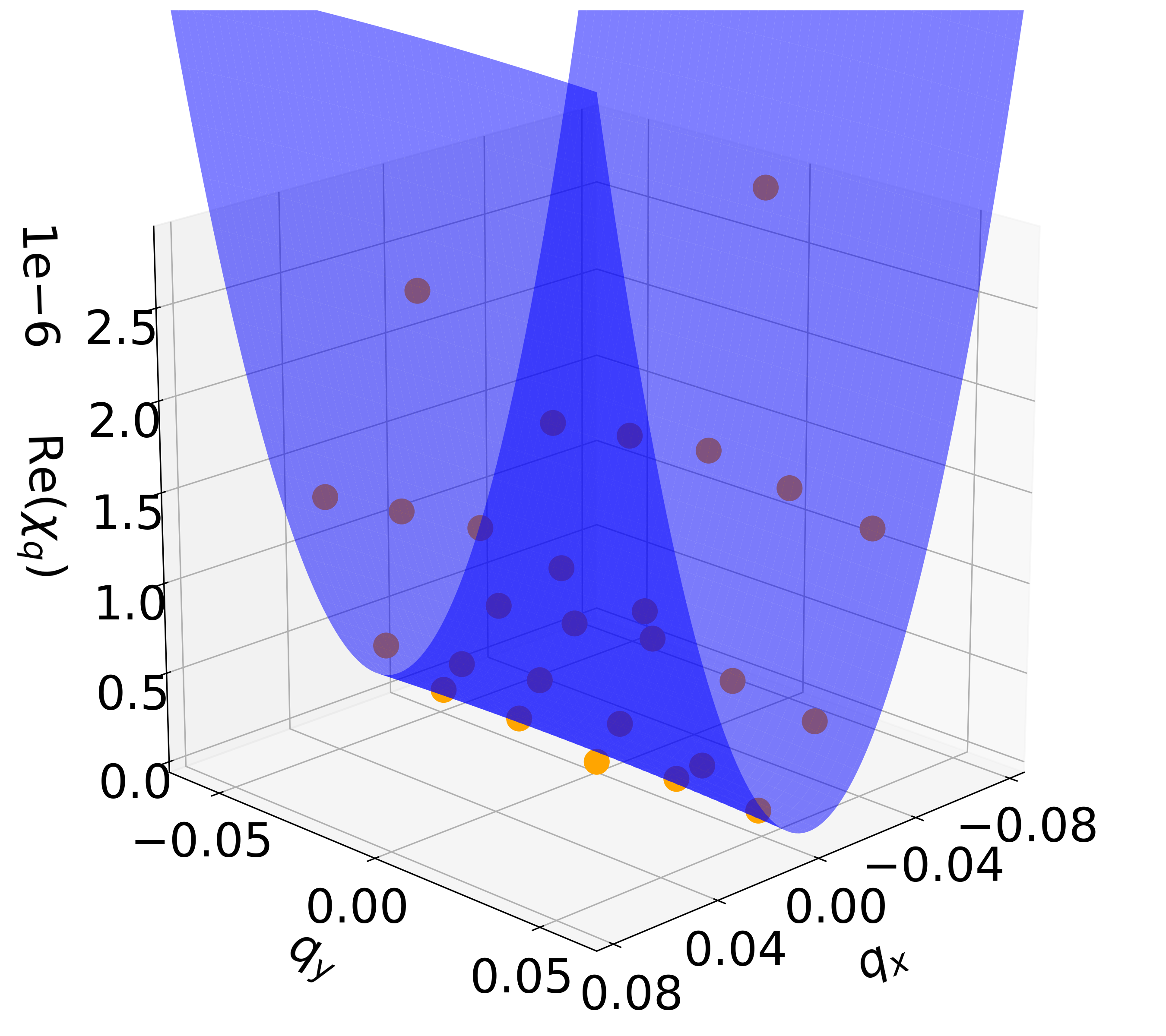
Figure 4: (a) Structure and magnetic order of Mnχ(q)1Sn; (b) χ(q)2 and its octupolar fit in the (100) plane.
Mnχ(q)3NiN
Mnχ(q)4NiN in the χ(q)5 phase shows intermediate-magnitude octupolar moments, with a closely similar spatial structure to that of the minimal model, and with explicit quantification of SOC-induced terms.
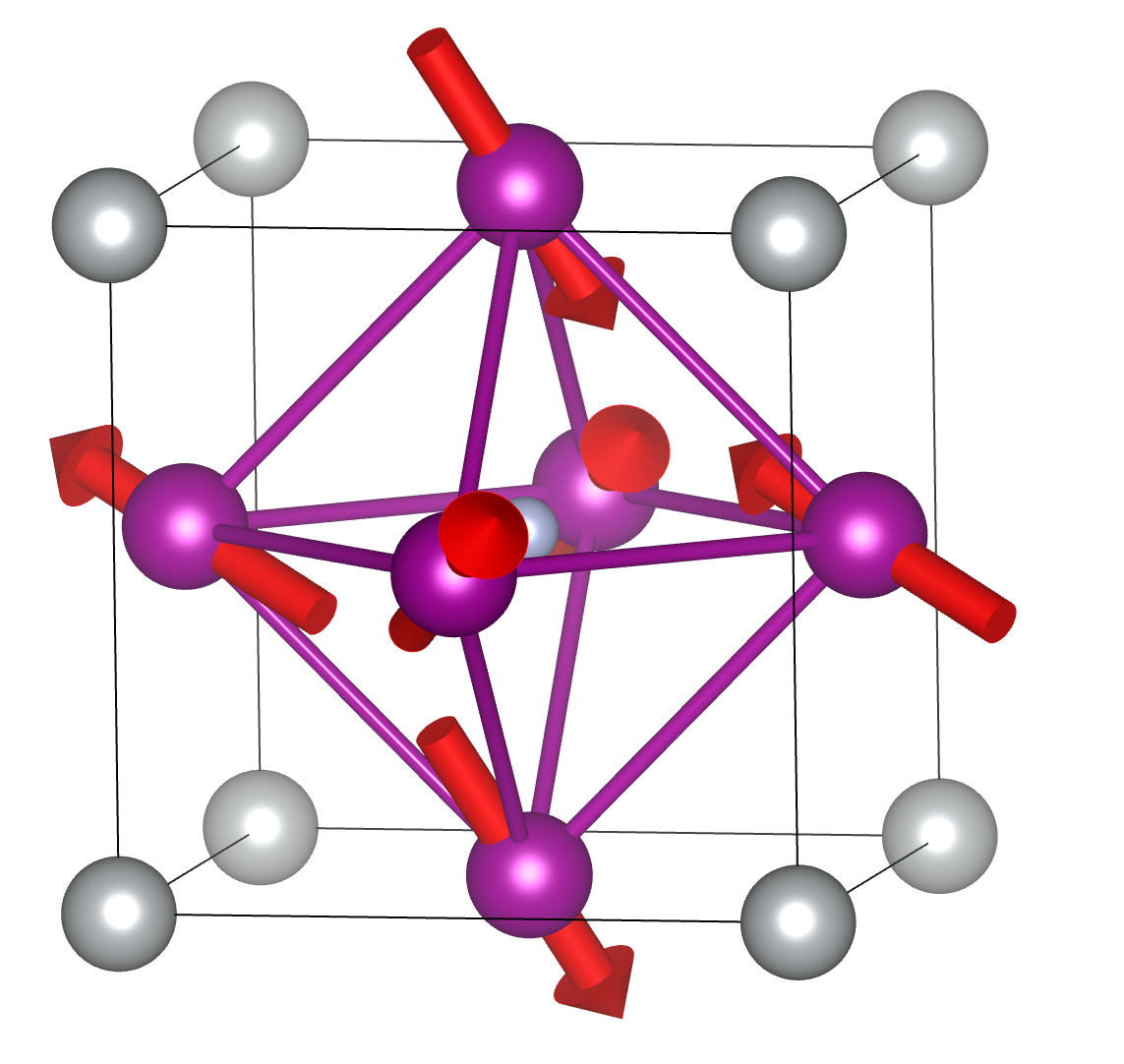
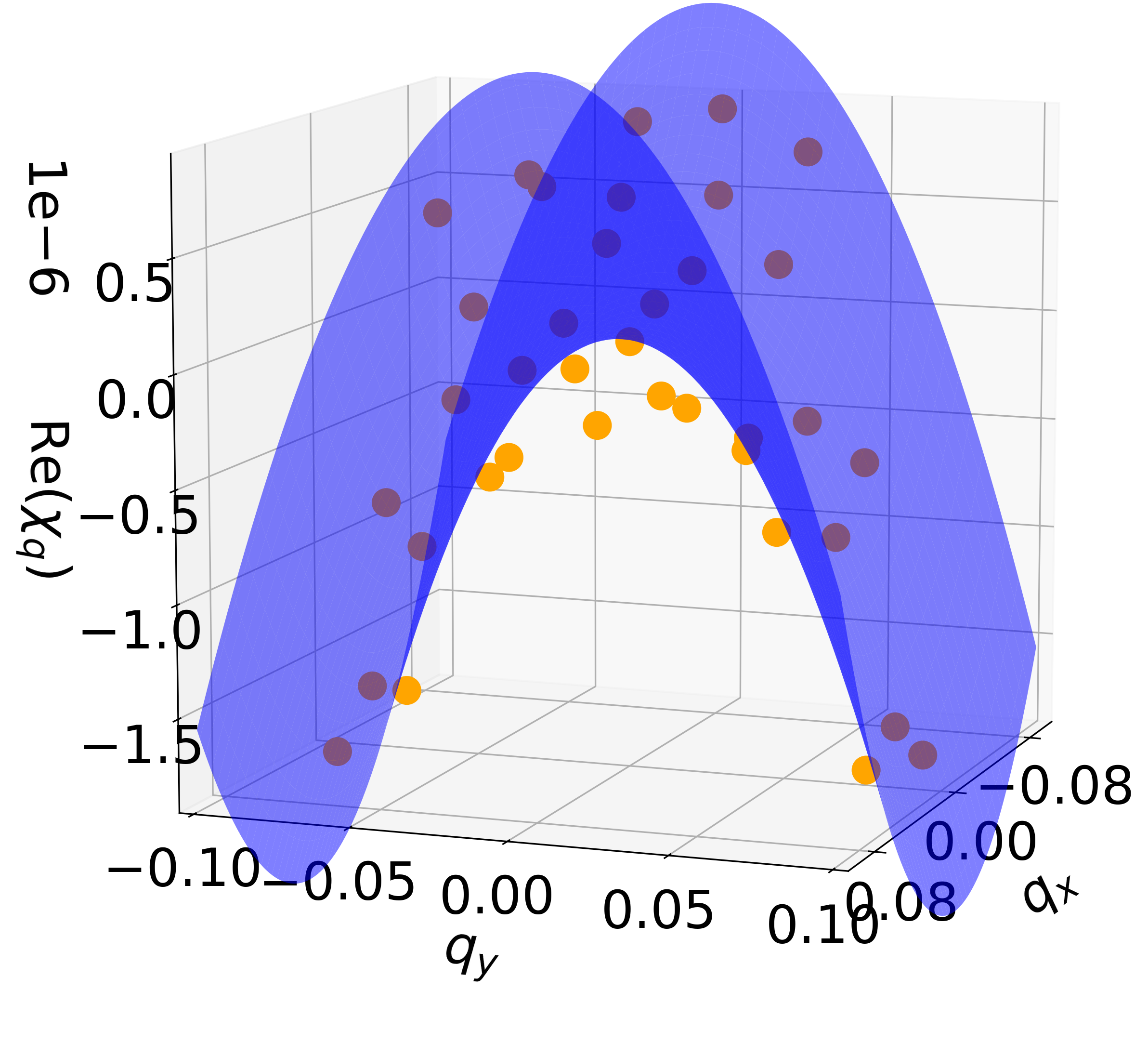
Figure 5: (a) Structure and magnetic order of Mnχ(q)6NiN; (b) χ(q)7 and octupolar approximant on the (100) plane.
Implications and Future Directions
The formalism elevates the treatment of magnetic multipoles in AFM from abstract symmetry descriptors to quantitative, first-principles-accessible thermodynamic quantities. The analysis provides practical, material-specific predictions of both local and global magnetic responses, including at domain walls and interfaces—connecting measurable local spin densities with underlying bulk multipoles.
Practically, this enables design and analysis of new AFM spintronic phenomena, e.g., via controlled inhomogeneity or strain, and allows mapping of SMχ(q)8 in a wide range of material classes. Theoretically, the approach can be directly extended to include orbital magnetic multipoles and charge multipoles, possibly illuminating elusive observables such as higher-order electric and orbital responses and their role in mixed magnetic/topological phases.
Further, the scheme provides the foundation for connecting nonlinear and texture-driven responses—such as inhomogeneous spin currents, higher-order magnetoelectric effects, and the manipulation of multipolar orders via external fields or temperature gradients.
Conclusion
This work establishes a unified first-principles theory of spin magnetic multipole moments in antiferromagnets by linking nonlocal spin susceptibility and multipolar expansion, incorporating rigorous symmetry constraints, and providing a direct, operational route to the calculation and interpretation of arbitrary-order SMχ(q)9 in real materials. The implications span characterization, control, and exploitation of novel order parameters in complex antiferromagnets, with strong connections to current directions in both fundamental and applied condensed matter research.

