- The paper introduces a rigorous framework to decompose and quantify omitted variable bias in nonlinear IV estimators.
- It employs sensitivity parameters and double machine learning for robust, data-calibrated partial identification and inference.
- Empirical applications reveal that while first-stage estimates remain robust, treatment effect estimates show high sensitivity to omitted variables.
Quantifying Omitted Variable Bias in Nonlinear IV Estimators
Introduction and Motivation
Omitted variable bias (OVB) is a fundamental concern in instrumental variable (IV) estimation, especially in nonlinear or semiparametric models such as the Local Average Treatment Effect (LATE), Local Average Treatment Effect for the Treated (LATT), and the partially linear IV model (PLIVM). This paper, "Quantifying Omitted Variable Bias in Nonlinear Instrumental Variable Estimators" (2604.03544), presents a unified, rigorous framework for quantifying OVB in a general class of nonlinear IV estimators. The framework extends and generalizes recent sensitivity analysis approaches, introducing partial identification bounds and valid inference procedures for settings where important covariates may be unobserved.
General Framework and Main Results
The class of IV estimands considered admits the ratio form
θ=γλ,
with λ=E[α(W)gY(W)] and γ=E[α(W)gD(W)], where W=(Z,X,A) is the full set of variables including an omitted component A, Z is the instrument, and X are observed covariates. When A is omitted, one obtains a "short" version θs using Ws=(Z,X).
Bias Decomposition and Sensitivity Bounds
A general bias decomposition expresses OVB as: λ=E[α(W)gY(W)]0
where λ=E[α(W)gY(W)]1 are computed without λ=E[α(W)gY(W)]2. The key insight is that for broad classes of nonlinear IV estimators (including PLIVM, LATE, LATT), the bias in both λ=E[α(W)gY(W)]3 and λ=E[α(W)gY(W)]4 can be characterized in terms of sensitivity parameters λ=E[α(W)gY(W)]5, λ=E[α(W)gY(W)]6, and λ=E[α(W)gY(W)]7, which quantify the predictive power and influence of the omitted variable λ=E[α(W)gY(W)]8. These sensitivity parameters are formally unit-free, interpretable in terms of variance ratios or partial λ=E[α(W)gY(W)]9, and can be calibrated empirically by benchmarking omitted variable effects against observed covariates.
The framework delivers explicit finite-sample bounds for the true parameter: γ=E[α(W)gD(W)]0
with analogous partial identification for γ=E[α(W)gD(W)]1, derived via the interplay of γ=E[α(W)gD(W)]2 and γ=E[α(W)gD(W)]3 bounds, and detailed closed-form cases corresponding to possible sign configurations.
Estimation and Inference
The paper advances nonparametric estimation of OVB-adjusted bounds using double machine learning (DML), leveraging Neyman-orthogonal score functions and K-fold cross-fitting. This makes the approach tractable in high-dimensional settings and robust to overfitting.
Notably, the inference framework accounts for both sampling uncertainty and partial identification, constructing confidence intervals for the identified region using modern methods for partially identified parameters (Imbens–Manski, Stoye shrinkage). These intervals reliably incorporate the additional uncertainty from omitting γ=E[α(W)gD(W)]4 and avoid superefficiency issues. Median aggregation across multiple sample splits further stabilizes estimation.
Illustrative Empirical Application
The approach is applied to the U.S. Job Training Partnership Act data, focusing on LATE and LATT estimation stratified by gender. The outcome is 30-month earnings, γ=E[α(W)gD(W)]5 is program participation, and γ=E[α(W)gD(W)]6 is a randomized encouragement instrument. Sensitivity analysis is performed via benchmarking, with the omitted variable assumed to be as predictive as the most influential observed covariate.
Main Empirical Findings
- First stage estimates (probability of compliance γ=E[α(W)gD(W)]7) remain robust even under substantial omitted variable assumptions for both genders.
- Reduced-form (γ=E[α(W)gD(W)]8) and treatment effect (γ=E[α(W)gD(W)]9) estimates are much more sensitive, particularly for males, where OVB-adjusted CIs often include zero.
- For females, significant and robust treatment effects persist after OVB adjustment.
After introducing the sensitivity analysis, the main figures provide visualizations of the OVB implications for estimating LATE and LATT in the JTPA context.
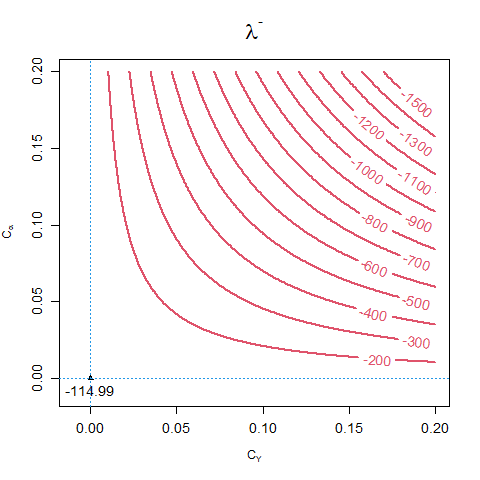
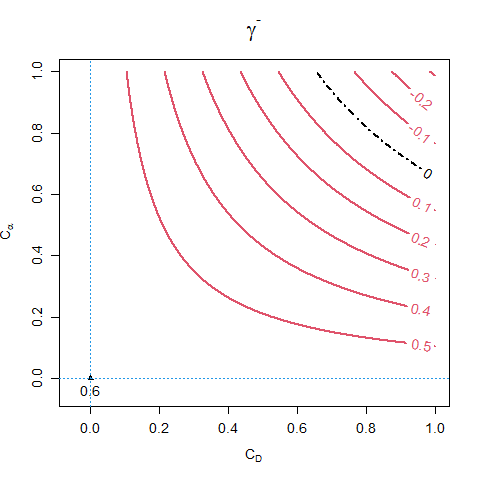
Figure 1: Sensitivity contour plots of the lower 97.5% CI for W=(Z,X,A)0 (left) and W=(Z,X,A)1 (right) for male LATE, varying W=(Z,X,A)2 and W=(Z,X,A)3.
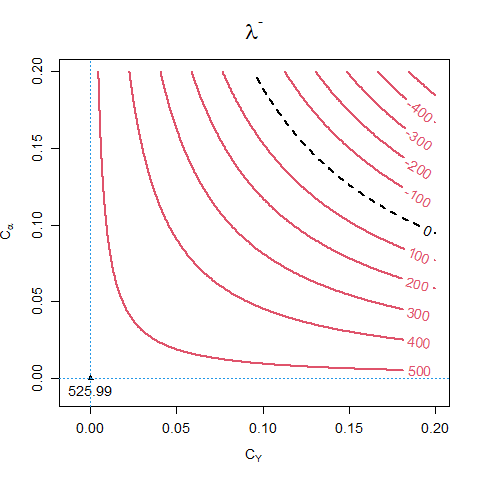
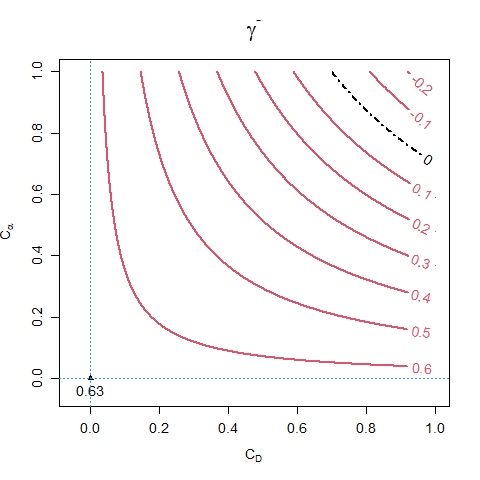
Figure 2: Sensitivity contour plots of W=(Z,X,A)4 (left) and W=(Z,X,A)5 (right) for female LATE, showing the impact of omitted variable strength on lower CI bounds.
Plots of the partial identification bounds as functions of W=(Z,X,A)6 (candidate parameter values) for the main estimand, as in:
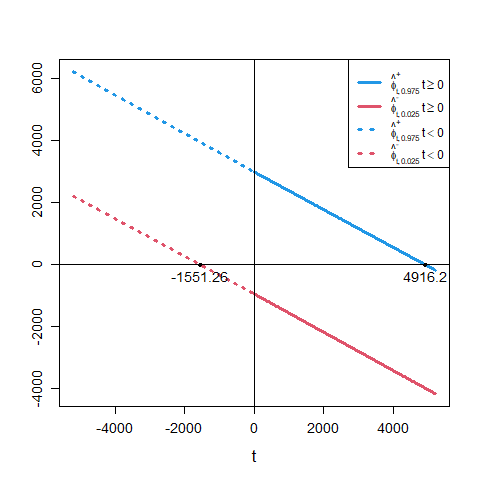
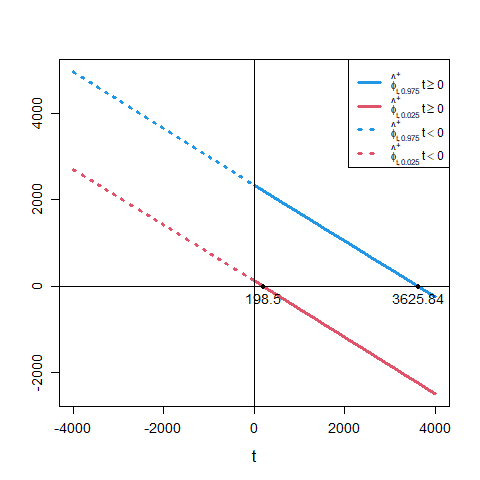
Figure 3: Plots of W=(Z,X,A)7 and W=(Z,X,A)8 for male (left) and female (right) LATE, showing the set of W=(Z,X,A)9 values compatible with the OVB-adjusted region.
Sensitivity contours for the LATT model closely mirror the LATE results:
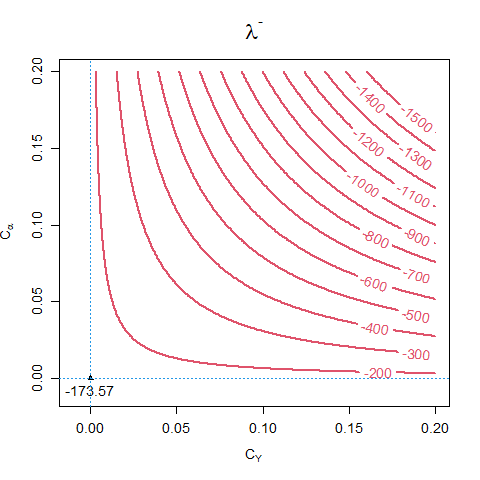
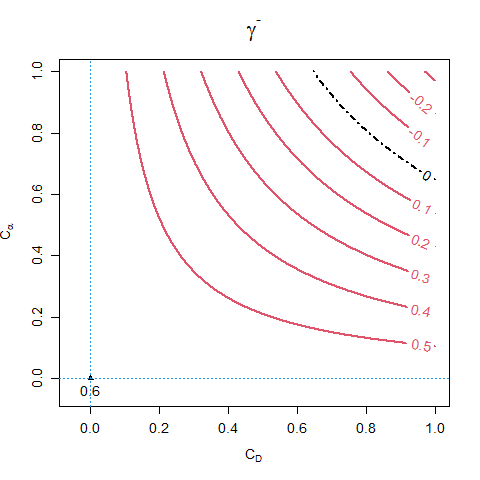
Figure 4: Sensitivity contour plots for A0 (left) and A1 (right) for male LATT.
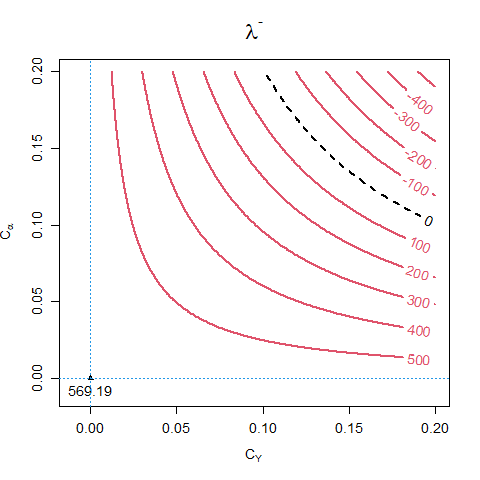
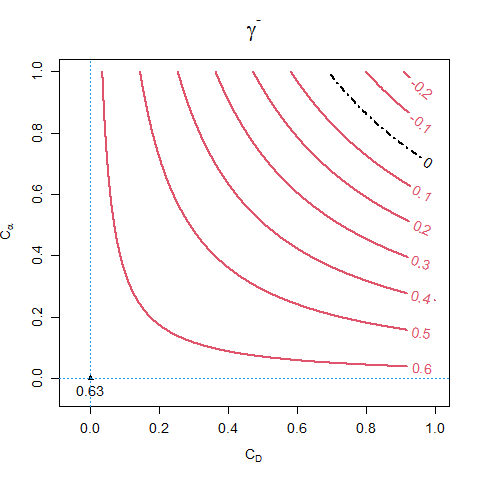
Figure 5: Sensitivity contour plots for A2 (left) and A3 (right) for female LATT.
Bounding function plots for LATT:
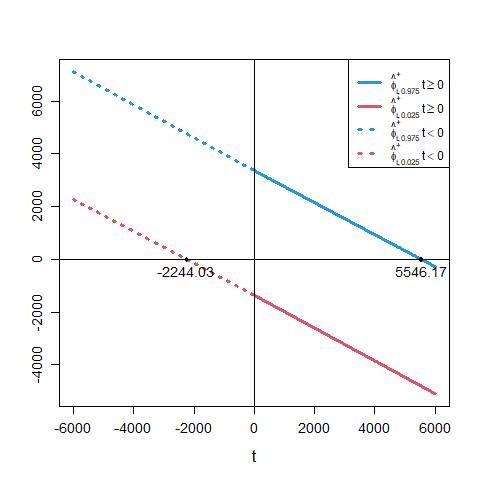
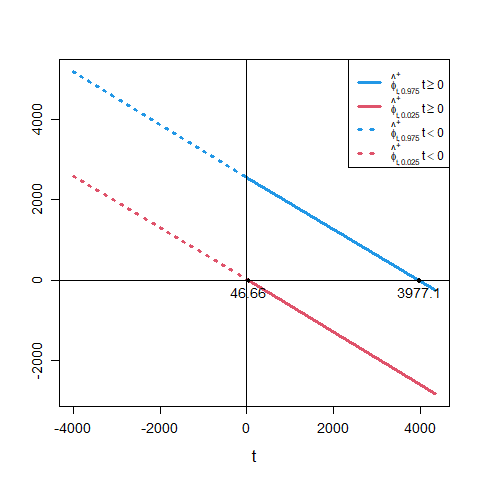
Figure 6: Plots of A4 and A5 for LATT in males (left) and females (right).
Finally, OVB-adjusted confidence interval bounds for the identified set under shrinkage:
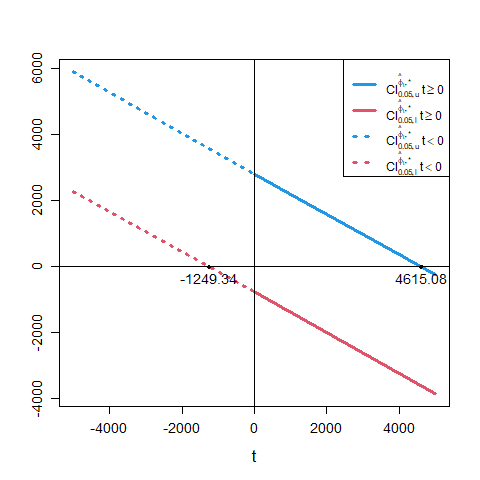
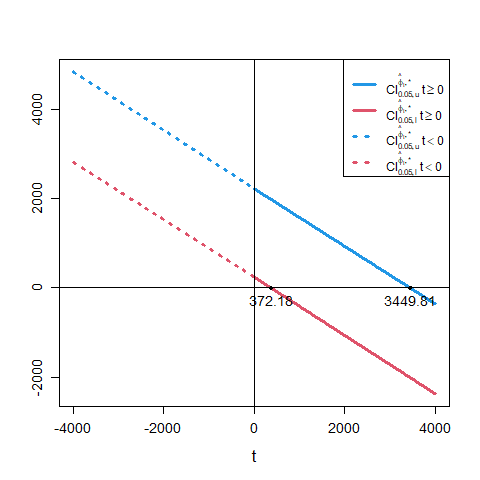
Figure 7: OVB-adjusted upper and lower confidence interval bounds for A6 in male (left) and female (right) LATE.
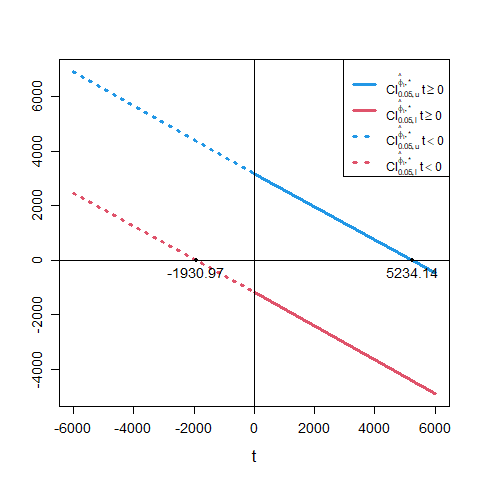
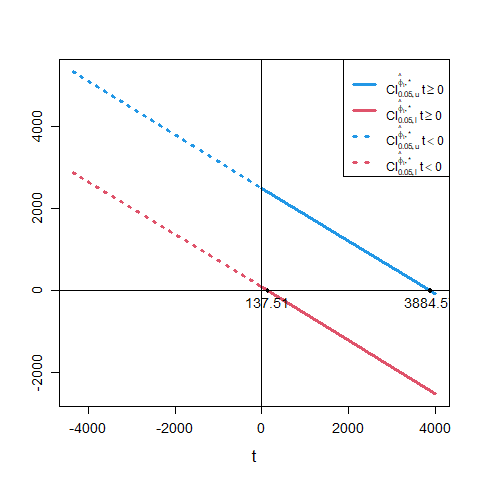
Figure 8: OVB-adjusted upper and lower confidence interval bounds for A7 in male (left) and female (right) LATT.
Numerical Results and Robustness
Benchmarking identifies the most influential observed variable, and sets the sensitivity parameter as if the omitted A8 were comparably useful. For example, A9 (instrument weight sensitivity) takes values around 0.08–0.14, while Z0 (outcome prediction) is 0.15–0.18.
Empirically, the OVB-adjusted CI for Z1 (first stage) remains tight and far from zero even for aggressive OVB assumptions. However, ITT and LATE/LATT bounds and their CIs widen substantially, with male LATE/LATT no longer statistically distinguishable from zero under plausible OVB, while female effects remain robust. Adjustment via the Stoye shrinkage method yields interpretively relevant and generally narrower CIs, confirming that first-stage relevance is not threatened by OVB but that reduced-form and treatment effect estimates are fragile.
Theoretical and Practical Implications
The analysis establishes that many nonlinear IV estimands admit partial identification under OVB, with explicit, data-calibrated sensitivity analysis tools. The framework is fully compatible with high-dimensional machine learning and modern semiparametric inference.
The major implication for applied causal inference is that in the presence of possibly important omitted covariates, only first-stage compliance estimates may be fully robust; ITT and structural effect estimates can be highly sensitive, in both sign and magnitude, even with relatively weak omitted variables. This makes OVB analysis essential for responsible application of IV methods, especially in labor economics, program evaluation, and related fields.
Methodologically, this work bridges causal machine learning and econometric sensitivity analysis, operationalizing partial identification logic for practical empirical research and highlighting the crucial role of calibration via observable covariates.
Future Directions
Potential extensions include the development of analogous sensitivity analysis and identification bounds for more complex and nonstandard IV models (e.g., nonparametric structural IV, dynamic treatment regimes), automatic or robust benchmarking calibrations, and integration with causal discovery for omitted variable search.
Conclusion
This work rigorously formalizes the quantification of omitted variable bias in nonlinear IV estimators, delivering bias decompositions, sensitivity parameterizations, and valid OVB-adjusted confidence intervals via double machine learning. The empirical evidence underscores the necessity of OVB analysis in applied work—particularly when causal claims about treatment effects are made and unobserved confounding cannot be ruled out. The framework enables both sharper theoretical insights and more credible policy evaluation in the presence of non-ignorable omitted variables.