- The paper presents a novel framework (SDVDiag) that integrates human-in-the-loop feedback with reinforcement learning to improve automated diagnostics in connected vehicle systems.
- It combines statistical causal inference with multimodal graph refinement to filter spurious edges and enhance the interpretability of diagnostic graphs.
- Experimental results in an automated valet parking scenario show significant gains with 100% precision and 84% recall in pinpointing underlying system bottlenecks.
Context-Aware Causality Mining for Diagnosis in Connected Vehicle Functions: An Expert Analysis of "SDVDiag" (2604.03391)
Introduction
"SDVDiag: Using Context-Aware Causality Mining for the Diagnosis of Connected Vehicle Functions" proposes a comprehensive framework that addresses fundamental limitations in automated diagnostics for distributed, software-defined vehicle (SDV) systems. Unlike traditional, purely data-driven causal discovery techniques unable to accommodate hidden dependencies or rapidly changing software architectures, SDVDiag uniquely integrates reinforcement learning from human feedback, multimodal system observability data, and expert-driven context rules. The resulting platform achieves substantial increases in diagnostic accuracy and interpretability, exemplified via a fully containerized automated valet parking application with connected vehicle features.
This essay provides a technical overview of the SDVDiag framework, focusing on its architectural innovations, algorithms for human-in-the-loop causal inference, multimodal graph refinement methodology, evaluative results, and broader ramifications for intelligent vehicular system management.
System Architecture and Analysis Pipeline
SDVDiag's pipeline orchestrates distributed observability data collection, deep causal representation learning, and expert-guided graph discovery through a highly modular design (Figure 1).
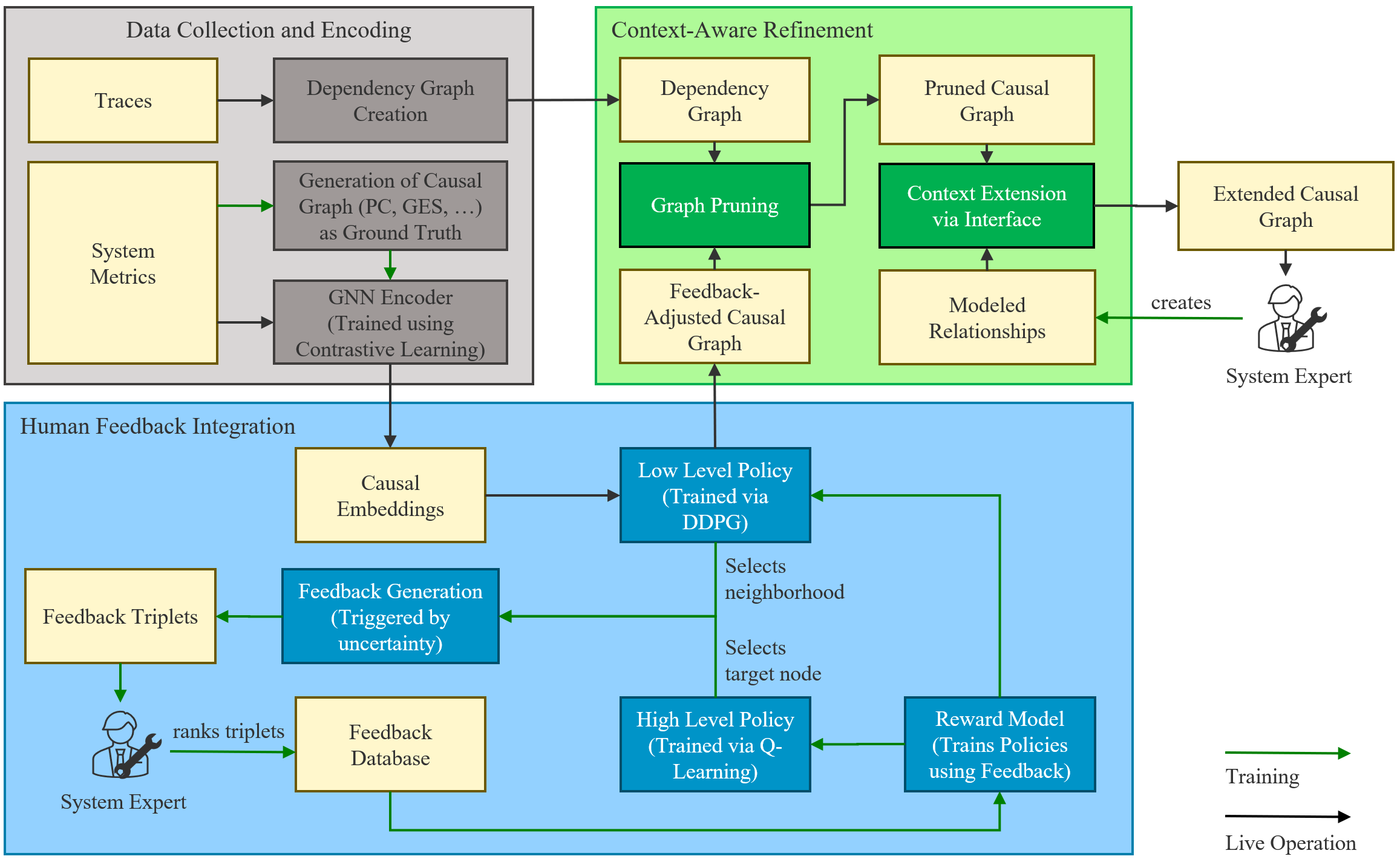
Figure 1: The SDVDiag pipeline processes metrics, traces, and feedback into a context-enriched causal graph for diagnosis.
Metric sources include performance telemetry captured by Prometheus—CPU, memory, and resource statistics—and distributed traces via Zipkin, which catalog real interaction patterns between services. The pipeline encodes these heterogeneous data streams as multivariate time series fed to a contrastive learning-based Graph Neural Network (GNN) encoder. This encoder operationalizes latent, causal-aware embeddings supporting generalization across vehicle deployments and topologies by leveraging both GCN and GAT variants.
Distinctively, initial causal graphs are generated using constraint- and score-based algorithms (e.g., PC, GES) to provide pseudo-ground-truth for bootstrapping the embedding space without manual labels. This automation ensures scalability across dynamic connected vehicle fleets.
Reinforcement Learning from Expert Feedback
To address false positives and capture domain-specific relations elusive to purely statistical analysis, SDVDiag integrates hierarchical reinforcement learning (RL) with human experts in the feedback loop. Here, RL agents—discretized into node- and edge-level hierarchies—use DDPG for continuous edge selection and Q-learning for target node prioritization, respectively. Expert input is solicited through minimally-intrusive, pairwise comparisons over candidate causal predecessors, dramatically reducing annotation effort from O(N2) manual decisions.
The policies update asynchronously in the background, leveraging all historical feedback via persistent storage to ensure knowledge continuity and decrease brittleness with system restarts. Policy optimization is driven by a neural reward model trained on expert triplet rankings, producing high-fidelity, incrementally refined causal graphs.
Multimodal Context-Aware Graph Refinement
Raw causal graphs, even after RL feedback, contain residual spurious edges. SDVDiag implements robust, multimodal pruning and context augmentation steps to enforce structural and semantic validity (Figure 2).
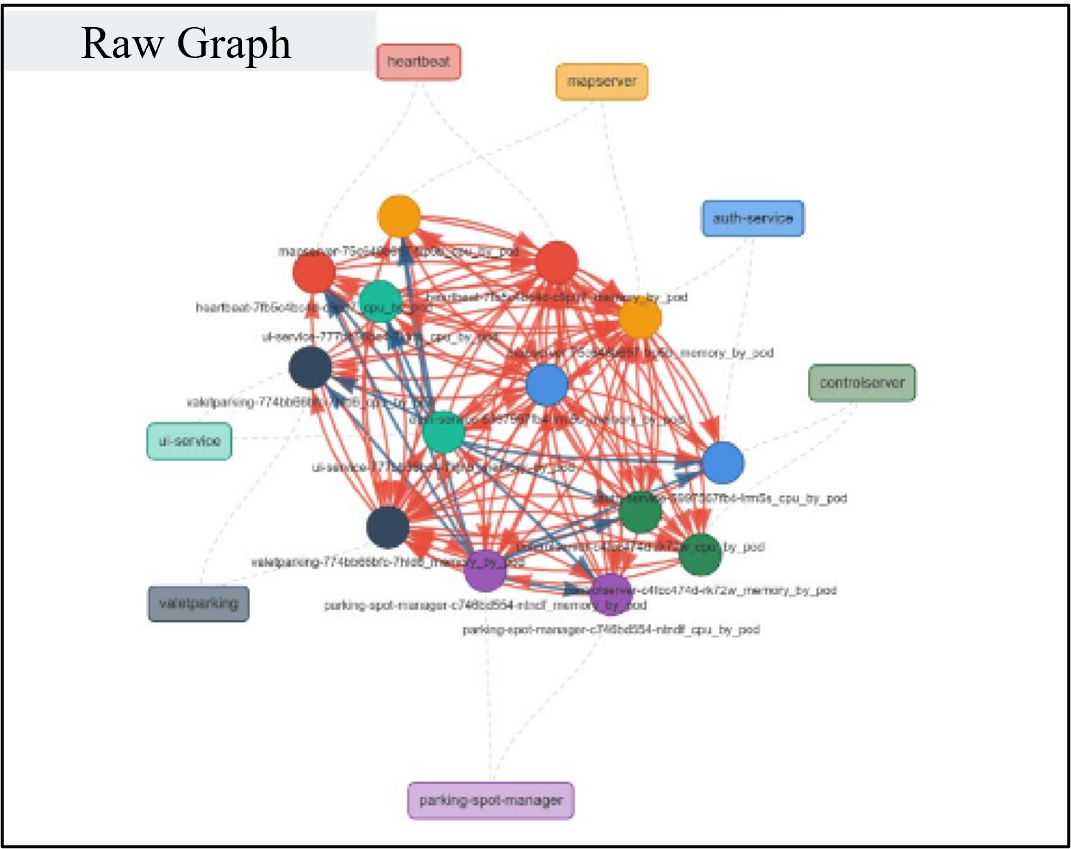
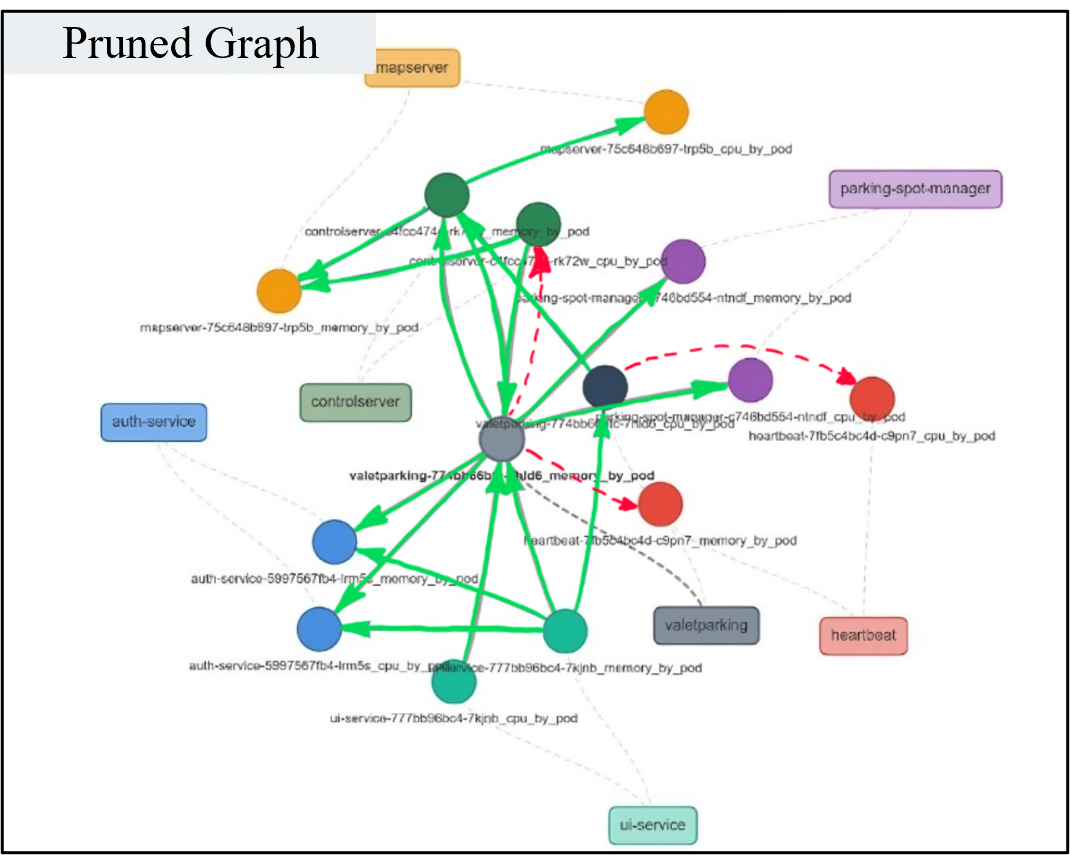
Figure 2: Causal graph pre- (left) and post-refinement (right); green edges are validated, red edges are false negatives or missing.
Edges are filtered via three sequential modules:
- Confidence Filtering: Eliminates weak predictions using a configurable probability threshold.
- Trace Validation: Edges are verified against Zipkin's service-level dependency DAGs, correcting orientation and invalidating edges unsupported by actual call traces—even reconciling granularity mismatches between metric- and service-level abstractions.
- Duplicate Aggregation: Merges metric-level edge variants to a canonical, most confident graph-representative.
The framework enables further enrichment using expert-specified rules for latent causes. These rules can inject virtual nodes and associated edges conditioned on real-time system metrics (e.g., introducing a "parking queue" node upon sustained CPU overload, see Listing 1 in the original text). This capability elevates SDVDiag's causal graphs to semantically align with operational realities, including phenomena unobservable in baseline telemetry.
Application and Evaluation on Automated Valet Parking
The SDVDiag framework was instantiated within a connected Automated Valet Parking (AVP) scenario, featuring seven intercommunicating services for user interface, authentication, parking spot management, and control (Figure 3). A test case simulated a queue overflow—leading to a deadlock observable in the control and parking spot pipeline.
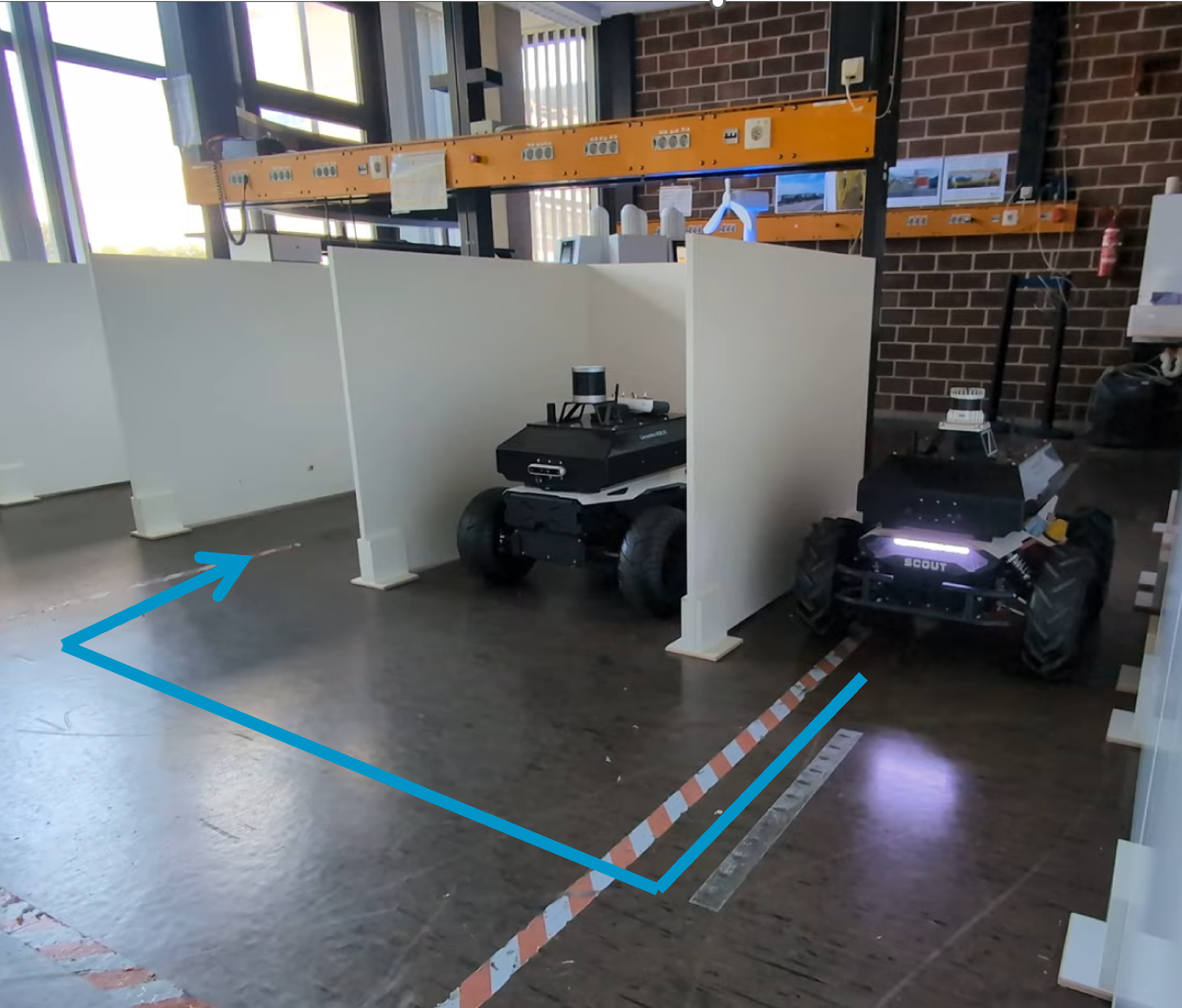
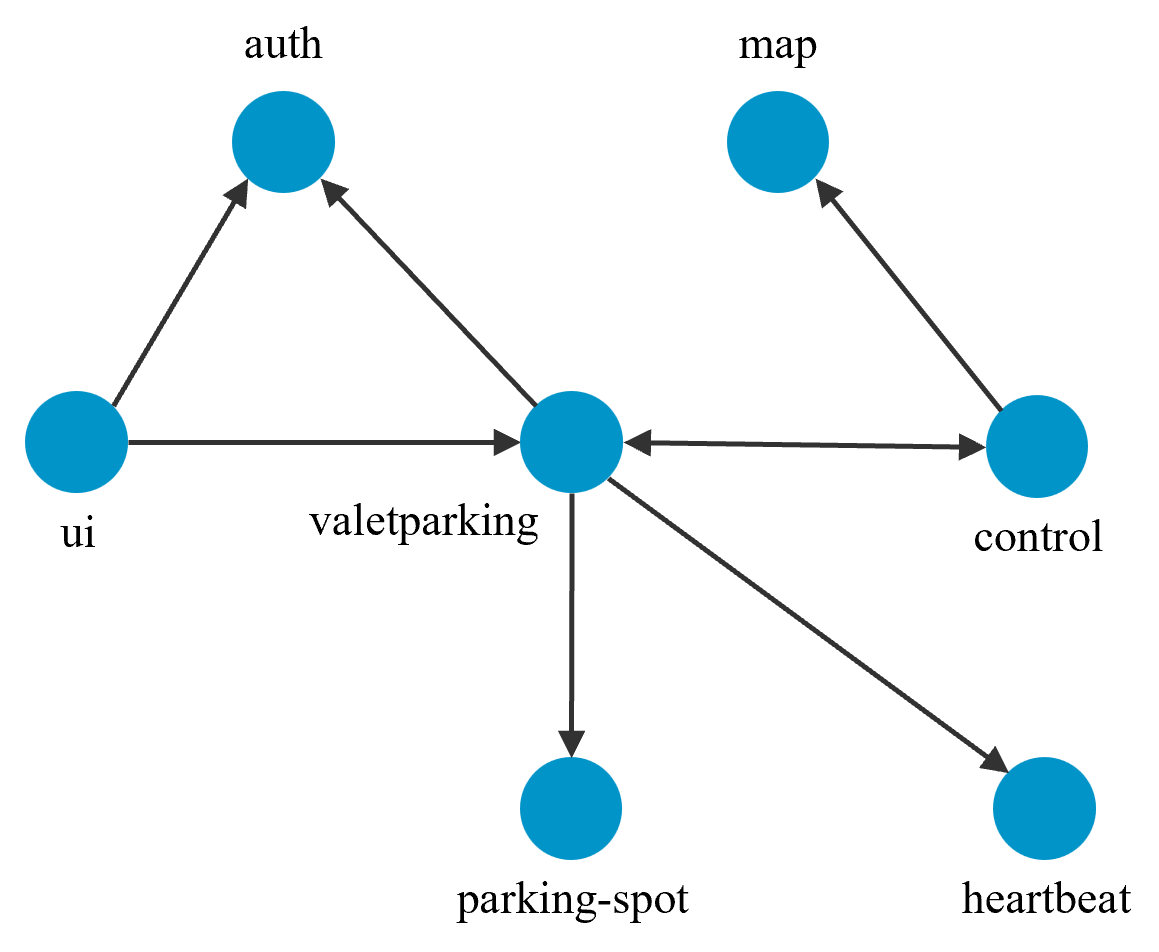
Figure 3: Overview of the Automated Valet Parking use case, depicting service orchestration and ground-truth causal dependencies.
Across multiple evaluation stages, the SDVDiag process demonstrated the following:
- Initial (base) causal graph generated from statistical data: low precision (14%), many false positives, about 137 edges.
- After RL-guided expert feedback (30 triplet responses): significant reduction in spurious edges, increased graph sparsity and focus (~49 edges, 32% precision, 84% recall).
- After full context- and trace-based pruning: 16 final edges, achieving 100% precision (all predicted edges valid), 84% recall.
Notably, final root cause analysis could now pinpoint non-observable system bottlenecks—specifically, the queue overflow—demonstrating the value of context-rule injection (Figure 4).
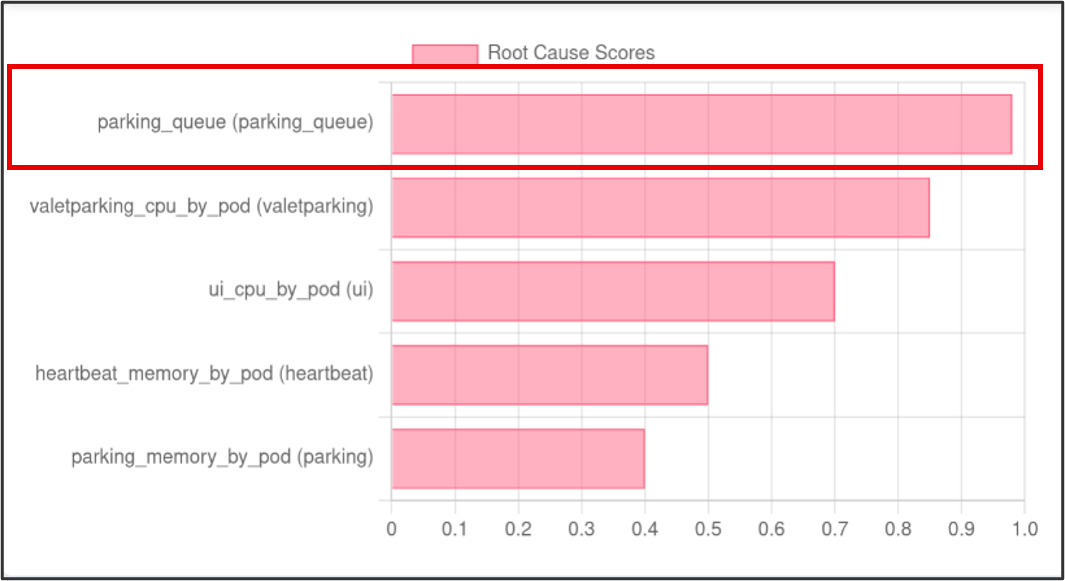
Figure 4: Context-aware analysis accurately isolates the root cause, mapping observable anomalies to hidden factors in the extended DAG.
Implications and Future Directions
SDVDiag's results substantiate the thesis that integrating expert feedback, system-specific context, and observability traces can overcome prevailing generalization and recall/precision limitations in automated causality mining for vehicle software. The ability to maintain high diagnostic accuracy under system evolution, network dynamics, and architectural updates points toward future self-adaptive and resilient vehicular management software.
Two primary implications arise:
- Practical: Operators gain rapid, actionable diagnostic insight, thus minimizing downtime and costly interventions in critical SDV deployments.
- Theoretical: The success of multimodal, context-augmented causal modeling motivates further research into combining formal system models, policy learning, and hybrid statistical-symbolic causality reasoning in non-stationary cyber-physical systems.
Further work is required to generalize this approach to large-scale microservice ecosystems, automate context rule extraction, and optimize causal embedding learning strategies—potentially integrating natural language system documentation, additional telemetry sources, and meta-learning over the feedback process for tighter human-AI collaboration.
Conclusion
SDVDiag presents a methodologically rigorous and practically validated framework for context-aware causality mining in distributed connected vehicle architectures. By synergistically combining hierarchical reinforcement learning from human feedback, multimodal graph validation, and expert-driven contextual augmentation, the system achieves a step change in precision and interpretability over traditional data-centric analytics. The evidence provided in the automated valet parking use case underscores its effectiveness in real-world scenarios and elucidates a pathway for next-generation diagnosability in intelligent software-defined vehicles.