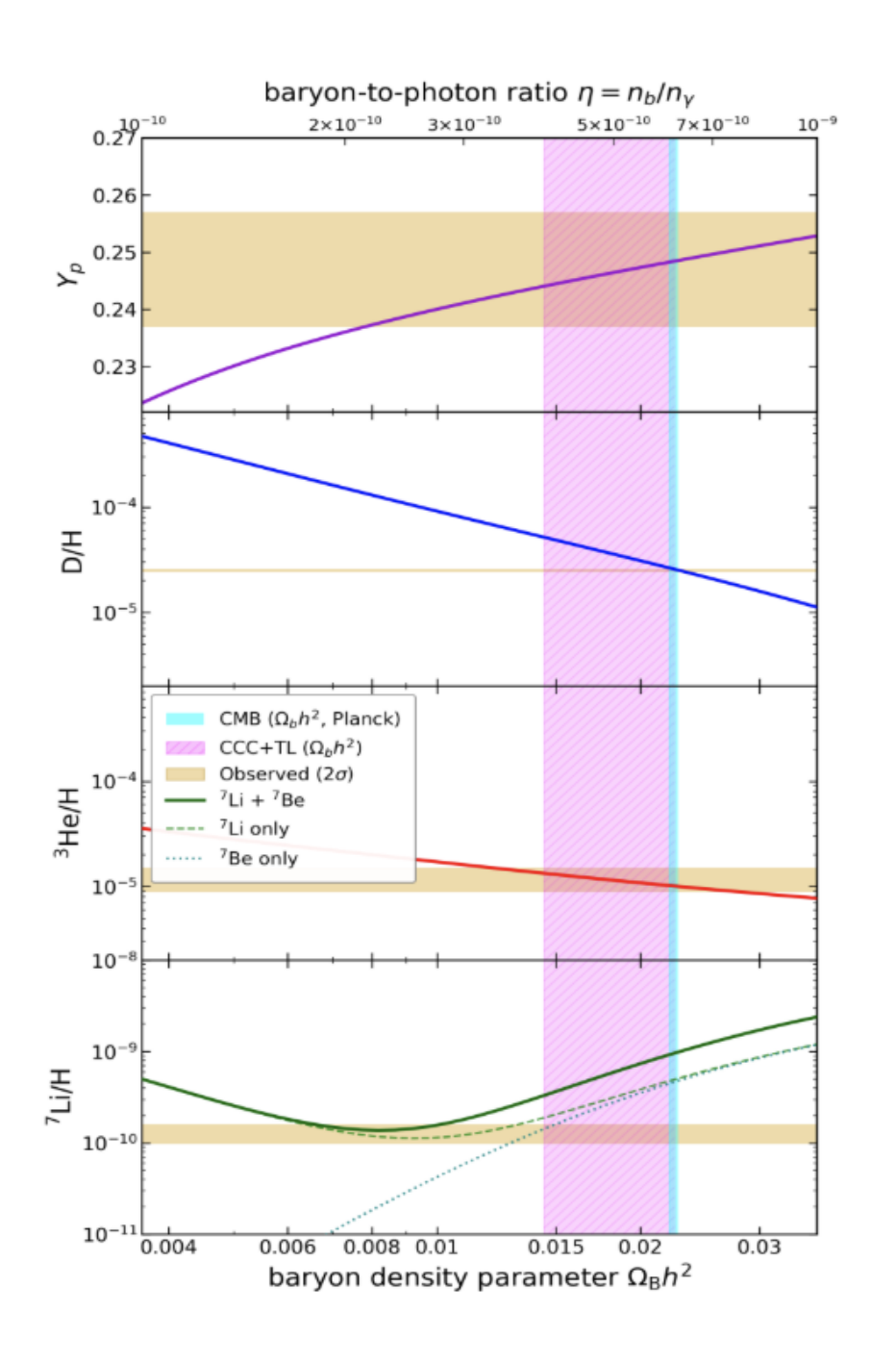
- The paper demonstrates that applying a universal scaling function f(z) within CCC+TL preserves BBN’s predicted light element abundances.
- It modifies standard Friedmann dynamics by rescaling decay and reaction rates, maintaining invariant dimensionless parameters.
- Lower baryon density in CCC+TL potentially reduces lithium discrepancies, though it increases deuterium levels relative to ΛCDM predictions.
Big Bang Nucleosynthesis Constraints in CCC+TL Cosmology
Overview of CCC+TL Framework and Its Motivation
The Covarying Coupling Constants plus Tired Light (CCC+TL) cosmology proposes a unified approach to cosmic expansion that modifies standard Friedmann dynamics by introducing a universal scaling function f(z), applied to all quantities with explicit length dimensionality. Dimensionless constants and ratios, such as α, remain strictly invariant. The “tired light” component arises from microscopic vacuum structure, mediating photon energy loss without scattering and preserving observed CMB isotropy. The CCC+TL model has been validated against a suite of cosmological and astrophysical data, including SNe Ia, BAO, CMB, galaxy formation timescales, and rotation curves.
Scaling Laws and Expansion Dynamics
Cosmic quantities scale as X(z)=X(0)f(z)n for length dimension n. For example, c∼f, G∼f3, ℏ∼f2, while mass and charge remain unchanged. Critically, at high redshifts relevant for BBN (zBBN), f(z) approaches a plateau, fmax≈3. The tired light effect is negligible for BBN but dominates at recombination.
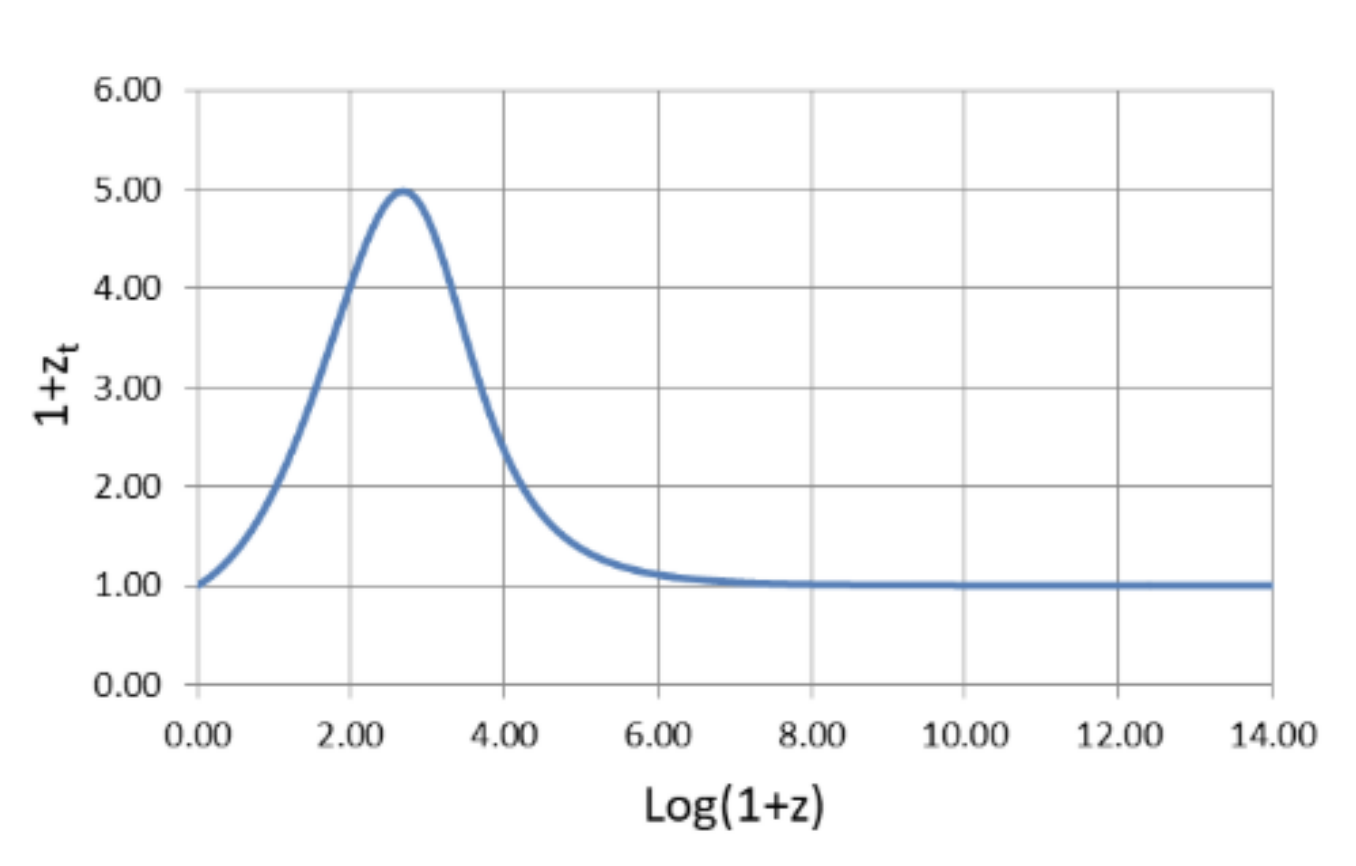
Figure 1: Variation of tired light redshift versus observed redshift; negligible tired light effects for BBN, significant for recombination.
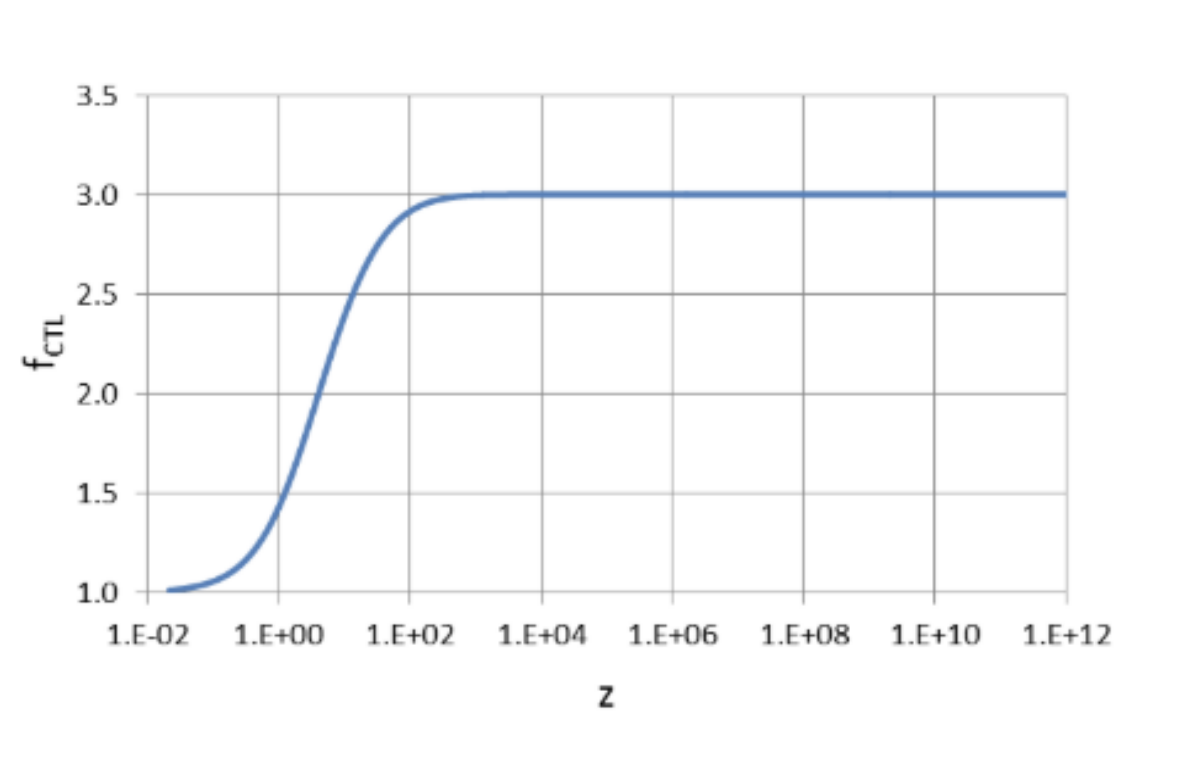
Figure 2: Universal scaling function α0, which reaches a constant value α1 at BBN.
The expansion rate in CCC+TL scales as α2, with the time elapsed between freeze-out and nucleosynthesis also stretched by α3.
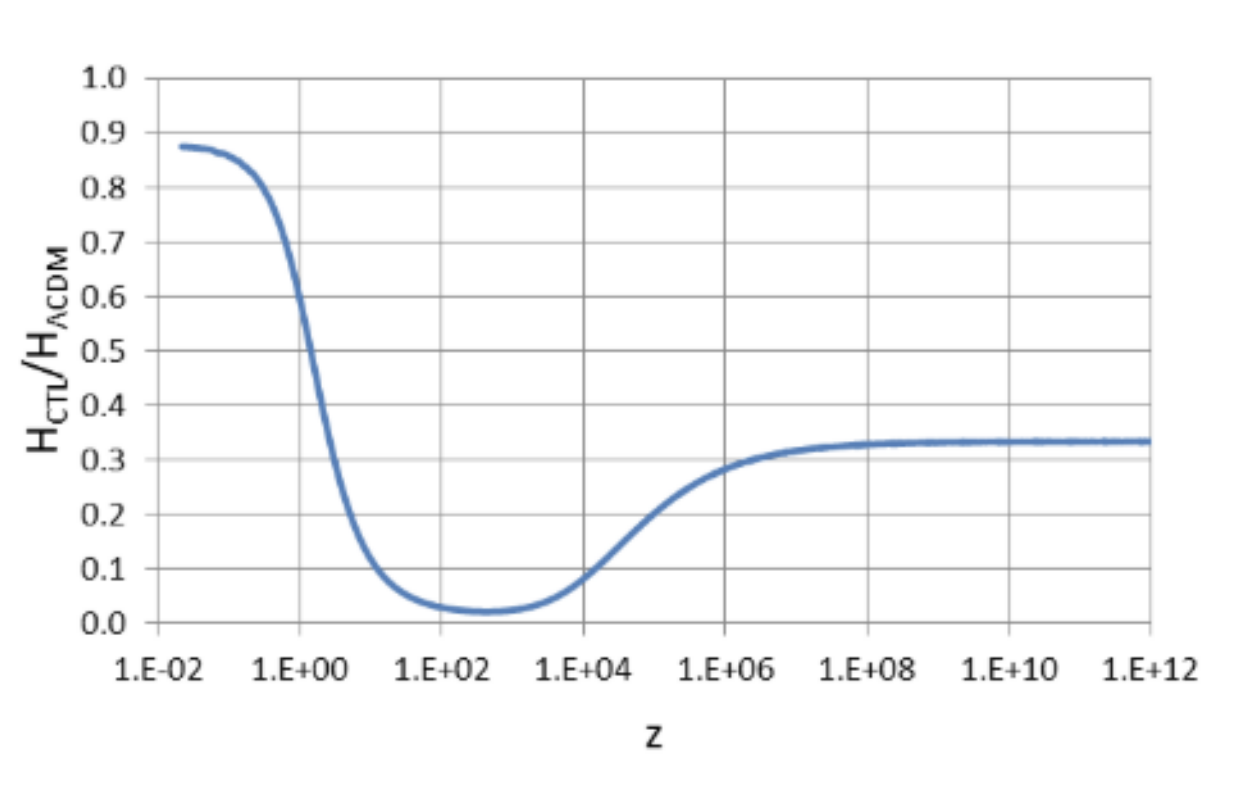
Figure 3: Ratio α4 versus α5—constant at BBN.
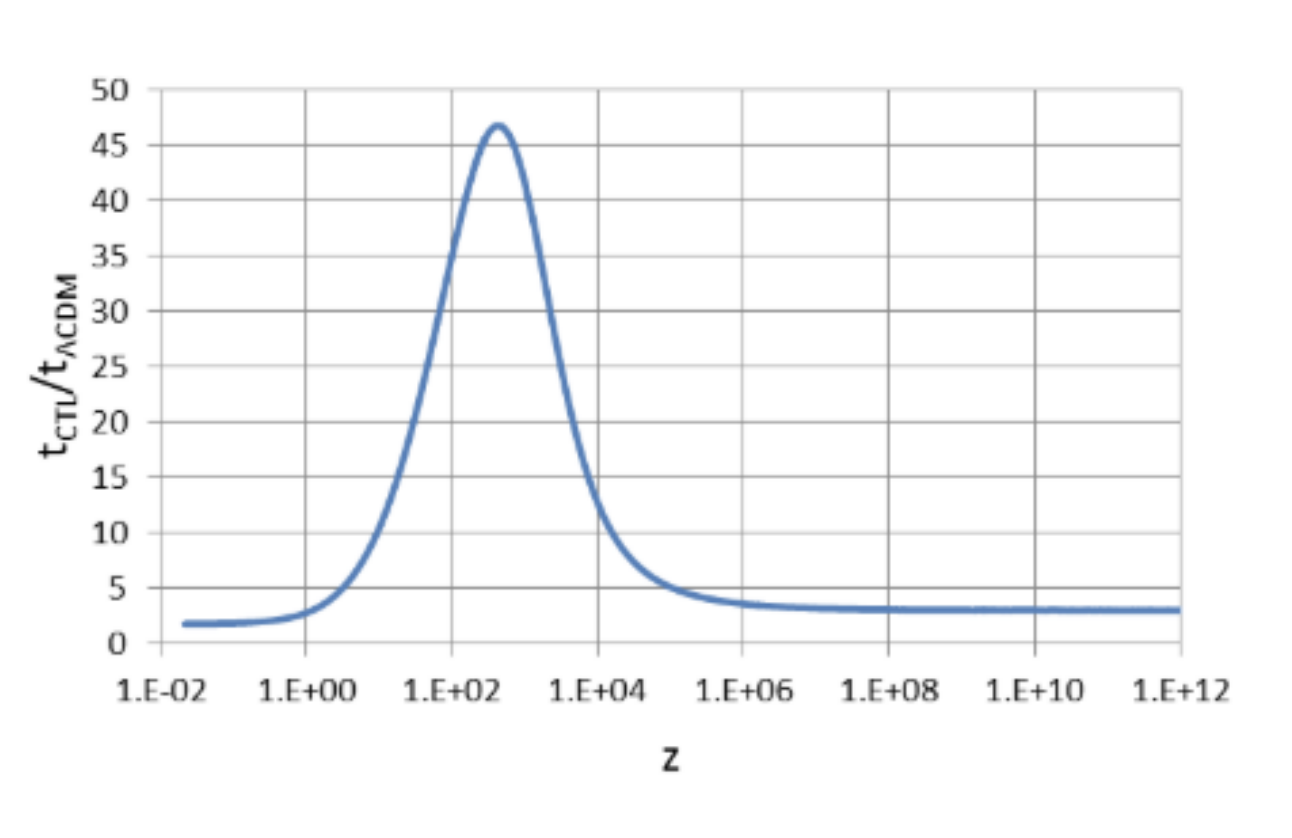
Figure 4: Ratio of cosmic times α6 reaches α7 at BBN.
BBN in CCC+TL is governed by the same four essential parameters as standard cosmology:
- Baryon-to-photon ratio α8: Directly determines light element yields, and is different in CCC+TL depending on late-time baryon density fits, ranging from 56% to 100% of the α9CDM value.
- Expansion-to-reaction-rate ratios X(z)=X(0)f(z)n0: Both weak and nuclear rates scale as X(z)=X(0)f(z)n1, leaving ratios invariant.
- Energy ratios (binding/thermal, etc.): Dimensionless, unchanged by CCC+TL scaling.
- Neutron lifetime X(z)=X(0)f(z)n2: Although dimensional, argued to scale as X(z)=X(0)f(z)n3 due to rate symmetry ansatz.
Implementation in Kawano/NUC123 Network
The authors modified the Kawano/NUC123 network to incorporate X(z)=X(0)f(z)n4 scaling. All expansion rates, time steps, and decay/reaction rates were rescaled. Forward and backward reactions inherit the same symmetry, leading to identical predicted abundances for X(z)=X(0)f(z)n5 (X(z)=X(0)f(z)n6CDM) and X(z)=X(0)f(z)n7 (CCC+TL), differing only at the numerical rounding level.
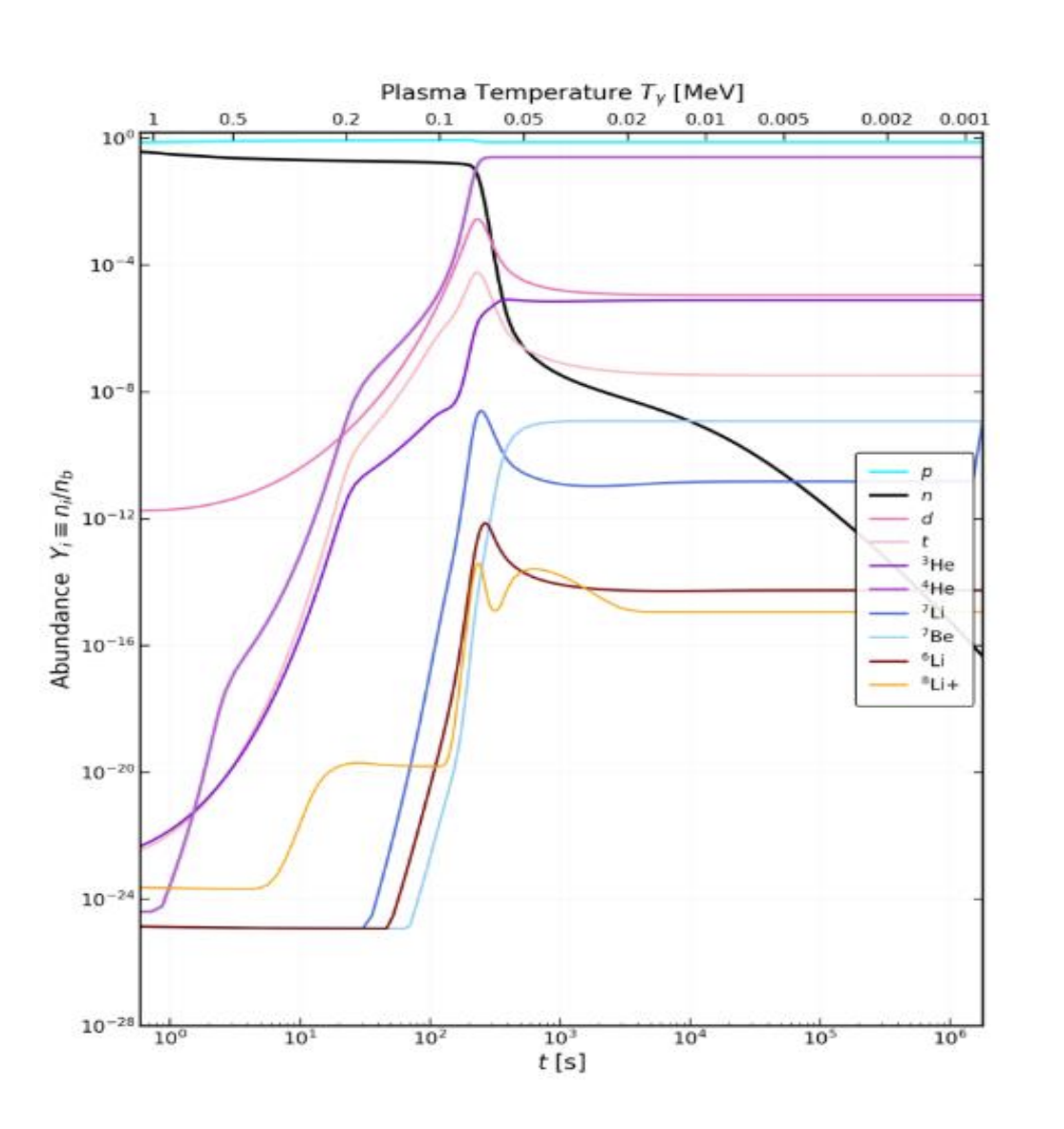
Figure 5: Light element abundances over cosmic time with X(z)=X(0)f(z)n8CDM clock; CCC+TL changes clock rate but does not affect relative abundances.
Numerical Results and Baryon Density Implications
Fig. 6 presents the Schramm plot of BBN yields, highlighting the vertical spread in CCC+TL baryon density derived from Pantheon+ and CMB data. Notable claims are:
Theoretical and Practical Implications
The CCC+TL model preserves BBN predictions through the invariance of dimensionless ratios, synchronized scaling of decay and interaction rates with the Hubble expansion rate, and unchanged thermodynamic thresholds. This demonstrates that models with correlated evolution of dimensionful constants can be consistent with primordial nucleosynthesis, provided scaling symmetries are enforced. The model challenges the interpretation of empirical constraints on evolving constants, as “one-at-a-time” variations are inconsistent within the CCC framework.
In practical terms, CCC+TL allows alternative approaches to dark matter and dark energy phenomenology, reframes critical density definitions, and offers a route to reconcile lithium discrepancies by leveraging parameter flexibility without affecting helium and deuterium predictions.
Conclusion
The CCC+TL framework maintains the compatibility of primordial element abundances predicted by BBN with observations—under the condition that decay and interaction rates scale with the expansion rate. Although the model allows for variation in baryon density, BBN alone does not discriminate between late-time values derived from different datasets. The CCC+TL symmetry therefore preserves the empirical successes of standard BBN and invites further exploration into correlated cosmological parameter variation, potentially influencing future cosmological modeling and tests beyond the standard paradigm.