- The paper introduces a GNN surrogate using multimesh connectivity to expand the spatial receptive field and enhance flood forecasting accuracy.
- Methodology details include projecting high-fidelity Telemac2D outputs onto coarser, geometrically consistent meshes, explicit Q(t) conditioning, and pushforward training to reduce error propagation.
- Results demonstrate significant speedups—achieving 6-hour predictions in 0.4s on a GPU—and improved Critical Success Index (CSI) compared to traditional hydraulic solvers.
Operational Multimesh GNN Surrogates for Flood Forecasting
Domain Problem and High-Fidelity Dataset Construction
The study addresses the operational challenge of rapid flood forecasting in urban river basins, where dependence on high-fidelity 2D hydraulic solvers such as Telemac2D can result in prohibitive runtimes, particularly on large unstructured meshes. In the Têt River case, the production-grade model operates on a mesh with more than 4×10⁵ nodes (Figure 1), and simulating a realistic 40-hour flood event requires up to 10 hours on 56 CPU cores.
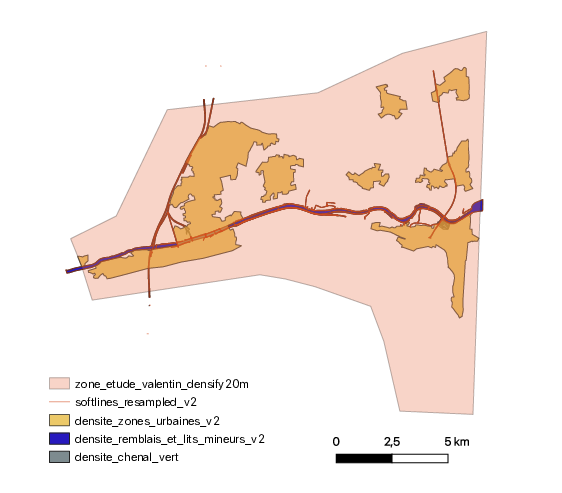
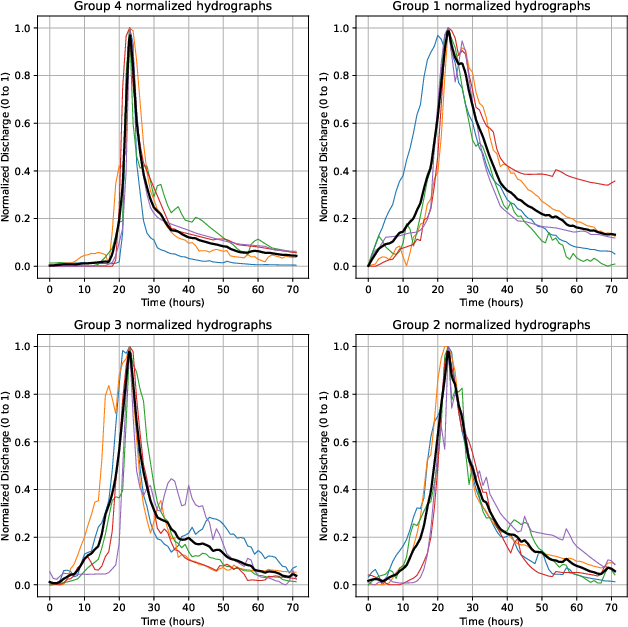
Figure 1: Mesh-density map guiding the unstructured discretisation of the Têt River floodplain.
The dataset construction involved typical mesh-density strategies: fine resolution at riverbed/embankments, moderate refinement in urban/vulnerable zones, and coarser coverage elsewhere. Historical flood hydrographs were characterized via shape coefficient Kc clustering, resulting in four representative hydrograph families (Figure 2), with scaling to cover operationally relevant peak discharges.
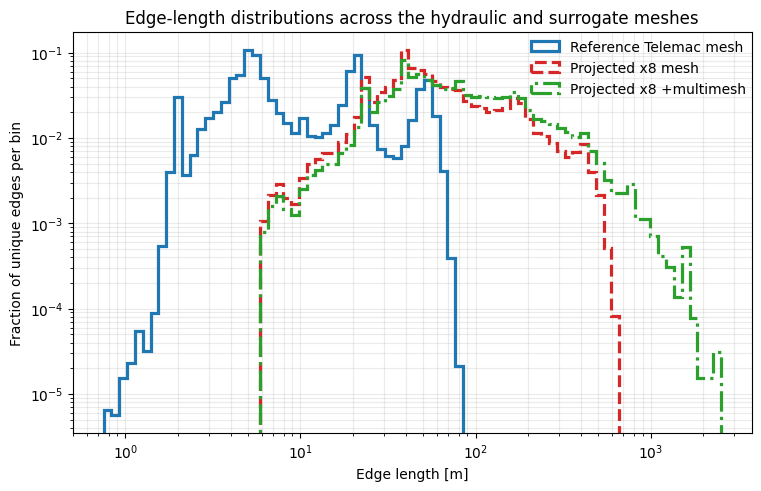
Figure 2: Distribution of unique edge lengths for the reference Telemac mesh, projected meshes, and multimesh configuration, illustrating physical interaction scales.
GNN Surrogate Architecture and Mesh Projection
The surrogate model is based on MeshGraphNet, which leverages message passing on mesh-based graphs to learn update operators mapping hydraulic states from time t to t+Δt. For tractable training and increased spatial receptive field, Telemac outputs are projected onto coarser meshes, obtained by relaxing the density map. The projected mesh maintains geometric consistency, enabling high-fidelity supervision via interpolation.
An innovation is the multimesh connectivity: long-range edges are injected by transferring coarse mesh adjacencies onto the surrogate graph, yielding a multi-scale connectivity that allows message passing to propagate hydraulic information efficiently across the floodplain (Figure 2). This is critical, as local message passing on fine meshes limits receptive field to small spatial radii in practical L-layer networks.
Explicit Conditioning and Pushforward Training
Ablation studies highlight the necessity of explicit upstream discharge conditioning (Q(t)) as a global node feature. Direct broadcast of Q(t) at each node proved essential for recovering event timing/magnitude and reducing state-space errors. Multimesh connectivity further improves results once Q(t) conditioning is in place, with most pronounced gains on water depth prediction.
To address roll-out error accumulation typical of autoregressive GNN surrogates, pushforward training was implemented using a probabilistic teacher-forcing strategy, where the input state for a rollout step is stochastically chosen between ground truth and model prediction. The parameter pTF is annealed to zero over epochs, stabilizing long-horizon predictions.
Held-out evaluation across 16 floods demonstrates:
- Conditioning on Q(t) yields the largest reduction in mean held-out Kc0 error across the entire rollout horizon, especially at Kc1–Kc2 hour lead times (Figure 3).
- Multimesh connectivity provides additional gains in all hydraulic variables, with emergent benefits when coupled with pushforward for deeper rollouts (Figure 4).
- Pushforward training consistently lowers error propagation, both on standard and multimesh graphs (Figure 5).
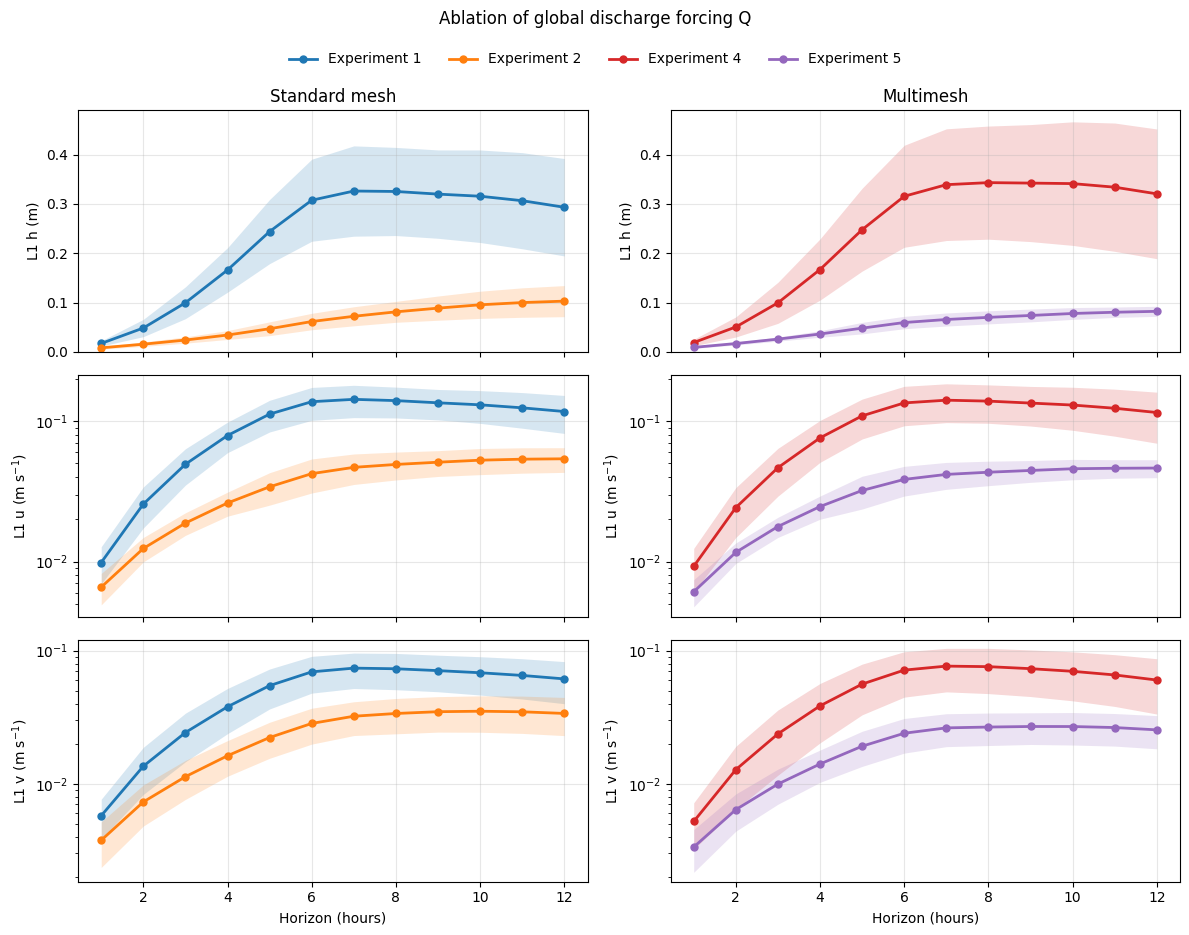
Figure 3: Ablation of the global discharge feature Kc3—mean held-out Kc4 error curves for surrogates with and without conditioning.
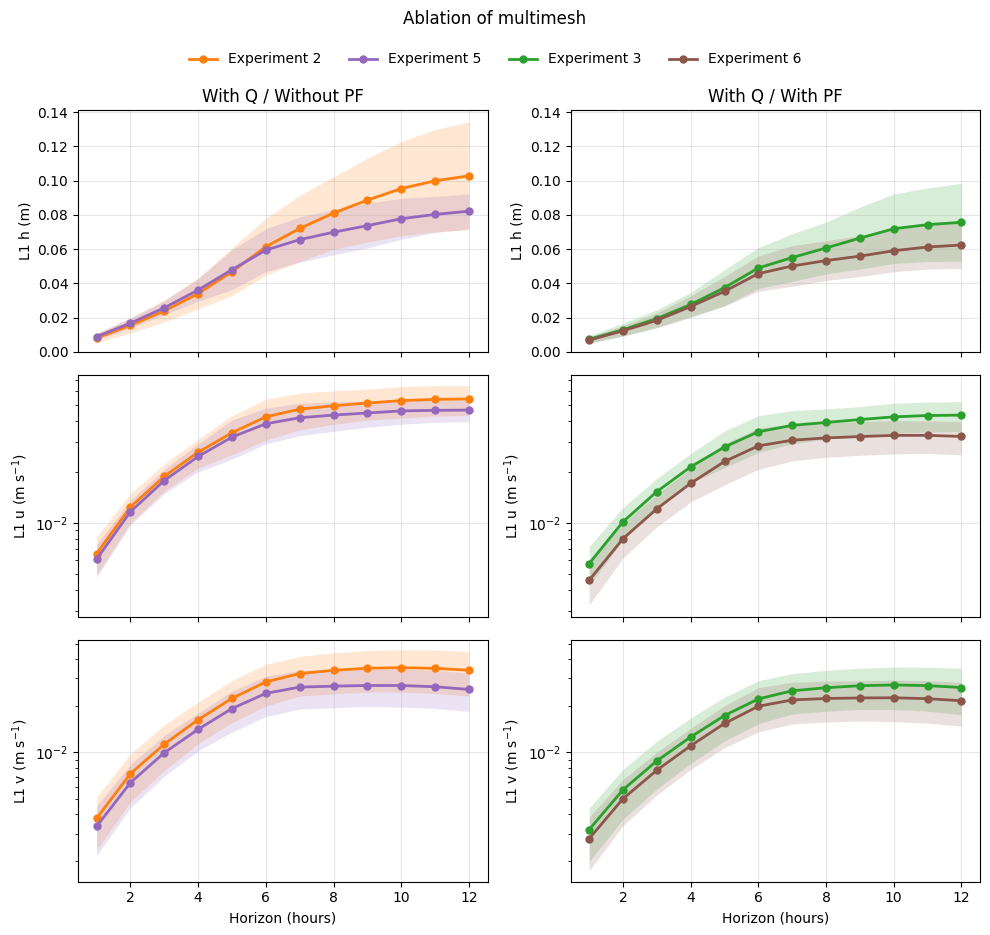
Figure 4: Ablation of multimesh connectivity—multimesh consistently improves long-range spatial propagation.
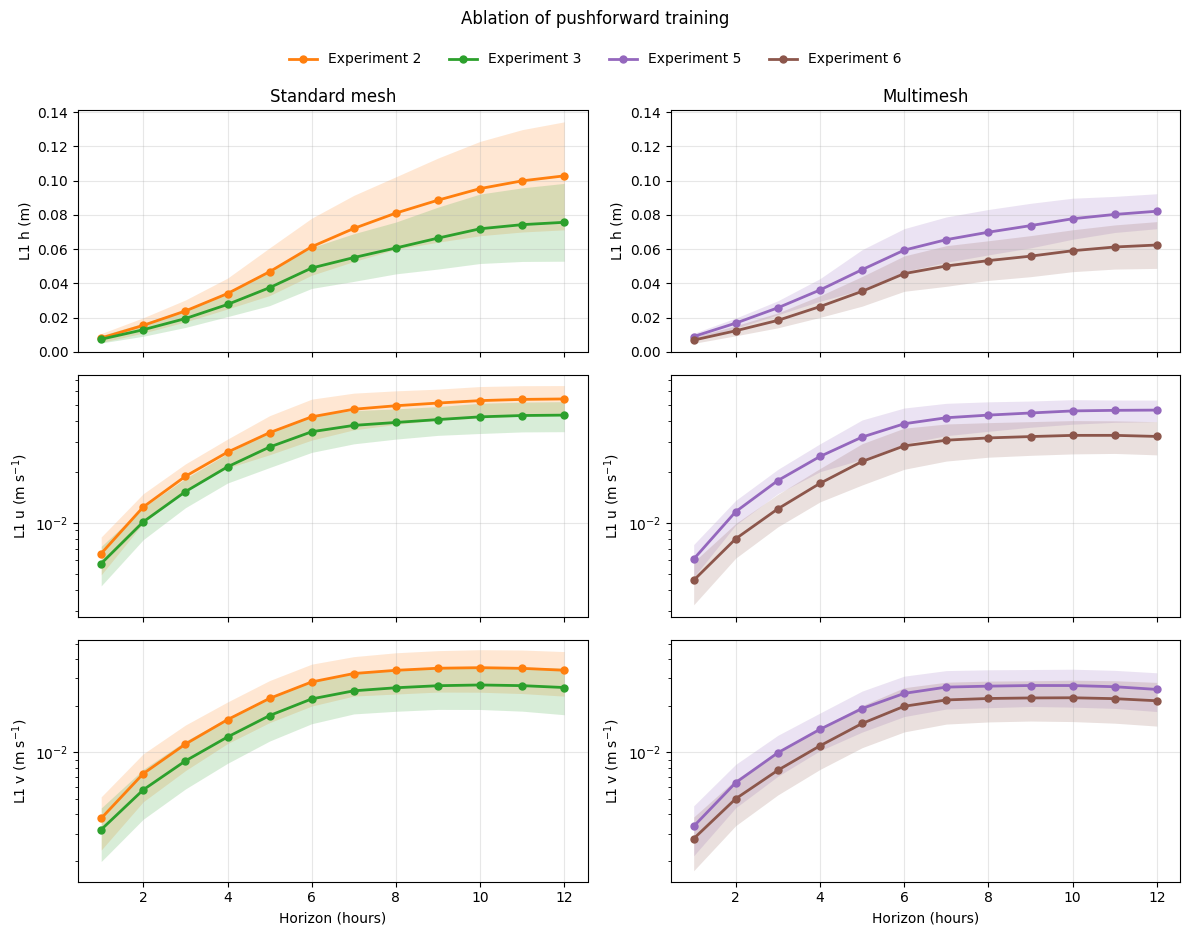
Figure 5: Ablation of pushforward training—reducing train-test mismatch enhances rollout stability.
Flood Map Evaluation and Critical Success Index
Operational performance is evaluated using the Critical Success Index (CSI) on inundation maps interpolated onto a Kc5 grid, the standard cartographic product for emergency response. Two thresholds are considered:
- Kc6: sensitive to flood fringe/margins.
- Kc7: targets hydraulically meaningful flooded areas.
Results show that multimesh variants (E5, E6) outperform standard-mesh surrogates on both thresholds. At Kc8, the combination of Kc9 conditioning, multimesh connectivity, and pushforward (E6) achieves the highest CSI at all lead times (Figure 6 and Figure 7).
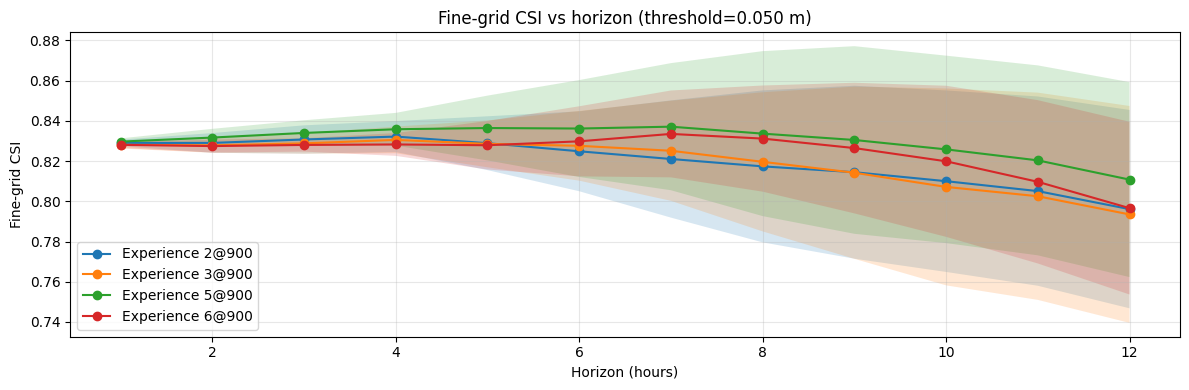
Figure 6: Fine-grid CSI on the t0 grid, t1 for four t2-conditioned surrogates.
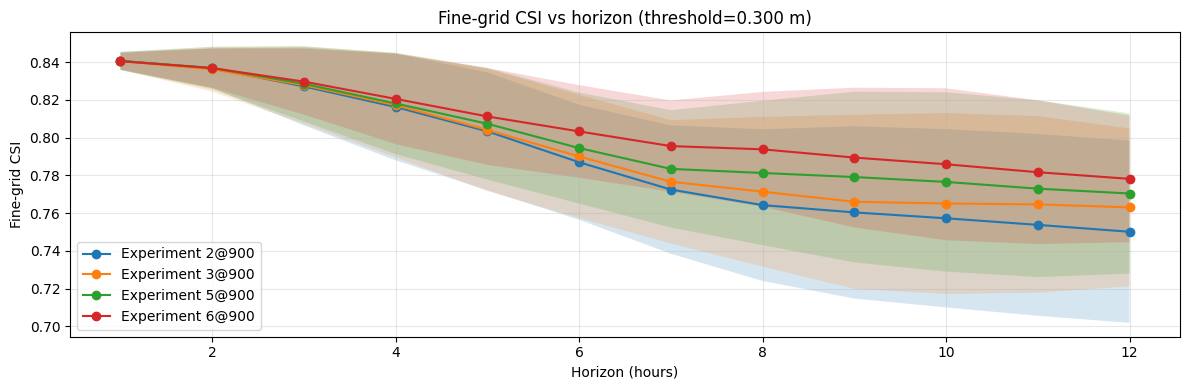
Figure 7: Fine-grid CSI, t3, indicating best performance by the E6 configuration.
Qualitative map comparison for a high-peak flood event (Figure 8) shows both surrogates recover the main flooded corridor, with E6 visually closer to reference and achieving higher CSI (0.798 vs 0.776). Learned surrogate predictions are smoother and less fragmented than the numerical reference due to projection/interpolation dynamics.
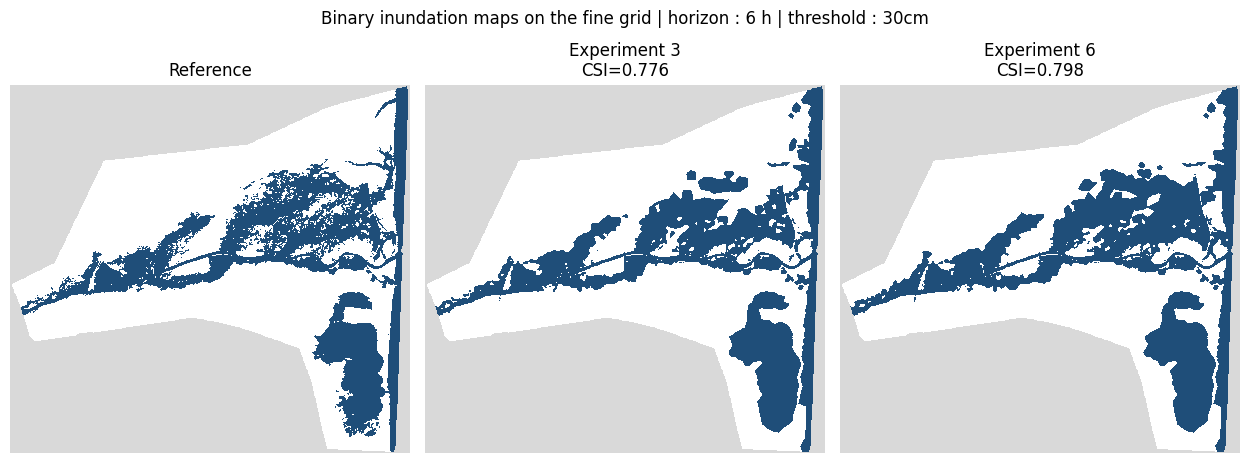
Figure 8: Qualitative binary inundation map on the t4 grid, demonstrating surrogate recovery versus high-resolution reference.
Computational Implications and Practical Integration
The learned surrogate achieves t5-hour predictions in t6 on a single NVIDIA A100 GPU, compared to approximately t7 on 56 CPU cores for Telemac2D. This constitutes a strong claim of practical complementarity: GNN surrogates are viable for near-real-time forecasting and operational deployment, providing orders-of-magnitude speedups without compromising core flood map fidelity.
Theoretical and Practical Implications
This work demonstrates that operational surrogates for flood forecasting must jointly address mesh representation, boundary-driven dynamics, and rollout stability. The multimesh strategy provides efficient spatial receptive field expansion within tractable network depths. Explicit discharge conditioning is required for robustness to boundary forcings—a property highlighted by physical GNNs in recent literature. The pushforward training regime mitigates error drift, supporting longer-horizon forecasts.
Practically, these findings advocate for integrating GNN surrogates alongside industrial hydraulic solvers to enable rapid scenario exploration and time-critical decision support. The theoretical framework is generalizable to other mesh-based PDE forecasting tasks, with future directions including improved cartographic validation, robust boundary treatment for uncertain hydrographs, and full operational deployment in emergency response workflows.
Conclusion
The presented GNN-based multimesh surrogate represents a significant advancement in operational flood mapping, combining tractable mesh projection, multi-scale spatial connectivity, explicit boundary conditioning, and stable autoregressive training. The empirical results validate both the state-space and cartographic performance, and the approach achieves substantial computational speedups with maintained accuracy on realistically grounded flood scenarios. Continued research is warranted to refine boundary handling and robustness for real-world operational uncertainties, with the methodology readily extensible to broader AI-driven physics surrogates.

