- The paper demonstrates that inner dark matter slopes vary with galaxy mass and redshift, with hydrodynamical runs yielding systematically steeper profiles than dark-matter-only versions.
- It employs an Inner Linear Fit (ILF) method within TNG50 to robustly quantify central density gradients across diverse galaxy subsamples.
- Key implications highlight the balance of feedback, baryonic contraction, and environmental effects in shaping DM cusps and cores, informing both theoretical models and observational constraints.
The Inner Dark-Matter Structure of Galaxies: Insights from TNG50
Introduction
This paper ("The Inner Dark-Matter Structure of Galaxies" (2604.02566)) presents a comprehensive analysis of the central dark matter (DM) distribution in galaxies, leveraging the high-resolution TNG50 run of the IllustrisTNG suite. Using both full physics (hydrodynamical) and dark-matter-only (DMO) realizations, the authors systematically investigate the dependence of the inner DM density slope on galaxy stellar mass, environmental classification (central/satellite), galaxy properties, and cosmic time. The inner density profile is quantified using an Inner Linear Fit (ILF) approach, yielding robust constraints on the central logarithmic slope over resolved radial ranges and enabling a consistent comparison across diverse galaxy subsamples and redshifts.
Methodology and Data
The analysis is based on the TNG50 simulation, which combines a comoving volume of (35h−1cMpc)3 and a DM mass resolution of 3.1×10⁵M⊙h−1, employing the AREPO moving-mesh code. The simulation includes essential baryonic physics (star formation, stellar and AGN feedback, metal enrichment, etc.), allowing the impact of baryons on the central DM structure to be quantified via matched comparison to a DMO version with identical initial conditions.
Galaxies are identified as gravitationally bound subhaloes, with robust mass and resolution cuts applied. The DM density profile for each subhalo is derived in log-spaced spherical radial bins, with the inner slope γ measured via a logarithmic linear fit from r=1 to $3$ times the softening length, ensuring the avoidance of formal resolution limits. The fit is repeated over alternative intervals to test robustness.
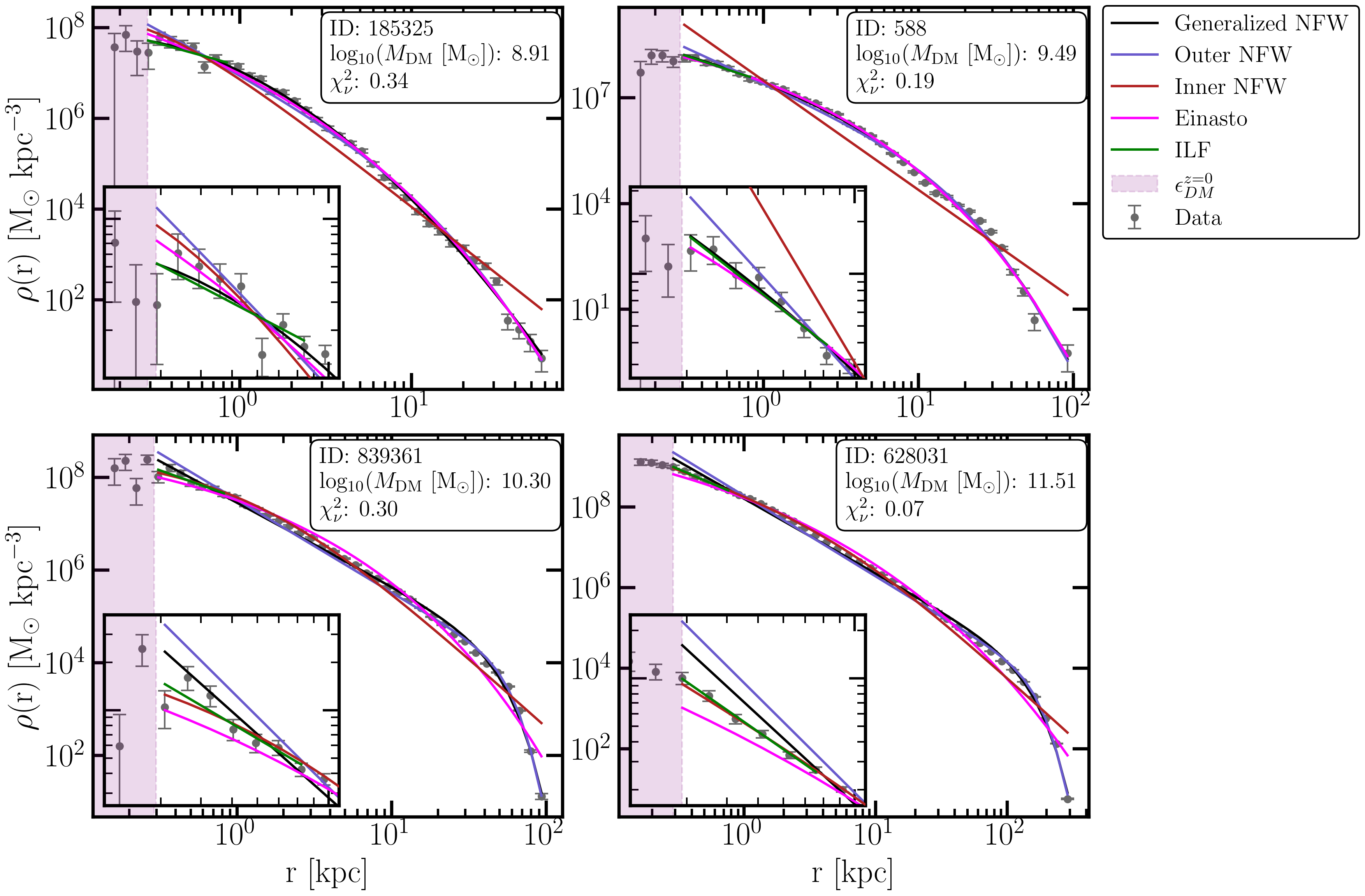
Figure 1: Representative DM density profiles for galaxies across a range of DM masses, showing diverse behaviors and quality of fit for six different parametric models and the inner linear fit (ILF).
The ILF inner slope is interpreted as a local characterization of the density gradient in the well-resolved central region, independent of assumptions about the global DM profile parameterization.
Dependence of Inner Density Slope on Galaxy Properties
The analysis reveals marked trends and diversity in the measured γ as a function of galaxy mass, specific star formation rate, colour, Vmax, and host halo mass. At low mass (M⋆≲109M⊙), galaxies show a wide dispersion in inner slopes, frequently with steep (γ≳1.5) profiles. In contrast, massive systems (M⋆≳1011M⊙) exhibit predominantly shallow (3.1×10⁵M⊙h−10) slopes, largely independent of classification as centrals or satellites.
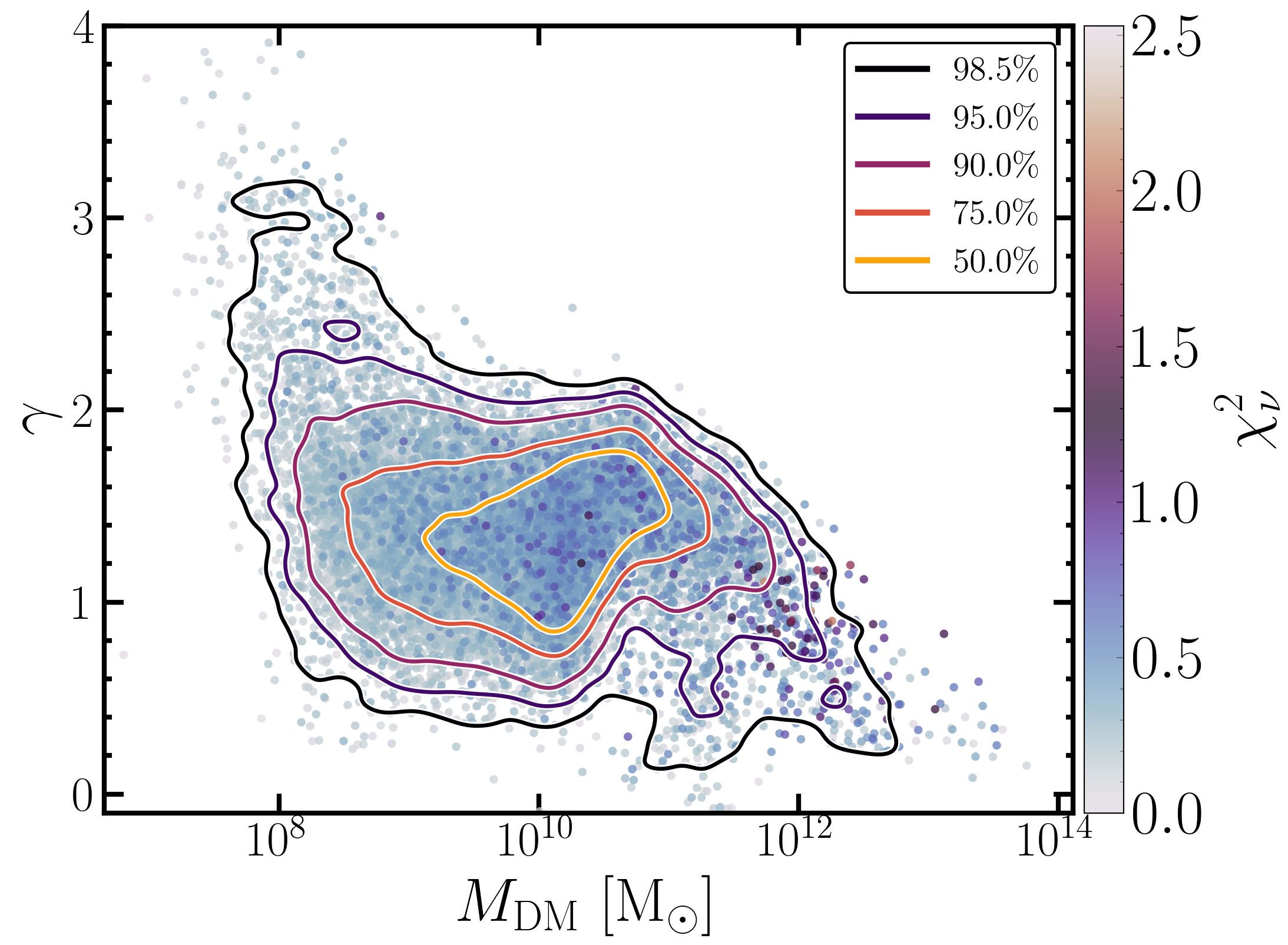
Figure 2: Two-dimensional distribution of inner slope 3.1×10⁵M⊙h−11 vs. DM mass, colored by reduced 3.1×10⁵M⊙h−12, illustrating the diversity of inner density slopes across the mass spectrum.
In the intermediate mass range, the modal 3.1×10⁵M⊙h−13 is consistently 3.1×10⁵M⊙h−14, with little variation as a function of DM mass. Strong correlations also emerge with stellar mass, colour, and 3.1×10⁵M⊙h−15:
- Red, low-mass satellites in massive hosts are most prone to show extreme (steep) inner cusps.
- Systems with high 3.1×10⁵M⊙h−16 tend to have shallower inner slopes at fixed stellar mass.
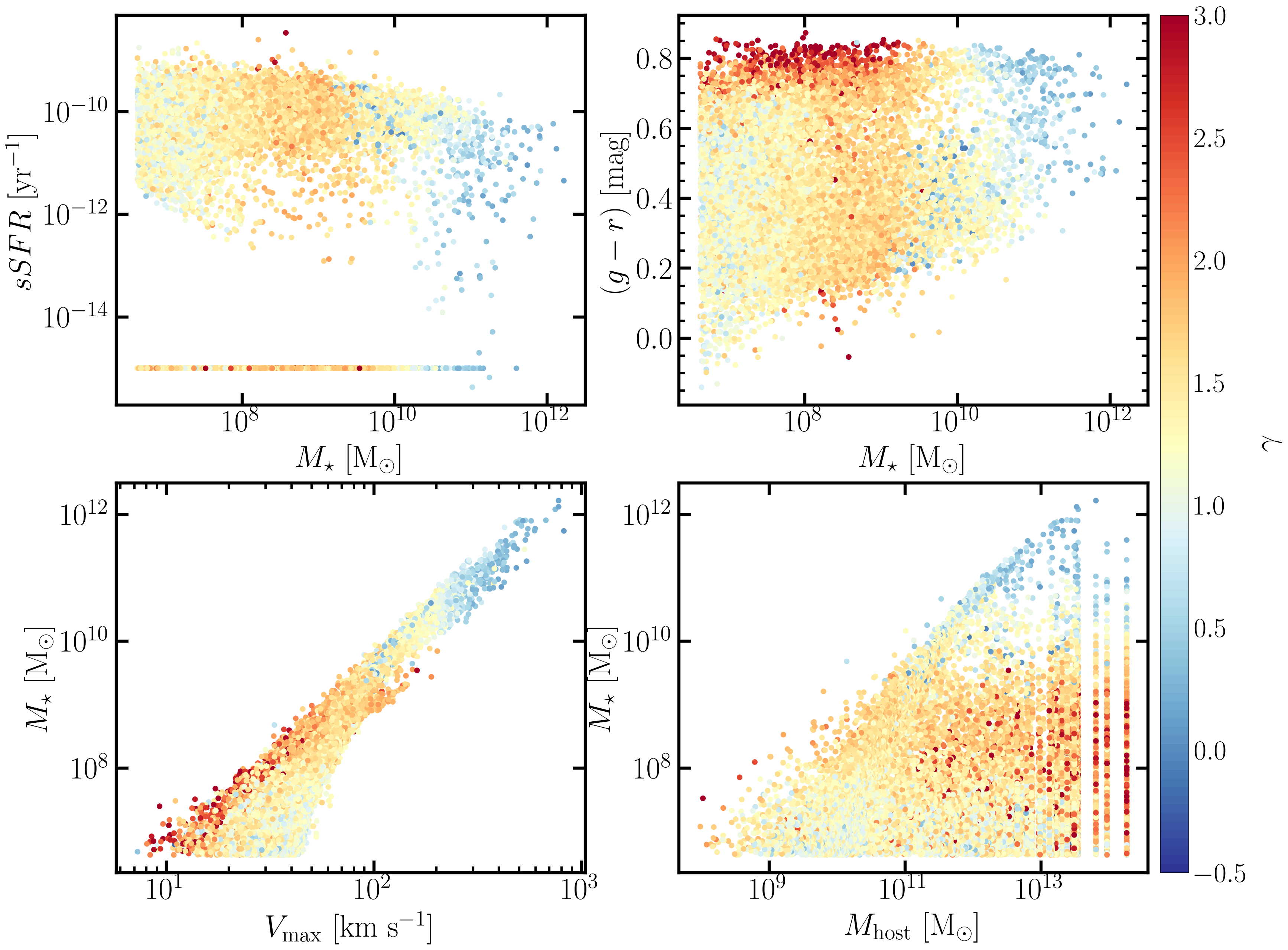
Figure 3: Multi-panel scaling relations demonstrating correlations between 3.1×10⁵M⊙h−17 and galaxy properties, including specific star formation rate, 3.1×10⁵M⊙h−18 colour, 3.1×10⁵M⊙h−19, and host mass.
While central and satellite high-mass systems converge in γ0, satellites display greater scatter and environmental sensitivity, particularly at low mass, consistent with expectations from tidal and quenching processes.
Cosmic Evolution of Inner Density Slope
A clear evolutionary trend is found in the population distribution of γ1 with redshift. At γ2, typical inner slopes (γ3) are shallower than an NFW cusp γ4; by γ5 the median increases to γ6. This trend holds in both hydrodynamical and DMO runs but is consistently offset to higher values in the presence of baryons. The evolution is mass-dependent: intermediate-mass galaxies evolve rapidly in γ7, whereas the most massive show near-constancy.
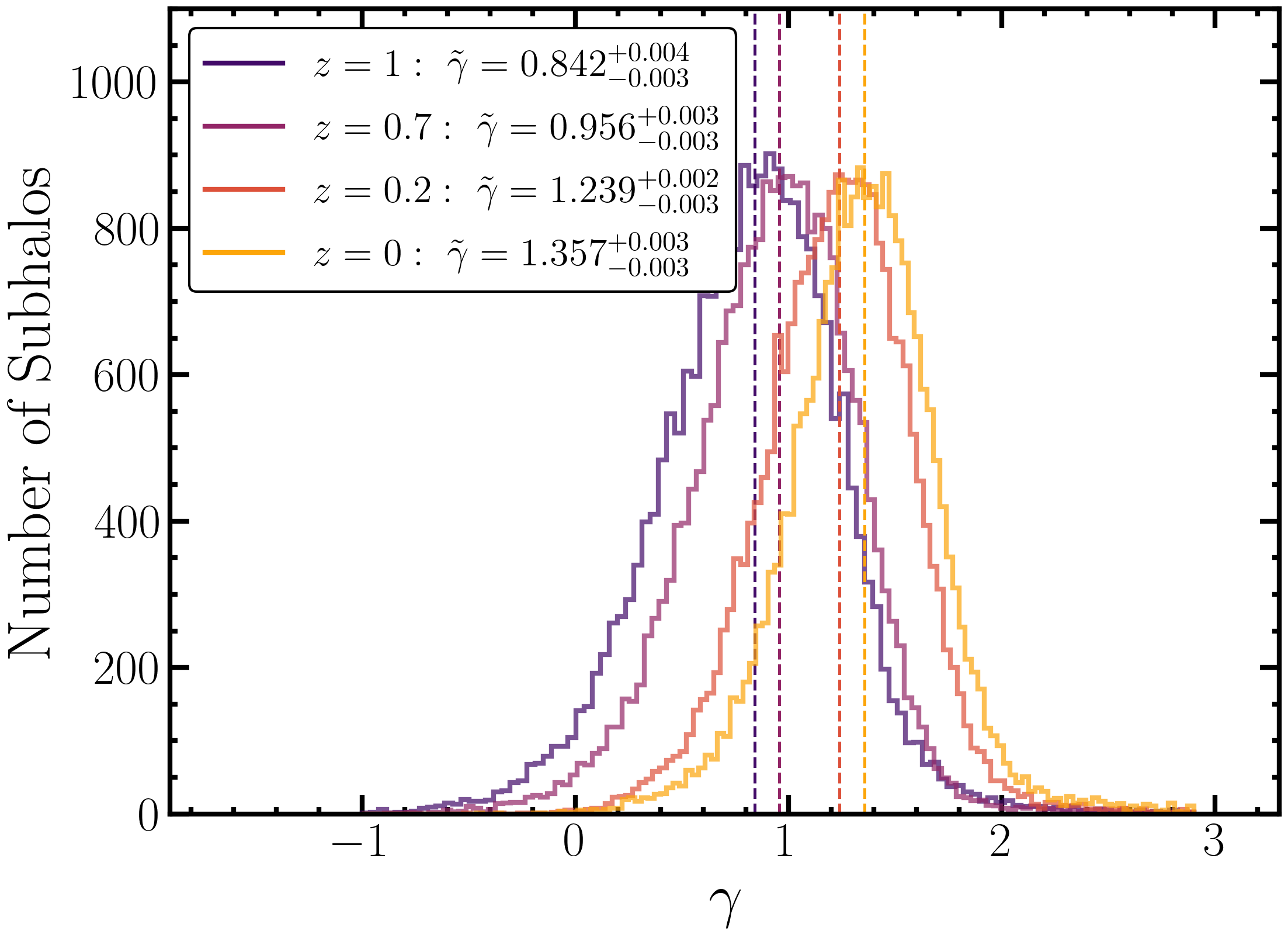
Figure 4: Redshift evolution of the inner slope γ8 distribution, showing a systematic shift towards steeper slopes from γ9 to r=10.
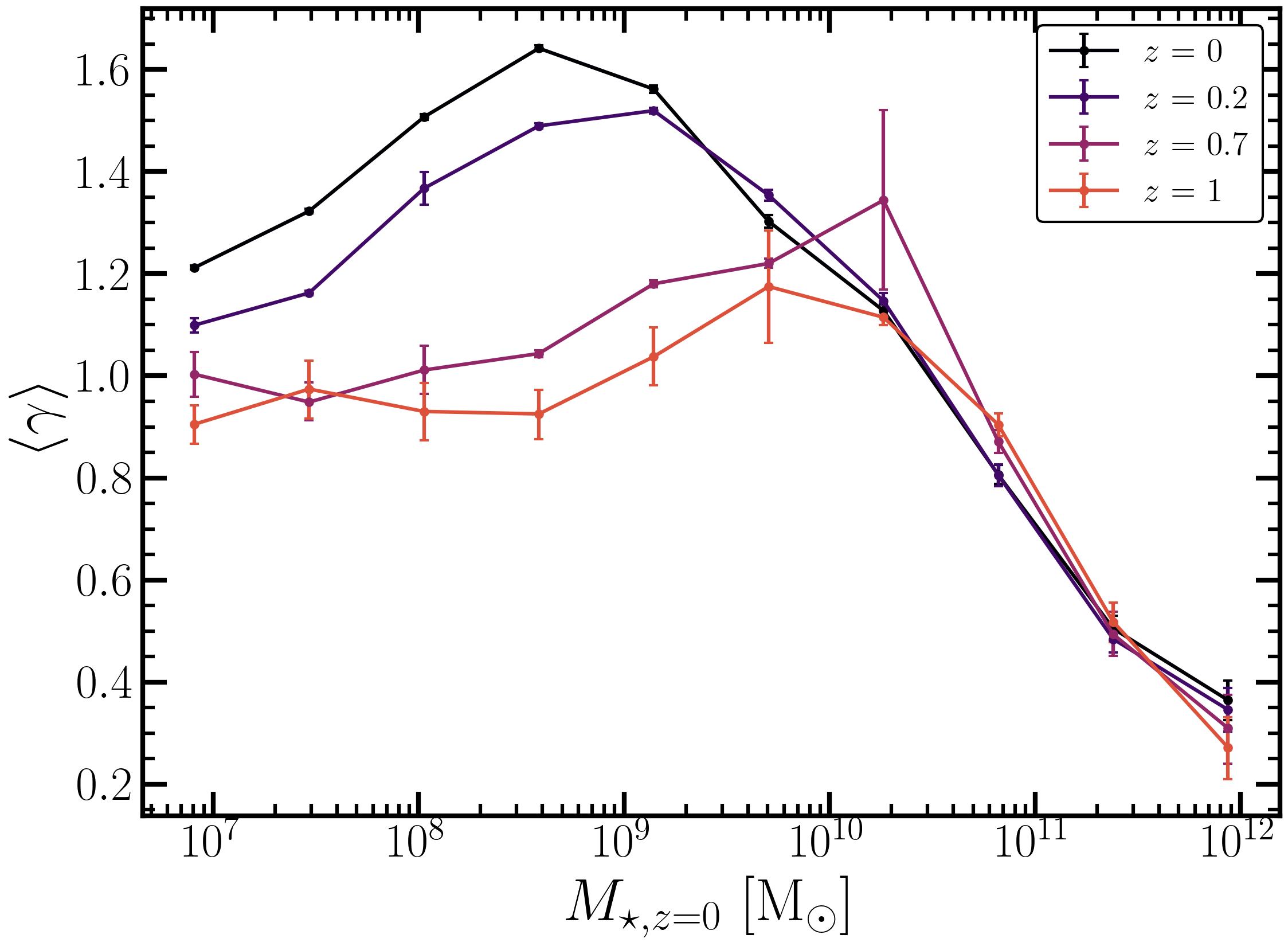
Figure 5: Mean r=11 vs. r=12 stellar mass for main progenitors, highlighting mass-dependent evolutionary regimes.
Impact of Baryonic Physics
A key result is the quantification of baryonic effects: across all redshifts and masses, the hydrodynamical run yields systematically higher (r=13) inner slopes than its DMO counterpart for matched subhaloes. This can be attributed to baryonic contraction, AGN and stellar feedback, and the interplay of dissipative and outflow-driven processes. The increased scatter in r=14 for baryonic runs reflects the non-linear diversity of baryonic assembly histories.
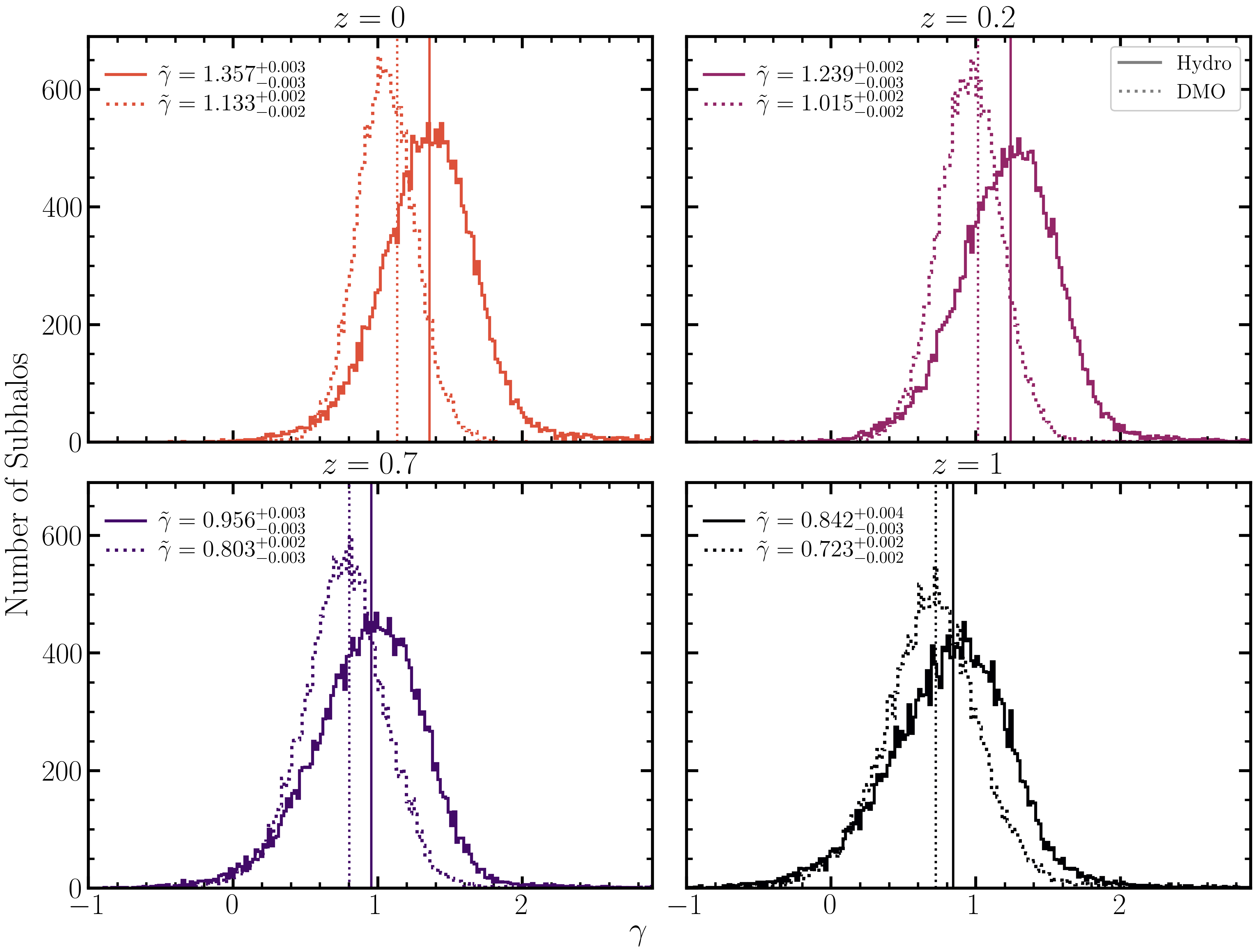
Figure 6: Comparison of the r=15 distribution for hydrodynamical vs. DMO runs at various redshifts, explicitly displaying the systematic offset induced by baryonic physics.
Robustness to Fitting Interval
The authors explore the sensitivity to the choice of fitting region, showing that extending the fit to larger radii (excluding the innermost regions) systematically leads to steeper inferred slopes, with the increase being most pronounced for high-mass systems. The conclusion is that their fiducial radial interval remains a conservative and physically motivated choice for isolating genuinely inner profile behavior.
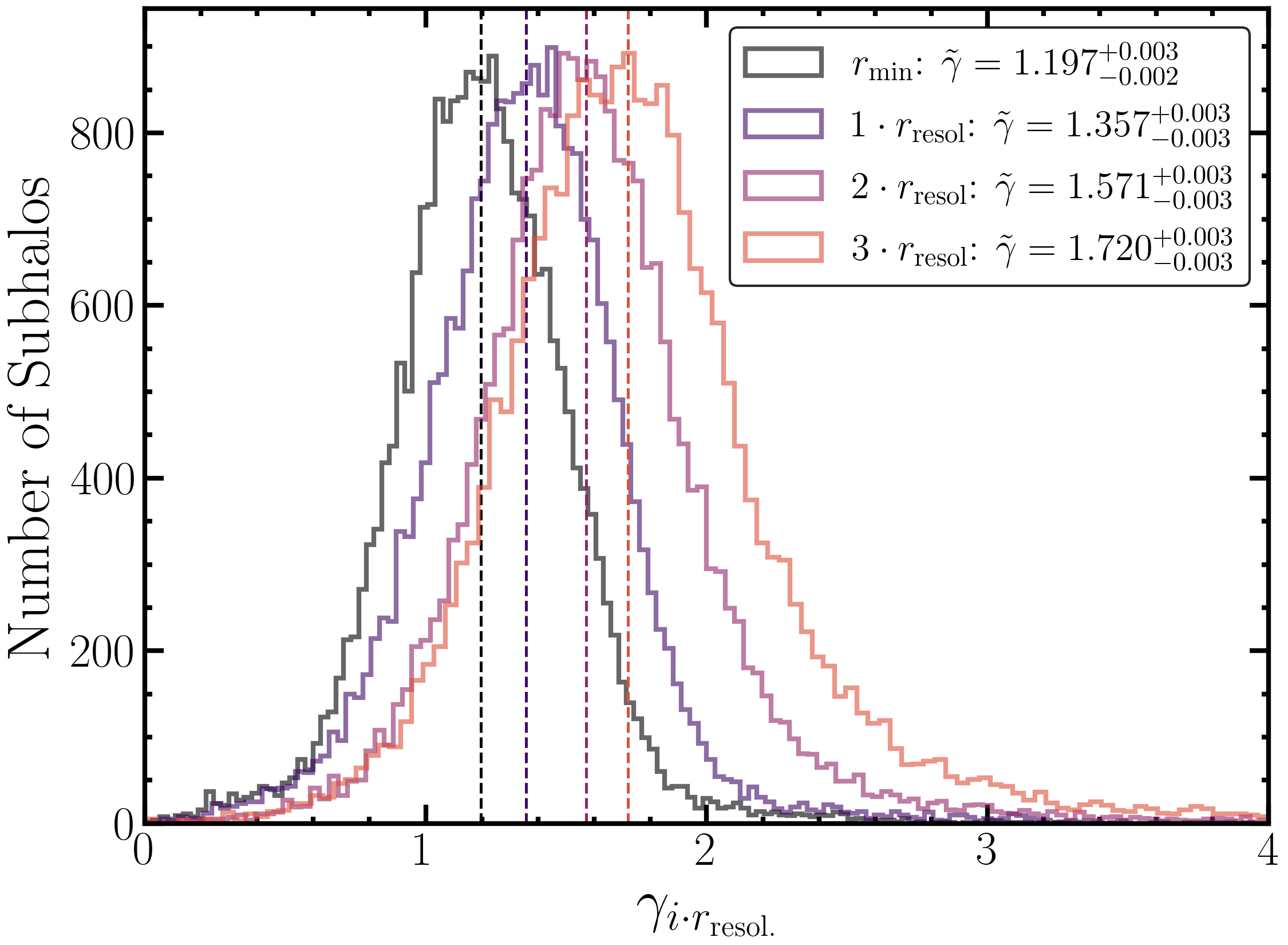
Figure 7: Distribution of r=16 for different fitting regions; larger radii yield systematically higher slopes.
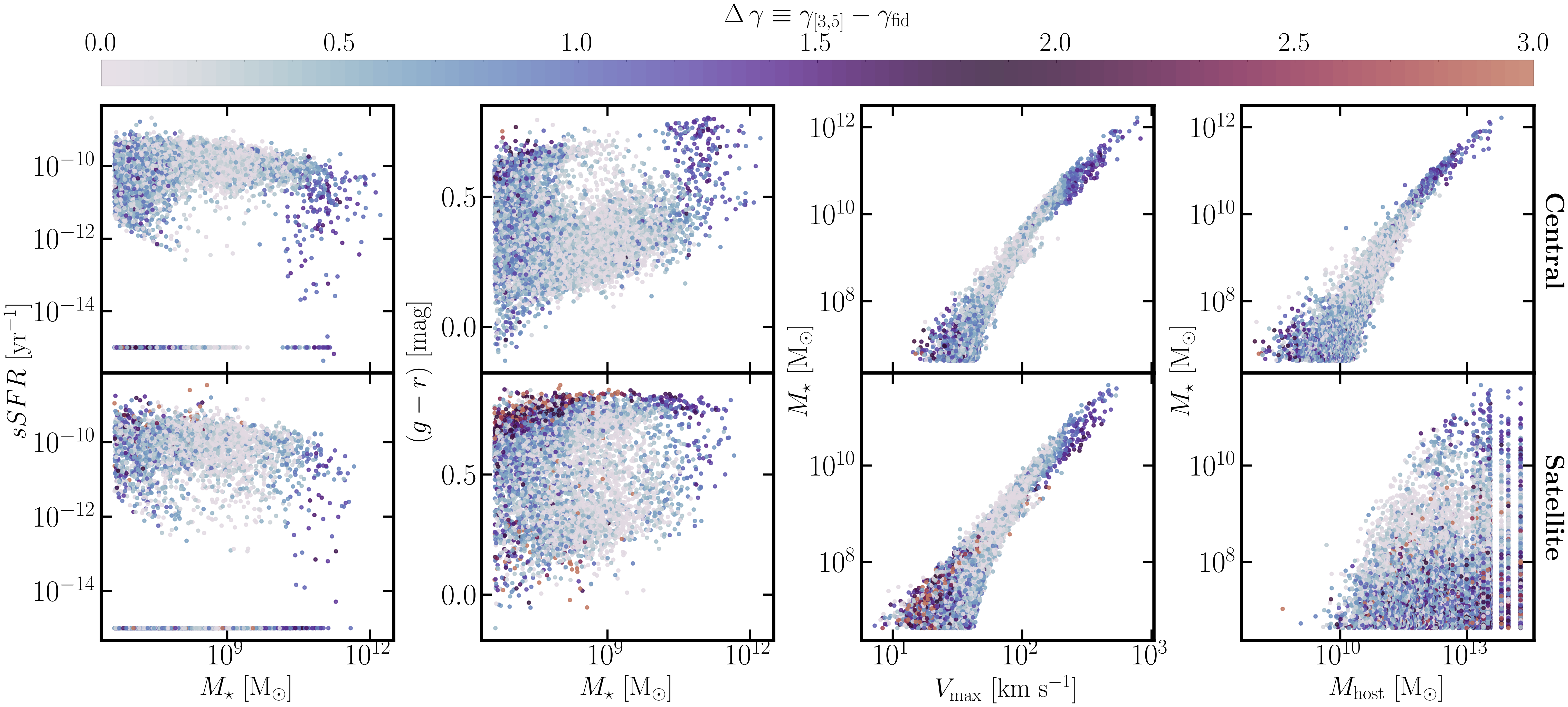
Figure 8: Differences in slope (r=17) between external and fiducial fits, across galaxy properties and subsamples, highlighting the strongest effect at high and low stellar mass.
Theoretical and Observational Context
The results support an evolving physical picture where early feedback-driven fluctuations induce DM core formation in low/intermediate-mass galaxies, while subsequent baryonic inflow and contraction steepen the cusp, particularly in higher-mass systems. Environmental quenching in satellites, especially in massive hosts, suppresses feedback-driven core creation, yielding systematically steeper inner slopes.
The findings are broadly compatible with observational constraints across mass scales—reproducing both the diversity of dwarf satellite slopes and the shallow inner slopes inferred for massive early-type galaxies and clusters via lensing and dynamics, provided differences in spatial resolution and centering are accounted for.
Conclusion
This work establishes several robust conclusions regarding the inner dark matter structure of galaxies:
- There is a clear mass-dependent and redshift-evolving trend in the inner DM density slope, with hydrodynamical (baryonic) runs always yielding steeper inner slopes than DMO analogues.
- Low-mass, red, quenched satellites in massive environments consistently show the steepest inner cusps, reflecting suppressed feedback cycling and environmental processing.
- The inner profile measurement is sensitive to the radial window adopted; exclusion of the central region artificially steepens r=18, but the low-mass satellite population remains robustly identified as steep in all cases.
- The observed variations in the inner DM structure, both across galaxy properties and through cosmic time, are consistent with current theoretical models of core formation and contraction driven by a balance of feedback, baryonic inflow, and environmental effects.
For future theoretical and computational development, these results highlight the necessity of precise baryonic modeling—particularly of star-formation-driven outflows and environmental processes—to fully capture the diversity and evolution of DM cusps and cores in cosmological galaxy formation simulations. Improved observational probes of the smallest spatial scales, more accurate modeling of quenching and feedback, and additional comparison with alternative DM models (e.g., SIDM) will be critical for further constraining the origin of the core-cusp diversity in galaxies.