- The paper presents SHRED, a novel method that accurately reconstructs MHD flows and infers latent magnetic parameters from sparse temperature measurements.
- The methodology integrates SVD for dimensionality reduction with an LSTM encoder-decoder, reducing simulation time from several hours to instantaneous reconstructions.
- Key results show high-fidelity reconstructions under varied magnetic conditions with errors maintained below 10%, validating SHRED's robustness and efficiency.
Overview and Methodological Foundation
This work rigorously evaluates the SHallow REcurrent Decoder (SHRED) framework for state estimation in magnetohydrodynamic (MHD) flows within liquid metal blankets of fusion reactors, specifically targeting Water-Cooled Lead-Lithium (WCLL) blanket cells. The MHD model considered captures compressible, visco-resistive lead–lithium flow under complex, parameterized magnetic field conditions. The core challenge addressed is the prohibitive computational cost of direct multiphysics simulation of these systems across multiple magnetic field scenarios, especially in contexts demanding real-time or multi-query analysis.
SHRED integrates dimensionality reduction via Singular Value Decomposition (SVD) with data-driven sequence modeling. The architectural stack compresses full-field simulation data onto a low-rank SVD basis, generates sparse sensor measurements (temperature) at a fixed set of spatial locations, encodes the sensor time series with an LSTM network, and finally applies a shallow decoder to reconstruct the full-order, high-dimensional state fields (temperature, velocity, pressure) by projecting back through the pre-computed SVD basis. The framework leverages Takens’ embedding theorem to reconstruct global states from local measurements and is robust to the exact sensor configuration.
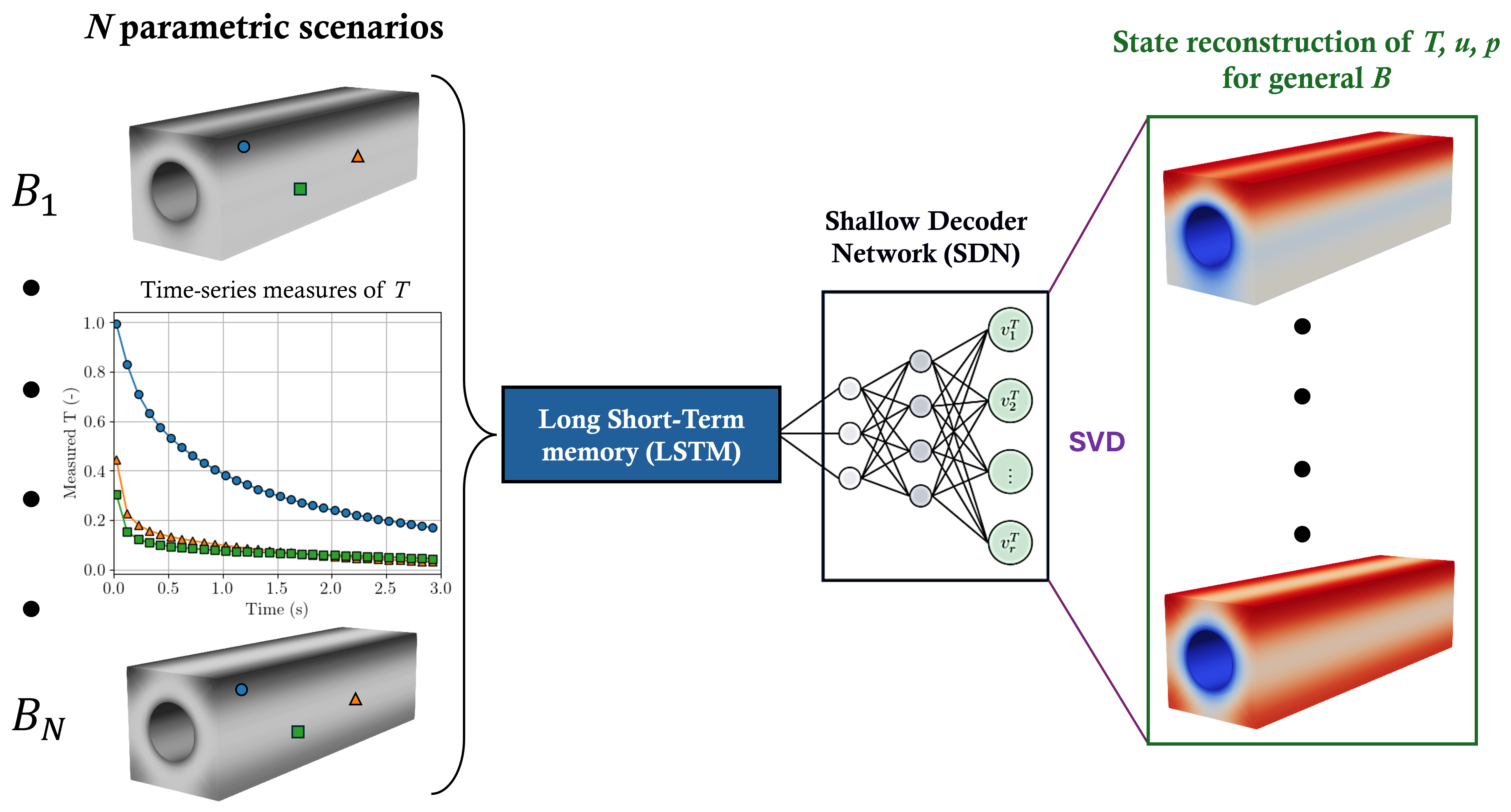
Figure 1: Schematic of the SHRED architecture: time-series from sparse temperature sensors are encoded by an LSTM, decoded through a shallow network, and backprojected via the SVD basis to reconstruct the full spatio-temporal state.
Benchmark Scenarios and Configuration
The investigated geometry is a physically realistic abstraction: a 3D rectangular region with an embedded cylindrical cavity (modeling a cooling water tube), with periodic boundary conditions to mimic a blanket cell subdomain. The adopted numerical model employs OpenFOAM and resolves the full compressible MHD equations with DEMO-relevant material and field parameters.
Three families of magnetic field configurations parameterize the space of physical conditions:
- Constant toroidal field: Bx varied across a realistic range.
- Constant toroidal and poloidal fields: Bx and By parameterized jointly, probing effects of orientation as well as magnitude.
- Time-varying magnetic fields: Bx(t) prescribed as sinusoids with varying amplitude, frequency, and phase, emulating operational transients.
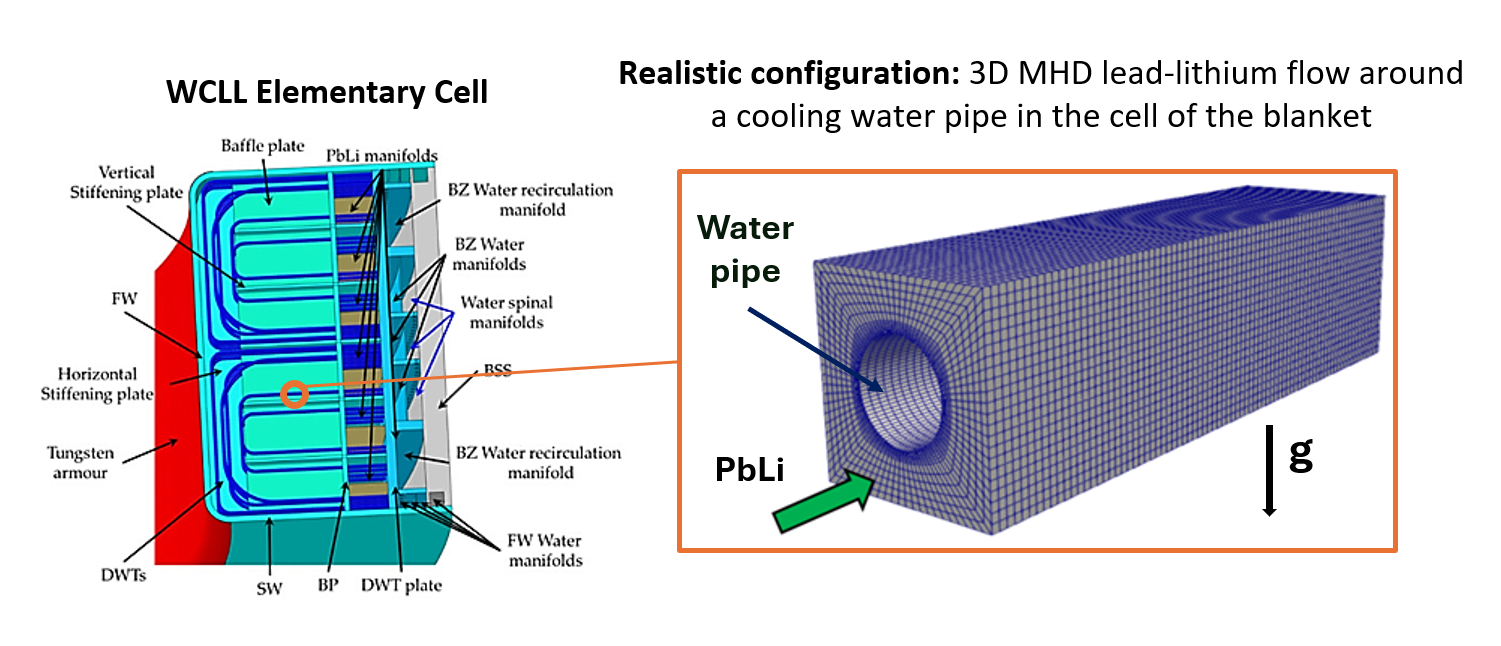
Figure 2: 3D geometry schematic, illustrating the lead–lithium channel with a central water-cooled tube—as used in the computational domain.
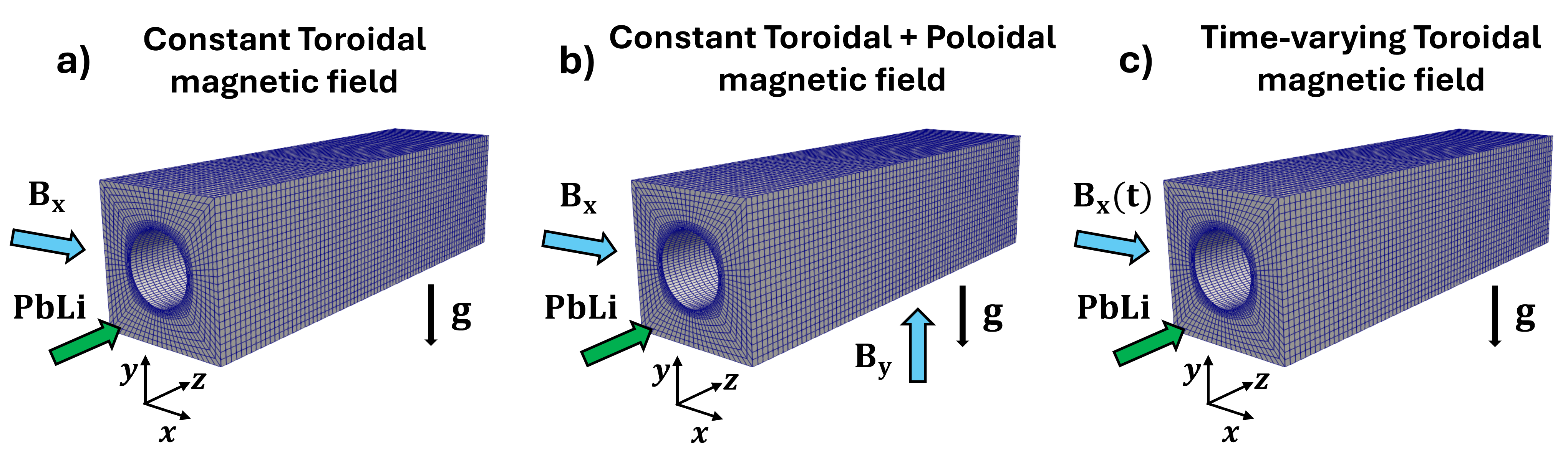
Figure 3: Illustration of the magnetic field configurations considered: (a) constant toroidal, (b) combined toroidal/poloidal, (c) time-varying.
Training Workflow and Data Efficiency
SHRED is trained exclusively on time-series of temperature from three sensors, with all fields and magnetic parameters rescaled by min-max normalization. Sensor locations are fixed but randomly chosen, leveraging SHRED’s agnostic performance with respect to placement. For each scenario (constant Bx, constant (Bx,By), time-varying Bx), distinct models are trained using five principal SVD modes. Training is computationally trivial, requiring only several minutes per model on commodity hardware, and reconstruction at test time is essentially instantaneous (<1s per realization). This sharply contrasts with the high-fidelity MHD solver, which requires $5$–$15$ hours per trajectory.
Reconstruction Accuracy: In-Distribution and Extrapolative Regimes
SHRED provides high-fidelity reconstructions of the full spatio-temporal fields—temperature, velocity, and pressure—directly from sparse sensor data. Evaluation encompasses both interpolation (in-distribution) and extrapolation (out-of-training-range) on magnetic parameters.
In the case of constant Bx, SHRED achieves nearly indistinguishable reconstructions from the full-order model:
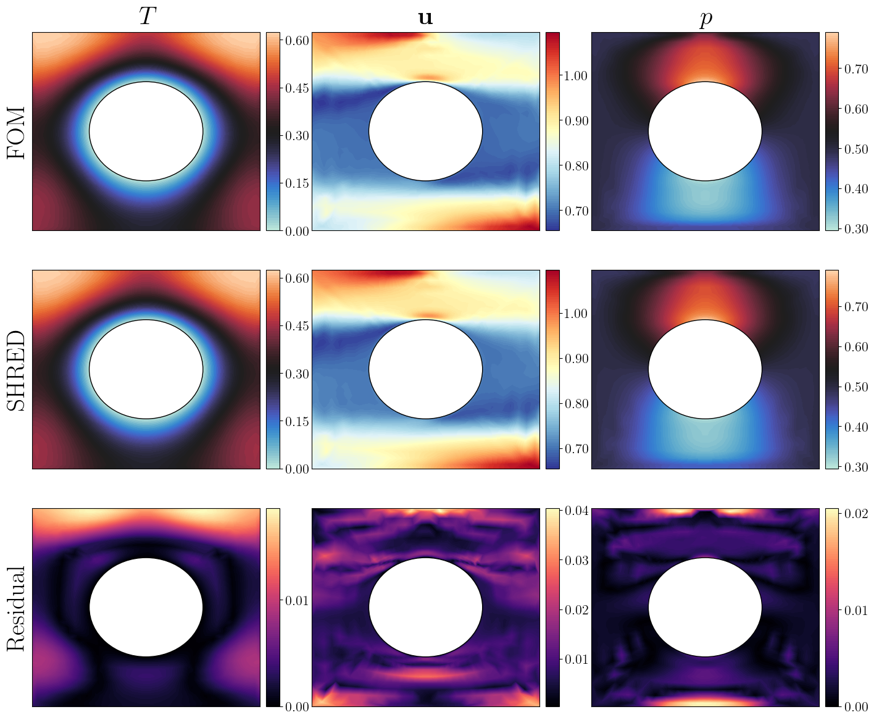
Figure 4: Comparison of reference FOM fields, SHRED reconstructions, and residuals for Bx0 at Bx1.
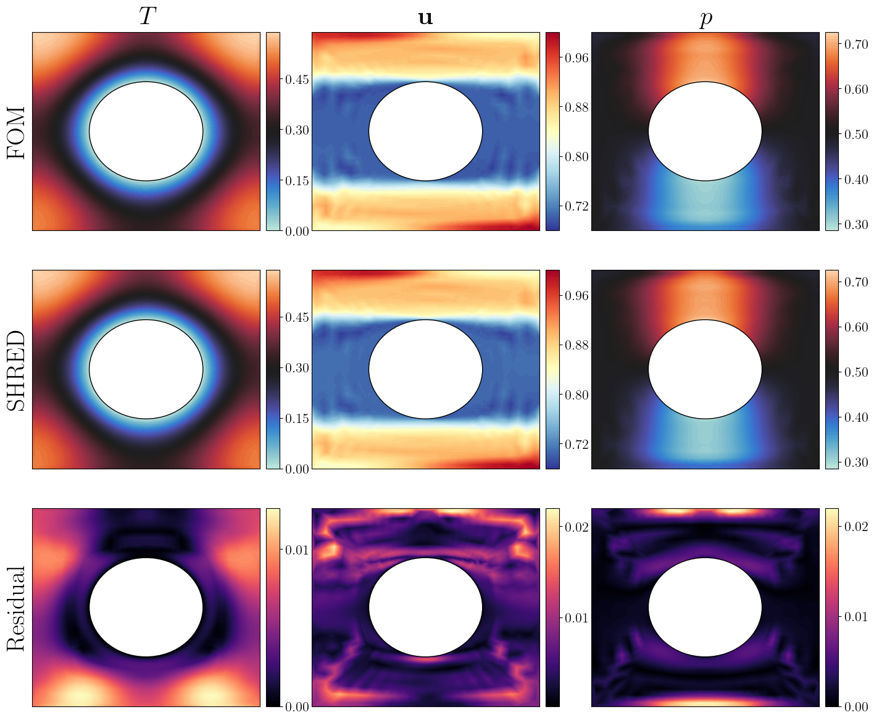
Figure 5: Same as Figure 4 but for Bx2 (interior of training range).
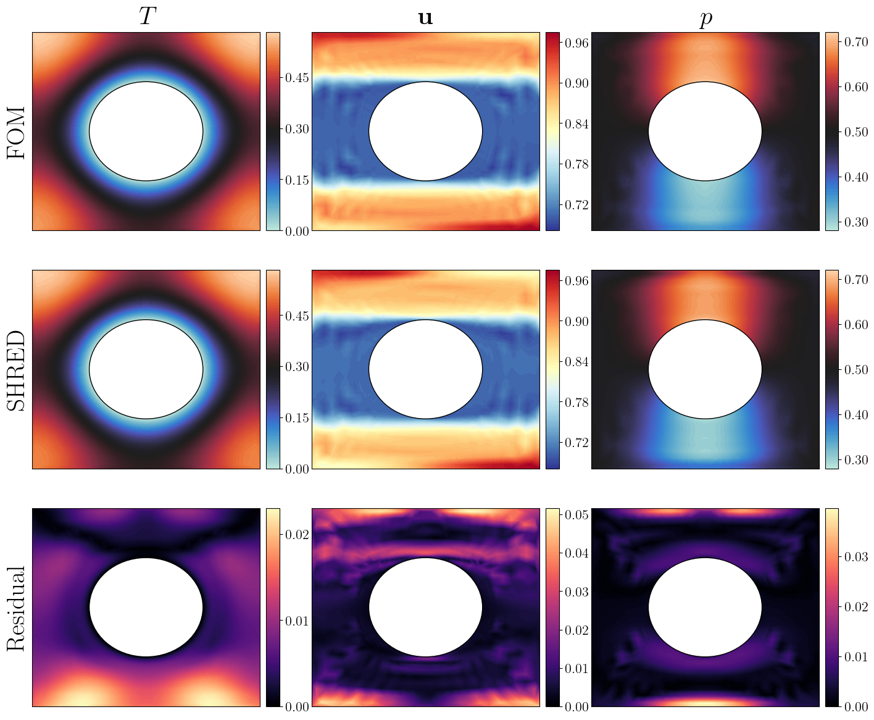
Figure 6: Same as Figure 4 but for Bx3 (extrapolative, outside training interval).
Residuals are localized and remain at only a few percent. Even with extrapolative test cases (Bx4), accuracy degrades only minimally, confirming the model’s robust parametric generalization.
Temporal analysis of relative Bx5 errors further substantiates strong performance:
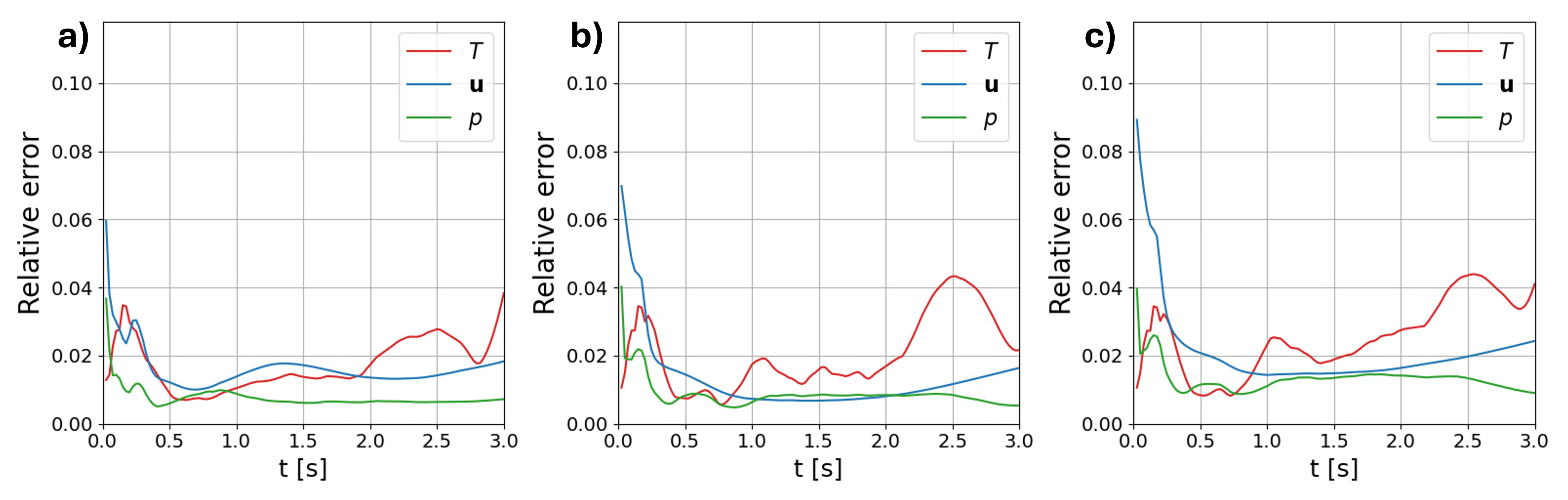
Figure 7: Temporal profiles of relative Bx6-error for temperature, velocity, and pressure, showing initial transients followed by rapid convergence to low error across all fields.
Error in the velocity field is initially largest due to rapid flow reorganization but does not exceed Bx7 and stabilizes near Bx8; temperature and pressure remain below Bx9 and By0, respectively, throughout.
Magnetic Field Orientation and Combined Parameter Variation
For cases with both toroidal and poloidal field components, SHRED retains accuracy, even though the flow morphology becomes more complex due to field orientation effects.
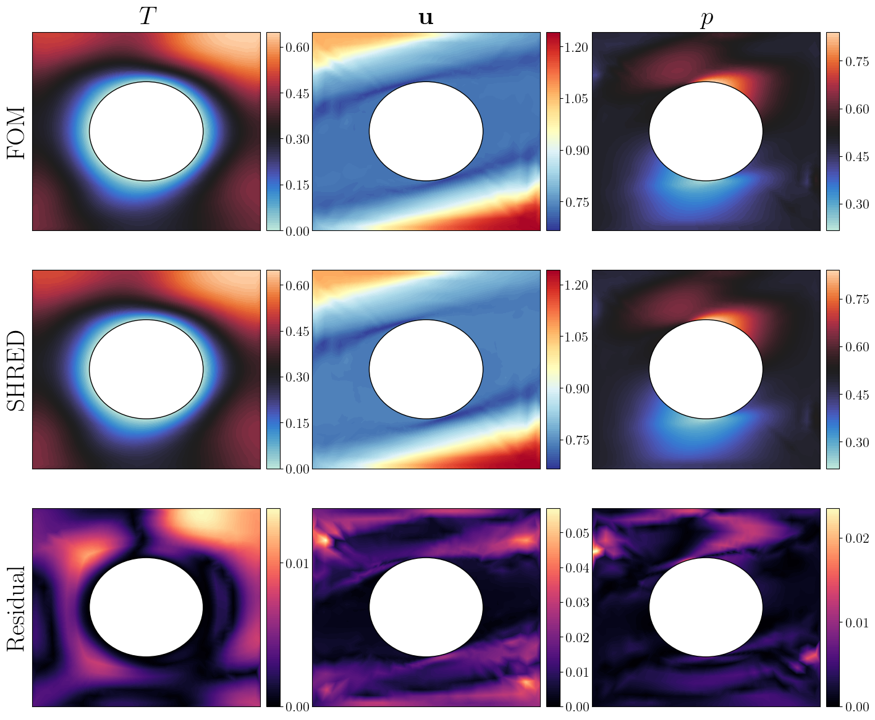
Figure 8: SHRED reconstruction for By1, By2 at By3. Results show highly accurate spatial fields under a composite field.
Error profiles again demonstrate stable reconstruction, with a maximum By4 error below By5 for all fields:
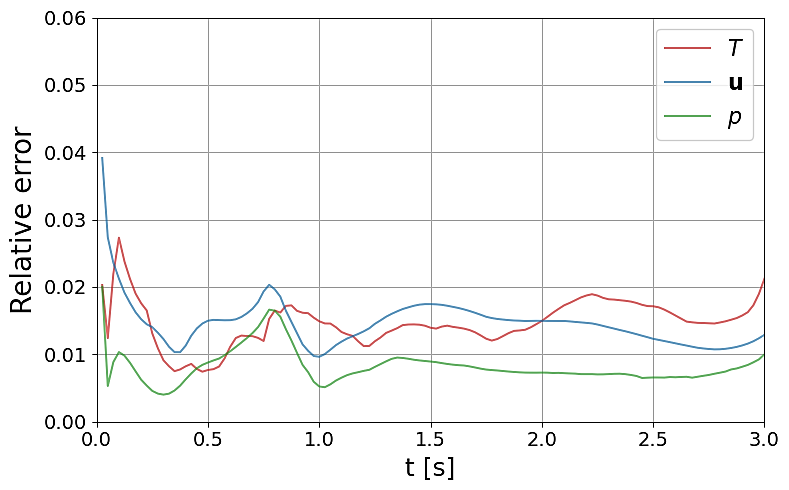
Figure 9: Relative By6-error over time for temperature, velocity, and pressure in the two-parameter case.
Time-Dependent Magnetic Field Reconstruction and Indirect Parameter Inference
With time-periodic magnetic forcing, the model confronts non-stationary transients and rapidly evolving flow structures. Three test cases with markedly distinct temporal field profiles are considered:
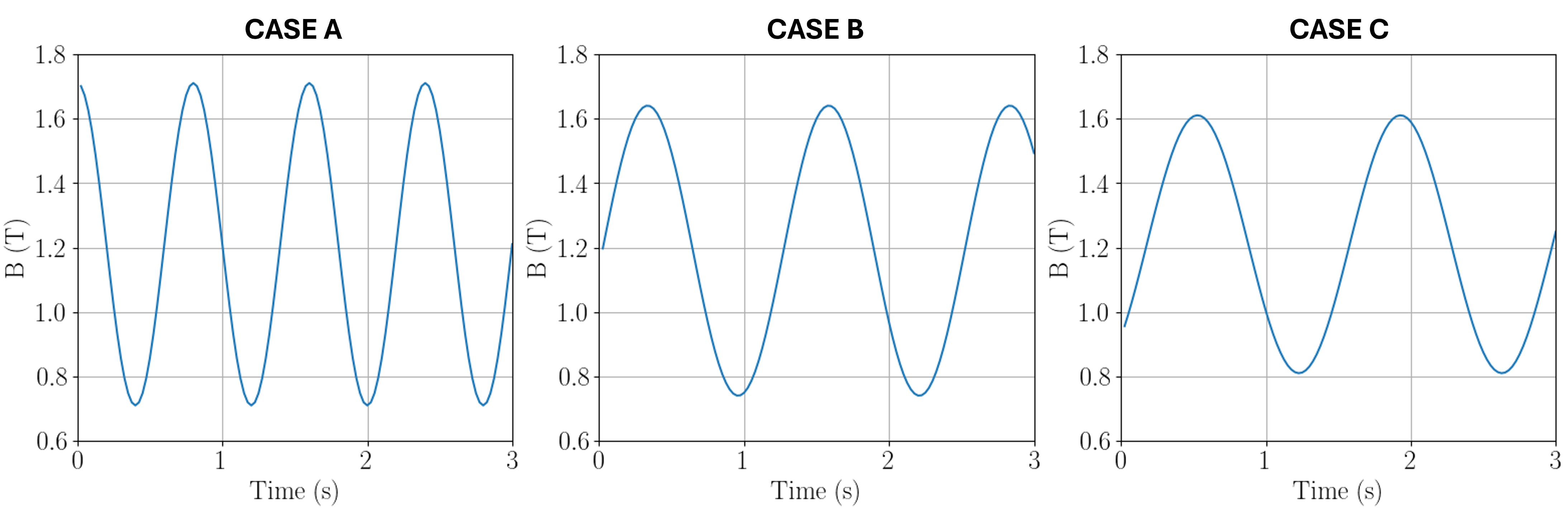
Figure 10: Time-traces of the magnetic fields for the three test cases A, B, and C.
Despite strong temporal variability, SHRED provides highly accurate reconstructions:
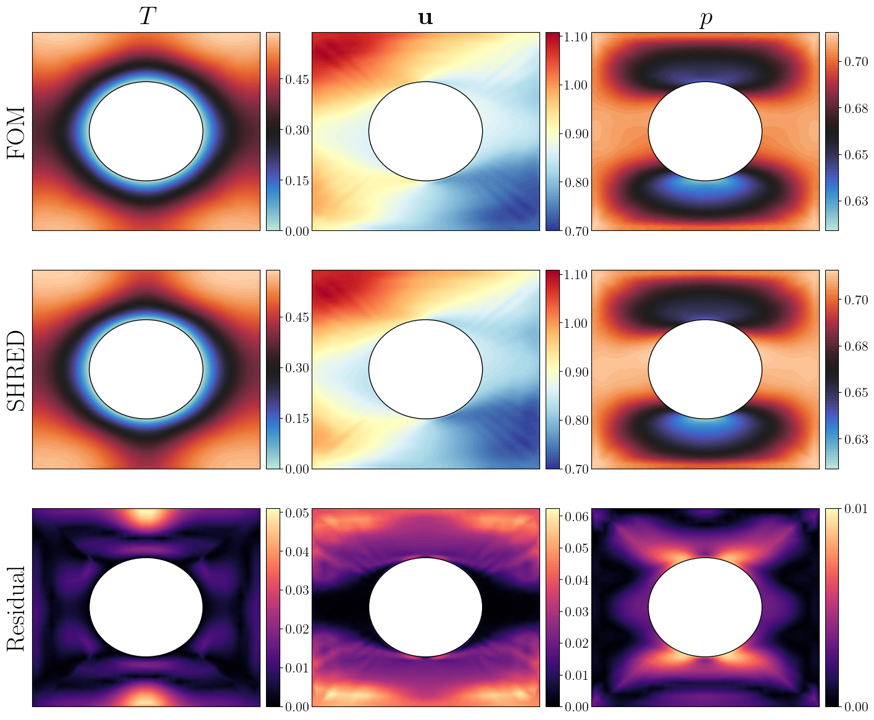
Figure 11: Reference and SHRED-reconstructed temperature, velocity, and pressure fields at By7, test case A.
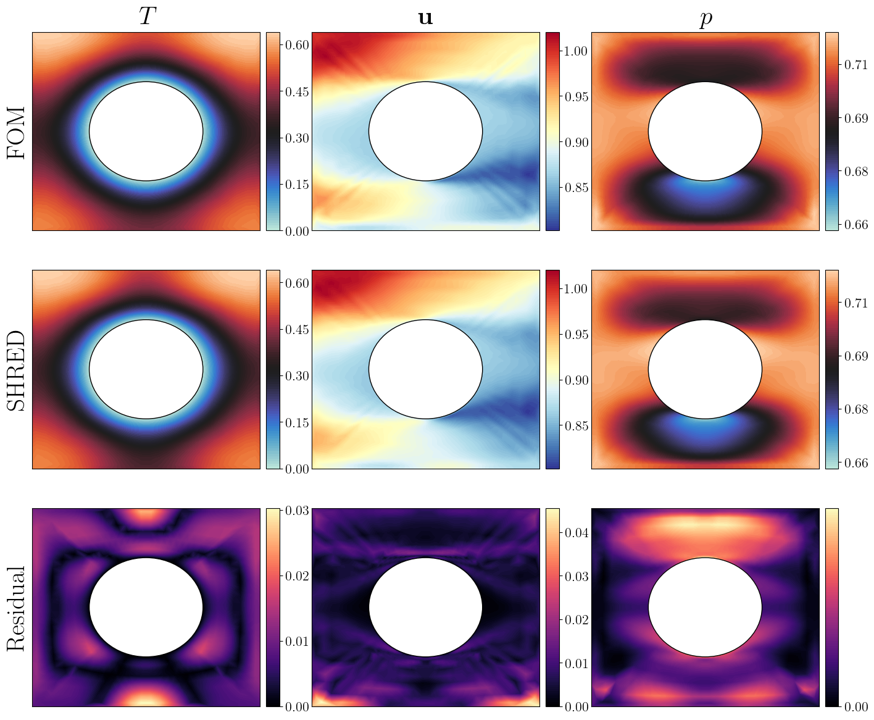
Figure 12: As above, for test case B.
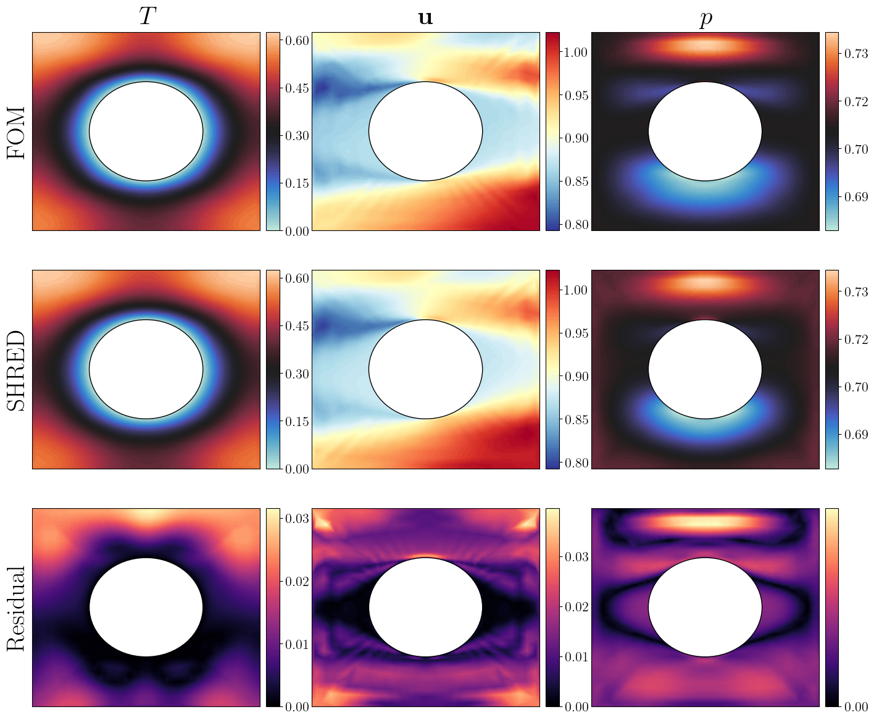
Figure 13: As above, for test case C.
Early-time errors (By8 for velocity and pressure in the hardest case) decay rapidly, stabilizing below By9 after the initial transient. Temperature error remains consistently less than Bx(t)0:
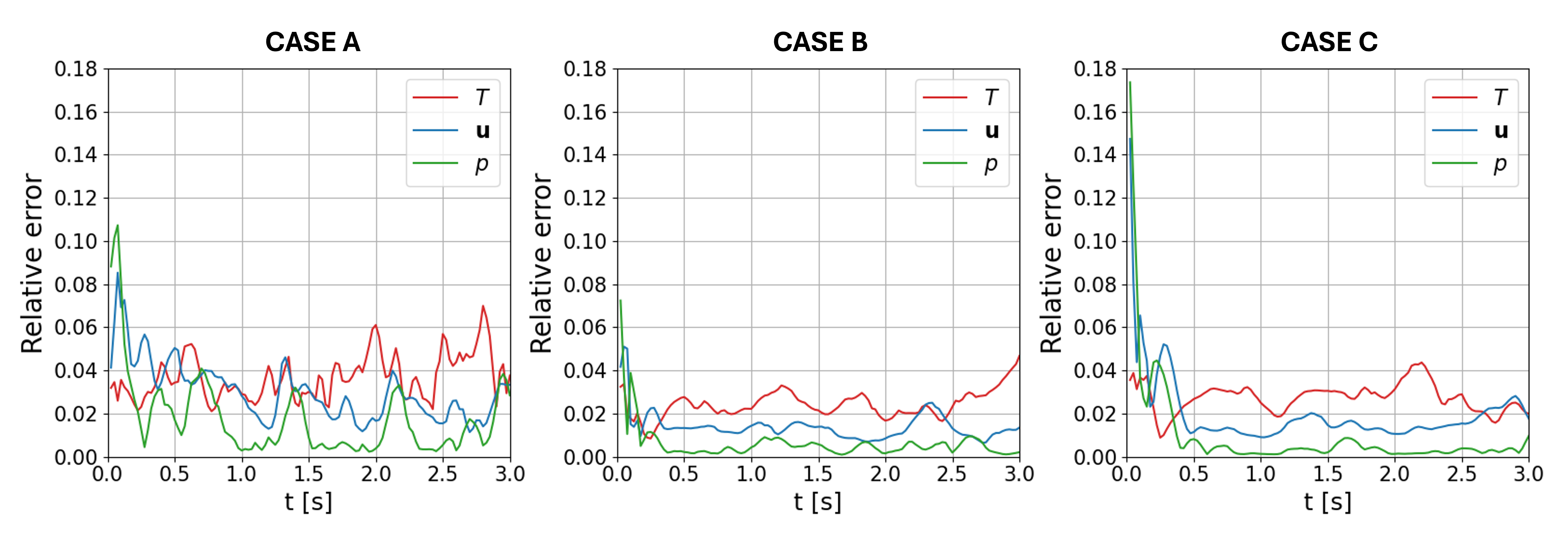
Figure 14: Temporal Bx(t)1-error profiles for all three fields across the three test cases with oscillating fields.
A significant outcome is the ability for SHRED to infer the latent, time-dependent magnetic field directly from temperature sensor data alone—a nontrivial inverse regression task. After a short initialization lag (ascribed to LSTM warmup), SHRED’s predicted magnetic field aligns closely with the true value for all cases:
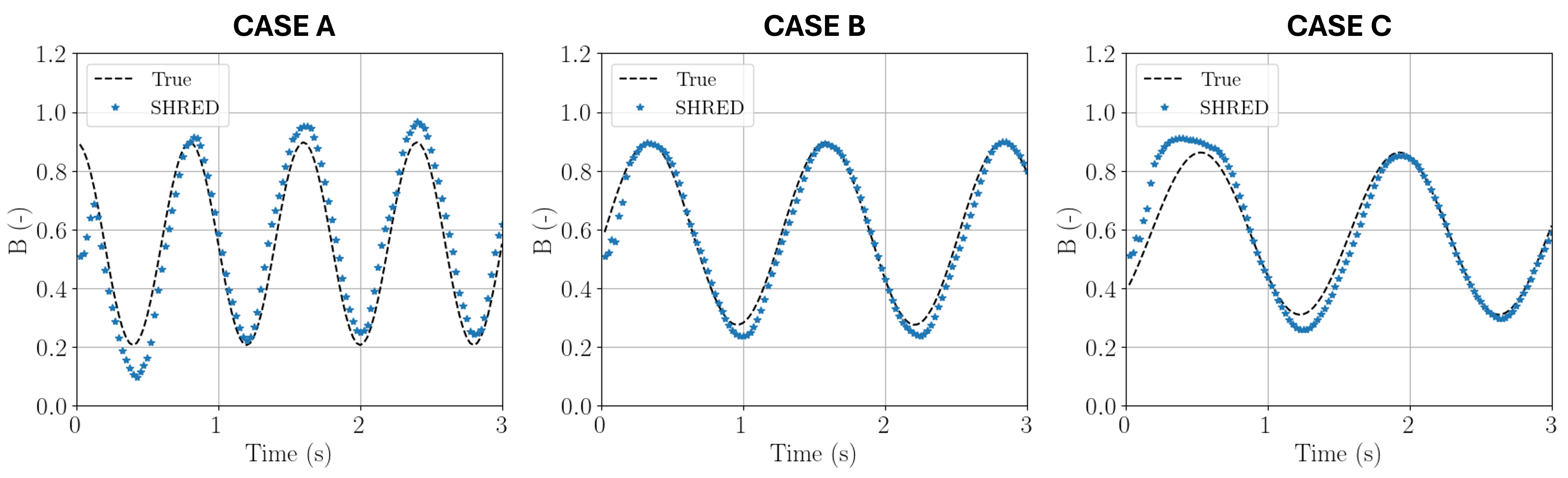
Figure 15: Reference and SHRED-estimated temporal profiles of the (normalized) driving magnetic field for all three test cases.
This demonstrates that the learned mapping encapsulates not just state estimation, but also latent parameter identification from observable dynamics.
Implications, Limitations, and Future Directions
SHRED offers a scalable, data-driven alternative to classical intrusive reduced order models for MHD systems, operating efficiently with modest training data and exceptional inference speed. Its robustness across varying magnetic intensities, orientations, and temporal profiles establishes its suitability for both offline parametric sweeps and real-time model-based monitoring or control in fusion blankets. The capability for indirect parameter inference (e.g., reconstructing Bx(t)2 from thermal measurements) highlights its value as a data-driven diagnostic tool.
Practically, the requirement of only temperature data at minimal, arbitrarily placed sensors substantially relaxes experimental design constraints; this is critical in high-radiation fusion environments where sensor deployment is challenging. The training cost is negligible compared to high-fidelity MHD simulation, making SHRED viable for digital twin implementations with continual model updates.
Theoretically, SHRED’s architecture aligns with dynamical systems embedding theory, and the interpretability afforded by reduced network size (Bx(t)3 trainable parameters) allows model interrogation, unlike deep black-box alternatives. Limitations include the reliance on informative sensor data and the necessity that system dynamics fall within the attractor manifold captured by SVD and LSTM encoding.
Future research directions include scaling to more complex blanket geometries, advancing closed-loop control by integrating SHRED into real-time controllers, and expanding the framework to incorporate direct uncertainty quantification. Deploying SHRED in online digital twins is a particularly promising avenue, enabling predictive control and fault detection in operational fusion reactors.
Conclusion
This study establishes SHRED as an accurate, data-efficient, and flexible tool for reconstructing and diagnosing MHD states in liquid metal blanket environments, robust to both parametric and temporal variability in driving conditions. The method delivers precise field estimations from minimal data and offers indirect parameter inference, supporting both practical reactor monitoring and theoretical investigation of complex multiphysics systems. The demonstrated computational and inferential advantages underline SHRED’s potential as an enabling methodology for real-time, data-driven digital twins and control in next-generation fusion energy systems.

