- The paper establishes NP-hardness of the forced king chasing problem in Chinese Chess by reducing from 3-SAT.
- It constructs intricate gadgets—including mate-in-one, turn, variable, and clause gadgets—to simulate Boolean logic within the game setting.
- The results highlight the rich computational structure of Xiangqi, offering new insights for AI research and game theory analysis.
NP-Hardness of the King Chasing Problem in Chinese Chess
Introduction and Preliminaries
The paper "King Chasing Problem in Chinese Chess is NP-hard" (2604.01935) formalizes and analyzes the complexity of a specialized decision problem in Chinese Chess (Xiangqi), termed the King Chasing Problem. In this variant, the player is constrained to check the opponent’s king in every move until delivering checkmate. The work establishes that, when generalized to n×n boards and under these rules, determining whether Red has a forced win is NP-hard, using a reduction from 3-SAT.
The results build on extensive literature classifying the computational hardness of optimal play and subproblems in classical board games, which range from PSPACE-hardness in Go and Othello to EXPTIME-completeness for Western Chess. However, for the specific king-chasing subproblem within Chinese Chess, the precise boundary of complexity had not previously been identified.
The King Chasing Problem asks: Given a generalized Chinese Chess position where Red must check every move, does Red have a forced win under standard movement and capturing rules? This is a strict restriction: at every playout step, Red is legally obligated to check, and Black must resolve check. The initial position can include an arbitrary arrangement of the five principal piece types (king, rook, horse, elephant, cannon), all within a generalized and possibly enlarged palace region.
Chinese Chess rules, particularly the complex capturing mechanics of the cannon and blocking properties of the elephant, are leveraged for simulating logical constraints in the reduction. The definition ensures that Red cannot avoid checking, and any deviation immediately loses due to the mate-in-one construction.
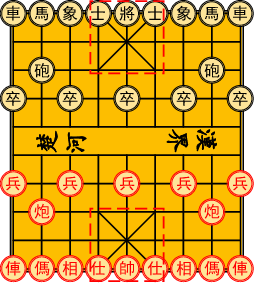
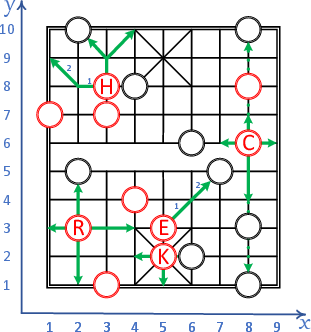
Figure 1: The Chinese Chess board.
Reduction from 3-SAT: Gadget Construction
The proof of NP-hardness deploys a reduction from 3-SAT, assembling a generalized board position encoding an instance of 3-SAT such that Red has a forced king-chasing win if and only if the formula is satisfiable. The reduction is architected using intricate gadgets, each corresponding to elements of the SAT instance:
1. Mate-in-One Gadget: Enforces the king-chasing condition by ensuring that if Red ever fails to check, Black can execute a forced mate on the subsequent move. This guarantees strict adherence to chase dynamics throughout play.
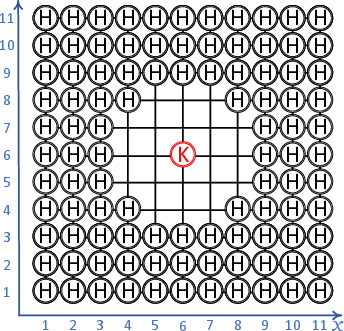
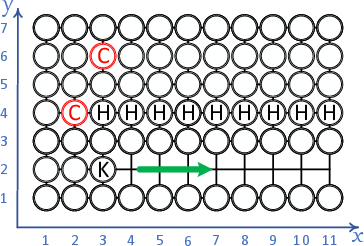
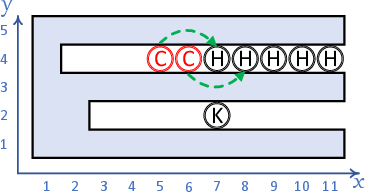
Figure 2: The mate-in-one gadget, ensuring Red must check in every move to survive.
2. Start and Turn Gadgets: Orchestrate the overall flow of Black’s king, enforcing unidirectional movement and supporting turns (90-degree path changes), key to simulating traversal through a variable-clause circuit.
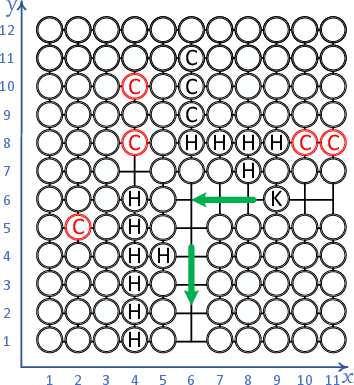
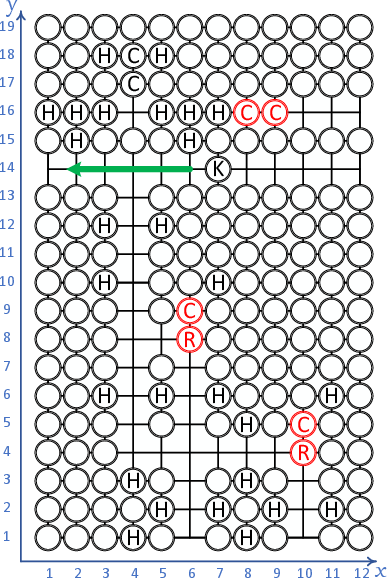
Figure 3: The turn gadget, designed to force the black king through a specific routing corresponding to 3-SAT wiring.
3. Variable Gadgets: Implement Boolean choice; Red’s selection of which rook to move and check with irrevocably represents variable assignment (true/false) for each 3-SAT variable.
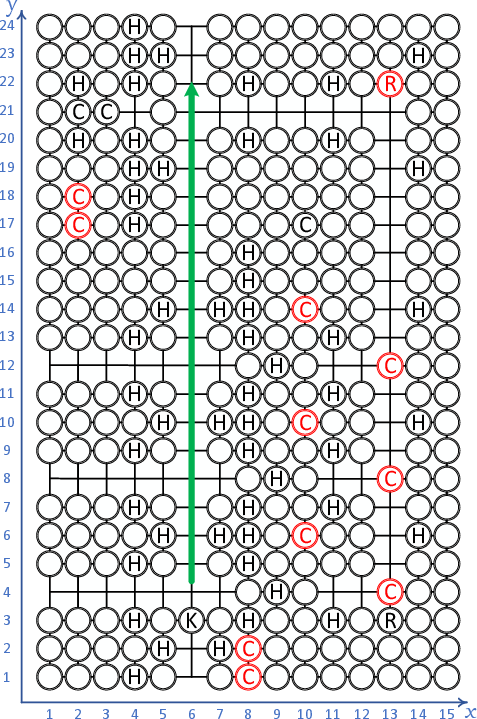
Figure 4: The clause gadget enforces the clause logic by constraining rook and cannon use depending on variable assignments.
4. Clause Gadgets: Model 3-literal clauses so that Red can safely keep checking through the gadget if and only if the clause is satisfied under the current variable assignment. Otherwise, continuation becomes impossible or leads to loss due to checkmate by Black.
5. Variable-Clause Wiring: Through a set of “key rooks” and “literal cannons,” variable gadgets are connected to corresponding literals in clause gadgets, authentically simulating the evaluation of each clause based on assignment decisions.
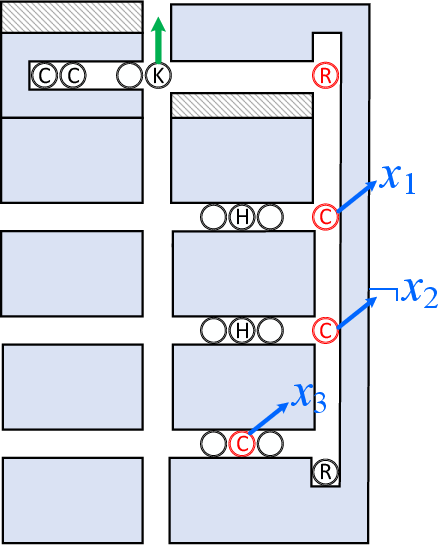
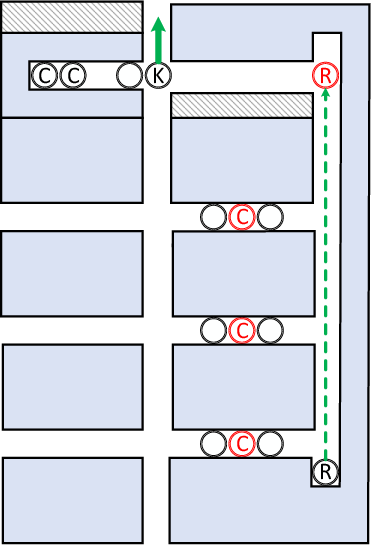
Figure 5: Variable assignments activate clause gadgets, allowing Black’s passage only if the clause is satisfied.
6. Variable Cannons and Force-to-Bottom Gadget: These stages prevent spurious winning strategies by compelling variable cannons to fire according to the assignment logic, blocking unintended alternative wins when the SAT instance is unsatisfiable.
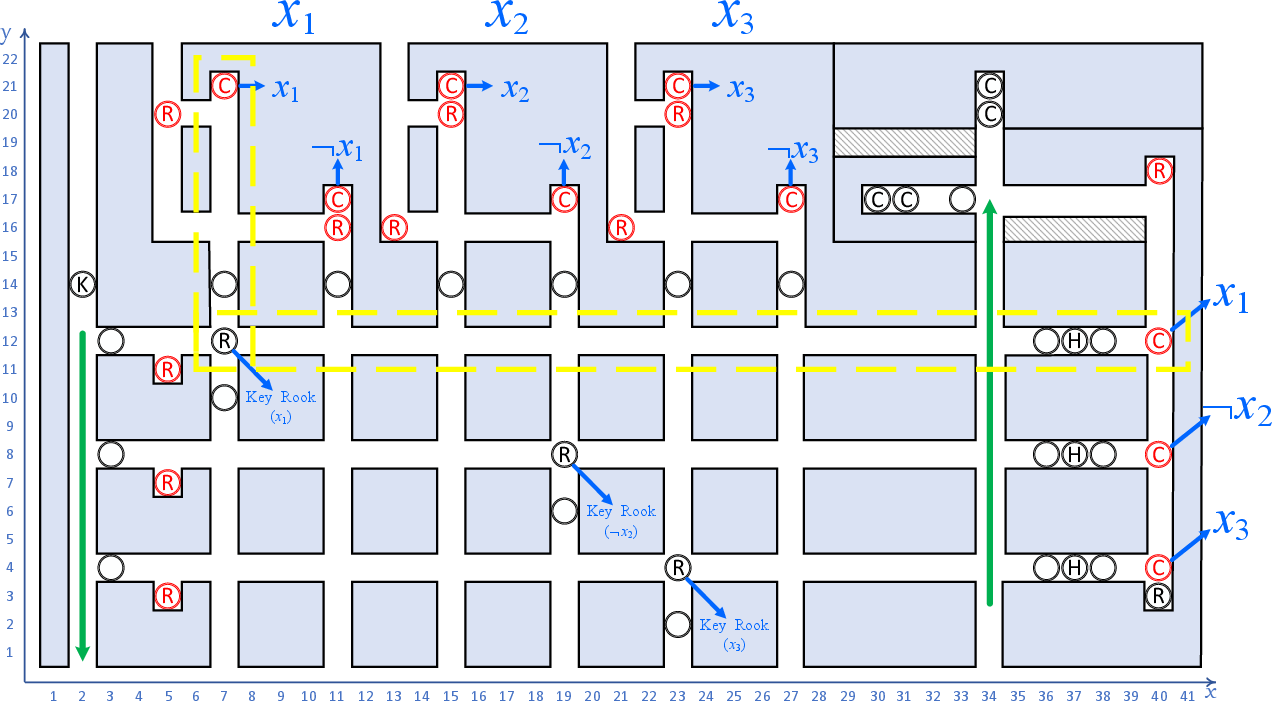
Figure 6: Variable cannons interact with the clause gadget’s blocking mechanism to ensure clause verification mirrors logical structure.
Correctness, Lemmas, and Implications
The reduction is proven correct through a precise correspondence:
- Forward Direction: A satisfying assignment to the 3-SAT instance yields a winning checking sequence for Red by proper orchestration of variable and clause gadgets.
- Reverse Direction: Any winning king-chasing sequence encodes an assignment satisfying all clauses, as loss becomes inevitable at an unsatisfied clause gadget otherwise.
Key technical lemmas formalize the correspondence, giving the equivalence between solution existence in 3-SAT and winning strategy existence in the king-chasing position. The proof is robust to multiple path choices due to the forced-move structure imposed by gadgets.
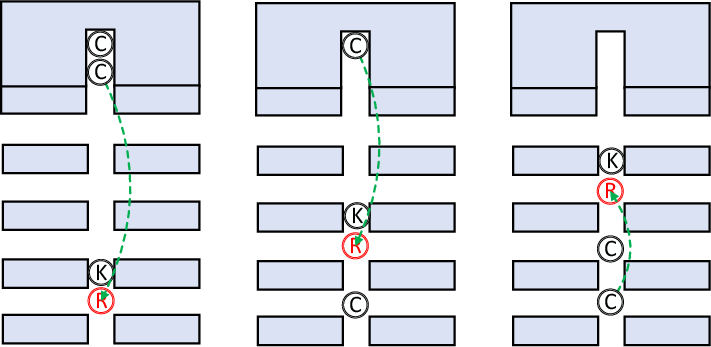
Figure 7: Black cannon captures any rook attempting an unintended check, safeguarding against illegal move sequences.
Theoretical and Practical Implications
Establishing NP-hardness for the king-chasing version situates this subproblem below the full EXPTIME complexity for generalized Chinese Chess, but at least as hard as any NP-complete problem. The reduction modularizes classic Boolean logic primitives in the movement and interaction of Chinese Chess pieces, demonstrating the game’s expressive computational power even under sustained-check constraints.
This result has consequences both for artificial intelligence (e.g., the intractability of general solving of such forced-check puzzles in Xiangqi) and for game theory, where understanding the tractability of subproblems supports analysis of solution space complexity. It also provides a template for future complexity-theoretic proofs in variants and subproblems of chess-like strategy games.
An open question remains whether king-chasing is in a higher complexity class (e.g., PSPACE or EXPTIME), contingent on further proof of completeness or hardness. Additionally, the work suggests that king-chasing problems—even with five piece types and restricted to expanded palaces—retain sufficient richness to encode arbitrary NP-complete problems.
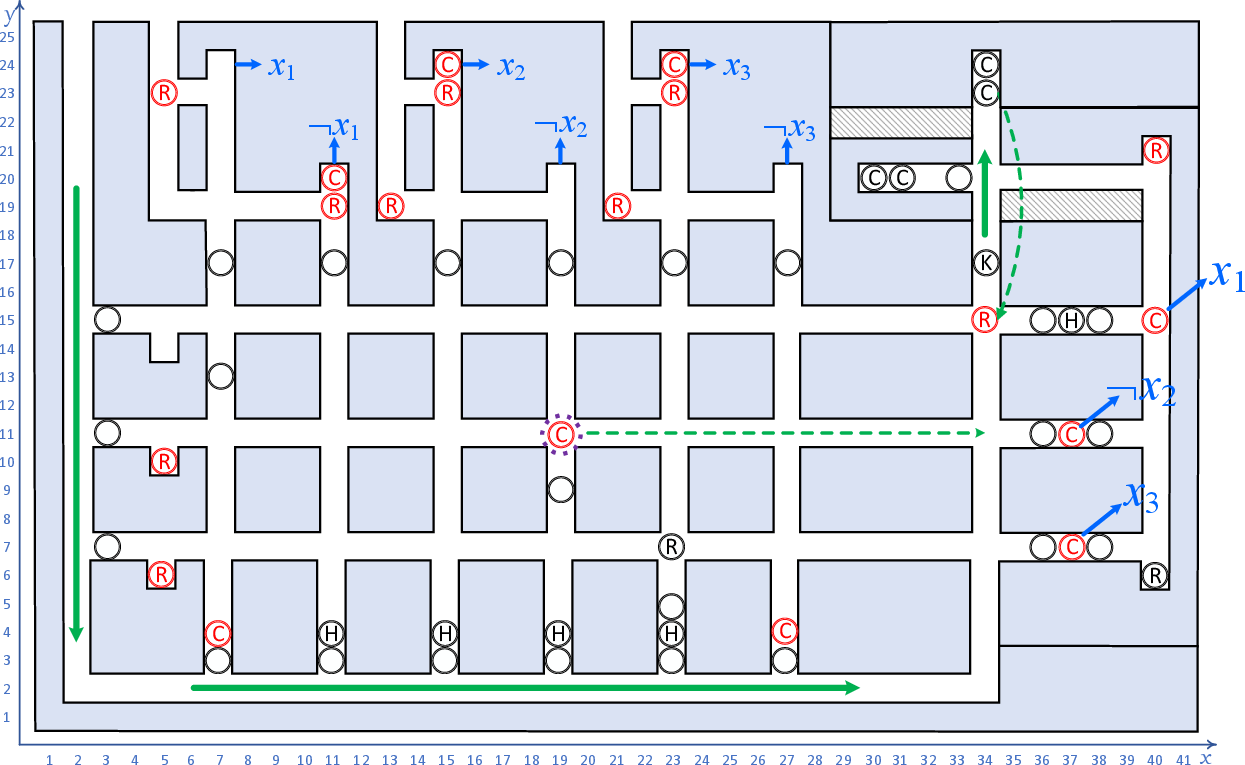
Figure 8: Red’s unintended moves are punished by force-to-bottom gadget constraints, eliminating illicit solutions.
Conclusion
The paper rigorously proves that the king chasing problem in Chinese Chess, under strict forced-check rules, is NP-hard by explicit reduction from 3-SAT via a precise assembly of Chess gadgets. The realization that even such a constrained decision subproblem matches the complexity of classic logical satisfiability highlights the deep computational structure underpinning Xiangqi and, by extension, other chess-like games and their puzzle subgenres. This NP-hardness result motivates future research targeting completeness, tightening lower bounds, and exploring analogous complexity characterizations in related forced-move game variants and AI solving paradigms.
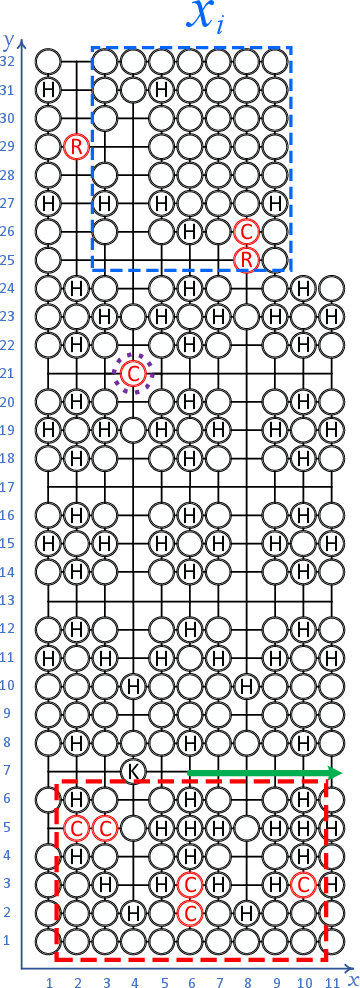
Figure 9: The full board construction for a sample formula, assembling all gadgets into a composite logical circuit.