Global Geometry of Orthogonal Foliations in the Control Allocation of Signed-Quadratic Systems
Published 2 Apr 2026 in eess.SY, cs.RO, and math.OC | (2604.01912v1)
Abstract: This work formalizes the differential topology of redundancy resolution for systems governed by signed-quadratic actuation maps. By analyzing the minimally redundant case, the global topology of the continuous fiber bundle defining the nonlinear actuation null-space is established. The distribution orthogonal to these fibers is proven to be globally integrable and governed by an exact logarithmic potential field. This field foliates the actuator space, inducing a structural stratification of all orthants into transverse layers whose combinatorial sizes follow a strictly binomial progression. Within these layers, adjacent orthants are continuously connected via lower-dimensional strata termed reciprocal hinges, while the layers themselves are separated by boundary hyperplanes, or portals, that act as global sections of the fibers. This partition formally distinguishes extremal and transitional layers, which exhibit fundamentally distinct fiber topologies and foliation properties. Through this geometric framework, classical pseudo-linear static allocation strategies are shown to inevitably intersect singular boundary hyperplanes, triggering infinite-derivative kinetic singularities and fragmenting the task space into an exponential number of singularity-separated sectors. In contrast, allocators derived from the orthogonal manifolds yield continuously differentiable global sections with only a linear number of sectors for transversal layers, or can even form a single global diffeomorphism to the task space in the case of the two extremal layers, thus completely avoiding geometric rank-loss and boundary-crossing singularities. These theoretical results directly apply to the control allocation of propeller-driven architectures, including multirotor UAVs, marine, and underwater vehicles.
The paper introduces a geometric framework that formalizes redundancy resolution via globally integrable orthogonal foliations.
It demonstrates that signed-quadratic fibers uniquely partition actuator space to reduce singularities compared to pseudo-linear methods.
The approach enhances fault tolerance and task space coverage by shifting control allocation from algebraic inversion to manifold-based selection.
Global Geometry of Orthogonal Foliations in Control Allocation of Signed-Quadratic Systems
Overview and Problem Formulation
This paper addresses redundancy resolution for systems governed by signed-quadratic actuation maps, such as multirotor UAVs and marine vehicles. The central problem is mapping a lower-dimensional task space W to a higher-dimensional actuator space V, where the map is nonlinear: f(v)=A(v⊙∣v∣) with A full-rank and n=m+1. This minimal redundancy case sets the stage for a rigorous analysis of the global topology of the actuation null-space, focusing on the fiber bundle structure induced by f.
Traditional pseudo-linear static allocation methods (e.g., Moore-Penrose pseudo-inverse) fail to account for the differential topology of the kinetic space, often triggering singularities when mapped back to actuator states. The paper instead formalizes the geometry of redundancy resolution, proving the existence and properties of globally integrable orthogonal distributions derived from an exact logarithmic potential field. This approach stratifies the actuator space into orthants and layers, yielding a geometric partitioning fundamentally distinct from classical techniques.
Topology of Signed-Quadratic Fibers
For minimally redundant systems, the pre-image (fiber) of each task w under f is a one-dimensional continuous curve in V, parameterized via null-space progression:
γ(w,λ)=sign(zwA+λbA)⊙∣zwA+λbA∣,
where V0 and V1 (normalized). This fiber structure induces a unique central fiber for V2, asymptotically governing the flow of all null-space fibers.
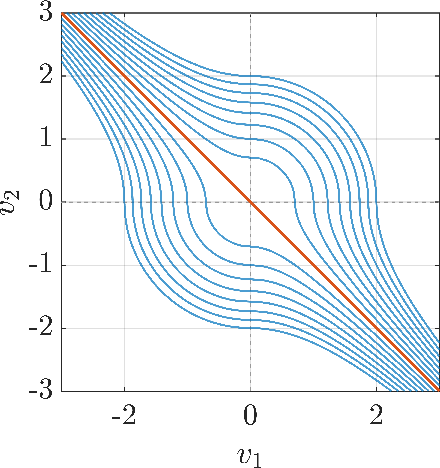
Figure 1: V3 symmetric case fiber geometry, showing central fiber alignment and expansion of adjacent fibers.
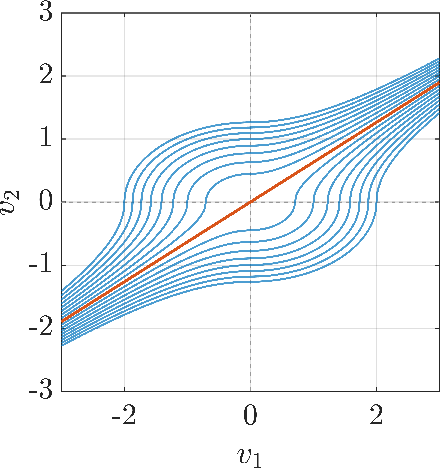
Fibers traverse the kinetic space in a strictly ordered manner, crossing V4 coordinate hyperplanes, each representing a single actuator's zero crossing. The central fiber passes through exactly two extremal orthants; transitional orthants are traversed between these extremal regions. As V5, all fibers converge to the central fiber, demonstrating global asymptotic alignment.
Figure 2: Asymmetric case illustrating fiber and orthant traversal, highlighting varied sign signatures.
Orthogonal Manifolds and Logarithmic Potential Foliation
The orthogonal distribution to the fibers is globally integrable, yielding V6-dimensional manifolds characterized as level sets of the logarithmic potential field:
V7
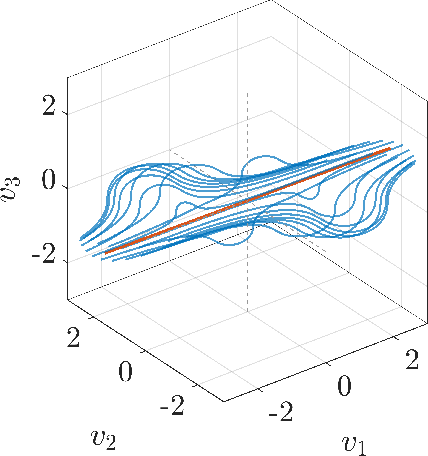
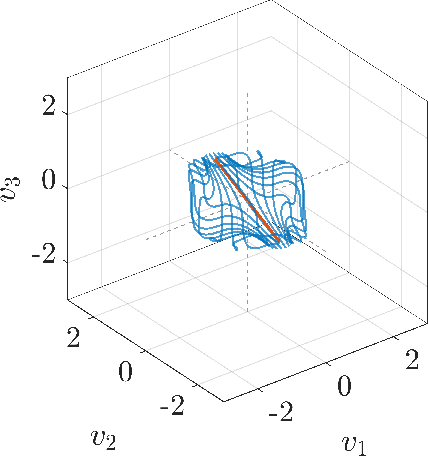
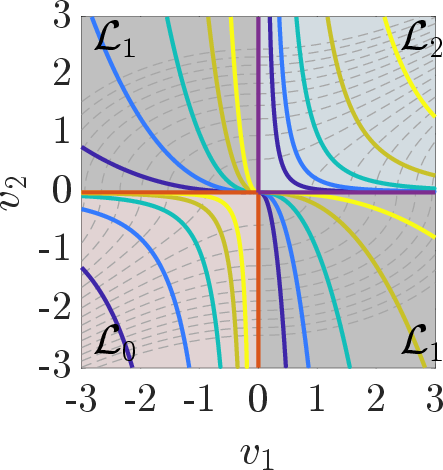
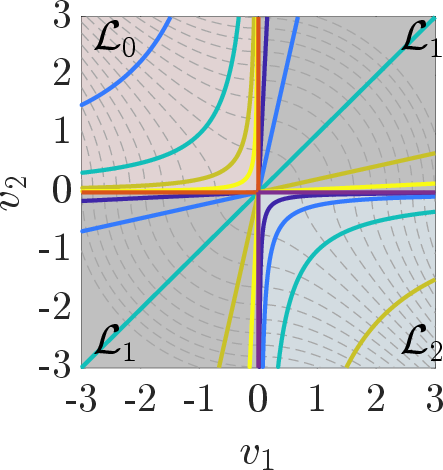
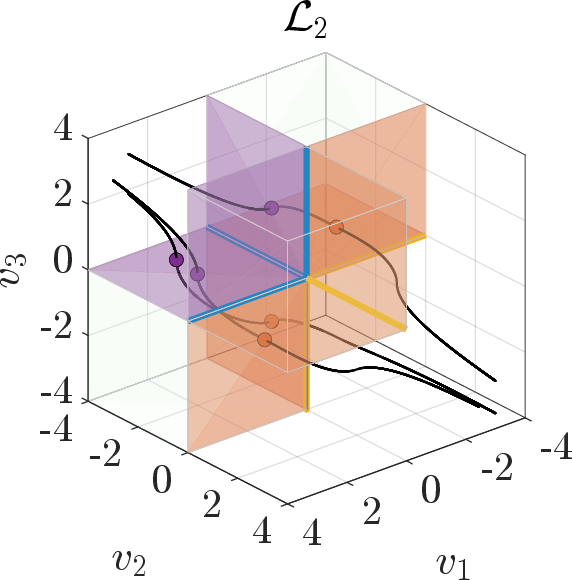
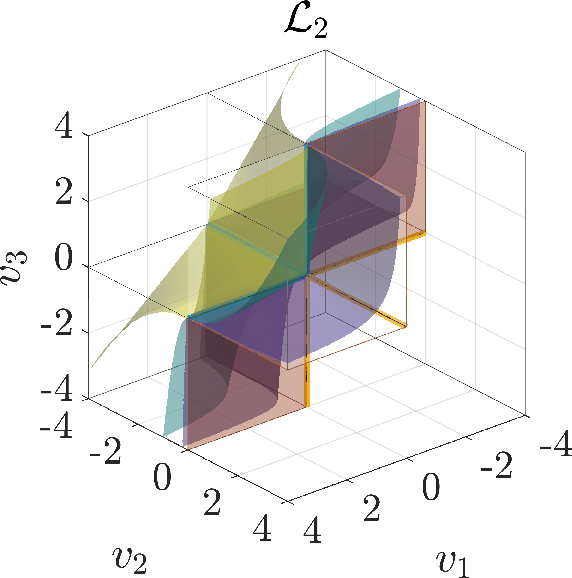
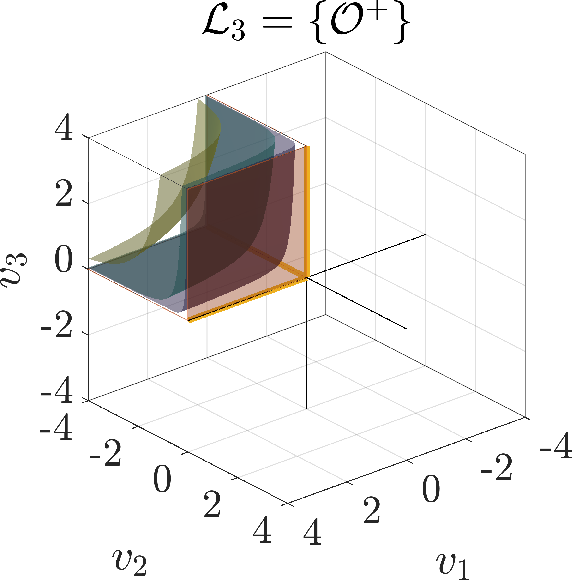
These manifolds form a foliation of actuator space V8, indexed by layer V9 and potential constant f(v)=A(v⊙∣v∣)0. Within each orthant, the orthogonal manifolds are smooth; boundaries arise as coordinates approach zero, leading to hinges and folds at orthant faces.
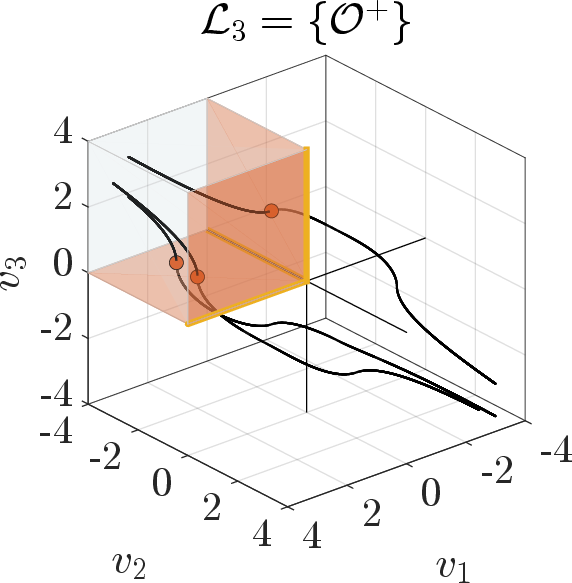
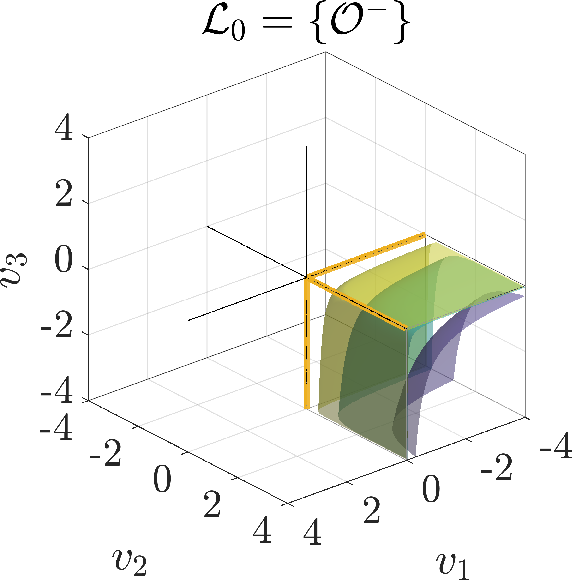
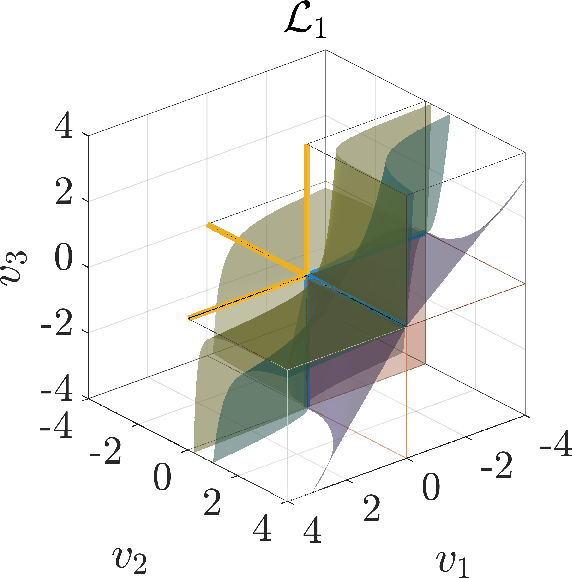
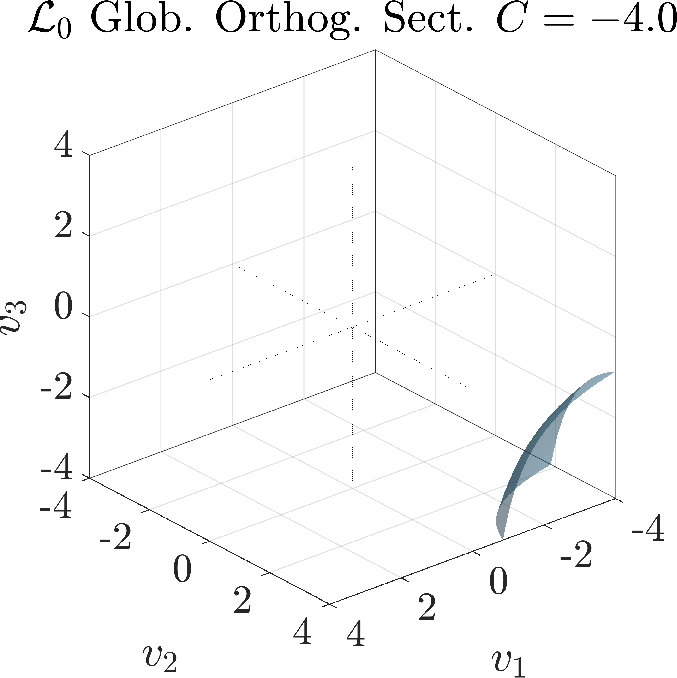
Figure 3: Families of level sets of the global logarithmic potential in extremal and transitional orthants.
The orthogonal foliation reveals a continuous stratification into layers. Each layer f(v)=A(v⊙∣v∣)1 comprises orthants sharing the same number of entry coordinates (matches to f(v)=A(v⊙∣v∣)2), with combinatorial structure (f(v)=A(v⊙∣v∣)3 orthants per layer). The layered construction glues orthants together at reciprocal hinges—f(v)=A(v⊙∣v∣)4-dimensional strata—yielding globally smooth sections.
Global Orthogonal Sections and Task Space Partitioning
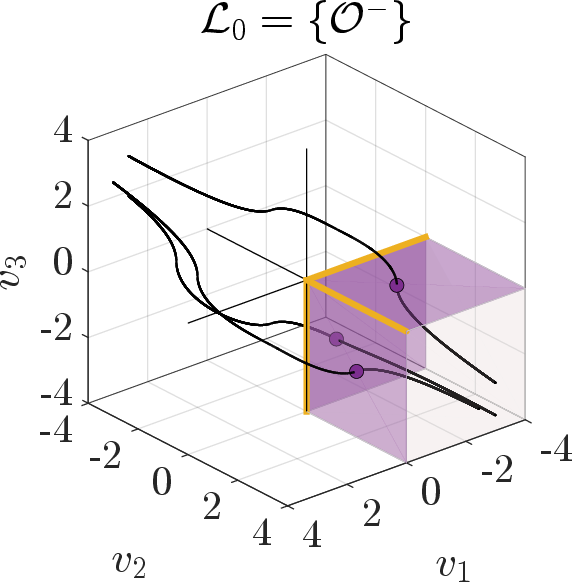
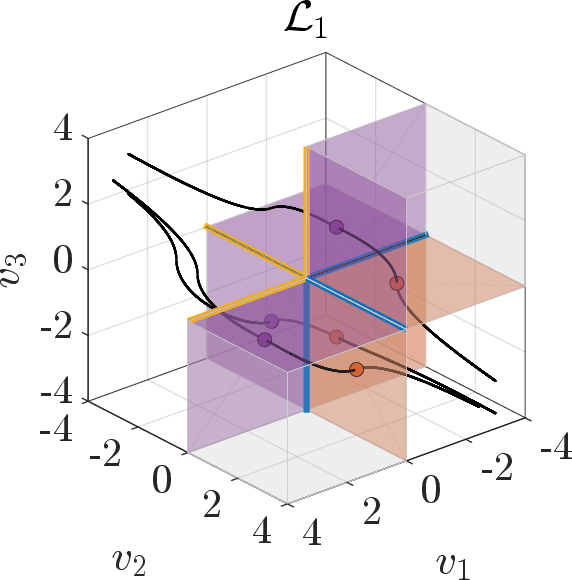
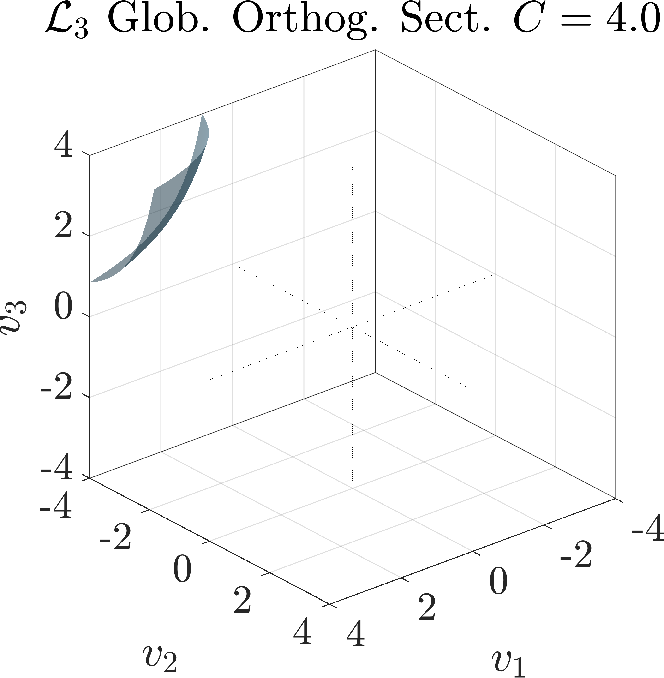
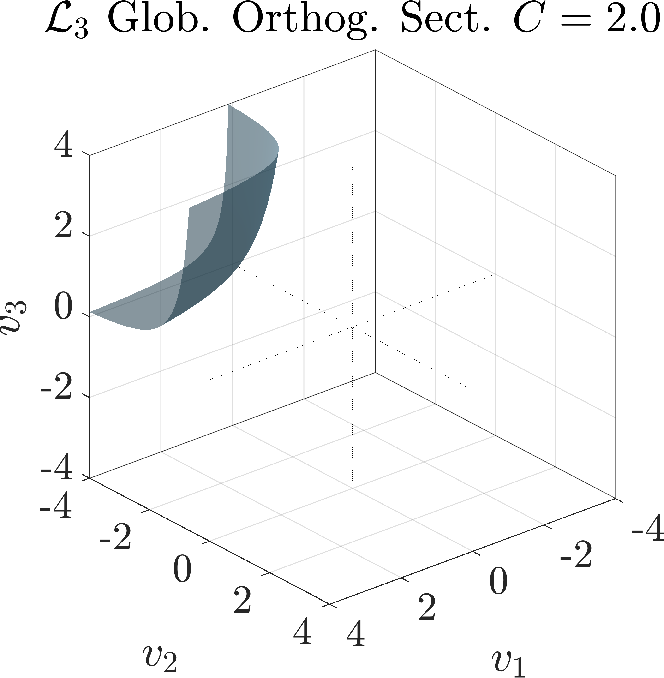
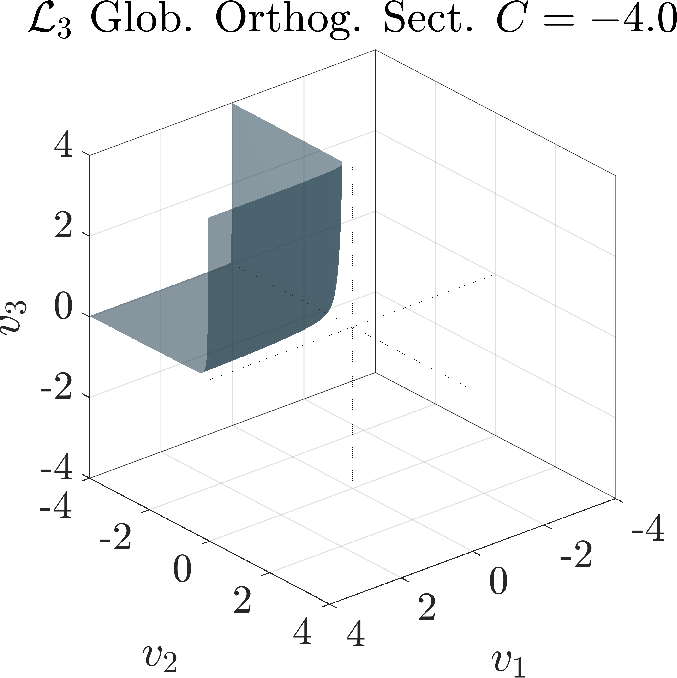
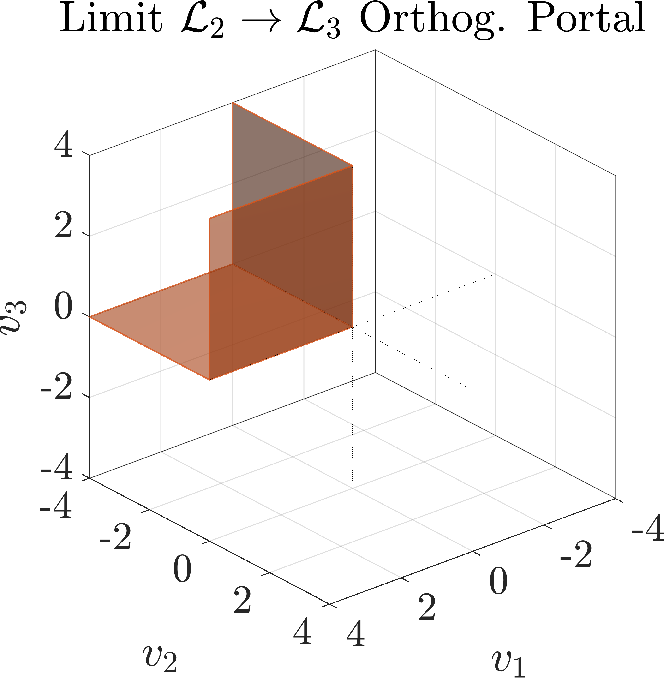
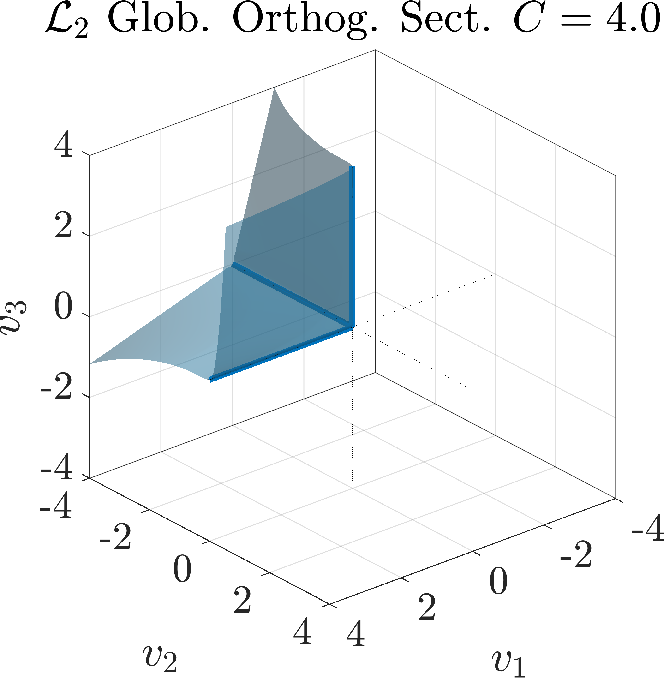
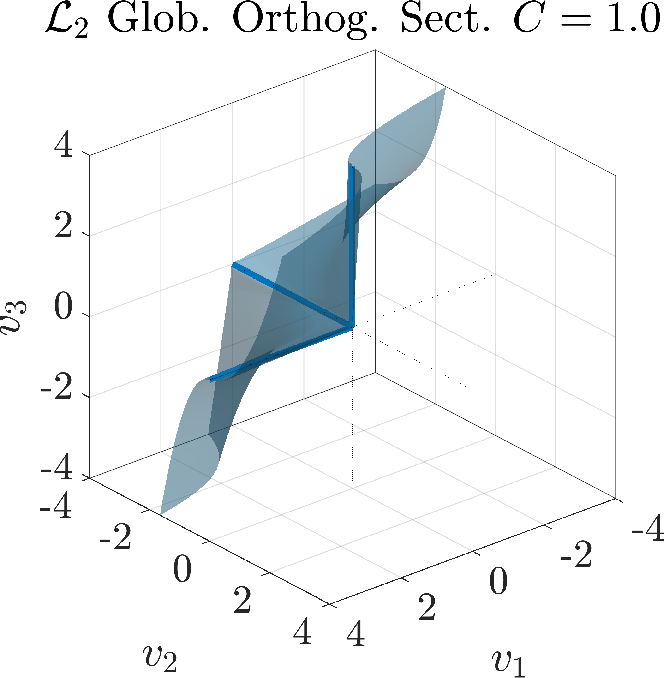
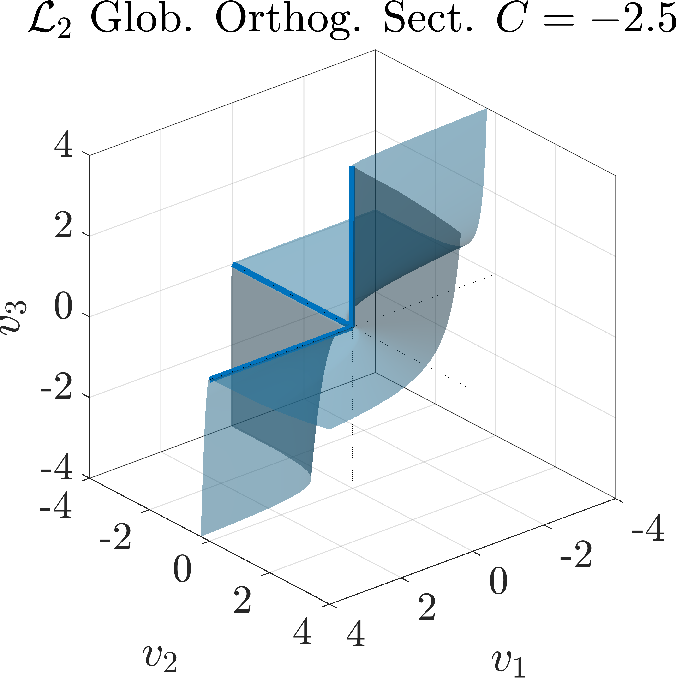
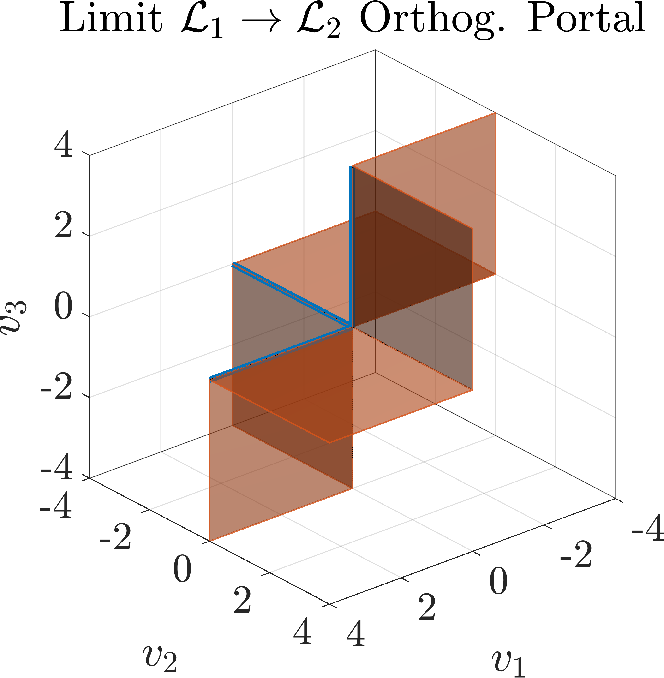
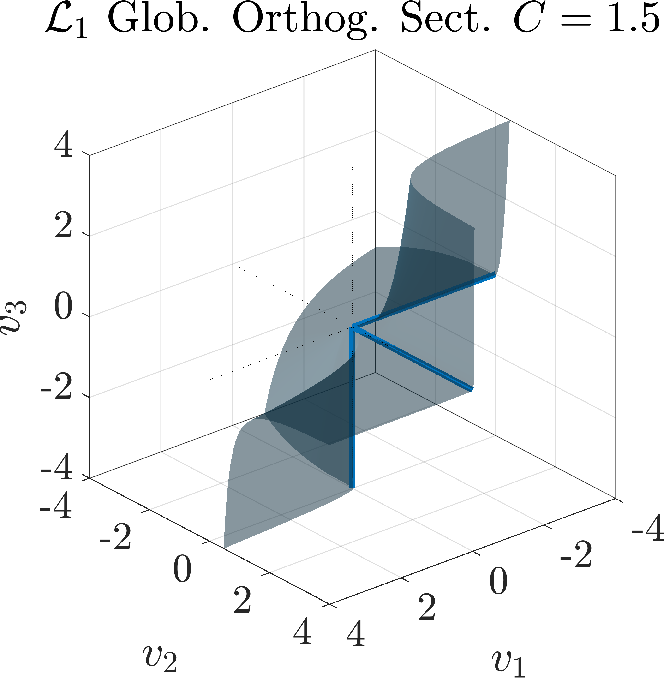
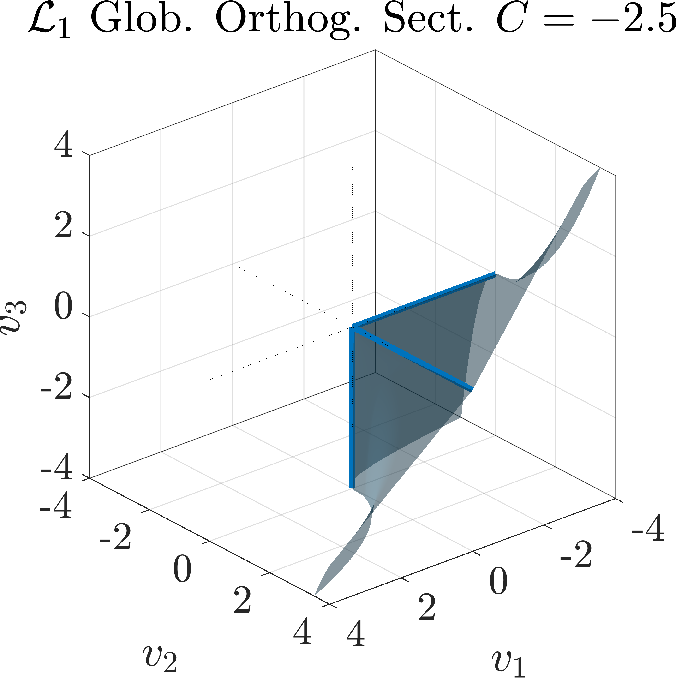
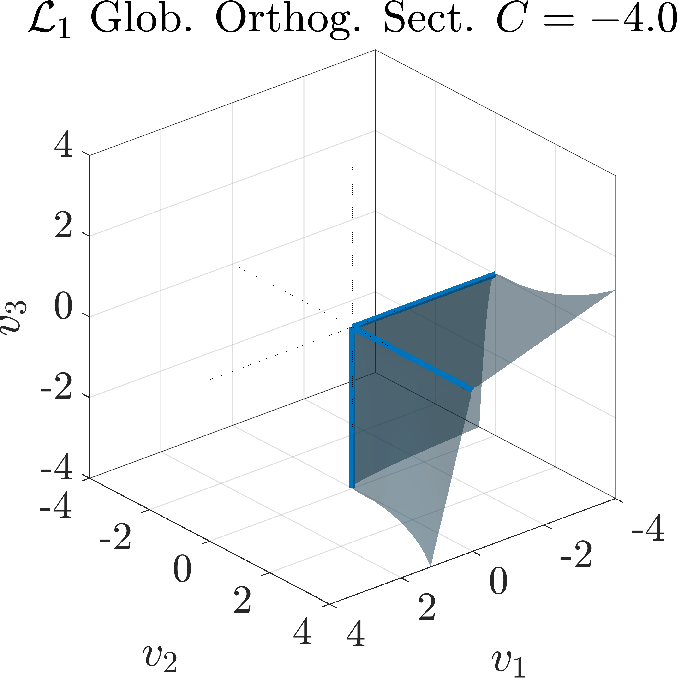
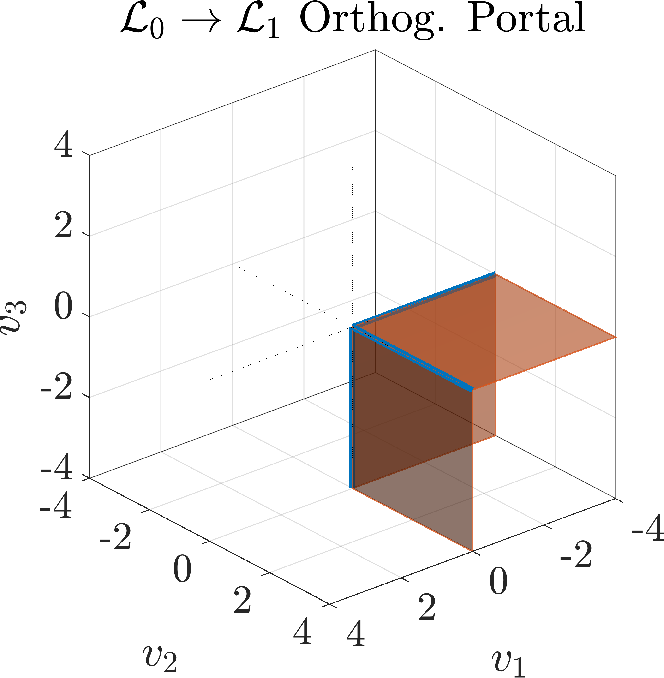
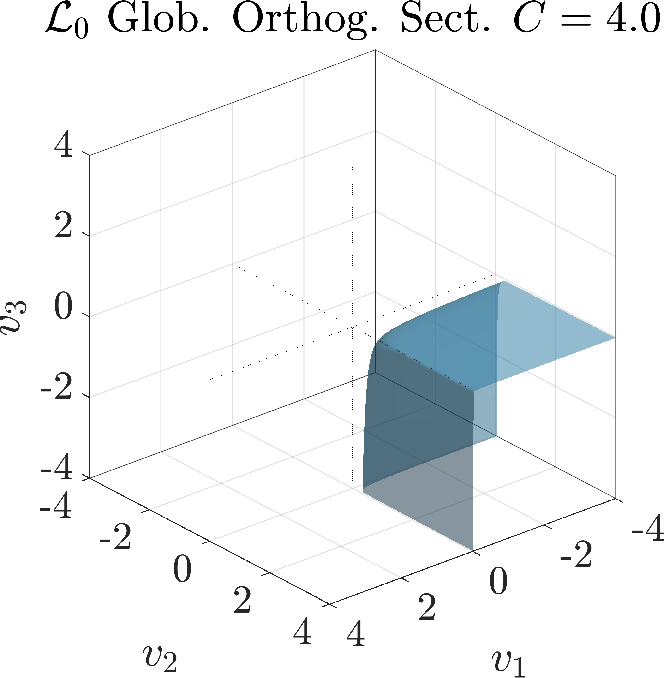
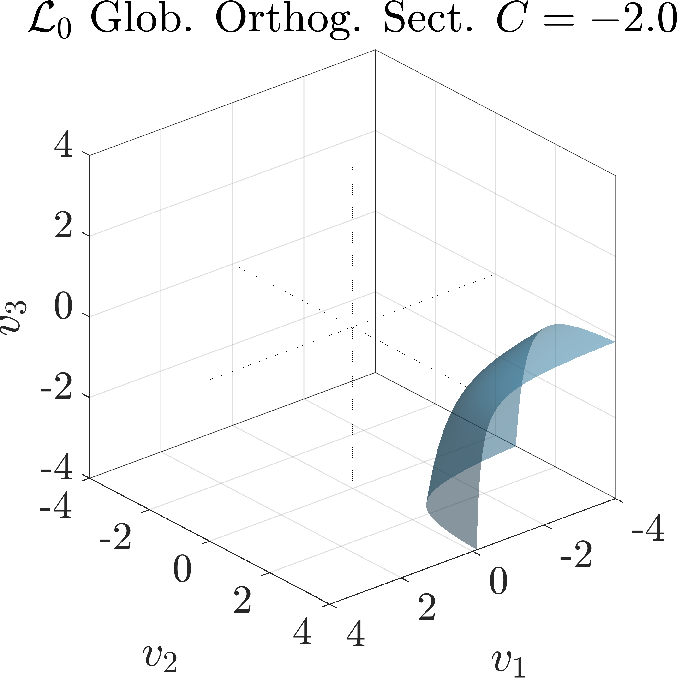
Orthogonal sections in a given layer f(v)=A(v⊙∣v∣)5 act as smooth transversal barriers to fiber flow, partitioning the task space f(v)=A(v⊙∣v∣)6 into disjoint regions corresponding to the orthants. Sections are glued at reciprocal hinges, achieving f(v)=A(v⊙∣v∣)7 smoothness across the kinetic space, except at singularities (coordinate vanishing).
Figure 4: Sequential evolution of global orthogonal sections, demonstrating smooth passage between the layered orthants.
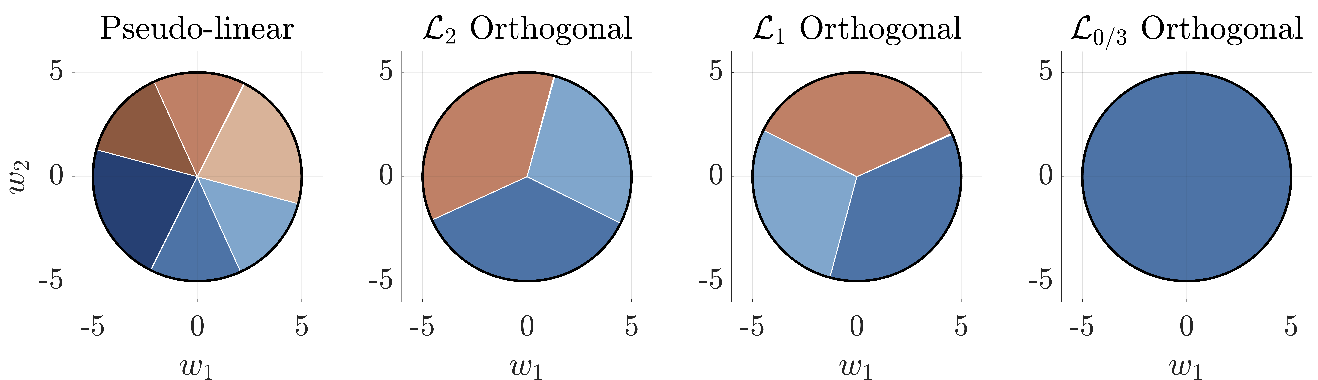
The partitioning of task space is strictly combinatorial: pseudo-linear allocators induce f(v)=A(v⊙∣v∣)8 sectors, while orthogonal allocators in adjacent extremal layers reduce this to f(v)=A(v⊙∣v∣)9 sectors, exponentially increasing the uninterrupted task-space footprint.
Figure 5: Task space sector partitioning—pseudo-linear allocation fractures into exponentially many sectors, orthogonal allocators linearly.
Static Allocation: Orthogonal Allocators versus Pseudo-linear Approaches
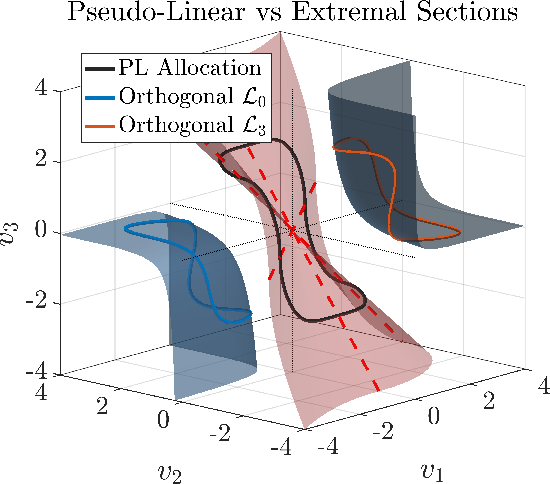
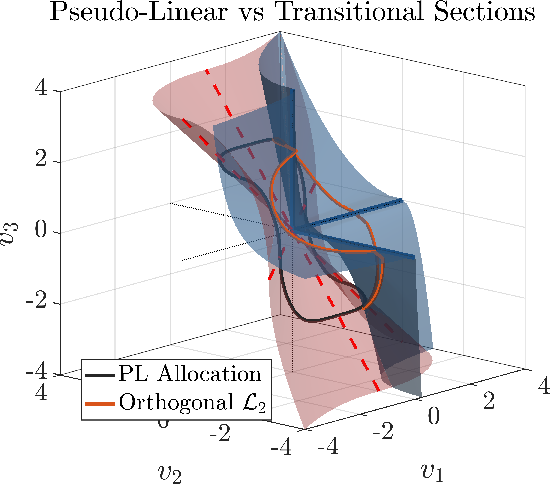
Pseudo-linear allocators leverage an affine subspace in the transformed domain, projecting back via A0. While diffeomorphic almost everywhere, such allocators inevitably intersect all coordinate hyperplanes—triggering infinite-derivative singularities in actuator rates.
Figure 6: Visual comparison of pseudo-inverse (red) vs orthogonal allocation (blue); singularity-free mapping in extremal orthant.
In contrast, extremal orthogonal allocators restrict mapping to a single orthant, forming a global diffeomorphism to A1 and permanently avoiding all boundary singularities. Only orthogonal sections in the extremal layers (A2, A3) offer this guarantee; pseudo-linear mappings are strictly excluded from these regions due to their orthogonality to A4. Transitional orthogonal allocators have fewer singular boundaries, offering a linear (A5) reduction in task space partitioning.
Implications and Future Directions
The geometric formalism provided rigorously demonstrates that redundancy resolution in signed-quadratic systems is a manifold selection problem, not merely an algebraic inversion or constrained optimization. The theoretical foundation enables explicit synthesis of static allocators and informs the control design of real-world propeller-driven architectures by structurally avoiding kinetic singularities.
Practically, the orthogonal foliation enables fault-tolerant allocation, maximizes task space coverage in hardware-limited unidirectional actuators, and enhances operational resilience. Theoretically, it establishes a baseline for global null-space projection strategies, integrating nonlinear actuator constraints directly into the control allocation manifold.
Future research directions include dynamic allocation using the global topology of the foliation, energy and torque minimization protocols leveraging the orthogonal framework, and application to modular and morphing actuation platforms.
Conclusion
The paper develops the global differential topology of signed-quadratic redundancy resolution, reveals structural advantages and limitations of pseudo-linear and orthogonal allocation strategies, and introduces a geometric framework for singularity-free control allocation. The results shift the control allocation paradigm from algebraic mapping to manifold-based selection, with tangible impact on both theory and practice in redundant nonlinear actuation systems.