- The paper demonstrates that a critical Cr–Cr bond length (≈3.53 Å) drives a first-order magnetic transition between antiferromagnetic and ferromagnetic states.
- DFT calculations with van der Waals corrections accurately capture the electronic structure, exchange interactions, and band-gap variations in quasi-1D CrSbX3.
- The study offers practical insights for tuning low-dimensional magnetism and pressure-induced superconductivity in Cr-based chalcogenides.
Bond-Length-Driven Magnetic Transition in Quasi-One-Dimensional CrSbX3 (X=S, Se): Ab Initio Investigation
Introduction
This paper presents a comprehensive first-principles study of magnetic phase transitions in quasi-one-dimensional (1D) chromium antimony trichalcogenides CrSbX3 (X=S, Se). These compounds, built from double-rutile CrX6 chains weakly connected by SbX3 pyramids, are of current interest due to their rich and tunable magnetic phase diagrams, proximity to Mott insulating behavior, and the coexistence of magnetic order and low-dimensional transport. The research focuses on elucidating the mechanisms underlying the distinct magnetic ground states observed in CrSbS3 (antiferromagnetic, AFM) and CrSbSe3 (ferromagnetic, FM), highlighting the sensitivity of these states to the Cr–Cr bond length dCr−Cr.
The study utilizes density functional theory (DFT) with a focus on accurately capturing van der Waals effects and exchange interactions within these quasi-1D systems. The work systematically examines ground state energetics, magnetic interactions, electronic structure, and pressure-induced phase transitions, providing a rigorous basis for understanding experimentally observed phenomena and offering predictions for bond-length control of magnetism in related systems.
Crystal Structure and Computational Methodology
CrSbX3 crystallizes in the orthorhombic X0 structure, incorporating infinite edge-sharing CrX1 double rutile chains extending along the crystallographic X2-axis. These 1D chains manifest strong magnetic anisotropy and are weakly coupled across the X3 plane by van der Waals forces.
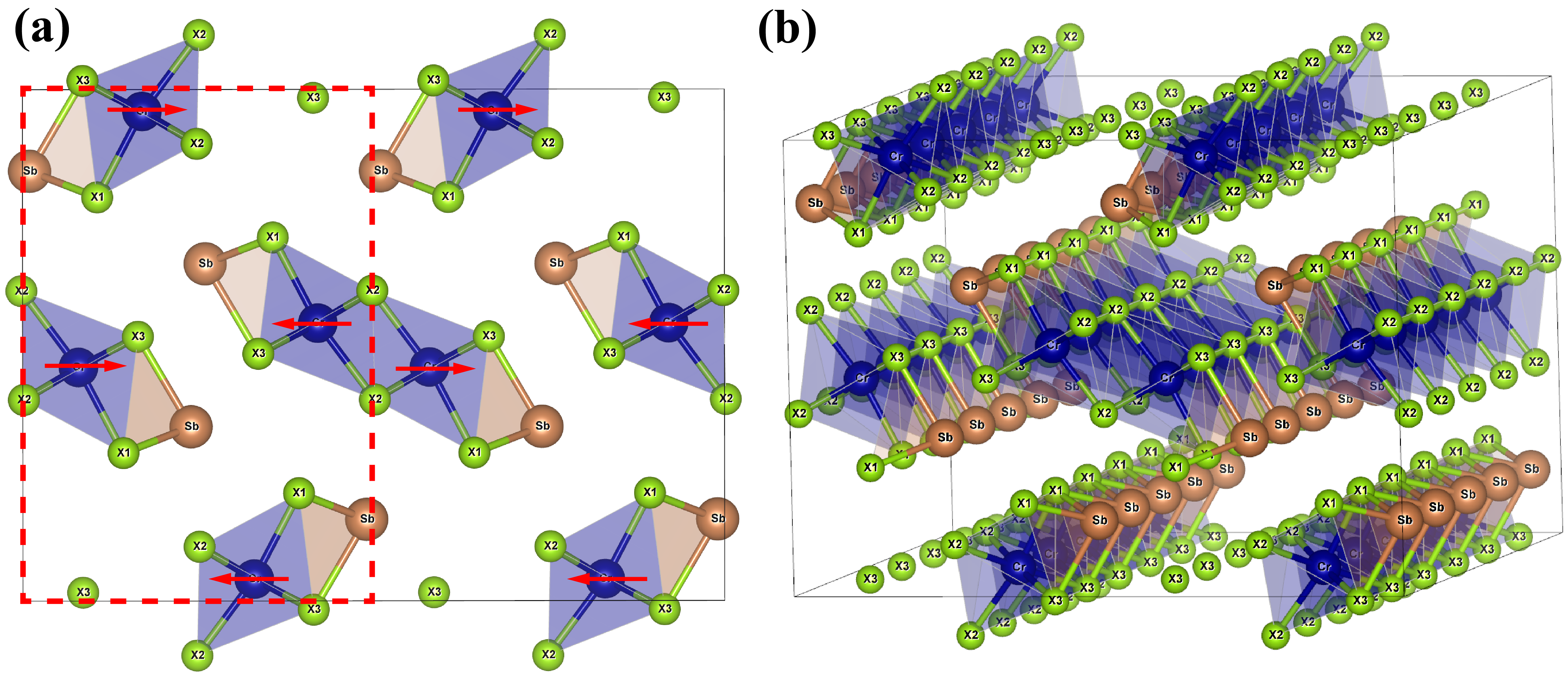
Figure 1: Crystal structure of CrSbX4 (X5=S, Se), showing double-rutile chains and AFM spin configuration within the unit cell.
Structural parameters were obtained by DFT-D3 optimization and benchmarked against experimental X-ray data. Notably, Cr–Cr bond lengths were carefully tuned and set as the key structural control parameter. All-electron full-potential codes ({\sc wien2k}, {\sc fplo}) were employed to avoid the underestimation of electronic band gaps ubiquitous in prior pseudopotential-based studies.
Magnetic Phase Transition and Energetics
The relative energies of AFM and FM states were mapped as a function of X6. The data reveal a sharp, first-order phase transition between AFM and FM ground states at a material-independent critical distance X7 Å, establishing bond length as a universal tuning parameter for this family.
In CrSbSX8, the experimental bond length places the compound at the critical threshold, correlating with sensitivity and reported variability in its magnetic ground state. CrSbSeX9, with a larger Cr–Cr distance, is robustly FM, consistent with all recent experimental reports.
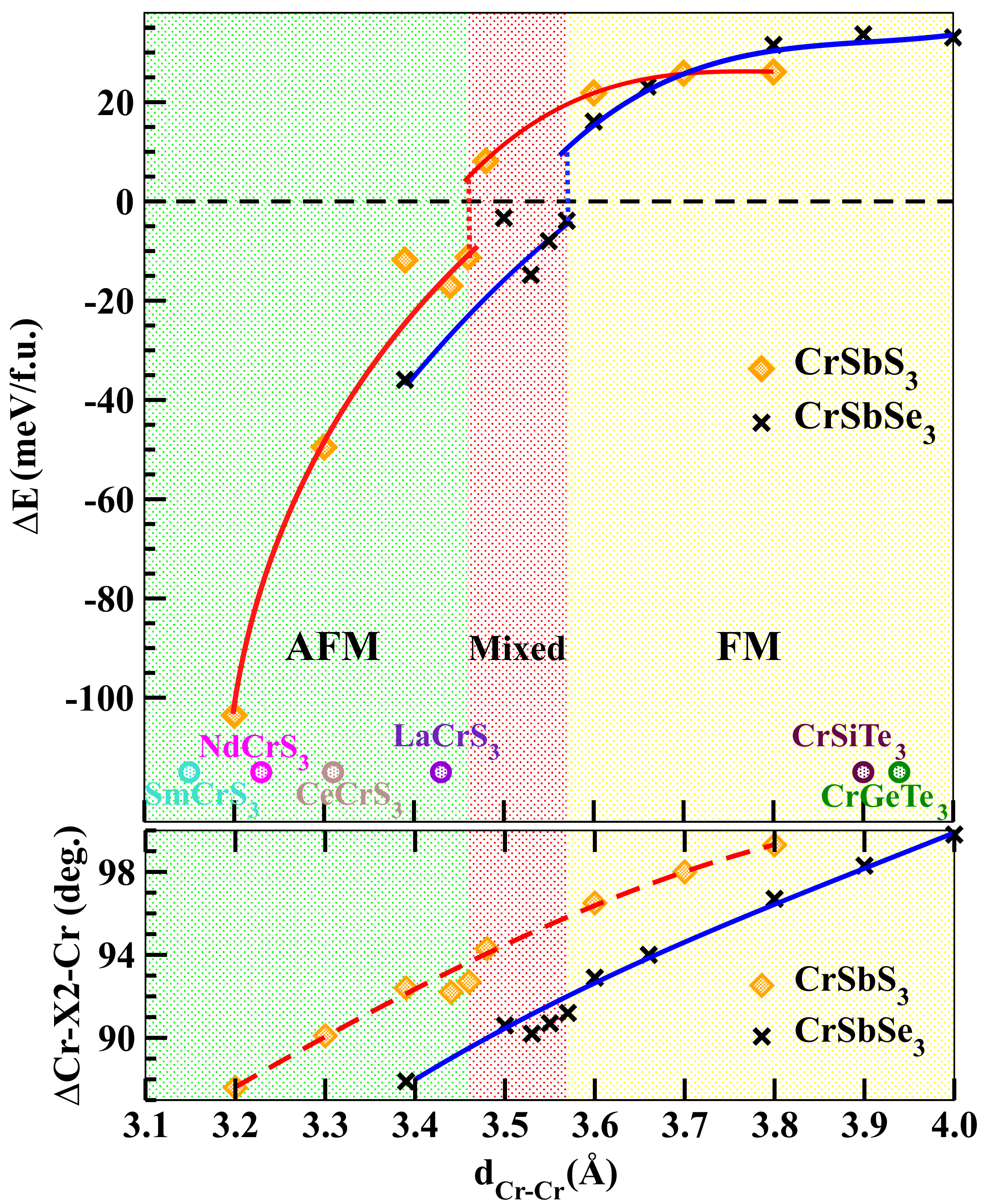
Figure 2: Energy difference X30 as a function of X31, exhibiting a first-order phase transition and the corresponding evolution of superexchange bond angles.
These results directly contradict the Mott-insulator scenario previously advanced for these systems. Calculated band gaps within conventional GGA (using an all-electron approach) closely reproduce experiment, supporting a band-insulating—not correlation-driven—picture.
Electronic Structure Analysis
The nonmagnetic (NM) and magnetically ordered electronic structures were systematically studied:
- The NM density of states (DOS) features a quasi-1D X32 manifold and a prominent X33 singularity at X34, indicative of 1D electronic confinement.
- In the FM state (CrSbSeX35), the majority spin channel displays a well-separated X36 manifold, a direct band gap X37 eV, and a robust CrX38 configuration.
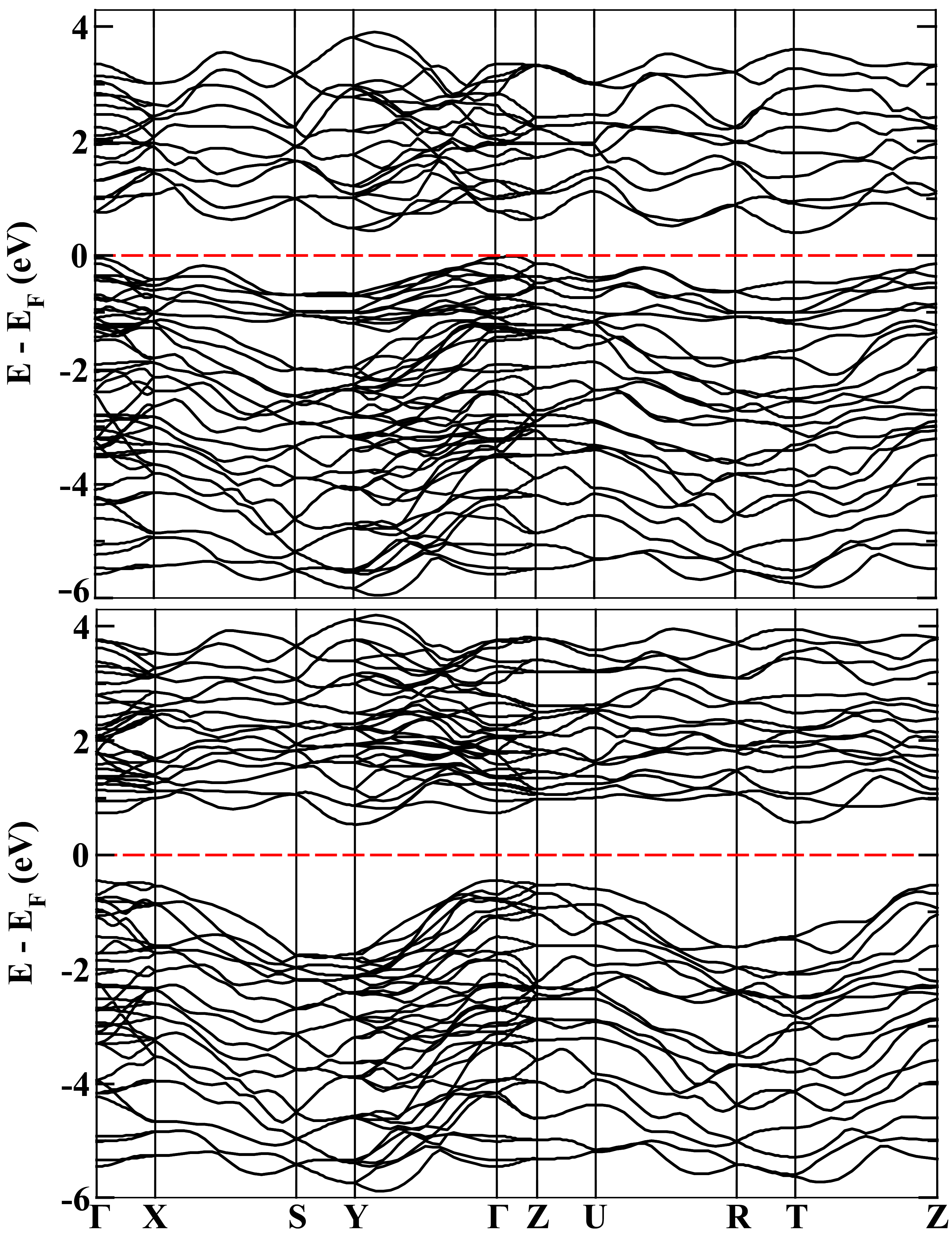
Figure 3: FM band structure of CrSbSeX39 at experimental geometry. The system is an insulator with strong quasi-1D dispersion.
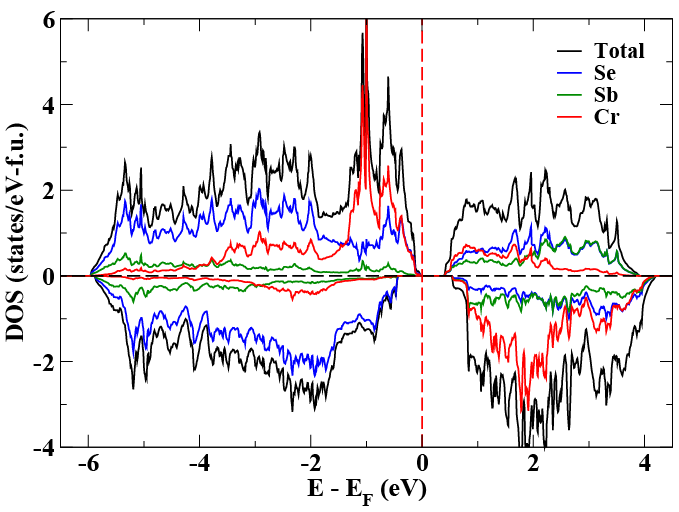
Figure 4: FM total and atom-projected DOSs, showing a 0.5 eV gap and high spin-polarization in CrSbSeX0.
- In the AFM state (CrSbSX1), the X2 band is narrower (reflecting decreased X3), with the gap increased to 0.8 eV, matching experiment.
- The band structures in both FM and AFM cases show pronounced 1D features and non-symmorphic band sticking.
Microscopic Mechanism: Exchange Pathways and Bethe–Slater Analogy
The intra-chain exchange constants X4 and X5 were determined by mapping ab initio results onto a classical Heisenberg model. X6 corresponds to the chalcogen-mediated superexchange and can change sign (AFM/F) as a function of bond length, while X7 is the direct FM Cr–Cr exchange, remaining FM but varying in strength.
- The first-order transition is due to a discontinuous sign change in X8, a hallmark of Bethe–Slater-like physics, where the relative strength of antiferromagnetic and ferromagnetic exchange is set by interatomic separation.
- X9 varies smoothly but does not sign-reverse.
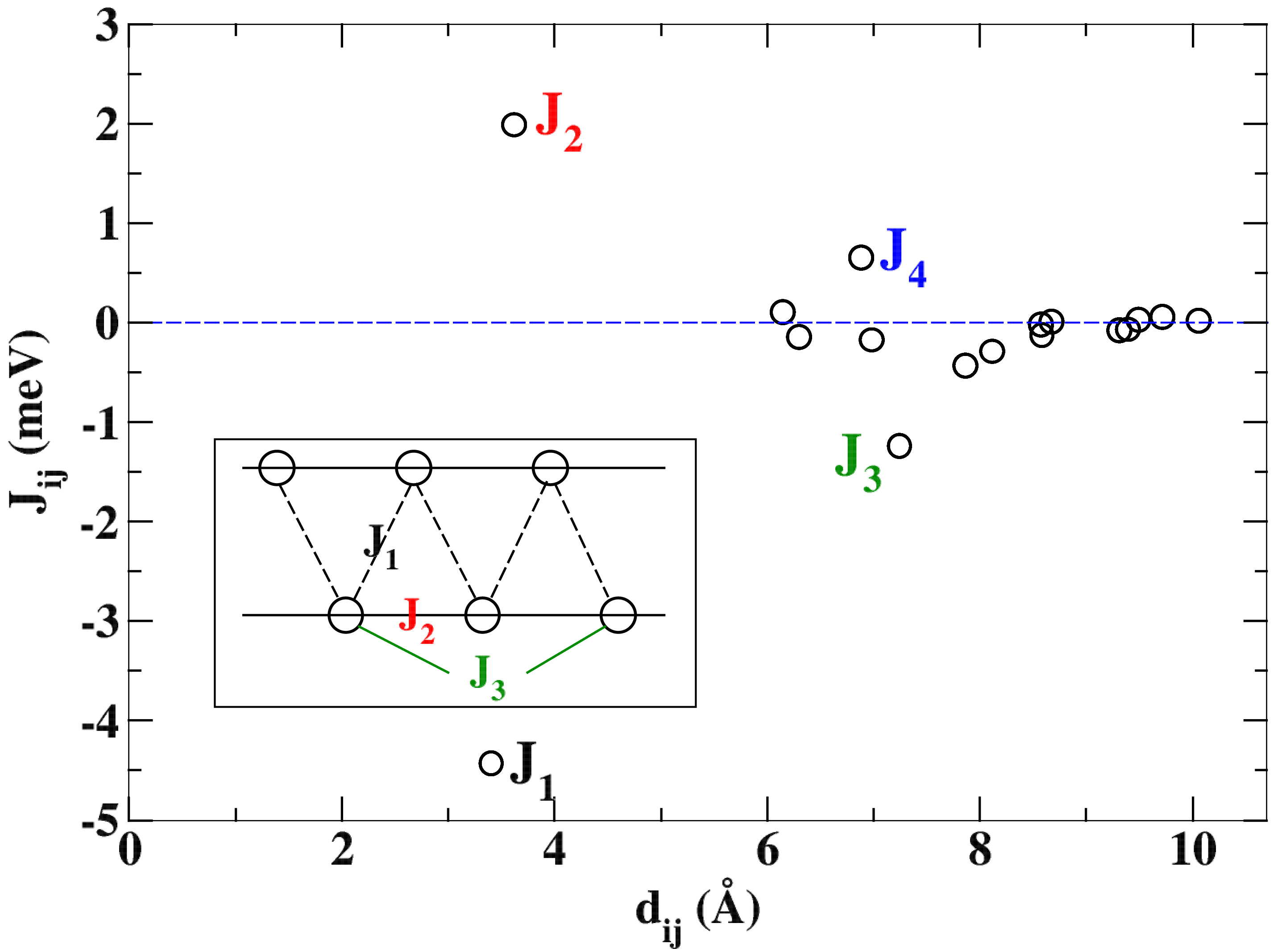
Figure 5: Calculated exchange parameters in CrSbSX60 at the AFM ground state (X61=3.39 Å), showing dominant intra-chain interactions.
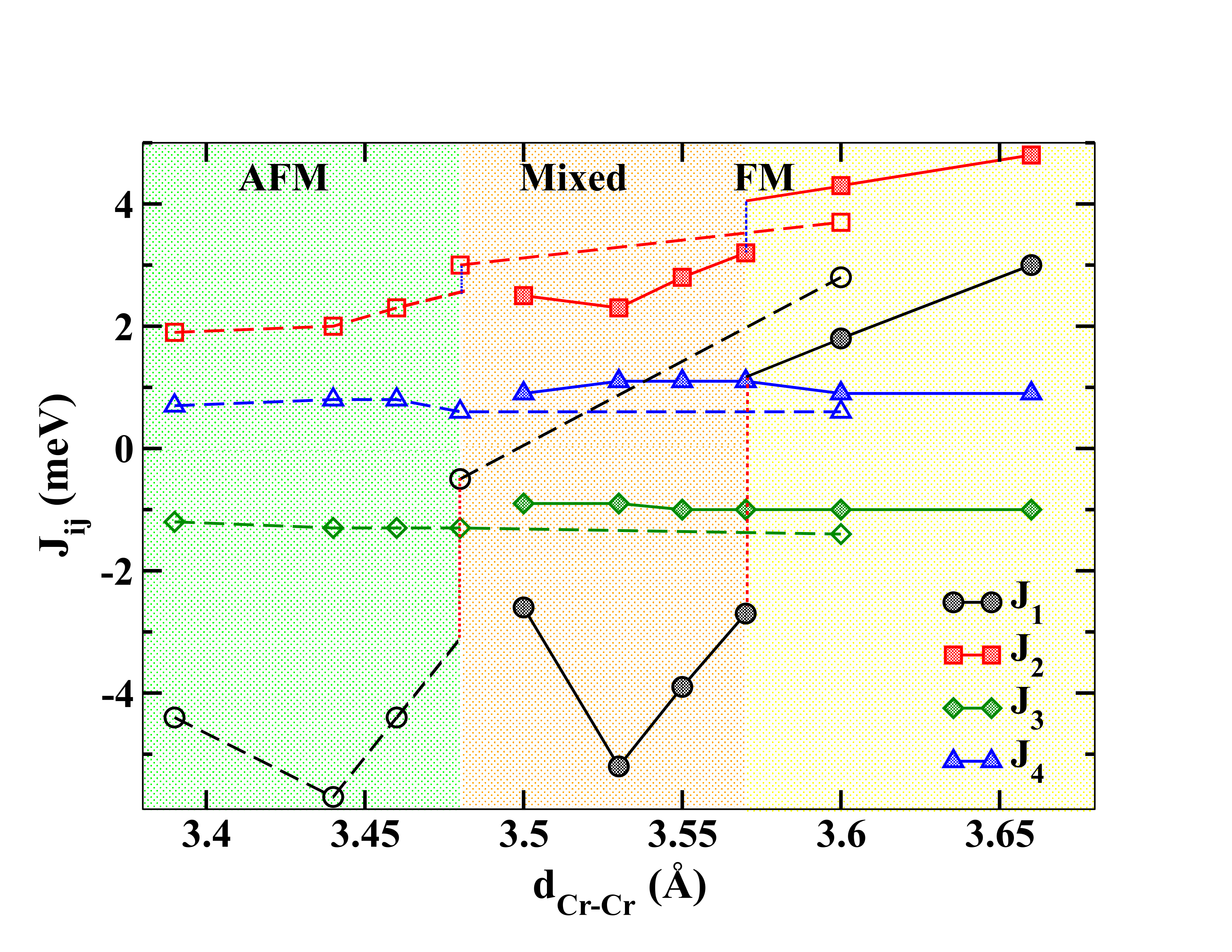
Figure 6: Evolution of dominant exchange parameters X62, X63, X64, and X65 with X66. Discontinuity in X67 underpins the first-order phase boundary.
The energetic competition between X68 and X69 thus governs the experimentally observed and pressure/strain-inducible FM–AFM transition in the CrSbX30 series. This mechanism is theoretically robust and likely extends to the wider class of low-dimensional Cr-based magnets.
Pressure Effects and Superconductivity
Under high pressure (X31–40 GPa), CrSbSeX32 transitions from FM insulator to an itinerant AFM phase, with a further transition to a superconducting state above 33 GPa. High-pressure calculations confirm a collapsed volume, vanishing magnetic order, and emergent 1D Fermi surfaces prone to nesting—features correlated with superconductivity in quasi-1D systems.
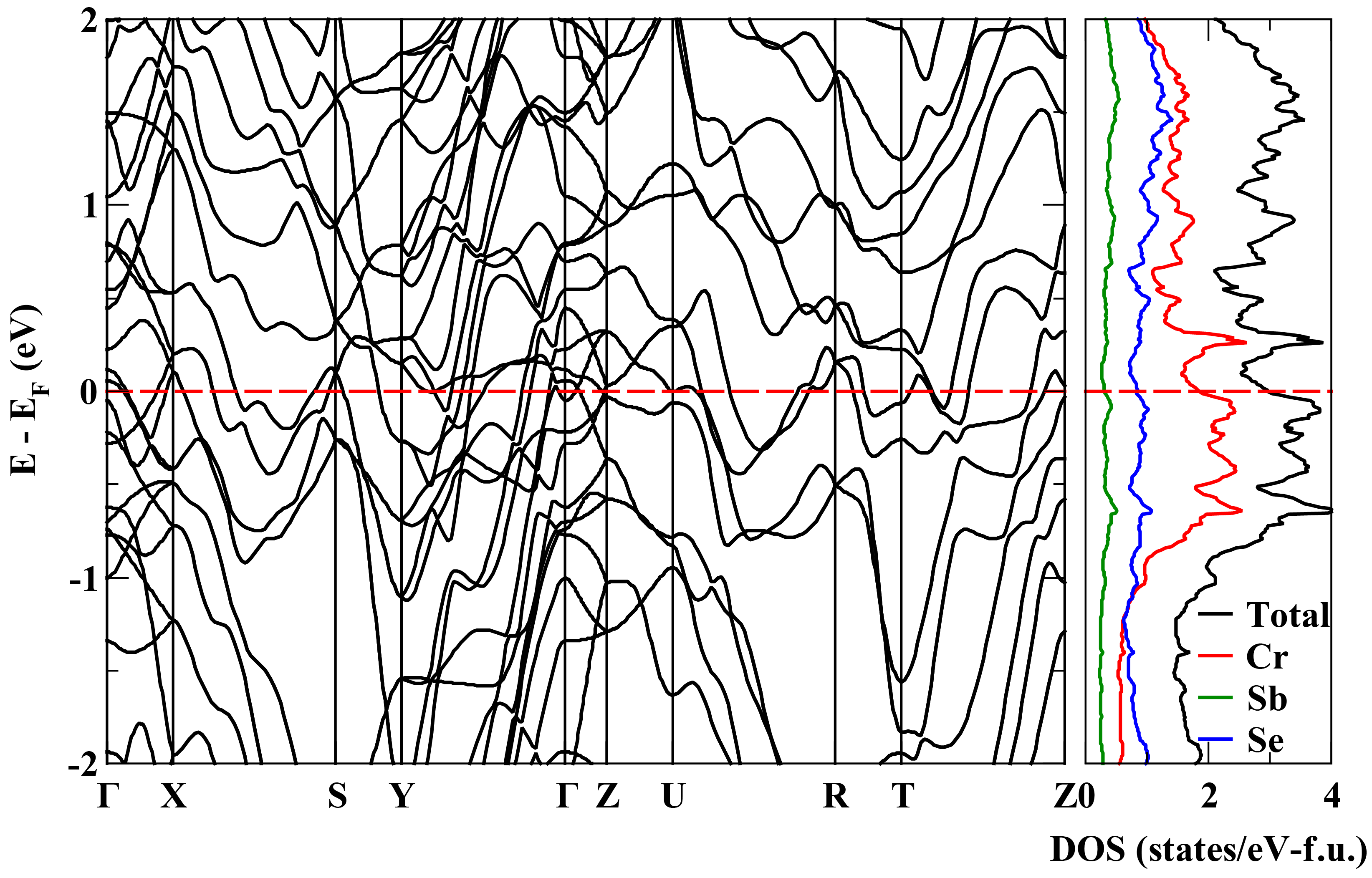

Figure 7: Electronic structure and Fermi surfaces of nonmagnetic CrSbSeX33 at 40 GPa, with DOS at X34 dominated by Cr 3X35, and strongly 1D Fermi sheets suggestive of instability towards superconductivity.
AFM fluctuations likely play the dominant role in pairing, given the suppression of FM order at the insulator–metal boundary.
Experimental Implications and Open Questions
- The proximity of CrSbSX36 to the critical point explains the variance in literature regarding its magnetic ground state and invites careful structural characterization.
- The experimental observation of a charge-transfer transition in CrSbSX37 (CrX38 CrX39 near 94 K) is not reproduced by conventional DFT; this signals the need for advanced many-body methods and high-resolution structural probes.
- Bond length—potentially tunable by chemical substitution, strain, or pressure—offers a practical parameter for engineering and switching between 1D AFM and FM states.
Conclusion
This comprehensive first-principles analysis elucidates the bond-length-driven first-order transition between AFM and FM ground states in quasi-1D CrSb30 (31=S, Se). The decisive tuning parameter is the Cr–Cr separation, which controls the competition between chalcogen-mediated superexchange (32) and direct exchange (33), yielding a discontinuous Bethe–Slater-like transition. The theoretical framework is validated by strong correspondence with experimental magnetic and electronic properties, and it predicts that bond-length engineering offers a route to switchable 1D magnetism in this material family. The pressure-induced superconductivity, accompanied by a drastic change in magnetic and electronic structure, is strongly indicative of unconventional pairing mechanisms. The work also identifies outstanding questions regarding the nature of thermally induced charge transfer and the precise role of many-body effects at the AFM–FM instability.
Reference: "Bond-Length-Driven Magnetic Transition in Quasi-One-Dimensional CrSb34 (35=S, Se)" (2604.01810)

