- The paper introduces VFDM, a conditional denoising diffusion model that separates natural scene information from RFI in SAIR.
- It leverages a U-Net backbone and a forward-reverse diffusion process to accurately reconstruct clean spatial-frequency visibilities.
- VFDM outperforms traditional methods on both simulated and real SMOS datasets, significantly reducing reconstruction error and preserving fine details.
Denoising Diffusion Probabilistic Modeling for RFI Mitigation in SAIR
Introduction
Synthetic aperture interferometric radiometers (SAIR) provide high-resolution passive microwave imaging by synthesizing extended apertures through interferometric measurements—an approach foundational in radio astronomy and increasingly pivotal for Earth observation missions such as the Soil Moisture and Ocean Salinity (SMOS) satellite. A major issue undermining SAIR performance is L-band radio-frequency interference (RFI), which contaminates visibility samples and significantly degrades the quality of reconstructed brightness temperature (BT) images. This contamination not only distorts the spatial structure of observed scenes but also critically impairs geophysical parameter retrieval, motivating the need for robust RFI mitigation techniques.
Existing RFI mitigation strategies, including array factor-based methods, spectral filtering, and point-source cancellation, suffer from reliance on strong prior information, limited flexibility, or inability to preserve fine-scale spatial details without artifact introduction. To address these challenges, this paper introduces the Visibility-Function Diffusion Model (VFDM), a conditional denoising diffusion probabilistic model (DDPM) that operates directly in the spatial-frequency (visibility) domain, conditioned on contaminated measurements. VFDM leverages the generative power of diffusion models to robustly separate natural scene information from diverse, complex RFI scenarios, marking the first known application of diffusion models to RFI mitigation within synthetic aperture interferometric radiometry (2604.01531).
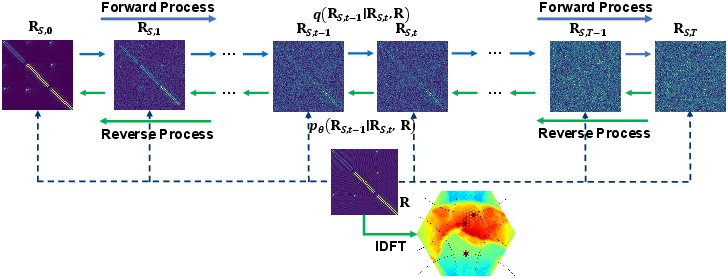
Figure 1: Overview of VFDM depicting the conditional diffusion process for reconstructing clean visibility from contaminated covariance matrices.
Theoretical Modeling and VFDM Architecture
The proposed VFDM models the RFI-mitigation problem as conditional generation of clean spatial-frequency visibility functions given contaminated observations. Formally, the contaminated covariance matrix R is decomposed into RS (natural scene) and RI (RFI), and the goal is to approximate q(RS∣R).
VFDM implements a conditional DDPM where Gaussian noise is progressively added to clean visibility samples in the forward diffusion process, and the reverse process stochastically reconstructs RS conditioned on R. A U-Net backbone is employed to predict the noise components at each step, and training minimizes a variational bound on the negative log-likelihood, following standard DDPM objectives. Critically, the contaminated visibility is incorporated as conditioning in the reverse process transitions, guiding reconstruction of the natural covariance matrix.
Sampling uses a schedule of noise injection/hyperparameterized variance, iteratively refining the denoised estimate. This process ensures modeling flexibility: VFDM can respond to variable numbers, intensities, and spatial distributions of RFI sources, without assumptions on prior locations or strengths. The architecture and process flow are summarized in Figure 1.
Dataset and Experimental Protocol
To facilitate rigorous evaluation, the authors constructed a large-scale dataset of 13,007 paired samples based on randomized RFI simulation applied to SMOS L1A observations. The dataset encompasses diverse contamination regimes, including 1–8 RFI sources with weak, medium, strong, very strong, and hybrid intensities and spatial distributions. This supports comprehensive validation across synthetic and real-world scenarios. Performance is assessed using RMSE and SSIM for simulated data, and Total Reconstruction Error (TRE) for real SMOS scenes.
Comparative Evaluation: Simulated Data
Evaluation across representative simulated scenes demonstrates that VFDM consistently outperforms established baselines (CLEAN, RPCA, RNN-DFT) across all contamination regimes. In weak RFI cases, VFDM preserves high-frequency natural scene details that are lost with CLEAN or RPCA; in hybrid/strong regimes, VFDM eliminates both strong and weak RFI artifacts, whereas other methods leave voids, residuals, or significant texture degradation.
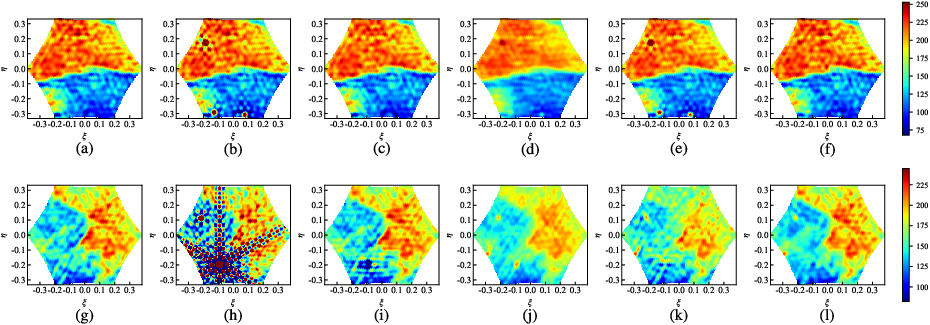
Figure 2: Simulated scenes showing baseline and VFDM results for varying RFI contamination—VFDM preserves structure and suppresses artifacts for both weak and hybrid cases.
Quantitative results reveal significant performance improvements:
- For Scene 1 (weak RFI): VFDM achieves RMSE = 3.31 K, SSIM = 0.9975, outperforming CLEAN (RMSE = 4.14 K, SSIM = 0.9895), RPCA, and RNN-DFT.
- For Scene 2 (hybrid RFI): VFDM achieves RMSE = 8.08 K, SSIM = 0.9638, with lower error and higher structural fidelity than baselines.
Across the full dataset, VFDM shows robust generalization, especially for strong and hybrid contamination: for very strong RFI, RMSE = 11.93 K, SSIM = 0.7720 (CLEAN RMSE = 26.05 K, SSIM = 0.3834). These results are statistically validated on a 10% test split, underscoring the method’s effectiveness and robustness.
Real-World Data Validation
On SMOS L1A real data, VFDM is validated against unconstrained RFI contamination, where reference BT images are unavailable. TRE metrics reveal that VFDM achieves lowest reconstruction error in all cases (Scene 3 TRE = 13.09 K, Scene 4 TRE = 8.82 K). Visual inspection further confirms that VFDM eliminates both strong and weak RFI, preserves natural gradients and textures, and avoids residual voids/artifacts produced by baselines.
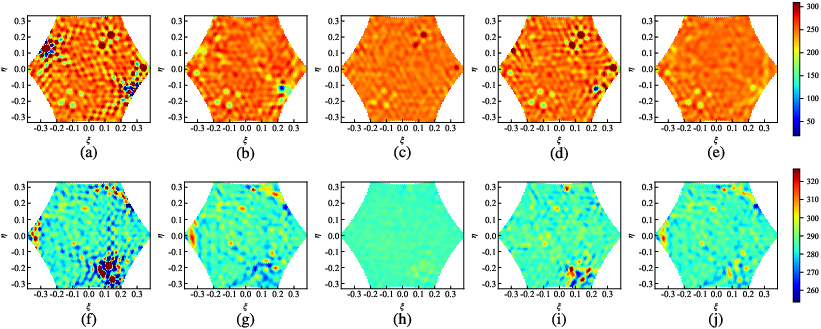
Figure 3: RFI mitigation results for real SMOS scenes—VFDM produces smooth, consistent reconstructions free of voids and artifacts.
Implications and Future Directions
The application of conditional diffusion modeling to RFI mitigation in SAIR represents a substantial shift in methodology, enabling adaptive, data-driven separation of natural scene information from unpredictable, multi-source RFI contamination. VFDM’s superior performance across synthetic and real datasets demonstrates the practical viability of generative modeling for signal processing in remote sensing.
Theoretically, VFDM circumvents prior dependence and restrictive assumptions that limit classical approaches. Its generative capacity enables preservation of fine-scale spatial structure while robustly suppressing diverse RFI patterns. The methodology suggests potential extension to other imaging domains affected by structured interference (e.g., medical imaging, radio astronomy), and integration of spatial-frequency priors may further enhance performance.
Future research may focus on:
- Incorporating spatial-frequency domain structural priors to improve inference for ultra-dense or irregular RFI regimes.
- Extending diffusion-based approaches to multispectral interferometric data.
- Real-time adaptation and deployment in operational remote sensing pipelines.
Conclusion
VFDM sets a new paradigm for RFI mitigation in SAIR, leveraging conditional diffusion models to robustly recover clean visibility information under variable interference scenarios. The methodology achieves superior quantitative and qualitative results compared to traditional methods, preserves structural integrity, and demonstrates strong generalization to real data. The results foreground generative modeling as a powerful tool for signal processing in remote sensing and inspire future work toward more sophisticated and adaptive denoising algorithms for SAIR and related modalities.