- The paper demonstrates that black hole shadows encode detailed thermodynamic and microstructural phase information, linking observable shadow features to entropy and heat capacity variations.
- It employs Geometrothermodynamics (GTD) to correlate curvature singularities in charged and rotating black holes with phase transitions and stability regimes.
- The novel Shadow–Microstructure diagrams offer practical tools to constrain Sagittarius A*’s parameters, enabling empirical tests of gravitational thermodynamics with EHT data.
Probing Black Hole Thermodynamics and Microstructure via the Shadow of Sagittarius A*
Introduction and Motivation
The direct imaging of supermassive black holes by the Event Horizon Telescope (EHT), particularly Sagittarius A* (Sgr A*), has motivated rigorous studies on how observable features, such as black hole shadows, encode information about both gravitational and thermodynamic properties of black holes. The paper "Probing Black Hole Thermodynamics and Microstructure via the Shadow of Sagittarius A*" (2604.01521) investigates the connection between black hole shadows, the thermodynamic phase structure, and underlying microstructure, within the frameworks of General Relativity and Geometrothermodynamics (GTD).
The central contribution is a systematic demonstration that the shadow of a black hole—observable via image features like ring diameter—encodes the same thermodynamic phase information as entropy, including signatures of microstructural interactions. The authors develop a methodology to probe the microstructure of charged and rotating black holes (Reissner-Nordström and Kerr solutions) through the analysis of their shadow, introducing Shadow–Microstructure (SM) diagrams as a novel tool for mapping observational shadow data to microscopic thermodynamic phases.
Phase Structure of Charged and Rotating Black Holes
The paper provides a comprehensive characterization of the phase structure of Reissner-Nordström (RN) and Kerr black holes, emphasizing their behavior in canonical ensembles and using variables such as entropy (S), electric charge (Q), and angular momentum (J).
Reissner-Nordström Black Hole
The RN black hole, as described via its mass M(S,Q) and associated thermodynamic quantities, exhibits a well-defined structure: the existence of the black hole is limited to S>πQ2, with a Davies point (a divergence in heat capacity CQ) at Sm=3πQ2. Between these critical curves, the solution is locally thermodynamically stable.
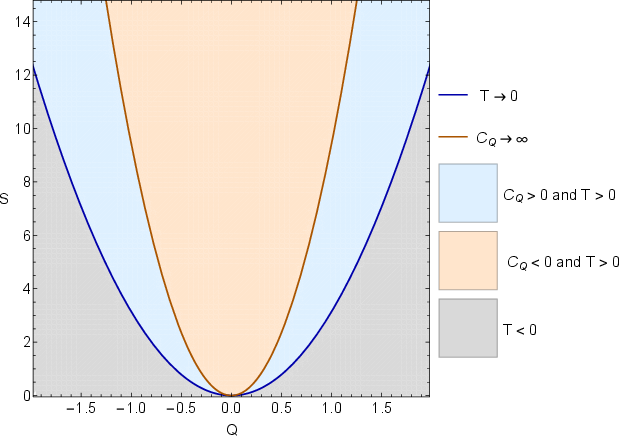
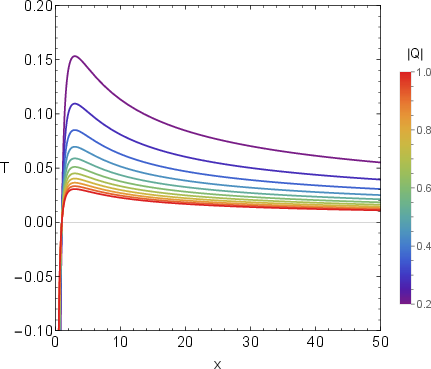
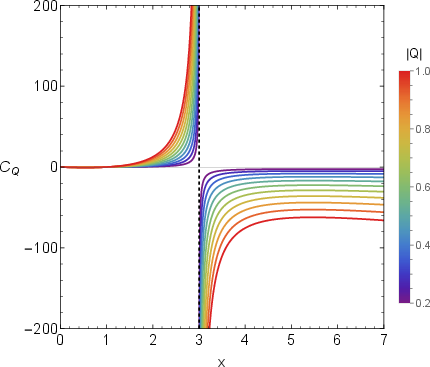
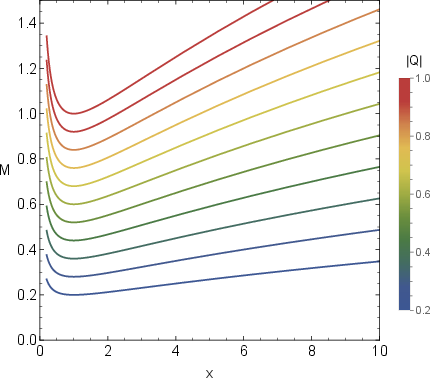
Figure 1: (a) The region of black hole existence and local stability for RN. (b) Temperature, (c) heat capacity, and (d) mass as functions of x≡S/(πQ2).
Two distinct thermodynamic branches are present: small black holes (SBH) with positive heat capacity (stable) and large black holes (LBH) with negative heat capacity (unstable). The free energy displays corresponding features.
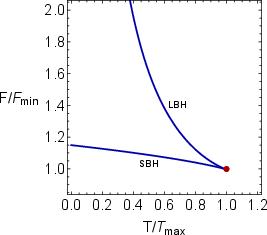
Figure 2: (a) The Helmholtz free energy for the RN black hole, demonstrating branch structure; (b) entropy branches against the reduced variable x.
Kerr Black Hole
Analysis of the Kerr solution, parameterized by M(S,J), reveals analogous features. The condition Q0 delimits black hole existence, and the Davies point at Q1 is marked by a divergent heat capacity Q2. As with RN, locally stable (SBH) and unstable (LBH) branches exist.
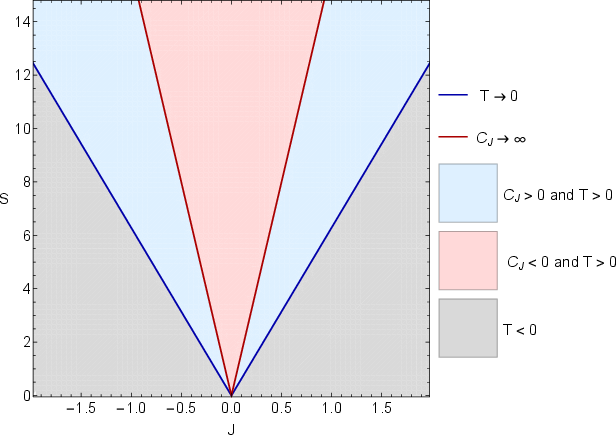
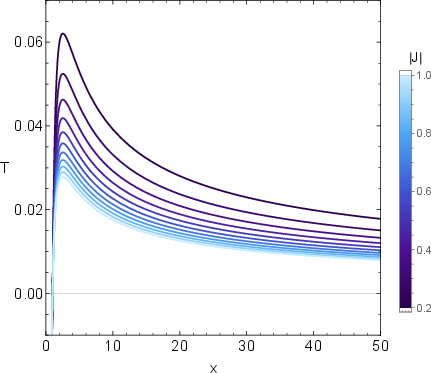
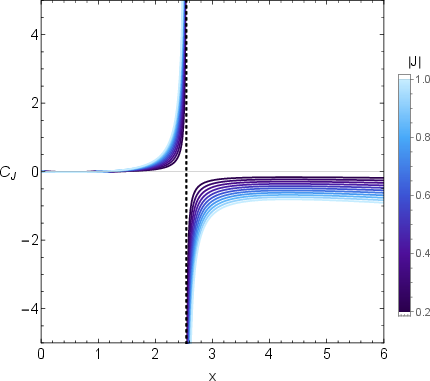
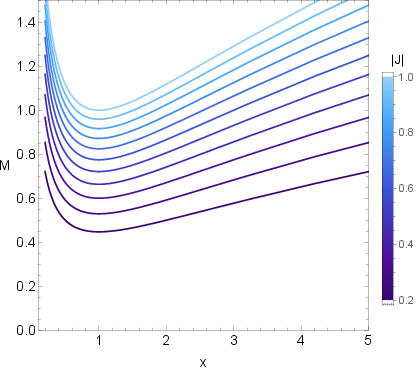
Figure 3: (a) Existence and stability regions for the Kerr black hole in Q3-Q4 space.
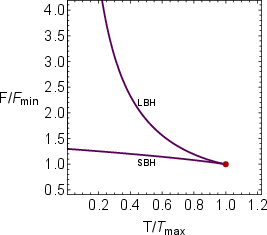
Figure 4: (a) Helmholtz free energy for the Kerr black hole; (b) entropy branches display two physical branches corresponding to SBH and LBH.
Geometrothermodynamic Microstructure Analysis
The authors implement GTD to study the microstructure encoded in different curvature scalars derived from Legendre-invariant thermodynamic metrics. They rigorously match GTD curvature singularities to singularities in thermodynamic response functions (e.g., Q5, Q6), providing a criterion for selecting the appropriate GTD metric based on the ensemble.
Reissner-Nordström GTD Scalars
By expressing the GTD scalars as functions of the reduced parameter Q7 and temperature, they show precise correspondence between curvature divergences and phase structure:
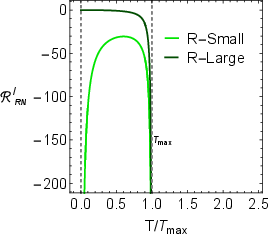
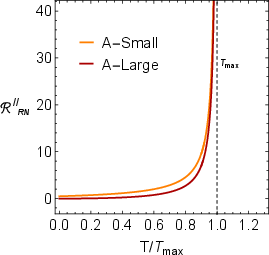
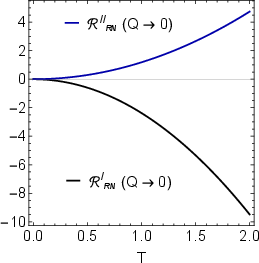
Figure 5: GTD scalars Q8 and Q9 for the RN black hole versus temperature, highlighting the multivalued nature and branch merging at J0.
Kerr GTD Scalars
A similar correspondence—and universality in divergence structure—is observed for the Kerr solution. Notably, the Kerr scalar curvatures remain regular at extremality; the zero of J1 signals a change in the sign of microscopic interactions.
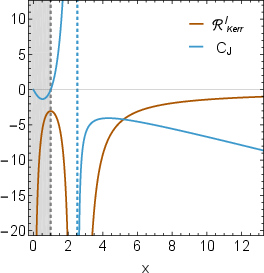
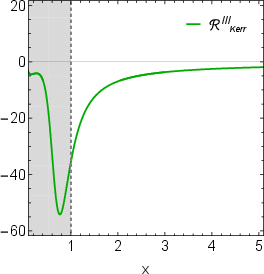
Figure 6: Reduced GTD scalars and heat capacity for the Kerr black hole, showing distinct behavior of J2 and J3 across thermodynamic branches.
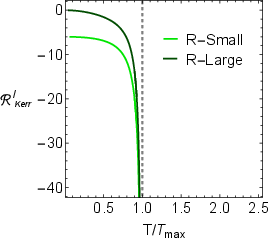
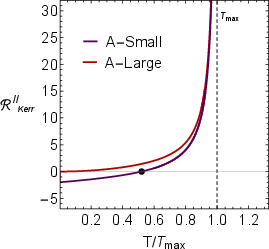
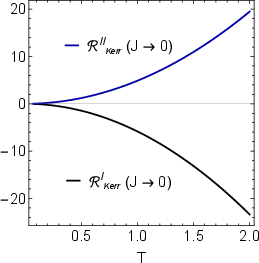
Figure 7: Temperature dependence of the GTD scalars for the Kerr black hole.
Numerical analysis demonstrates that near thermodynamic instability, the curvature scalars universally diverge as J4, with J5, supporting gravitational–thermodynamic universality.
Shadows as Observational Probes of Thermodynamics
The link between shadow observables and thermodynamic microstructure is established by reconstructing shadow radii in entropy space for the RN and Kerr metrics. The photon sphere and critical shadow curves are parameterized by thermodynamic variables, enabling mapping between observables and phase structure.
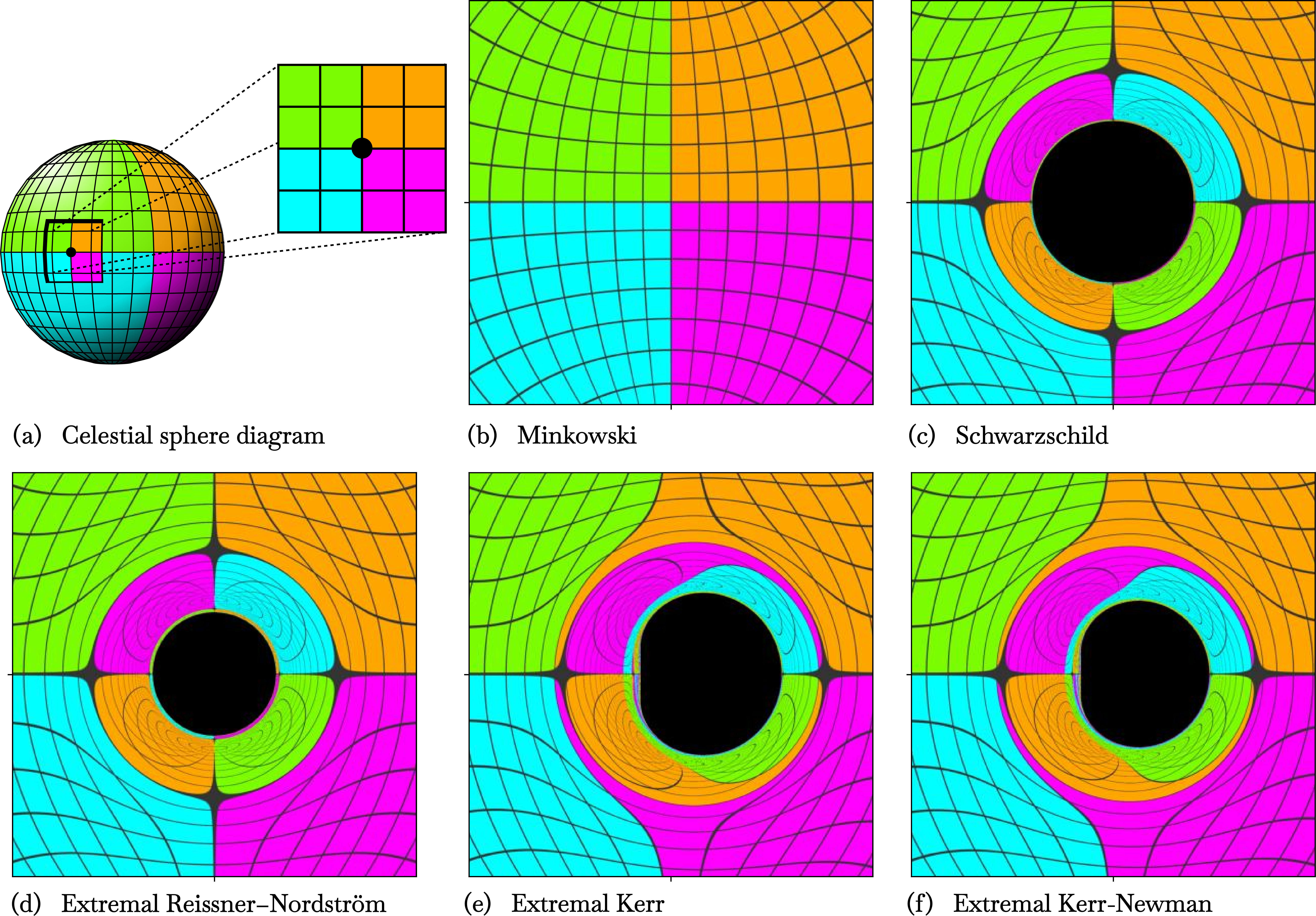
Figure 8: Ray-traced black hole shadows, demonstrating the effect of charge and rotation.
Shadow thermodynamic profiles are constructed for RN and Kerr, overlaying color scales of temperature, heat capacity, and GTD scalars onto the shadow radius.
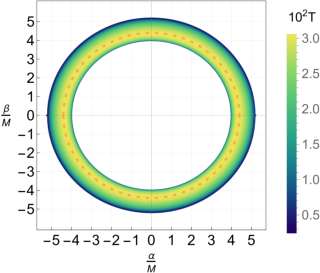
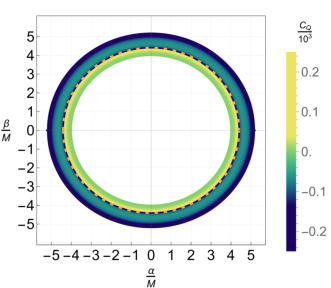
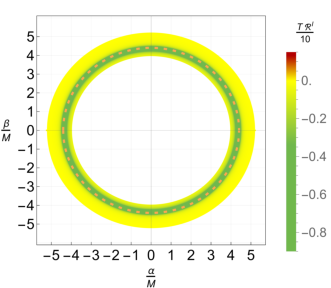
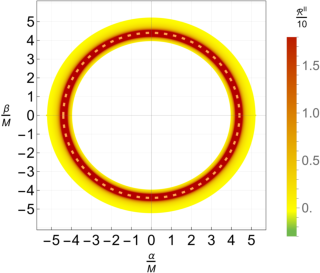
Figure 9: Shadow profiles for the RN black hole, illustrating correspondence between critical thermodynamic features (temperature, J6, J7, J8) and the shadow radius.
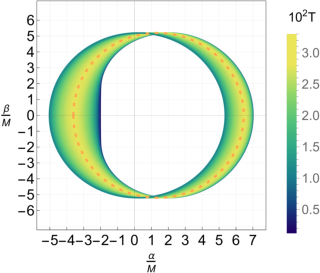
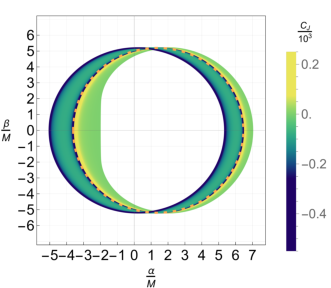
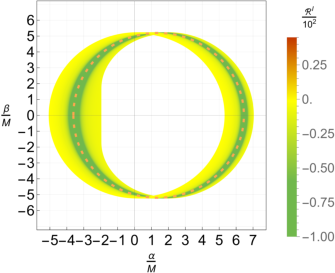
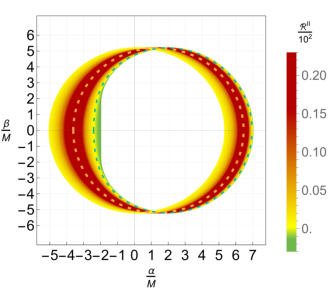
Figure 10: Shadow profiles for the Kerr black hole. The cyan dotted line in (d) marks the non-interacting configuration where J9.
A strong claim is made: the shadow radius encodes the same thermodynamic phase information as entropy, supporting the use of shadow measurements to probe thermodynamic stability and microstructure.
Shadow–Microstructure Diagrams and Constraints on Sagittarius A*
The paper introduces Shadow–Microstructure (SM) diagrams, plotting regions of parameter space accessible to a black hole given its shadow radius and highlighting the microscopic interaction type (attractive, repulsive, or noninteracting) based on the sign of GTD curvature scalars.
By using latest EHT observational constraints on Sgr A*, ranges for both shadow radius and black hole parameters (charge, angular momentum) are extracted. The allowed microscopic thermodynamic phases (MTPs) for Sgr A* as RN or Kerr black hole are explicitly delineated—demonstrating that not all microscopic phases are compatible with the observed shadow.
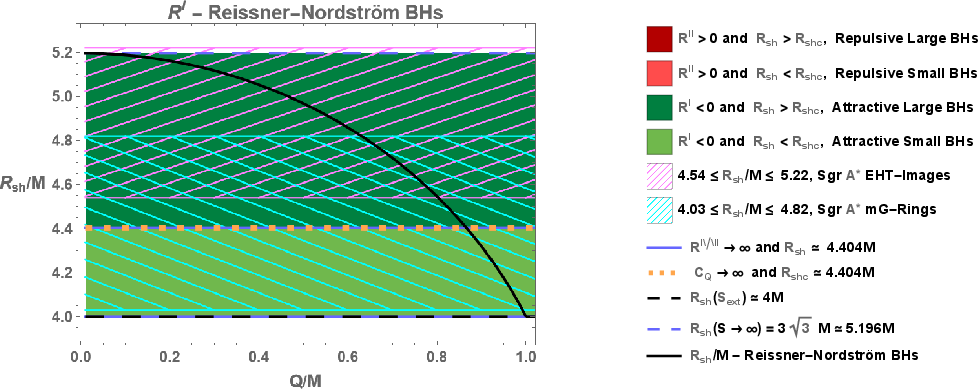
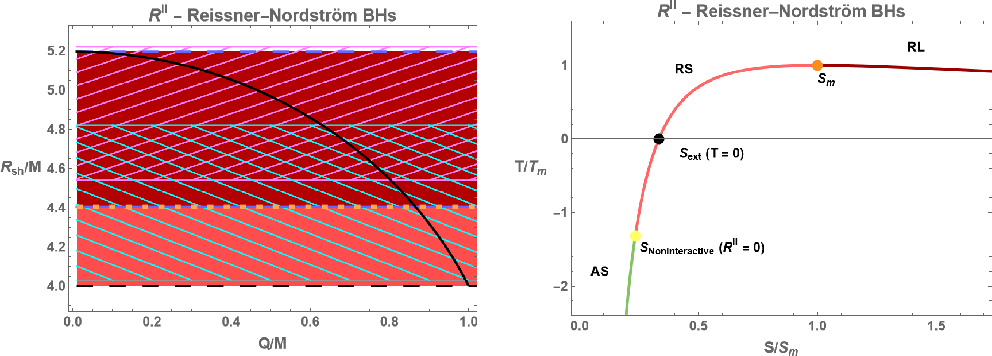
Figure 11: SM diagrams for Sgr A
(RN case), mapping shadow radius, charge, and microstructure via
M(S,Q)0 and
M(S,Q)1.*
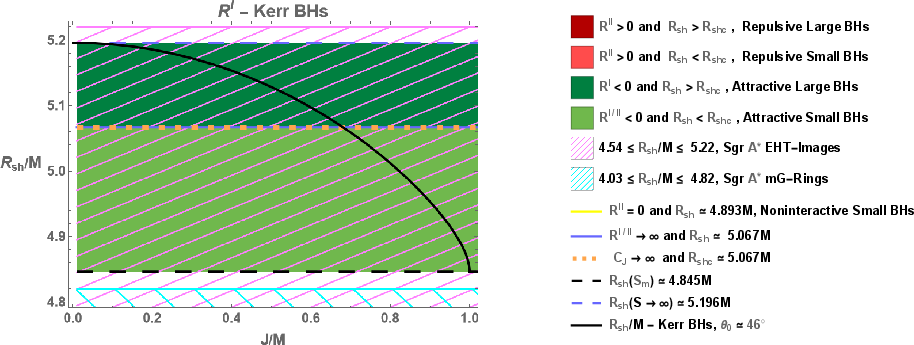
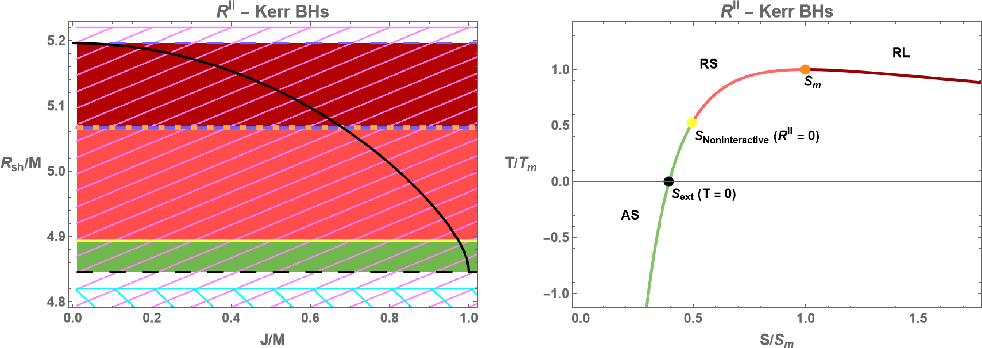
Figure 12: SM diagrams for Sgr A
(Kerr case), constraining allowed regions of
M(S,Q)2 and
M(S,Q)3 and identifying the associated MTPs.*
Key conclusions include:
- For RN, only attractive large (AL) and repulsive large (RL) phases remain under the most stringent EHT bounds; the small stable AS phase is permitted only near extremality under less stringent constraints.
- For Kerr, attractive and repulsive large/small phases are allowed, with near-extremal cases admitting small stable phases.
- The shadow, combined with GTD scalar analysis, allows discrimination between scenarios with different microscopic interaction types.
Theoretical and Observational Implications
This research demonstrates that black hole shadow measurements can go beyond constraining macroscopic parameters, enabling the inference of microscopic interaction types and stability regimes. The explicit mapping between observable quantities and microstructure opens new pathways for testing different thermodynamic formalisms (such as the selection of appropriate GTD metrics) via astrophysical observations.
The identification of a "Boyle-like temperature" for Kerr black holes, where effective microstructure transitions from attractive to repulsive (the point where M(S,Q)4), introduces parallels with classical thermodynamic systems and offers a novel interpretative tool.
Future developments could leverage next-generation EHT and related projects to probe microstructural predictions with greater precision, potentially discriminating between standard General Relativity and alternative theories, or between different thermodynamic approaches.
Conclusion
The study establishes a rigorous correspondence between black hole shadow observables and the thermodynamic phase structure and microstructure inferred from GTD. By synthesizing analytic and numerical methods, it demonstrates that shadow radii encode complete thermodynamic and microstructural information, with implications for both theory and observation. Shadow–Microstructure diagrams provide a direct method for translating observational bounds into constraints on both macroscopic and microscopic properties of astrophysical black holes, and offer a promising route for empirical tests of gravitational thermodynamics.
Reference:
"Probing Black Hole Thermodynamics and Microstructure via the Shadow of Sagittarius A*" (2604.01521)

