- The paper demonstrates that ultralight boson clouds formed via superradiance around primordial black holes can emit persistent MHz–GHz gravitational wave signals.
- The methodology combines analytic models and numerical simulations, employing Regge trajectories and occupation number evolution to map the optimal parameter space.
- The study highlights significant experimental challenges and proposes novel detector templates and design improvements for high-frequency gravitational wave searches.
High-Frequency Gravitational Wave Transients from Superradiance: Comprehensive Review
Physical Mechanism and Parameter Space
The study analyzes gravitational wave (GW) emission in the MHz–GHz regime arising from ultralight bosons forming macroscopic clouds—gravitational atoms (GAs)—around rotating black holes (BHs) via superradiance. The essential control parameter is the gravitational fine-structure constant α=GMBHμ, linking boson mass μ to the BH mass MBH. Efficient superradiance and GW emission occur for α∼0.1–$0.3$, which, for boson masses μ∼10−8–10−5 eV, identifies primordial black holes (PBHs) in the mass range MBH∼10−6–10−3M⊙ as natural sites for GHz gravitational wave production.
Regge trajectories, defined by the minimum BH spin required for superradiance as a function of μ, μ0, and mode μ1, delineate the parameter region where clouds grow and extract rotational energy (Figure 1).
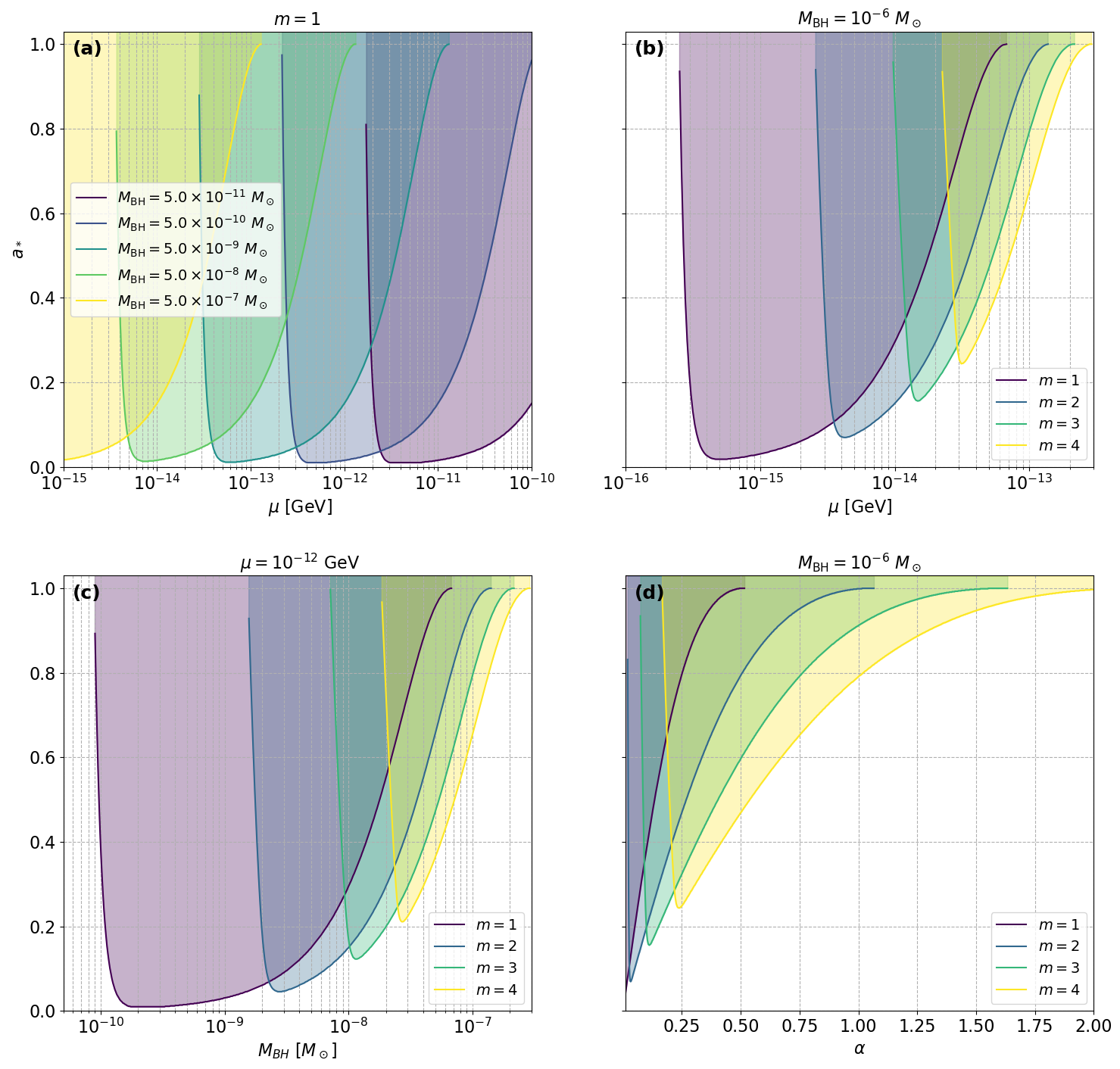
Figure 1: Regge trajectories showing the minimum black hole spin μ2 required to sustain superradiant growth as a function of boson and black hole parameters for azimuthal modes μ3; shaded regions represent active superradiance.
Macroscopic bosonic clouds form when superradiance is active, with occupation numbers reaching μ4–μ5. Instability rates are highly sensitive to μ6 and are dominated by the lowest-angular-momentum (μ7) states. The growth timescale spans seconds to cosmological times, depending on μ8, with sharp suppression outside the optimal range.
Cloud saturation via superradiant spin-down enables a maximum transfer of BH mass to the boson cloud, calculated to be approximately μ9, in agreement with both analytic and numerical results.
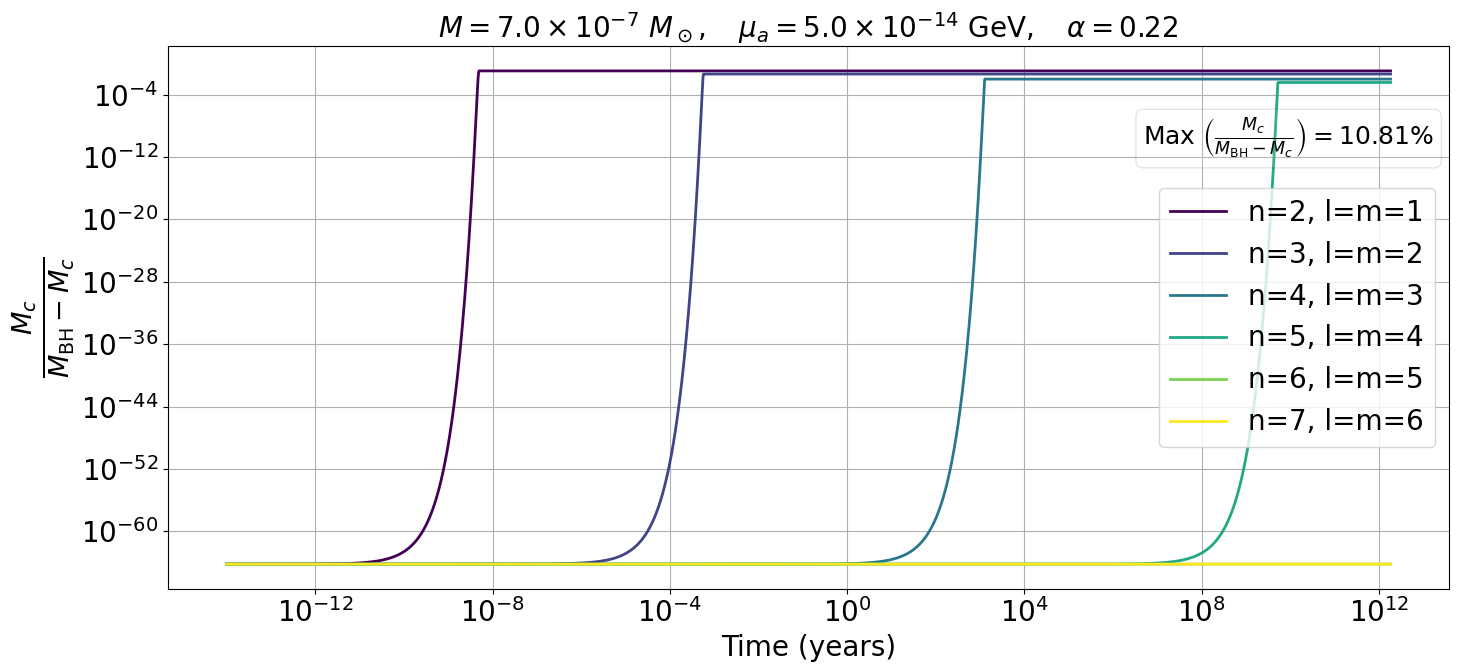
Figure 2: Fractional BH mass transferred to each superradiant level, maximizing at MBH0 for dominant modes.
Bosenova (self-interaction-induced) collapse imposes an upper limit on the cloud occupation, but for QCD axion couplings this threshold does not constrain the bulk of the parameter space considered.
Gravitational Wave Emission Channels in Isolated Gravitational Atoms
Isolated GAs yield two GW channels:
- Level Transitions: Quadrupole self-interactions between two populated states (excited and ground) drive quasi-monochromatic GW emission at the Bohr frequency MBH1.
- Annihilation: Pairwise boson annihilation produces monochromatic GWs at MBH2.
The signals are quasi-monochromatic and, especially for annihilation, persist over timescales vastly exceeding experiment ring-up times, satisfying detectability prerequisites for resonant-cavity detectors.
Numerical results show level transitions yield peak GW strains MBH3 at 1 kpc, while annihilation can reach MBH4.
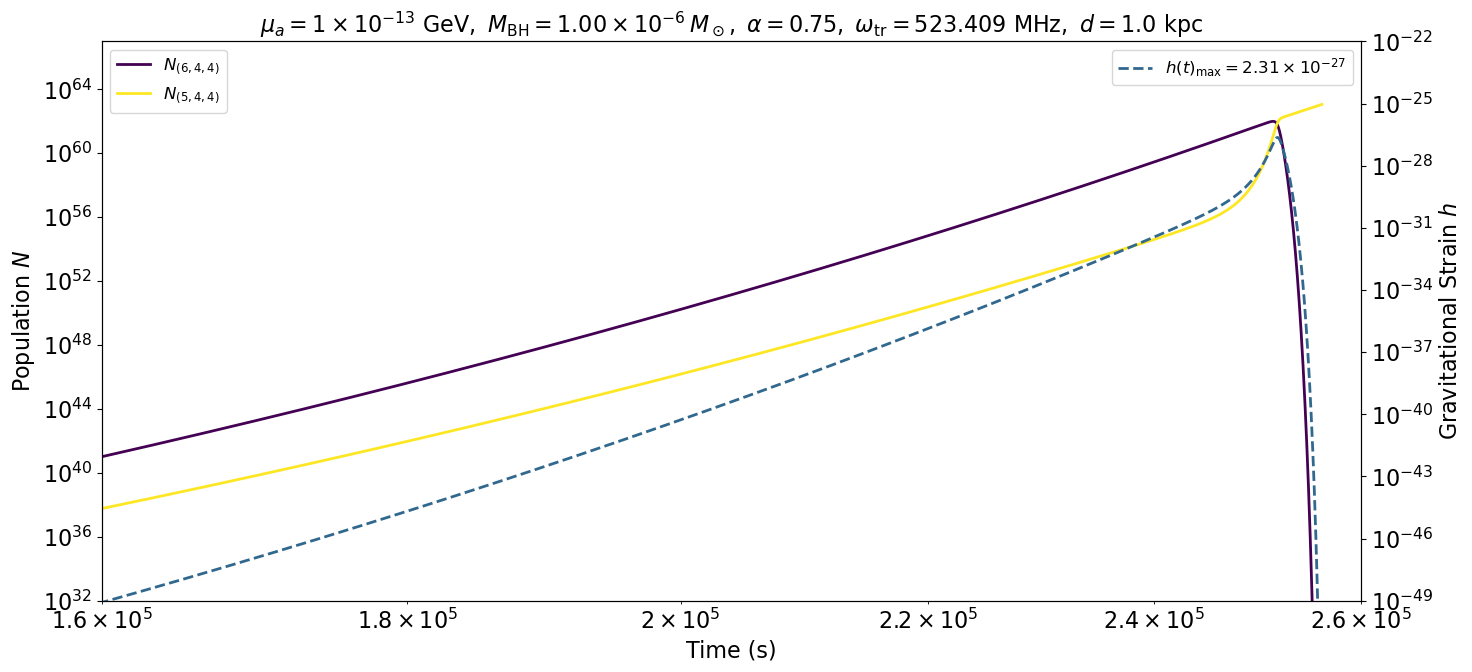
Figure 3: Time evolution of occupation numbers for excited and ground levels alongside the level-transition gravitational wave strain envelope.
Signal lifetimes are MBH5–MBH6 years for level transitions, and MBH7–MBH8 years for annihilation, rendering both highly coherent and persistent.
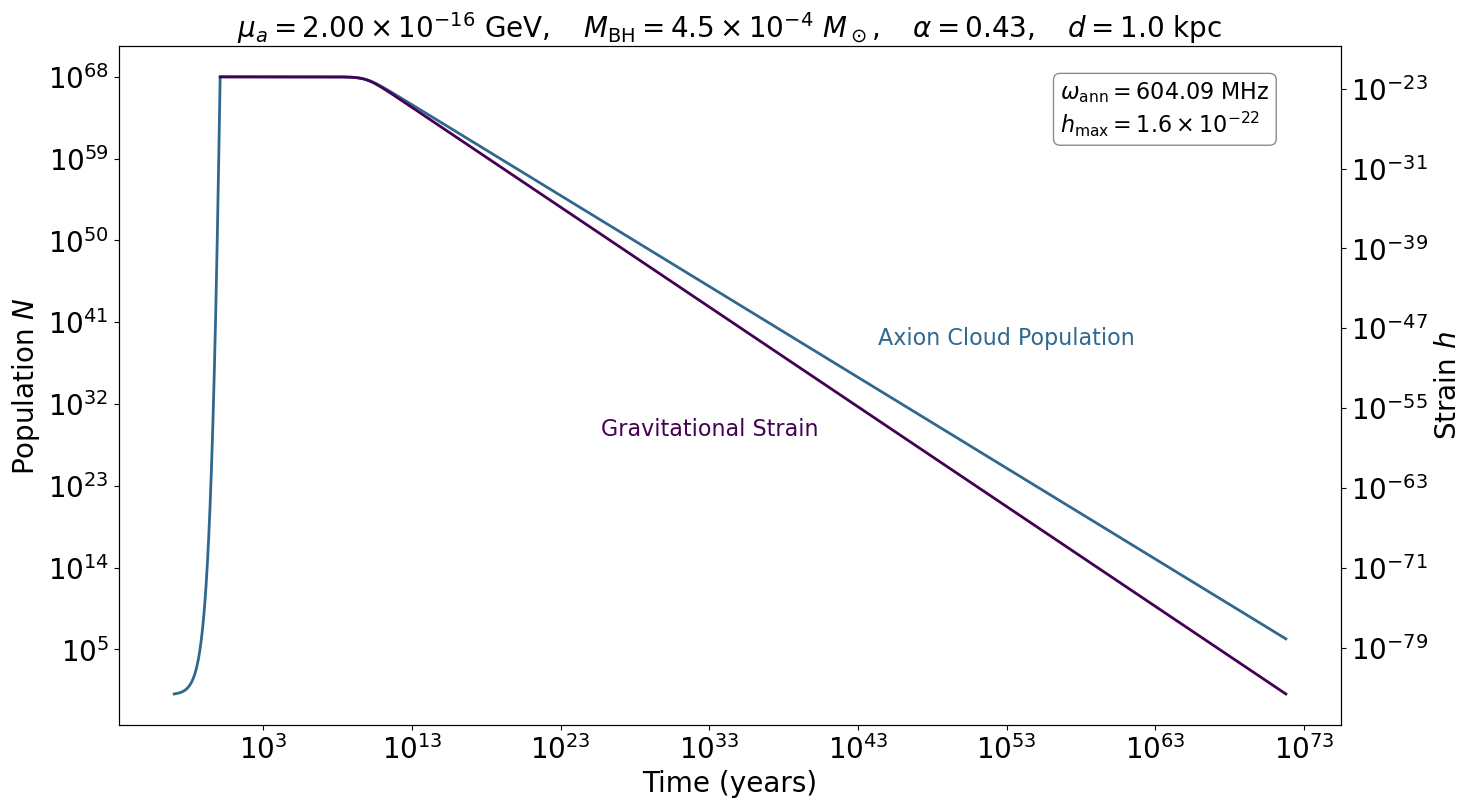
Figure 4: Time evolution of the cloud occupation number and corresponding annihilation strain envelope; annihilation persistently dominates after saturation.
Frequency-domain templates for both emission channels are provided, enabling direct comparison to detector sensitivities.
Gravitational Wave Signatures from Binary-Perturbed Gravitational Atoms
The presence of a binary companion induces tidal perturbations that trigger resonant level transitions via a Landau–Zener mechanism, resulting in transient GW bursts. The signal duration, peak frequency, strain amplitude, and spectral width are determined by the adiabaticity parameter MBH9, instability rates, and orbital parameters.
The characteristic strain for binary-driven transitions is orders of magnitude below the sensitivity floor of current experiments at astrophysically plausible distances and is only detectable for unrealistically small event separations.
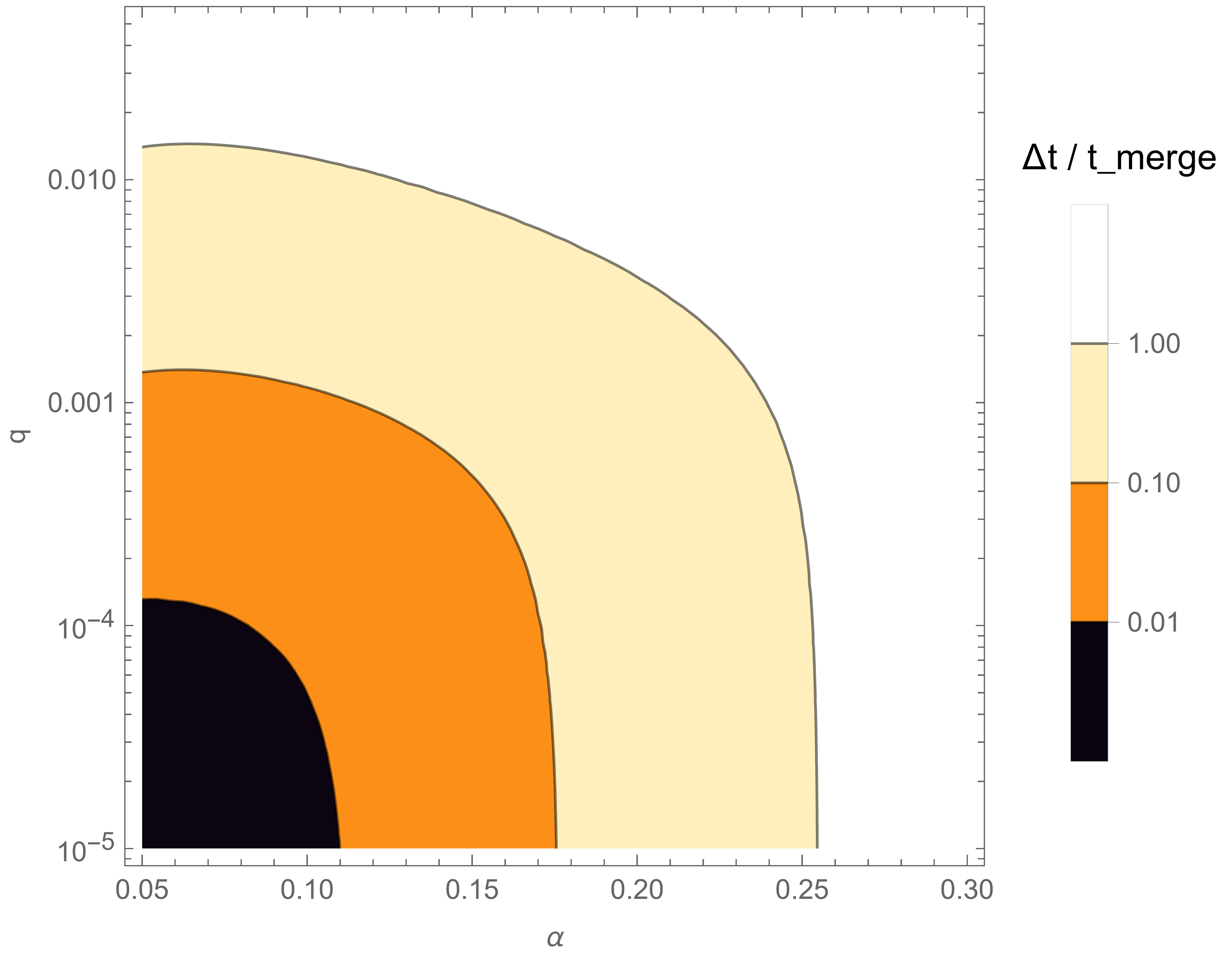
Figure 5: Ratio α∼0.10 illustrates parameter space constraints for signal duration relative to merger time.
Peak transition frequencies for PBH–GA binaries naturally populate the ADMX GHz band only in the relevant PBH mass regime.
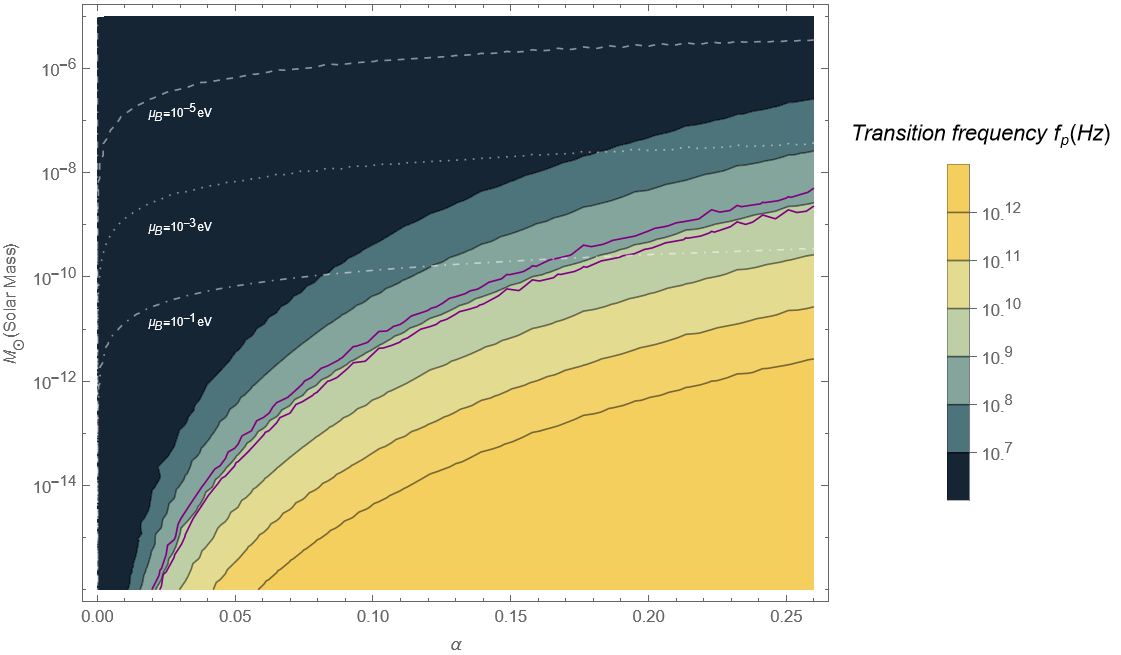
Figure 6: Peak transition frequency in PBH–GA binaries for different boson masses and couplings; shaded region identifies ADMX frequency scan range.
Waveforms, both time and frequency domain, are computed for benchmark configurations. The ring-up condition for cavity detection is universally satisfied for relevant parameter combinations, but strain amplitude is severely limiting.
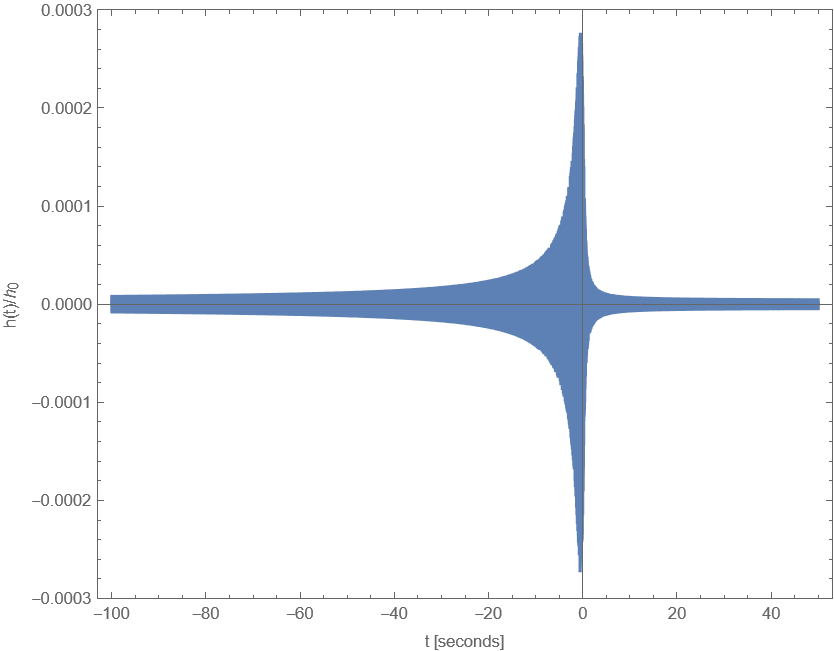
Figure 7: Time-domain and frequency-domain amplitude for a benchmark PBH binary GA system located at α∼0.11 kpc.
Detailed comparison of GW strains with ADMX sensitivity curves confirms the significant gap in detectability.
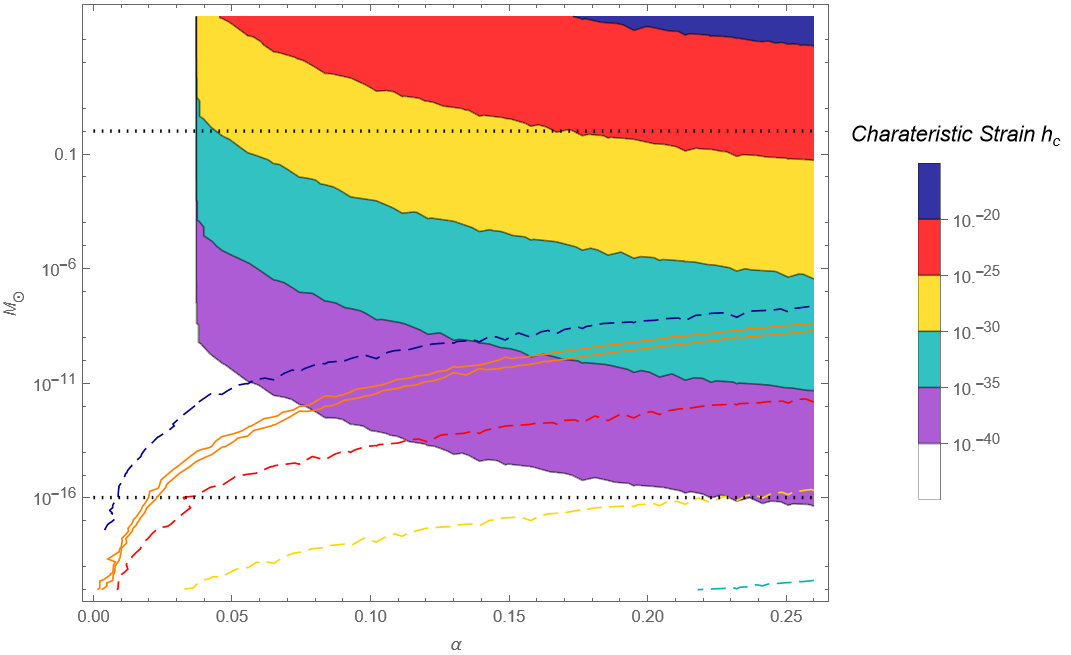
Figure 8: GW characteristic strain α∼0.12 and ADMX minimum detectable strain α∼0.13 for binary GA systems; no overlap in relevant parameter space.
Event Rates and Detection Prospects
Merger rates for PBH binaries are computed from early universe formation models, primarily via the two-body channel, for dichromatic and double-lognormal mass functions. For ADMX-relevant binaries (α∼0.14), event rates imply characteristic distances of α∼0.15 kpc for one event per year, whereas detection requires sources within α∼0.16 AU. Even optimistic PBH clustering fails to bridge the strain sensitivity gap.
Figure 9: Binary event distances for merger rates and mass functions; ADMX-relevant binaries merge at distances far from detector sensitivity thresholds.
Theoretical and Practical Implications
- Theory: PBH–GA systems provide a rare, well-motivated astrophysical source for MHz–GHz GWs. The QCD axion mass window is uniquely accessible, and waveform templates enable direct applications to high-frequency GW searches.
- Experiment: Detectability of isolated GA annihilation signals is more promising versus binary-induced bursts. The necessary improvements include strain sensitivity enhancements (factor α∼0.17), broader frequency coverage, and faster detector response times.
- Constraints: Non-observation could set bounds on PBH abundance and boson properties; matched-filter searches using analytic templates could extend exclusion regions in parameter space.
- Future Developments: Novel detector designs, larger volumes, stronger fields, lower temperatures, and extended integration times are imperative. Plasma haloscopes, LC circuits, and broadband acoustic resonators may yield complementary coverage.
Figure 10: Population evolution for superradiant states and corresponding gravitational strain due to annihilation; highlights regime transition from growth to persistent emission.
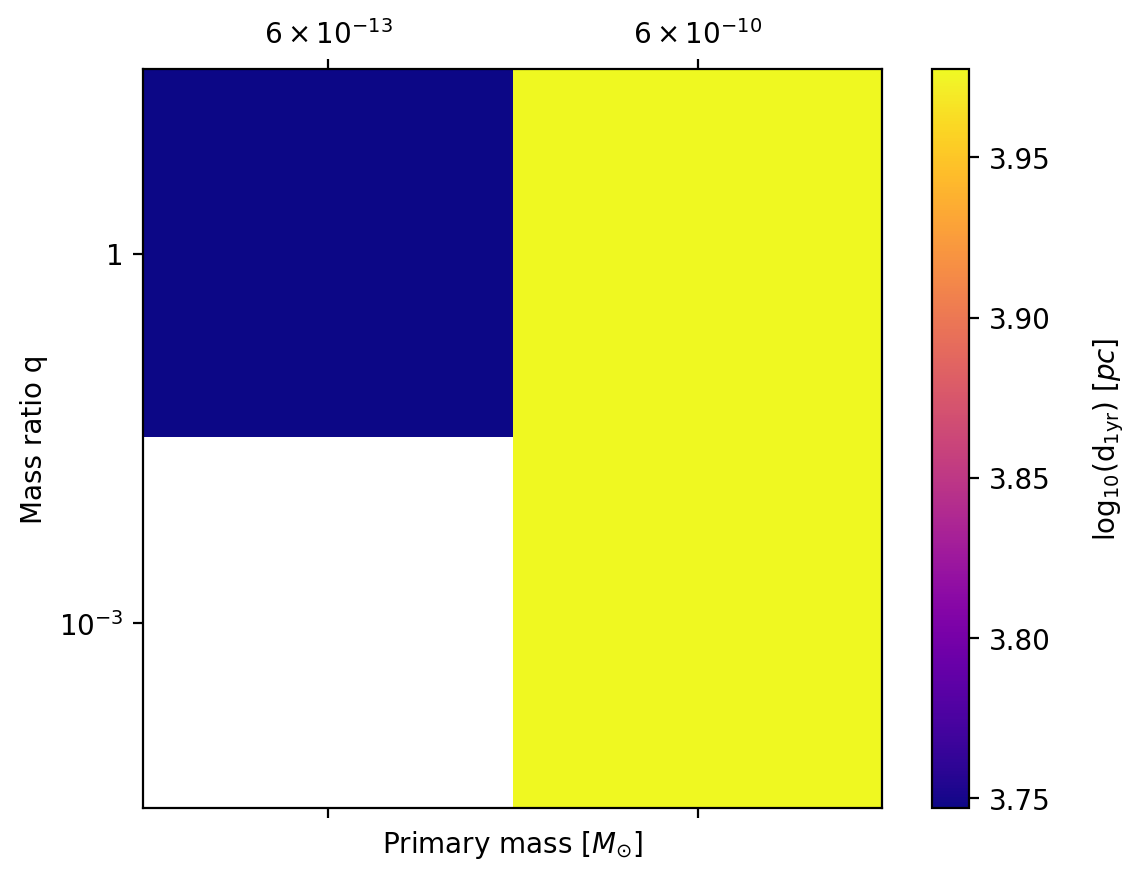
Figure 11: Event distance distribution in non-dichromatic (lognormal) PBH mass functions; characteristic distances remain above detection thresholds.
Conclusion
Superradiance around PBHs produces persistent and transient GW signals in the MHz–GHz range via bosonic clouds, with analytic and numerical characterization of both isolated and binary-perturbed systems. While theoretical models identify ideal conditions for strong signal generation, practical detection is limited by current instrument sensitivity and event rates. The templates and parameter mappings developed offer benchmarks for future high-frequency GW searches. Isolated GA annihilation signals are the priority target for near-term detection, while binary-induced bursts require advancements far beyond current capabilities. The systematic elucidation of the physical mechanism, parameter space, waveform properties, and event statistics provides a foundation for ongoing experimental and theoretical investigations into ultralight boson physics, PBH demographics, and high-frequency gravitational wave astronomy.