- The paper introduces a DMcD framework that merges measurement data with model-driven augmentation to construct high-fidelity, continuous channel maps for 6G networks.
- It employs a hybrid ray tracing and stochastic model combined with an inductive edge-conditioned GNN to achieve rapid online adaptation and robust interpolation.
- Experimental results demonstrate superior NMSE performance and accurate replication of channel characteristics, enabling real-time embodied intelligence in dynamic environments.
Data-Model Co-Driven Continuous Channel Map Construction for 6G Embodied Agents
Introduction
The transition towards AI-native 6G networks necessitates real-time, location-specific channel awareness over continuous-spatial domains for embodied intelligent agents. The paper "Data-Model Co-Driven Continuous Channel Map Construction: A Perceptive Foundation for Embodied Intelligent Agents in 6G Networks" (2604.01060) proposes a two-stage Data-Model Co-Driven (DMcD) framework to address the limitations of purely measurement-based or purely model-based approaches. The DMcD enables the construction of space-time continuous channel maps providing both large-scale and small-scale CSI, thus furnishing foundational perception capabilities crucial to autonomous tasks, trajectory planning, and ISAC operations.
Limitations of Existing Channel Map Paradigms
Traditional model-driven paradigms leverage stochastic geometry or ray tracing (RT), which are adaptive but have limited spatial fidelity due to the inherently stochastic nature and required simplifications. Data-driven paradigms, especially deep learning-based, interpolate channel maps from discrete observations, achieving high spatial accuracy but suffering from insufficient robustness to fast environmental changes; retraining is expensive and often infeasible in dynamic situations.
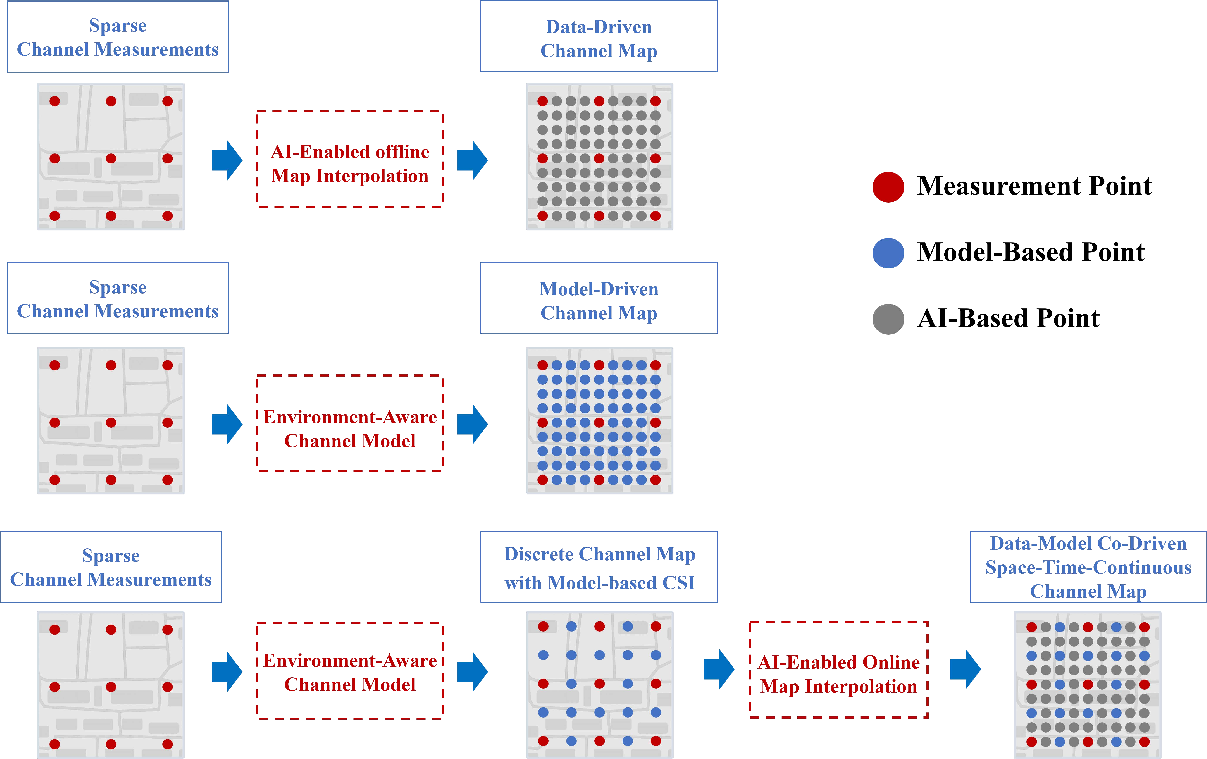
Figure 1: Comparison of channel map construction paradigms, highlighting trade-offs between data-driven and model-driven approaches.
The study demonstrates that neither approach alone satisfies the demands of 6G embodied intelligence, which requires both high accuracy and real-time adaptability. This motivates the hybridization of physics-based modeling and sample-efficient, inductive machine learning.
The DMcD Framework: Architecture and Methodology
The DMcD framework is partitioned into three principal stages: measurement-based data acquisition, model-driven augmentation, and data-driven online spatial interpolation.
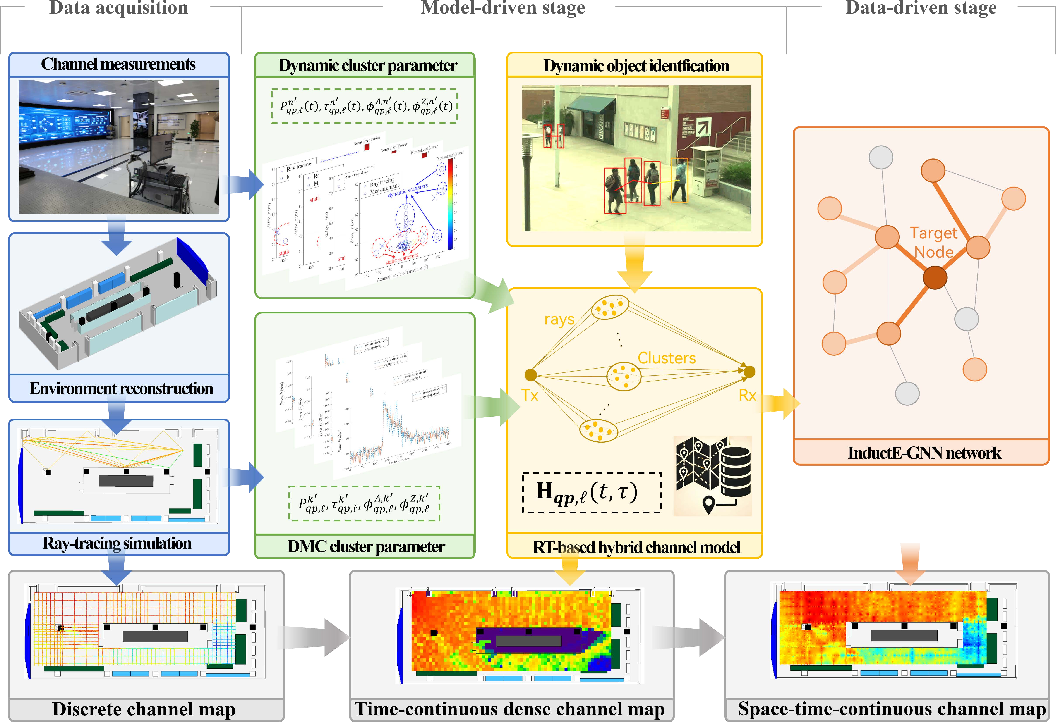
Figure 2: Two-stage data-model co-driven framework for space-time continuous channel map construction incorporating measurement data, HCM, and InductE-GNN.
Stage 1: Data Acquisition and Environment Reconstruction
High-resolution channel measurement campaigns are conducted in both indoor and outdoor environments at 28 GHz and 5.5 GHz, respectively. The raw CSI is used to parameterize the model-driven component and serve as a ground-truth basis for benchmarking.
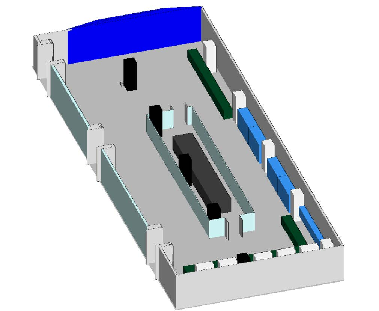
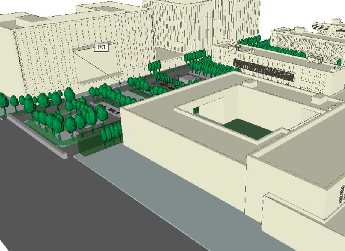
Figure 3: Reconstruction of indoor and outdoor measurement environments using RT simulations for geometry calibration.
Stage 2: Model-Driven Augmentation – Hybrid Channel Model
The Hybrid Ray Tracing/Geometry-Based Stochastic Model (H-RT/GBSM), or Hybrid Channel Model (HCM), synthesizes static RT-predicted specular multipath, measured and statistically modeled diffuse multipath components (DMCs), and physically parameterized dynamic scatterers.
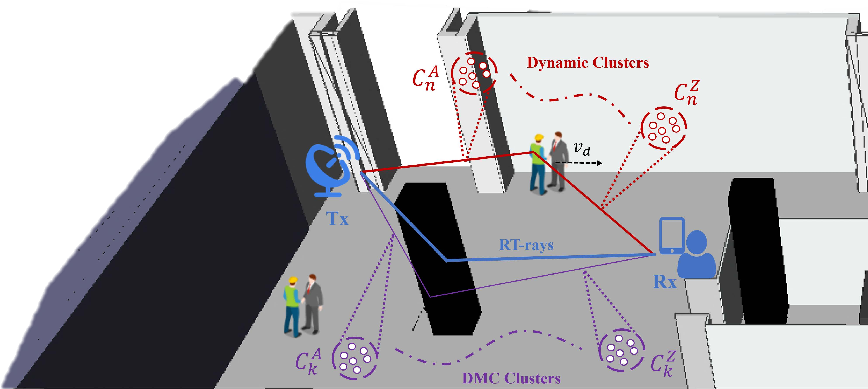
Figure 4: Geometry map of the proposed RT-based hybrid channel model, displaying the integration of static, dynamic, and DMC clusters.
The model captures temporal channel evolution, with DMC incorporation significantly improving agreement with measurement-derived power profiles and angular/delay spreads.
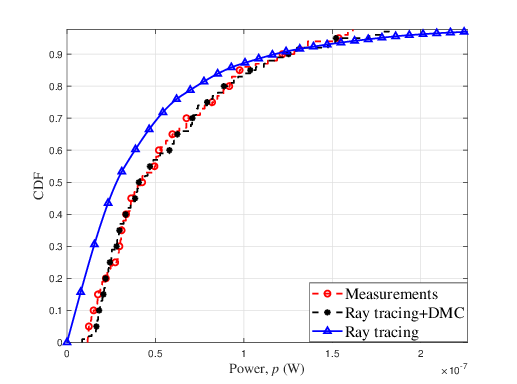
Figure 5: CDFs of MPC power for measurements, pure RT, and RT with DMC, demonstrating the necessity of DMC modeling for accuracy.
Stage 3: Data-Driven Online Interpolation – InductE-GNN
A novel inductive, edge-conditioned GNN (InductE-GNN) refines HCM-predicted channel features over a constructed W-KNN topology. Node features leverage both physics-based prior interpolations and observed samples; edges utilize Wasserstein-distance similarity for robust message passing, maintaining physical manifold congruence beyond Euclidean proximity.
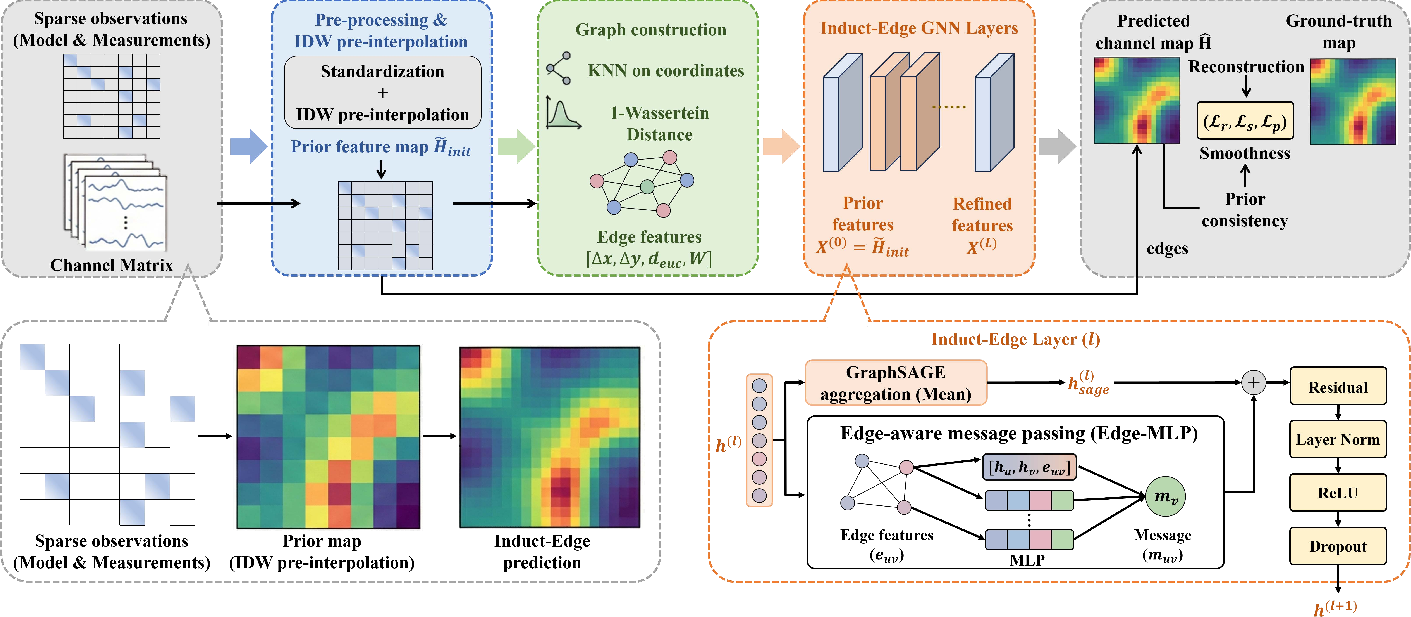
Figure 6: Diagram of the proposed induct-edge GNN, integrating feature, edge, and prior information for inductive interpolation.
The architecture enables rapid online adaptation without retraining, a critical requirement for semantic-level real-time operations. The composite training objective combines reconstruction, smoothness, and prior consistency losses, stabilizing performance in data-sparse regions.
Experimental Evaluation
Quantitative and qualitative evaluation is performed using NMSE, CDFs of RMS delay and angular spreads, and spatial-temporal channel map visualization.
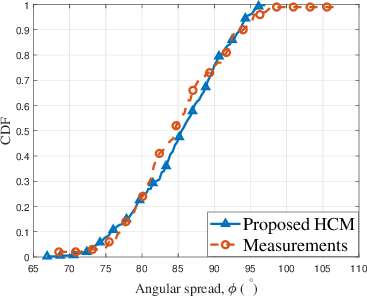
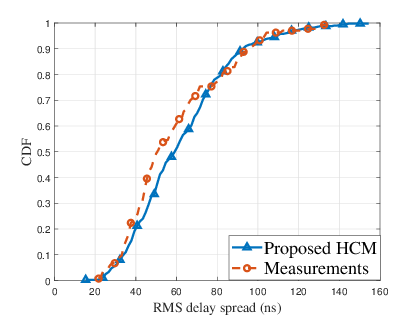
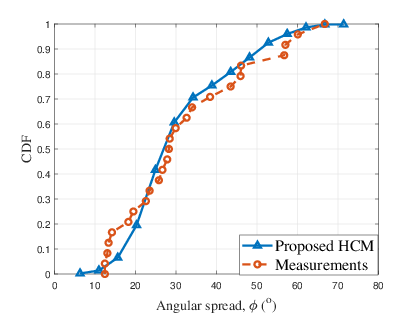
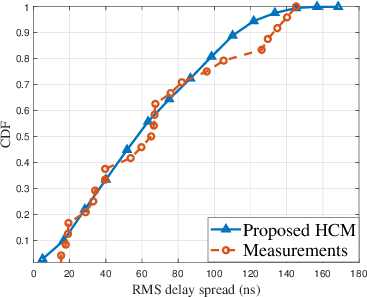
Figure 7: CDFs of AS and DS (indoor and outdoor) comparing the proposed HCM with measurements. The HCM matches measured dispersions both temporally and spatially.
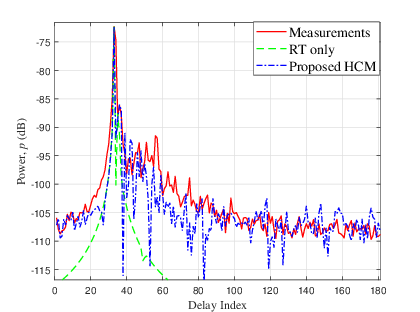
Figure 8: Delay PSDs demonstrate HCM’s ability to replicate both LoS and diffuse components observed in measurements.
InductE-GNN outperforms CGAN, GRU, and vanilla GCNs in NMSE under varying sampling densities, showing robustness to sparse observation regimes and stable convergence.
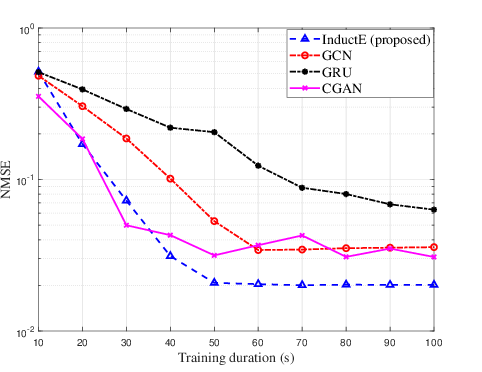
Figure 9: NMSE during training for different data-driven methods. InductE-GNN converges to consistently lower error.
Ablations confirm the impact of each architectural component, including Wasserstein-informed edges and IDW-based priors.
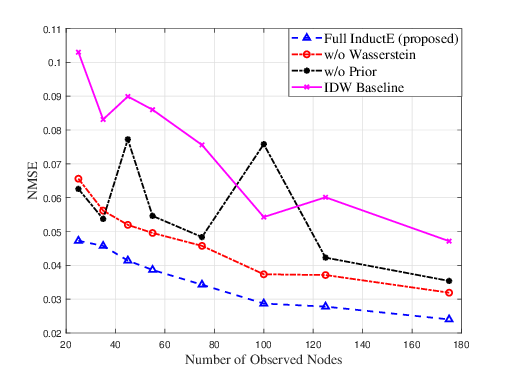
Figure 10: NMSE versus number of observed nodes, highlighting InductE-GNN’s superior performance, especially under scarce sampling.
End-to-End Channel Map Quality
The DMcD framework constructs space-time continuous channel maps that not only closely resemble the ground-truth measurements in power, DS, and AS, but also preserve fine-grained topology and avoid patchiness or discontinuities present in data-only approaches.
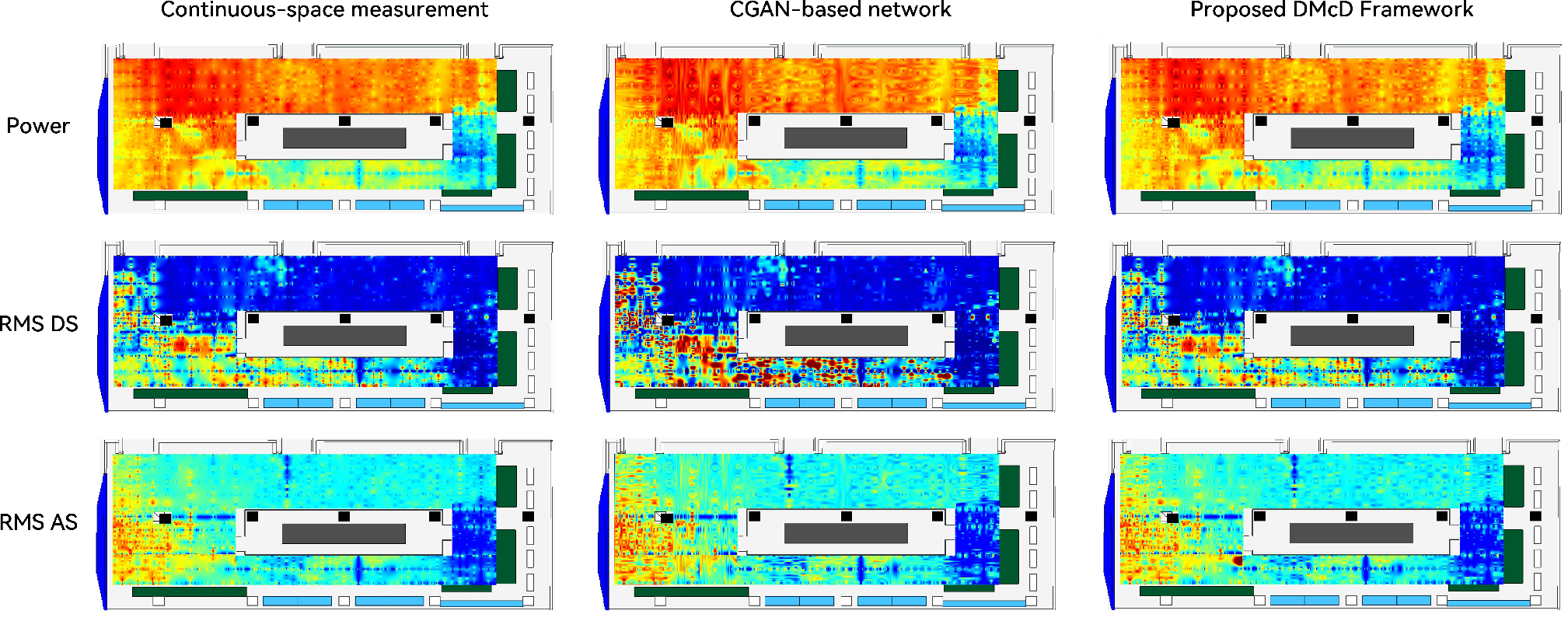
Figure 11: Channel maps for received power, RMS DS, and RMS AS: direct comparison between measurements, CGAN-based baseline, and DMcD framework.
Temporal consistency with real-world dynamic scenarios is verified via time-varying delay PSD trajectories.
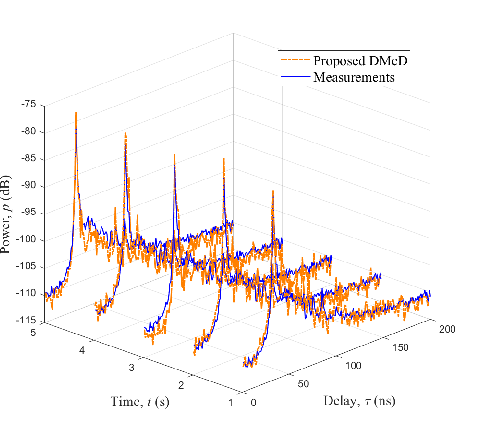
Figure 12: Time-varying delay PSD comparison between measurements and the proposed DMcD confirms accurate tracking of physical channel evolution.
Theoretical and Practical Implications
The integration of HCM and InductE-GNN provides a perceptually meaningful, queryable world model for embodied agents, enabling new classes of online, environment-aware resource management, localization, and trajectory planning algorithms. Unlike data-only generative models, the framework constructs the full high-dimensional channel matrix, not limited to marginal statistical parameters. The inductive nature supports scalable deployments, where agents adapt online with minimal computational overhead—sub-second update latency (0.6s total) is demonstrated. This capability is essential for real-time ISAC and autonomous agent orchestration in rapidly evolving wireless environments.
Theoretically, the approach bridges the “atlas gap,” binding the physical realism of geometry-based models to the statistical richness and sample efficiency of GNN-based machine learning. The explicit modeling of DMC, dynamic scatterers, and the physics-informed graph topology yields superior generalization across environments, frequency bands, and temporal regimes.
Conclusion
The DMcD framework sets a new benchmark for real-time, space-time continuous channel map construction by fusing RT-based physical modeling with inductive, edge-aware graph learning. Comprehensive validation in realistic environments establishes not only high interpolation fidelity and stability, but also practical viability for implementation in 6G agent ecosystems. The approach’s capacity for full-matrix CSI prediction and rapid online adaptation has direct implications for embodied intelligence, ISAC systems, and AI-native RRM. Subsequent research directions include closed-loop integration with reinforcement learning agents for simultaneous channel perception and control, as well as scaling to million-node deployments in ultra-dense 6G networks.