- The paper demonstrates that the Klein bottle ratio is a robust diagnostic for continuous, weakly first-order, and strongly first-order transitions in 2D Potts models.
- It utilizes advanced density-matrix and tensor-network renormalization methods to extract critical scaling, central charges, and exponent drift across q=4, 5, and 6.
- Findings validate the role of complex CFTs in explaining pseudo-critical scaling and the weakly first-order behavior observed specifically in the q=5 Potts model.
The Klein Bottle Ratio as a Diagnostic of Phase Transitions in 2D Potts Models
Introduction
This paper investigates the phase transition properties of two-dimensional ferromagnetic Potts models, focusing on the weakly first-order nature at q=5, by leveraging the Klein bottle ratio g as a universal diagnostic. The study utilizes advanced density-matrix and tensor-network renormalization group techniques to extract and interpret g, critical scaling indices, transfer-matrix spectra, and central charges in both original and dual lattice constructions, across q=4,5,6. The results validate g as a robust indicator capable of distinguishing continuous, weakly first-order, and strongly first-order transitions, with particular emphasis on finite-size scaling behavior and the theoretical implications of complex CFTs for the Potts-q models.
Tensor-Network Construction and Simulation Methodology
The Potts model Hamiltonian is defined with Sq symmetry, and the statistical mechanics framework is extended via tensor network representations of partition functions for both original and dual lattice formulations. In this context, local tensor units encode spin configurations and criticality, as shown in the schematic construction:
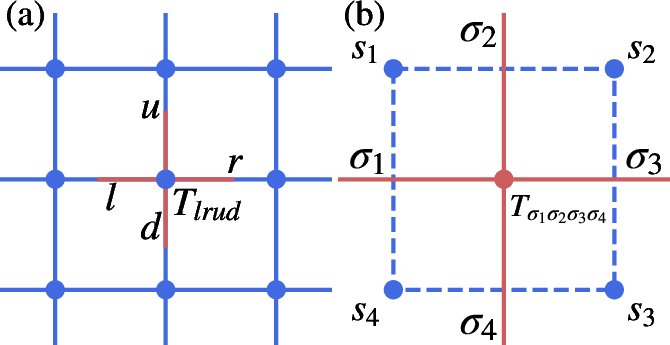
Figure 1: Tensor-network schematic for the q-state Potts model on square lattices, distinguishing original and dual lattice tensor decompositions.
The numerical procedures employ DMRG and tensor-network renormalization techniques, enabling efficient calculation of transfer matrix spectra and entanglement observables as system size Ly is varied. The truncated bond dimension D plays a critical role in ensuring convergence and accuracy, particularly for large g0 and g1.
Klein Bottle Ratio: Theory and Calculation
The Klein bottle ratio g2 is defined as the normalized quotient of partition functions on Klein bottle and torus manifolds, capturing the universal "ground-state degeneracy" underlying criticality. The tensor contraction strategy implements crosscap and periodic boundary conditions along g3, allowing direct numerical access to g4 across model parameters:
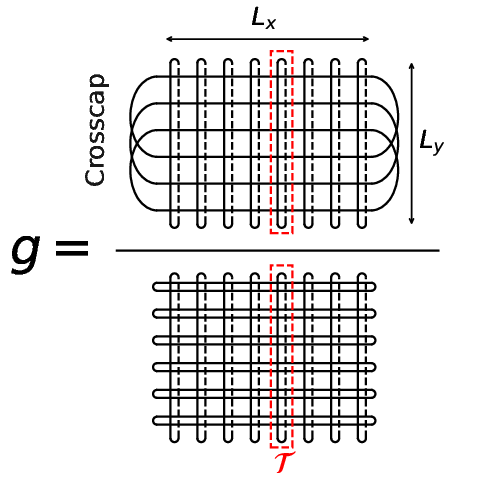
Figure 2: Tensor network contraction scheme for calculating the Klein bottle ratio g5 via crosscap operations along g6.
Analytically, g7 reflects the quantum dimensions of primary fields, and is tightly linked to the central charge g8 and boundary entropy as predicted by CFT. Numerical results reveal precise finite-size scaling behavior, with g9 saturating or diverging depending on transition order.
Finite-Size Scaling, Critical Points, and Data Collapse
A comprehensive survey of Klein bottle ratio g0 at critical temperature g1 for g2 confirms established CFT predictions for g3, while higher g4 exposes nontrivial finite-size effects and scaling exponent drift:
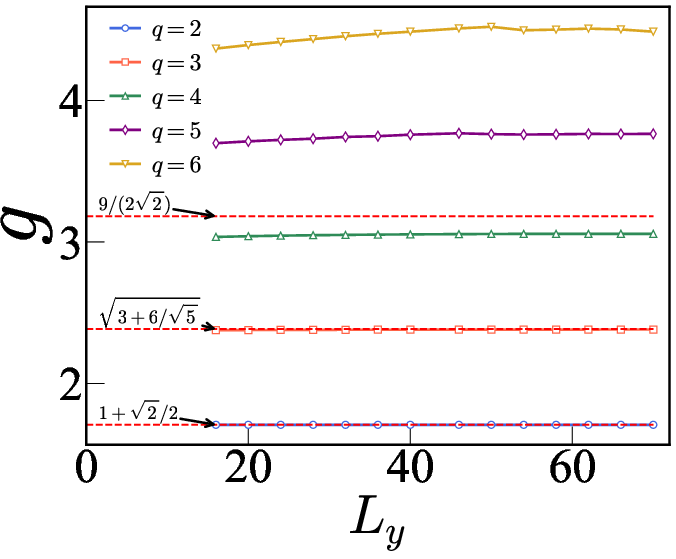
Figure 3: Klein bottle ratio g5 as a function of g6 at g7 for g8; finite-size scaling and CFT predictions indicated.
For g9, q=4,5,60 displays power-law scaling with multiplicative logarithmic corrections, saturating towards the theoretical value with increasing q=4,5,61 and q=4,5,62. At q=4,5,63, the transition is characterized by pseudo-critical finite-size scaling and prominent drift in the scaling exponent q=4,5,64, distinguishing it from continuous scaling observed in q=4,5,65:
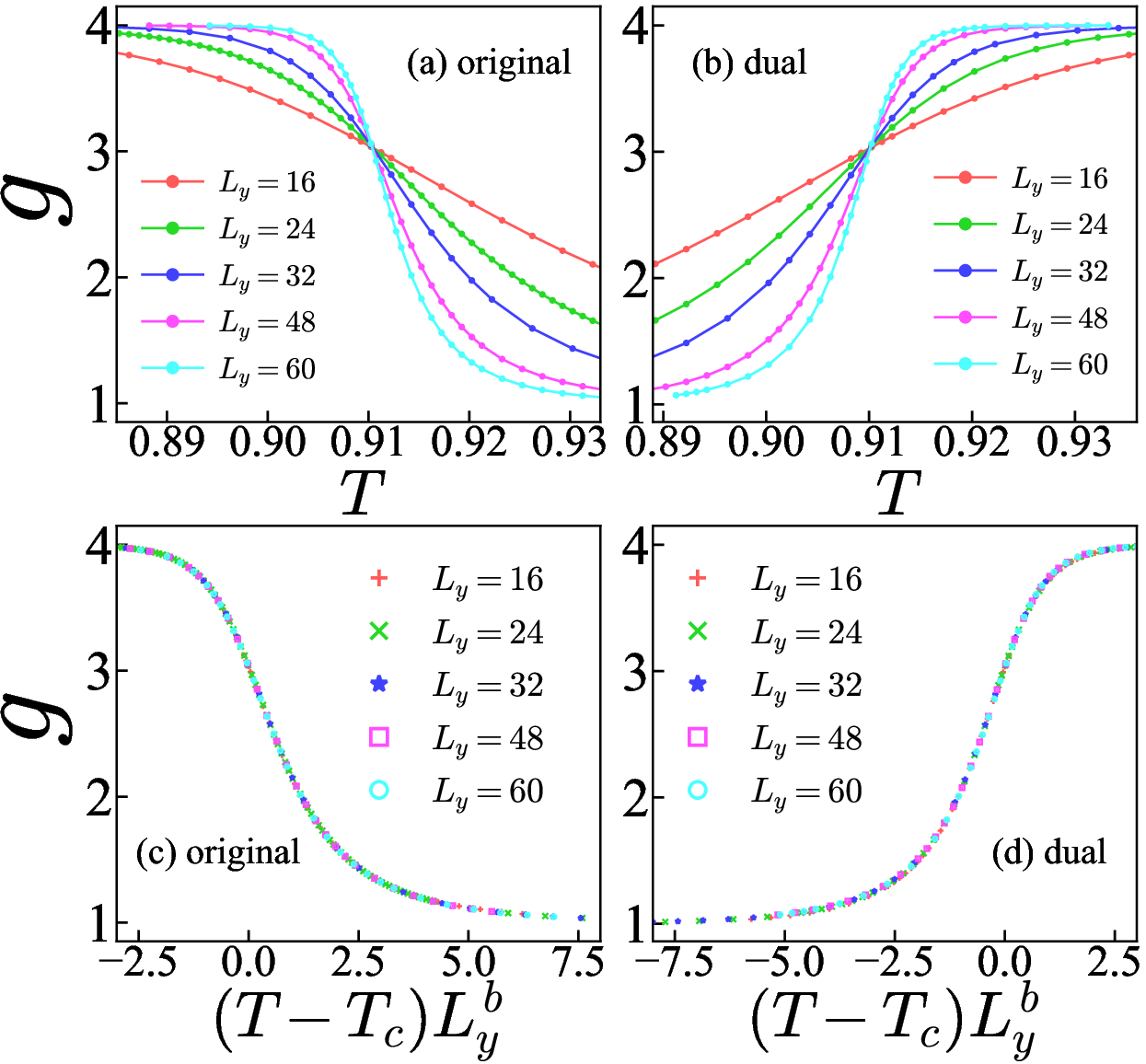
Figure 4: Temperature dependence and data collapse of q=4,5,66 for q=4,5,67 Potts model on both original and dual lattices.
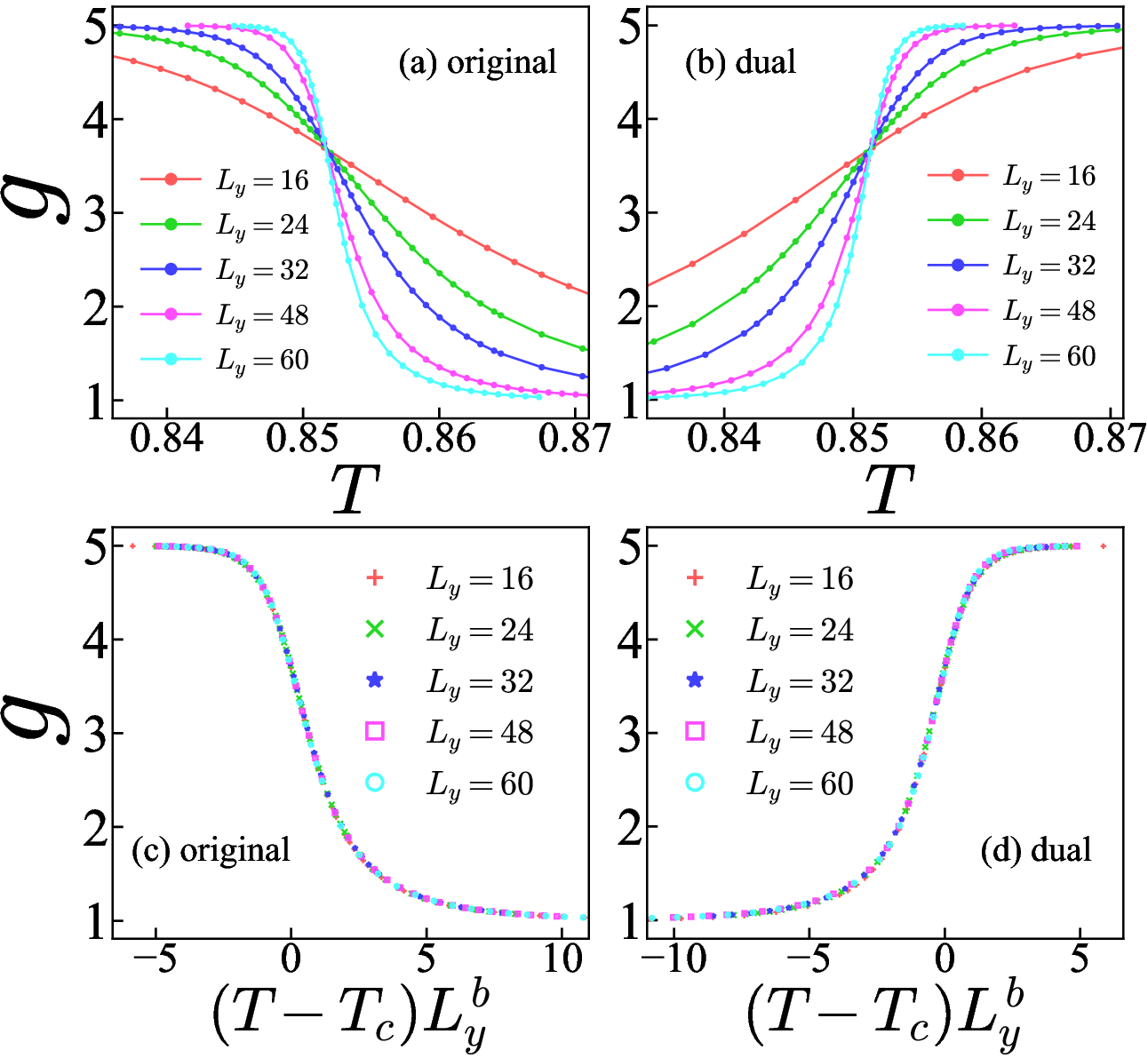
Figure 5: Temperature dependence and data collapse of q=4,5,68 for q=4,5,69 Potts model on both original and dual lattices.
Detailed comparison between small and large g0 reveals that, in g1, g2 systematically increases with g3, while g4 remains stable. This exponent drift is a strong numerical indicator of weakly first-order behavior:
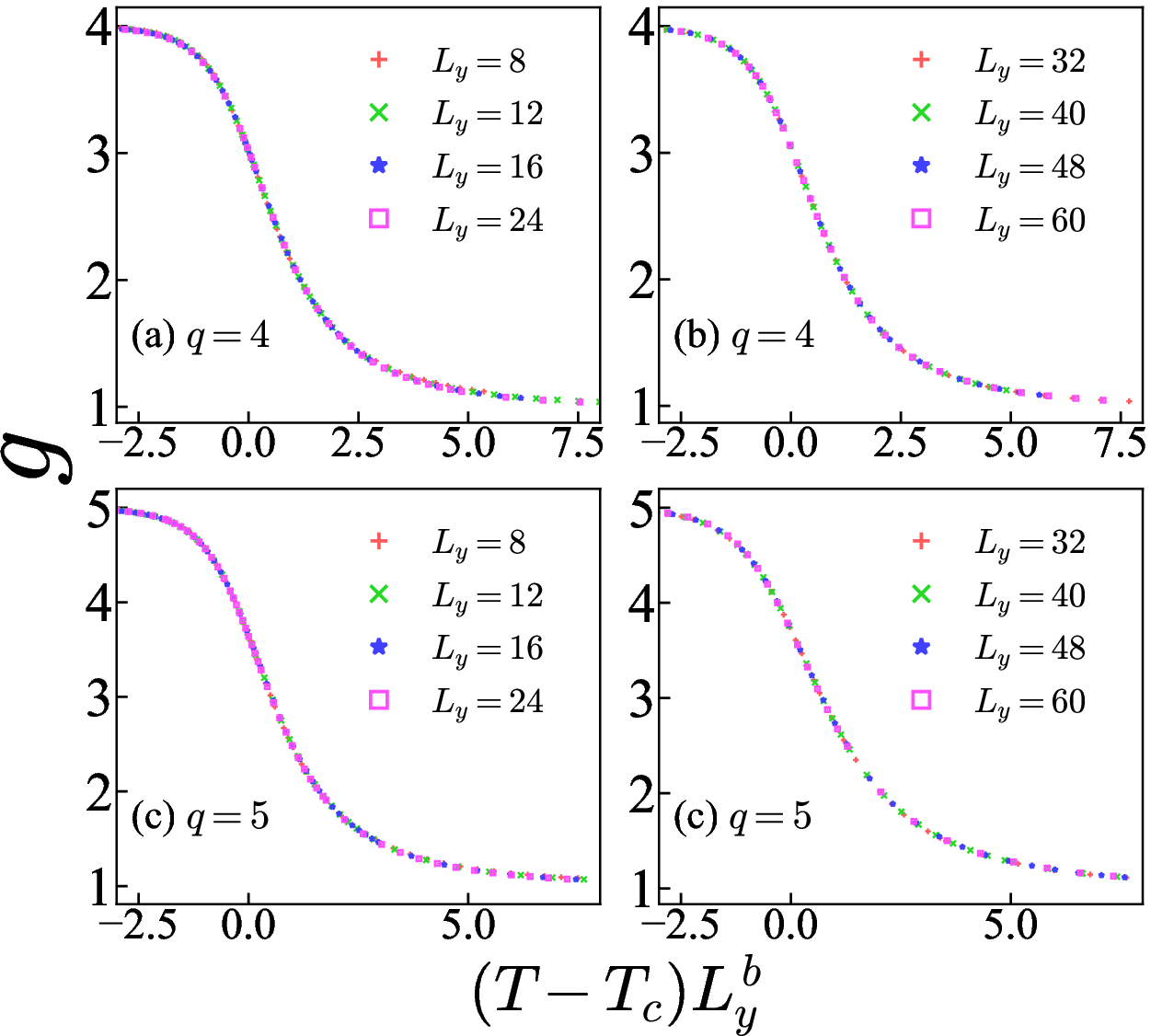
Figure 6: Size-dependent drift in scaling exponent g5 for g6 and g7 Potts models; small vs. large g8 collapse compared.
Transfer Matrix Spectra and Entanglement Entropy
The SVD spectrum of the transfer matrix encodes entanglement in tensor-network algorithms. The spectrum for g9 illustrates exponential decay with persistent degeneracy in low-lying eigenvalues, demanding high bond dimension for reliable fidelity:
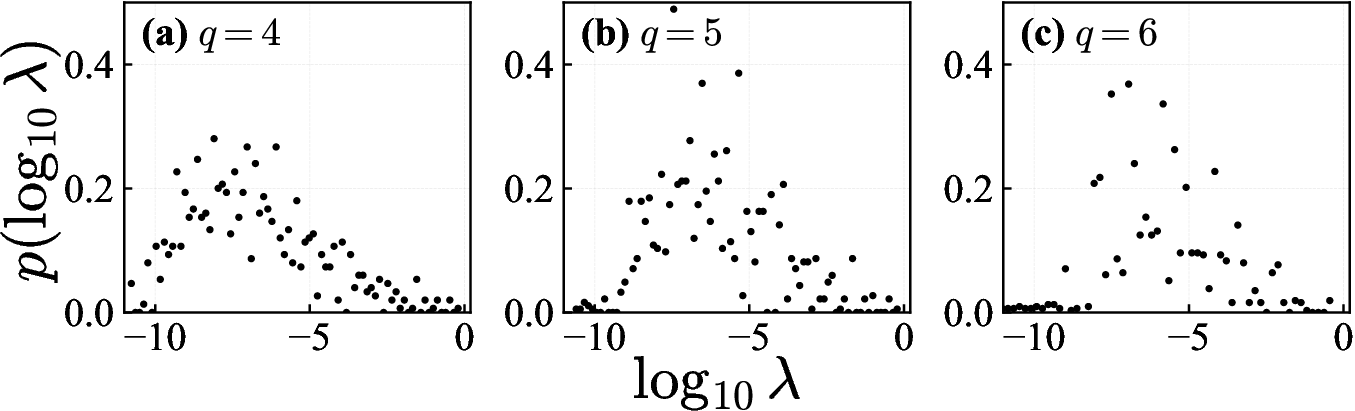
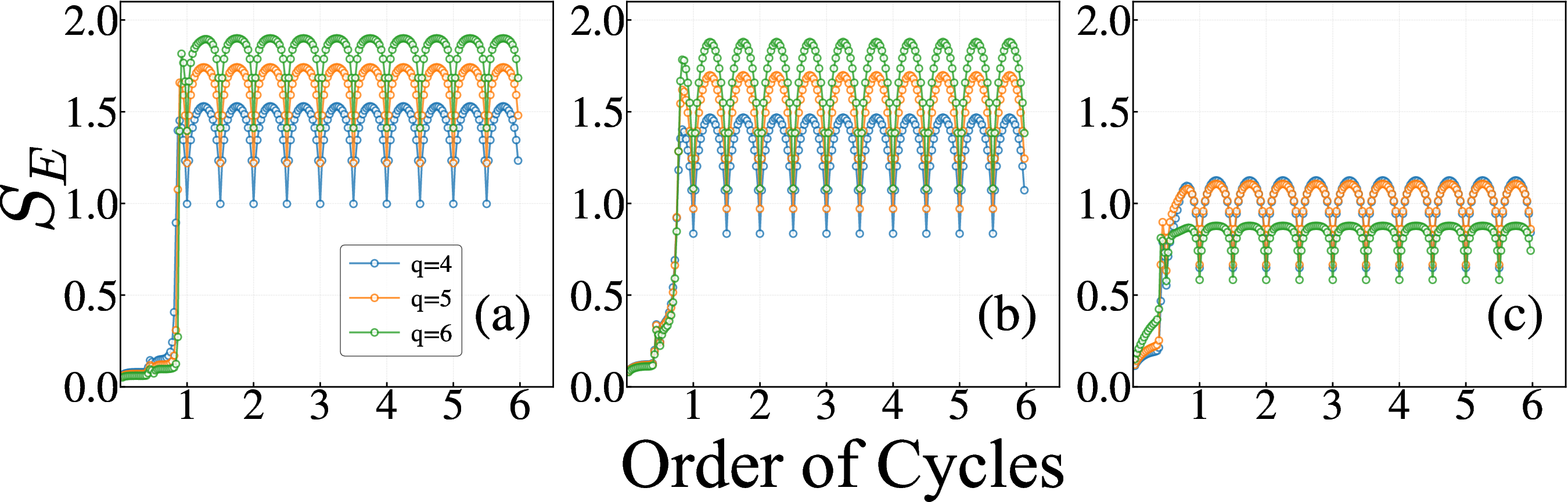
Figure 7: Spectrum distribution of retained non-zero eigenvalues q0 for q1 at q2, q3.
Entanglement entropy q4 peaks at the center of the chain and increases with q5—but above q6, q7 for q8 drops sharply, confirming a transition from conformal to strongly first-order regime:
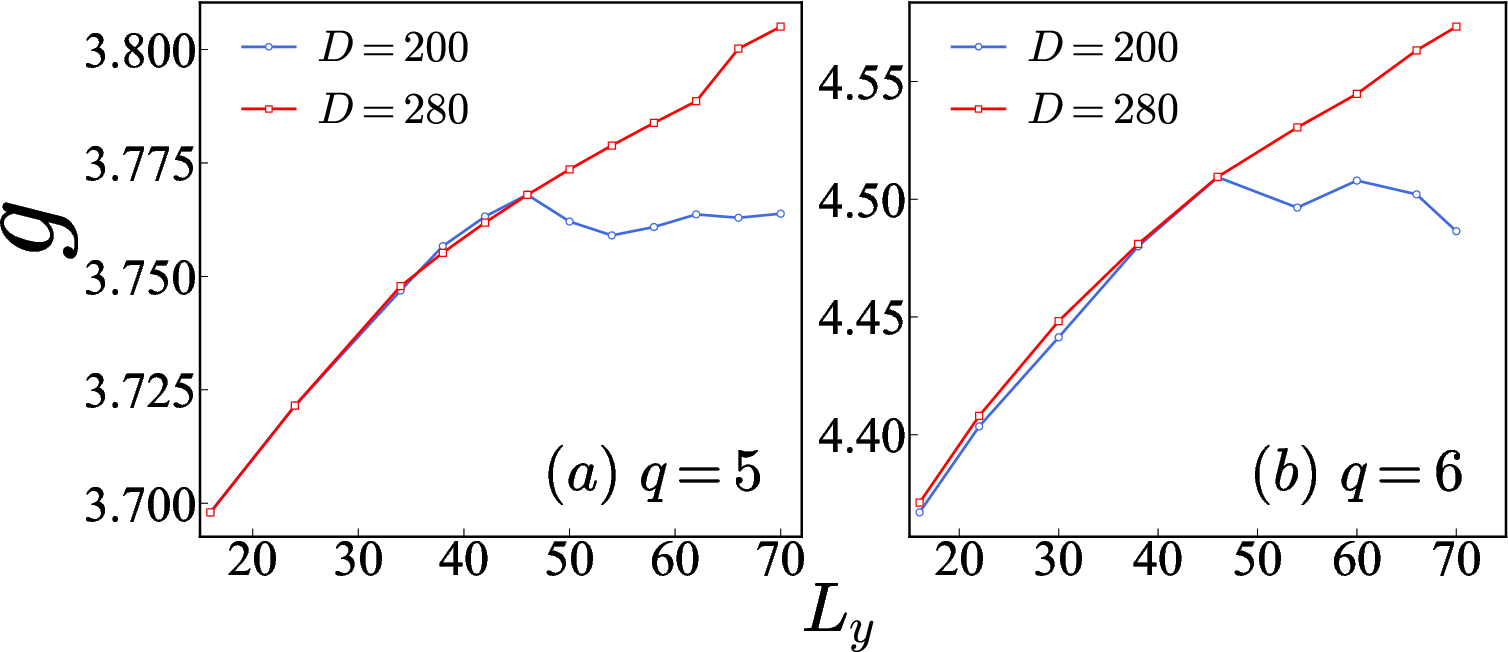
Figure 8: von Neumann entanglement entropy evolution for q9 around Sq0, Sq1, Sq2.
Bond dimension effects are explored, showing necessity for Sq3 to suppress oscillations and enable monotonic Sq4 scaling at high Sq5:
Figure 8: Effects of bond dimension Sq6 on Sq7 for Sq8, highlighting numerical stability at Sq9.
Scaling Functions, Divergence, and Extrapolation
Power-law and logarithmic fits of q0 vs. q1 and q2 demonstrate diverging behavior in q3, confirming first-order nature and validating q4 as a generic diagnostic beyond CFT:
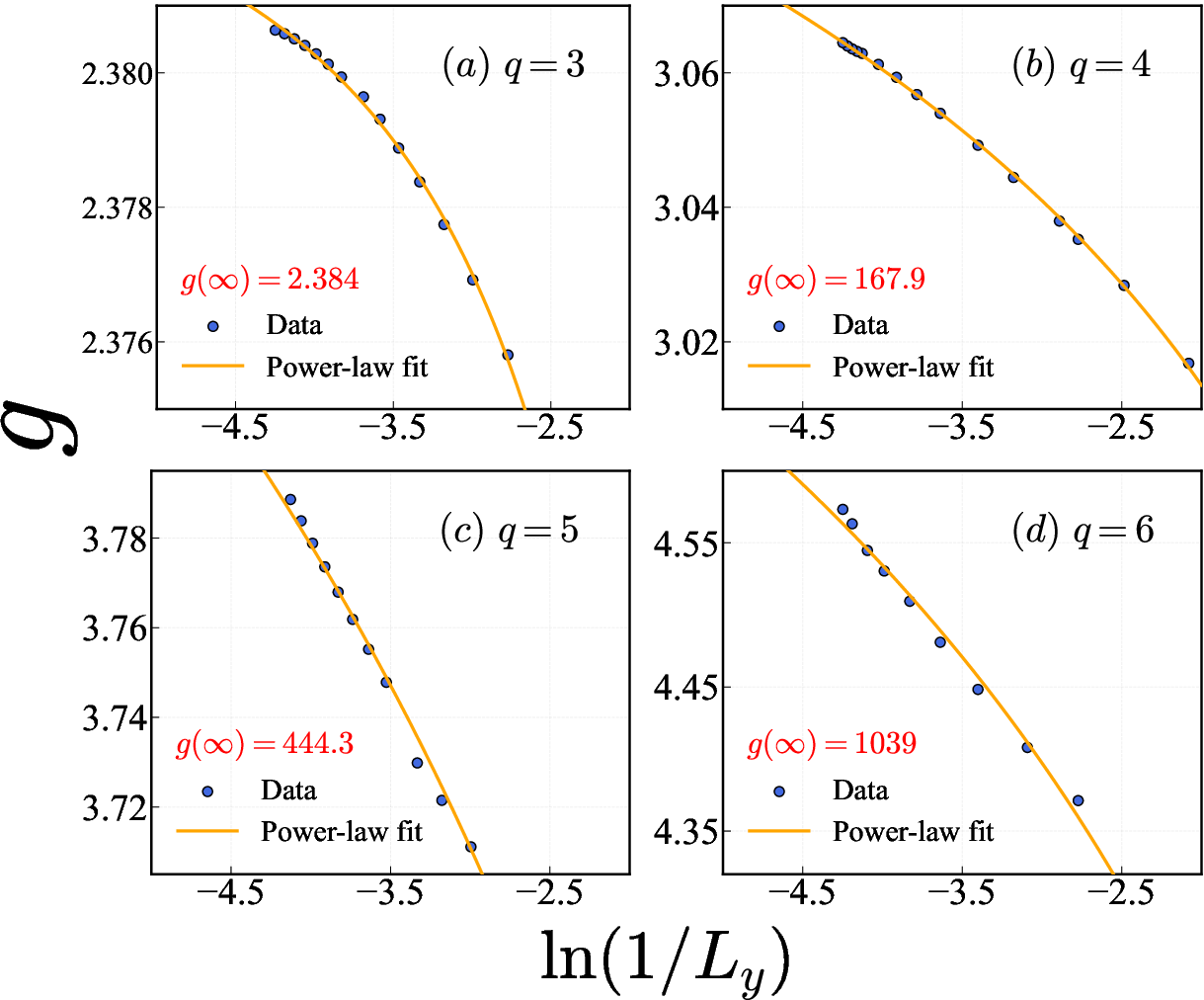
Figure 9: q5 vs. q6 across q7, with power-law extrapolation to thermodynamic limit.
Figure 10: Power-law fitting of q8 vs. q9; distinction between continuous and first-order transitions shown.
Further data collapse for Ly0 supports robust scaling of Ly1 even in the first-order regime:
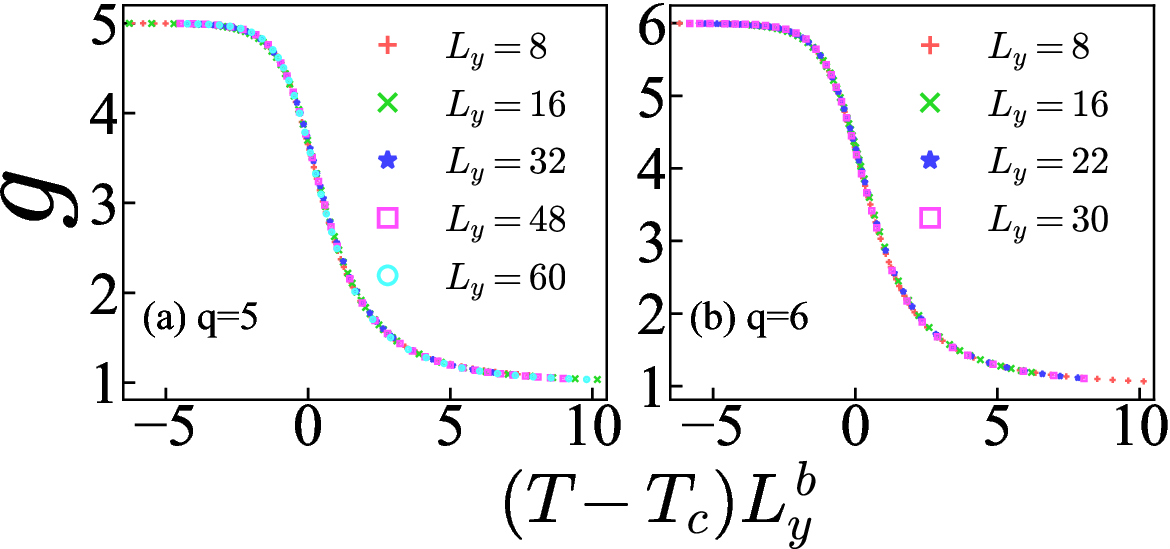
Figure 11: Data collapse of Ly2 for Potts-Ly3 (Ly4) on original lattice at Ly5.
Central Charge Extraction and CFT Connection
The central charge Ly6 is extracted via torus free-energy scaling. For Ly7, Ly8, consistent with compactified boson theory. For Ly9, D0, matching the real part of complex CFT predictions (D1), corroborating the theoretical framework of complex fixed points and "walking" RG behavior for weakly first-order transitions:
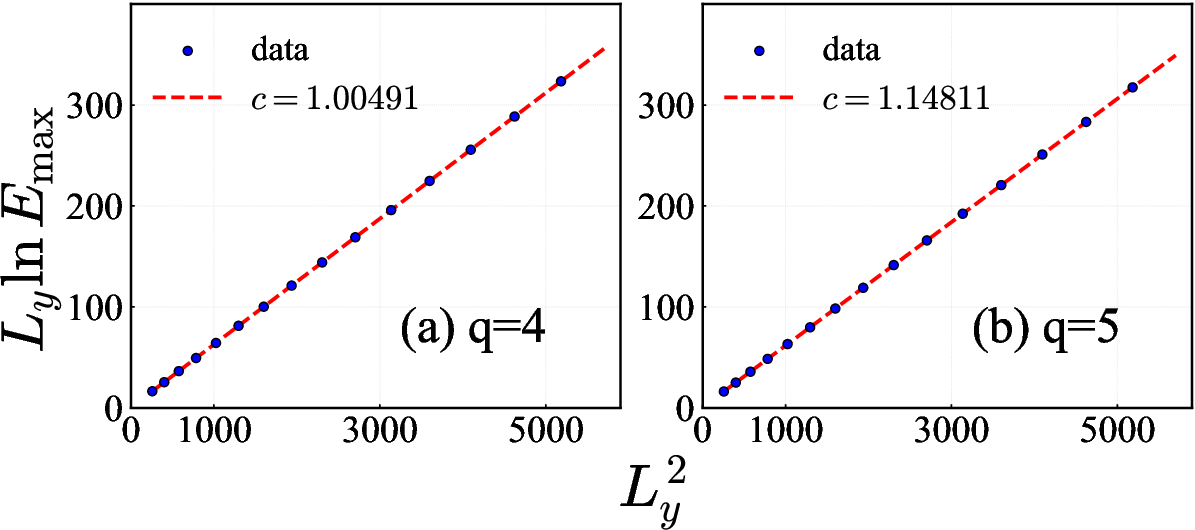
Figure 12: Central charge D2 extraction for D3 and D4 via torus free energy scaling; comparison to complex CFT prediction.
Conclusion
The Klein bottle ratio D5, calculated through tensor network and DMRG algorithms, is demonstrated as a high-precision diagnostic for phase transitions in 2D Potts models. The results establish D6 as universally effective in locating phase transition points and distinguishing continuous, weakly first-order, and strongly first-order behaviors. Exponent drift in scaling collapse and the divergence of D7 at D8 quantifies the pseudo-critical scaling regime and substantiates the role of complex CFTs in theoretical descriptions. The extracted central charges further validate the crossover from conventional conformal criticality to weakly first-order transitions governed by complex fixed points. The findings imply that D9 encodes essential information transcending traditional CFT observables and can be deployed for critical diagnostics in broader classes of statistical models. Future directions include extending g00 analysis to models with symmetry-protected topological order, non-Hermitian interactions, and systems with exotic finite-size scaling.