- The paper introduces AuraDesk, a system that uses physiological signals to generate ambient olfactory feedback for stress monitoring in office settings.
- It employs a dual mapping strategy with PicoLM-driven Arousal-Valence inference and rule-based scheduling to convert biosignals into dynamic scent profiles.
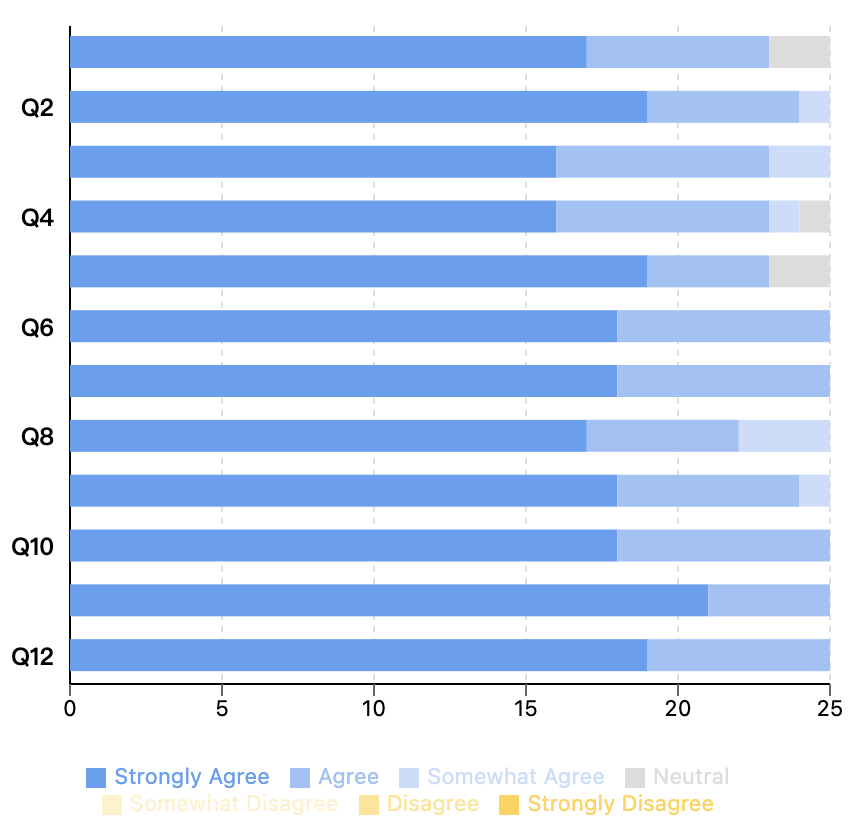
- Field studies with 25 workers reveal that subtle, atmospheric scent cues can enhance stress awareness and emotional regulation without interrupting workflow.
Olfactory Data Physicalization for Workplace Stress: An Expert Analysis of "AuraDesk"
Introduction and Context
The study "AuraDesk: Data Physicalization through Olfaction Metaphors for Representing and Mitigating Workplace Stress" (2604.00869) investigates the underexplored intersection of olfactory interfaces, bio-signal driven feedback, and ambient data physicalization in the context of office-based knowledge work. Standard mechanisms for workplace stress monitoring rely heavily on visual and auditory displays, which are poorly aligned to the attentional constraints and saturation typical of knowledge-work environments. AuraDesk is introduced as an alternative: a system for representing and gently regulating cognitive stress and fatigue via dynamic, physiologically modulated olfactory intervention, eschewing explicit alerts and dashboards for atmospheric modulation via ambient scent.
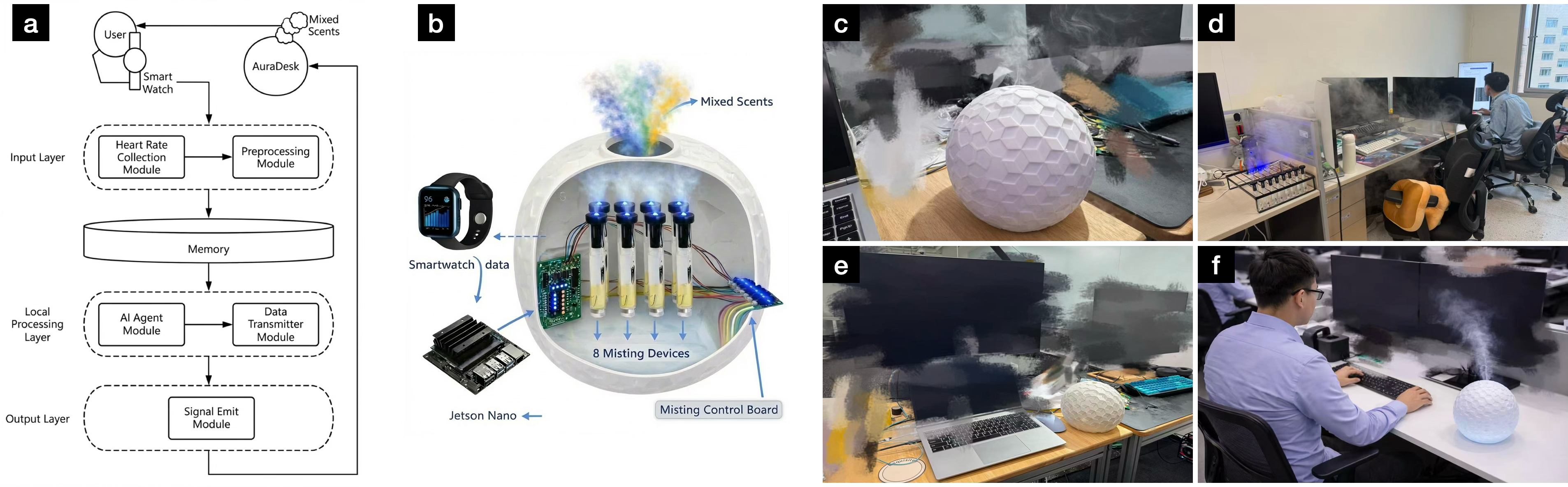
Figure 1: Schematic overview of the AuraDesk system, hardware composition, real-world deployment, and user interaction in situ.
System Architecture and Olfactory Mapping Paradigm
AuraDesk is structured as a three-layered system: physiological acquisition via a commercial smartwatch (HR, HRV, contextual activity signals), edge-based state estimation using a quantized PicoLM model, and multi-channel scent actuation hardware, all coordinated via an embedded controller (NVIDIA Jetson Nano). Critically, AuraDesk structures its feedback around "olfactory metaphors"—scene-based scent profiles (e.g., forest, sea breeze, garden)—rather than simple one-to-one mappings between affective state and specific chemicals, leveraging the associative and atmospheric affordances of olfaction.
The system's hybrid neuro-symbolic mapping is notable: physiological time-series are projected into the Arousal-Valence space via PicoLM, then discretized into stable actuation profiles using a rule-based scheduler. This dual-layer mapping acts as a buffer between volatile physiological trends and the inherently sluggish, spatially persistent nature of scent dissemination. Choices around bounded near-field diffusion, actuation rate constraints, and exclusive channeling circumvent issues endemic to prior olfactory feedback systems, such as olfactory fatigue, scent mixing, and disruption in shared offices.
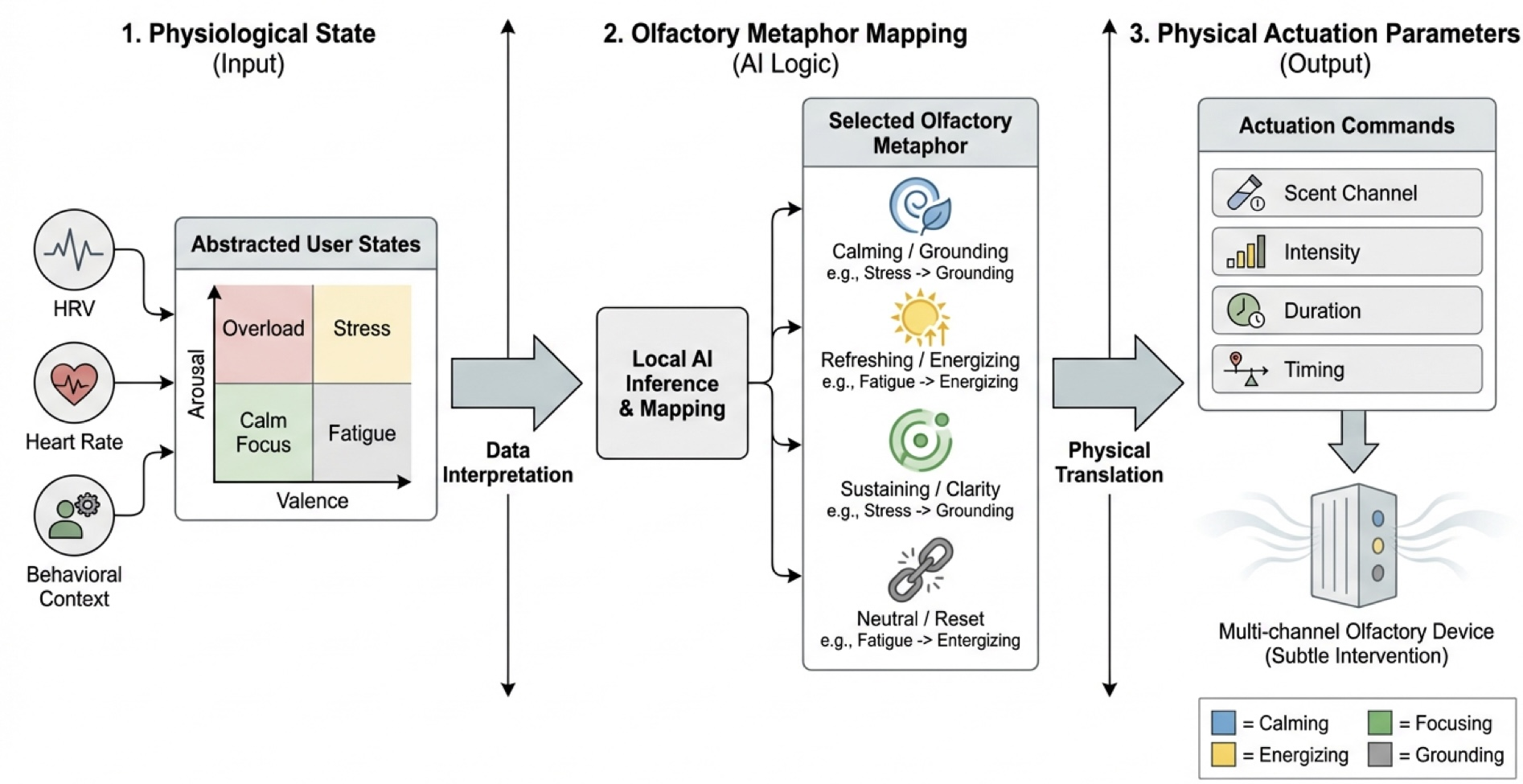
Figure 2: Mapping from physiological states (via Arousal-Valence inference from HRV/HR) to olfactory metaphors and interventions, supporting graded and context-appropriate feedback.
Study Methodology
The paper reports an in-situ field study (N=25) involving actual desk workers, emphasizing ecological validity over laboratory control. The core research questions centered on: (1) whether physiological stress/fatigue could be externalized as ambient olfactory change without interruption, and (2) how such physicalizations differ in impact and perception relative to conventional visual interfaces.
The one-day deployments integrated system logging, post-study quantitative ratings, and qualitative interviews, focusing on perception, interpretation, and negotiation of scent-driven feedback during genuine work. The emphasis is on subjective experience, awareness dynamics, and the atmospheric versus symbolic roles of olfactory output.
Empirical Findings
Participants predominantly interpreted olfactory output as a subtle, atmospheric modulation rather than explicit notification. Several critical design findings emerged:
Comparison to Visual/Notification Interfaces
Participants consistently contrasted olfactory feedback with visual dashboards and notifications, highlighting several differentiating dimensions:
- Peripheral Engagement: Unlike visual systems requiring direct inspection, olfactory cues operated in the attentional periphery, minimizing cognitive and task interruption costs.
- Affective Resonance and Personalization: Meaning making was contingent on personal and cultural associations with environmental scents, not universal legibility of a representational code. This preference for situated, affect-laden cues marks a departure from standardized biofeedback paradigms.
- Ambiguity as a Design Asset: The intentionally ambiguous, metaphorically structured feedback sidestepped the potential for over-surveillance, judgment, or alert fatigue, fostering a sense of gentle attunement over explicit evaluation.
Technical and Theoretical Implications
The deployment of AuraDesk foregrounds a series of practical and theoretical advances:
- Data Physicalization Beyond Tangibility and Visualization: The system extends the domain of data physicality by treating atmospheric cues (olfaction) as a substrate for representing internal state, leveraging embodiment without tangible interaction [10.1145/3617366].
- Latent Emotional/Affective State Monitoring: By embedding biosignal-driven feedback into the work environment, the system supports ongoing, low-burden awareness, potentially improving early recognition of cumulative stress and fatigue—a critical gap in knowledge-work HCI [10.1145/3563657.3596096].
- Designing for Peripheral Interaction: The work aligns with calls for peripheral, minimally invasive feedback modalities in attention-heavy contexts, demonstrating that olfaction can achieve awareness without saturating traditional channels [weiser_brown_1995_designing_calm_technology, 10.5555/1466595.1466602].
- Hybrid AI-HCI Integration: The dual neuro-symbolic mapping combines robustness to physiological noise with constraints appropriate for the slow-acting, persistent qualities of scent, representing a practical template for biosignal-driven ambient systems.
Limitations and Future Research
Key limitations include brief deployment duration (one day), modest sample size (N=25), and reliance on subjective rather than performance data. Longitudinal studies are needed to probe scent habituation, sustained behavioral change, privacy concerns, and broader demographic/cultural generality. Integration with other multisensory feedback channels, adaptive personalization of scent mapping, and larger ecological studies in team-based/shared workspaces comprise natural continuations.
Theoretical questions remain regarding boundary conditions for olfactory feedback's interpretability and regulatory efficacy, especially in the presence of competing environmental scents and social negotiation in real offices.
Conclusion
AuraDesk provides compelling evidence for the viability of olfactory ambient feedback as both a representational and regulatory companion to biosignal-driven workplace wellbeing systems. By relocating stress data from explicit metric dashboards and intrusive notifications to the atmospheric periphery of the workspace, the research marks a significant extension of the data physicalization paradigm—expanding it to encompass affective, metaphorical, and experiential domains historically under-leveraged in HCI.
The study motivates a reorientation in biofeedback system design: from explicit, interruption-prone notification to continuous, peripheral, and affectively attuned environmental modulation, using olfactory metaphors as a substrate for embodied, lived interaction with personal stress data. This points toward novel futures for ambient, attention-sensitive AI in real-world workplace environments and opens new avenues for the multisensory design of data-driven wellbeing interventions.