- The paper presents a MIDAS-based DAQ system designed for scalable and robust operation of gaseous detectors in rare event searches.
- It details the integration of custom front-end and back-end electronics with a hierarchical software architecture enabling real-time monitoring and control.
- Experimental validation in the PandaX-III setup confirms stable operation, efficient data transfer, and adaptability for large-scale detector arrays.
MIDAS-Based DAQ System for Gaseous Detectors: Architecture, Implementation, and Experimental Validation
Introduction
Gaseous detector systems, such as the high-pressure gaseous TPCs deployed in rare event searches, increasingly demand scalable, robust, and feature-rich data acquisition (DAQ) systems capable of managing thousands of readout channels, enabling synchronized readout, and facilitating real-time monitoring and analysis. This paper introduces a DAQ software specifically developed based on the MIDAS framework for deployment within the PandaX-III experiment, targeting neutrinoless double beta decay searches. The DAQ integrates comprehensive workflow management, configurable parameter interfaces, and end-to-end data lifecycle handling, demonstrating high performance and stability across varied operational scenarios.
Electronics System and Integration
The PandaX-III detector's electronics architecture comprises 26 front-end cards (FECs), each populated with four AGET ASICs, and a single back-end card (BEC) with variants including TDCM and DCM modules. In aggregate, the system manages 6656 channels read out from modular Micromegas detectors. FECs handle analog signal digitization and mesh-trigger generation, while BEC modules synchronize clocks, handle trigger feedback, and route data upstream via USB 3.0 or gigabit Ethernet using a UDP protocol. Robust handshake, trigger multiplicity control, and clock distribution strategies are deployed to ensure reliable, low-latency signal collection.
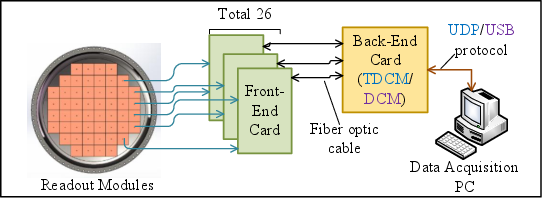
Figure 1: Electronics system structure of PandaX-III showing hierarchical integration of FECs, TDCM/DCM, and DAQ platform.
Two distinct backend modules (TDCM developed by CEA Saclay and DCM by USTC) were validated for compatibility and throughput. The scalable multi-port BECs allow expansion beyond 6656 channels, accommodating up to 32 FECs per BEC for future deployments.
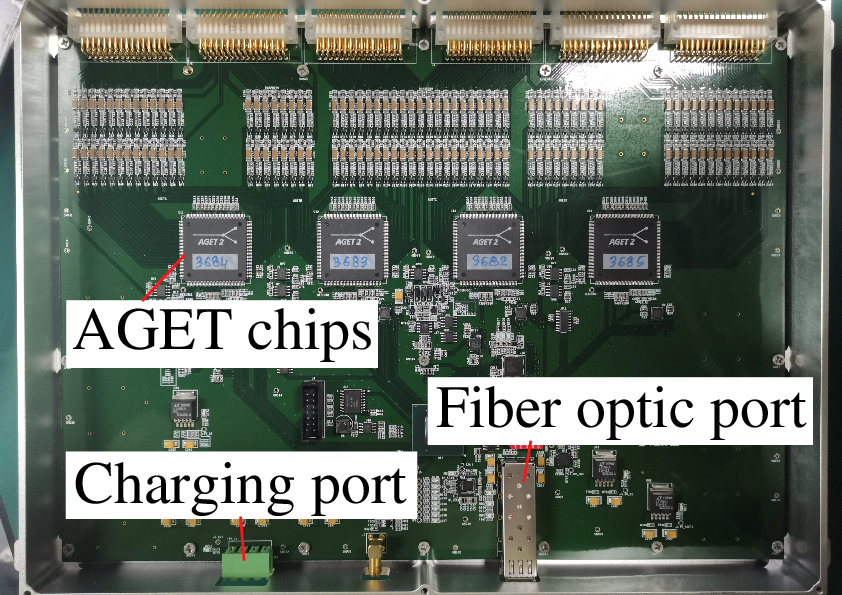
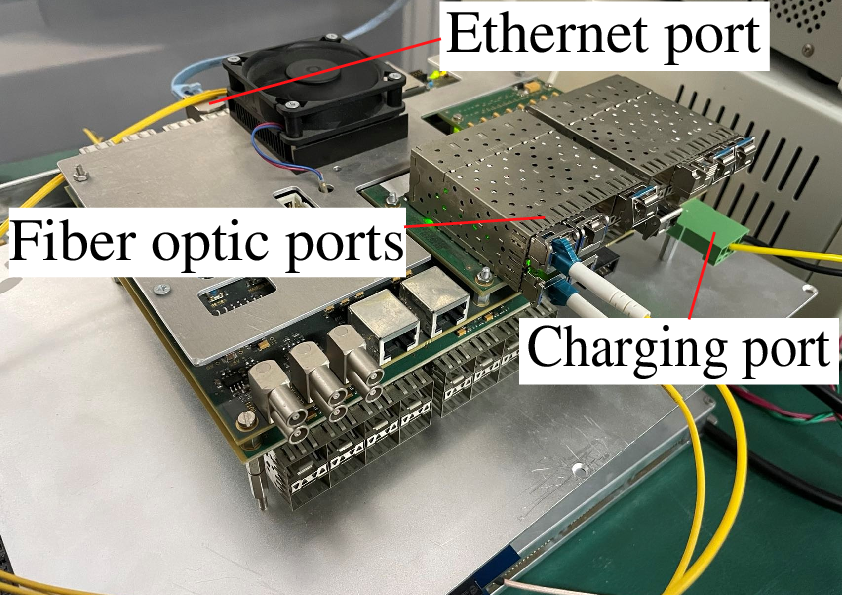
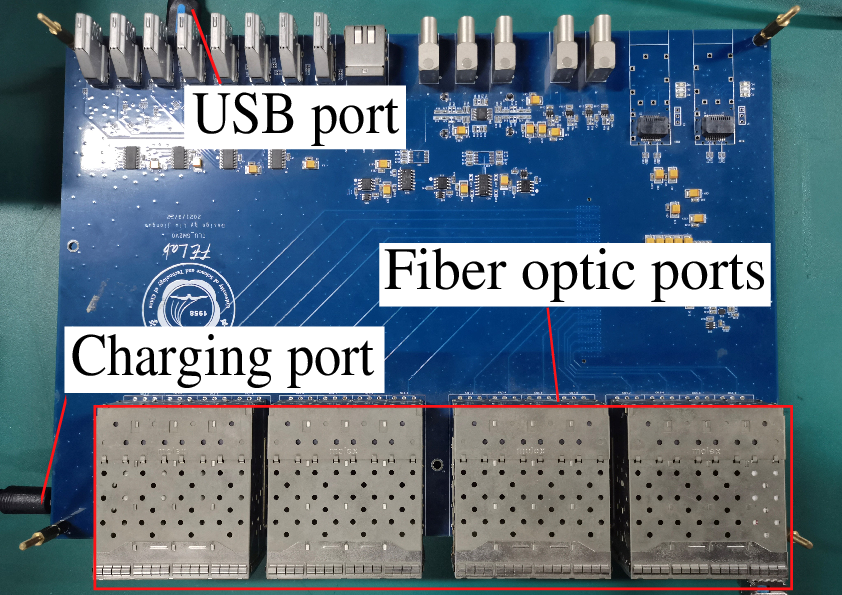
Figure 2: Front-end and back-end hardware: (a) FEC, (b) TDCM, (c) DCM modules for the PandaX-III electronics system.
DAQ Software Architecture
Leveraging the event-based MIDAS DAQ framework, the software stack comprises default MIDAS applications (odbedit, mhttpd, mlogger) and custom modules (CmdProc, DataFlow). Parameter management utilizes a hierarchical ODB for device state and experimental configuration. Real-time command and feedback are enabled through a terminal interface (CmdProc), and live data metrics are reported via DataFlow. All modular applications are coordinated to facility robust workflow and streamlined user interaction.
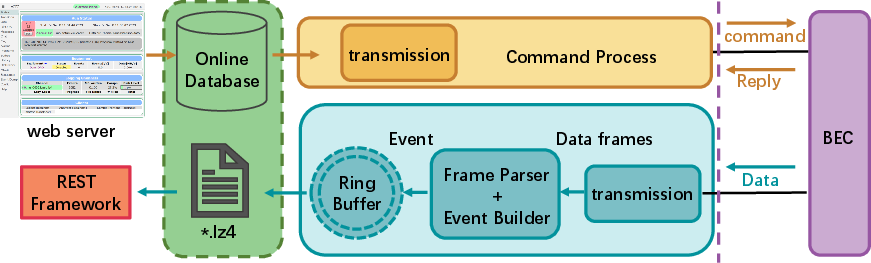
Figure 3: DAQ main workflow—command transmission, real-time device exchange, frame parsing, and event reconstruction.
A highly interactive web interface exposes run status, device metrics, storage information, and active client applications, supporting operational oversight, alarm notification, experiment control, and secure remote access.
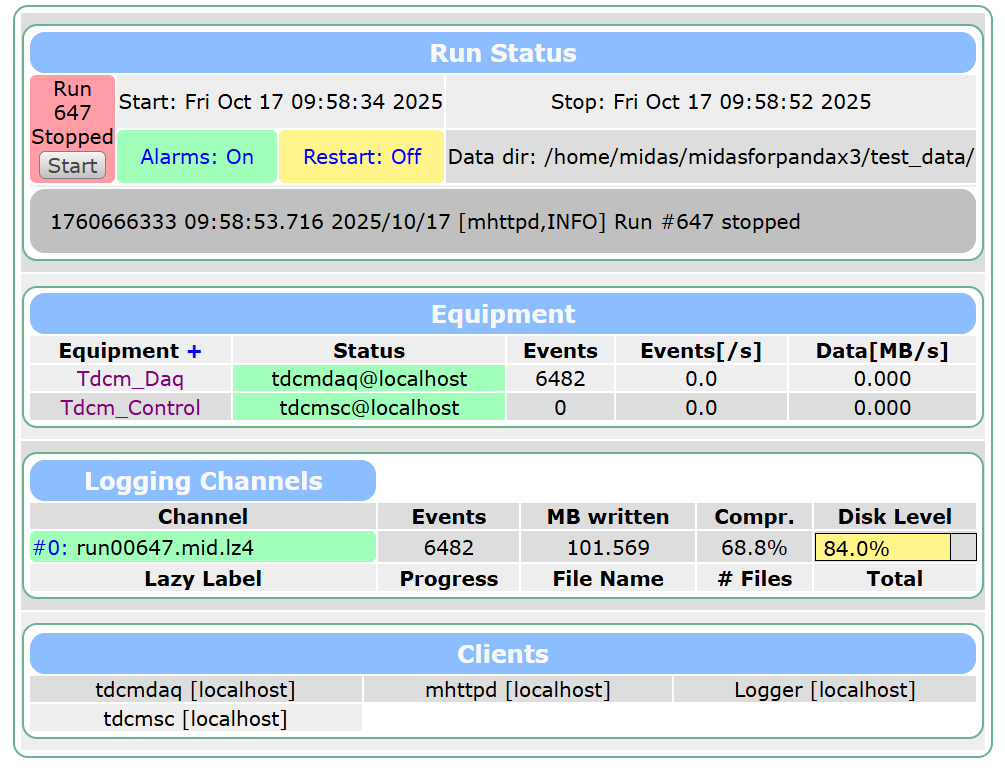
Figure 4: DAQ web interface showing control, monitoring, and event statistics for active experiments.
Data Management and Analytical Integration
The MIDAS event format is adopted, ensuring structured, traceable data storage. Event headers, global bank headers, and channel banks encode physical and logical location information for each data sample. Peak event sizes (6.5 MB for full detector readout) underscore stringent bandwidth and storage demands.
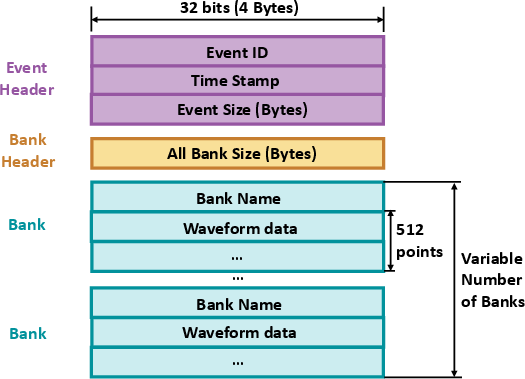
Figure 5: Hierarchical MIDAS data format for event storage, showing headers and channel banks.
Seamless integration with the REST framework (Rare Event Searches Toolkit) enables real-time analysis, waveform visualization, and feature extraction during acquisition. Modular XML configuration and ROOT-format outputs support rapid adaptation to different detection tasks.
Parameter Configuration and Control Schema
A dual-mode parameter configuration (global XML for batch operations, ODB for hot-link editing) provides both efficiency and fine-grained flexibility. Trigger modes (self-trigger, hit-trigger, multiplicity-trigger), AGET dynamic gain adjustment (4 levels), channel compression, and configurable thresholds are all exposed for real-time tuning.
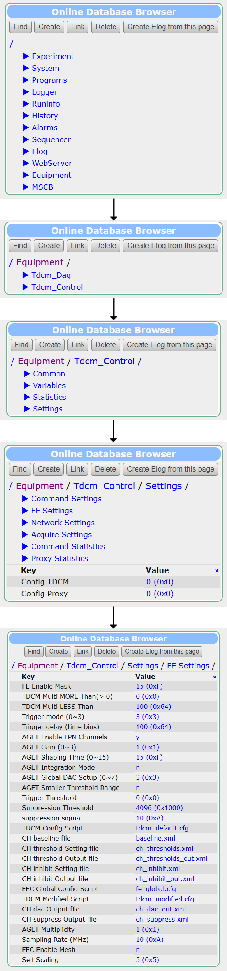
Figure 6: Hierarchical parameter configuration path in the online ODB browser, supporting one-click command execution.
These extensive configuration capabilities are critical for optimizing channel utilization, balancing event throughput, and minimizing bandwidth saturation. Sophisticated channel compression mechanisms are deployable to restrict readout to active channels, and adaptive thresholding prevents noise from dominating high-volume acquisitions.
Tests were conducted using both simulated inputs (signal generator) and physical sources (\ce{{37}Ar}, \ce{{109}Cd}) across single-module and multi-module TPC setups. Full readout of a single AGET chip reached a stable event rate up to 230 Hz with data transfer at 15.2 MB/s. Extended operation demonstrated negligible data packet loss or corruption over month-long campaigns, affirming system reliability.
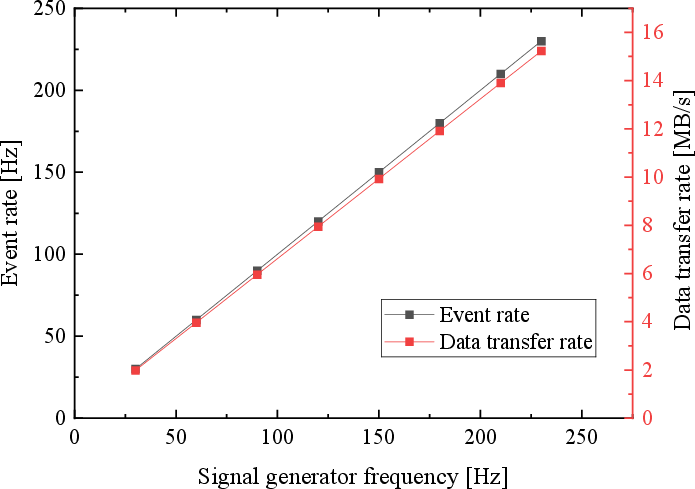
Figure 7: Event rate and data transfer rate as a function of signal generation frequency under full AGET chip readout.
Waveform acquisition, trigger delay and sampling rate adjustment, channel compression, noise characterization, and self-calibration were exhaustively validated (Figure 8), confirming successful implementation of all baseline electronics functions.
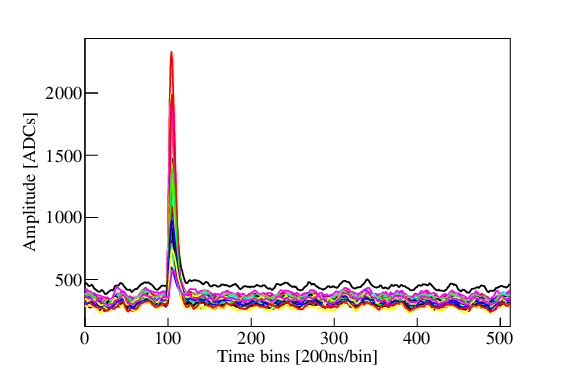
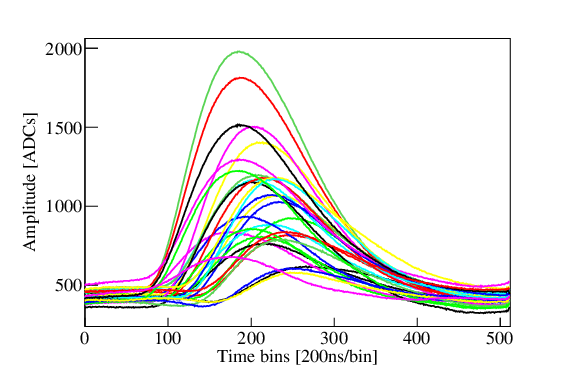
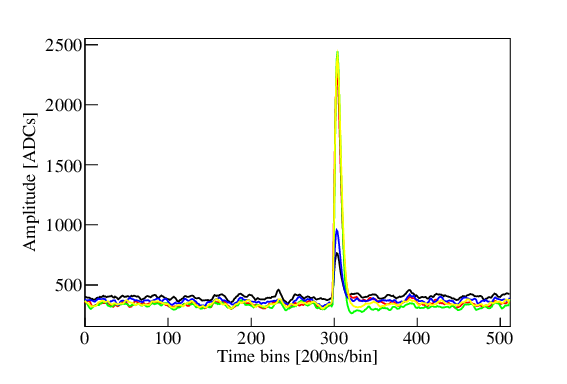
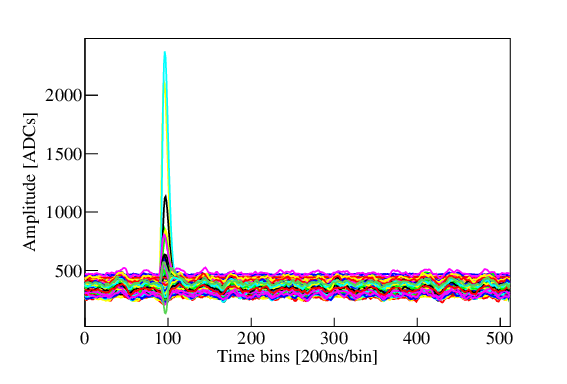
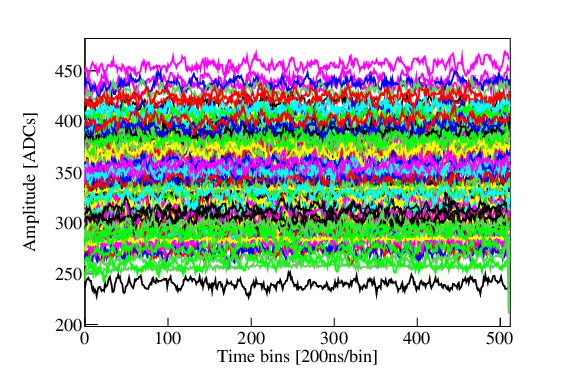
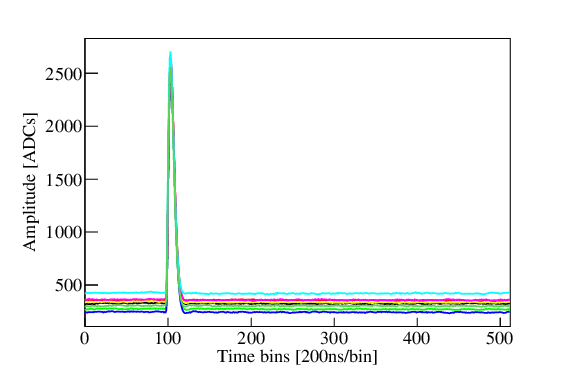
Figure 8: Physical signal waveforms under varied channel compression, trigger delay, sampling rates, noise, and calibration settings.
Detector-DAQ Joint Operation
Single-module tests produced 2D hitmaps and energy spectra for both sources under calibrated operating conditions, with spatial clustering correlated to electric field distortions.
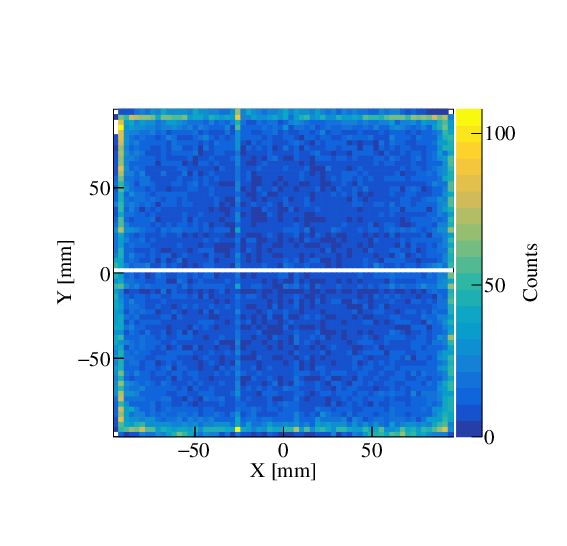
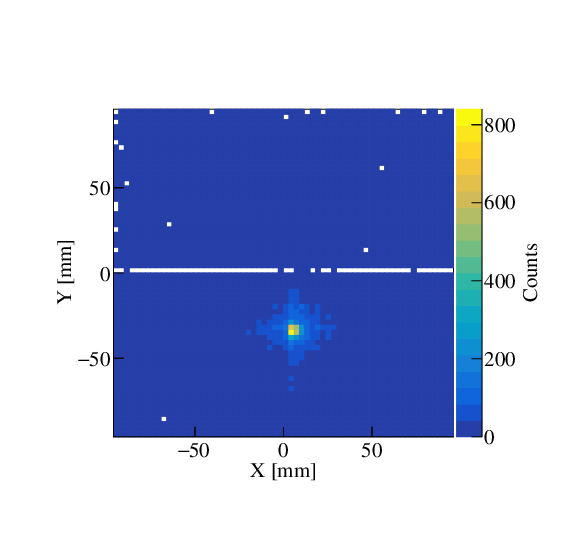
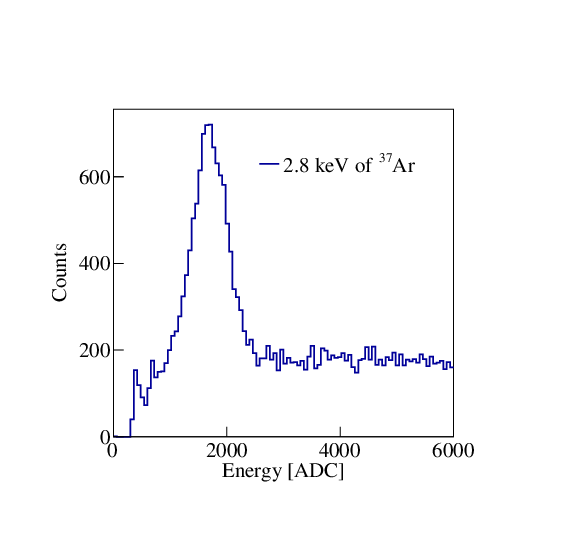
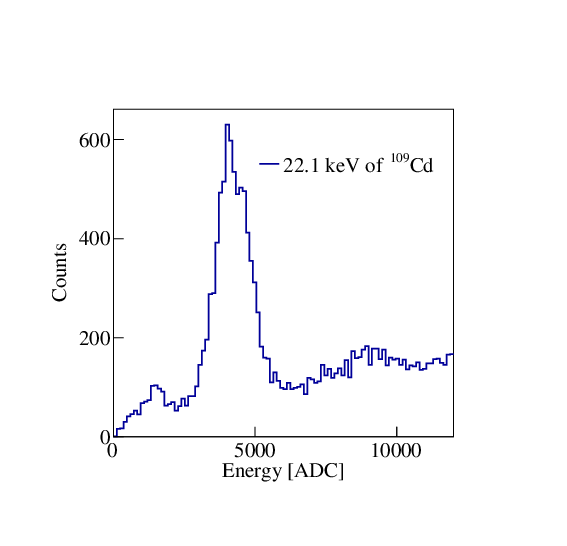
Figure 9: Hitmaps and energy spectra from single-module DAQ operation for \ce{{37}Ar} and \ce{{109}Cd} sources.
Multi-module testing with the PandaX-III prototype established DAQ compatibility with seven Micromegas modules, achieving spatially distinct signal mapping for multiple sources simultaneously. Defective channels and edge field distortion effects were directly observable in hitmap results.
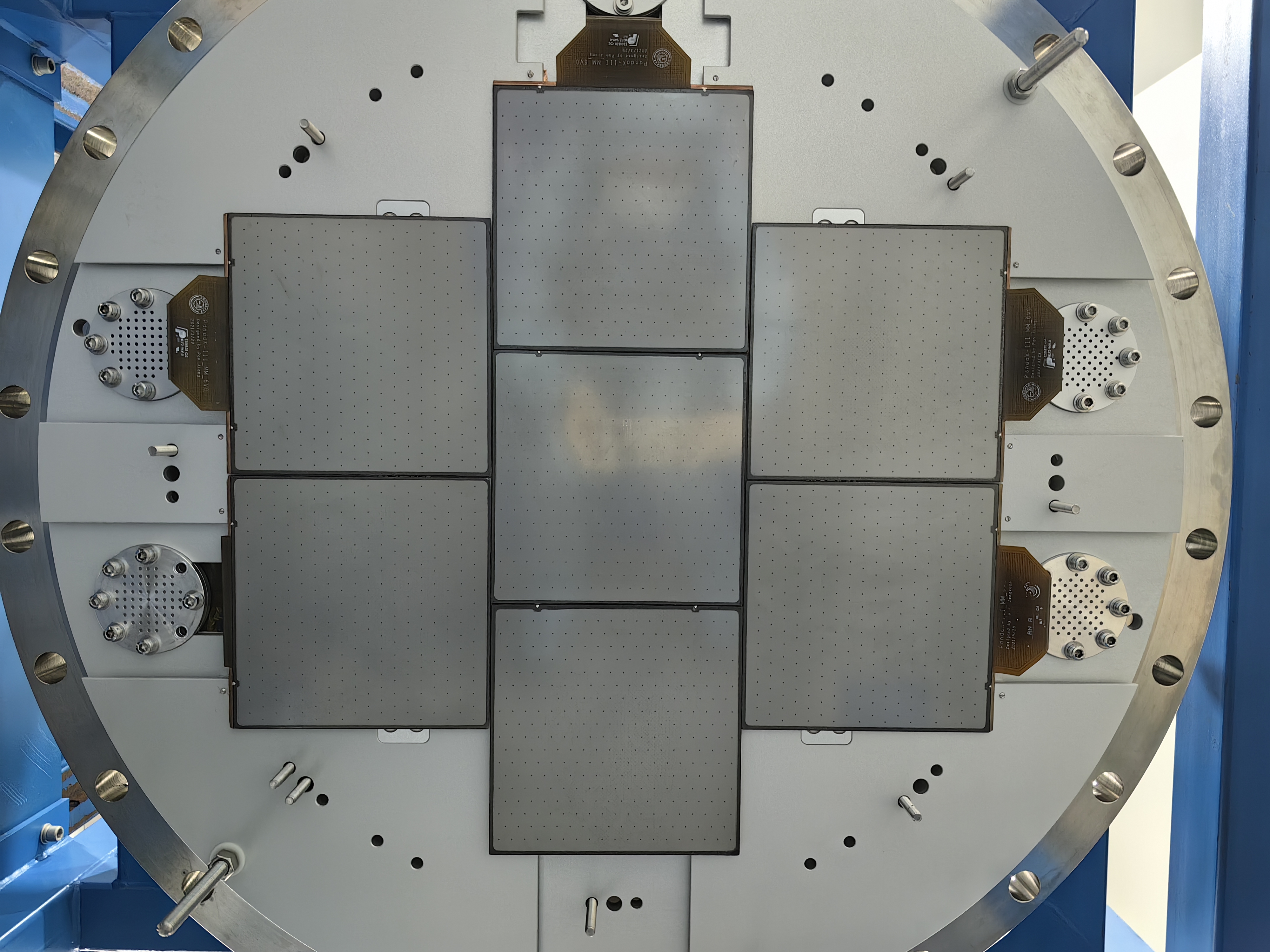
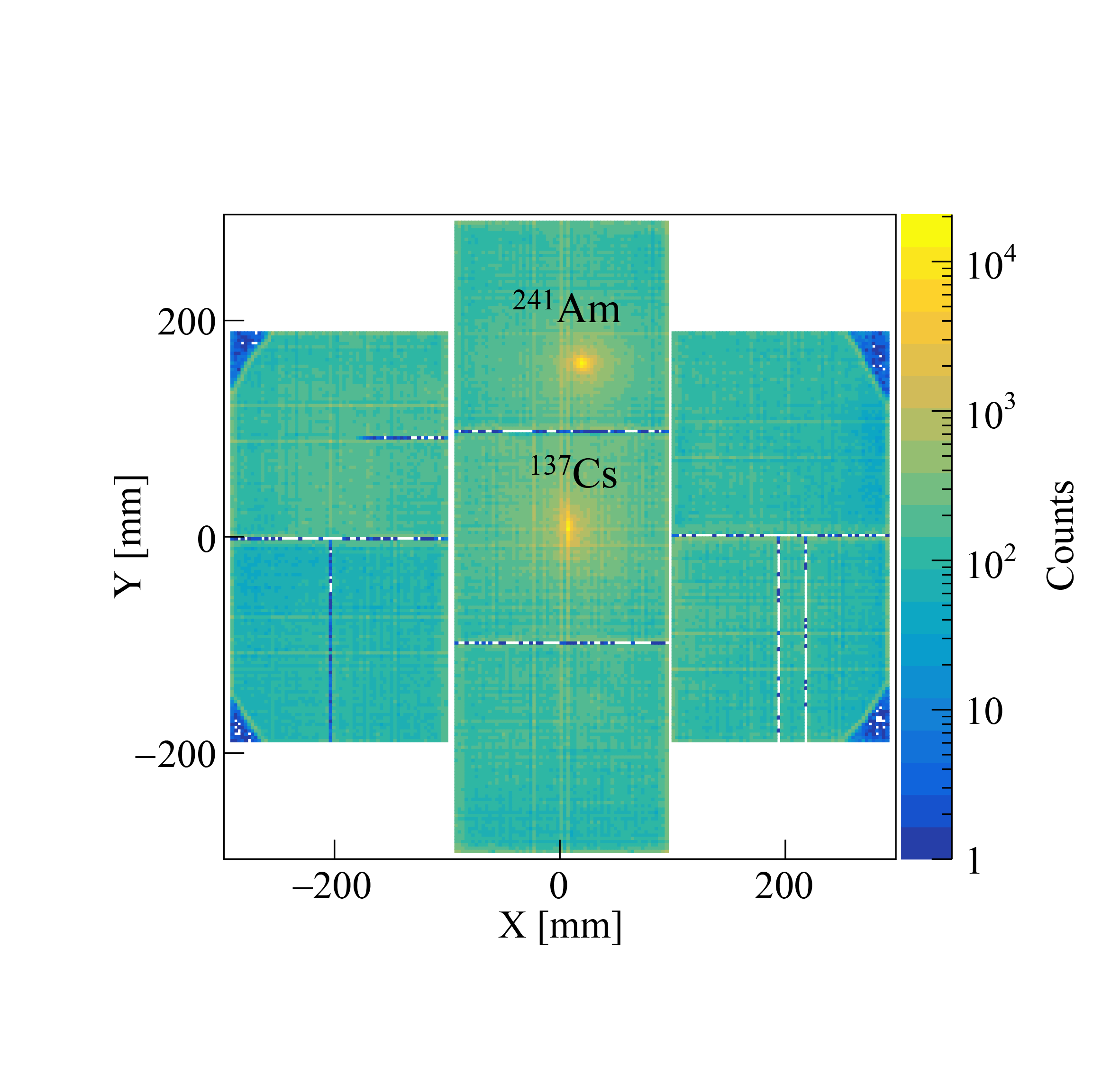
Figure 10: Hitmap from multi-module DAQ enabled readout, showing source localization and channel performance.
Implications and Future Directions
The results establish the MIDAS-based DAQ system as a versatile, stable platform for large-scale gaseous detector deployments. The end-to-end workflow and real-time analytical capabilities substantially reduce experiment tuning time and provide immediate feedback for detector optimization. The highly configurable hardware/software stack supports expansion to larger arrays and higher channel densities, with efficient parameter management and lossless data transfer at scale.
Potential future developments include integration with advanced event filtering, online calibration routines, and adaptive noise suppression leveraging ML-based techniques, given the structured data formats and embedded analytics. The modular MIDAS+REST stack serves as a template for DAQ solutions in similarly complex TPC-based experiments, facilitating rapid deployment, cross-detector interoperability, and streamlined offline reconstruction.
Conclusion
The presented MIDAS-based DAQ system delivers a unified, robust solution for data collection, decoding, storage, and analysis in gaseous detector experiments. It was extensively validated in the PandaX-III setting, exhibiting stable operation, high throughput, and fully integrated real-time analytical workflows. Comprehensive performance evaluation under varied electronics configurations and detector scenarios confirms its reliability and adaptability, providing a scalable foundation for future large-volume, high-channel TPC applications and rare event searches.