- The paper introduces a dual-action fabric-based soft robotic glove featuring per-finger, symmetrical-chamber actuators that enable both flexion and extension for enhanced hand rehabilitation.
- It employs CNC heat sealing to fabricate customized actuators that achieve significant bending moments and blocking forces while reducing required muscle effort.
- Functional trials in healthy subjects and cervical SCI patients demonstrate improved grasp performance and reduced compensatory motions, underscoring its practical clinical potential.
Dual-Action Fabric-Based Soft Robotic Glove for Personalized Ergonomic Hand Rehabilitation
Introduction and Motivation
Soft robotic gloves have become prominent assistive technologies for hand rehabilitation, addressing limitations in ADL independence experienced by individuals with neurological disorders, including cervical SCI and stroke. However, commercial and academic devices often exhibit mechanical and ergonomic shortcomings that restrict efficacy: insufficient actuation modalities (primarily flexion-only), suboptimal ergonomic conformity yielding poor force transmission and user comfort, and limited capacity for patient-specific geometric customization. The work titled "A Dual-Action Fabric-Based Soft Robotic Glove for Ergonomic Hand Rehabilitation" (2604.00768) presents a dual-action, fabric-based pneumatic glove system comprising per-finger, symmetrical-chamber actuators targeting both flexion and extension as well as thumb abduction, realized through CNC heat-sealing workflows enabling custom alignment to a user’s anatomy.
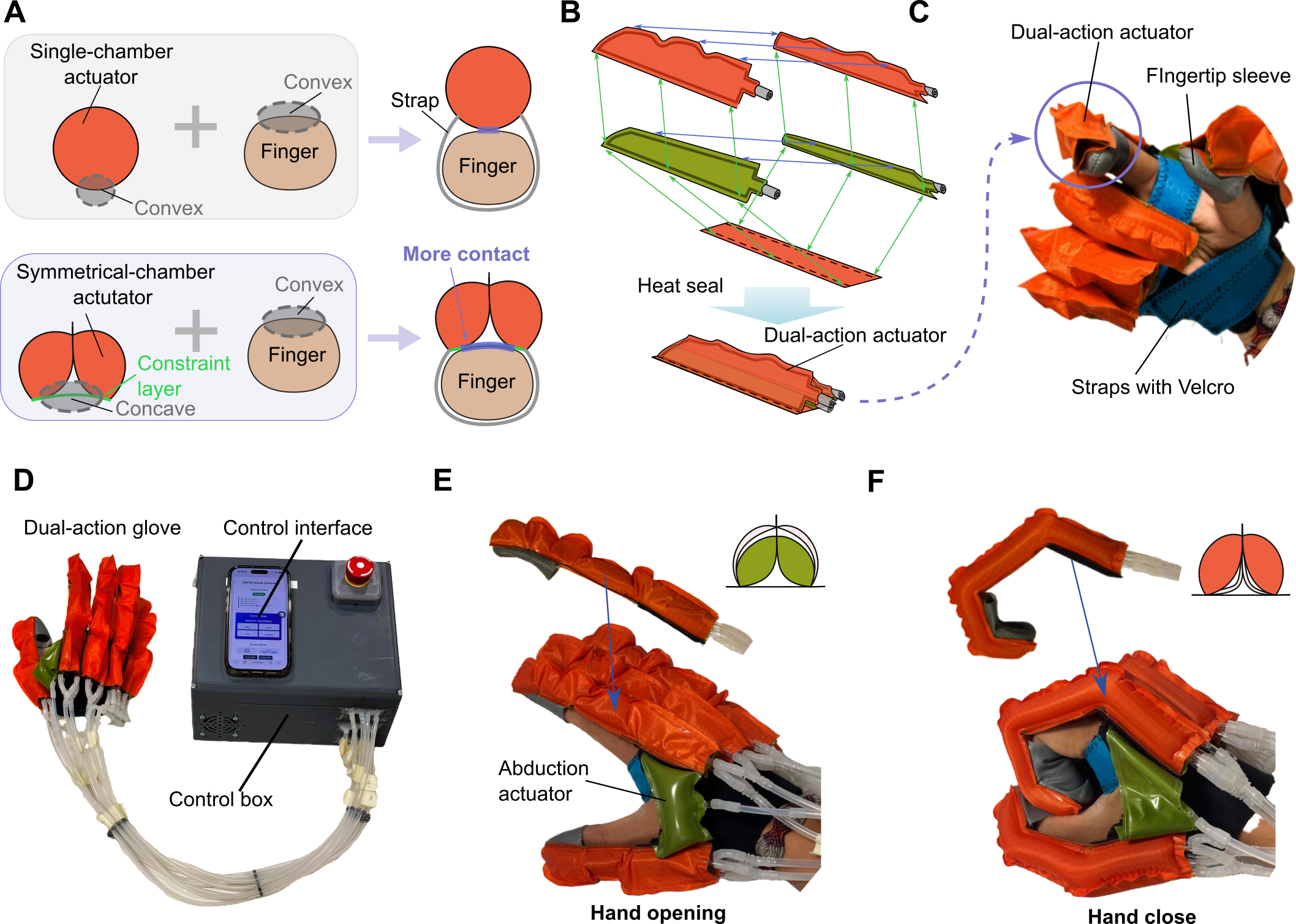
Figure 1: Overview of the glove system architecture, highlighting dual-action actuator topology, modular assembly, and configurations for full extension and flexion.
Actuator and Glove Design Principles
The actuator architecture is built on fabric-based, symmetrical-chamber designs, a significant departure from the traditional single-chamber actuators. Inflation of these symmetrical chambers, implemented via CNC heat sealing of TPU-coated nylon, results in a concave dorsal profile, reciprocally increasing finger contact area and homogenous pressure distributions, which enhance ergonomic comfort under assistive loads. Each dual-action actuator consists of separate flexion and extension chambers stacked with a constraint layer, allowing selective inflation for out-of-plane (flexion/extension) digit motion and thumb abduction.
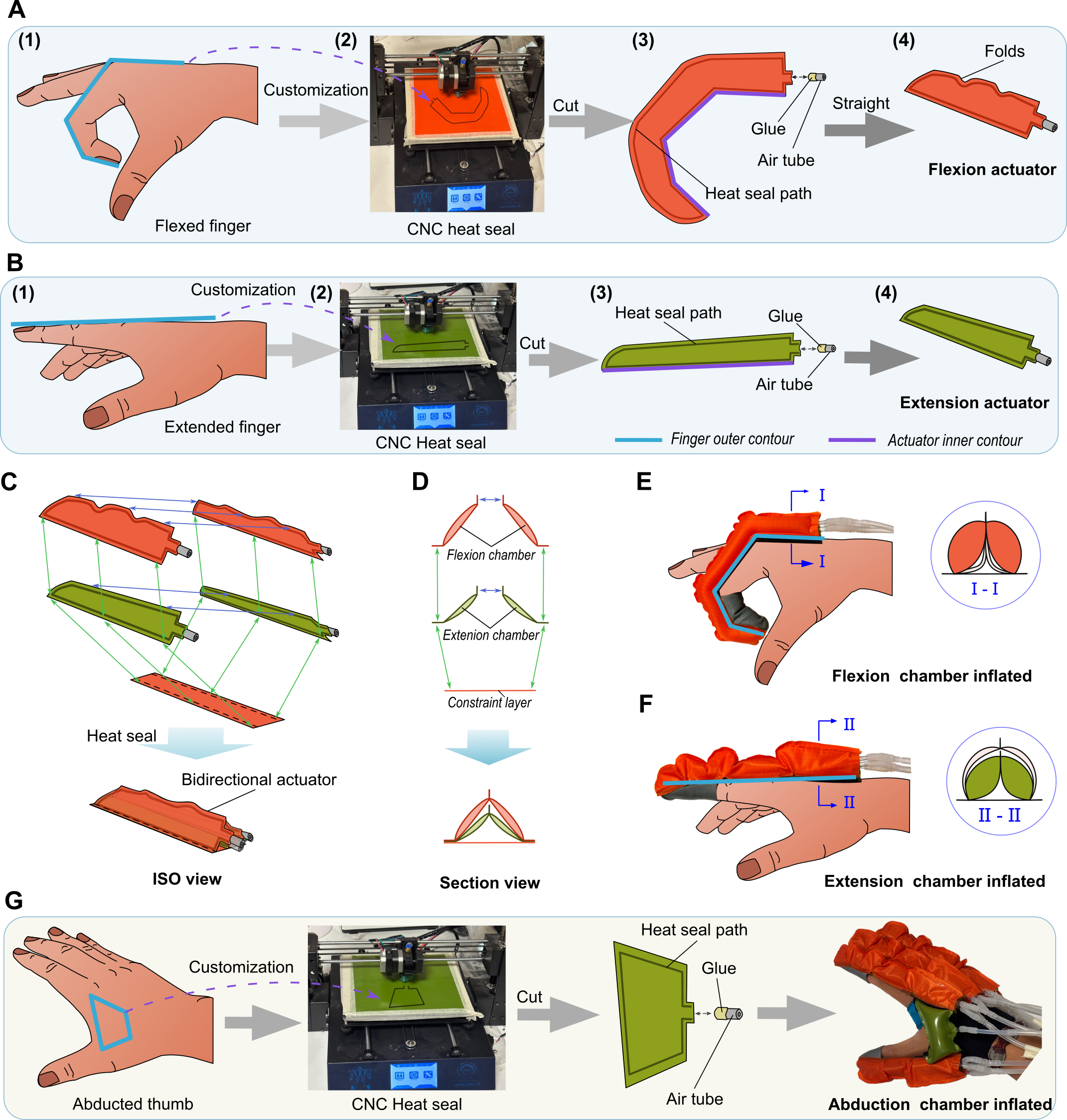
Figure 2: Schematic and in-process fabrication of customized dual-action actuators using CNC heat sealing, targeting patient-specific finger joint geometries.
Five independently controlled dual-action actuators (four fingers, one thumb flexion/extension, and a dedicated thumb abduction actuator) are integrated on a textile hand base via Velcro, enabling modularity and rapid actuation reconfiguration. The result is a fully fabric-based glove (90 g), permitting both ergonomic adaptability and minimal passive impedance, with all actuation controlled from a wireless interface.
Mechanical Characterization
Performance quantification involved systematic analysis of actuator moments, fingertip blocking forces, and grasp metrics relevant to ADL. For the representative thumb actuator:
- Flexion chamber yielded up to 0.27 N·m bending moment and 12.2 N blocking force at 80 kPa inflation.
- Extension chamber output peaked at 0.23 N·m.
These force and moment values are commensurate with functional grasp requirements for ADLs, and additionally matched or surpassed prior fabric-based soft actuator benchmarks. The system-level behavioral metrics included:
- Directional pinch force (thumb-forefinger) up to 9.8 N at 80 kPa.
- Normal grasp force reaching 24.8 N at 100 kPa.
- Frictional grasp performance scaling monotonically with pressure and object diameter, demonstrating suitability for a range of cylindrical and power-grasp tasks.
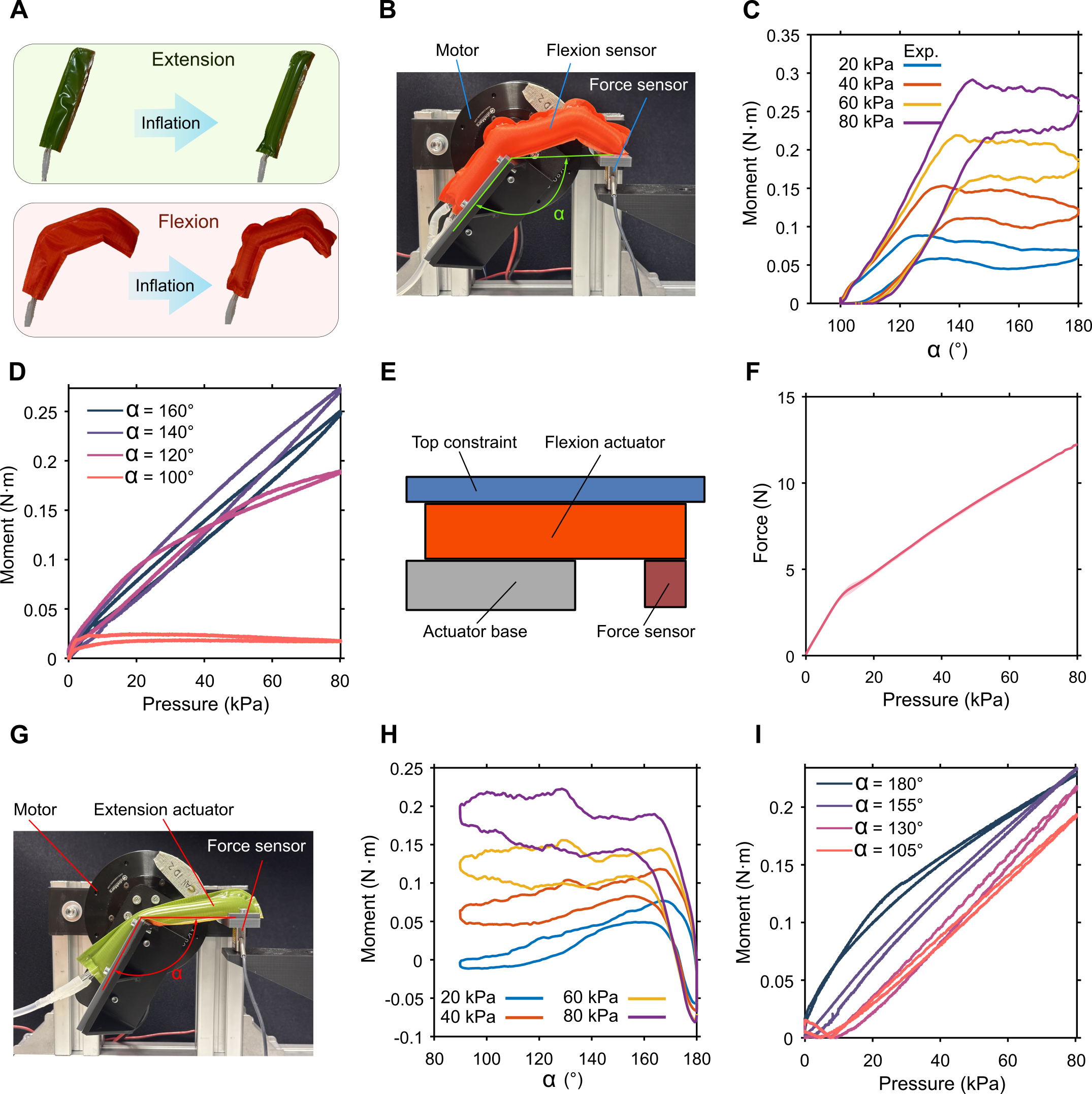
Figure 3: Mechanical testing setups and resulting force/moment characterizations of thumb actuators for flexion and extension.
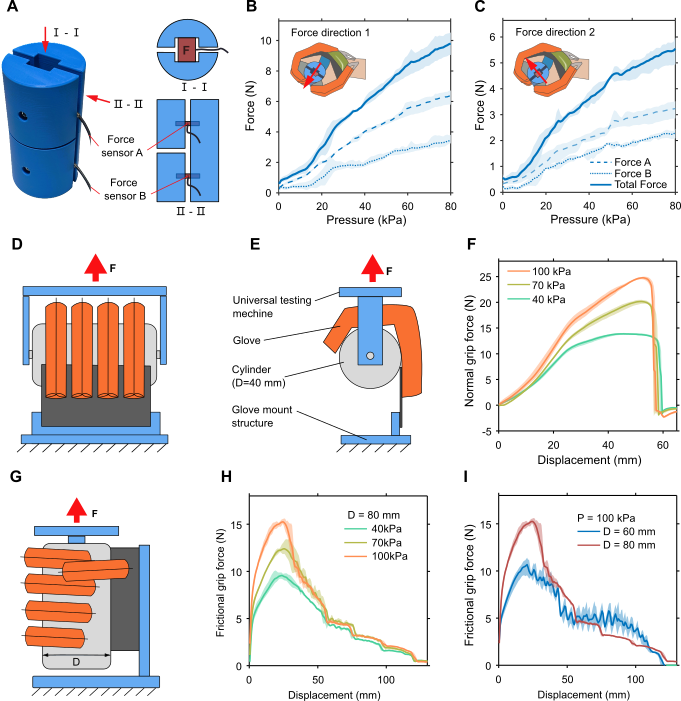
Figure 4: System-level glove grasp characterization, showing directional, normal, and frictional grasp force as a function of inflation pressure and object geometry.
Functional Evaluation: Healthy Individuals
A controlled study with ten healthy adults examined glove performance across representative object transfer tasks under three conditions: no glove, passive glove, and active actuation at 60 kPa. Muscle activity from forearm flexors/extensors was monitored via a 32-channel sEMG sleeve. The dual-action glove delivered significant muscular unloading, with averaged sEMG reductions up to 37% (p=0.001) for select objects. The passive glove did not significantly increase sEMG amplitude compared to bare hand, confirming low impedance in the absence of actuation.
Task completion time increased significantly under active assistance (39–101%), attributed to the manual button-switch interface. Nevertheless, the clear reduction in required muscle effort during large-object transport tasks represents a robust demonstration of the glove’s practical assistive potential.
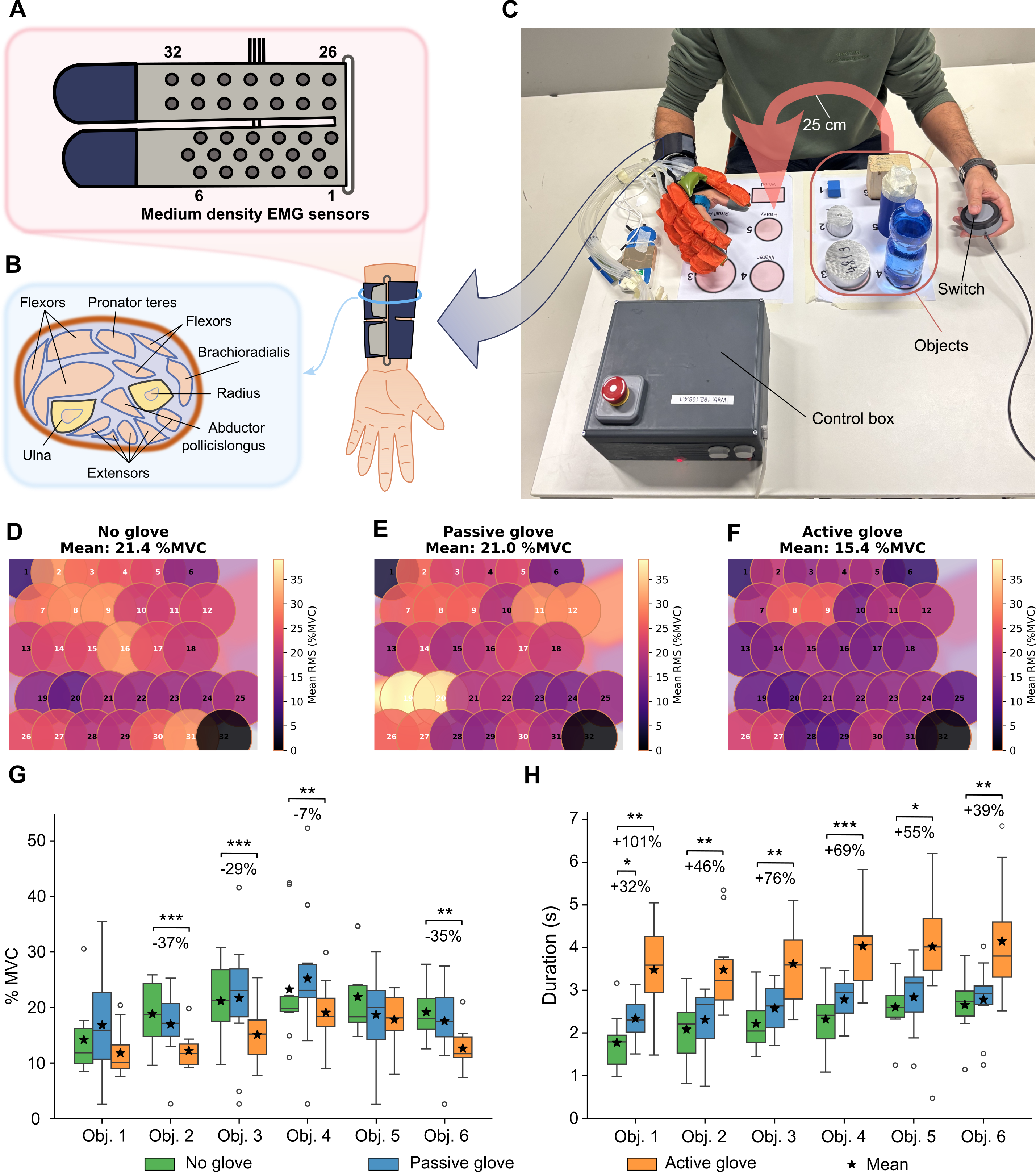
Figure 5: Healthy subject study protocol and results, outlining sEMG muscle activation and task completion time across all conditions and objects.
Clinical Feasibility: Cervical SCI Cohort
A pilot clinical study was conducted with three individuals with cervical SCI, evaluating the glove across a battery of seven tasks (standardized and custom), with per-task selection based on motor capacity. The glove enabled:
- Restoration of task performance otherwise unattainable (e.g., water pouring, previously unachievable without assistance).
- Elimination of compensatory tenodesis grasp in favor of anatomically appropriate patterns.
- Reduced object drop incidence, increasing grasp stability.
While task durations were longer during glove-assisted trials—reflecting system interface limitations—qualitative improvements in control and functional gain were apparent, underscoring the utility of incorporating both flexion and extension (along with abduction) in ergonomic, patient-specific soft robotic gloves.
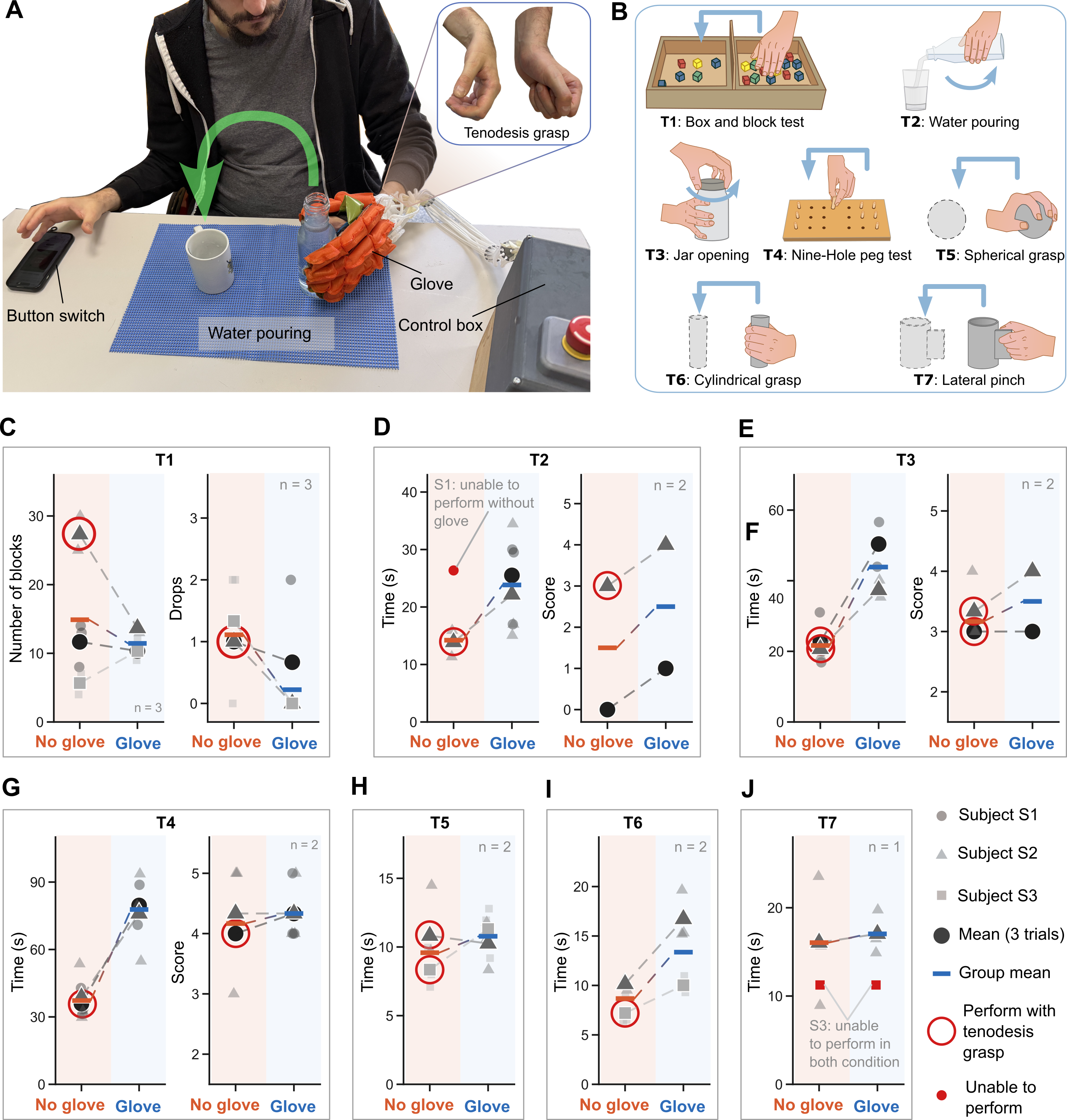
Figure 6: Pilot clinical trial, illustrating protocol, task set, and outcome metrics for individuals with cervical SCI in both assisted/unassisted conditions.
Limitations and Future Work
Current device realization involves manual hand measurement and fabrication, constraining throughput and scalability. The study sample size remains limited, necessitating more statistically powered trials, especially in target patient populations with variant hand sizes, levels of impairment, and demographic diversity. The actuation interface (manual button-switching) imposes latency, warranting integration of intent-detection modalities such as sEMG or residual limb motion for closed-loop control. Expanded actuation strategies are necessary to target precision and lateral pinch grasps, extending beyond the demonstrated full extension and full flexion states.
Further, systematic characterization of actuator durability across repeated loading cycles is vital for translation to home or clinical deployment scenarios.
Implications and Future Directions
The dual-action glove provides an explicit demonstration of the value of patient-specific actuation geometry, per-finger actuation, and ergonomic optimization in soft wearable robots. The system architecture supports modular expansion (integration of sensing and control modalities), and the platform is amenable to closed-loop, adaptive control—potentially leveraging AI-driven interpretation of intent in future iterations. Such advances would further facilitate individualized rehabilitation regimens and hand function restoration. Longitudinal, controlled trials are required to establish efficacy in population-scale deployments and to quantify rehabilitative neuroplastic outcomes.
Conclusion
The dual-action fabric-based soft robotic glove achieves high biomechanical output, low passive impedance, and robust ergonomic conformity, enabled by symmetrical-chamber actuators fabricated via CNC heat sealing. Its demonstrated ability to deliver clinically relevant assistance in both healthy and neurologically impaired populations, while retaining modularity and scalability, positions this architecture as a promising step toward customizable, effective, and user-centric soft robotic rehabilitation systems.

